मुफ्त! आयुर्वेदिक डॉक्टरों से पूछें 24/7

 तेज़ प्रतिक्रियाएँ
 1000+ सत्यापित डॉक्टर
Althaea officinalis
Introduction
You don’t usually hear Althaea officinalis come up in casual herb talk—unless someone’s throat is sore, their digestion’s gone off track, or their skin’s flaring up. This soft, downy plant—sometimes just called marshmallow root—has been quietly sitting in the Ayurvedic toolbox for centuries. Its cool, slimy extract might not win beauty awards, but it’s loved for how it coats, calms, and restores. In this article, we’ll explore what sets Althaea officinalis apart in Ayurveda: its botany, ancient roots (pun intended), bioactive magic, real-life health perks, and modern-day science. You’ll see exactly why this humble herb deserves more credit—and maybe even a spot in your kitchen or clinic.
Botanical Description and Taxonomy
Scientific Classification
-
Family: Malvaceae
-
Genus: Althaea
-
Species: Althaea officinalis L.
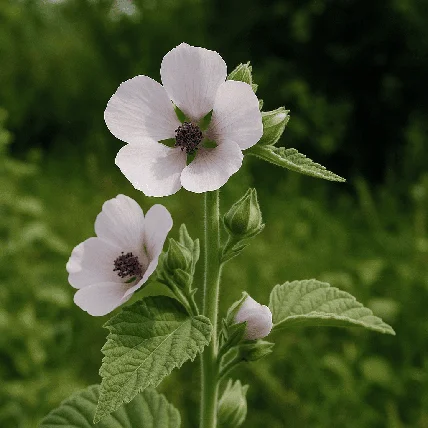
The plant is unmistakable if you’ve seen it once—those velvety, grey-green leaves and pale pink flowers blooming in summer are hard to forget. Native to Europe and western Asia, Althaea officinalis now grows widely in the marshy soils of India, the UK, and parts of North America. It prefers damp ditches and riverbanks, but adapts well to home gardens if the soil’s kept moist. The whole plant is useful in Ayurveda, but the roots are the prized part. Roots are collected after the second year for optimal mucilage content. Other usable parts include the leaves and flowers, though they’re less potent. The key bioactives are concentrated in the roots—mucilage, flavonoids, and phenolic acids, to name a few.
Historical Context and Traditional Use
This herb’s history goes way beyond Ayurveda. Greeks were chewing marshmallow root soaked in wine. Egyptians apparently fed it to royalty for sore throats and gut issues. In Ayurveda, Althaea officinalis has long been used under regional names—though it's not native to the subcontinent, it was gradually absorbed into classical herbal practice through Unani and Siddha texts. Charaka doesn’t mention it directly, but later compilations in Rasashastra and folk medicine use the term "Khatmi" to describe it—usually referring to imported marshmallow or local Malvaceae substitutes.
In Persian and Unani medicine, Khatmi is revered for its demulcent and expectorant qualities, and that wisdom found its way into northern Indian practice. Farmers in Kashmir, for example, still steep dried roots to make a decoction for persistent cough. In colder Himalayan pockets, the root was used in poultices for cracked skin and frostbite—suggesting both topical and systemic benefits.
Its transformation from a folk remedy to a formally documented herb has been slow but steady. In European herbalism, it was part of apothecary lozenges and throat syrups for hundreds of years. And now, ironically, modern phytotherapy is coming back around to what old village grandmothers always knew—slippery herbs soothe what’s irritated.
Active Compounds and Mechanisms of Action
The standout component of Althaea officinalis is mucilage—a sticky, gel-like substance composed mainly of polysaccharides. This is what gives marshmallow root its ability to coat irritated tissues. Studies show that its mucilage forms a protective film over mucous membranes, reducing mechanical irritation in the throat, stomach, and intestines.
Other notable compounds include:
-
Flavonoids (kaempferol, quercetin): mild antioxidants that reduce inflammation
-
Phenolic acids (syringic acid, caffeic acid): add antimicrobial and anti-inflammatory support
-
Pectin: supports gut health by acting as a gentle fiber
-
Asparagine: a soothing amino acid known for its cooling effects in Unani and Siddha medicine
Some speculate there may be mild immunomodulatory effects—though data is still sparse. The roots are best when dried and sliced, then steeped to release these compounds. Interestingly, the activity of mucilage increases in cold infusions, which Ayurveda interprets as the herb’s Sheeta Virya (cooling potency) coming through more effectively without heat degradation.
Therapeutic Effects and Health Benefits
Let’s get into what this plant actually does. Althaea officinalis may be unassuming, but it’s got range:
1. Soothing sore throats and coughs
This is where the herb shines. Studies from German phytotherapy journals back its use in lozenges and syrups. The mucilage coats inflamed throat tissue, easing dryness, pain, and the urge to cough—particularly in dry, irritating coughs without much phlegm.
2. Gastric and digestive relief
Traditional Ayurvedic use includes cooling and pacifying aggravated Pitta dosha in the gut. When stomach ulcers or gastritis flare up, marshmallow root decoction or cold infusion offers immediate relief. Its mucilage creates a film over the stomach lining, reducing acid-related damage.
3. Skin healing
Ever had cracked heels, dry eczema, or weepy wounds that just won’t calm down? Marshmallow root paste—or oil infused with the root—is traditionally applied to soothe and hydrate. It’s often paired with manjistha or neem for wound cleansing, but Althaea officinalis brings the calm.
4. Urinary tract health
The cooling and demulcent nature extends to the bladder, too. Mild UTIs or burning micturition, especially in Pitta types or during hot weather, may benefit from internal decoction. There’s a traditional preparation in some folk texts that pairs marshmallow root with coriander seeds.
5. Immunity and systemic inflammation
While this is newer territory, some herbalists suggest the mucilage not only shields tissues but may indirectly support immune response. There’s an old tradition of giving marshmallow tea during fevers to prevent dehydration and calm irritated tissues—especially in children.
6. Adjunct in allergic conditions
Some anecdotal uses include giving it during mild asthma or allergy flare-ups, as the mucilage calms inflamed bronchial linings. It’s never a primary treatment—but certainly a supportive one.
Real-life insight: Many Ayurvedic practitioners now blend Althaea officinalis into formulas for post-COVID cough recovery or lingering throat irritation. It’s even found in some modern Ayurvedic syrups under proprietary names—so keep an eye on ingredient labels.
Dosage, Forms, and Administration Methods
Most traditional use of Althaea officinalis involves cold infusions—roots steeped in room temperature water for several hours—particularly for sore throat, gastritis, or burning urination. Why cold? Because heat can degrade the mucilage, which is the star of the show here.
In Ayurveda and European herbal traditions, typical dosage recommendations are:
-
Cold infusion (root): 2–5 grams dried root in 150 ml water, steeped for 4–8 hours, consumed 2–3 times daily.
-
Decoction: 5 grams in 250 ml water, boiled for 10 minutes (less ideal for mucilage preservation).
-
Powder (churna): 1–3 grams mixed in honey or warm water, once or twice daily.
-
Syrups or throat lozenges: Follow manufacturer instructions, especially in proprietary Ayurvedic formulations.
Topical use:
Crushed dried root or its infused oil can be used in salves for cracked skin, burns, or eczema. Some dermatology clinics are experimenting with its inclusion in post-laser or post-inflammatory care, though it's still niche.
Children and elderly:
Safer than most herbs, but reduce dosage to half. Always test for sensitivity with a diluted cold infusion first.
Pregnancy and lactation:
Traditionally considered safe, but data is lacking. Stick to external applications unless advised by an Ayurvedic physician.
Warning for diabetic patients:
High mucilage content may interfere with glucose absorption. Monitor levels closely if consumed regularly.
Final thought:
Herbs aren’t one-size-fits-all. Before using Althaea officinalis for chronic conditions, it's best to consult with a certified Vaidya on Ask-Ayurveda.com for personalized advice.
Quality, Sourcing, and Manufacturing Practices
Althaea officinalis prefers temperate, marshy soils—think the loamy riverbanks of Himachal Pradesh, Kashmir, and even parts of Eastern Europe. However, large-scale Ayurvedic manufacturers in India often source dried roots from Iran or Eastern Europe where it's grown organically and in bulk.
Traditional harvesting is done in the second year of growth—autumn being the best time when the mucilage content is at its peak. Roots are cleaned, sliced, and sun-dried, though some artisanal batches are shade-dried to preserve the sticky compounds better.
How to spot the real thing?
-
Look for pale beige, fibrous root slices—not too brittle, with a faint earthy smell.
-
Powder should be cream-colored and not overly fine.
-
Avoid roots that smell musty or appear moldy—moisture can ruin a whole batch.
Certified organic sourcing helps ensure mucilage retention, free of heavy metals and additives—especially when used for therapeutic purposes.
Safety, Contraindications, and Side Effects
Most people tolerate Althaea officinalis well, even in larger doses. Still, there are a few caveats worth mentioning.
-
Possible side effects: Bloating, loose stool (if taken in excess), or a slight delay in the absorption of other oral medications due to the mucilage coating the digestive lining.
-
Drug interactions: It may reduce absorption of medications like lithium, thyroxine, or iron supplements. Always separate intake by 2–3 hours.
-
Allergic responses: Rare, but a few cases of skin itching or mild rash after topical use have been reported in sensitive individuals.
Contraindications:
-
Patients with hypoglycemia or those on insulin must monitor sugar levels carefully.
-
Avoid during gut fermentation syndromes like IBS with bloating—its mucilage can sometimes worsen stagnation if digestion is weak (Mandagni in Ayurveda).
-
Not recommended for immediate post-operative care where complete gastrointestinal absorption is critical.
As always: Ask your Ayurvedic doctor before regular use, especially if you're managing multiple conditions.
Modern Scientific Research and Evidence
Recent years have seen a revival of interest in Althaea officinalis, particularly in integrative medicine. Multiple European journals have acknowledged its role in upper respiratory relief, while Ayurveda researchers have begun studying its synergy with Indian herbs like yashtimadhu and tulsi.
A 2018 German randomized control trial (RCT) observed that marshmallow-based lozenges provided faster relief in patients with pharyngitis compared to placebo—though more robust data is needed.
A 2021 Iranian study explored its role in gastric mucosal healing, showing positive outcomes when administered in cold infusion for patients with GERD-like symptoms.
In India, a few AYUSH-funded labs have initiated work on combining Althaea officinalis with Pitta-pacifying herbs to assess long-term outcomes in acid reflux and skin disorders—but these are still in early phases.
Still, some gaps remain:
-
Very few double-blind studies exist on its immunological benefits.
-
Limited Indian field trials on sourcing and preparation consistency.
-
Ongoing debate on whether hot decoction reduces efficacy or just changes compound profiles.
The herb is clearly promising—but we’re still in the “need more data” phase on many fronts.
Myths and Realities
Myth #1: “Althaea officinalis is just a Western herb, not Ayurvedic.”
Reality: While not classically Indian, it’s been integrated into Unani-Ayurveda interface systems and folk practice—especially under the name Khatmi.
Myth #2: “You can boil it like any other herb.”
Reality: Heat can degrade the mucilage. Cold infusion is often more effective for mucosal benefits.
Myth #3: “It works instantly.”
Reality: It soothes quickly but healing is gradual. For chronic gastritis or eczema, expect results after consistent use for 2–3 weeks.
Myth #4: “It’s completely side-effect-free.”
Reality: It’s mild, yes—but may interfere with drug absorption or worsen digestive sluggishness.
Myth #5: “Only the root matters.”
Reality: True, roots are most potent—but flowers and leaves have been used in skin poultices or teas in European folk practice.
The truth? Althaea officinalis is subtle, not flashy. It won’t deliver fireworks but rather calm the storm beneath the surface—if used wisely and with patience.
Conclusion
Althaea officinalis, or marshmallow root, offers a quiet strength in the Ayurvedic materia medica. Its demulcent action is gentle, cooling, and highly effective when tissues are inflamed or agitated—whether in the throat, gut, bladder, or skin.
What makes it stand out isn’t drama—it’s the ability to coat, calm, and protect. Backed by historical use and modern research, it finds a place not just in ancient scripts but also in today’s clinical conversations.
Its safety profile is encouraging, though not universally perfect. Responsible, well-informed use—preferably with expert consultation—is the best way to harness its potential.
For anyone considering it therapeutically, always consult a trained Ayurvedic professional on Ask-Ayurveda.com to tailor its use to your unique constitution and condition.
Frequently Asked Questions (FAQ)
-
What is Althaea officinalis used for in Ayurveda?
It’s mainly used for sore throat, gastritis, skin irritation, and urinary tract cooling. -
Is Althaea officinalis the same as marshmallow root?
Yes, marshmallow root is the common name for Althaea officinalis. -
Can I take marshmallow root every day?
Yes, if advised by a practitioner—especially in cold infusion form. -
Is Althaea officinalis safe for children?
Generally yes, in reduced doses. Cold infusion is the mildest form. -
How do I prepare Althaea officinalis for gastritis?
Use a cold infusion—2–5g dried root steeped for several hours. -
Can pregnant women use it?
Externally, yes. Internal use only under supervision. -
Is it part of classical Ayurveda?
Not originally, but it’s been absorbed into integrated practice. -
Is the mucilage harmful?
No. It’s beneficial—but may reduce drug absorption if not timed right. -
Where does Althaea officinalis grow best?
In temperate, marshy areas like Kashmir and Europe. -
Is it helpful for acid reflux?
Yes, it soothes the esophagus lining. -
What is the best form to use?
Cold infusion for internal issues; salve for skin. -
Can it be used with other herbs?
Yes. Often combined with licorice or tulsi. -
Does it reduce cough?
Yes, especially dry coughs or throat irritation. -
Any scientific studies support it?
Yes, especially from Europe on throat and gut issues. -
Is it available in India?
Yes, in Ayurvedic stores and online. -
Can diabetics use it?
With caution. It may affect sugar absorption. -
Does it help urinary burning?
Yes, its cooling effect helps soothe the urinary tract. -
Is it a heating or cooling herb?
Cooling. It pacifies Pitta dosha. -
Is it used for wounds?
Yes, topically as poultice or infused oil. -
Does it help allergies?
It may ease irritated membranes in mild allergy cases. -
Can it be given to pets?
Not recommended without veterinary guidance. -
Does it affect digestion?
It soothes, but excess may reduce fire (Agni). -
Can it be taken long-term?
Yes, but monitor for sluggish digestion. -
Is it in proprietary Ayurvedic syrups?
Yes, under names with soothing or cough-relief claims. -
How can I identify good-quality root?
Look for pale, fibrous, slightly sticky slices. -
Does it taste sweet?
Not sweet—more neutral or slightly earthy. -
Can I boil it?
Not ideal. Cold steeping retains mucilage best. -
Can it treat ulcers?
Supports healing, but not a standalone cure. -
Does it work for dry eyes?
No traditional evidence for that use. -
Where can I ask about it further?
Speak to an expert on Ask-Ayurveda.com.


