मुफ्त! आयुर्वेदिक डॉक्टरों से पूछें 24/7

 तेज़ प्रतिक्रियाएँ
 1000+ सत्यापित डॉक्टर
Aerva javanica
Introduction
If you’ve ever driven through the arid zones of Rajasthan or the dry landscapes near the Deccan plateau, chances are you've seen a soft, silvery shrub standing resilient against the dust—Aerva javanica. Known locally as Bui, this modest plant might seem inconspicuous, but in the Ayurvedic world, it’s anything but ordinary. It's admired for its cooling properties, wound-healing benefits, and urinary relief abilities. This article explores the full spectrum of what makes Aerva javanica unique—from its botany and traditional roles in regional healing systems to the bioactive compounds that give it such therapeutic power. We'll also unpack modern research, real-world applications, preparation forms, safety, sourcing, and much more.
Botanical Description and Taxonomy
Aerva javanica, commonly called Bui or Desert Cotton, belongs to the family Amaranthaceae. Scientifically, it is classified as:
-
Kingdom: Plantae
-
Order: Caryophyllales
-
Family: Amaranthaceae
-
Genus: Aerva
-
Species: A. javanica
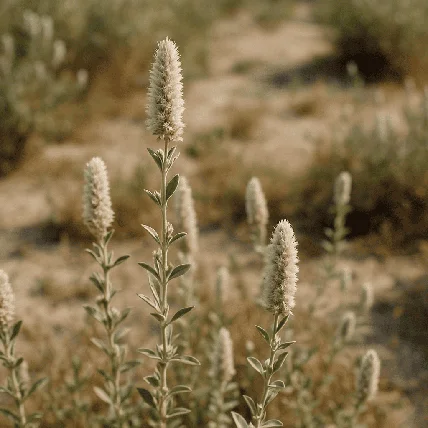
This semi-woody perennial shrub grows up to 1.5 meters in height and is easily recognizable by its densely woolly stems and silvery-green leaves. Native to arid regions like Rajasthan, Gujarat, and the Thar Desert, Aerva javanica thrives in poor, sandy soils where few other plants survive. The flowering is year-round but peaks during late summer when the pinkish-white spikelets stand out against the desert backdrop. In Ayurveda, the whole plant is used, but especially the leaves, flowers, and root. Key phytochemicals identified include flavonoids like quercetin and rutin, alkaloids, saponins, and tannins—each contributing to its traditional healing repertoire.
Historical Context and Traditional Use
Now here’s where it gets truly interesting. While not as globally glamorized as turmeric or neem, Aerva javanica has long held esteem in indigenous and Ayurvedic medicine—especially in dry and semi-arid zones of India and parts of the Middle East. In Bhavaprakasha Nighantu, the plant is referenced under its Sanskrit name Bhadra, associated with its auspicious and healing nature.
Historically, tribal healers from Rajasthan and Gujarat used the plant in wound dressings, calling it Bui Patta. Soldiers and travelers reportedly packed the leaves in cloth to treat injuries during long treks. Its use in urinary complaints—such as burning micturition and gravel (kidney stones)—was common in Siddha and folk remedies, where a decoction of the flowers was administered.
Interestingly, Bedouin communities in Oman and Saudi Arabia used Aerva javanica as camel fodder, valuing its cooling properties for both animals and humans during peak summer heat. In fact, in traditional Unani medicine, it is listed under cooling herbs for internal use in urinary inflammation. With time, these scattered traditional uses were compiled by ethnobotanists in India’s desert zones, giving the plant a kind of “folk celebrity” status among arid-region botanicals.
Over the last century, Aerva javanica has gained recognition in modern ethnomedicinal compendiums—not as a miracle herb, but as a dependable ally for specific, context-driven ailments. Today, its role in Ayurvedic formulations for urinary tract relief, minor wounds, and respiratory conditions is seeing a modest revival.
Active Compounds and Mechanisms of Action
While the Ayurvedic uses have been around for centuries, the chemistry behind Aerva javanica has only recently been demystified. Several studies, including those published in Journal of Ethnopharmacology, have identified the following active compounds:
-
Flavonoids such as quercetin, rutin, and kaempferol—renowned for their antioxidant, anti-inflammatory, and capillary-stabilizing effects.
-
Alkaloids, which may contribute to mild analgesic and diuretic properties.
-
Tannins and saponins, which provide antimicrobial and expectorant action, explaining the plant’s use in wound care and respiratory issues.
Aqueous extracts of Aerva javanica have shown significant diuretic activity in animal studies, lending weight to its traditional use for urinary issues. Its flavonoid-rich profile also supports its role in soothing internal inflammation. Though no single compound dominates its profile, it’s the synergistic action—typical of Ayurvedic herbs—that makes Aerva javanica versatile.
From a mechanistic point of view, the anti-inflammatory effects may stem from inhibition of cyclooxygenase enzymes, while antimicrobial actions have been tied to the disruption of microbial membranes, mostly in Gram-positive bacteria.
Therapeutic Effects and Health Benefits
Let’s be real—Aerva javanica isn’t going to show up in your trendy herbal lattes anytime soon. But that doesn’t mean it’s not powerful. In fact, it holds a quiet, unflashy relevance in places where modern resources are scarce but traditional knowledge runs deep. Here's a breakdown of its recognized and research-backed benefits:
-
Wound Healing: Crushed leaves are applied to cuts and abrasions to promote healing. Thanks to the tannins and flavonoids, it acts as both an astringent and antimicrobial.
-
Urinary Tract Health: Possibly its most famous role. The plant’s decoction is given for burning urination, cystitis, and early-stage kidney gravel. It’s mildly diuretic, helps flush toxins, and cools the urinary tract.
-
Anti-inflammatory Use: Both topically and internally, the plant shows soothing effects in cases of swelling, redness, and pain—likely due to its quercetin content.
-
Respiratory Relief: In dry-season coughs or even mild asthma, the smoke of dried flowers has been traditionally used. Strange, but several communities—including in Sindh—still practice this.
-
Antimicrobial and Antifungal: In vitro studies have shown its aqueous extracts inhibit Staphylococcus aureus and Candida albicans. This validates its folk use for skin infections.
-
Postpartum Tonic: In some regional traditions, it’s used as a part of post-delivery recovery decoctions for women, especially for its anti-inflammatory and tissue-repair properties.
-
Antioxidant Support: Early studies suggest that extracts may scavenge free radicals effectively, pointing to broader long-term protective roles.
There’s a certain earthy honesty to how Aerva javanica is used. You won’t find it glamorized in capsules at every health store, but in villages across Kutch or remote Baluchistan, people still rely on it—and that says something.
Dosage, Forms, and Administration Methods
When it comes to Aerva javanica, traditional healers rarely worked with “standardized doses”—instead, they depended on season, soil quality, and even the mood of the plant. But modern Ayurvedic formulations and ethnobotanical handbooks give us more measurable suggestions.
-
Decoction (Kashaya): The most common form. About 10–20 grams of the dried whole plant is boiled in 200 ml of water and reduced to half. Typically consumed twice daily for urinary and postpartum concerns.
-
Powder (Churna): The dried leaves or flowers are ground and taken in 3–5 grams twice daily, often with warm water or honey. This form is preferred for respiratory support or mild inflammation.
-
Infusion: Particularly in folk practice, the flowers are steeped in hot water and taken like herbal tea.
You might also come across smoked preparations (yes, really!) in tribal areas—mainly for dry coughs or sinus congestion. This isn’t something we recommend casually, though, as dosage control is difficult. And while Aerva javanica hasn’t yet entered mainstream Ayurveda capsules, some small-batch herbal apothecaries in Rajasthan and Tamil Nadu have begun experimenting with aqueous extracts and ointments.
Vulnerable Groups Caution:
-
Pregnancy: Avoid unless under Ayurvedic supervision. The diuretic effect could disturb electrolyte balance.
-
Children: Not recommended below age 12, except in very diluted forms.
-
Chronic Illnesses: Those with kidney disease, hypotension, or on diuretics should use cautiously.
And always—before trying Aerva javanica or any herbal preparation, consult with a qualified practitioner. You can reach reliable experts at Ask-Ayurveda.com for tailored guidance.
Quality, Sourcing, and Manufacturing Practices
Sourcing good Aerva javanica is trickier than it sounds. This isn’t a plant you’ll find growing in polished commercial nurseries. It thrives in semi-arid and arid climates, especially across Rajasthan, Gujarat, parts of Maharashtra, and desert tracts of northern Karnataka.
-
Best Harvest Time: Post-monsoon, when the plant is leafy and less dusty. Avoid summer harvests as the leaves tend to be too fibrous and dry.
-
Sustainable Harvesting: Traditionally, only mature aerial parts are trimmed, allowing the rootstock to regenerate.
-
Drying: Should be done in shade with minimal handling to retain the silvery fuzz and preserve volatile compounds.
When buying, prefer local collectives or verified Ayurvedic suppliers who list the botanical name and batch-test for contaminants. The color should be silvery-green, not dull brown. If it smells musty—it’s past its prime.
Safety, Contraindications, and Side Effects
Aerva javanica has a good safety record—but “safe” doesn’t mean “for everyone, always.” Here’s what you should know:
-
Mild Diarrhea or Cramping: Occasionally reported when higher doses of decoction are taken, especially on an empty stomach.
-
Electrolyte Loss: Long-term use as a diuretic might deplete potassium. Not ideal for those already on medications for high blood pressure or kidney issues.
-
Allergy Risk: Rare, but some sensitive individuals experience mild itching or rashes.
Contraindicated In:
-
Chronic kidney failure
-
Patients on potassium-wasting diuretics
-
Individuals prone to dehydration
Like all herbal medicines, context matters. Just because it grows wild doesn’t mean it's benign in all conditions. Always get a proper evaluation before using it regularly.
Modern Scientific Research and Evidence
Over the last two decades, Aerva javanica has slowly made its way into ethnopharmacology journals—though it hasn’t exactly gone viral in academic circles.
-
A 2014 study published in Bangladesh Journal of Pharmacology found that aqueous extracts of Aerva javanica produced significant diuretic activity in albino rats, supporting traditional urinary use.
-
In Indian Journal of Natural Products and Resources, researchers noted notable wound healing in rat models with topical application of leaf paste.
-
Preliminary lab studies suggest antifungal properties against Candida albicans and moderate antimicrobial activity against Gram-positive bacteria.
Still, there's a gap between folk practice and clinical research. No major randomized controlled trials exist yet, and the studies are mostly limited to in-vitro or small animal models. But the plant’s reputation continues to attract botanists and pharmacologists, especially in desert ecosystem studies.
Some Ayurvedic physicians have begun using Aerva javanica formulations in integrative urology, but mostly in low doses and with professional monitoring.
Myths and Realities
There are a few myths surrounding Aerva javanica, and some are frankly romanticized.
-
“It’s a miracle cure for kidney stones.” Not really. It may ease symptoms and promote urine flow, but large or obstructive stones require clinical treatment.
-
“Safe in pregnancy because it’s natural.” Natural doesn't equal safe. Its diuretic effects can disturb hydration and minerals during pregnancy.
-
“Smoked flowers are harmless.” This practice exists but isn't without risks—especially for asthmatics or those with respiratory sensitivity.
Reality? Aerva javanica is valuable—but context, dosage, and diagnosis all matter. It isn’t magic, but it is medically significant when used correctly.
Conclusion
So what do we make of this dry-zone warrior? Aerva javanica may not look flashy or smell divine, but in the hands of experienced Ayurvedic practitioners and local healers, it has offered reliable support for generations. Its role in managing urinary tract disorders, wound healing, and mild inflammation is increasingly being validated by science.
But it’s not an herb to experiment with casually. Respect the plant, seek professional advice, and remember—it’s not about fixing everything, but supporting the body's own intelligence to heal. Want to explore its safe use or combine it with other treatments? Reach out to qualified Ayurvedic experts at Ask-Ayurveda.com before starting.
Frequently Asked Questions (FAQ)
-
What is Aerva javanica used for in Ayurveda?
It's mainly used for urinary disorders, wound healing, and postpartum recovery. -
Is Aerva javanica safe for daily use?
Short-term use is generally safe, but daily long-term use should be supervised. -
Can I take Aerva javanica for kidney stones?
It may help mild gravel, but not large or obstructive stones—consult a doctor. -
Does Aerva javanica reduce inflammation?
Yes, due to its flavonoids, it helps reduce mild inflammation both internally and externally. -
Is Aerva javanica good for children?
It’s not generally recommended for children under 12. -
How is Aerva javanica typically consumed?
As a decoction, powder, or infusion depending on the condition. -
Are there any side effects of Aerva javanica?
Possible mild diarrhea or cramping, especially if overdosed. -
Does Aerva javanica grow only in India?
No, it’s also found in arid parts of Africa and the Middle East. -
Is Aerva javanica the same as desert cotton?
Yes, it's a common name due to its soft, woolly texture. -
Can it be used with other Ayurvedic herbs?
Yes, but only under professional guidance. -
Does it have antibacterial effects?
Yes, especially against Gram-positive bacteria. -
What does the plant look like?
It’s a silvery, woolly shrub with small pinkish-white flowers. -
Can it help with urinary infections?
Yes, it has cooling and diuretic properties helpful in such cases. -
Are there clinical trials on Aerva javanica?
Some animal studies exist, but human trials are limited. -
Is it used in Siddha or Unani medicine?
Yes, it has roles in both, especially for urinary and postpartum conditions. -
What are the traditional names of Aerva javanica?
Bui, Bhadra, Kapuri, and Desert Cotton are common names. -
Is it safe for pregnant women?
No, avoid during pregnancy unless advised by a practitioner. -
Where can I buy authentic Aerva javanica?
Look for certified Ayurvedic pharmacies or ethical herbal suppliers. -
Can it treat respiratory issues?
Yes, especially dry cough—sometimes used as a smoked herb. -
Does it help with skin infections?
Leaf paste is used topically for minor cuts and fungal issues. -
Is Aerva javanica available in capsule form?
Rarely, but some herbal companies are exploring it. -
What is the correct dosage for adults?
Typically 3–5 grams of powder or 20 ml decoction twice a day. -
Can diabetics use Aerva javanica?
Cautiously and only after medical consultation. -
Is Aerva javanica good for liver detox?
Not directly, though its antioxidant effect supports general detox. -
How long does it take to show results?
Depends on the condition, but 5–10 days is common. -
Does it interact with modern medicines?
Yes, especially diuretics—seek professional advice. -
Is it used in cosmetics?
Traditionally, no. Some now explore its wound-healing uses topically. -
Can I grow Aerva javanica at home?
Yes, if you live in a dry, sunny climate with sandy soil. -
Are there seasonal restrictions for using it?
Best used in warmer seasons; avoid excessive use during monsoons. -
Where can I ask Ayurvedic doctors about it?
Visit Ask-Ayurveda.com to consult professionals for free.


