मुफ्त! आयुर्वेदिक डॉक्टरों से पूछें 24/7

 तेज़ प्रतिक्रियाएँ
 1000+ सत्यापित डॉक्टर
Allamanda cathartica
Introduction
Allamanda cathartica, often called the golden trumpet or yellow bell, isn’t just a feast for the eyes. In Ayurveda, it has carved a distinct niche thanks to its strong purgative properties and vibrant botanical presence. While most recognize it as an ornamental vine found in warm climates, this plant's therapeutic potential runs much deeper. In this article, we’ll explore exactly what sets Allamanda cathartica apart — from its active phytochemicals and historical roots to current medical research and preparation forms. You’ll also discover important safety guidelines and answers to the most common questions people have about this curious plant.
Botanical Description and Taxonomy
Allamanda cathartica belongs to the Apocynaceae family and thrives in humid tropical climates. Scientifically classified as:
-
Kingdom: Plantae
-
Order: Gentianales
-
Family: Apocynaceae
-
Genus: Allamanda
-
Species: A. cathartica
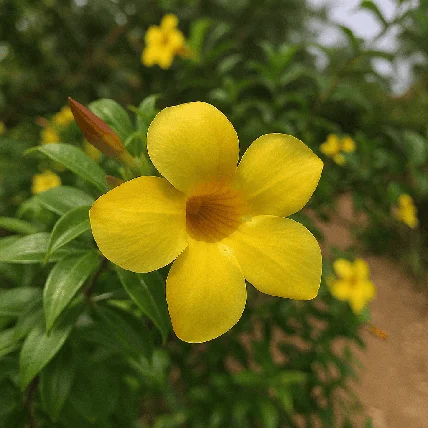
Native to Brazil, the plant has now spread across South and Southeast Asia, often found climbing fences, garden walls, and riverbanks. Its glossy, evergreen leaves are arranged in whorls of three to four, with vivid, trumpet-shaped yellow flowers blooming almost year-round in hot weather. The latex-rich stems and leaves exude a milky sap when broken, a trait common among Apocynaceae plants. In Ayurveda, the roots, leaves, and latex are typically used, each part holding its own unique medicinal significance. The plant contains specific active compounds like plumericin and allamandin, which are believed to drive its purgative and antimicrobial effects.
Historical Context and Traditional Use
The use of Allamanda cathartica in traditional healing systems—especially in the southern parts of India—is largely medicinal rather than spiritual. Interestingly, you won’t find it extensively detailed in classical Ayurvedic texts like Charaka Samhita or Sushruta Samhita, possibly due to its non-native origin. However, over time, as Ayurveda adapted to local flora, Allamanda began finding its place in regional treatments under the umbrella of “upavisha dravyas” (semi-toxic herbs used with caution).
Historically, rural healers in Tamil Nadu and Kerala used the root powder to induce purgation in cases of chronic constipation, intestinal obstruction, or to detoxify after accidental poisoning. Some healers even recall how, during certain rituals involving detox, patients were administered a bitter decoction made from Allamanda leaves mixed with jaggery and ginger to manage the taste and side effects. In folk medicine across Sri Lanka and Indonesia, Allamanda latex was applied topically for ringworm and other skin infections.
By the 20th century, its usage became more structured and cautious. Ayurvedic physicians began using standardized formulations involving Allamanda root extracts combined with supportive herbs like haritaki and ginger to mitigate its intense purgative effect. This was a shift from unregulated traditional use to more refined therapeutic protocols. In some tribal traditions, dried Allamanda bark was even smoked or burned during fevers — a practice now largely discontinued due to its known toxicity if misused.
While many traditional systems have celebrated Allamanda’s power, they’ve also feared it. The term “cathartica” literally refers to its strong laxative property — it clears out the bowels with force, which made it a go-to plant in urgent situations. That said, modern Ayurveda tends to view it as a plant that requires supervision, reserved for specific detoxifying treatments rather than general well-being use.
Active Compounds and Mechanisms of Action
Despite its bright, cheerful flowers, Allamanda cathartica harbors a set of compounds that pack a punch. Chief among these are plumericin, allamandin, and iridoid lactones. Plumericin is known for its strong anti-inflammatory and antibacterial action, confirmed by in vitro studies that have shown inhibition of bacterial growth, particularly in gram-positive strains. Allamandin, on the other hand, exhibits cytotoxic effects, and its presence in the sap and roots contributes to the plant’s purgative strength.
Mechanistically, these compounds seem to irritate the gastrointestinal lining in a controlled way, stimulating peristalsis — that wave-like motion in the intestines — which leads to a strong laxative response. While this might sound harsh, in Ayurvedic detox protocols, this is exactly the desired effect when dealing with “ama” (toxins) or excess kapha.
There are also saponins present in Allamanda extracts, believed to help with mucus breakdown, which may explain why some traditional uses include it for respiratory cleansing. However, due to its potency, these same compounds can cause cramping or dehydration if improperly used, especially in sensitive individuals. Modern herbal pharmacology supports these mechanisms but advises close monitoring due to the plant’s narrow therapeutic window — the difference between a helpful and harmful dose is slim.
Therapeutic Effects and Health Benefits
Allamanda cathartica’s primary role in Ayurveda and ethnomedicine revolves around its purgative action, but there’s more to it than just clearing the bowels. Several studies and practitioner observations suggest that, when used judiciously, it may offer a range of specific health benefits:
-
Detoxification support: By promoting bowel clearance, it helps eliminate built-up toxins (ama), especially in kapha-dominant individuals or during seasonal cleanses.
-
Anti-parasitic: Traditional healers have used the root decoction to expel intestinal worms, especially in children (though modern use in children is controversial).
-
Skin infections: Applied topically, the latex is said to reduce fungal infections, boils, and ringworm, although caution is required due to irritation risk.
-
Liver support: Some lesser-known Ayurvedic formulations suggest that Allamanda, when combined with bhumyamalaki or katuki, may stimulate liver function and bile flow.
-
Febrile conditions: Decoctions with Allamanda leaf were once administered to reduce fevers associated with malaria or dengue-like symptoms in folk practices.
-
Mood elevation: A surprising area of interest — anecdotal accounts hint at mood-boosting effects, possibly due to gut-brain axis stimulation following detox. Not clinically validated yet, but still fascinating.
That said, the benefits come with a big asterisk. Allamanda is not for casual use. Even in Ayurveda, it’s not something you just sip like tulsi tea. Its strength lies in its targeted action, used sparingly and under supervision. And while the research on plumericin and other compounds is promising — especially for anti-cancer and anti-inflammatory pathways — clinical human trials are still limited.
Dosage, Forms, and Administration Methods
In Ayurveda, Allamanda cathartica is handled with utmost care due to its potent purgative and semi-toxic nature. The most commonly used forms include:
-
Root powder (dried and pulverized)
-
Fresh latex (for external application)
-
Decoctions (boiled extracts from roots or leaves)
-
Infused oils or pastes (for topical fungal issues)
The standard dosage of dried root powder is approximately 250–500 mg, often administered alongside supportive herbs to balance its effect — think haritaki, shunthi (dry ginger), or fennel. Decoctions, when used, are heavily diluted (usually 1 part herb to 16 parts water), boiled down to a quarter, and given in 10–15 ml doses once under supervision.
External use of latex is limited to small areas, often diluted with coconut or neem oil, and applied with a clean cotton swab — never on open wounds or sensitive skin.
Pregnant women, nursing mothers, children under 12, and those with chronic digestive issues or heart conditions are strictly advised against internal use unless under specialist supervision.
Because the plant can easily tip from healing to harmful, even seasoned Ayurvedic practitioners often conduct preliminary allergy or irritability checks before prescribing. It’s also common to follow up strong purgation with replenishing tonics or demulcent herbs like licorice or amalaki.
Before you try anything with Allamanda cathartica, it’s essential to consult an Ayurvedic physician. The formulations aren’t DIY territory. For guidance and safe access to this herb, it’s best to connect with experts via Ask-Ayurveda.com — where certified practitioners can tailor recommendations to your constitution and condition.
Quality, Sourcing, and Manufacturing Practices
Allamanda cathartica grows best in tropical and subtropical zones, thriving in India’s Western Ghats, the humid coastal belts of Sri Lanka, and even parts of southern Thailand and Malaysia. The plant prefers well-drained soil and abundant sunlight, often blooming more profusely during monsoon-end seasons.
Traditionally, roots are harvested post-flowering, typically between October and December when the concentration of active compounds peaks. Healers usually extract only mature roots, ensuring sustainable re-growth by leaving behind the main taproot.
In commercial production, wild harvesting is discouraged due to overextraction risks. Reputable manufacturers now grow Allamanda under controlled organic conditions, testing batches for microbial contamination and active compound concentration — particularly allamandin levels.
When purchasing, ensure the product label includes botanical name, part used (e.g., root), and extraction method. Avoid powders or extracts with unclear sourcing or unverified purity. Color, aroma (sharp and earthy), and texture (fine and non-clumpy) are quick home checks you can do.
Safety, Contraindications, and Side Effects
Let’s be blunt — Allamanda cathartica isn’t a “gentle” herb. It’s effective, yes, but can easily cause severe side effects if misused. Reported adverse effects include:
-
Violent purgation with abdominal cramps
-
Dehydration and electrolyte imbalance
-
Skin irritation or blistering when latex is overapplied
-
Nausea, dizziness, or fainting, especially in weak individuals
Internally, it’s contraindicated for:
-
Pregnant or lactating women
-
Children under 12
-
Those with inflammatory bowel diseases (IBS, ulcerative colitis)
-
Cardiac patients or those on diuretics
Additionally, if you’re on medication like blood thinners, antihypertensives, or immunosuppressants, consult your doctor — Allamanda compounds may intensify or counteract drug actions.
Topical use might seem safer, but latex contains iridoids that can trigger allergic reactions in sensitive skin. Always patch-test first.
It’s worth emphasizing again: Do not self-medicate with this plant. While folklore praises its power, today’s use demands precision and supervision.
Modern Scientific Research and Evidence
Modern studies on Allamanda cathartica are still developing, but the findings are compelling. Laboratory analyses have confirmed the presence of plumericin and allamandin, both with antimicrobial and anti-inflammatory properties.
-
A 2012 study published in Pharmaceutical Biology found plumericin inhibits NF-κB signaling, a key inflammatory pathway, suggesting potential in treating chronic inflammatory diseases.
-
Another trial in Asian Journal of Pharmaceutical Sciences (2015) explored its anti-fungal efficacy, noting promising activity against Candida and dermatophytes.
Despite the buzz, there’s little to no human clinical trial data, especially regarding dosage tolerance or long-term use. Most findings are in vitro or based on animal studies.
Comparing this to traditional Ayurvedic practice, we see interesting overlaps. While Ayurveda used Allamanda for detox and parasites, modern research hints at immune modulation and cancer cell apoptosis — though still too early to confirm.
A few universities in southern India have launched small-scale trials to study hepatoprotective effects, especially when combined with herbs like kalmegh or bhringaraj, but results remain unpublished.
Myths and Realities
Let’s clear the air around some common misconceptions about Allamanda cathartica:
-
Myth: It’s just a garden plant, not medicinal.
Reality: While it is ornamental, several parts of the plant have been traditionally and scientifically recognized for their therapeutic effects. -
Myth: You can boil the flowers for tea.
Reality: Wrong. The flowers contain irritants. Only specific parts like roots and leaves (in precise doses) are used medicinally — and not casually. -
Myth: Allamanda is safe because it’s “natural.”
Reality: Natural doesn’t mean harmless. This plant is classified under “upavisha” for a reason — toxic if mishandled. -
Myth: It cures liver disease or cancer.
Reality: Early-stage lab studies are promising, but no clinical backing exists yet. Don’t replace medical treatments with untested herbal alternatives. -
Myth: Topical use is risk-free.
Reality: Not quite. The latex may cause burns or rashes in some people, especially if applied too thick or without dilution.
Reality check? Allamanda cathartica is powerful but should never be used without expertise.
Conclusion
Allamanda cathartica stands out as one of those paradoxical herbs — bold in appearance, intense in action, and yet delicate in terms of dosage and handling. It brings a lot to the Ayurvedic table: cleansing, skin protection, potential liver support, and even a touch of modern intrigue through its studied compounds.
But it’s not a home remedy, and it’s definitely not meant for experimentation. With great potency comes the need for greater responsibility. If you're considering Allamanda for any health reason, let it be through informed channels and professional oversight.
For trusted guidance, turn to certified Ayurvedic practitioners on Ask-Ayurveda.com — your safest route to understanding how (or if) this plant belongs in your wellness journey.
Frequently Asked Questions (FAQ)
1. What is Allamanda cathartica used for in Ayurveda?
Primarily as a strong purgative and detox herb in carefully controlled doses.
2. Is Allamanda cathartica safe to use at home?
No. It should only be used under professional Ayurvedic guidance.
3. Which part of Allamanda cathartica is medicinal?
Mainly the root and leaves; latex is used externally.
4. Can I make tea from Allamanda flowers?
No, flowers are not used medicinally and can be irritating.
5. Is Allamanda cathartica good for constipation?
Yes, but only in supervised Ayurvedic formulations due to its strength.
6. Are there any skin benefits from Allamanda?
Its latex may help fungal infections, but caution is essential.
7. What are the side effects of Allamanda cathartica?
Diarrhea, cramps, dehydration, and possible skin irritation.
8. Does Allamanda help with liver problems?
Some traditional formulas use it with liver-supporting herbs, but evidence is limited.
9. Is Allamanda used in Panchakarma therapy?
Yes, as part of virechana (purgation) in rare cases.
10. Can children take Allamanda?
Absolutely not without strict medical supervision.
11. Can it help with parasites or worms?
Traditionally used for this, but modern use requires care.
12. What does Allamanda latex do?
Used topically for fungal conditions — but can cause irritation.
13. Is Allamanda cathartica poisonous?
Yes, in large doses or if misused.
14. How much root powder is safe?
250–500 mg under expert advice only.
15. Where does Allamanda grow best?
Tropical climates — India, Brazil, Southeast Asia.
16. Can pregnant women use Allamanda?
No. It’s contraindicated during pregnancy.
17. Is Allamanda cathartica used in cancer treatment?
Some lab studies show promise, but no clinical use yet.
18. What compounds are in Allamanda?
Plumericin, allamandin, saponins, iridoids.
19. Is it used in modern medicine?
Not directly, but under research for future applications.
20. Can I use Allamanda oil for my scalp?
No traditional use suggests this. Avoid self-use.
21. What does “cathartica” mean in the name?
It refers to its strong purgative property.
22. Does it have antifungal action?
Yes, particularly against skin fungi in lab tests.
23. Can Allamanda be used with other herbs?
Yes, often with ginger, fennel, or haritaki.
24. Is Allamanda cathartica bitter?
Yes, extremely bitter — a trait linked to its potency.
25. How do I store Allamanda powder?
In a dry, airtight container away from light.
26. Can it cause dehydration?
Yes, due to its purgative effects.
27. Is it sold online?
Yes, but ensure quality and sourcing are verified.
28. Should I consult a doctor before using it?
Always — preferably an Ayurvedic expert.
29. Is Allamanda used for detox?
Yes, in Ayurvedic cleansing protocols.
30. Where can I get expert advice?
Visit Ask-Ayurveda.com for consultation.


