


Aconitum spicatum
Introduction
Aconitum spicatum isn’t just a wildflower scattered along the cold slopes of the Himalayas—it’s a deeply storied plant in Ayurveda. Known for its intense action and therapeutic depth, this species is carefully used for fever, neuralgia, and pain-related disorders. What makes it stand out isn’t only its botanical elegance or poisonous nature, but the centuries of traditional wisdom layered into its roots—literally and figuratively. In this article, we’re diving into everything Aconitum spicatum: its botanical profile, historical references, active ingredients, traditional uses, and what science is saying now. You’ll also get a sense of how it’s prepared, where it grows best, how safe it is (or isn’t), and why it remains a bit of a mystery herb even today.
Botanical Description and Taxonomy
Scientific Classification
-
Family: Ranunculaceae
-
Genus: Aconitum
-
Species: Aconitum spicatum (Brühl) Stapf
-
Common Names: Indian Aconite, Bikh, Vatsanabha (in Ayurvedic texts)
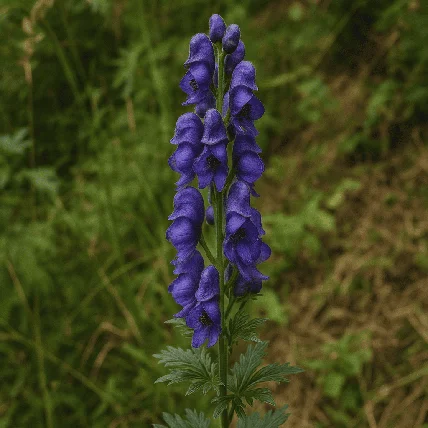
Aconitum spicatum is a tall, erect herb native to alpine regions of the Himalayas, commonly found at altitudes between 3000–4500 meters. The plant can reach up to 1.5 meters in height, bearing narrow, deeply lobed leaves and a vertical spike of bluish-purple hooded flowers—hence “spicatum.” It thrives in moist, cold environments with dappled sunlight and well-drained soils. The tuberous roots, often dark brown and tapering, are the primary part used medicinally after extensive detoxification (shodhana) processes. Key compounds identified in A. spicatum include aconitine, mesaconitine, and hypaconitine, all contributing to its neurological and anti-inflammatory activity—but only when properly prepared.
Historical Context and Traditional Use
Aconitum spicatum has walked a fine line between medicine and poison for centuries. In ancient Ayurvedic compendiums like the Charaka Samhita and Sushruta Samhita, similar aconites were documented under the name “Vatsanabha.” Though scholars debate which exact species were intended, A. spicatum’s profile closely aligns with those referenced in Himalayan traditions. It was categorized under the "Upavisha" (semi-poisonous) group, meaning it could be healing if handled correctly—but fatal if not.
In Tibetan medicine, it's referred to in the Amchi system as “Bikma” and used in precise, minuscule doses for treating cold disorders and pains related to wind imbalance (rlung). Nepalese healers from the Karnali and Dolpa regions still mention it in connection with fever and sore joints, often mixed with other detoxified roots or minerals.
Interestingly, its use in warfare was also noted. Local folklore in Uttarakhand and Himachal Pradesh speaks of poison-tipped arrows made from the root sap, used not only for hunting but for self-defense in feudal disputes.
Over time, modern Ayurvedic practitioners restricted its use due to safety concerns, but it never disappeared entirely. It transitioned from a more freely used medicine to one prescribed only under controlled circumstances, always post-detoxification. The plant’s “fear factor” may have even contributed to its mystique and selective reverence in certain tribal lineages. In some remote regions, old-timers still whisper about it as both healer and curse.
Active Compounds and Mechanisms of Action
Let’s not sugarcoat it—Aconitum spicatum is chemically intense. Its primary alkaloids include aconitine, mesaconitine, hypaconitine, and benzoylaconine—all classified as diterpenoid alkaloids. These compounds interact with voltage-gated sodium channels in nerve cells, which explains their dramatic effect on pain, sensation, and sometimes even the heartbeat.
In Ayurvedic thought, these actions are described in a different language. Aconitum spicatum is said to balance aggravated Vata and Kapha doshas, especially in conditions where pain is dull, cold, and immobilizing. The bitter, pungent taste (tikta-katu rasa), and penetrating, sharp potency (ushna virya), is believed to break through stagnation, dissolve ama (toxins), and restore the flow of energy—or at least bring about enough heat to stimulate circulation and nerve recovery.
Modern pharmacological analysis mirrors some of these ideas. Studies have shown A. spicatum extracts to possess significant anti-inflammatory, analgesic, and antipyretic properties—though the margin between therapeutic and toxic doses is razor-thin. Alkaloids like aconitine are cardiotoxic in large amounts, but in controlled doses, they can dull nerve pain by temporarily numbing the affected area. That’s likely why, even with all its dangers, this herb still finds its way into highly specialized Ayurvedic formulations.
Therapeutic Effects and Health Benefits
Here’s where Aconitum spicatum’s story gets more layered—because for such a feared plant, it sure comes up often in medicinal recipes.
1. Pain Management
The root is traditionally used to relieve neuralgia, sciatica, and arthritic pain, particularly in cold climates or seasons. Its heating and numbing nature make it ideal (in theory) for deeply rooted Vata disorders—especially when combined with other nervine or warming herbs like Dashamoola.
2. Fever and Inflammatory Conditions
In the foothills of Nepal and Bhutan, healers used Aconitum spicatum decoctions for reducing high-grade fever—especially when accompanied by chills, stiffness, or chest discomfort. Its antipyretic effect, though potent, was carefully dosed and never administered alone.
3. Respiratory Distress and Cough
Some classical references link the plant to alleviation of bronchial congestion and spasmodic coughing—especially when phlegm blocks the chest and airflow feels restricted. This ties in with the concept of dissolving Kapha accumulation.
4. Digestive Tonic (Post-Detoxification)
Oddly enough, in some parts of Tibet, small doses of purified A. spicatum were believed to stimulate appetite and aid sluggish digestion. Again, this only occurred after long detoxification and mixing with safer herbs like ginger, haritaki, or clove.
5. Rheumatic and Autoimmune Disorders
Some early Ayurvedic treatises hinted at its potential for rheumatism and vague conditions of joint swelling or systemic stiffness—perhaps autoimmune in nature. The heating, sharp action may explain why patients reported better circulation and mobility after treatment.
6. Veterinary Uses
Yes, even animals got a dose. Some tribes in northern India applied diluted aconite preparations to infected wounds or leg injuries in cattle, but only after boiling and steeping it in cow urine and turmeric—essentially their version of a rural disinfectant.
Despite all these uses, the takeaway remains the same: it’s not a casual herb. It works, sometimes astoundingly so—but only in practiced hands. Which is perhaps why it’s still revered in Ayurvedic pharmacopoeias, but mostly left untouched by casual herbalists.
Dosage, Forms, and Administration Methods
In Ayurveda, dosage isn’t a one-size-fits-all game—especially not when it comes to herbs like Aconitum spicatum. Its preparations demand serious caution, beginning with a multi-step detoxification process known as Shodhana. Raw roots are boiled in cow’s milk, then soaked in cow urine or herbal decoctions like Dashamoolarishtam to reduce their toxic potency. Only then are they dried and powdered for therapeutic use.
Typical Ayurvedic Dosage (Post-Purification):
-
Churna (powder): 15–30 mg per day
-
Decoction-based preparations: Often administered in mixed formulas, rarely exceeding 100 mg total root extract.
-
Vati (tablet): 1 tablet (standardized, ~30 mg) once daily, under supervision.
Forms include churna (fine powder), ghrita (medicated ghee), and in some rare Rasashastra contexts, it appears in mineral-herb combinations. One widely referenced polyherbal formula is Mahavatsanabha Gulika, used for Vata disorders.
Use Cases by Form:
-
Powdered form: Best for joint disorders and pain relief.
-
Tablets or decoctions: Given during fevers and colds in colder regions, especially when digestion is weak.
-
Topical preparations: Extremely diluted pastes for veterinary or tribal use only.
Safety Advice:
-
Never self-administer A. spicatum.
-
Contraindicated during pregnancy, lactation, and childhood.
-
Avoid combining with digitalis or sedative drugs.
-
Patients with cardiac conditions must consult a physician.
If you're ever considering this herb for therapeutic use—seriously—speak with a trained Ayurvedic doctor. You can ask certified experts at Ask-Ayurveda.com before making any decisions involving this potent plant.
Quality, Sourcing, and Manufacturing Practices
Aconitum spicatum prefers cold, temperate climates and thrives best between 3000–4500 meters above sea level. It grows naturally in Himachal Pradesh, Sikkim, Bhutan, and parts of Nepal, usually tucked into forested valleys or rocky mountain slopes.
Harvesting typically occurs in autumn, once the flowering season has ended and the root has accumulated sufficient phytoconstituents. Ethical harvesting methods recommend leaving younger plants untouched and only digging mature roots after seed dispersal.
Due to its threatened status in some regions, overharvesting is discouraged. Sustainable cultivation projects, including some initiated in the Kumaon Himalayas, are underway to protect wild populations.
Quality Indicators:
-
Well-dried, non-moldy roots with a strong odor.
-
Roots should be dark brown, fibrous, and tapering—never mushy or pale.
-
Always look for lab-tested products with clear detoxification documentation.
Buy from GMP-certified Ayurvedic pharmacies or licensed dealers specializing in Himalayan herbs, and always check the batch details and origin if you're sourcing it raw.
Safety, Contraindications, and Side Effects
Let’s be blunt: Aconitum spicatum is toxic in its raw form. Without purification, it can be fatal. Its alkaloids act on the nervous system and the heart, and even small miscalculations can cause:
-
Vomiting and diarrhea
-
Tingling or numbness
-
Hypotension or arrhythmia
-
Convulsions and respiratory paralysis (in extreme overdose)
Documented contraindications include:
-
Pregnant or breastfeeding women
-
Children under 12
-
Patients with liver or kidney disease
-
Those taking beta-blockers, diuretics, or heart medications
It’s also worth noting that purified forms may still cause mild nausea, dizziness, or dry mouth in hypersensitive individuals. A strict Ayurveda practitioner will always do a preliminary test dose before fully prescribing.
Never ingest raw aconite. Ever.
Modern Scientific Research and Evidence
Scientific curiosity around Aconitum spicatum has picked up—albeit cautiously—over the last two decades. Some phytochemical studies conducted by institutions like CSIR and ICMR have isolated aconitine and related diterpenoid alkaloids, confirming their analgesic, antipyretic, and neuro-modulating properties.
A few key studies include:
-
A 2005 animal trial in Nepal showing significant reduction in neuropathic pain after administration of processed A. spicatum extract.
-
A 2011 phytopharmacological review noted dose-dependent anti-inflammatory responses in lab mice.
-
A 2020 ethnobotanical survey in Uttarakhand recorded over 20 folk uses, confirming its cultural entrenchment but highlighting safety concerns.
That said, most studies end with a big asterisk: “Requires more controlled clinical evaluation in humans.” Because of its toxicity, regulatory barriers have slowed down clinical trials.
Still, it's an active subject of exploration in integrative medicine, with labs in Europe and India trying to find safe dosing frameworks and perhaps even isolate useful compounds without the toxic baggage.
Myths and Realities
Myth #1: “It’s banned in Ayurveda.”
Reality: Not banned—restricted. Its use is highly controlled and only allowed in post-detoxified forms by licensed practitioners.
Myth #2: “You can take it like ashwagandha.”
Reality: Absolutely not. Unlike gentle adaptogens, Aconitum spicatum is semi-toxic and needs professional handling.
Myth #3: “It kills instantly if consumed.”
Reality: Yes and no. It can be fatal in raw form, but purified and dosed correctly, it's an ancient medicine. Still, no room for self-experimentation.
Myth #4: “It works for all kinds of pain.”
Reality: It’s especially useful for Vata-type pain—cold, stiff, and neural. Doesn’t work as a broad-spectrum painkiller.
Many myths stem from confusing it with other aconitum species like A. ferox or A. heterophyllum, each with slightly different profiles and potencies. When in doubt, consult someone who’s been trained in Ayurvedic pharmacology.
Conclusion
Aconitum spicatum is one of those rare herbs that walk the tightrope between life and death—dangerous yet therapeutic, feared yet revered. With a strong track record in Himalayan healing traditions and emerging evidence in modern research, its potential in managing pain, inflammation, and nerve disorders is undeniable. Still, it’s not a casual remedy.
Every aspect—from identification to purification to administration—requires precision and respect. And while the thrill of such a potent plant might appeal to the adventurous, its place in real healing remains within the careful, experienced hands of trained Ayurvedic physicians.
If you’re even considering using Aconitum spicatum or products containing it—pause. Ask a licensed expert first. Visit Ask-Ayurveda.com to get a professional opinion tailored to your case. That way, you respect both the power and the wisdom behind this ancient Himalayan remedy.
Frequently Asked Questions (FAQ)
1. What is Aconitum spicatum used for in Ayurveda?
It's used for neuralgia, fever, arthritis, and inflammation after detoxification.
2. Is Aconitum spicatum safe?
Only after proper purification and under expert supervision.
3. Can I grow Aconitum spicatum at home?
Not advisable—it’s toxic and needs expert handling.
4. Is it the same as Aconitum ferox?
No. They're related but differ in toxicity and applications.
5. How is Aconitum spicatum purified?
Typically by boiling in cow’s milk and herbal decoctions.
6. What are the side effects of Aconitum spicatum?
Nausea, dizziness, arrhythmia—especially if not detoxified.
7. Can it be used during pregnancy?
Strictly contraindicated.
8. Is it used in classical Ayurvedic texts?
Yes, under names like Vatsanabha.
9. What is the usual dose of Aconitum spicatum?
15–30 mg/day (post-detox), only under supervision.
10. Can I take it for chronic pain?
Yes, if prescribed by an Ayurvedic doctor.
11. Does it help with colds and fevers?
Traditionally yes, especially in cold-induced fevers.
12. Where does Aconitum spicatum grow?
In the Himalayas: India, Nepal, Bhutan.
13. Is it legal to buy online?
Only from certified Ayurvedic pharmacies with documentation.
14. Is it addictive?
No, but improper use can cause toxicity.
15. Can it treat autoimmune diseases?
There are anecdotal uses, but no solid evidence.
16. Can it be taken with allopathic medicines?
Only under professional guidance due to potential interactions.
17. How is it used in Tibetan medicine?
For cold disorders, fever, and energy stagnation.
18. Is it used in veterinary care?
Rarely, and only by experienced tribal practitioners.
19. What part of the plant is used?
The root—after purification.
20. How do I know if a product is genuine?
Look for GMP certification and detoxification proof.
21. Is Aconitum spicatum endangered?
It’s at risk in some areas due to overharvesting.
22. Can I forage this herb in the wild?
No—high risk of misidentification and poisoning.
23. Does it affect the heart?
Yes. Its alkaloids can influence heart rhythm.
24. Why is it feared?
Because improper use can be lethal.
25. Does modern science support its use?
Partially—some studies show analgesic and anti-inflammatory effects.
26. Can children use Aconitum spicatum?
Absolutely not.
27. Are there other herbs used with it?
Yes, like Dashamoola, ginger, or haritaki.
28. Is it available in pill form?
Yes, in polyherbal tablets from licensed pharmacies.
29. Can I use it externally?
Only in extremely diluted forms and never on broken skin.
30. Where can I get professional guidance?
From certified Ayurvedic doctors—try Ask-Ayurveda.com.


