


Anagallis arvensis
Introduction
Anagallis arvensis isn’t the kind of herb that screams for attention. It quietly grows along field edges, often dismissed as just another weed. But for centuries, it’s held a spot in traditional medicine—especially in European and Ayurvedic systems—for its potent therapeutic value. Known locally in India as Krishnajiraka or Raktapunarnava, this modest-looking plant has been used for everything from skin issues to mental disturbances. In this article, we’ll dig deep into what makes Anagallis arvensis unique—its botanical makeup, rich historical background, specific chemical compounds, potential health benefits, and how it continues to be relevant today in both classical and modern contexts.
Botanical Description and Taxonomy
Scientific classification of Anagallis arvensis:
-
Kingdom: Plantae
-
Order: Ericales
-
Family: Primulaceae
-
Genus: Anagallis
-
Species: A. arvensis
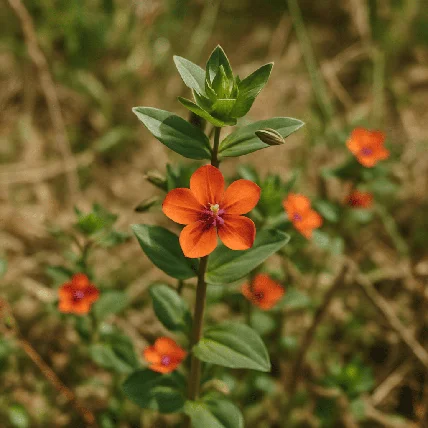
Commonly known as Scarlet Pimpernel, Anagallis arvensis is a low-growing, mat-forming herb. It has bright red to orange flowers that close under cloudy skies or in the evening—a detail noted even in old botanical texts. Its square stems, opposite leaves, and trailing growth habit help it adapt well to sandy or disturbed soils across Europe, Asia, and parts of North Africa. In India, it's particularly seen during the late monsoon, scattered across uncultivated lands.
The whole plant is considered medicinal in Ayurveda, but traditionally, the aerial parts—including leaves and flowers—are most used. The plant contains a red dye in its petals, and its pungent, slightly acrid taste is noted in older Ayurvedic pharmacopoeias.
Historical Context and Traditional Use
Let’s rewind a bit—back to when healing meant observing the earth and recording patterns. Anagallis arvensis appears in classical Greco-Roman texts (Dioscorides, Pliny) as a remedy for melancholy and madness, often brewed into decoctions or poultices. These mentions crossed into Arabic texts during the Islamic Golden Age and were further absorbed into medieval European herbals.
In Ayurveda, the plant is less commonly mentioned in foundational texts like the Charaka Samhita but shows up in regional compilations and folk practice. Traditional Indian healers have long used it for skin diseases (kushta), mental instability (unmada), and even liver disorders. Some Nighantus (Ayurvedic lexicons), especially the Bhavaprakasha, refer to it under synonyms such as Krishnajiraka or Lohitapuspi, highlighting its reddish flowers and carminative properties.
There’s also an interesting reference from the Siddha system in South India, where it was used as part of herbal preparations for treating “vatta diseases”—those believed to arise from air imbalance—like joint pain and insomnia.
Colonial-era British medical officers in India wrote about Anagallis arvensis in their dispensatories as a remedy for dropsy (fluid retention), closely aligning with its Ayurvedic classification under mutrala (diuretic) herbs. This cross-cultural acknowledgment is fascinating—there was no internet, yet distant traditions were reaching the same conclusions.
But over time, its reputation faded. As modern pharmaceuticals surged, many such herbs—especially those without glamorous names—were sidelined. Only recently, with a revived interest in integrative and evidence-based herbalism, Anagallis arvensis is gaining attention again.
Active Compounds and Mechanisms of Action
Here’s where things start to get chemically interesting. The active profile of Anagallis arvensis is surprisingly diverse for such a small herb. Modern phytochemical studies confirm the presence of:
-
Saponins – Known for their surface-active properties and possible expectorant or anti-inflammatory effects.
-
Flavonoids (like kaempferol and quercetin) – Potent antioxidants that help counter oxidative stress.
-
Tannins – Useful for astringent action, particularly in treating diarrhea or wounds.
-
Cyclamin-like glycosides – Compounds responsible for the herb’s mild toxicity; they’re believed to influence the nervous system in small doses.
-
Phenolic acids – These contribute to its antimicrobial and hepatoprotective actions.
The plant is also known to have anti-depressant-like effects in animal models, possibly due to modulation of neurotransmitter levels—although the exact mechanism is still under investigation. In Ayurveda, this aligns with its categorization as a medhya (cognitive-supportive) and hridya (heart-nourishing) herb, especially in regional traditions.
Interestingly, the whole-plant extracts show selective inhibition against certain bacterial strains (like Staphylococcus aureus), which might explain its longstanding use in skin infections.
Therapeutic Effects and Health Benefits
This is where Anagallis arvensis finally comes out from the shadows. It’s not a panacea, but it definitely holds therapeutic promise. Let’s look at where it truly shines:
1. Skin Disorders
Traditionally applied as a poultice or ointment, especially for scabies, eczema, and fungal infections. Its antimicrobial and anti-inflammatory properties make it ideal for soothing irritated skin. Local healers often recommend the fresh juice mixed with turmeric.
2. Mental Wellness and Mood Support
Some folk practitioners used it as a “herb for melancholy.” Modern interpretations suggest mild antidepressant and anxiolytic effects, likely linked to its phytochemicals acting on serotonin and dopamine pathways. However, more research is needed to confirm this.
3. Diuretic Action
It has shown mild to moderate diuretic effects in animal models. This aligns with traditional usage in cases of dropsy, urinary retention, and edema. It’s often decocted with coriander seeds and consumed once daily in some villages of Rajasthan.
4. Liver Support
Though not a primary hepatoprotective herb, it’s sometimes used alongside herbs like Bhumyamalaki for sluggish liver or skin conditions stemming from internal toxicity. The flavonoids may play a supportive role here.
5. Anti-Parasitic Properties
Animal studies indicate mild anthelmintic activity. Traditionally, crushed leaves were given with honey to children suffering from intestinal worms—though dosing is tricky due to its slight toxicity.
6. Minor Wound Healing
Applied topically, it appears to hasten healing in minor wounds. The astringent tannins help contract tissues and prevent infection.
7. Menstrual Irregularities (folk use)
Though not widely documented in classical Ayurveda, some rural applications suggest use of Anagallis arvensis infusions to regulate scanty menstruation. This could be attributed to its hormonal-like activity in preliminary lab tests.
Despite its modest stature, Anagallis arvensis has carved out a small but meaningful place in both rural Ayurvedic healing and emerging scientific curiosity. Its benefits are niche but real—especially when applied with the right context and dosage.
Dosage, Forms, and Administration Methods
There’s no one-size-fits-all when it comes to Anagallis arvensis. In rural Ayurvedic setups, the most common form is a fresh plant juice, extracted by crushing the aerial parts—about 5–10 ml once daily, often with honey or ghee. However, it’s rarely used as a standalone formulation in formal Ayurvedic pharmacies, and that’s probably due to its mild toxicity in large doses.
Powdered form of the dried plant (called churna) is used in doses of 250–500 mg per day, typically mixed with warm water or buttermilk. It’s sometimes combined with other herbs like Triphala or Kutki in formulations for liver or skin disorders. In Siddha, it may be decocted in sesame oil for external application.
Modern herbalists occasionally work with ethanolic extracts, but there's no standard dosage protocol yet. And this is important: overuse can lead to nausea, dizziness, or irritation. Pregnant or lactating women should strictly avoid it, as should children unless prescribed by a trained practitioner.
For those with sensitive systems, even the external use should begin cautiously—test patches are a good idea, especially for those prone to dermatitis.
Before using Anagallis arvensis, always consult with a qualified Ayurvedic practitioner. You can ask licensed professionals at Ask-Ayurveda.com for guidance tailored to your condition.
Quality, Sourcing, and Manufacturing Practices
Here’s where many herbs get overlooked. Anagallis arvensis is most potent when harvested during late monsoon to early winter, just before it flowers fully. The plant prefers loamy or sandy soils and does best in areas with mild rainfall and good sunlight—regions like Gujarat, Punjab, and parts of Rajasthan offer ideal growing conditions.
For quality assurance, pick only healthy, vibrant green plants. Avoid specimens growing near polluted roads or industrial runoff, as the plant may absorb heavy metals.
If purchasing dried Anagallis arvensis, check for:
-
Non-uniform browning (a sign of poor drying),
-
Musty odors (indicates fungal growth),
-
Powder adulteration (watch out for similar-looking weeds like Lindernia species).
Genuine sources will often label the plant as “Scarlet Pimpernel” or provide the Latin binomial. Always buy from certified Ayurvedic dispensaries or farms with transparent sourcing records.
Safety, Contraindications, and Side Effects
This part’s non-negotiable. While Anagallis arvensis has plenty of benefits, it comes with a red flag: mild toxicity. Its cyclamin-like glycosides can irritate the GI tract or nervous system in larger doses. Symptoms like nausea, vomiting, drowsiness, or headache have been reported anecdotally and in some early pharmacology studies.
Contraindications include:
-
Pregnancy and breastfeeding – Absolutely avoid.
-
Children under 12 – Too risky, even in diluted doses.
-
People on psychotropic medications – Possible CNS interactions.
-
Pre-existing liver or kidney conditions – Use only under supervision.
If you have a sensitive constitution (manda agni in Ayurvedic terms), start with microdoses or external use. And always stop if any discomfort arises.
The plant is not meant for long-term daily use—think of it more as a targeted remedy than a daily tonic.
Modern Scientific Research and Evidence
Scientific literature on Anagallis arvensis is still limited, but growing. A 2014 study published in the International Journal of Pharmaceutical Sciences and Research showed the herb’s ethanol extract inhibited Staphylococcus aureus, supporting traditional use for skin infections. Another 2017 rodent study indicated mild antidepressant effects, likely linked to its flavonoid content.
Some recent work out of Pakistan and Iran has focused on its diuretic potential, finding dose-dependent increases in urine output in controlled lab settings. These findings align surprisingly well with historical applications.
However, no large-scale human clinical trials exist yet. That’s the catch—while traditional use is extensive, modern validation is still catching up. One meta-analysis from 2021 even flagged Anagallis arvensis as a “promising but under-researched plant in integrative medicine.”
So the plant’s in an interesting spot: respected in older systems, rediscovered by scientists, but still lacking the modern clinical data to bring it fully into the limelight.
Myths and Realities
Let’s bust a few myths.
Myth #1: It’s completely safe because it’s natural.
Nope. Anagallis arvensis contains compounds that are mildly toxic in excess. Just because it grows wild doesn’t mean it’s harmless.
Myth #2: It cures depression.
Not exactly. It may support mood in specific cases, but calling it a “cure” is a stretch without strong clinical backing.
Myth #3: It’s only useful externally.
False. Internal use is common in folk medicine—diuretic and hepatoprotective effects are reported. But dosing must be careful.
Myth #4: You can take it daily like Tulsi or Amla.
Definitely not. It’s more of a short-term support herb, not a rasayana or daily rejuvenative.
Myth #5: It’s outdated and irrelevant now.
Quite the opposite. With the resurgence of integrative approaches, neglected herbs like this are getting their spotlight back.
So yes, while the Scarlet Pimpernel is still misunderstood, the more we investigate it, the more its unique properties emerge—quirky, potent, but deserving of respect.
Conclusion
Anagallis arvensis is a perfect example of a plant that slipped through the cracks of modern herbalism—not because it lacked value, but because it never got the marketing. Rooted in centuries of regional use, it offers genuine therapeutic value for skin, mood, urinary issues, and more. Its potent phytochemistry demands cautious handling, but with proper guidance, it holds promise.
Whether you’re an herbalist, a curious patient, or a practitioner looking for forgotten allies, this humble herb deserves a second glance.
Consult an expert. Personalized advice from an Ayurvedic physician—like those on Ask-Ayurveda.com—can help you use Anagallis arvensis safely and wisely.
Frequently Asked Questions (FAQ)
-
What is Anagallis arvensis used for in Ayurveda?
It’s used for skin diseases, mood support, urinary issues, and wound healing. -
Is Anagallis arvensis edible?
Technically yes, but only in small, controlled doses under expert guidance. -
What are its side effects?
Nausea, dizziness, and GI irritation in higher doses. -
Can it be used during pregnancy?
No. It is contraindicated in pregnancy and lactation. -
How is it prepared traditionally?
Juice, decoction, or dried powder are the most common forms. -
Is it safe for children?
Generally not recommended due to mild toxicity. -
Can it help with depression?
It may have mood-supportive properties, but not a standalone treatment. -
How does it affect the liver?
Some studies suggest mild hepatoprotective activity. -
Is it used externally?
Yes, in pastes and oils for skin conditions and wounds. -
What part of the plant is used?
Primarily the aerial parts—leaves and flowers. -
Is there scientific research on it?
Yes, but limited. Most studies are preclinical. -
Does it have antioxidant properties?
Yes, due to flavonoids like kaempferol and quercetin. -
Can it cause allergic reactions?
In rare cases, yes—do a patch test for topical use. -
What is its taste like?
A bit acrid and pungent. -
How often can you take it?
Short-term use only, under supervision. -
What are its active compounds?
Saponins, flavonoids, glycosides, tannins. -
Does it grow in India?
Yes, especially in North and Central Indian states. -
Is it a common Ayurvedic herb?
Not mainstream but used in folk traditions. -
Can it be used with other herbs?
Yes, often combined with liver or detox herbs. -
Is it in any classical Ayurvedic texts?
It appears in regional texts and Nighantus. -
Can it be grown at home?
Yes, it’s a hardy weed but needs sun. -
What are its traditional names?
Krishnajiraka, Lohitapuspi, Raktapunarnava. -
Can it help with urinary infections?
Its diuretic properties suggest potential use. -
How should I store the powder?
In an airtight container, away from moisture. -
Can it be used for hair problems?
Some folk uses include scalp application for dandruff. -
Does it interact with medications?
Potentially with CNS or liver drugs—consult your doctor. -
How long has it been used?
Over 2000 years in various medical systems. -
Can it improve digestion?
Mild carminative action is noted traditionally. -
Is it good for joint pain?
Some Siddha uses suggest it, but more data is needed. -
Where can I get trusted advice?
From certified Ayurvedic professionals on Ask-Ayurveda.com.


