


Acca sellowiana
Introduction
Acca sellowiana, often called pineapple guava or feijoa, is an evergreen shrub native to the highlands of South America but increasingly noted in Ayurveda and global herbalism for its potent medicinal profile. Unlike typical guava, its unique aromatic fruit and silvery-green leaves hold distinct therapeutic value. What sets it apart is its fusion of floral flavor, edible blossoms, and phytochemical richness. In this article, you'll learn exactly what makes Acca sellowiana such a compelling plant—from its taxonomy and historical roots to its active constituents, healing benefits, safe use, and ongoing research.
Botanical Description and Taxonomy
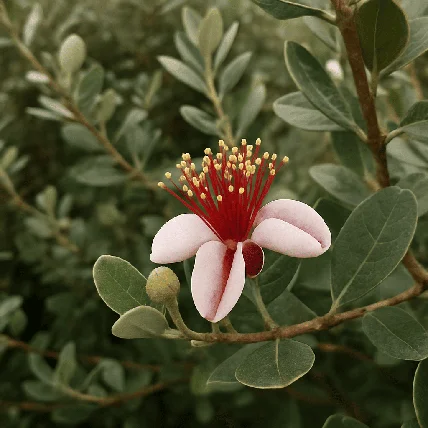
Acca sellowiana belongs to the Myrtaceae family and was earlier classified under Feijoa sellowiana, which still appears in many texts. It's a slow-growing, evergreen shrub or small tree reaching 1–7 meters in height, native to southern Brazil, eastern Paraguay, Uruguay, and northern Argentina. Now cultivated in parts of India and New Zealand, it thrives in subtropical climates and well-drained soils, especially in regions with mild winters. The plant features opposite, thick, oblong leaves with silvery undersides and striking pink-white flowers with prominent red stamens—these flowers are also edible. The fruit, roughly egg-shaped, emits a sweet aroma and tastes like a blend of pineapple, guava, and mint. In Ayurveda, the parts used include the fresh leaves and fruit pulp, although this is a recent incorporation. Active constituents noted in current pharmacognosy studies include flavonoids, tannins, terpenes, and phenolic acids.
Historical Context and Traditional Use
Though Acca sellowiana isn’t mentioned in ancient Ayurvedic samhitas like Charaka Samhita or Sushruta Samhita, its healing role is growing among contemporary Ayurvedic practitioners—especially in integrative wellness approaches. In its native South America, the Guarani and Tupi tribes consumed the leaves in decoctions to address throat infections, urinary discomfort, and as an anti-inflammatory. These early traditions focused more on topical and oral applications of leaf infusions rather than the fruit itself. Spanish colonizers recorded its sweet fruit and medicinal utility as early as the 19th century, particularly in Brazilian coastal towns. In contrast, Ayurvedic use began appearing only in recent decades, mainly through cross-cultural herbal trade and experimentation with adaptogenic therapies.
Today in parts of Kerala and Maharashtra, Ayurvedic vaidyas are trialing its fruit pulp for managing pitta imbalances, given its cooling post-digestive effect (madhura vipaka) and its capacity to soothe burning sensations. In some cases, leaf powder has been used in formulations for oral hygiene due to its antimicrobial potential, echoing its traditional South American role. However, its entry into Ayurveda is still exploratory—often paralleled with better-known fruits like amla or bilva when prescribed as part of trial-based protocols. While it lacks classical Ayurvedic documentation, the real-world use of Acca sellowiana is steadily carving out a space in modern practice—through informal community clinics, international herbal collaborations, and evidence-led reinterpretation of Ayurvedic pramanas.
Active Compounds and Mechanisms of Action
Phytochemical investigations of Acca sellowiana have isolated several active components, notably quercetin, kaempferol, gallic acid, epicatechin, and α-pinene. The leaf extract contains essential oils rich in sesquiterpenes and triterpenoids—compounds widely recognized for their antioxidant and antimicrobial effects. The plant’s polyphenolic richness is particularly notable in the fruit peel and pulp, contributing to its use in anti-inflammatory formulations.
Quercetin and kaempferol contribute to membrane stabilization and inhibit pro-inflammatory cytokines like TNF-α and IL-6, supporting their role in chronic inflammation control. Meanwhile, the triterpenoids, such as ursolic acid, exhibit mild hepatoprotective and adaptogenic effects. In vitro studies indicate that aqueous extracts of the leaves show significant activity against Staphylococcus aureus and Candida albicans, suggesting its usefulness in managing oral and skin infections. The mechanism likely involves disruption of microbial cell membranes and oxidative stress modulation.
In Ayurvedic analogies, its action is mildly tikta (bitter) and kashaya (astringent) with potential in balancing aggravated pitta and rakta dhatus, although more Ayurvedic classification studies are needed to confirm this. Its emerging profile is that of a plant with multi-layered phytochemical defenses that act in both systemic and localized ways.
Therapeutic Effects and Health Benefits
Acca sellowiana's range of health benefits is quietly gaining recognition—especially among natural medicine enthusiasts looking for gentle alternatives to more aggressive pharmaceutical interventions. Let's start with the leaves. Their antimicrobial and anti-inflammatory profile makes them useful in managing gingivitis, mild skin eruptions, and even certain respiratory tract inflammations when prepared as a warm infusion. The presence of phenolic acids, especially ellagic and gallic acids, suggests protective action against oxidative stress, making it relevant for conditions like premature aging, gastritis, and even inflammatory bowel disorders.
The fruit, with its sweet-tart flavor and adaptogenic notes, is increasingly being used in Ayurvedic nutrition therapy. It supports digestion without aggravating heat in the body—a contrast to citrus fruits. Some Ayurvedic nutritionists recommend it in cases of mild hyperacidity, due to its post-digestive cooling effect and soothing mucosal interaction. Its fiber content adds bulk to stools, and anecdotal evidence shows it may assist in managing mild constipation and bloating.
In some integrative practices, leaf extracts are being trialed in diabetes management regimens—not as a standalone, but as an adjunct. The leaves seem to aid in reducing post-prandial blood glucose spikes, though clinical trials are limited. It’s also showing promise in maintaining oral hygiene when used as a rinse or gargle due to its potent antimicrobial compounds. Athletes and wellness seekers appreciate its mild diuretic action, which doesn’t drain potassium the way stronger diuretics often do. And, interestingly, there’s a rising trend of using dried feijoa skin powder in face masks and scrubs in Ayurvedic cosmetology clinics—it brightens the skin and may assist in reducing surface-level pigmentation due to its vitamin C content.
It's not a magic herb, and it's certainly not a replacement for conventional therapies in chronic illness. But for anyone looking to bring something nuanced and naturally synergistic into their wellness regimen, Acca sellowiana might just be worth discussing with their vaidya.
Dosage, Forms, and Administration Methods
In Ayurvedic applications, Acca sellowiana is still emerging, so there’s no shastra-based dosage standard yet. However, based on integrative practices and early usage trends, fresh leaf decoctions (15–20 ml twice daily) and powdered leaf extracts (250–500 mg/day) are cautiously recommended for short durations under supervision. The fruit is often consumed raw (1–2 fruits per day) or juiced, particularly in seasonal detox regimens. Ayurvedic herbalists experimenting with its adaptogenic qualities prefer combining the fruit pulp with other pitta-pacifying ingredients like coriander and fennel.
The leaves can also be infused and used as a gargle for oral ulcers or gum sensitivity, or even added to herbal foot baths for local inflammatory conditions. Some preparations now available in niche clinics include feijoa-leaf churna, feijoa-fruit jams for digestion support, and topical masks for skin rejuvenation.
Due to its astringency and essential oil content, high doses or long-term use—especially in concentrated extracts—can irritate sensitive individuals. Pregnant women, lactating mothers, and children should avoid it unless under professional guidance. Similarly, patients on antihypertensives or diuretics should be cautious, as the plant’s mild diuretic property could compound effects.
Before introducing Acca sellowiana into your diet or daily regimen, always consult an Ayurvedic practitioner—preferably through a qualified platform like Ask-Ayurveda.com—to ensure proper prakriti-based recommendation and avoid unintended interactions.
Quality, Sourcing, and Manufacturing Practices
Acca sellowiana grows best in high-altitude, temperate zones with well-drained, mildly acidic soil. In India, small organic farms in Sikkim, Himachal, and parts of Karnataka are attempting controlled cultivation. The ideal harvest season is late autumn when the fruit naturally drops and leaves mature. For therapeutic quality, only mature, unblemished leaves should be shade-dried and powdered within a week.
When purchasing, choose organically certified powders or sun-dried whole leaves from reputed Ayurvedic or naturopathic brands. Avoid overly processed products with synthetic preservatives—genuine feijoa products should retain a faint herbal-pine scent and not be bitter or moldy.
Check for third-party testing, especially when buying feijoa powders from international sources. Adulteration is rare but possible, especially with crushed guava leaves or other Myrtaceae plants which visually resemble Acca sellowiana.
Safety, Contraindications, and Side Effects
Acca sellowiana is generally well-tolerated in culinary amounts. However, in medicinal or concentrated doses, it may lead to gastric discomfort, dryness in the mouth, or mild nausea, particularly in individuals with vata dominance. Its astringent nature may aggravate dryness or constipation if used excessively. Rare allergic responses such as rashes or tingling in the mouth have been reported with the raw fruit in sensitive individuals.
Contraindications include pregnancy, lactation, and known hypersensitivity to Myrtaceae family plants. While not directly hepatotoxic, its use alongside hepatically metabolized drugs should be monitored. There is insufficient data on its use during autoimmune conditions—best to avoid unless supervised.
The plant’s essential oil components may mildly lower blood pressure or exert diuretic action, which, when combined with antihypertensives or lithium, could exaggerate effects. Always disclose current medications to your Ayurvedic practitioner before including Acca sellowiana in any formulation.
Modern Scientific Research and Evidence
Studies from Brazil, New Zealand, and Italy have identified potent antioxidant activity in Acca sellowiana leaf and fruit extracts. A 2020 in vitro study published in Antioxidants journal demonstrated that leaf polyphenols suppressed ROS-induced damage in epithelial cells, lending credence to its use in oxidative stress-related disorders. Another 2022 randomized pilot study in humans, conducted in Argentina, found that daily intake of 150g of fresh feijoa pulp improved gut microbiota composition in 28 adults over four weeks.
Animal models have shown anti-inflammatory effects in induced paw edema and mild hypoglycemic activity in rats. However, clinical validation in large cohorts remains limited. Some evidence also suggests antimicrobial activity against oral bacteria and dermatophytes, making it a candidate for natural oral care or skin product formulations.
That said, Ayurvedic classification studies and clinical evaluations are just beginning. Many formulations are being used on trial basis in Kerala-based integrative clinics, but peer-reviewed Ayurvedic literature is sparse.
More data is required to confirm its exact role in Ayurveda beyond contemporary usage. Still, there's palpable interest in creating hybrid formulations that combine classical dravyas with Acca sellowiana for specific conditions like non-ulcer dyspepsia, halitosis, or skin hyperpigmentation.
Myths and Realities
Myth 1: Feijoa is just another guava.
Reality: Although from the Myrtaceae family, Acca sellowiana is taxonomically distinct and chemically richer in polyphenols and aromatic oils.
Myth 2: Its leaves are toxic.
Reality: While concentrated doses require caution, traditional South American cultures have used the leaves in decoctions for generations.
Myth 3: It’s irrelevant to Ayurveda.
Reality: Classical texts don’t mention it, but many modern vaidyas are beginning to explore its integration based on Ayurvedic principles like rasa and vipaka.
Myth 4: It cures diabetes.
Reality: Some animal studies show mild glucose-lowering potential, but it's not a replacement for standard treatment.
Myth 5: All parts are safe.
Reality: Only the mature fruit and dried leaves are generally considered safe—seeds and unripe fruit can sometimes trigger GI irritation.
Conclusion
Acca sellowiana stands at an interesting crossroads of tradition and innovation. Not classically Ayurvedic, yet unmistakably medicinal, this plant’s sweet fruit and astringent leaves are slowly earning their place in integrative and experimental Ayurvedic therapies. Its unique chemistry—quercetin, kaempferol, ellagic acid—aligns with the goals of dosha balancing, especially in pitta and rakta disorders. Whether used in digestion-focused regimens, oral hygiene, or even skin-care therapies, its applications are vast—though not yet fully standardized.
What’s promising is how its gentle effects are aligning with modern expectations: subtle support for inflammation, safe gut regulation, and bioavailable antioxidants. But let’s be clear—Acca sellowiana isn’t a magic bullet. It needs responsible dosing, practitioner oversight, and more rigorous studies. But in the right hands, guided by a knowledgeable vaidya, it might become a valuable ally in personalized herbal medicine.
Before trying Acca sellowiana, consult an expert at Ask-Ayurveda.com to ensure it aligns with your health needs and doshic constitution.
Frequently Asked Questions (FAQ)
1. What is Acca sellowiana used for in Ayurveda?
It is used for digestive regulation, oral hygiene, and pitta imbalance.
2. Is Acca sellowiana the same as guava?
No, it belongs to the same family but is a distinct species with different properties.
3. Can I eat the fruit raw?
Yes, it’s commonly eaten raw when fully ripe and has a sweet-tart flavor.
4. Are the leaves safe for tea?
In small amounts, dried leaves can be brewed into a tea for inflammation or sore throat.
5. Does it help with diabetes?
There’s some evidence it helps reduce blood sugar, but it's not a primary treatment.
6. Can children consume Acca sellowiana?
Children should avoid medicinal doses; the ripe fruit is generally safe in moderation.
7. Is it good for skin?
Yes, powdered peel is used in face masks to help with pigmentation.
8. Are there any side effects?
Some may experience dry mouth or mild nausea in high doses.
9. Can I grow it at home?
Yes, in temperate climates with well-drained soil and moderate sun.
10. What part is used in Ayurvedic remedies?
Mainly the fruit and dried leaves.
11. Is there clinical evidence of its benefits?
Limited but growing—especially in antioxidant and gut health studies.
12. Does it lower blood pressure?
Mild diuretic action may have slight BP-lowering effects.
13. Can pregnant women use it?
Not recommended without professional supervision.
14. What is the best form to consume?
Fresh fruit or decoction of dried leaves.
15. Is it part of traditional Ayurveda?
Not historically, but now explored in modern Ayurveda.
16. Is it anti-inflammatory?
Yes, due to flavonoids like quercetin and kaempferol.
17. Is it antioxidant-rich?
Extremely—especially the fruit peel.
18. Can I use it daily?
In small, dietary amounts yes; therapeutic doses require supervision.
19. Where is it traditionally grown?
Brazil, Uruguay, and now some Indian hill stations.
20. Does it have vitamin C?
Yes, particularly in the fruit peel.
21. Can it be combined with other herbs?
Yes, often with coriander or fennel for pitta regulation.
22. Are the seeds edible?
Yes, but they can irritate in large quantities.
23. Is it used in cosmetics?
Yes, for skin brightening and exfoliation.
24. Is it available in India?
Limitedly—check organic and Ayurvedic suppliers.
25. Is it bitter in taste?
The leaves are mildly bitter; the fruit is sweet-tart.
26. Can it help with ulcers?
May soothe mild gastritis but not a standalone treatment.
27. Can I make oil from the leaves?
Not commonly done, though essential oils are extracted in labs.
28. Is it suitable for vata prakriti?
Should be used cautiously; may cause dryness.
29. Can I mix it with honey?
Yes, to mask bitterness or for throat conditions.
30. Where can I get expert advice?
Visit Ask-Ayurveda.com for professional consultation.


