FREE! Ask Ayurvedic Doctors 24/7

 Fast responses
 1000+ verified doctors
Unlocking Ayurvedic Beauty Secrets

Ayurvedic beauty secrets are time-tested rituals rooted in a 5,000-year-old Indian healing system that treats beauty as a reflection of internal balance — not just external appearance. From oil massages (Abhyanga) and turmeric face masks to dosha-specific skincare routines and stress-reducing breathwork, Ayurveda offers a holistic blueprint for glowing skin, strong hair, and lasting youthfulness. Unlike modern cosmetics that target symptoms, Ayurveda addresses the root causes — digestive health, hormonal balance, sleep quality, and emotional well-being — to unlock beauty that genuinely comes from within.
In Sanskrit, Ayurveda defines beauty through three dimensions: Roopam (outer beauty — healthy skin, bright eyes, lustrous hair), Gunam (inner beauty — confidence, emotional warmth, compassion), and Vayastyag (lasting beauty — looking younger than your biological age). This three-dimensional framework makes Ayurvedic beauty fundamentally different from anything you'll find in a modern skincare aisle.
Whether you're dealing with acne, premature aging, dull complexion, or hair thinning, this guide gives you actionable Ayurvedic beauty secrets — backed by scientific research, organized by dosha type, and structured into clear morning and evening routines you can start today.
How Does Ayurveda Define Your Skin Type? The Dosha System Explained
Before applying a single drop of oil or mixing any face mask, Ayurveda asks one fundamental question: What is your dosha?
Your dosha — Vata, Pitta, or Kapha — is your unique mind-body constitution determined by the five elements (earth, water, fire, air, space). It dictates not only your skin type but also which ingredients will heal you and which might cause irritation.
Vata Skin (Air + Space)
Vata skin tends to be thin, dry, and prone to fine lines. It feels rough, sometimes flaky, and ages faster than other types. Cold, windy weather makes it worse.
Best oils: Sesame oil, almond oil Key ingredients: Ashwagandha, ghee, avocado Avoid: Harsh cleansers, cold water washes, astringent toners
Pitta Skin (Fire + Water)
Pitta skin is warm, sensitive, and prone to redness, rosacea, sunburn, and inflammatory acne. It has a medium thickness and often develops freckles or moles.
Best oils: Coconut oil, sunflower oil Key ingredients: Sandalwood, aloe vera, rose water, neem Avoid: Spicy foods, excessive sun exposure, hot water on face
Kapha Skin (Earth + Water)
Kapha skin is thick, oily, and smooth with large pores. It resists aging well but is susceptible to blackheads, cystic acne, and water retention (puffiness).
Best oils: Jojoba oil (light), mustard oil Key ingredients: Turmeric, honey, lemon, dry ginger powder Avoid: Heavy creams, over-moisturizing, dairy-heavy diets
| Feature | Vata Skin | Pitta Skin | Kapha Skin |
|---|---|---|---|
| Texture | Thin, dry, rough | Warm, soft, medium | Thick, oily, smooth |
| Main concerns | Fine lines, flaking, dullness | Redness, sensitivity, acne | Large pores, blackheads, puffiness |
| Aging pattern | Ages fastest | Moderate aging with pigmentation | Ages slowest |
| Best base oil | Sesame | Coconut | Jojoba / Mustard |
| Diet priority | Warm, moist foods | Cooling, anti-inflammatory | Light, astringent, warming spices |
- > Quick Dosha Test: If your skin feels tight and dry by afternoon — likely Vata.
- If it gets red and irritated easily — Pitta.
- If it's shiny and congested by midday — Kapha. Most people are dual-dosha combinations, so adapt accordingly.
How to Get Glowing Skin in Ayurveda: Core Rituals That Actually Work
- Ayurvedic beauty isn't about one magic product.
- It's a system of daily rituals — called Dinacharya — that compound over time. Here are the non-negotiable practices.
Abhyanga: The Ancient Self-Massage That Transforms Skin
Abhyanga is perhaps the single most important Ayurvedic beauty ritual. It involves massaging warm oil over the entire body before bathing, using long strokes on limbs and circular motions on joints.
A 2011 study published in the Journal of Ayurveda and Integrative Medicine demonstrated that regular Abhyanga with sesame oil improved skin hydration, elasticity, and barrier function significantly over a 6-week period.
How to do it:
- Warm your dosha-appropriate oil to slightly above body temperature
- Begin at the scalp, massage downward — face, neck, arms, torso, legs, feet
- Use long strokes on long bones, circular motions on joints
- Leave oil on for 15–20 minutes (let it absorb)
- Bathe with warm (not hot) water — use minimal soap
Frequency: Daily for Vata types, 3–4 times weekly for Pitta and Kapha.
Udvartana: Dry Powder Massage for Detox and Skin Tightening
This is a lesser-known gem. Udvartana involves massaging herbal powders upward against the direction of hair growth. It's especially powerful for Kapha types dealing with fluid retention, cellulite, or sluggish circulation.
| Dosha | Powder Base | Herbal Additions |
|---|---|---|
| Vata | Chickpea flour (besan) | Ashwagandha powder, calamus |
| Pitta | Rice flour | Sandalwood powder, neem leaf |
| Kapha | Barley flour, horse gram | Triphala powder, dry ginger |
Technique: Mix the powder with a small amount of warm oil (Vata) or warm water (Kapha). Massage vigorously in upward strokes for 10–15 minutes before bathing. Do this 2–3 times per week.
The Ayurvedic Bath Ritual
Your bath temperature should match your dosha. Vata types benefit from warm water with a few drops of sesame oil. Pitta types do best with lukewarm water and rose petals or sandalwood. Kapha types can handle slightly hotter water with Epsom salt and dry ginger powder (about 1 tablespoon of each).
This might seem like a small thing, but the bath ritual is where many of the other practices — Abhyanga, Udvartana — culminate and get sealed into the skin.
Ayurvedic Beauty Secrets for Face: DIY Masks, Cleansers, and Toners
Turmeric-Based Face Masks (Ubtan)
Turmeric (Curcuma longa) is the cornerstone of Ayurvedic facial care. A 2016 review in Phytotherapy Research confirmed that curcumin — the active compound — has significant anti-inflammatory, antioxidant, and wound-healing properties. It reduces melanin production and improves skin radiance.
Classic Ubtan Recipe:
- 2 tablespoons chickpea flour
- 1/2 teaspoon turmeric powder
- 1 tablespoon raw honey
- Enough rose water to make a paste
Apply for 15 minutes, rinse with lukewarm water. Use 2–3 times per week.
> ⚠️ Safety note: Turmeric can temporarily stain fair skin yellow. Always do a patch test first. If staining occurs, wipe with a cotton pad soaked in coconut oil or milk.
Neem for Acne and Bacterial Skin Issues
Neem (Azadirachta indica) has been validated by multiple studies for its antibacterial, antifungal, and anti-inflammatory effects. A 2013 study in the Journal of Pharmacognosy and Phytochemistry found that neem extract demonstrated activity against Propionibacterium acnes (the bacteria responsible for inflammatory acne) comparable to some pharmaceutical options.
Simple Neem Face Wash: Boil 10–15 neem leaves in 2 cups of water for 10 minutes. Strain. Cool. Use as a face rinse morning and evening. Store in the fridge for up to 3 days.
> ⚠️ Caution: Neem can cause contact dermatitis in sensitive individuals. Start with diluted applications. Pregnant women should avoid neem entirely.
Sandalwood (Chandan) for Brightening and Cooling
Sandalwood is Pitta skin's best friend. A 2019 study published in the Journal of Clinical and Aesthetic Dermatology found that Indian sandalwood oil (Santalum album) reduced mild-to-moderate acne by 54% over 8 weeks and improved skin evenness.

Sandalwood Brightening Paste:
- 1 tablespoon sandalwood powder
- 2 teaspoons rose water
- 1/2 teaspoon turmeric
Mix, apply to face, leave 20 minutes. Rinse gently.
How to Tighten Skin in Ayurveda
- Skin laxity is a Vata imbalance issue in Ayurveda.
- To tighten skin naturally:
- 1.Internal: Consume collagen-boosting foods — amla (Indian gooseberry provides one of the highest natural vitamin C concentrations), bone broth, ghee
- 2.External: Apply a mask of egg white + 1 tsp multani mitti (fuller's earth) + aloe vera gel — 3 times per week
- 3.Facial yoga (Mukha Vyayam): Practicing facial exercises for 20 minutes daily for 20 weeks was shown in a 2018 JAMA Dermatology study to improve mid-face and lower-face fullness, making participants appear approximately 3 years younger
- 4.Bakuchiol serum: Apply nightly — research positions bakuchiol as a plant-based retinol alternative (more on this below)
- Ayurvedic vs Modern Skincare: How Ancient Ingredients Compare
This is something no other guide covers properly — and it's valuable information if you're deciding between an Ayurvedic approach and conventional products.
| Ayurvedic Ingredient | Modern Equivalent | How They Compare | Research Insight |
|---|---|---|---|
| Curcumin (Turmeric) | Vitamin C serums | Both are antioxidants and brighten skin. Curcumin has stronger anti-inflammatory action; Vit C is a more potent collagen booster | 2017 Nutrients review: curcumin modulates 6+ inflammatory pathways |
| Bakuchiol (Babchi) | Retinol | Similar anti-aging results without retinol's irritation, dryness, or photosensitivity | 2019 British Journal of Dermatology: bakuchiol showed comparable results to retinol in reducing wrinkles and pigmentation over 12 weeks |
| Neem extract | Salicylic acid | Both are antibacterial and anti-acne. Neem is gentler but slower; salicylic acid is faster but can over-dry | Neem contains nimbidin and azadirachtin — effective against multiple skin pathogens |
| Aloe vera | Hyaluronic acid | Both hydrate, but through different mechanisms. Aloe soothes + heals; HA pulls moisture from environment | A 2008 Skin Pharmacology and Physiology study: aloe improved skin elasticity in women over 45 |
| Kumkumadi Thailam | Vitamin C + Retinol combo serums | Multi-herb oil blend for radiance, pigmentation, anti-aging. More holistic but results take longer | Traditional 26-herb formulation with saffron as primary active |
The key takeaway? Ayurvedic ingredients often work more gently with fewer side effects but require consistency — typically 4–8 weeks before visible results. Modern cosmeceuticals tend to act faster but carry higher irritation risk.
Ayurvedic Diet for Beautiful Skin and Hair: The 80/20 Rule
What Is the 80/20 Rule in Ayurveda?
- The 80/20 rule in Ayurveda refers to eating until your stomach is 80% full, leaving 20% for digestion.
- This isn't just a weight loss hack — it's central to beauty. When you overeat, your digestive fire (Agni) weakens, producing toxins (Ama) that manifest as dull skin, acne, and premature aging.
Dosha-Specific Dietary Guidelines
Vata (dry, aging skin): Prioritize warm, cooked, oily foods. Ghee, soups, stews, cooked vegetables, sweet fruits. Avoid raw salads, cold drinks, dry crackers. Pitta (inflamed, sensitive skin): Favour cooling, bitter, and sweet foods. Cucumber, coconut water, leafy greens, sweet fruits. Minimize spicy food, citrus, alcohol, fermented foods. Kapha (oily, congested skin): Embrace light, warm, spicy foods. Ginger tea, steamed vegetables, lentils, bitter greens. Reduce dairy, sweets, fried food, heavy carbohydrates.
Key Nutrients for Ayurvedic Beauty
- Vitamin C: Amla (Indian gooseberry) — contains roughly 600–700 mg per fruit. Essential for collagen synthesis
- Zinc: Pumpkin seeds, chickpeas — supports wound healing and oil regulation
- Vitamin E: Almonds, sunflower seeds — protects cell membranes from oxidative damage
- Omega-3 fatty acids: Flaxseeds, walnuts — reduce inflammatory skin conditions
- Sulfur-rich foods: Garlic, onions — support keratin production for hair and nails
Ayurvedic Hair Care Secrets: Oil Massage, Masks, and Herbal Rinses
Scalp Oil Massage (Shiro Abhyanga)
Warming oil and massaging it into the scalp for 10–15 minutes before washing improves blood circulation, strengthens hair follicles, and calms the nervous system. A 2016 study in ePlasty showed that standardized scalp massage for 4 minutes daily led to increased hair thickness after 24 weeks.
Best oils by concern:
- Hair fall: Bhringraj oil or coconut oil infused with curry leaves
- Dandruff: Neem oil mixed with tea tree oil (2 drops per tablespoon)
- Premature graying: Amla oil or brahmi oil
- Dryness: Warm sesame oil with a few drops of rosemary
Fenugreek (Methi) Hair Mask
Soak 2 tablespoons of fenugreek seeds overnight. Grind into a paste. Add 1 tablespoon of yogurt. Apply to scalp and hair for 30 minutes. Rinse with a mild shampoo. The lectins and nicotinic acid in fenugreek seeds promote hair growth and add strength to the hair shaft.
Herbal Hair Rinses
After shampooing, rinse hair with:
- For shine: Apple cider vinegar diluted 1:4 with water
- For growth: Rosemary and amla decoction (boil both herbs for 15 minutes, cool, strain)
- For softness: Hibiscus flower water
Stress Management, Sleep, and Oral Care: The Overlooked Beauty Secrets
Why Stress Destroys Your Skin
Chronic stress elevates cortisol, which breaks down collagen, increases oil production, and triggers inflammatory skin conditions. A 2014 study in Inflammation & Allergy Drug Targets directly linked psychological stress to worsening of acne, psoriasis, and eczema.
Ayurvedic stress management tools that directly benefit skin:
- Pranayama (breathing exercises): Nadi Shodhana (alternate nostril breathing) — 10 minutes daily. Balances all three doshas
- Meditation: Even 12 minutes of daily meditation was shown to reduce inflammatory markers in a 2017 Psychoneuroendocrinology study
- Yoga asanas for skin: Sarvangasana (shoulder stand) and Matsyasana (fish pose) increase blood flow to the face
Dinacharya and Sleep: The Free Anti-Aging Treatment
Ayurveda recommends sleeping by 10 PM and waking before 6 AM — the Kapha period — for optimal tissue repair. The skin undergoes maximum cell turnover between 11 PM and 2 AM. Missing this window consistently accelerates aging.
Evening wind-down ritual:
- Apply warm sesame oil to feet and scalp
- Drink warm milk with a pinch of nutmeg (natural sedative)
- Avoid screens 1 hour before bed
- Practice 5 minutes of gratitude journaling or gentle stretching
Oral Hygiene as a Beauty Practice
This surprises most people, but Ayurveda considers oral health integral to facial beauty.
- Oil pulling (Gandusha): Swish 1 tablespoon of cold-pressed coconut or sesame oil in the mouth for 15–20 minutes each morning. A 2015 Nigerian Medical Journal study confirmed oil pulling significantly reduced Streptococcus mutans counts and improved overall oral hygiene
- Tongue scraping (Jihwa Prakshalana): Use a copper tongue scraper each morning to remove Ama (toxins). This improves taste perception and reduces bad breath
- Herbal tooth powder: Mix equal parts neem bark powder, clove powder, and rock salt. Use as toothpaste alternative 2–3 times per week
Ayurvedic Beauty by Age: How Your Routine Should Evolve
This is a critical gap in most Ayurvedic guides. Your dosha balance shifts as you age, and your routine must adapt.
| Age | Dominant Phase | Skin Changes | Priority Adjustments |
|---|---|---|---|
| 20s | Kapha | Oily, acne-prone, resilient | Focus on cleansing, oil control, sun protection. Light oils only |
| 30s | Pitta begins | First fine lines, pigmentation starts | Add antioxidants (turmeric, amla). Begin Abhyanga if not already |
| 40s | Pitta dominant | Deeper lines, elasticity loss, hormonal shifts | Bakuchiol serum nightly, Ashwagandha internally, richer oils |
| 50+ | Vata increases | Dryness, thinning skin, significant laxity | Heavy Abhyanga with sesame oil daily, ghee internally, facial yoga |
A Note on Ayurvedic Beauty for Men
- Ayurvedic beauty isn't gendered. Men benefit equally from Abhyanga, dietary adjustments, and herbal remedies.
- Key differences:
- Men typically have thicker, oilier skin (more Kapha influence) — lighter oils work better
- Beard care: Apply warm castor oil mixed with a few drops of tea tree to beard area nightly for healthier growth
- Post-shave: Rose water + aloe vera gel instead of alcohol-based aftershaves, which aggravate Pitta
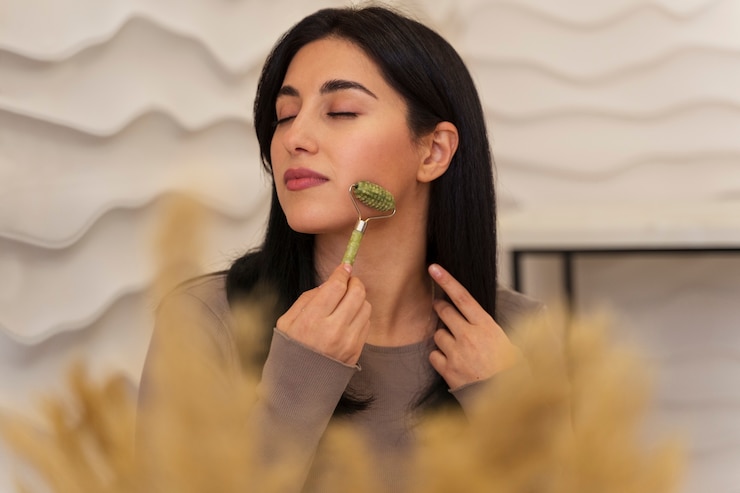
Your Complete Ayurvedic Beauty Routine: Morning and Evening (Step-by-Step)
No other guide assembles everything into a clear, timed routine. Here it is.
Morning Routine (Prabhata Charya) — 30–45 Minutes
- 5:30–6:00 AM: Wake up. Scrape tongue with copper scraper. Oil pull for 15 minutes while preparing for the day
- Splash face with room-temperature water (Vata/Kapha) or cool water (Pitta)
- Cleanse: Chickpea flour paste or gentle herbal face wash
- Tone: Rose water (Pitta), vetiver water (Kapha), or warm chamomile water (Vata)
- Moisturize: 2–3 drops dosha-appropriate face oil
- Sun protection: Apply natural sunscreen or a thin layer of Kumkumadi Thailam (contains saffron, a mild UV protector, though not a substitute for SPF in intense sun)
- Drink: Warm water with lemon + a pinch of turmeric (all doshas)
- Breakfast: Dosha-appropriate, warm, nourishing — eaten mindfully at 80% fullness
Evening Routine (Sayam Charya) — 20–30 Minutes
- 1.Remove makeup/sunscreen: Coconut oil cleansing method — massage oil onto dry face, wipe with warm damp cloth
- 2.Cleanse: Gentle herbal wash or neem water rinse
- 3.Treatment: Apply Bakuchiol serum or Kumkumadi Thailam
- 4.Eye area: Dab a tiny amount of pure castor oil around eyes using ring finger (lightest pressure)
- 5.Facial yoga: 5 minutes of targeted exercises — cheek puffs, forehead smoothing, jaw release
- 6.Body: If doing Abhyanga, do it now. Bathe. Apply light body oil post-bath
- 7.Wind down: Warm milk with nutmeg, no screens, oil on feet and scalp
How to Glow in 7 Days Naturally: A Quick-Start Ayurvedic Plan
If you want visible results fast, here's an intense but safe 7-day protocol:
Day 1–7 (Daily Non-Negotiables):
- Morning: Tongue scraping + oil pulling + warm lemon-turmeric water
- Apply Ubtan face mask (turmeric + chickpea flour + honey) every other day
- Abhyanga with warm oil before evening bath — daily
- Drink 8 glasses of warm/room-temperature water (never ice cold)
- Sleep by 10 PM — this alone transforms skin in a week
- Eat one meal of khichdi (rice + mung dal) daily for digestive reset
Day 3: Add Udvartana (dry powder scrub) before bath Day 5: Do a 20-minute steam facial with neem leaves or tulsi Day 7: Apply a sandalwood + rose water + saffron (2–3 strands) mask for 25 minutes
Most people report noticeably brighter, calmer skin by Day 5. Full radiance by Day 7. But the real transformation happens when you maintain these habits beyond the initial week.
Frequently Asked Questions
What is the best Ayurvedic tonic for glowing skin?
Kumkumadi Thailam — a traditional 26-herb oil blend with saffron, sandalwood, and lotus — is widely considered the gold standard. Internally, Chyawanprash (1 tablespoon daily) provides concentrated Vitamin C from amla and supports overall skin health. For a simple daily tonic, mix 1 teaspoon of amla powder in warm water each morning.
Can Ayurveda help manage menopause symptoms that affect skin?
Yes. Menopause increases Vata dosha, leading to dryness, thinning skin, and accelerated aging. Shatavari (Asparagus racemosus) supports estrogen balance naturally. Daily Abhyanga with sesame oil combats dryness. A 2018 Journal of Ethnopharmacology study confirmed Shatavari's phytoestrogenic properties and its safety profile for menopausal symptom management.
Can face oil help oily skin and acne marks without feeling greasy?
Absolutely — this is a common misconception. Jojoba oil closely mimics human sebum, so it actually signals the skin to produce less oil. Bakuchiol oil reduces acne marks without irritation. Apply just 2–3 drops to damp skin at night. The key is using the right oil for your dosha, not avoiding oil altogether.
What is the difference between hydration and moisturisation in Ayurveda?
- Hydration means adding water to cells (achieved through drinking warm water, eating water-rich foods, using aloe vera). Moisturisation means sealing that water in (achieved through oils, ghee, or cream-based applications).
- Ayurveda addresses both — hydration through diet and internal tonics, moisturisation through external oil application. You need both for truly healthy skin.
Are there any side effects or risks with Ayurvedic beauty treatments?
- Yes, and this is critical. Turmeric can stain skin and may cause irritation in high concentrations. Neem can trigger contact dermatitis in sensitive individuals and should be avoided during pregnancy. Essential oils (tea tree, rosemary) must always be diluted in a carrier oil — never applied neat. Allergies to any natural ingredient are possible. Always perform a patch test on your inner forearm 24 hours before applying anything new to your face.
- If you're on medication — especially blood thinners or hormonal treatments — consult an Ayurvedic practitioner before starting internal herbs like Ashwagandha or Shatavari.
Start Your Ayurvedic Beauty Journey Today
Ayurvedic beauty secrets aren't really secrets at all. They're a comprehensive, scientifically grounded system for whole-body beauty that India has practiced for millennia. The difference between knowing these rituals and experiencing their benefits comes down to one thing: consistent daily practice.
- Start small.
- Pick one ritual — maybe Abhyanga, maybe the morning Ubtan mask, maybe just drinking warm turmeric water each morning. Do it for 21 days. Notice what changes. Then add another practice.
- Your skin is the largest organ in your body, and it's constantly telling you what's happening inside.
- Ayurveda simply teaches you to listen — and respond with the right foods, oils, herbs, and habits.
The best time to start was years ago. The second best time is this morning.
Scientific Sources
- Pharmacological evaluation of Ashwagandha highlighting its healthcare claims, safety, and toxicity aspects — Mandlik Ingawale DS et al., 2021, Journal of dietary supplements
- Can Ashwagandha Benefit the Endocrine System?-A Review — Wiciński M et al., 2023, International journal of molecular sciences
- Clinician guidelines for the treatment of psychiatric disorders with nutraceuticals and phytoceuticals: The World Federation of Societies of Biological Psychiatry (WFSBP) and Canadian Network for Mood and Anxiety Treatments (CANMAT) Taskforce — Sarris J et al., 2022, The world journal of biological psychiatry : the official journal of the World Federation of Societies of Biological Psychiatry
- Effects of Withania somnifera (Ashwagandha) on Stress and the Stress- Related Neuropsychiatric Disorders Anxiety, Depression, and Insomnia — Speers AB et al., 2021, Current neuropharmacology
- Plant-derived nootropics and human cognition: A systematic review — Lorca C et al., 2023, Critical reviews in food science and nutrition
- Ulcerative colitis: molecular insights and intervention therapy — Liang Y et al., 2024, Molecular biomedicine
- Turmeric and Curcumin: From Traditional to Modern Medicine — Akaberi M et al., 2021, Advances in experimental medicine and biology
- Curcumin (Turmeric) and cancer — Unlu A et al., 2016, Journal of B.U.ON. : official journal of the Balkan Union of Oncology
- The Essential Medicinal Chemistry of Curcumin — Nelson KM et al., 2017, Journal of medicinal chemistry
- Neuroprotective Herbs for the Management of Alzheimer's Disease — Gregory J et al., 2021, Biomolecules
- Rosemary and neem: an insight into their combined anti-dandruff and anti-hair loss efficacy — Hashem MM et al., 2024, Scientific reports
- Bangladeshi medicinal plant dataset — Borkatulla B et al., 2023, Data in brief
- Phytotherapy in periodontics as an effective and sustainable supplemental treatment: a narrative review — Gawish AS et al., 2024, Journal of periodontal & implant science
- Formulation and Evaluation of Turmeric- and Neem-Based Topical Nanoemulgel against Microbial Infection — Giri S et al., 2024, Gels (Basel, Switzerland)
- Molecular insights into anti-inflammatory activities of selected Indian herbs — Upadhyay S et al., 2025, Journal of Ayurveda and integrative medicine
Ask Ayurvedic doctor a question and get a consultation online on the problem of your concern in a free or paid mode.
More than 2,000 experienced doctors work and wait for your questions on our site and help users to solve their health problems every day.
Related articles