FREE! Ask Ayurvedic Doctors 24/7

 Fast responses
 1000+ verified doctors
Laghu Soota Mishrana: The Ayurvedic Solution for Holistic Health
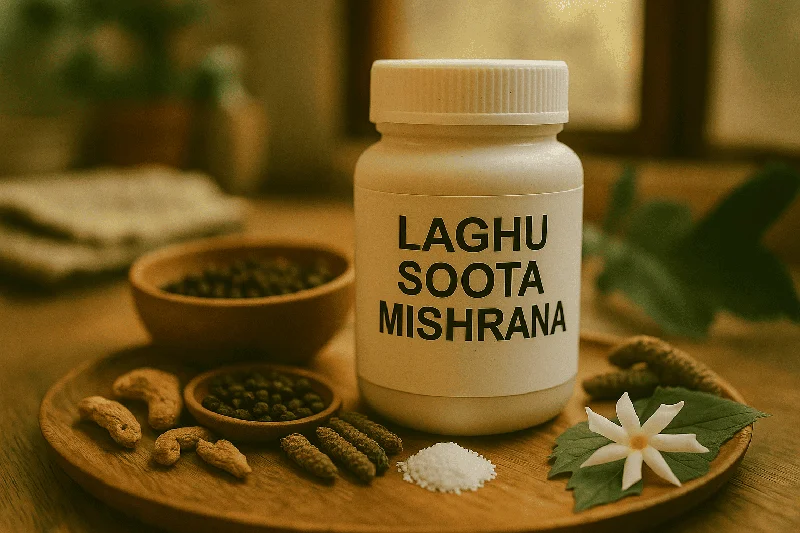
Laghu Soota Mishrana is a classical Ayurvedic herbomineral formulation primarily used to manage respiratory disorders like cough, cold, bronchial asthma, and bronchitis, as well as digestive complaints including indigestion and acid reflux. It contains purified Parada (mercury) processed through rigorous Shodhana (purification) procedures, combined with herbal ingredients like Talisadi Churna, Godanti Bhasma, and Swasakutara Rasa to create a synergistic formula that balances Vata and Kapha doshas. In this comprehensive guide, we break down everything you need to know — from its classical origins and detailed mechanism of action to safety considerations around its mercury content, something no other resource online adequately covers.
What Is Laghu Soota Mishrana?
Laghu Soota Mishrana (sometimes spelled Laghu Suta Mishrana or abbreviated as LSM) is a polyherbal-mineral powder (Churna) formulation rooted in the Rasa Shastra tradition of Ayurveda — the branch that deals specifically with the therapeutic use of metals, minerals, and gemstones after elaborate purification and incineration processes.
The word "Laghu" means light or smaller, "Soota" (also written as Suta) refers to Parada — purified mercury, and "Mishrana" means mixture or combination. So the name literally translates to "a lighter mercury-based combination formula," distinguishing it from heavier, more potent Suta-based preparations like Suta Shekara Rasa.
This formulation is designed as a broad-spectrum remedy that primarily targets the respiratory system (Pranavaha Srotas) and the digestive system (Annavaha Srotas), while also addressing imbalances in Vata, Kapha, and sometimes Pitta doshas depending on the clinical presentation.
Classical Reference and Origin
One of the significant gaps in existing online resources is the complete absence of information about the classical textual origin of Laghu Soota Mishrana. Based on available pharmacopoeial and traditional references, the formulation draws its foundation from the principles outlined in classical Rasa Shastra texts, particularly the Rasa Tarangini by Sadananda Sharma and the Bhaishajya Ratnavali, both of which extensively document mercury-based therapeutic preparations.
The specific combination found in commercially available Laghu Soota Mishrana products — particularly those manufactured by SDM Ayurveda (Shri Dharmasthala Manjunatheshwara) — appears to be a proprietary adaptation based on these classical principles rather than a direct single-text formulation. SDM Ayurveda, established as part of the Dharmasthala tradition in Karnataka, has been a pioneer in standardizing such Rasa Shastra preparations for modern clinical use.
The Role of Soota (Parada) in Ayurvedic Formulations
This is perhaps the most critical aspect that virtually no competitor addresses, and it deserves serious attention.
"Soota" or "Suta" in the formulation name refers to Parada — mercury. Yes, the same mercury that modern toxicology considers a heavy metal hazard. However, in Ayurvedic pharmacology, Parada undergoes an elaborate multi-step purification process called Shodhana before it is ever used therapeutically.
The Shodhana process for Parada typically involves:
- 1.Svedana — steaming mercury with specific herbal juices (like Kumari swarasa or Kanji)
- 2.Mardana — trituration with herbal pastes including garlic, brick powder, and Saindhava Lavana (rock salt)
- 3.Murchhana — "killing" or rendering mercury biologically inert through repeated grinding with sulfur (Gandhaka) and other substances
- 4.Multiple Bhavana cycles — levigation with herbal decoctions that further bind the free mercury ions
After proper Shodhana, the mercury is believed to be converted into a form that Ayurvedic pharmacology considers bioavailable for therapeutic action without the toxic effects associated with raw, unprocessed mercury. A 2012 study published in the Journal of Ayurveda and Integrative Medicine examined traditionally processed mercury-based Ayurvedic preparations and found that the Shodhana process significantly altered the chemical form of mercury, potentially reducing its bioavailability as a toxicant while preserving its claimed therapeutic properties.
That said — and this is important — the safety of mercury-containing Ayurvedic formulations remains a subject of ongoing scientific debate. We'll address this in detail in the safety section below.
Key Ingredients and Their Properties
- Laghu Soota Mishrana is not a single-ingredient preparation. It's a carefully designed combination where each component plays a specific role.
- Here's a detailed breakdown:
Laghu Suta Shekara Choorna
This is the core base of the formulation and itself contains purified Parada (mercury) processed with Gandhaka (purified sulfur) to form Kajjali — a fine black powder that serves as the foundational mercury-sulfur complex. The Kajjali is then further processed with other ingredients to create the Suta Shekara base. This component is primarily responsible for the formulation's action on Pitta dosha and its anti-emetic, digestive-supportive properties.
Godanti Bhasma (Gypsum Calx)
- Godanti Bhasma is prepared from natural gypsum (calcium sulfate dihydrate) through a process of repeated calcination.
- It is one of the most widely used Bhasmas in Ayurveda for:
- Antipyretic action — it's a classical fever reducer, particularly effective in Pitta-type fevers
- Calcium supplementation — provides bioavailable calcium
- Anti-inflammatory effects — especially beneficial in respiratory tract inflammation
A 2017 study in the International Journal of Ayurveda Research confirmed that Godanti Bhasma exhibits significant antipyretic and analgesic activity comparable to paracetamol in experimental models.
Swasakutara Rasa
Swasakutara Rasa is itself a compound Rasa preparation specifically indicated for Swasa Roga (respiratory diseases). It contains processed mercury, sulfur, Maricha (black pepper), Pippali (long pepper), and Tankana Bhasma (purified borax). Its inclusion in Laghu Soota Mishrana is specifically targeted at:
- Bronchodilation and clearing of respiratory passages
- Reduction of Kapha accumulation in the lungs
- Managing wheezing and dyspnea (difficulty breathing)
Talisadi Churna
- Talisadi Churna is a well-known herbal powder combination that includes Talispatra (Abies webbiana), Maricha (Piper nigrum), Pippali (Piper longum), Ela (cardamom), and Vamshalochana (bamboo manna).
- This component contributes:
- Expectorant properties — helps loosen and expel phlegm
- Digestive stimulation — kindles Agni (digestive fire)
- Bronchodilatory support
- Immune-enhancing effects through its rich phytochemical profile
Purified Gairika (Red Ochre)
Gairika is a naturally occurring iron oxide mineral that, after purification, serves as a mild hematinic (blood-building) agent and has traditionally been used for its astringent and anti-inflammatory properties. In this formulation, it likely contributes to managing excessive secretions in both respiratory and gastrointestinal tracts.
Other Supporting Ingredients
| Ingredient | Sanskrit/Common Name | Primary Action in This Formula |
|---|---|---|
| Shunthi | Dry Ginger (Zingiber officinale) | Anti-inflammatory, digestive stimulant, anti-tussive |
| Maricha | Black Pepper (Piper nigrum) | Bioavailability enhancer, Kapha-reducing, decongestant |
| Pippali | Long Pepper (Piper longum) | Bronchodilator, Rasayana (rejuvenative), immunomodulator |
| Tankana Bhasma | Purified Borax | Mucolytic (breaks down mucus), Kapha-pacifying |
| Gandhaka | Purified Sulfur | Antimicrobial, synergist with Parada, skin & respiratory support |
The important thing to understand is that these ingredients don't just work individually — they create a synergistic effect. For example, Maricha and Pippali enhance the bioavailability of the mineral components (a concept remarkably similar to modern pharmacology's use of piperine as a bioenhancer), while Talisadi Churna provides the herbal backbone that supports the mineral ingredients' therapeutic action.
How Does Laghu Soota Mishrana Work? Mechanism of Action
This is where we go deeper than any existing resource online. Understanding the mechanism of action requires looking at this formulation through both the Ayurvedic and modern pharmacological lens.
Ayurvedic Mechanism (Dosha Level)
From a doshic perspective, Laghu Soota Mishrana primarily works by:
- 1.Pacifying Kapha dosha — Kapha accumulation in the chest (Uras Sthana) is considered the root cause of most respiratory disorders in Ayurveda. The Tikshna (sharp) and Ushna (hot) qualities of ingredients like Maricha, Pippali, and Swasakutara Rasa directly counteract the heavy, cold, and sticky qualities of aggravated Kapha.
- 2.Balancing Vata dosha — Vata governs all movement in the body, including the movement of breath (Prana Vayu). When Prana Vayu is obstructed by excess Kapha, breathing difficulties arise. The formulation restores proper Vata flow through the respiratory channels.
- 3.Regulating Pitta dosha — Through Godanti Bhasma and the Suta Shekara base, the formulation prevents excessive Pitta aggravation that can manifest as fever, burning sensation, or acid reflux.
Pharmacological Mechanism (Modern Perspective)
While comprehensive clinical trials specifically on Laghu Soota Mishrana are lacking (a gap we'll discuss), the pharmacological actions of its individual components suggest the following mechanisms:
- Bronchodilation: Pippali and Maricha contain piperine, which has demonstrated bronchodilatory effects in in vitro studies. A 2015 study in Phytomedicine showed piperine's ability to relax tracheal smooth muscle.
- Mucolytic action: Tankana Bhasma acts as a mucolytic, physically breaking down thick mucus to facilitate expectoration.
- Anti-inflammatory cascade: Shunthi contains gingerols and shogaols that inhibit COX-2 and 5-LOX pathways — the same inflammatory pathways targeted by modern NSAIDs.
- Antipyretic effect: Godanti Bhasma's calcium sulfate content, after calcination, appears to modulate the thermoregulatory center, providing fever relief.
- Digestive fire stimulation: The combination of Trikatu (Shunthi + Maricha + Pippali) stimulates gastric acid secretion and enhances enzymatic activity, addressing indigestion from the root.
Therapeutic Benefits of Laghu Soota Mishrana
Respiratory Health: Cough, Cold, Asthma, and Bronchitis
- This is the primary therapeutic domain of Laghu Soota Mishrana.
- The formulation is clinically indicated for:
- Kasa (Cough) — both productive and dry cough, particularly Kapha-type cough with thick, white or clear phlegm
- Pratishyaya (Common Cold) — nasal congestion, runny nose, post-nasal drip
- Tamaka Shwasa (Bronchial Asthma) — wheezing, chest tightness, difficulty breathing especially at night or early morning
- Chronic Bronchitis — persistent cough with sputum production lasting more than three months
- Eosinophilia — elevated eosinophil counts, often associated with allergic respiratory conditions
The formulation works as both an acute remedy and a longer-term management tool for chronic respiratory conditions.
Digestive Health: Indigestion, Acid Reflux, and Appetite
While respiratory benefits get most of the attention, Laghu Soota Mishrana's digestive applications are equally significant:
- Ajirna (Indigestion) — stimulates Agni and promotes proper digestion
- Amlapitta (Acid Reflux / Hyperacidity) — the Suta Shekara base has documented anti-acid properties
- Aruchi (Loss of Appetite) — particularly when appetite loss is due to Kapha or Ama (toxin) accumulation
How It Helps with Seasonal Allergies
Seasonal allergies — particularly those manifesting as allergic rhinitis, sneezing, watery eyes, and throat irritation — represent an area where Laghu Soota Mishrana can be remarkably effective. The combination of Kapha-reducing ingredients with anti-inflammatory minerals helps modulate the allergic response. Many Ayurvedic practitioners in South India prescribe it preventively before monsoon season when Kapha-related allergies tend to peak.
Fever Management
- Godanti Bhasma is one of Ayurveda's most reliable antipyretics.
- Within the Laghu Soota Mishrana formulation, it helps manage:
- Low-grade fevers associated with respiratory infections
- Intermittent fevers with body ache
- Post-viral fever lingering after the primary infection resolves
Neurological and General Applications
Some practitioners, particularly at SDM Ayurveda hospitals, also use Laghu Soota Mishrana for:
- Headaches and migraines (especially those triggered by sinusitis or digestive disturbance)
- Dizziness and lightheadedness
- Excessive sweating (hyperhidrosis)
- Insomnia when related to respiratory discomfort
Immune System Support
The formulation's combination of Rasayana herbs (particularly Pippali) with mineral Bhasmas contributes to long-term immune modulation. Regular use under medical supervision during appropriate seasons may help reduce the frequency and severity of recurrent respiratory infections.
Dosage of Laghu Soota Mishrana
Standard Adult Dosage
| Parameter | Recommendation |
|---|---|
| Form | Fine powder (Churna) |
| Typical dose | 500 mg to 1 gram (approximately ¼ to ½ teaspoon) |
| Frequency | 2–3 times daily |
| Anupana (vehicle) | Honey, warm water, or as directed by physician |
| Timing | Preferably after meals or as advised |
Important: The dosage above is a general guideline based on commonly available product labels. Your Ayurvedic physician may adjust the dose based on your Prakriti (constitution), Vikriti (current imbalance), Agni status, age, and severity of the condition.
Administration with Honey vs. Warm Water
The choice of Anupana (carrier substance) matters:
- With honey (Madhu): Preferred for respiratory conditions, especially productive cough. Honey itself has mucolytic and antimicrobial properties that complement the formulation.
- Always use raw, unheated honey mixed at room temperature — Ayurveda strictly prohibits heating honey.
- With warm water: Better suited for digestive complaints and general wellness use.
- With ginger juice: Some practitioners recommend this for acute bronchial congestion.
How Long Should You Take It?
This is a question no competitor answers, and it's a crucial one.
For acute conditions (cold, cough, fever): A course of 5–14 days is typical. Most patients begin experiencing relief within 3–5 days.
For chronic conditions (recurrent bronchitis, chronic asthma support): Courses of 1–3 months may be recommended, often with periodic breaks and reassessment. Because this formulation contains mineral and metallic ingredients, long-term unsupervised use is strongly discouraged.
For preventive/seasonal use: Some practitioners prescribe short courses (7–10 days) at the onset of seasonal transitions, particularly the Varsha Ritu (monsoon) and Hemanta Ritu (early winter) when Kapha-related disorders are most likely to manifest.
Safety, Side Effects, and Precautions
This section is perhaps the most important part of this entire article, and it's where existing online resources fall dramatically short.
Is Laghu Soota Mishrana Safe Despite Containing Mercury?
The short answer: when prepared according to classical Rasa Shastra protocols by reputable manufacturers, and when used in prescribed doses for appropriate durations, it is generally considered safe by the Ayurvedic medical community.
The longer, more nuanced answer: the safety of mercury-containing Ayurvedic preparations is a subject of legitimate scientific concern. A 2004 study published in JAMA by Saper et al. found that some Ayurvedic products contained detectable levels of heavy metals. However, a 2016 systematic review in the Journal of Ethnopharmacology noted that properly processed (Shodhana-treated) mercury preparations showed significantly different toxicological profiles compared to raw mercury compounds.
Key safety factors include:
- Manufacturer credibility — Only purchase from GMP-certified, established manufacturers like SDM, SDP Ayurveda, or Alva's Herbal Health
- Proper Shodhana verification — Reputable manufacturers follow documented Shodhana protocols
- Dose adherence — Never exceed prescribed doses
- Duration limits — Avoid prolonged, unsupervised use
Specific Contraindications
No competitor provides detailed contraindications, so here they are:
| Condition | Recommendation |
|---|---|
| Pregnancy and lactation | Strictly avoid — mercury-containing formulations are contraindicated |
| Children under 5 years | Avoid unless specifically prescribed by a pediatric Ayurvedic specialist |
| Kidney disease (renal insufficiency) | Contraindicated — impaired renal clearance increases metal accumulation risk |
| Liver disease (hepatic impairment) | Use with extreme caution — liver is primary organ for metal detoxification |
| Known mercury allergy/sensitivity | Absolutely contraindicated |
| Patients on blood thinners (Warfarin, etc.) | Consult both Ayurvedic and allopathic physicians — some ingredients may affect coagulation |
Possible Side Effects
While well-tolerated by most patients at recommended doses, potential side effects include:
- Mild gastric irritation in Pitta-dominant individuals (due to Ushna Virya ingredients)
- Metallic taste in the mouth (usually transient)
- Loose stools if taken in excess doses
- Allergic reactions (rare but possible with any multi-ingredient formulation)
If you experience any persistent discomfort, discontinue use and consult your physician immediately.
Compatibility with Modern Medicines
Another gap no competitor covers. There is limited formal research on drug interactions with Laghu Soota Mishrana specifically. However, general precautions based on its ingredient profile include:
- Antacids and PPIs (Omeprazole, Pantoprazole): May alter absorption of mineral components
- Antibiotics (especially tetracyclines): Mineral content can chelate certain antibiotics, reducing their efficacy
- Anti-diabetic medications: Some herbal components may have mild hypoglycemic effects
- Immunosuppressants: The immunomodulatory herbs may theoretically interfere
- Always inform your allopathic doctor about any Ayurvedic medications you are taking, and vice versa.
- This isn't optional — it's essential for your safety.
Laghu Soota Mishrana vs. Similar Formulations
Understanding how Laghu Soota Mishrana compares to similar preparations helps both practitioners and patients make informed choices.
| Feature | Laghu Soota Mishrana | Suta Shekara Rasa | Swasakutara Rasa |
|---|---|---|---|
| Primary indication | Respiratory + Digestive | Primarily Digestive (Amlapitta) | Primarily Respiratory (Shwasa) |
| Mercury content | Moderate (in processed form) | Higher (core ingredient) | Moderate |
| Dosha focus | Vata-Kapha (primary), Pitta (secondary) | Pitta-Kapha | Vata-Kapha |
| Form | Churna (powder) | Tablet / Rasa (pill) | Tablet / Rasa (pill) |
| Complexity | Combination formula with multiple sub-formulations | Standalone Rasa preparation | Standalone Rasa preparation |
| Versatility | High — covers multiple systems | Moderate — mainly GI tract | Moderate — mainly respiratory |
| Relative potency | Milder ("Laghu" = lighter) | Stronger | Moderate |
The "Laghu" prefix is clinically significant — it indicates a gentler formulation suitable for patients who may not tolerate the full-strength Suta Shekara Rasa or who present with mixed respiratory-digestive complaints.
Difference Between Sutshekhar and Laghu Sutshekhar
- This is a commonly searched question. Suta Shekara Rasa (Sutshekhar Ras) is a more concentrated, Pitta-focused formulation primarily used for hyperacidity, vomiting, and GI inflammation. Laghu Suta Shekara (which forms a component of Laghu Soota Mishrana) is a reduced-potency version that is combined with respiratory-specific ingredients.
- Think of it this way: Sutshekhar Ras is the heavyweight specialist, while Laghu Soota Mishrana is the versatile generalist.
Complementary Lifestyle Tips for Better Results
Laghu Soota Mishrana works best when supported by appropriate diet and lifestyle modifications:
Dietary Recommendations
- Favor: Warm, freshly cooked foods; ginger tea; light soups; steamed vegetables; honey (unheated); turmeric milk
- Avoid: Cold foods and beverages, dairy products during acute respiratory episodes (increases Kapha), heavy fried foods, excessively sweet or sour items
- Hydration: Drink warm or room-temperature water throughout the day — at least 8 glasses. Avoid iced drinks completely during treatment.
Yoga and Pranayama
- Bhastrika Pranayama (Bellows Breath): Clears respiratory channels, 5–10 rounds morning and evening
- Anulom Vilom (Alternate Nostril Breathing): Balances Prana Vayu, 10 minutes daily
- Bhujangasana (Cobra Pose): Opens the chest, strengthens respiratory muscles
- Matsyasana (Fish Pose): Expands the thoracic cavity
Sleep and Rest
- Adequate sleep (7–8 hours) is critical for respiratory healing. Elevate your head slightly during sleep if you experience nocturnal cough or breathing difficulties.
- Avoid sleeping immediately after meals — wait at least 2 hours.
Available Brands and Forms
| Brand | Product Name | Form | Approximate Quantity | Notable Feature |
|---|---|---|---|---|
| SDM Ayurveda | Laghu Soota Mishrana | Churna (powder) | 50g / 100g | Classical preparation, widely prescribed in Karnataka |
| SDP Ayurveda | Laghu Soota Mishrana | Powder | 50g / 100g | Competitive pricing, good availability |
| Alva's Herbal Health | Laghu Soota Mishrana | Powder | 50g | Ingredients sourced from organic botanical farms (est. 1982) |
Storage: Keep in a cool, dry place away from direct sunlight. Store in an airtight container. Keep out of reach of children. Generally, Rasa Shastra preparations have a longer shelf life than purely herbal formulations — typically 2–3 years when stored properly.
Frequently Asked Questions (FAQ)
What is the full form of LSM Churna in Ayurveda?
LSM stands for Laghu Soota Mishrana. It is a polyherbal-mineral Ayurvedic powder formulation used primarily for respiratory and digestive disorders.
Who can benefit from Laghu Soota Mishrana?
Adults suffering from chronic or acute respiratory conditions (cough, cold, bronchitis, asthma), digestive issues (indigestion, loss of appetite, mild acid reflux), seasonal allergies, and recurrent low-grade fevers may benefit from this formulation. It is particularly suitable for individuals with Vata-Kapha predominant constitutions or imbalances.
Can Laghu Soota Mishrana be used for children?
For children above 5 years, some Ayurvedic pediatric specialists may prescribe reduced doses (typically 125–250 mg) under strict supervision. For children under 5, it is generally not recommended due to the mercury content. Always consult a qualified Ayurvedic pediatrician.
Is Laghu Soota Mishrana the same as Laghu Sutshekhar Ras Tablet?
No, they are related but different. Laghu Sutshekhar Ras is a component within Laghu Soota Mishrana, but the complete Mishrana formulation includes additional ingredients like Godanti Bhasma, Swasakutara Rasa, Talisadi Churna, and Gairika that extend its therapeutic range beyond what Laghu Sutshekhar Ras alone can achieve.
Are there any clinical studies on Laghu Soota Mishrana?
As of 2025, there are no large-scale randomized controlled trials (RCTs) specifically on the complete Laghu Soota Mishrana formulation. However, individual ingredients like Godanti Bhasma, Talisadi Churna, and piperine-containing herbs have been studied in various clinical and preclinical settings with positive results. The need for formal clinical research on composite Rasa Shastra formulations remains a critical gap in evidence-based Ayurveda.
Can I take Laghu Soota Mishrana with allopathic medicines?
It is possible in many cases, but you should never self-prescribe this combination. Always disclose your complete medication list to both your Ayurvedic and allopathic physicians. Maintain a gap of at least 30–60 minutes between Ayurvedic and allopathic medications unless directed otherwise.
How is Laghu Soota Mishrana different from a simple herbal cough syrup?
Unlike over-the-counter herbal cough syrups that primarily suppress cough reflex, Laghu Soota Mishrana addresses the root cause of respiratory dysfunction according to Ayurvedic principles — namely, dosha imbalance and Srotas (channel) blockage. It works at a deeper systemic level rather than providing merely symptomatic relief.
Conclusion: Is Laghu Soota Mishrana Right for You?
- Laghu Soota Mishrana stands as a testament to the sophistication of classical Ayurvedic pharmacology.
- It's not just a "herbal remedy" — it's a carefully engineered herbomineral formulation that combines the precision of Rasa Shastra with the gentle efficacy of herbal medicine. For those dealing with persistent respiratory troubles, stubborn digestive issues, or recurrent seasonal ailments, it offers a holistic approach that modern medicine often struggles to match.
However — and this cannot be stressed enough — this is not a formulation for self-medication. The presence of processed mercury, while rendered therapeutically appropriate through Shodhana, demands that you use it only under the guidance of a qualified Ayurvedic physician (BAMS or MD Ayurveda) who can assess your individual constitution, current health status, and potential interactions with other treatments.
If you've been struggling with chronic respiratory or digestive issues and conventional treatments haven't given you lasting relief, consult an experienced Ayurvedic practitioner about whether Laghu Soota Mishrana could be appropriate for your specific situation. The right formulation, at the right dose, for the right person — that's the essence of Ayurvedic medicine.
Disclaimer: This article is for educational and informational purposes only. It is not intended to replace professional medical advice, diagnosis, or treatment. Always consult a qualified Ayurvedic practitioner or healthcare provider before starting any new medication or supplement, especially formulations containing mineral or metallic ingredients.
Scientific Sources
- Herbal and Holistic Solutions for Neurodegenerative and Depressive Disorders: Leads from Ayurveda — Sharma R et al., 2018, Current pharmaceutical design
- Swarna Bindu Prashana-an Ancient Approach to Improve the Infant's Immunity — Nelaturi P et al., 2021, Biological trace element research
- From nature's bounty to drug discovery: Leveraging phytochemicals and molecular approaches to combat multi-drug-resistant (MDR) tuberculosis — Nalam SM et al., 2024, The Indian journal of tuberculosis
- RESEARCH ARTICLE: Ayurveda and the medical knowledge in ancient India: Shadows and realities — Sebastian CD, 2022, Indian journal of medical ethics
- Procedures of complementary medicine in rheumatology (https://pubmed.ncbi.nlm.nih.gov/38935116/) — Keyßer G et al., 2024, Zeitschrift fur Rheumatologie
- Triphala in prevention of dental caries and as an antimicrobial in oral cavity- a review — Shanbhag VK, 2015, Infectious disorders drug targets
- Maharishi Ayur-Veda — 1991, JAMA
- Historical and cross-cultural perspectives on Parkinson's disease — Blonder LX, 2018, Journal of complementary & integrative medicine
- Ayurveda and gynecological disorders — Jadhav AN et al., 2005, Journal of ethnopharmacology
- Utilization of Ayurveda in health care: an approach for prevention, health promotion, and treatment of disease.
- Part 2--Ayurveda in primary health care — Sharma H et al., 2007, Journal of alternative and complementary medicine (New York, N.Y.)
- The role of alternative medicine in rhinology — Roehm CE et al., 2012, Facial plastic surgery clinics of North America
- Celebrity-based medicine — Ernst E et al., 2006, The Medical journal of Australia
- Whole Medical Systems the Rehabilitation Setting (Traditional Chinese Medicine, Ayurvedic Medicine, Homeopathy, Naturopathy) — Drake DF et al., 2020, Physical medicine and rehabilitation clinics of North America
- Ayurveda in Cancer Care in India: Scope, Challenges, and Suggested Approaches — Gundeti MS et al., 2018, Journal of alternative and complementary medicine (New York, N.Y.)
- A Systematic Review and Meta-Analysis of Ayurvedic Herbal Preparations for Hypercholesterolemia — Gyawali D et al., 2021, Medicina (Kaunas, Lithuania)
- Ayurveda for comprehensive healthcare — Rastogi S, 2009, Indian journal of medical ethics
- The Significance of Ayurvedic Medicinal Plants — Kumar S et al., 2017, Journal of evidence-based complementary & alternative medicine
- Ayurveda therapy in the management of epilepsy — Adiga SH et al., 2024, Epilepsy & behavior : E&B
- A Multimodal Ayurveda and Mind-Body Therapeutic Intervention for Chronic Symptoms Attributed to a Postinfectious Syndrome: A Pilot Study — Shere-Wolfe KD et al., 2024, Journal of integrative and complementary medicine
- Some excerpts from Charaka Samhita - An ancient treatise on Ayurveda & healthy living — Katiyar CK et al., 2017, Journal of ethnopharmacology
Ask Ayurvedic doctor a question and get a consultation online on the problem of your concern in a free or paid mode.
More than 2,000 experienced doctors work and wait for your questions on our site and help users to solve their health problems every day.
Related articles