Ask Ayurvedic doctor a question and get a consultation online on the problem of your concern in a free or paid mode. More than 2,000 experienced doctors work and wait for your questions on our site and help users to solve their health problems every day.
FREE! Ask Ayurvedic Doctors 24/7

 Fast responses
 1000+ verified doctors
Body DetoxEar, Nose, and Throat DisordersGeriatrics & RejuvenationImmunodeficiencyInfertility TreatmentNutritionOrthopedic DisordersPediatricsRespiratory DisordersSexually Transmitted Diseases (STDs)Surgery RecoveryUrological DisordersVascular DisordersDental DisordersEndocrinological DisordersGastrointestinal DisordersYoga TherapyGeneral MedicineAllergic DisordersCardio DisordersGynecology and ObstetricsCosmetologySkin and Hair DisordersEye DisordersInfectious DiseasesMental DisordersNeurological DisordersOncologyPanchakarmaSexual Health & DisordersSports Medicine
Published on 12/11/24
(Updated on 07/04/26)
3,213
Ashtamurti Rasayan: An Ayurvedic Miracle for Rejuvenation and Vitality
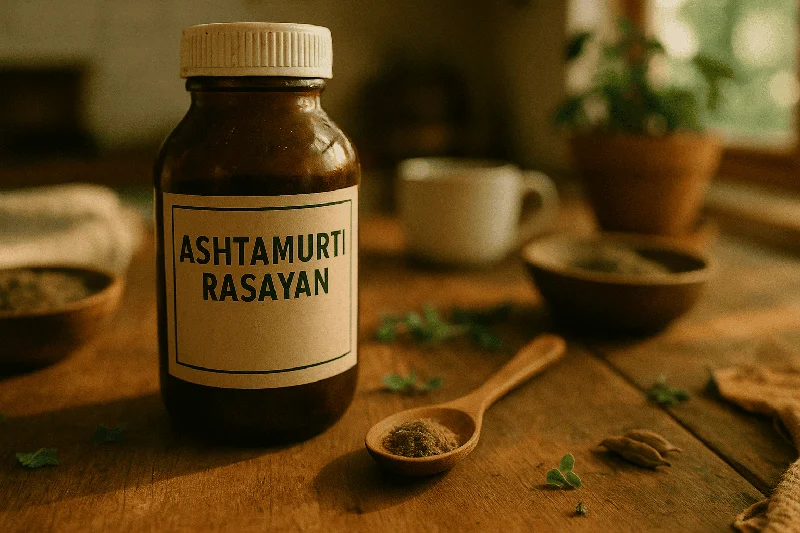
Ashtamurti Rasayan is a classical Ayurvedic mineral formulation (Kupipakva Rasayana) containing eight potent ingredients — including purified mercury, sulfur, gold, and silver — used primarily for rejuvenation, chronic fevers, neurological disorders, and immune enhancement. Referenced in the ancient text Rasatantra-Sara & Sidhaprayoga Sangraha, this preparation undergoes a rigorous 30-hour heating process to ensure therapeutic safety. In this comprehensive guide, we cover everything from its exact composition and preparation method to dosage, safety concerns around heavy metals, and how it compares to similar Rasayana formulations.
If you've been searching for reliable, in-depth information on Ashtamurti Rasayan — beyond the surface-level content available elsewhere — you're in the right place. Let's dive in.
What Is Ashtamurti Rasayan?
Ashtamurti Rasayan is a Kupipakva Rasayana — a category of Ayurvedic medicines prepared by heating mineral and metallic ingredients inside a glass bottle (kupi) using a sand bath apparatus called Valuka Yantra. Unlike herbal formulations, Kupipakva Rasayanas rely on processed minerals and metals to deliver potent therapeutic effects at very small doses.
This formulation belongs to the Rasa Shastra tradition of Ayurveda, which specializes in the pharmaceutical processing of metals, minerals, and gemstones for medicinal purposes. The word "Rasa" here refers to mercury (Parada), which serves as the foundational ingredient.
Etymology and Meaning of the Name
The name breaks down simply:
- Ashta = Eight (Sanskrit)
- Murti = Forms or embodiments
- Rasayan = Rejuvenating formulation
So, Ashtamurti Rasayan literally means "the rejuvenating preparation with eight forms (ingredients)." Each of the eight components represents a distinct therapeutic principle, and their synergy is what makes this formulation uniquely powerful in classical Ayurvedic practice.
Historical Reference: Rasatantra-Sara & Sidhaprayoga Sangraha
The primary textual source for Ashtamurti Rasayan is Rasatantra-Sara & Sidhaprayoga Sangraha, a well-known compendium of Rasa Shastra formulations widely used in Ayurvedic pharmaceutical practice across India. This text provides the original shloka (verse), ingredient proportions, preparation methodology, and therapeutic indications.
Unlike many popular Ayurvedic formulations that appear in multiple classical texts, Ashtamurti Rasayan's references are relatively concentrated in Rasa Shastra literature — which partly explains why detailed information about it is harder to find online.
Classification: Kupipakva Rasayana
- Kupipakva Rasayanas are distinct from other Ayurvedic dosage forms like Bhasmas (calcined ash) or Vati (tablets).
- Key characteristics include:
- Prepared exclusively in glass bottles sealed with mud and cloth
- Require precise temperature control over extended periods (often 24–30+ hours)
- The final product forms as a solidified mass inside the bottle neck
- Extremely potent — used in milligram doses, not grams
- Shelf life of approximately 3 years when stored properly
Other well-known Kupipakva Rasayanas include Ras Sindoor, Makardhwaj, and Siddha Makardhwaj — all of which share some ingredients with Ashtamurti Rasayan but differ in composition, ratios, and therapeutic emphasis.
Ingredients of Ashtamurti Rasayan
Complete Ingredient List with Proportions
| # | Sanskrit Name | English / Common Name | Proportion |
|---|---|---|---|
| 1 | Parada (पारद) | Purified Mercury | 1 part |
| 2 | Gandhaka (गन्धक) | Purified Sulfur | 1 part |
| 3 | Swarna Bhasma (स्वर्ण भस्म) | Calcined Gold | 1 part |
| 4 | Rajata Bhasma (रजत भस्म) | Calcined Silver | 1 part |
| 5 | Tamra Bhasma (ताम्र भस्म) | Calcined Copper | 1 part |
| 6 | Vanga Bhasma (वङ्ग भस्म) | Calcined Tin | 1 part |
| 7 | Naga Bhasma (नाग भस्म) | Calcined Lead | 1 part |
| 8 | Loha Bhasma (लोह भस्म) | Calcined Iron | 1 part |
All eight ingredients are used in equal proportions. The first step involves creating Kajjali (a black sulfide of mercury) by triturating Parada and Gandhaka together until a fine, lusterless black powder forms. The remaining six Bhasmas are then incorporated into this Kajjali base.
Role of Each Ingredient
Parada (Mercury): The carrier and catalyst. In Rasa Shastra, mercury is called "Rasaraj" (king of Rasa) because it is believed to enhance the bioavailability and potency of all other ingredients it combines with. A 2012 study published in the Journal of Ayurveda and Integrative Medicine confirmed that properly processed mercury in Ayurvedic preparations exists primarily as mercuric sulfide (HgS), which has significantly lower bioavailability and toxicity compared to organic mercury compounds. Gandhaka (Sulfur): Acts as a binding agent with mercury and contributes its own therapeutic properties — particularly in skin disorders, chronic fevers, and inflammatory conditions. Sulfur also plays a critical role in the Kupipakva process by facilitating the chemical transformation of metals. Swarna Bhasma (Gold): Considered the most prized ingredient for Rasayana (rejuvenation). Gold Bhasma is classically indicated for improving Ojas (vital essence), cognitive function, immunity, and reproductive health. A 2011 study in the International Journal of Ayurveda Research demonstrated that Swarna Bhasma particles in the 56–57 nm range exhibited immunomodulatory activity. Rajata Bhasma (Silver): Primarily acts on the nervous system and the Majja Dhatu (bone marrow/nervous tissue). It's indicated for neurological weakness, memory disorders, and chronic debilitating conditions. Tamra Bhasma (Copper): Has strong Pitta-regulating and hepatoprotective properties. In Ayurvedic pharmacology, copper acts primarily on the liver and spleen, making it valuable for conditions involving impaired digestion, anemia, and skin disorders. Vanga Bhasma (Tin): Specifically acts on the Shukra Dhatu (reproductive tissue). It is commonly used in formulations addressing male reproductive health, urinary disorders, and diabetes (Prameha). Naga Bhasma (Lead): Despite its known toxicity in crude form, classically purified and calcined lead (processed through multiple cycles of Shodhana and Marana) is used in Ayurveda for Prameha (diabetes), urinary disorders, and spleen-related conditions. This is perhaps the most controversial ingredient in the formulation. Loha Bhasma (Iron): The most commonly used metallic Bhasma in Ayurveda. Acts as a potent Rasayana and blood builder, indicated for anemia, general debility, liver disorders, and skin diseases.
Purification (Shodhana) of Toxic Minerals
This is a critical topic that most online sources completely overlook.
- Every metallic and mineral ingredient in Ashtamurti Rasayan must undergo Shodhana (purification) before it can be used in the formulation.
- Shodhana is not merely washing — it's a series of pharmaceutical processes designed to:
- Remove physical impurities and toxic surface compounds
- Alter the chemical structure to reduce toxicity
- Reduce particle size to enhance therapeutic absorption
- Impart specific therapeutic properties through the media used
For example, Parada Shodhana involves triturating mercury with specific herbal juices (like garlic, brick powder, and various plant decoctions) through 18 prescribed steps called Ashtadasha Samskaras. Each step progressively transforms crude mercury into a therapeutically safe form.
Gandhaka undergoes Gandhaka Shodhana — typically by melting sulfur and pouring it into cow's milk or ghee repeatedly, which removes arsenic-based impurities commonly found in raw sulfur.
Naga (lead) is purified by heating and quenching in sesame oil, buttermilk, cow's urine, and herbal decoctions — a process repeated multiple times. While modern toxicology remains cautious about any form of lead in medicine, the classical Ayurvedic position is that properly processed Naga Bhasma is therapeutically distinct from crude lead.
Ayurvedic Pharmacology (Rasa Panchaka)
No competitor has covered the classical pharmacological properties of Ashtamurti Rasayan. Here they are, based on the properties of its constituent ingredients:
Rasa, Guna, Virya, Vipaka
| Property | Value |
|---|---|
| Rasa (Taste) | Predominantly Tikta (Bitter), Kashaya (Astringent) |
| Guna (Quality) | Laghu (Light), Snigdha (Unctuous) |
| Virya (Potency) | Ushna (Hot) |
| Vipaka (Post-digestive effect) | Madhura (Sweet) |
| Prabhava (Special action) | Rasayana (Rejuvenation), Balya (Strength-promoting) |
Doshic Action (Tridosha Balance)
Ashtamurti Rasayan is considered Tridoshahara — it pacifies all three doshas when used appropriately. However, its primary action is on Vata and Kapha due to its Ushna Virya. Its gold and silver components lend a Pitta-balancing capacity, which prevents the formulation from aggravating Pitta despite its heating potency.
Action on Dhatus (Tissues)
The formulation acts across multiple tissue levels, which is unusual — most Ayurvedic medicines target one or two Dhatus.
Here's the breakdown:
- Rasa Dhatu (Plasma): Mercury and sulfur improve nutrient assimilation
- Rakta Dhatu (Blood): Iron and copper address anemia and blood quality
- Mamsa Dhatu (Muscle): Gold and silver support tissue strength
- Meda Dhatu (Fat/Adipose): Copper aids metabolic regulation
- Asthi Dhatu (Bone): Lead and tin contribute to skeletal health (classically)
- Majja Dhatu (Marrow/Nervous): Silver acts specifically on neural tissues
- Shukra Dhatu (Reproductive): Tin and gold support reproductive vitality
This pan-Dhatu action is what earns it the "Ashtamurti" designation — eight forms, eight ingredients, activity across practically all tissue systems.
Method of Preparation (Kupipakva Vidhi)
Step-by-Step Manufacturing Process
- 1.Kajjali preparation: Purified mercury and purified sulfur are triturated together in a mortar (Khalva Yantra) until a homogenous, black, lusterless powder forms. This can take several hours.
- 2.Addition of Bhasmas: The six metallic Bhasmas (gold, silver, copper, tin, lead, iron) are added one by one to the Kajjali, with thorough trituration after each addition.
- 3.Filling the Kupi: The mixed powder is placed into a Kacha Kupi (glass bottle) — typically a 600–800 mL capacity bottle — filling no more than one-third of its volume to allow space for sublimation.
- 4.Sealing: The bottle mouth is kept open initially. The bottle is wrapped with seven layers of mud-smeared cloth, dried, and placed neck-up inside the Valuka Yantra (sand bath).
Valuka Yantra and Heating Stages
The heating process is perhaps the most critical and technically demanding step. It proceeds through three stages over approximately 30 hours:
| Stage | Name | Duration | Temperature Range | Observations |
|---|---|---|---|---|
| 1 | Mridu Agni (Mild fire) | ~10 hours | 250–350°C | Moisture removal; sulfur fumes begin |
| 2 | Madhyama Agni (Moderate fire) | ~10 hours | 350–500°C | Dense sulfur fumes; Kajjali melts |
| 3 | Tikshna Agni (Intense fire) | ~10 hours | 500–650°C+ | Fumes reduce; copper coin test performed |
The copper coin test (Shulba mudra pariksha) is a traditional quality check: a copper coin placed over the bottle mouth should develop a golden tinge if the process is proceeding correctly. When fumes cease completely, the bottle mouth is sealed with a cork and clay, and the apparatus is allowed to cool gradually over 12–24 hours.
Quality Indicators of Final Product
- After cooling, the bottle is carefully broken.
- A properly prepared Ashtamurti Rasayan shows:
- A solidified mass deposited at the bottle's neck
- Lustrous, smooth texture
- Characteristic color (typically reddish-black or dark metallic)
- No free mercury droplets visible
- Clean fracture when broken
- The product should not produce a blackish streak when rubbed on a touchstone
Faulty preparation — such as insufficient heating duration or improper Shodhana — can result in free mercury remaining in the final product. This is precisely why Kupipakva Rasayanas should only be sourced from reputable manufacturers following GMP standards.
Indications and Therapeutic Uses
Vata Disorders and Neurodegenerative Conditions
Ashtamurti Rasayan's silver and gold components make it particularly effective for Vata-predominant neurological conditions:
- Pakshaghat (Hemiplegia/Paralysis)
- Kampavata (Parkinson's-like tremors)
- Gridhrasi (Sciatica)
- Apatantraka (Convulsive disorders)
- General nervous debility and neuralgia
The formulation is believed to nourish and strengthen the Majja Dhatu and improve nerve conductivity. While no randomized controlled trials exist specifically on Ashtamurti Rasayan for neurological conditions, a 2018 review in AYU Journal noted that Kupipakva Rasayanas containing mercury-sulfur-gold combinations show promising neuroprotective potential in preclinical models.
Fevers (Vishama Jwara, Sannipataja Jwara)
Classically, Ashtamurti Rasayan is indicated for:
- Vishama Jwara — Intermittent/irregular fevers (historically correlated with malarial fevers)
- Sannipataja Jwara — Fevers involving all three doshas, considered the most complex and dangerous type
- Jeerna Jwara — Chronic low-grade fevers of uncertain origin
The iron, copper, and gold components work synergistically to enhance immune response while the mercury-sulfur base provides broad-spectrum antipyretic action.
Skin Disorders (Kapha-Predominant)
Due to the presence of Gandhaka (sulfur) and Tamra Bhasma (copper), Ashtamurti Rasayan has applications in:
- Chronic, recalcitrant skin conditions with Kapha dominance
- Kushtha (dermatological disorders with deep tissue involvement)
- Conditions with oozing, itching, and sluggish healing
Reproductive and Urinary Disorders (Prameha)
Vanga Bhasma (tin) and Swarna Bhasma (gold) target the reproductive system specifically:
- Prameha (Diabetes and metabolic urinary disorders)
- Shukra Daurbalya (Seminal debility)
- Klaibya (Erectile dysfunction)
- General loss of vitality and premature aging
General Rejuvenation and Immunity Enhancement
As a Rasayana, this formulation addresses:
- Age-related decline in tissue quality
- Chronic fatigue and immunodeficiency
- Post-illness recovery and convalescence
- Enhancement of Ojas (vital immunity)
Don't wait or self medicate. Start chat with Doctor NOW
Dosage, Anupana, and Duration of Course
Recommended Dosage
| Patient Category | Dose | Frequency |
|---|---|---|
| Adults (general) | 30–125 mg | Once or twice daily |
| Adults (acute conditions) | Up to 125 mg | Twice daily |
| Elderly patients | 30–60 mg | Once daily |
| Children | Not recommended without specialist supervision |
- These are very small doses.
- For context, 125 mg is roughly 1/8th of a gram — about the size of a small grain of rice. This is typical for Kupipakva Rasayanas and reflects their extreme potency.
Important: Always use a precise measuring scale. Eyeballing doses of mineral formulations is dangerous and clinically irresponsible.
Anupana (Vehicle/Carrier) by Condition
The Anupana — the substance used to carry and deliver the medicine — varies based on the target condition:
| Condition | Recommended Anupana |
|---|---|
| Chronic fevers | Fresh ginger juice + honey |
| Neurological disorders | Ashwagandha Churna + warm milk |
| Skin diseases | Triphala decoction |
| Prameha (Diabetes) | Honey + Shilajit |
| General rejuvenation | Ghee + honey (in unequal proportions) |
| Respiratory conditions | Pippali Churna + honey |
Note: In Ayurveda, honey and ghee should never be mixed in equal proportions (Samana Matra), as this combination is considered Viruddha Ahara (incompatible food). Always ensure unequal ratios.
How Long Should You Take It?
This is a question no competitor addresses, and it matters a lot.
- Acute conditions (fevers, infections): 7–14 days, then reassess
- Chronic conditions (neurological, metabolic): 30–90 days, with periodic breaks (typically 1 week off after every 3 weeks)
- Rejuvenation purposes: 45–60 days as a seasonal Rasayana course, ideally during Varsha Ritu (monsoon) or Hemanta Ritu (early winter)
Continuous, indefinite use of any Kupipakva Rasayana is not recommended. Periodic assessment by a qualified Ayurvedic practitioner is essential — particularly to monitor for any signs of metal accumulation.
Safety, Side Effects, and Heavy Metal Concerns
This is the section that every other source on the internet avoids or glosses over. Let's address it directly.
Are Heavy Metals in Ashtamurti Rasayan Dangerous?
The formulation contains mercury, lead, and other metals that are unequivocally toxic in their crude, unprocessed forms. This is not a matter of debate. The critical question is whether classical Ayurvedic processing (Shodhana and Marana) renders them safe for therapeutic use.
The Ayurvedic position: Through systematic purification, trituration, and calcination at high temperatures over extended periods, these metals undergo chemical transformation. Mercury binds with sulfur to form mercuric sulfide (Kajjali). Metallic Bhasmas are converted into nanoparticulate metal oxides. These processed forms have fundamentally different pharmacokinetics than crude metals. The modern toxicology position: Regulatory agencies like the U.S. FDA, European Medicines Agency, and UK MHRA have issued warnings about Ayurvedic products containing detectable levels of heavy metals. Several studies, including a widely cited 2004 study in JAMA by Saper et al., found that approximately 20% of Ayurvedic products purchased online contained detectable lead, mercury, or arsenic. The nuanced reality: A 2016 study published in Journal of Ethnopharmacology by Beaumont et al. found that well-prepared Rasa Shastra medicines showed heavy metal levels significantly below toxic thresholds in clinical subjects when administered at classical doses for prescribed durations. However, the study also emphasized that quality control is paramount — poorly prepared products absolutely can cause toxicity.
Known Side Effects
When taken at proper doses under qualified supervision:
- Generally well-tolerated
- Occasional mild gastrointestinal discomfort (usually self-limiting)
- Metallic taste in mouth (transient)
When misused, overdosed, or from poorly manufactured batches:
- Nausea, vomiting, abdominal pain
- Renal stress indicators
- Neurological symptoms (in severe cases of mercury toxicity)
- Hepatotoxicity signs
Contraindications
Clear contraindications include:
- 1.Pregnancy and lactation — absolutely contraindicated
- 2.Children under 12 — not recommended without specialist Rasa Shastra expert oversight
- 3.Kidney disease — impaired renal clearance increases accumulation risk
- 4.Liver disease — compromised hepatic metabolism
- Known heavy metal sensitivity or prior heavy metal exposure
- Patients on blood thinners or hepatotoxic medications
Compatibility with Other Medicines
Ashtamurti Rasayan can generally be taken alongside:
- Other Ayurvedic herbal formulations (with practitioner guidance)
- Homeopathic medicines (no known interactions)
Exercise caution with:
- Allopathic medications metabolized by the liver (potential for compounded hepatic load)
- Other Rasa Shastra preparations (cumulative metal exposure)
- Anticoagulants and antiplatelet drugs
Always maintain a minimum 30-minute gap between Ashtamurti Rasayan and any allopathic medication.
Regulatory Status by Country
| Country/Region | Status |
|---|---|
| India | Legal; available OTC as Ayurvedic medicine under AYUSH Ministry regulations. Must comply with Drugs & Cosmetics Act, 1940. |
| United States | Not FDA-approved as medicine. Can be sold as dietary supplement but frequently flagged if heavy metals detected above limits. |
| European Union | Restricted/banned in most EU countries due to heavy metal content exceeding EU pharmacopeia limits. |
| United Kingdom | MHRA has issued specific advisories against mercury-containing Ayurvedic products. |
| Canada | Not approved; Health Canada restricts mercury and lead in natural health products. |
| Australia | TGA does not permit; classified under Scheduled substances. |
If you're outside India, check your local regulations before attempting to purchase or import this formulation.
Ashtamurti Rasayan vs. Similar Kupipakva Rasayanas
This comparison has never been published elsewhere — and it's genuinely useful for practitioners and patients trying to choose the right formulation.
| Parameter | Ashtamurti Rasayan | Ras Sindoor | Makardhwaj | Siddha Makardhwaj |
|---|---|---|---|---|
| Key Metals | 6 metals + Hg + S | Hg + S | Hg + S + Gold | Hg + S + Gold |
| Preparation Time | ~30 hours | ~24 hours | ~20 hours | ~36 hours |
| Primary Action | Broad-spectrum Rasayana | Fever, infections | Rejuvenation, vigor | Superior rejuvenation |
| Dose Range | 30–125 mg | 60–125 mg | 15–60 mg | 15–30 mg |
| Gold Content | Yes (as Bhasma) | No | Yes (as Bhasma) | Yes (as Bhasma) |
| Price (approx.) | ₹185–230 / 5g | ₹80–150 / 5g | ₹200–400 / 5g | ₹500–1000+ / 5g |
| Scope of Dhatu Action | All 7 Dhatus | Rasa, Rakta | Rasa, Shukra, Majja | All 7 Dhatus |
When to choose Ashtamurti Rasayan over alternatives: When the clinical picture involves multi-system involvement — for instance, a patient with chronic fever, debility, nervous weakness, and metabolic disturbance simultaneously. Its broad mineral base makes it a more comprehensive formulation than single-metal Kupipakvas.
Price, Manufacturers, and How to Buy
Leading Manufacturers
- The primary and most commonly available manufacturer is Vyas Pharmaceuticals (Vyas Pharma), based in India.
- Other manufacturers include:
- Krishna Gopal Ayurved Bhavan — offers 2g packaging
- Shri Mohta Rasayanshala — traditional manufacturer
- Various regional Rasa Shastra pharmacies
Current Price Range
| Manufacturer | Pack Size | Approximate MRP |
|---|---|---|
| Vyas Pharmaceuticals | 5 gm | ₹185–₹230 |
| Krishna Gopal Ayurved Bhavan | 2 gm | ₹100–₹150 |
Available on platforms like Ayush Pharmacy, Healthmug, Rajved, and other specialised Ayurvedic retailers. Always verify that the product has a valid manufacturing license number and batch details.
Integrating Ashtamurti Rasayan into Daily Wellness
Taking the medicine alone is not enough. For optimal results, classical Ayurvedic practice recommends a supportive regimen:
Diet (Pathya):
- Favor warm, freshly cooked, easily digestible foods
- Include ghee, milk, almonds, and dates for Rasayana support
- Avoid excessive sour, salty, and fermented foods during the course
- Minimize processed foods and alcohol completely
Lifestyle Practices:
- Maintain a regular sleep schedule (before 10 PM ideally)
- Practice gentle Pranayama — Anulom Vilom and Bhramari complement Rasayana therapy well
- Light yoga (avoid intense exercise during active Rasayana course)
- Oil massage (Abhyanga) with sesame oil supports Vata pacification
Seasonal Considerations:
The ideal time to undertake a Rasayana course is during Hemanta Ritu (early winter, roughly November–January) when digestive fire is naturally strong and the body's assimilative capacity is at its peak.
Frequently Asked Questions (FAQ)
What is the shelf life of Ashtamurti Rasayan?
Approximately 3 years from the date of manufacture when stored in an airtight glass container, in a cool and dry place, away from direct sunlight. Do not transfer to plastic containers.
Can Ashtamurti Rasayan be taken during pregnancy?
No. It is strictly contraindicated during pregnancy and breastfeeding due to its heavy metal content. There is no safe dose established for pregnant or lactating women.
Is Ashtamurti Rasayan safe for children?
It is not recommended for children under 12 years of age. For children above 12 in specific clinical scenarios, only a Rasa Shastra specialist should prescribe it, and at significantly reduced doses with careful monitoring.
What is the original text reference for this formulation?
The classical reference is Rasatantra-Sara & Sidhaprayoga Sangraha, a compendium of Rasa Shastra formulations. The book Rastantrasaar Siddha Prayog is available in various Ayurvedic book publishers' catalogs and some digital archives, though complete free PDF versions are not officially authorized.
Can I take it alongside allopathic medicines?
With caution. Maintain a minimum 30-minute gap between Ashtamurti Rasayan and any Western medication. Inform both your Ayurvedic practitioner and allopathic doctor about concurrent use — especially if you're on hepatotoxic drugs, blood thinners, or medications with narrow therapeutic windows.
How is Ashtamurti Rasayan different from Vyadhiharan Rasayan?
Vyadhiharan Rasayan is a different classical formulation with distinct ingredients and indications. While both belong to the Rasayana category, Vyadhiharan Rasayan focuses more narrowly on specific disease removal ("Vyadhi" = disease, "Haran" = removal), whereas Ashtamurti Rasayan has a broader rejuvenative scope across multiple tissue systems.
Where can I buy genuine Ashtamurti Rasayan?
Purchase only from licensed Ayurvedic pharmacies or authorised online retailers such as Ayush Pharmacy, Healthmug, or Rajved. Verify the manufacturer license number, batch number, and expiry date. Avoid unbranded or loose products sold without proper labelling.
Conclusion: Is Ashtamurti Rasayan Right for You?
Ashtamurti Rasayan remains one of Ayurveda's most potent mineral-based rejuvenative formulations — its eight-ingredient composition acts across virtually all tissue systems, making it uniquely suited for complex, multi-system health challenges. But potency comes with responsibility.
This is emphatically not a self-medication product. The presence of processed mercury, lead, and other metals means that proper manufacturing quality, accurate dosing, qualified supervision, and appropriate duration of use are all non-negotiable prerequisites for safe and effective therapy.
If you're considering Ashtamurti Rasayan, consult a qualified Ayurvedic practitioner — ideally one with specific training in Rasa Shastra. Discuss your complete health history, current medications, and treatment goals. When used correctly, under expert guidance, this classical formulation can deliver profound therapeutic benefits that have been observed and documented across centuries of Ayurvedic clinical practice.
Disclaimer: This article is for informational and educational purposes only. It is not a substitute for professional medical advice. Always consult a qualified healthcare practitioner before starting any new medication or supplement, especially mineral-based Ayurvedic formulations.
Scientific Sources
- Catharanthus roseus (L.) G.Don: A review of its ethnobotany, phytochemistry, ethnopharmacology and toxicities — Kumar S et al., 2022, Journal of ethnopharmacology
- Ayurveda for Animals — Dohmen L, 2025, The Veterinary clinics of North America. Small animal practice
- Botanical drugs in Ayurveda and Traditional Chinese Medicine — Jaiswal Y et al., 2016, Journal of ethnopharmacology
- Ayurvedic plumbism — Sadler M et al., 2017, Internal medicine journal
- Cancer--an ayurvedic perspective — Balachandran P et al., 2005, Pharmacological research
Questions from users
What are the signs that Ashtamurti Rasayan has been prepared correctly?
Jaxon
8 days ago
Hey there! So, if Ashtamurti Rasayan is prepped correctly, you'll notice a solidified mass at the neck of the bottle with a lustrous, smooth texture. The color should be reddish-black or dark metallic, no free mercury droplets, and it shouldn't make a black streak on a touchstone. The fracture should be clean when broken. If those signs line up, you're good to go!
What are the potential risks of using Ashtamurti Rasayan without professional guidance?
River
18 days ago
Using Ashtamurti Rasayan without professional guidance can have some risks. The key issues are potential toxicity from processed mercury or lead and improper dosage. These can disrupt your Vata and Kapha balance, affect agni, and maybe even harm dhatus or organs. It's crucial to consult an expert in Rasa Shastra to tailor it safely to your prakriti. Better safe than sorry!
Can I use Loha Bhasma for anemia treatment in Ayurveda?
Abigail
27 days ago
Loha Bhasma can be used in Ayurveda for anemia, as it’s rich in iron. But it's important to consult an Ayurvedic practitioner first! Bhasmas are powerful and should be used carefully to make sure it's right for your body's needs. Self-medicating with them isn't recommended due to potential side effects or imbalances.
Is it safe to use Ashtamurti Rasayan for long-term health benefits?
Morgan
36 days ago
Ashtamurti Rasayan, when used correctly and checked by a qualified Ayurvedic practitioner, can be beneficial. But long-term use should be approached carefully due to the presence of minerals like Naga Bhasma. Everybody's doshas and body's constitution are different, so professional guidance is key hereee. Regular monitoring and respecting the balance of agni and doshas are crucial.
What is the best time of day to take Ashtamurti Rasayan for maximum benefits?
Waylon
48 days ago
Taking Ashtamurti Rasayan on an empty stomach in the morning is generally recommended, as it helps boost your energy and mental clarity for the day. It's also good to take it with warm water or milk to aid digestion and absorption. If mornings don't work for you, bedtim could be an alternate, but morning’s ideal!
What is the history behind Ashtamurti Rasayan in Ayurvedic practice?
Christopher
58 days ago
Ashtamurti Rasayan has a rich history in Ayurveda, often linked to holistic rejuvenation and enhanced vitality. It blends eight essential herbs, each targeting different aspects of health like immunity and mental clarity. If you're keen on its origins, looking into ancient texts like Charaka Samhita might give more insights!
Can Ashtamurti Rasayan help improve my overall health and wellness?
Christian
68 days ago
Yes, Ashtamurti Rasayan can definitely boost your overall health and wellness. It aims to balance doshas, boost immunity, and enhance vital energy—like a full-body tune-up. Just make sure it aligns with your personal constitution, or "prakriti," by consulting an Ayurvedic practitioner. Too much of a good thing can be unbalanced! 😊
Can Ashtamurti Rasayan help with improving sexual health and libido?
Quincy
77 days ago
Yes, Ashtamurti Rasayan can indeed help in improving sexual health and libido. By balancing the body's doshas and rejuvenating tissues, it potentially boosts overall vitality, which can enhance sexual well-being. Remember, though, each person’s Ayurvedic constitution is unique, so check with a practitioner if you're interested!
What is the traditional use of Ashtamurti Rasayan in Ayurvedic medicine?
John
87 days ago
Ashtamurti Rasayan has traditionally been used in Ayurveda to promote longevity, vitality, and holistic rejuvenation. It's like a power-packed formula for boosting immunity, energy, and mental clarity. It helps rejuvenate body tissues and bring balance to both mind and body. If you're looking to enhance overall wellness, it's a great option to consider!
Can Ashtamurti Rasayan improve energy levels in people with chronic fatigue?
Uriah
96 days ago
Yes, Ashtamurti Rasayan could potentially help improve energy levels for those dealing with chronic fatigue by rejuvenating your body's tissues and restoring balance to your doshas. Remember though, Ayurveda views everyone as unique, so it's best to combine it with a lifestyle that's suited to your prakriti and maybe consult an Ayurveda practitioner for personalized advice.
Related articles

Geriatrics & Rejuvenation
Nityananda Rasa Benefits, Dosage, Ingredients, Side Effects
Exploration of Nityananda Rasa Benefits, Dosage, Ingredients, Side Effects
2,191

Geriatrics & Rejuvenation
Ashtavargam Kashayam – Benefits, Dose, Side Effects and Ingredients
Exploration of Ashtavargam Kashayam – Benefits, Dose, Side Effects and Ingredients
1,930

Geriatrics & Rejuvenation
Ajamamsa Rasayanam Benefits, Usage, Dose, Ingredients, Side Effects
Exploration of Ajamamsa Rasayanam Benefits, Usage, Dose, Ingredients, Side Effects
2,541

Geriatrics & Rejuvenation
Amukkara Chooranam
Exploration of Amukkara Chooranam
3,215

Geriatrics & Rejuvenation
How to Speed Up Muscle Strain Recovery with Home Remedies and Exercises
Learn how to speed up muscle strain recovery with home treatments, Ayurveda tips, and gentle exercises. Useful for back, neck, leg, or chest muscle injuries
2,098

Geriatrics & Rejuvenation
Siddha Makardhwaj Benefits, Dosage, Side Effects, Ingredients, Reference
Exploration of Siddha Makardhwaj Benefits, Dosage, Side Effects, Ingredients, Reference
7,222

Geriatrics & Rejuvenation
Narasimha Rasayana – Benefits, Dosage, How To Use, Side Effects, Ingredients, Reference
Exploration of Narasimha Rasayana – Benefits, Dosage, How To Use, Side Effects, Ingredients, Reference
4,263

Geriatrics & Rejuvenation
Rasarajeshwar Rasa
Exploration of Rasarajeshwar Rasa
2,320

Geriatrics & Rejuvenation
Ichhabhedi Ras Benefits Dosage Ingredients Side Effects
Exploration of Ichhabhedi Ras Benefits Dosage Ingredients Side Effects
2,035

Geriatrics & Rejuvenation
Laxmi Vilas Ras Nardiya Benefits, Dosage, Ingredients, Side Effects
Exploration of Laxmi Vilas Ras Nardiya Benefits, Dosage, Ingredients, Side Effects
4,161
Related consultations on the topic
Legal
Additional Documents
© 2024 Ask Ayurveda. All rights reserved.