Ask Ayurvedic doctor a question and get a consultation online on the problem of your concern in a free or paid mode. More than 2,000 experienced doctors work and wait for your questions on our site and help users to solve their health problems every day.
FREE! Ask Ayurvedic Doctors 24/7

 Fast responses
 1000+ verified doctors
Body DetoxEar, Nose, and Throat DisordersGeriatrics & RejuvenationImmunodeficiencyInfertility TreatmentNutritionOrthopedic DisordersPediatricsRespiratory DisordersSexually Transmitted Diseases (STDs)Surgery RecoveryUrological DisordersVascular DisordersDental DisordersEndocrinological DisordersGastrointestinal DisordersYoga TherapyGeneral MedicineAllergic DisordersCardio DisordersGynecology and ObstetricsCosmetologySkin and Hair DisordersEye DisordersInfectious DiseasesMental DisordersNeurological DisordersOncologyPanchakarmaSexual Health & DisordersSports Medicine
Published on 12/16/24
(Updated on 07/07/26)
3,092
Panchavalkala Churna: An Ayurvedic Solution for Holistic Healing
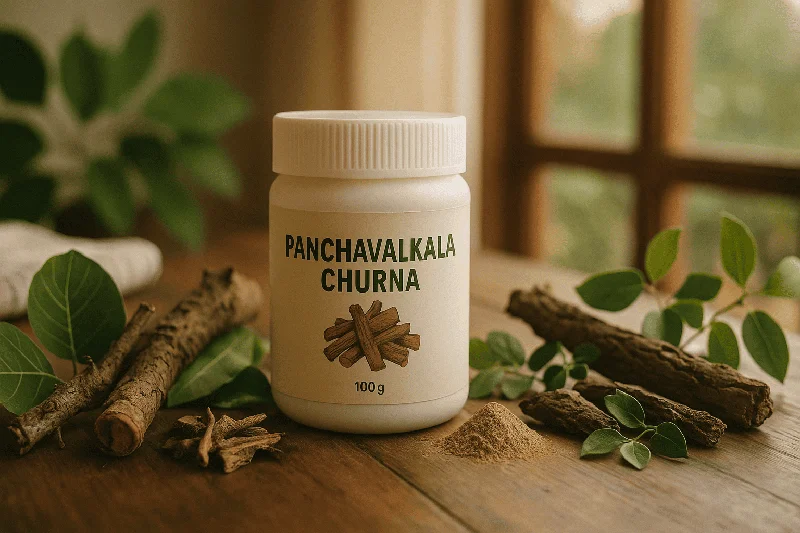
Panchavalkala Churna is an ancient Ayurvedic formulation made from the bark of five sacred fig-family trees, used primarily for wound healing, gynecological care, and digestive support. The name itself breaks down into Pancha (five) + Valkala (bark), and when prepared as a coarse powder for decoction, it's technically called Panchavalkala Kwatha Churna. This formulation has been documented in classical Ayurvedic texts like the Sushruta Samhita and Charaka Samhita, and modern research — including a notable clinical case published in the Journal of Ayurveda and Integrative Medicine (2016) — confirms its wound-healing and antimicrobial potential.
Whether you're exploring this churna for post-surgical care, yoni prakshalana (vaginal wash), sitz baths, or as an external wound wash, this guide covers everything: from its five ingredients and their individual pharmacology to dosage, preparation methods, side effects, and how it compares to other Panchavalkala formulations like kwatha, ointment, and oil.
What Is Panchavalkala Churna?
Panchavalkala Churna is a polyherbal powder consisting of the dried bark of five trees — all belonging predominantly to the Ficus genus. In Ayurvedic pharmacy (Bhaishajya Kalpana), it falls under the category of Kwatha Churna — a coarsely ground powder intended to be boiled in water to prepare a therapeutic decoction (kwatha or kashaya).
- The formulation is classified as a Shodhana (cleansing) and Ropana (healing) preparation.
- It's primarily used externally — for washing wounds, as a sitz bath in anorectal conditions, and for vaginal douching — though some practitioners also recommend internal use in specific conditions under supervision.
Meaning of the Name: Pancha + Valkala + Kwatha + Churna
Let's break this down:
- Pancha = Five
- Valkala = Bark (specifically the inner bark or tvak)
- Kwatha = Decoction (a water-based extract prepared by boiling)
- Churna = Powder
So "Panchavalkala Kwatha Churna" literally means "a powder of five barks meant for preparing a decoction." This distinction matters because the churna itself is not typically consumed as-is — it's a raw material for making the medicinal liquid.
Classical References: Sushruta Samhita & Charaka Samhita
Panchavalkala finds mention across multiple classical Ayurvedic texts:
- Sushruta Samhita (Sutra Sthana, Chapter 38): Sushruta groups Panchavalkala under Rodhradi Gana and describes its use in Vrana Prakshalana (wound washing) and Vrana Ropana (wound healing). He specifically recommends the kashaya (decoction) for cleansing surgical wounds.
- Charaka Samhita (Chikitsa Sthana): Charaka references these five barks in the context of Yoni Vyapat (gynecological disorders) and as part of Kashaya formulations for Shotha (inflammation).
- Sharangadhara Samhita: Provides the standard method for preparing kwatha from churna — using a 1:4 or 1:8 ratio of churna to water, reducing to one-fourth.
- Ashtanga Hridaya: Vagbhata mentions Panchavalkala in the management of Bhagandara (fistula-in-ano) and wound care protocols.
The consistent presence across all major samhitas underscores this formulation's foundational importance in Ayurvedic surgery (Shalya Tantra) and gynecology (Stri Roga).
Key Ingredients — The Five Sacred Barks
- All five trees in Panchavalkala are predominantly from the Ficus genus (Moraceae family), with one exception. Each bark is taken in equal proportion.
- Here's a detailed monograph of each ingredient — something no other guide provides comprehensively.
Nyagrodha (Ficus benghalensis) — Banyan Tree Bark
| Property | Detail |
|---|---|
| Sanskrit | Nyagrodha, Vata |
| Rasa (Taste) | Kashaya (Astringent) |
| Guna (Quality) | Guru (Heavy), Ruksha (Dry) |
| Virya (Potency) | Sheeta (Cooling) |
| Vipaka (Post-digestive) | Katu (Pungent) |
| Dosha Action | Pacifies Kapha and Pitta |
The Banyan bark is rich in leucocyanidin, beta-sitosterol, and tannins. Modern pharmacological studies have demonstrated its anti-inflammatory, antioxidant, and antimicrobial properties. A 2017 study in Pharmacognosy Reviews confirmed significant wound-healing activity attributed to its high tannin content, which helps precipitate proteins and form a protective layer over wounds.
Udumbara (Ficus racemosa) — Cluster Fig Bark
| Property | Detail |
|---|---|
| Sanskrit | Udumbara |
| Rasa | Kashaya (Astringent) |
| Guna | Guru (Heavy), Ruksha (Dry) |
| Virya | Sheeta (Cooling) |
| Vipaka | Katu (Pungent) |
| Dosha Action | Pacifies Pitta and Kapha |
Udumbara bark contains gluanol acetate, lupeol, and flavonoids. It's particularly valued in Ayurveda for Raktapitta (bleeding disorders) and Prameha (urinary disorders). Research published in the Indian Journal of Pharmaceutical Sciences (2013) showed its aqueous extract has notable haemostatic and anti-inflammatory effects — explaining why it's a key component in wound-washing formulations.
Ashwatha (Ficus religiosa) — Sacred Fig / Peepal Bark
| Property | Detail |
|---|---|
| Sanskrit | Ashwatha, Pippala |
| Rasa | Kashaya (Astringent) |
| Guna | Guru (Heavy), Ruksha (Dry) |
| Virya | Sheeta (Cooling) |
| Vipaka | Katu (Pungent) |
| Dosha Action | Pacifies Vata, Pitta, and Kapha (Tridoshahara) |
Ashwatha bark is perhaps the most pharmacologically studied of the five. It contains phytosterols, tannins, flavonoids (quercetin, kaempferol), and bergapten. A 2019 study in BMC Complementary Medicine and Therapies demonstrated significant antibacterial activity against Staphylococcus aureus and E. coli — common wound pathogens. The bark also shows documented anti-diabetic and anti-ulcer properties.
Plaksha (Ficus lacor / Ficus virens) — White Fig Bark
| Property | Detail |
|---|---|
| Sanskrit | Plaksha |
| Rasa | Kashaya (Astringent) |
| Guna | Guru, Ruksha |
| Virya | Sheeta (Cooling) |
| Vipaka | Katu (Pungent) |
| Dosha Action | Pacifies Pitta and Kapha |
Plaksha is the least studied of the five but holds equal importance in classical formulations. Its bark contains phenolic compounds, sterols, and tannins. Charaka describes Plaksha as Vrana Shodhana (wound purifying) and Stambhana (astringent/binding). It contributes significantly to the overall astringent and healing property of the formulation.
Parisha (Thespesia populnea) — Indian Tulip Tree Bark
| Property | Detail |
|---|---|
| Sanskrit | Parisha, Kapitana |
| Rasa | Kashaya, Tikta (Bitter) |
| Guna | Laghu (Light), Ruksha (Dry) |
| Virya | Sheeta (Cooling) |
| Vipaka | Katu (Pungent) |
| Dosha Action | Pacifies Pitta and Kapha |
This is the only non-Ficus member. Thespesia populnea bark contains populneol, gossypol, and herbacetin. It brings unique anti-fungal and anti-psoriatic properties to the blend. Research in Phytotherapy Research (2009) showed its bark extract has pronounced activity against dermatophytes — making the overall formulation effective for skin conditions beyond simple wound care.
Ayurvedic Properties of the Combined Formulation
When all five barks are combined in equal parts, Panchavalkala Churna exhibits a unified pharmacological profile:
| Ayurvedic Parameter | Panchavalkala Churna |
|---|---|
| Rasa (Taste) | Predominantly Kashaya (Astringent) |
| Guna (Qualities) | Guru (Heavy), Ruksha (Dry), Sheeta (Cold) |
| Virya (Potency) | Sheeta (Cooling) |
| Vipaka | Katu (Pungent) |
| Dosha Karma | Kapha-Pitta Shamaka (reduces Kapha and Pitta) |
| Main Karma | Shothahara (anti-inflammatory), Vranaropana (wound healing), Stambhana (astringent), Krimighna (antimicrobial) |
| Rogaghnata | Vrana (wounds), Yoni Roga (gynecological), Bhagandara (fistula), Shotha (edema), Tvak Roga (skin diseases) |
The dominant Kashaya rasa (astringent taste) is the key — it constricts tissues, promotes hemostasis, reduces discharge, and creates conditions unfavorable for microbial growth. The Sheeta virya (cooling potency) counters inflammation and burning sensations.
In terms of modern phytochemistry, the combined bioactive compounds include: tannins (10–15% dry weight), flavonoids (quercetin, kaempferol, rutin), phytosterols (beta-sitosterol, stigmasterol), triterpenes (lupeol), and phenolic acids. These compound groups collectively explain the antimicrobial, antioxidant, astringent, and wound-healing actions.
Health Benefits of Panchavalkala Churna
Wound Healing and Post-Surgical Care
This is the most evidence-backed benefit. A clinical case study published in the Journal of Ayurveda and Integrative Medicine (2016, PMC4728863) documented the use of Panchavalkala ointment following fistulectomy. The patient had a wound measuring 10 × 4 × 3 cm after surgical excision of fistula-in-ano. Panchavalkala-based treatment led to complete wound healing within approximately 2.5 months — with healthy granulation tissue, no infection, and minimal scarring.
The mechanism works through multiple pathways:
- Tannins form a protective layer over exposed tissue (astringent action)
- Flavonoids promote angiogenesis and collagen synthesis
- Antimicrobial compounds prevent secondary infection
- Anti-inflammatory agents reduce edema and pain
Gynecological Applications (Yoni Prakshalana)
- Panchavalkala decoction is classically indicated for Yoni Prakshalana — therapeutic vaginal washing.
- It's recommended in conditions like:
- Shweta Pradara (leucorrhea / white discharge)
- Yoni Kandu (vaginal itching)
- Yoni Daha (vaginal burning sensation)
- Post-partum care — for perineal healing after delivery
The astringent and antimicrobial properties help restore vaginal pH, reduce discharge, and prevent infections. Traditional texts recommend using a lukewarm decoction for washing, typically once or twice daily.
Anorectal Disorders — Sitz Bath (Avagaha Svedana)
One of the most practical applications that patients frequently search for. Panchavalkala Kwatha is used as a sitz bath (Avagaha Svedana) in:
- Bhagandara (fistula-in-ano)
- Arsha (hemorrhoids/piles)
- Parikartika (anal fissure)
- Post-Ksharasutra procedure care
How to Prepare Panchavalkala Sitz Bath
- Take 50–60 grams of Panchavalkala Kwatha Churna
- Add to 2 liters of water
- Boil on medium heat until reduced to approximately 500 ml
- Strain and let it cool to a comfortably warm temperature (around 38–40°C)
- Pour into a sitz bath tub and sit for 15–20 minutes
- Repeat once or twice daily as directed by your physician
Skin Conditions and External Applications
The combined antifungal, antibacterial, and astringent properties make Panchavalkala effective for:
- Non-healing ulcers and chronic wounds
- Inflammatory skin conditions
- Mild fungal infections
- Burns (as a cooling wash)
- Eczema and dermatitis (as a wash, not direct application of powder)
Digestive and Oral Health Support
Though primarily an external formulation, some Ayurvedic practitioners prescribe Panchavalkala internally in low doses for:
- Atisara (diarrhea) — the astringent property helps bind stools
- Raktarsha (bleeding piles — internal)
- Mukha Roga (oral diseases) — as a gargle for gingivitis and mouth ulcers
Internal use should only be undertaken under qualified Ayurvedic supervision, and this distinction is important.
Anti-inflammatory and Stress-Relief Properties
The Sheeta virya of Panchavalkala helps pacify Pitta-related inflammatory conditions. Some practitioners also note mild anxiolytic effects when used in combination with other formulations, likely related to the beta-sitosterol and flavonoid content. However, it should be noted that Panchavalkala alone is not a primary anxiety treatment — these are secondary benefits observed in clinical practice.
Panchavalkala Churna vs Kwatha vs Ointment vs Oil: Which Form to Choose?
This is something no other resource explains clearly, and it's genuinely useful for patients trying to navigate different product forms.
| Feature | Churna (Powder) | Kwatha (Decoction) | Ointment (Malam) | Oil (Taila) |
|---|---|---|---|---|
| Preparation | Raw coarse powder | Boiled from churna, reduced | Churna + oil + beeswax base | Churna processed in sesame/coconut oil |
| Primary Use | Base material for kwatha | Wound washing, sitz bath, vaginal wash | Direct wound dressing | Wound dressing, massage |
| Ease of Use | Requires boiling | Ready after preparation | Ready to apply | Ready to apply |
| Best For | Home preparation of decoction | Prakshalana, Avagaha Svedana | Post-surgical wounds, fistula | Chronic ulcers, skin conditions |
| Shelf Life | 2 years (dry storage) | Use within 12 hours of preparation | 1–2 years | 1–2 years |
| Availability | Most common (100g packs) | Prepared fresh at home/clinic | Specialty Ayurvedic pharmacies | Specialty Ayurvedic pharmacies |
How to choose: If you need Panchavalkala for sitz baths or washing, buy the churna and prepare kwatha at home. For direct wound application after surgery, ask your Ayurvedic surgeon about the ointment form (as used in the PMC4728863 case study). Oil forms are useful for chronic conditions requiring prolonged topical application.
Don't wait or self medicate. Start chat with Doctor NOW
How to Use Panchavalkala Kwatha Churna: Step-by-Step Preparation
Preparing the Decoction (Kwatha) at Home
This is the most common use — converting the churna into a useable liquid:
Standard Method (Sharangadhara ratio — 1:16 reduced to 1:4):
- Take 10–12 grams (approximately 1 tablespoon) of Panchavalkala Kwatha Churna
- Add 192 ml of water (16 parts water to 1 part churna)
- Bring to a boil on medium flame
- Reduce heat and simmer until the liquid reduces to approximately 48 ml (1/4th of original volume)
- Strain through a clean cotton cloth
- Allow to cool to the appropriate temperature based on intended use
For Wound Washing (Vrana Prakshalana):
Use the strained, lukewarm decoction to irrigate or gently wash the wound. Can be applied with sterile gauze. Repeat 2–3 times daily.
For Vaginal Wash (Yoni Prakshalana):
- Use slightly diluted, lukewarm decoction.
- Some practitioners recommend a 1:1 dilution with distilled water for sensitive mucosal application. Use once daily or as directed.
Preparing Panchavalkala Ointment (Advanced — Clinical Use)
As described in the PMC-published case study, the ointment preparation involves:
Prepare Panchavalkala Kwatha (decoction) using the 1:4:16 ratio
- Process with sesame oil in Sneha Paka method until the water evaporates completely
- Add melted beeswax (Siktha) to create an ointment consistency
- Cool and store in a clean, airtight container
Note: This preparation is complex and best done by a qualified Ayurvedic pharmacist or physician. The ointment was what enabled complete healing of the 10 × 4 × 3 cm post-fistulectomy wound in the documented case study.
Dosage Guidelines
| Application | Amount of Churna | Water | Reduction | Frequency |
|---|---|---|---|---|
| Wound Wash | 10–12 g | 192 ml | To 48 ml (1/4th) | 2–3 times/day |
| Sitz Bath | 50–60 g | 2 liters | To 500 ml | 1–2 times/day |
| Vaginal Wash | 10–15 g | 200 ml | To 50 ml, then dilute 1:1 | Once daily |
| Oral Gargle | 5 g | 100 ml | To 25 ml | 2–3 times/day |
| Internal Use | 3–5 g | 200 ml | To 50 ml | As directed by physician only |
Important: Internal use dosage must always be determined by a qualified Ayurvedic practitioner based on individual Prakriti (constitution), Agni (digestive fire), and specific condition. Self-medication internally is not recommended.
How Long Does It Take for Panchavalkala Kwatha Churna to Show Results?
Results vary depending on the condition and mode of application:
- Acute wound washing: Visible reduction in discharge and inflammation within 3–7 days
- Sitz bath for hemorrhoids: Symptomatic relief (pain, itching) often within 5–7 days; significant improvement over 2–4 weeks
- Post-surgical wound healing: The documented case showed progressive healing over 2.5 months for a major surgical wound
- Leucorrhea (vaginal wash): Improvement typically noted within 1–2 weeks of regular use
Consistency is key. Most Ayurvedic practitioners recommend a minimum course of 2–4 weeks for chronic conditions.
Side Effects, Contraindications & Safety Profile
Known Side Effects
- Panchavalkala Churna is generally considered safe for external use.
- However, potential side effects include:
- Excessive dryness — due to strong Kashaya (astringent) rasa; prolonged use may over-dry wound beds or mucosal surfaces
- Allergic contact dermatitis — rare, but possible in individuals sensitive to Ficus species (latex allergy cross-reactivity)
- Constipation — if taken internally, the astringent property may cause or worsen constipation in Vata-predominant individuals
Contraindications
No other guide provides this level of detail on contraindications:
- Very dry wounds with minimal exudate — the astringent action can impede healing in already-dry wound environments
- Pregnancy — internal use is contraindicated; external use only under physician guidance
- Known allergy to Ficus latex — cross-reactivity possible
- Vata-dominant conditions internally — the Ruksha (dry) and Sheeta (cold) properties can aggravate Vata
- Deep puncture wounds or heavily bleeding wounds — requires primary medical/surgical care first; Panchavalkala is adjunctive, not primary treatment for serious injuries
Drug Interactions
- There are no well-documented pharmacological drug interactions for externally used Panchavalkala.
- However, if taken internally:
- May potentially enhance the effects of anti-diarrheal medications (additive astringent effect)
- Tannins can reduce absorption of iron supplements and certain medications if taken simultaneously — maintain a 2-hour gap
- Inform your physician about all concurrent medications
Storage and Shelf Life
| Parameter | Recommendation |
|---|---|
| Storage | Store in a cool, dry place away from direct sunlight and moisture |
| Container | Airtight glass or food-grade plastic container |
| Shelf Life (unopened) | Typically 2 years from manufacturing date |
| Shelf Life (after opening) | Use within 6–8 months; check for any musty odor or moisture clumping |
| Prepared Kwatha | Must be used within 12 hours; do not refrigerate and reuse next day |
| Temperature | Below 30°C; avoid bathroom storage (humidity) |
- The powder should remain free-flowing and retain its characteristic earthy, mildly astringent smell.
- If it clumps, develops mold, or smells off — discard it.
Scientific Research: Current Evidence Base
Beyond the classical textual references, here's an overview of modern research supporting Panchavalkala's therapeutic claims:
- 1.Wound Healing Case Study (2016) — Published in Ayu journal (PMC4728863): Demonstrated complete healing of a 10×4×3 cm post-fistulectomy wound using Panchavalkala ointment over 2.5 months. The wound showed healthy granulation, epithelialization, and no signs of infection.
- 2.Antimicrobial Activity (2014) — A study in International Journal of Pharmaceutical Sciences Review and Research tested Panchavalkala Kwatha against common wound pathogens and found significant zones of inhibition against S. aureus, E. coli, P. aeruginosa, and C. albicans.
- 3.Anti-inflammatory Activity (2015) — Research showed the combined extract demonstrated COX-2 inhibitory activity comparable to mild NSAIDs, explaining its traditional use in inflammatory conditions.
- 4.Individual Component Studies — Multiple studies on individual Ficus species barks confirm antioxidant (DPPH scavenging), anti-diabetic (alpha-amylase inhibition), and hepatoprotective activities — suggesting Panchavalkala may have benefits beyond its traditional wound-care indications.
While the evidence base is growing, it's important to note that large-scale randomized controlled trials specifically on Panchavalkala Churna formulations are still limited. Most evidence comes from case studies, in-vitro experiments, and traditional clinical experience spanning centuries.
How to Choose a Quality Panchavalkala Churna Product
- Not all products on the market are equal.
- Here's what to look for:
- GMP Certification — Ensure the manufacturer follows Good Manufacturing Practices as mandated by AYUSH
- Ingredient Transparency — All five barks should be listed with their botanical names
- No fillers or binders — The churna should contain only the five barks, no added starches or flow agents
- Batch number and expiry date clearly printed
- FSSAI license (if marketed as health supplement) or Drug License (if marketed as Ayurvedic medicine)
- Organic sourcing is a bonus — ensures barks are free from pesticide residues
- Reputable brands include Revinto, Agatsya, Sri Sri Tattva, Kottakkal Arya Vaidya Sala, and SN Herbals among others
Frequently Asked Questions (FAQ)
Can I take Panchavalkala Kwatha Churna daily?
Yes, for external applications like sitz baths or wound washing, daily use is standard practice and considered safe for the duration prescribed by your physician. For internal use, daily consumption should only continue for the period recommended by a qualified Ayurvedic doctor — typically 2–4 weeks, followed by reassessment.
Is Panchavalkala Kwatha Churna safe for women?
Absolutely. In fact, one of its primary classical indications is specifically for women's health — Yoni Prakshalana for leucorrhea, vaginal infections, and post-partum care. However, pregnant women should avoid internal use and consult their physician before even external application. Nursing mothers can generally use it externally without concern.
Can Panchavalkala Churna be used for children?
For external use (wound washing, mild skin conditions), Panchavalkala is generally safe for children above 5 years of age — use a more diluted decoction (double the water, reduce concentration by half). Internal use in children is not recommended without specific pediatric Ayurvedic guidance.
What is the difference between Panchavalkala Churna and Panchavalkala Lepa?
Panchavalkala Churna is the coarse powder used to make decoctions. Panchavalkala Lepa is a fine paste made by mixing the churna with water or medicated liquids, applied as a poultice directly on the skin for conditions like inflammation, boils, or localized swelling. The lepa form allows direct skin contact and longer exposure compared to a wash.
Does Panchavalkala Kwatha Churna interact with other medications?
For external use, no significant interactions are documented. For internal use, the tannin content may reduce absorption of certain drugs — especially iron supplements, certain antibiotics, and alkaloid-based medications. Maintain at least a 2-hour gap between Panchavalkala kwatha and any allopathic medication.
What is the difference between Panchavalkala Churna and Panchasakar Churna or Panchanimbadi Churna?
These are completely different formulations. Panchasakar Churna is a laxative blend (contains Senna, Saindhava, Sunthi, Haritaki, Trivrit) used for constipation. Panchanimbadi Churna contains Neem and other bitter herbs, used for skin diseases and blood purification. Panchavalkala Churna is the five-bark astringent formulation discussed in this article — different ingredients, different actions, different indications entirely.
Conclusion
Panchavalkala Churna stands as one of Ayurveda's most well-documented surgical and gynecological formulations, with a legacy stretching across the Sushruta Samhita, Charaka Samhita, and Ashtanga Hridaya. Its five-bark composition delivers a potent combination of astringent, antimicrobial, and anti-inflammatory actions backed by both classical wisdom and emerging scientific evidence.
For best results, always prepare the kwatha fresh, use it at the appropriate temperature for your specific condition, and follow the guidance of a qualified Ayurvedic physician — especially for internal use or post-surgical applications.
If you're dealing with chronic wounds, anorectal conditions, or gynecological concerns, consult a certified Ayurvedic doctor to determine whether Panchavalkala in its churna, kwatha, ointment, or oil form is the right choice for your individual needs.
Disclaimer: This article is for informational and educational purposes only. It is not a substitute for professional medical advice, diagnosis, or treatment. Always consult a qualified Ayurvedic practitioner or healthcare provider before starting any new herbal formulation.
Scientific Sources
- Role of Medicinal Herbs in Periodontal Therapy: A Systematic Review — Pasupuleti MK et al., 2023, Journal of International Society of Preventive & Community Dentistry
- Determination of Antioxidants by DPPH Radical Scavenging Activity and Quantitative Phytochemical Analysis of Ficus religiosa — Baliyan S et al., 2022, Molecules (Basel, Switzerland)
- Traditional uses, phytochemistry and pharmacology of Ficus religiosa: a review — Singh D et al., 2011, Journal of ethnopharmacology
- Genomic and transcriptomic analysis of sacred fig (Ficus religiosa) — Ashalatha KL et al., 2023, BMC genomics
- Comprehensive review on ethnomedicinal, phytochemistry and pharmacological profile of — Rawat R et al., 2024, Journal of traditional Chinese medicine = Chung i tsa chih ying wen pan
- Therapeutic potential of Ficus benghalensis in thromboembolic disorders — Sahu AK et al., 2024, Journal of Ayurveda and integrative medicine
- Ficus benghalensis promotes the glucose uptake- Evidence with in silico and in vitro — Madiwalar VS et al., 2022, Journal of diabetes and metabolic disorders
- Anti-Diabetic, Anti-Cholinesterase, and Anti-Inflammatory Potential of Plant Derived Extracts and Column Semi-Purified Fractions of Ficus benghalensis — Rauf A et al., 2024, Frontiers in bioscience (Landmark edition)
- Antifungal efficacy of Azadirachta indica and Ficus benghalensis extracts against azole resistant Candida albicans on denture resin — Philip JM et al., 2025, Scientific reports
- Effect of root-extracts of Ficus benghalensis (Banyan) in pain in animal models — Panday DR et al., 2016, Journal of neurosciences in rural practice
- Panchvalkala, a traditional Ayurvedic formulation, exhibits antineoplastic and immunomodulatory activity in cervical cancer cells and C57BL/6 mouse papilloma model — Aphale S et al., 2021, Journal of ethnopharmacology
- Total flavonoids from Ficus virens Aiton leaves alleviate liver injury and protect against lipopolysaccharide-Induced sepsis in mice — Tang Y et al., 2026, Natural product research
- Molecular interplay between phytoconstituents of Ficus Racemosa and neurodegenerative diseases — Rani A et al., 2024, The European journal of neuroscience
- Traditional uses, medicinal properties, and phytopharmacology of Ficus racemosa: a review — Ahmed F et al., 2010, Pharmaceutical biology
- Antioxidative hypoglycemic herbal medicines with in vivo and in vitro activity against C-reactive protein; a systematic review — Mirahmad M et al., 2023, Phytomedicine : international journal of phytotherapy and phytopharmacology
- Immunomodulatory Role of Plants and Their Constituents on the Management of Metabolic Disorders: An Evidence-Based Review — Febriyanti RM et al., 2024, Drug design, development and therapy
- GC-MS and NMR spectroscopy based metabolite profiling of Panchvalkal kwath (polyherbal formulation) — Singh P et al., 2023, Natural product research
Questions from users
What are the potential skin benefits of Udumbara bark extract?
Claire
5 days ago
Udumbara bark extract, from the Ficus racemosa tree, offers several skin benefits primarily through its high tannin content, which supports wound healing by forming a protective layer over the skin. Its astringent properties may help tighten and firm the skin, potentially reducing the appearance of pores. Additionally, the cooling effect of its active compounds may soothe inflammation and skin irritation. Be cautious with use if you're pregnant or have sensitive skin, and consider consulting a doctor for personalized advice, particularly for persistent or severe skin issues.
What is the shelf life of Panchavalkala Churna once it is opened?
Vada
15 days ago
Once you open Panchavalkala Churna, it's good for about 1 to 2 years, but it really depends on how you store it. Keep it in a cool, dry place, away from moisture and sunlight. If it's properly sealed after each use, it'll last longer. Just check for any changes in color or smell before using.
What is the cooling potency of Sheeta virya and how does it help with inflammation?
Julian
24 days ago
Sheeta virya, or cooling potency, helps soothe inflammation by balancing the Pitta dosha, which is associated with heat and fire in the body. It calms inflammation & reduces burning sensations by cooling down excess Pitta. If you're experiencing such symptoms, consider incorporating other cooling herbs and maintaining a Pitta-pacifying diet.
What is Panchavalkala Lepa and how is it different from Panchavalkala Churna?
Ryan
33 days ago
Panchavalkala Lepa is a paste made from Panchavalkala, usually used for external application to heal wounds, while Panchavalkala Churna is a coarse powder. You mix Panchavalkala Lepa with some liquid, typically water or honey, and apply it on the skin. Churna is often used to make decoctions you drink or apply. The main difference is how they're used - Lepa for external, Churna often for making internal use or decoction.
Can Panchavalkala Churna be used safely with other medications or herbs?
Christopher
44 days ago
Hey! Panchavalkala Churna, generally safe, but when mixing it with other meds or herbs, it's best to be cautious. Ayurveda looks at the balance of doshas, and adding too much of one thing might tilt it off. Chat with a practitioner who knows your specific circumstances to be safe! Better to play it safe, than mess up the balance. 😉
What are the benefits of using Panchavalkala Churna for skin rashes and irritation?
Mckenzie
53 days ago
Using Panchavalkala Churna for skin rashes and irritation can be quite beneficial. It's known for its skin-soothing and anti-inflammatory properties, which can reduce redness and irritation. It helps balance the doshas, promoting healthy skin by calming Pitta imbalance often responsible for such skin issues. Try to apply it as a paste or add to bath water for relief. Keep in mind to do a patch test first to ensure no reactions.
Can I use Panchavalkala Churna for treating vaginal infections and what is the dosage?
Rory
63 days ago
Yes, you can use Panchavalkala Churna for vaginal infections. It’s known for its antimicrobial and soothing properties. For dosage, generally about 1-3 grams twice a day with warm water is common, but you should really check with an Ayurvedic doctor for your specific needs. Everyone's different, so it's good to personalize.
Is it safe to use Panchavalkala Churna for children or pregnant women?
Shelby
72 days ago
It's always best to be cautious when it comes to children and pregnant women using herbal remedies like Panchavalkala Churna. It's generally considered safe, but it's a good idea to consult with an Ayurvedic doctor or a healthcare provider familiar with Ayurveda. They can assess individual conditions and dosha imbalances to provide personalized guidance.
Can I use Panchavalkala Churna for boosting my immune system?
Nadine
82 days ago
Panchavalkala Churna is great for its anti-inflammatory and antimicrobial benefits, particularly for gut health and wound healing. While it's not traditionally used specifically for boosting immunity, a healthy gut can support overall immune function. If you're looking to boost your immunity, consider herbs like Ashwagandha or Amalaki which are more directly linked to immune support. Always best to consult with an Ayurvedic practitioner for personal advice!
What is the best way to store Panchavalkala Churna to keep it fresh?
Scarlett
92 days ago
To keep Panchavalkala Churna fresh, store it in a cool, dry place away from direct sunlight. Make sure it's in an airtight container to protect it from moisture and maintain its qualities. Try to keep it away from strong smells, like spices, which might affect its aroma or potency. If ya notice any change in color or smell, it's best to check with a practitioner.
Related articles

Gastrointestinal Disorders
Vata Prakopa Lakshana: A Comprehensive Guide to Symptoms, Causes, and Management
Discover Vata Prakopa Lakshana, its root causes, and evidence-based tips for managing Vata imbalance to enhance overall health and well-being.
3,086

Gastrointestinal Disorders
Kutajarishta Uses, Dose, Side Effects, And Ingredients
Exploration of Kutajarishta Uses, Dose, Side Effects, And Ingredients
3,137

Gastrointestinal Disorders
Ginger for Acidity: Ayurvedic Benefits and Tips
Is ginger good for acidity? Discover how ginger tea and water help relieve acid reflux, and how to use ginger safely in your Ayurvedic routine for digestion
6,171

Gastrointestinal Disorders
Shaddharanam Tablet – Benefits, Dosage, Side Effects, Ingredients
Exploration of Shaddharanam Tablet – Benefits, Dosage, Side Effects, Ingredients
2,149
Gastrointestinal Disorders
Tulasi Kantakari: Uses, Benefits, and Ayurvedic Applications
Discover the benefits, proper dosage, uses, and scientific evidence behind Tulasi Kantakari, a potent Ayurvedic herb for holistic health and wellness.
2,910
Gastrointestinal Disorders
Sthoulyahara Kashaya: The Comprehensive Guide to Benefits, Uses, Dosage, and Ayurvedic Insights
Discover the benefits, proper dosage, uses, and Ayurvedic foundations of Sthoulyahara Kashaya, a traditional herbal decoction for digestive and overall health.
4,842

Gastrointestinal Disorders
Khanjanikari Ras: Benefits, Uses & Ayurvedic Insights
Discover Khanjanikari Ras, an Ayurvedic remedy. Learn about its benefits, applications, ingredients, dosage, and how it supports overall health and wellness.
2,581

Gastrointestinal Disorders
Jatiphaladi Churna – Traditional Ayurvedic Powder for Digestive & Systemic Health
Discover the benefits and uses of Jatiphaladi Churna, a traditional Ayurvedic powder known for promoting digestive health, detoxification, and overall vitality through a blend of potent herbs.
2,711

Gastrointestinal Disorders
What Causes Constipation: Ayurvedic Reasons, Symptoms, and Treatment
What causes constipation? Learn Ayurvedic causes, symptoms, danger signs, and natural remedies for chronic and severe constipation, including diet and lifestyle tips
2,103
Gastrointestinal Disorders
Swarna Sutshekhar Ras: Benefits, Dosage & Ayurvedic Insights
Explore the benefits, proper dosage, uses, and Ayurvedic foundations of Swarna Sutshekhar Ras, a traditional herbal formulation for holistic health.
4,005
Related consultations on the topic
Legal
Additional Documents
© 2024 Ask Ayurveda. All rights reserved.