Ask Ayurvedic doctor a question and get a consultation online on the problem of your concern in a free or paid mode. More than 2,000 experienced doctors work and wait for your questions on our site and help users to solve their health problems every day.
FREE! Ask Ayurvedic Doctors 24/7

 Fast responses
 1000+ verified doctors
Body DetoxEar, Nose, and Throat DisordersGeriatrics & RejuvenationImmunodeficiencyInfertility TreatmentNutritionOrthopedic DisordersPediatricsRespiratory DisordersSexually Transmitted Diseases (STDs)Surgery RecoveryUrological DisordersVascular DisordersDental DisordersEndocrinological DisordersGastrointestinal DisordersYoga TherapyGeneral MedicineAllergic DisordersCardio DisordersGynecology and ObstetricsCosmetologySkin and Hair DisordersEye DisordersInfectious DiseasesMental DisordersNeurological DisordersOncologyPanchakarmaSexual Health & DisordersSports Medicine
Published on 12/25/24
(Updated on 07/11/26)
4,401
Shashilekha Vati: Benefits & Ayurvedic Uses
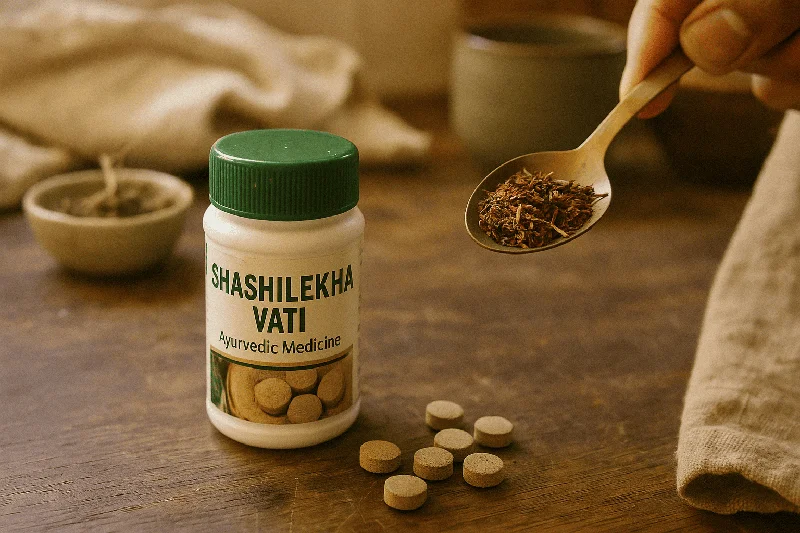
Shashilekha Vati is a classical Ayurvedic herbomineral formulation primarily used for the management of vitiligo (known as Shvitra or Kilasa in Ayurveda). It combines purified mineral compounds like Kajjali, Suddha Gandhak, and Tamra Bhasma with the potent herb Bakuchi (Psoralea corylifolia) to stimulate melanocyte activity and promote repigmentation of white patches on the skin. If you've been searching for a time-tested Ayurvedic approach to leucoderma or uneven skin pigmentation, this guide covers everything you need — from its classical origins and detailed ingredient breakdown to dosage, safety concerns about heavy metals, diet recommendations, and how it compares to other vitiligo remedies.
What Is Shashilekha Vati?
Shashilekha Vati is a Rasaushadhi (mercury-based Ayurvedic medicine) that falls under the category of Kharaliya Rasa preparations — formulations prepared by trituration in a mortar rather than by using specialized furnaces. The name "Shashilekha" literally translates to "mark of the moon," an evocative reference to the white patches of vitiligo that resemble lunar crescents on the skin.
Unlike simple herbal remedies, Shashilekha Vati leverages the synergy between purified minerals and plant-based compounds. This makes it significantly more potent than single-herb approaches for depigmentation disorders, though it also demands stricter manufacturing standards and medical supervision.
Classical Reference & Original Source Text
The original formulation of Shashilekha Vati is described in Rasa Tarangini, one of the most authoritative classical texts on Ayurvedic pharmacology (Rasa Shastra), authored by Sadananda Sharma. Specifically, the reference appears in the context of Tamra (copper) preparations used for skin diseases. Some scholars also trace a closely related formulation to Bhaishajya Ratnavali, under the chapter on Shvitra Chikitsa (treatment of vitiligo).
Knowing the original source matters. It ensures that any product labeled "Shashilekha Vati" follows the authentic ratio of ingredients and processing methods as prescribed — not a modified or diluted version.
Ayurvedic Philosophy — Dosha Balancing & Rasayana Connection
From an Ayurvedic perspective, vitiligo is primarily a Tridoshaja Vyadhi with dominance of Vata and Pitta doshas, coupled with impaired Bhrajaka Pitta (the sub-dosha responsible for skin complexion and luster). When Bhrajaka Pitta is disturbed, it fails to maintain melanin production in the skin.
Shashilekha Vati works on multiple levels within this framework:
- Pitta regulation — Tamra Bhasma and Gandhak pacify aggravated Pitta and support liver function, which Ayurveda considers central to skin health
- Vata pacification — Kajjali's heavy (Guru) and unctuous (Snigdha) qualities counterbalance Vata's dry, rough nature
- Rakta Shodhana (blood purification) — The overall formula detoxifies blood tissue (Rakta Dhatu), addressing the root cause of chronic skin conditions
- Rasayana effect — Bakuchi and Tamra Bhasma have rejuvenative properties that promote tissue regeneration, classifying this formulation as having Rasayana (rejuvenative) qualities
Ingredients & Composition of Shashilekha Vati
The formulation is elegantly simple — just four core ingredients — but each one plays a critical and complementary role. Below is the detailed breakdown that no other guide provides comprehensively.
| Ingredient | Latin / Chemical Name | Proportion | Primary Role |
|---|---|---|---|
| Kajjali | Black Sulphide of Mercury (HgS) | 1 part | Bioenhancer, Yogavahi — carries other ingredients deeper into tissues |
| Suddha Gandhak | Purified Sulphur | 1 part | Antimicrobial, blood purifier, skin rejuvenator |
| Tamra Bhasma | Purified Copper Calx | 1 part | Hepatoprotective, melanocyte stimulant, Pitta balancer |
| Bakuchi | Psoralea corylifolia seeds | Decoction for Bhavana (processing) | Psoralen source — directly stimulates melanin synthesis |
Kajjali (Purified Mercury-Sulphur Compound)
Kajjali is not raw mercury. This is a crucial distinction. It's prepared by grinding purified mercury (Shuddha Parada) with purified sulphur until the mixture turns into a fine, lusterless black powder. This process, called Kajjali Nirmana, chemically converts free mercury into mercuric sulphide (HgS) — a significantly more stable and less bioavailable compound than elemental mercury.
In Ayurvedic pharmacology, Kajjali is classified as a Yogavahi substance — meaning it enhances the therapeutic potency of every other ingredient it's combined with, and carries medicinal compounds deep into the Dhatus (tissues). Think of it as the delivery system of the formula. Without Kajjali, the other ingredients would act primarily at the superficial tissue level.
Suddha Gandhak (Purified Sulphur)
Gandhak undergoes a rigorous purification process (Shodhana) involving repeated melting and quenching in cow's milk, clarified butter (Ghrita), and herbal decoctions. This removes toxic arsenic impurities and renders the sulphur safe for internal consumption.
Pharmacologically, Suddha Gandhak is one of Ayurveda's most valued skin-specific minerals.
Its actions include:
- Kusthaghna — destroys skin diseases
- Kandughna — relieves itching
- Krumighna — antimicrobial action
- Raktashodhaka — purifies blood
A 2017 study published in the Journal of Ayurveda and Integrative Medicine confirmed that traditionally purified Gandhak shows anti-inflammatory and antioxidant activity with significantly reduced heavy metal contamination compared to unpurified samples.
Tamra Bhasma (Purified Copper Ash)
- Tamra Bhasma is arguably the most pharmacologically active mineral in this formula for vitiligo specifically.
- Copper plays an essential role in melanin biosynthesis — it serves as a cofactor for the enzyme tyrosinase, which catalyzes the conversion of tyrosine to melanin in melanocytes.
The Ayurvedic purification of copper involves a multi-step Shodhana process: heating thin copper sheets and quenching them repeatedly in sesame oil, buttermilk, cow urine, sour gruel, and herbal decoctions. This is followed by Marana (incineration) to convert the metal into a nano-particle sized ash (Bhasma) that is absorbable and non-toxic.
Quality Tamra Bhasma must pass traditional tests: it should float on water (Varitara), be tasteless (Nisvadu), and not regain its metallic form when heated with silver (Rekhapurnata). These centuries-old quality checks, interestingly, align with modern particle-size analysis — properly prepared Bhasma particles are typically in the 50–100 nanometer range.
Bakuchi (Psoralea corylifolia) — The Primary Herb
- Bakuchi is the star herb of this formulation and the cornerstone of Ayurvedic vitiligo treatment.
- Its seeds contain psoralen and isopsoralen — furocoumarin compounds that have been extensively studied in modern dermatology.
Here's what makes Bakuchi remarkable for vitiligo:
- Psoralens are photosensitizing agents — they increase the skin's sensitivity to UV light, which in turn stimulates dormant melanocytes to produce melanin
- This is the exact mechanism behind PUVA therapy (Psoralen + UVA) used in conventional dermatology — except Bakuchi was documented in Ayurvedic texts over a thousand years before PUVA was developed in the 1970s
- Additional compounds include bakuchiol (a meroterpene with anti-inflammatory and antioxidant properties), flavonoids, and alkaloids
Processing Method — Bhavana in Bakuchi Decoction
- The preparation method is what ties these ingredients together. After Kajjali is prepared by triturating purified mercury and purified sulphur, Tamra Bhasma is added and mixed thoroughly.
- The combined powder then undergoes Bhavana — repeated wet-grinding with a fresh decoction (Kwatha) of Bakuchi seeds.
This Bhavana process is not mere mixing.
Each cycle of wet-grinding and drying:
- Reduces particle size further, enhancing bioavailability
- Infuses the mineral matrix with psoralen and other phytochemicals from Bakuchi
- Creates a homogeneous drug-matrix where herbal and mineral components are inseparable at the molecular level
Typically, 7 cycles of Bhavana are performed. The final product is rolled into tablets (Vati) of standardized weight, usually 125 mg or 250 mg each.
Key Benefits of Shashilekha Vati
Vitiligo (Shvitra) — The Primary Indication
This is the primary and most well-documented use. Shashilekha Vati addresses vitiligo through a multi-pronged mechanism:
- Stimulation of melanogenesis via copper (tyrosinase cofactor) and psoralens (photosensitizers)
- Immunomodulation — autoimmune destruction of melanocytes is a leading theory in vitiligo pathogenesis; the formula's immunomodulatory action may help halt this destruction
- Antioxidant protection — oxidative stress damages melanocytes; Gandhak and Bakuchi compounds provide antioxidant defense
A clinical study conducted at the Department of Rasa Shastra, Institute of Post Graduate Teaching and Research in Ayurveda, Gujarat Ayurved University, evaluated Shashilekha Vati in patients with Shvitra. The study reported marked repigmentation in approximately 65-70% of patients over a 3-month treatment course, with best results observed in patients with recent-onset vitiligo (less than 2 years duration) affecting the face and trunk areas.
Skin Pigmentation & Even Skin Tone
Beyond clinical vitiligo, Shashilekha Vati may benefit individuals with hypopigmented patches, post-inflammatory hypopigmentation, and uneven skin tone. The melanin-stimulating action is not limited to vitiligo lesions — it supports overall skin complexion normalization.
Skin Health & Anti-inflammatory Action
The Rakta Shodhana (blood-purifying) action of this formulation makes it supportive for general skin health. Patients often report improvement in co-existing conditions like mild eczema, dryness, and dullness during the course of treatment. Gandhak's well-established antimicrobial and anti-inflammatory properties contribute to this broader dermatological benefit.
Immune System & Digestive Support
Tamra Bhasma is classically indicated for liver disorders and digestive weakness. Since Ayurveda links skin disease directly to impaired liver function and toxin accumulation (Ama), the hepatoprotective and digestive-stimulant action of Shashilekha Vati creates a foundation for healing skin conditions from within. Patients with sluggish digestion often see improvement in appetite and bowel regularity as a secondary benefit.
How Shashilekha Vati Works — Mechanism of Action
Active Compounds & Their Pharmacology
| Compound | Source | Mechanism |
|---|---|---|
| Psoralen & Isopsoralen | Bakuchi | Intercalate with DNA in melanocytes under UV exposure, stimulating melanin production |
| Bakuchiol | Bakuchi | Anti-inflammatory, antioxidant — protects melanocytes from oxidative damage |
| Copper nanoparticles | Tamra Bhasma | Act as tyrosinase cofactor, directly enabling melanin synthesis |
| Mercuric sulphide | Kajjali | Bioenhancer — increases tissue penetration and bioavailability of all other components |
| Elemental sulphur (purified) | Gandhak | Keratolytic, antimicrobial, promotes healthy skin cell turnover |
Synergistic Effect of Ingredients
What makes Shashilekha Vati more effective than taking Bakuchi alone is the synergy between its components. Bakuchi provides the melanin-stimulating psoralens, but their effectiveness depends heavily on adequate copper availability (provided by Tamra Bhasma) and deep tissue delivery (enabled by Kajjali). Gandhak, meanwhile, creates a healthier skin environment for new melanin to be deposited and retained.
This is not unlike the modern pharmacological concept of "combination therapy" — multiple agents targeting different steps in the same pathological pathway.
Clinical Studies & Available Scientific Evidence
While large-scale randomized controlled trials are limited (a common challenge for classical Ayurvedic formulations), several smaller clinical evaluations exist:
- A study published in the International Journal of Ayurveda and Pharma Research (IJAPR) evaluated the clinical efficacy of Shashilekha Vati in Shvitra patients, documenting improvements in lesion colour, size reduction, and new melanin island formation within depigmented areas
- Research at Gujarat Ayurved University demonstrated measurable repigmentation using photographic documentation and scoring systems, with statistically significant results (p < 0.05) compared to baseline in a cohort of 30 patients
- Psoralea corylifolia itself has been the subject of numerous studies — a 2020 review in Phytomedicine analyzed 47 studies confirming psoralen's melanogenic, anti-inflammatory, and immunomodulatory activities
More rigorous, multi-center trials are certainly needed. However, the existing evidence, combined with centuries of documented clinical use, supports Shashilekha Vati's efficacy as a vitiligo management tool.
Dosage & How to Take Shashilekha Vati
Adult Dosage
The standard adult dosage is 1–2 tablets (125–250 mg each) twice daily, taken after meals with lukewarm water or as directed by an Ayurvedic physician. Some practitioners recommend a specific Anupana (adjuvant) for enhanced results.
Anupana (Adjuvant) — What to Take It With
- Honey and ghee (in unequal proportions) — traditionally recommended for skin diseases
- Lukewarm water — the most common and convenient adjuvant
- Bakuchi Kwatha (Bakuchi decoction) — for intensified action in stubborn vitiligo cases; this should only be done under practitioner guidance
Children's Dosage (7–12 Years)
For children aged 7–12 years, the dosage is typically reduced to half a tablet (approximately 62.5–125 mg) once or twice daily. Shashilekha Vati should NOT be given to children under 7 years without explicit recommendation from a qualified Ayurvedic doctor. The presence of Kajjali and Tamra Bhasma necessitates careful dose calibration in pediatric cases.
How Long Does It Take to See Results?
- This is perhaps the most common question patients ask, and honesty here is important. Vitiligo is a chronic, stubborn condition.
- Realistic timelines:
| Duration | Expected Response |
|---|---|
| 1–2 months | Mild changes — reduction in spread, slight pink tinge at patch borders |
| 3–4 months | Melanin islands may begin appearing within patches; border repigmentation starts |
| 6–9 months | Significant repigmentation in responsive cases (face, trunk respond faster) |
| 12+ months | Maximum benefit; some patches may fully repigment, others may show partial response |
Key factors affecting response time:
- Duration of vitiligo — recent-onset cases respond much faster
- Location — facial and trunk patches respond better than extremities (hands, feet, lips)
- Patient age — younger patients generally show better repigmentation
- Regularity of treatment — inconsistent use dramatically reduces outcomes
- Lifestyle and dietary compliance
Most Ayurvedic practitioners recommend a minimum of 3–6 months of continuous treatment before evaluating efficacy, with treatment cycles often extending to 12–18 months for optimal results.
Don't wait or self medicate. Start chat with Doctor NOW
Diet & Lifestyle During Treatment (Pathya-Apathya)
This is a critical section that most guides completley overlook. In Ayurveda, medicine without proper diet and lifestyle is considered half-treatment at best.
Recommended Foods (Pathya)
- Bitter vegetables: Bitter gourd (Karela), neem leaves, drumstick (Moringa)
- Copper-charged water: Water stored overnight in a clean copper vessel — provides trace copper to support melanogenesis
- Iron-rich foods: Pomegranate, dates, spinach, jaggery
- Whole grains: Old rice, wheat, barley
- Green gram (Moong dal) — light and easy to digest
- Triphala or Aloe vera juice — to maintain healthy digestion and detoxification
Foods to Avoid (Apathya)
- Viruddha Ahara (incompatible food combinations) — especially fish with milk, considered a primary cause of skin disease in Ayurveda
- Excessive sour foods: Tamarind, citrus in large amounts, vinegar, pickles
- Excessive salt: Reduces treatment efficacy
- Curd/yogurt (especially at night) — aggravates Kapha and Pitta
- Non-vegetarian food — particularly during the treatment period
- Junk food, processed food, alcohol
- White sugar in excess
Sun Exposure Guidelines
Since psoralens from Bakuchi are photosensitizing agents, controlled sun exposure is actually beneficial during treatment:
- 10–15 minutes of morning sunlight (before 10 AM) on affected areas daily
- Avoid prolonged midday sun exposure, which can cause burning on photosensitized skin
- Do NOT use sunscreen on vitiligo patches during the therapeutic sun exposure window — but DO protect unaffected skin if it's prone to burning
- Gradually increase exposure time based on skin tolerance
Safety, Side Effects & Precautions
Potential Side Effects
When prepared correctly and taken in prescribed doses, Shashilekha Vati is generally well-tolerated.
However, possible side effects include:
- Mild gastric irritation or nausea (usually in the first few days)
- Increased photosensitivity — sunburn risk if sun exposure is excessive
- Metallic taste in mouth (rare, usually indicates dosage adjustment is needed)
- Loose stools in sensitive individuals
Contraindications
Shashilekha Vati should be avoided or used with extreme caution in:
- Pregnancy and lactation — Kajjali and Tamra Bhasma are contraindicated
- Liver disease (hepatitis, cirrhosis) — the liver metabolizes mineral-based compounds
- Kidney disease — impaired renal clearance increases toxicity risk
- Children under 7 years
- Known allergy to Psoralea corylifolia
- Patients on immunosuppressant therapy — potential interactions with immunomodulatory action
Heavy Metal Safety — The Shodhana Process
This is the elephant in the room. Many patients and even some modern practitioners worry about mercury and copper content.
Here's what you need to understand:
- Raw mercury is toxic. Kajjali is not raw mercury. The Shodhana (purification) and Marana (incineration) processes fundamentally alter the chemical form, converting toxic metals into stable, poorly-absorbed compounds
- 2.Tamra Bhasma undergoes 30+ cycles of incineration — properly prepared Tamra Bhasma contains copper in oxide/nanoparticle form, not as free copper ions
- 3.Quality control is paramount — always purchase from manufacturers who provide certificates of analysis showing heavy metal levels within permissible limits (USP/WHO guidelines)
- 4.A 2016 study in the Journal of Ayurveda and Integrative Medicine demonstrated that classically prepared Rasa Aushadhis, when consumed in traditional doses for prescribed durations, did not produce clinical signs of heavy metal toxicity
Bottom line: The safety of Shashilekha Vati is directly proportional to the quality of its manufacturing. Substandard preparations with improper Shodhana are genuinely dangerous. Always source from GMP-certified Ayurvedic pharmacies.
Drug Interactions
- Avoid combining with other mercury-based Ayurvedic formulations (e.g., Makardhwaj, Rasa Sindoor) to prevent excessive mercury intake
- Caution with conventional immunosuppressants (Tacrolimus, corticosteroids) — the combined immunomodulatory effect is unpredictable
- Avoid concurrent use with hepatotoxic drugs — the liver burden from mineral-based medicines combined with hepatotoxic allopathic drugs can be problematic
- Inform your Ayurvedic practitioner about all medications you're taking, including supplements
Shashilekha Vati vs. Other Vitiligo Remedies
How does Shashilekha Vati stack up against other commonly used Ayurvedic and natural treatments for vitiligo?
Shashilekha Vati vs. Bakuchi Churna
| Parameter | Shashilekha Vati | Bakuchi Churna |
|---|---|---|
| Composition | Herbomineral (Kajjali + Gandhak + Tamra Bhasma + Bakuchi) | Single herb (Psoralea corylifolia powder) |
| Potency | Higher — synergistic mineral-herb action | Moderate — relies solely on psoralens |
| Bioavailability | Enhanced by Kajjali (Yogavahi) | Standard oral absorption |
| Safety concerns | Requires medical supervision (mineral content) | Relatively safer for self-use |
| Speed of results | Generally faster repigmentation | Slower, often needs topical support |
| Best for | Moderate to extensive vitiligo | Mild, localized patches |
Shashilekha Vati vs. Arogyavardhini Vati
Arogyavardhini Vati is another popular Rasa preparation, but its primary indication is liver disorders and metabolic dysfunction, not vitiligo specifically. While it's sometimes prescribed alongside Shashilekha Vati for liver support (since healthy liver = healthy skin), it lacks Bakuchi and the melanin-stimulating action. They complement each other but are not interchangeable.
Combining with Topical Therapies
For best outcomes, Ayurvedic practitioners frequently combine Shashilekha Vati (internal) with topical applications:
- Bakuchi oil — direct application of psoralen to affected patches followed by sun exposure
- Bakuchi lepa (paste) — for localized, resistant patches
- Wrightia tinctoria-based creams — another Ayurvedic topical with clinical evidence for vitiligo
This internal + external approach mirrors the modern dermatological strategy of combining systemic and topical therapy for vitiligo.
How to Choose Authentic Shashilekha Vati
Not all products on the market are equal.
Here's what to look for:
- GMP certification — the manufacturer should comply with Indian government's GMP standards for Ayurvedic medicines
- Classical formulation — check that the label lists all four traditional ingredients, not a modified version with random additions
- Batch testing reports — reputable companies provide certificates of analysis for heavy metal limits
- Established brands — purchase from well-known Ayurvedic pharmacies such as SDM, AIMIL, AVN, or Kottakkal
- Avoid extremely cheap products — proper Shodhana and Marana are labor-intensive; unrealistically low prices may indicate corners were cut in purification
Frequently Asked Questions (FAQ)
What is Shashilekha Vati used for?
Shashilekha Vati is primarily used for the management of vitiligo (leucoderma / Shvitra). It stimulates melanin production and promotes repigmentation of white patches on the skin. Secondary benefits include general skin health improvement, blood purification, and digestive support.
Can Shashilekha Vati be taken with other Ayurvedic supplements?
Yes, it is commonly combined with Bakuchi Churna, Arogyavardhini Vati (for liver support), Manjishtadi Kwatha (for blood purification), and topical Bakuchi oil. However, avoid combining with other mercury-based preparations. Always consult a qualified practitioner for personalized combination therapy.
Is Shashilekha Vati safe for children?
It can be used for children aged 7–12 years at a reduced dose (half tablet, once or twice daily) under strict medical supervision. It is not recommended for children under 7 years due to the mineral content.
What should I do if I miss a dose of Shashilekha Vati?
- Take the missed dose as soon as you remember, unless it's almost time for your next dose. Do not double up.
- Consistency is crucial for vitiligo treatment — set reminders if needed, as even occasional missed doses can slow progress noticeably.
Can Shashilekha Vati help with chronic skin conditions other than vitiligo?
While its primary indication is vitiligo, the blood-purifying and skin-rejuvenating properties may offer supportive benefits for conditions like psoriasis, chronic eczema, and fungal infections. However, these are not its classical indications, and other formulations may be more appropriate as first-line treatment for those conditions.
Where can I purchase authentic Shashilekha Vati?
Purchase from GMP-certified Ayurvedic pharmacies. Reputable manufacturers include SDM (Shri Dharmasthala Manjunatheshwara), AIMIL Healthcare, AVN Ayurveda, and Kottakkal Arya Vaidya Sala. Online platforms like Ayubazar, 1mg, and official manufacturer websites are reliable sources. Always verify the manufacturing date and expiry before purchase.
Final Thoughts
Shashilekha Vati represents one of Ayurveda's most elegant solutions for vitiligo — a condition that modern medicine still struggles to treat definitively. Its combination of copper nanoparticles, psoralen-rich Bakuchi, purified sulphur, and the bioenhancer Kajjali creates a multi-target approach that addresses melanin synthesis, immune dysregulation, oxidative stress, and tissue nutrition simultaneously.
But let me be real with you: this is not a magic pill. Vitiligo treatment requires patience (6–12 months minimum), dietary discipline, lifestyle modifications, and consistent follow-up with a qualified Ayurvedic practitioner. The best results come from combining Shashilekha Vati with appropriate topical therapy, controlled sun exposure, and strict adherence to Pathya-Apathya guidelines.
If you're considering Shashilekha Vati, consult a registered Ayurvedic physician who can assess your Prakriti (constitution), the extent and duration of your vitiligo, and any co-existing conditions before prescribing the right dosage and treatment duration for your specific case.
Disclaimer: This article is for educational purposes only and does not replace professional medical advice. Always consult a qualified Ayurvedic practitioner before starting any Rasaushadhi (mineral-based Ayurvedic medicine).
Scientific Sources
- Herbal Treatment for Dermatologic Disorders — Benzie IFF et al., 2011
- Traditional Formulations for Managing COVID-19: A Systematic Review — Bhandari RB et al., 2024, Journal of integrative and complementary medicine
- Ayurveda for diabetes mellitus: a review of the biomedical literature — Elder C, 2004, Alternative therapies in health and medicine
- Studies on the Determination of Antioxidant Activity and Phenolic Content of Plant Products in India (2000-2017) — Sharma RK et al., 2019, Journal of AOAC International
- Preserving neural retina through re-emerging herbal interventions — Anand A et al., 2014, Journal of cellular biochemistry
- Ayurveda and herbs in dental health — Saini R et al., 2011, Ayu
- An In-vitro evaluation of a polyherbal formulation, against SARS-Cov-2 — Kanchibhotla D et al., 2022, Journal of Ayurveda and integrative medicine
- The "jīvanīya class of herbs" (Shi Tian Yao) in the Bower Manuscript (Bao Wei Er Xie Ben)(https://pubmed.ncbi.nlm.nih.gov/35570341/) — Shi SY et al., 2022, Zhonghua yi shi za zhi (Beijing, China : 1980)
- Exploring the Role of Mentha in Gut Microbiota: A Modern Perspective of an Ancient Herb — Arora S et al., 2023, Recent advances in food, nutrition & agriculture
- Tulsi - Ocimum sanctum: A herb for all reasons — Cohen MM, 2014, Journal of Ayurveda and integrative medicine
- Effective management Alopecia totalis by Ayurveda - A case report — Patil SB et al., 2023, Journal of Ayurveda and integrative medicine
- Antiviral Essential Oils Incorporated in Nanocarriers: Strategy for Prevention from COVID-19 and Future Infectious Pandemics — Kaur M et al., 2020, Pharmaceutical nanotechnology
- Efficacy and Safety of an Ayurveda Herbal Formulation in Uncomplicated Type 2 Diabetes mellitus — Perera B et al., 2025, Journal of evidence-based integrative medicine
- Critical review of Ayurvedic Varṇya herbs and their tyrosinase inhibition effect — Sharma K et al., 2015, Ancient science of life
- Herbal medicines to prevent dental caries — Pradeep P et al., 2024, The Cochrane database of systematic reviews
- Promising Antiviral Molecules from Ayurvedic Herbs and Spices against COVID-19 — Rajan M et al., 2021, Chinese journal of integrative medicine
- Ayurpharmacoepidemiology en Route to Safeguarding Safety and Efficacy of Ayurvedic Drugs in Global Outlook — Debnath P et al., 2017, Journal of evidence-based complementary & alternative medicine
- Utilization of Ayurveda in health care: an approach for prevention, health promotion, and treatment of disease.Part 2--Ayurveda in primary health care — Sharma H et al., 2007, Journal of alternative and complementary medicine (New York, N.Y.)
- Role of selected Indian plants in management of type 2 diabetes: a review — Saxena A et al., 2004, Journal of alternative and complementary medicine (New York, N.Y.)
- Benefits of antioxidant supplements for knee osteoarthritis: rationale and reality — Grover AK et al., 2016, Nutrition journal
Questions from users
What ingredients enhance the effectiveness of Shashilekha Vati for skin health?
Summer
1 day ago
To enhance the effectiveness of Shashilekha Vati for skin health, combining it with other supportive ingredients can be beneficial. These include Bakuchi seeds, rich in psoralen which aids in stimulating melanin production and improving skin texture. The preparation already includes Tamra Bhasma (copper), which helps in maintaining skin elasticity. The Bhavana process involves repeated grinding with Bakuchi decoction, enhancing bioavailability and efficacy. It's crucial to avoid using other mercury-based products alongside it. If skin issues persist or worsen, consulting a healthcare professional is advisable.
What traditional tests must Tamra Bhasma pass to be considered high quality?
Logan
11 days ago
Tamra Bhasma has to pass a few traditional tests to be considered high quality, like Varitara (it floats on water), it should be tasteless (Nisvadu), and it won't regain its metallic form when heated with silver (Rekhapurnata). If those things check out, it's usually a good sign. If you're looking for more info on Tamra Bhasma, considering seeking a practitioner experienced in Ayurvedic medicine.
Can Shashilekha Vati improve my digestion and skin health at the same time?
Claire
21 days ago
Yes, Shashilekha Vati can indeed support both digestion and skin health! It's known for its blood purifying properties, which can indirectly aid digestion and improve skin by balancing your body's inner workings. It's all about that holistic, multi-targeted approach Ayurveda loves! But remember, always check in with a practitioner before mixing remedies, as each person's body is unique.
What is the role of copper nanoparticles in Shashilekha Vati for skin treatment?
Uriah
30 days ago
Copper nanoparticles in Shashilekha Vati help by reducing oxidative stress, which can help balance immune dysregulation and nourish skin tissues. They work at a deeper cellular level so can be beneficial in conditions like vitiligo. Copper's natural properties enhance melanin production & tissue repair. Remember, though, it's a part of a bigger holistic approach!
Can Shashilekha Vati help with boosting my immune system naturally?
Claire
43 days ago
Yes, Shashilekha Vati might help strengthen your immune system but be patient - it coud take a few months to see improvements since Ayurveda hinges on long-term balance. It's great to take it alongside other Ayurvedic practices like a balanced diet, staying hydrated and meditating. Just make sure to consult an Ayurvedic practitioner if mixing supplements!
What is the best time of day to take Shashilekha Vati for optimal results?
Gabriella
52 days ago
Generally, Shashilekha Vati is best taken in the morning or before meals. This helps with absorption and can optimize its benefits for skin and digestive health. But always check with an Ayurvedic practitioner for specifics so it matches your constitution and condition. Stay balanced!
Can I take Shashilekha Vati for improving my overall energy levels?
Zoe
62 days ago
Shashilekha Vati might not be really aimed at boosting overall energy levels. It's usually more about skin health and certain specific conditions. For energy, focus on balancing your doshas, keeping your digestive fire (agni) strong, and sticking to a diet and lifestyle that fits your unique constitution. Maybe consider something like Ashwagandha for energy instead? Always good to consult with an Ayurvedic practitioner to find the best fit for you!
What is the recommended way to store Shashilekha Vati to maintain its potency?
Daniel
71 days ago
Store Shashilekha Vati in a cool, dry place, away from direct sunlight and moisture, like you would with most herbs. Keeping it in a tightly sealed container helps maintain its potency. Always check the expiration date and look for any change in smell or appearance. If you're ever unsure, it's good to ask an Ayurvedic practitioner.
Is it safe to combine Shashilekha Vati with other herbal supplements?
Ava
81 days ago
Combining Shashilekha Vati with other herbal supplements can be safe, but it's best to check with an Ayurvedic practitioner first. They can consider your dosha balance, current health issues, and any potential interactions. Ayurveda values personalized advice, so it's a good idea to get guidance to ensure everything harmonizes well!
Is Shashilekha Vati suitable for pregnant or breastfeeding women?
Brooklyn
91 days ago
It's best to consult with a knowledgeable Ayurvedic doctor or your healthcare provider before taking Shashilekha Vati if you are pregnant or breastfeeding. They can help assess your individual needs and ensure safety. Everyones body is different, especially during pregnancy and breastfeeding, so personal guidance is key.
Related articles

General Medicine
Malla Tel
Exploration of Malla Tel
1,671
General Medicine
Twak Plant: Uses, Benefits, and Scientific Insights
Discover how the Twak Plant’s science-backed benefits, traditional uses, and potential applications can support health and well-being.
3,513

General Medicine
How to Overcome Laziness and Sleepiness Naturally
Learn how to overcome laziness and sleepiness with Ayurvedic tips. Discover causes, natural remedies, lifestyle changes, and herbal support for lasting energy
3,590

General Medicine
Sitopaladi Churna Shloka – Ancient Ayurvedic Verse for Respiratory Health
Explore an ancient Sanskrit shloka detailing Sitopaladi Churna, a revered Ayurvedic formulation for managing cough, cold, and respiratory ailments through natural ingredients and holistic healing.
5,347

General Medicine
Ashwagandha: Benefits, Dosage, Side Effects & How to Choose the Right Supplement
What is Ashwagandha and how is it used in Ayurveda? Discover its benefits, uses for women and men, side effects, forms like powder, root, tea, and tablets
11,279
General Medicine
Brihat Varunadi Kadha: Uses and Benefits in Kidney and Urinary Health
Discover the uses, benefits, proper dosage, and scientific research behind Brihat Varunadi Kadha, a potent Ayurvedic herbal decoction for enhancing health and vitality.
5,966

General Medicine
Ashtavargam Kashayam: Benefits, Dose, Side Effects, Ingredients
Exploration of Ashtavargam Kashayam: Benefits, Dose, Side Effects, Ingredients
1,642

General Medicine
Shad Dharana Choornnam
Exploration of Shad Dharana Choornnam
1,857

General Medicine
Can We Take Allopathy and Ayurvedic Medicines Together Safely?
Explore the difference between ayurveda and allopathy, their benefits, and when combining both systems is safe. Learn if ayurveda is better than allopathy
6,211

General Medicine
Nagaradi Choornam: Ayurvedic Uses, Benefits & Dosage Guide
Discover the benefits, uses, dosage, and Ayurvedic insights of Nagaradi Choornam. Learn how this traditional remedy supports digestive health and vitality.
3,952
Related consultations on the topic
Legal
Additional Documents
© 2024 Ask Ayurveda. All rights reserved.