Ask Ayurvedic doctor a question and get a consultation online on the problem of your concern in a free or paid mode. More than 2,000 experienced doctors work and wait for your questions on our site and help users to solve their health problems every day.
FREE! Ask Ayurvedic Doctors 24/7

 Fast responses
 1000+ verified doctors
Body DetoxEar, Nose, and Throat DisordersGeriatrics & RejuvenationImmunodeficiencyInfertility TreatmentNutritionOrthopedic DisordersPediatricsRespiratory DisordersSexually Transmitted Diseases (STDs)Surgery RecoveryUrological DisordersVascular DisordersDental DisordersEndocrinological DisordersGastrointestinal DisordersYoga TherapyGeneral MedicineAllergic DisordersCardio DisordersGynecology and ObstetricsCosmetologySkin and Hair DisordersEye DisordersInfectious DiseasesMental DisordersNeurological DisordersOncologyPanchakarmaSexual Health & DisordersSports Medicine
Published on 12/26/24
(Updated on 07/11/26)
star_border 5
3,431
Rhinex Granules: Benefits, Dosage & Science-Backed Insights
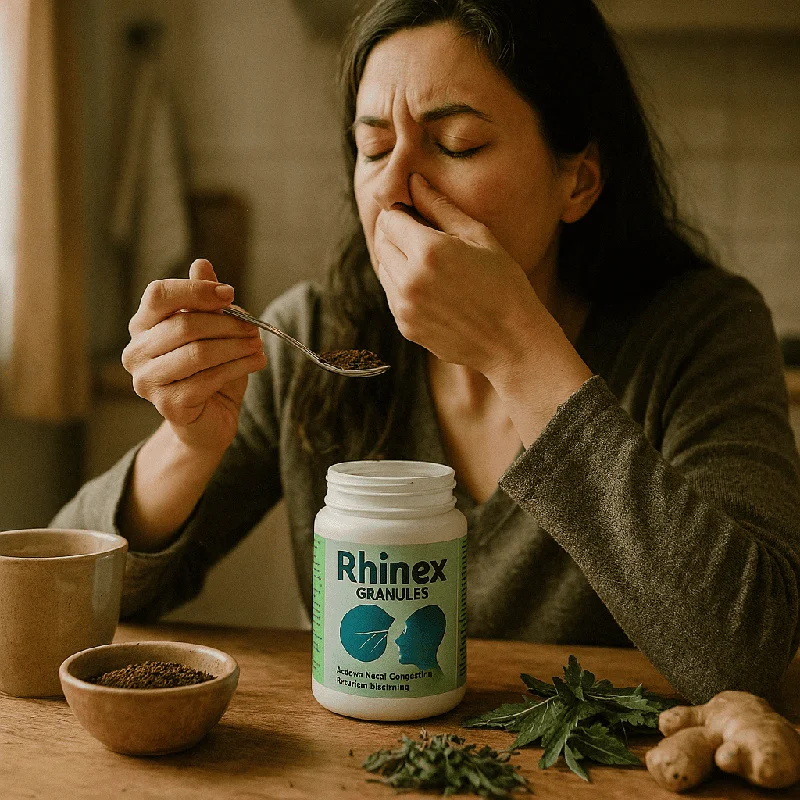
Rhinex Granules is a proprietary Ayurvedic medicine manufactured by Pentacare Pharmaceuticals and widely used for the management of allergic rhinitis, chronic cough, bronchial asthma, and other respiratory disorders. It combines classical herbal ingredients like Trikatu, Yashtimadhu, and Pushkarmoola with potent mineral bhasmas to deliver decongestant, bronchodilatory, and anti-inflammatory benefits. If you're searching for a natural, time-tested remedy for nasal congestion, recurrent sneezing, or wheezing — this granule formulation deserves a closer look.
In this comprehensive guide, we'll cover everything from the full ingredient list and Ayurvedic pharmacology to dosage, safety considerations, contraindications, and how Rhinex Granules compares with similar Ayurvedic formulations. We've also addressed gaps that no other source online has covered — including the safety of mineral components like Rasamanikya, dosha-based mechanism of action, dietary guidelines during treatment, and more.
What Is Rhinex Granules?
- Rhinex Granules is classified as a proprietary Ayurvedic medicine (not a classical formulation). This means it was developed by Pentacare Pharmaceuticals based on classical Ayurvedic principles but with a unique, brand-specific combination of ingredients.
- It's available as granules — a semi-coarse powder designed for easy oral administration, typically mixed with honey or warm water.
Manufacturer & Product Overview
Pentacare Pharmaceuticals is an Ayurvedic pharmaceutical company known for its respiratory and ENT product line. Rhinex Granules is one of their flagship products, formulated under Ayurvedic manufacturing standards.
| Detail | Information |
|---|---|
| Brand Name | Rhinex Granules |
| Manufacturer | Pentacare Pharmaceuticals |
| Type | Proprietary Ayurvedic Medicine |
| Form | Granules (oral) |
| Available Sizes | 50 g, 100 g, 250 g |
| Approx. Price | 50 g – ₹120, 100 g – ₹200, 250 g – ₹480 |
| Shelf Life | 3 years from date of manufacture |
Rhinex Granules vs Rhinex Powder — Is There a Difference?
This is a question that confuses many buyers. Some retailers list the product as "Rhinex Powder" while others sell it as "Rhinex Granules." Based on available product information and manufacturer labeling, these refer to the same formulation. The term "powder" is sometimes used loosely in Ayurvedic commerce to describe any dry oral preparation, but the official Pentacare product is labeled as granules. The granule form typically has a slightly coarser texture than a fine churna (powder), which can make it easier to mix with honey without clumping.
If you see both names online, don't worry — you're looking at the same medicine. Just make sure the manufacturer listed is Pentacare Pharmaceuticals.
Key Ingredients & Their Roles
The strength of Rhinex Granules lies in its synergistic combination of herbal extracts and mineral bhasmas. Each component has a specific role in addressing respiratory pathology. Let's break them down.
Herbal Extracts
| Ingredient | Latin/Sanskrit Name | Role in Formulation |
|---|---|---|
| Trikatu | Piper longum, Piper nigrum, Zingiber officinale | Acts as a natural decongestant and bioavailability enhancer. Reduces Kapha accumulation in the respiratory tract. |
| Yashtimadhu | Glycyrrhiza glabra (Licorice) | Potent anti-inflammatory and demulcent. Soothes irritated mucous membranes in the throat and nasal passages. A 2015 study in Journal of Ethnopharmacology confirmed its broncho-relaxant properties. |
| Pushkarmoola | Inula racemosa | Functions as a natural bronchodilator. Traditionally used in Ayurveda for Shwasa (asthma) and Hikka (hiccups). |
| Kantakari | Solanum surattense | One of the Dashamoola herbs; effective against cough and bronchospasm. Research published in Phytotherapy Research (2012) showed significant antitussive activity. |
| Triphala | Emblica officinalis, Terminalia chebula, Terminalia bellirica | Immunomodulatory and antioxidant. Supports systemic detoxification and enhances overall immunity. |
| Bharangi | Clerodendrum serratum | Anti-allergic and anti-histaminic. A key herb in Ayurvedic management of Tamaka Shwasa (bronchial asthma). |
| Vasa | Adhatoda vasica | Well-documented bronchodilator and mucolytic. Contains vasicine, which has been studied extensively for its expectorant action. |
Mineral Components — Rasamanikya, Abhraka Bhasma, Shankha Bhasma
This is a critically important section that no other source online adequately addresses. Rhinex Granules contains mineral and metallic preparations (bhasmas), which naturally raises safety questions.
Rasamanikya (Processed Arsenic Compound)
- Rasamanikya is a classical Ayurvedic preparation derived from arsenic.
- Before you raise an alarm — this is not raw arsenic. The Ayurvedic process of Shodhana (purification) and Marana (calcination) transforms the raw mineral into an inorganic oxide form with particle sizes in the nanometer range. A 2011 study published in the International Journal of Ayurveda Research analyzed Rasamanikya samples and found that properly prepared bhasmas contain arsenic in a non-toxic, biologically inert form with negligible bioavailability of harmful arsenic species.
In this formulation, Rasamanikya plays a role in managing chronic skin-related allergies and immune modulation. However, it is essential that the product is manufactured under GMP-certified conditions with proper quality control.
Abhraka Bhasma (Calcinated Mica)
Abhraka Bhasma is derived from mica through repeated cycles of heating and quenching. It's classified as a Rasayana (rejuvenative) in Ayurveda and is traditionally used for respiratory disorders, chronic fatigue, and immunodeficiency. A 2013 study in AYU Journal demonstrated its immunostimulant properties in animal models.
Shankha Bhasma (Calcinated Conch Shell)
Shankha Bhasma is rich in calcium and acts primarily as an antacid and digestive aid. In Rhinex Granules, its role is to support digestion of the other ingredients and reduce any Pitta aggravation that might occur from the heating herbs like Trikatu.
Full Composition Table (per 100 g)
| S.No. | Ingredient | Quantity (approx.) |
|---|---|---|
| 1 | Trikatu (Sunthi, Maricha, Pippali) | Present in proprietary ratio |
| 2 | Yashtimadhu (Glycyrrhiza glabra) | Present in proprietary ratio |
| 3 | Pushkarmoola (Inula racemosa) | Present in proprietary ratio |
| 4 | Kantakari (Solanum surattense) | Present in proprietary ratio |
| 5 | Triphala | Present in proprietary ratio |
| 6 | Bharangi (Clerodendrum serratum) | Present in proprietary ratio |
| 7 | Vasa (Adhatoda vasica) | Present in proprietary ratio |
| 8 | Rasamanikya | Present in proprietary ratio |
| 9 | Abhraka Bhasma | Present in proprietary ratio |
| 10 | Shankha Bhasma | Present in proprietary ratio |
| 11 | Sugar base (granule excipient) | q.s. |
Note: Pentacare Pharmaceuticals lists this as a proprietary formulation, so exact individual weights per 100 g are not publicly disclosed. The above ingredients are confirmed on the product label.
Ayurvedic Pharmacology — How Rhinex Granules Works
Understanding the Ayurvedic rationale behind this formulation helps explain why it works — and for whom it works best. This is something that competitors have completely overlooked.
Mechanism of Action
Rhinex Granules works through a multi-pronged approach:
- 1.Kapha liquefaction and expulsion — Trikatu and Bharangi liquefy stagnant Kapha in the sinuses and bronchial passages, promoting its elimination through sneezing, expectoration, or natural absorption.
- 2.Bronchodilation — Pushkarmoola and Vasa relax bronchial smooth muscle, easing airflow restriction in conditions like asthma.
- 3.Anti-inflammatory action — Yashtimadhu and Kantakari reduce inflammation of nasal and bronchial mucosa, addressing the root cause of allergic symptoms.
- 4.Immune modulation — Triphala and Abhraka Bhasma strengthen the body's innate immune response, reducing susceptibility to recurrent allergic episodes.
- 5.Digestive correction — Shankha Bhasma and Trikatu correct Agni (digestive fire), which in Ayurveda is considered the root of Ama (toxin) formation that aggravates respiratory allergies.
Effect on Doshas — Kapha & Vata
Rhinex Granules is primarily a Kapha-Vata shamaka (pacifier) formulation.
- Kapha: Most of the ingredients — Trikatu, Bharangi, Kantakari, Vasa — are Ushna Veerya (hot potency) and Katu Vipaka (pungent post-digestive effect). This makes them highly effective against Kapha disorders, which in respiratory pathology manifest as congestion, excessive mucus, heaviness, and blocked sinuses.
- Vata: Pushkarmoola and Yashtimadhu address the Vata component of respiratory disease — spasmodic cough, breathlessness, chest tightness. Yashtimadhu's Madhura Rasa (sweet taste) and Sheeta Veerya (cool potency) specifically balance Vata without excessively increasing Kapha.
- Pitta: Shankha Bhasma and Yashtimadhu provide a balancing effect to prevent Pitta aggravation from the predominantly hot-potency formula.
This is a crucial consideration. Patients with a strong Pitta constitution or active Pitta conditions (acid reflux, gastritis, burning sensations) should use this formulation cautiously and preferably with honey as anupana.
Rasa, Guna, Veerya, Vipaka of Key Ingredients
| Ingredient | Rasa (Taste) | Guna (Quality) | Veerya (Potency) | Vipaka (Post-digestive) |
|---|---|---|---|---|
| Pippali | Katu | Laghu, Snigdha | Anushna-Sheeta | Madhura |
| Maricha | Katu | Laghu, Tikshna | Ushna | Katu |
| Yashtimadhu | Madhura | Guru, Snigdha | Sheeta | Madhura |
| Pushkarmoola | Katu, Tikta | Laghu, Tikshna | Ushna | Katu |
| Kantakari | Katu, Tikta | Laghu, Ruksha | Ushna | Katu |
Indications & Health Benefits
What Is Rhinex Granules Used For?
Rhinex Granules is indicated in the following conditions:
- Pratishyaya (Allergic Rhinitis) — runny nose, sneezing, nasal itching
- Kasa (Cough) — both dry and productive
- Tamaka Shwasa (Bronchial Asthma)
- Peenasa (Chronic Sinusitis)
- Nasal congestion and blockage
- Recurrent upper respiratory tract infections
Key Benefits — Structured Overview
- 1.Clears Nasal Congestion Naturally — Without the rebound congestion effect seen with chemical nasal sprays. The herbal decongestants work gradually but sustainably.
- 2.Natural Bronchodilator — Pushkarmoola and Vasa provide bronchial muscle relaxation without the jitteriness of synthetic bronchodilators.
- 3.Soothes Irritated Throat — Yashtimadhu coats and protects inflamed throat tissues — particularly helpful for people with post-nasal drip.
- 4.Reduces Frequency of Allergic Episodes — With continued use over 2-3 months, the immunomodulatory ingredients help reduce hypersensitivity reactions.
- 5.Boosts Respiratory Immunity — Triphala and Abhraka Bhasma strengthen the body's first line of defense against airborne allergens and pathogens.
- 6.Non-Drowsy — Unlike many conventional anti-histamines, Rhinex Granules does not cause drowsiness or sedation.
Can Rhinex Granules Help With Seasonal Allergies?
Yes, and this is actually one of the best use cases for this formulation. Seasonal allergies (triggered by pollen, dust, or weather changes) are predominantly Kapha-Vata disorders in Ayurveda. Starting Rhinex Granules 2-3 weeks before the expected allergy season can act as a preventive measure by strengthening respiratory mucosa and reducing Kapha accumulation.
For people in North India, this typically means beginning the course in early February (before spring pollen season) or mid-September (before the post-monsoon dust season).
Recommended Dosage & How to Take Rhinex Granules
Dosage for Adults & Children
| Age Group | Dosage | Frequency |
|---|---|---|
| Adults | ½ to 1 teaspoon (5–10 g) | Twice daily |
| Children (5-12 years) | ¼ to ½ teaspoon (2.5–5 g) | Once or twice daily |
| Children below 5 | Not recommended without physician supervision | — |
Recommended course duration: 2 to 3 months for chronic conditions. For acute episodes, 2–4 weeks may suffice.
Best Anupana (Vehicle) for Taking Rhinex Granules
The anupana — or vehicle with which the medicine is consumed — significantly affects its absorption and efficacy in Ayurveda.
- Honey (Madhu) — The most recommended anupana. Honey is Kapha-reducing and enhances the decongestant action of the granules. Mix ½–1 tsp granules with 1 tsp of raw honey and consume before meals.
- Warm water — Suitable alternative if honey is not available or if the patient is diabetic.
- Lukewarm milk — Can be used when Vata symptoms (dry cough, chest tightness) are dominant.
> Important: Honey should never be heated or mixed with boiling water. Ayurveda considers heated honey (Ama Visha) to be toxic. Always use room-temperature or slightly warm honey.
How Long Does It Take to See Results?
Most patients report noticeable improvement in nasal congestion and sneezing within 5–7 days. However, for chronic conditions like bronchial asthma or recurrent sinusitis, significant improvement typically requires 4–8 weeks of consistent use. The full immunomodulatory benefits usually manifest over a 2–3 month course.
Don't wait or self medicate. Start chat with Doctor NOW
Side Effects, Safety & Contraindications
Is Rhinex Granules Safe for Long-Term Use?
When taken in recommended doses and under the guidance of an Ayurvedic practitioner, Rhinex Granules is generally considered safe. However, due to the presence of mineral bhasmas (Rasamanikya, Abhraka Bhasma), long-term use beyond 3 months should be done only under medical supervision with periodic monitoring.
Known Side Effects
- No significant side effects have been reported in standard dosage.
- In rare cases, some individuals may experience:
- Mild gastric irritation (usually resolves by taking after food)
- Sensation of warmth in the body (due to Ushna Veerya ingredients)
- Loose stools in Pitta-predominant individuals
Contraindications — What No Other Source Tells You
This section is critical, and it's surprising that competing resources have completely ignored it.
- Diabetes: Rhinex Granules uses sugar as a base excipient. Diabetic patients should consult their doctor and may need dosage adjustments or an alternative sugar-free formulation.
- Pregnancy & Lactation: Not recommended during pregnancy due to the presence of Rasamanikya and Ushna Veerya herbs. Lactating mothers should consult an Ayurvedic physician before use.
- Liver disease: Patients with pre-existing hepatic conditions should avoid this formulation without medical clearance, particularly due to mineral bhasma content.
- Chronic kidney disease: Mineral bhasmas require adequate renal clearance. Patients with impaired kidney function should not self-medicate.
- Known hypersensitivity to any ingredient listed.
Compatibility With Other Medications
Rhinex Granules can generally be taken alongside:
- Allopathic medications — Maintain a gap of at least 30 minutes between Rhinex Granules and any allopathic drug.
- Homeopathic remedies — A gap of 15–30 minutes is recommended.
- Other Ayurvedic medicines — Generally compatible, but consult your physician if you're already taking Rasoushadhi (mineral-based) Ayurvedic medicines to avoid cumulative dosage concerns.
- Dietary supplements — Can be taken together without issues in most cases.
Rhinex Granules vs Similar Ayurvedic Respiratory Formulations
This is a comparison that no competitor has provided. Here's how Rhinex Granules stacks up against other popular Ayurvedic respiratory medicines:
| Feature | Rhinex Granules | Sitopaladi Churna | Talisadi Churna | Haridrakhand |
|---|---|---|---|---|
| Primary Indication | Allergic rhinitis, asthma | Cough, cold, low appetite | Chronic cough, bronchitis | Allergic rhinitis, urticaria |
| Contains Bhasmas | Yes (Rasamanikya, Abhraka) | No | No | No |
| Bronchodilator Action | Strong (Pushkarmoola, Vasa) | Mild | Moderate | None |
| Anti-Allergic Effect | Strong (Bharangi) | Mild | Mild | Strong (Haridra) |
| Sugar Content | Yes | Yes | Yes | Yes |
| Suitable for Children | Above 5 years | Yes (all ages) | Yes (all ages) | Yes (all ages) |
| Formulation Type | Proprietary | Classical | Classical | Classical |
When to choose Rhinex Granules over alternatives: When the condition involves both nasal congestion AND lower respiratory symptoms (wheezing, bronchospasm), Rhinex Granules offers a more comprehensive solution than single-target formulations like Sitopaladi or Haridrakhand.
Diet & Lifestyle During Treatment (Pathya-Apathya)
Following proper Pathya (favorable regimen) while taking Rhinex Granules significantly enhances its efficacy. This is a traditional Ayurvedic practice that modern patients often overlook.
Recommended (Pathya)
- Warm, freshly cooked meals — soups, khichdi, steamed vegetables
- Ginger tea or Tulsi tea — 2-3 times daily
- Light exercise — brisk walking, Pranayama (especially Anulom-Vilom and Kapalbhati)
- Steam inhalation with Eucalyptus oil — before bedtime
- Adequate hydration — warm water throughout the day
To Avoid (Apathya)
- Cold drinks, ice cream, refrigerated foods — these increase Kapha and directly counteract the medicine's effect
- Curd/yogurt at night — aggravates Kapha and nasal congestion
- Heavy, fried, and oily foods — slow digestion and create Ama
- Exposure to dust, smoke, and strong perfumes — known allergen triggers
- Sleeping during the day — increases Kapha; evening naps are especially problematic
- Air conditioning for prolonged periods — dries out nasal mucosa and can worsen symptoms
How to Choose a Quality Product
When purchasing Rhinex Granules, verify the following:
- Manufacturer: Pentacare Pharmaceuticals (the original manufacturer)
- GMP Certification: Ensure the product bears a GMP certification mark
- Manufacturing & Expiry Date: Shelf life is 3 years; always check
- Batch Number: Should be clearly printed on the package
- Seal Integrity: Tamper-proof seal should be intact
Purchase from authorized Ayurvedic pharmacies or reputable online platforms. Avoid buying from unverified sellers, as counterfeit Ayurvedic products — particularly those containing bhasmas — can pose genuine health risks.
Frequently Asked Questions (FAQ)
What is Rhinex Granules used for?
Rhinex Granules is used primarily for allergic rhinitis (nasal allergy), cough, bronchial asthma, chronic sinusitis, and nasal congestion. It provides both symptomatic relief and addresses the underlying Kapha-Vata imbalance responsible for respiratory disorders.
Does Rhinex Granules cause drowsiness?
No. Unlike conventional antihistamines (such as cetirizine or chlorpheniramine), Rhinex Granules does not contain any sedating compounds. You can take it during the day without worrying about drowsiness or reduced alertness.
Is Rhinex Granules suitable for vegetarians and vegans?
The herbal ingredients are entirely plant-based. However, Shankha Bhasma is derived from conch shell (an animal product), and the recommended anupana is honey. Strict vegans should be aware of these components. Vegetarians generally consider bhasma preparations and honey acceptable, but this is a personal decision.
Can Rhinex Granules be taken with other allergy medications?
Yes, it can be taken alongside allopathic antihistamines or nasal sprays with a minimum gap of 30 minutes. However, if you are already on corticosteroid therapy or immunosuppressants, consult your doctor before adding any Ayurvedic formulation.
How should I store Rhinex Granules?
- Store in a cool, dry place away from direct sunlight and moisture. Keep the container tightly closed after each use.
- Do not refrigerate — excessive cold and moisture can degrade the granule quality and bhasma potency.
Is there a difference between Rhinex Granules, Rhinex Syrup, and Rhinex Tablet?
Pentacare Pharmaceuticals may offer different product variants under the Rhinex brand. The granule form is the most traditional and widely available formulation. Syrup variants (if available) may have different ingredient ratios or added flavoring for palatability. Always check the label for the specific formulation and manufacturer, as products named "Rhinex" from different companies may contain entirely different ingredients.
Can I use Rhinex Granules for prevention before allergy season?
Absolutely. Starting a preventive course 2-3 weeks before the expected onset of seasonal allergies can help strengthen respiratory mucosal immunity and reduce the severity and frequency of allergic episodes. A preventive dose of ½ teaspoon once daily is generally sufficient.
Final Thoughts
Rhinex Granules by Pentacare Pharmaceuticals stands out as a well-formulated Ayurvedic solution for a range of respiratory and allergic conditions. Its combination of classical herbal ingredients with mineral bhasmas gives it a broader therapeutic range than many single-category Ayurvedic churnas. The formulation addresses not just symptoms but the underlying doshic imbalance — making it a genuinely holistic intervention.
That said, the presence of Rasamanikya and other bhasmas means this is not a "take-it-casually" supplement. Proper dosage, appropriate anupana, dietary modifications, and medical supervision for long-term use are all essential for safe and effective outcomes.
If you're struggling with chronic nasal allergies, recurrent cough, or breathing difficulties, consult a qualified Ayurvedic practitioner to determine if Rhinex Granules is the right fit for your Prakriti (constitution) and Vikruti (current imbalance). When used correctly, it can be a remarkably effective addition to your respiratory health regimen. Disclaimer: This article is for informational purposes only and should not be considered medical advice. Always consult a qualified Ayurvedic practitioner or healthcare provider before starting any new medication. Individual results may vary based on constitution, severity of condition, and adherence to recommended guidelines.
Scientific Sources
- The landscape of Ayurveda education in India: Current status and prospects — Kumar S et al., 2025, The National medical journal of India
- The use and safety of non-allopathic Indian medicines — Gogtay NJ et al., 2002, Drug safety
- The Microbiome in Health and Disease from the Perspective of Modern Medicine and Ayurveda — Wallace RK, 2020, Medicina (Kaunas, Lithuania)
- Terminalia bellirica (Gaertn.) roxb. (Bahera) in health and disease: A systematic and comprehensive review — Gupta A et al., 2020, Phytomedicine : international journal of phytotherapy and phytopharmacology
- Ayurveda and Yoga Approaches for Managing Generalized Anxiety Disorder with Short Temperament in a School-Going Child: A Case Report — Khatri AN et al., 2024, Alternative therapies in health and medicine
- Use of Ayurvedic diagnostic criteria in Ayurvedic clinical trials: a literature review focused on research methods — Brar BS et al., 2012, Journal of alternative and complementary medicine (New York, N.Y.)
- A test of the systems analysis underlying the scientific theory of Ayurveda's Tridosha — Hankey A, 2005, Journal of alternative and complementary medicine (New York, N.Y.)
- Ayurvedic Herbal Therapies: A Review of Treatment and Management of Dementia — Srivastava V et al., 2022, Current Alzheimer research
- Integrated approaches towards drug development from Ayurveda and other Indian system of medicines — Mukherjee PK et al., 2006, Journal of ethnopharmacology
- Medical histories — Dance A, 2016, Nature
- Editorial: complementary and Alternative Medicine (CAM), Ayurvedic medicine, and research into behavioral and mind/body interventions in headache — Tepper SJ, 2014, Headache
- Ayurveda in changing scenario of diabetes management for developing safe and effective treatment choices for the future — Banerjee S et al., 2015, Journal of complementary & integrative medicine
- From ancient medicine to modern medicine: ayurvedic concepts of health and their role in inflammation and cancer — Garodia P et al., 2007, Journal of the Society for Integrative Oncology
- Can Ayurveda medicine supplement modern medical treatments in chronic disease management? — Ravindran V et al., 2024, The journal of the Royal College of Physicians of Edinburgh
- Interaction of Indian Culture and Ayurveda with Modern Medicine — Chandalia HB, 2025, The Journal of the Association of Physicians of India
- Triphala, Ayurvedic formulation for treating and preventing cancer: a review — Baliga MS, 2010, Journal of alternative and complementary medicine (New York, N.Y.)
- Efficacy and Safety of Ayurveda interventions in the management of conjunctivitis: A systematic review and meta-analysis — V KK et al., 2022, Complementary therapies in clinical practice
- Prameha in Ayurveda: correlation with obesity, metabolic syndrome, and diabetes mellitus.Part 2--management of Prameha — Sharma H et al., 2011, Journal of alternative and complementary medicine (New York, N.Y.)
- Knowledge, attitude, perception and satisfaction level of Ayurveda and allopathy in India: A systematic literature review — Hazra S et al., 2025, Explore (New York, N.Y.)
- Adaptogenic properties of six rasayana herbs used in Ayurvedic medicine — Rege NN et al., 1999, Phytotherapy research : PTR
Questions from users
How should I integrate Rhinex Granules into my daily routine?
Quincy
1 day ago
To safely integrate Rhinex Granules into your daily routine, start with the dosage recommended on the packaging or by a healthcare provider. Typically taken with water, it's best consumed after meals to aid digestion. Track any changes in your symptoms and consult a doctor if you experience any adverse effects. Be mindful of dietary guidelines accompanying Ayurvedic treatments, such as avoiding incompatible foods. While Rhinex Granules may help boost immunity, it's important to discuss long-term usage with a healthcare professional to avoid potential risks associated with mineral components like Rasamanikya.
What is the role of Rasamanikya in Rhinex Granules for respiratory health?
Jackson
11 days ago
Rasamanikya in Rhinex Granules mainly helps with the immune modulation and managing skin-related allergies, which can sometimes connect with respiratory issues like rhinitis. It has arsenic but in a form that's not harmful when made properly., so it aids the body’s balance without toxic effects! Always check in with a doctor though!
Can Rhinex Granules be used for treating cough associated with colds?
Michael
20 days ago
Rhinex Granules may help with cough linked to colds as it soothes irritated mucous membranes in the throat. However, its main use isn’t specifically for cough relief. Make sure it's aligned with your dosha balance and consider consulting an ayurvedic practitioner to ensure it's the right fit for you!
Can Rhinex Granules be taken by someone with chronic sinusitis?
Miles
29 days ago
Rhinex Granules could be helpful for chronic sinusitis, but it's crucial to consider the individual's constitution or dosha. They work on clearing sinus congestion which could balance kapha dosha. However, always consult an Ayurvedic practitioner to ensure it fits your specific needs. Keeping your agni strong is important, so ensure your diet supports digestion!
What is the recommended way to prepare Rhinex Granules for maximum effectiveness?
Tiffany
42 days ago
To prepare Rhinex Granules for best effectiveness, dissolve them in water, stirring well till fully dissolved. Then drink that mix right away. If ur taking other meds, it might be a good idea to check any interactions. The dosage on the package is worth paying attention to, for sure!
Is it effective to use Rhinex Granules for sinus infections?
Zoey
52 days ago
Rhinex Granules are primarily used for nasal congestion and allergic rhinitis, not specifically for sinus infections. However, they might help with some symptoms due to reducing inflammation and improving respiratory health. For sinus infections, it’s best to talk to a healthcare professional for a tailored approach.
Can I use Rhinex Granules if I have a history of high blood pressure?
Landon
62 days ago
If you have a history of high blood pressure, it’s always best to consult a healthcare provider before using any supplement, even something like Rhinex Granules. Some ingredients in herbal products could potentially affect blood pressure. Your health provider can guide you based on your unique health profile!
Can Rhinex Granules help with allergic rhinitis in children?
Patrick
71 days ago
Rhinex Granules are mainly intended for managing acute allergy symptoms in general, but for kids, especially with allergic rhinitis, it's always good to be a bit cautious. Make sure to talk to a pediatrician or healthcare professional first. They will be aware of the child's specific needs and any potential reactions, ensuring it’s the right fit.
What is the best way to store Rhinex Granules to maintain their effectiveness?
Zoey
81 days ago
Store Rhinex Granules in a cool, dry place away from direct sunlight or heat sources, like most Ayurvedic products. Try to keep them in their original packaging, if possible, and make sure the container is tightly sealed to protect from moisture. Keeping them in this condition will help maintain their effectiveness over time!
Can I take Rhinex Granules if I have food allergies?
Ruby
90 days ago
If you have food allergies, it's a good idea to check the ingredients in Rhinex Granules to make sure they don't include anything you're allergic to. Talk to your healthcare provider or an Ayurvedic practioner first to make sure it's safe for you. They can give you specific advice based on your health history!
Related articles

Ear, Nose, and Throat Disorders
Dashmool Haritaki – A Powerful Ayurvedic Formula for Health and Vitality
Discover the benefits and uses of Dashmool Haritaki, a traditional Ayurvedic formulation known for enhancing digestion, boosting immunity, and promoting overall wellness.
3,317

Ear, Nose, and Throat Disorders
Ayurvedic Tips To Improve Hearing
In contemporary times, hearing loss has become increasingly prevalent, often attributed to factors like loud noise exposure, medications, infections, or the natural aging process.
4,968

Ear, Nose, and Throat Disorders
Swasahara Leham – Natural Ayurvedic Syrup for Respiratory Wellness
Discover Swasahara Leham, a traditional Ayurvedic syrup formulated to support respiratory health. Learn about its benefits, ingredients, usage, and how it promotes holistic wellness naturally.
2,410
Ear, Nose, and Throat Disorders
Amodini Tablet Uncovered: The Secret to Boosting Digestion & Gut Health!
Explore the health benefits of Amodini Tablet, an Ayurvedic remedy designed for hormonal balance, menstrual health, and overall wellness in women.
2,302

Ear, Nose, and Throat Disorders
Kasa in Ayurveda – Understanding Its Role, Causes, and Remedies
Explore the significance of Kasa in Ayurveda, its causes, symptoms, and Ayurvedic remedies. Learn how this ancient approach can help alleviate cough-related issues effectively.
4,129

Ear, Nose, and Throat Disorders
Karna Bindu Ear Drops: Ayurvedic Ear Care for Healthy Hearing
Explore Karna Bindu Ear Drops, an Ayurvedic formulation for ear health. Learn about its benefits, uses, dosage guidelines, and holistic applications for optimal auditory well-being.
3,244

Ear, Nose, and Throat Disorders
Why Is My Ear Ringing All of a Sudden? Ayurvedic and Spiritual Insights
Why is your ear ringing all of a sudden? Discover Ayurvedic and spiritual meanings behind ringing in the left or right ear and natural ways to restore balance
17,947

Ear, Nose, and Throat Disorders
Hearing Loss Treatment in Ayurveda – Natural Remedies for Enhanced Auditory Health
Explore hearing loss treatment in Ayurveda through ancient herbal therapies and holistic practices designed to restore auditory function, balance doshas, and promote overall well-being.
3,978

Ear, Nose, and Throat Disorders
Gandha Thailam Uses Dosage Side Effects Ingredients Reference
Exploration of Gandha Thailam Uses Dosage Side Effects Ingredients Reference
4,963

Ear, Nose, and Throat Disorders
Swarn Bhupati Ras – Ayurvedic Elixir for Rejuvenation and Holistic Wellness
Discover Swarn Bhupati Ras, an ancient Ayurvedic formulation renowned for its rejuvenating properties, dosha balancing, and enhancement of overall vitality and longevity.
2,724
Related consultations on the topic
Legal
Additional Documents
© 2024 Ask Ayurveda. All rights reserved.