Ask Ayurvedic doctor a question and get a consultation online on the problem of your concern in a free or paid mode. More than 2,000 experienced doctors work and wait for your questions on our site and help users to solve their health problems every day.
FREE! Ask Ayurvedic Doctors 24/7

 Fast responses
 1000+ verified doctors
Body DetoxEar, Nose, and Throat DisordersGeriatrics & RejuvenationImmunodeficiencyInfertility TreatmentNutritionOrthopedic DisordersPediatricsRespiratory DisordersSexually Transmitted Diseases (STDs)Surgery RecoveryUrological DisordersVascular DisordersDental DisordersEndocrinological DisordersGastrointestinal DisordersYoga TherapyGeneral MedicineAllergic DisordersCardio DisordersGynecology and ObstetricsCosmetologySkin and Hair DisordersEye DisordersInfectious DiseasesMental DisordersNeurological DisordersOncologyPanchakarmaSexual Health & DisordersSports Medicine
Published on 01/16/25
(Updated on 07/06/26)
3,811
Kamdudha Ras Tablet Benefits: Ayurvedic Secret to Wellness
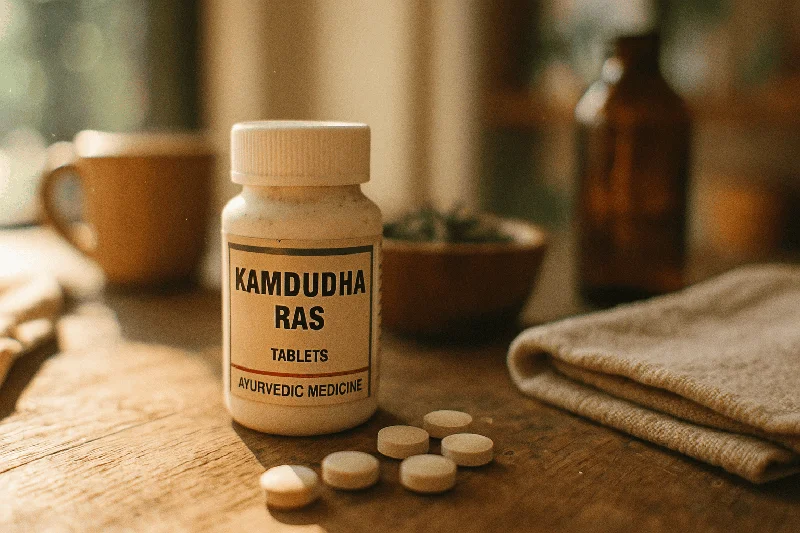
Kamdudha Ras is a classical Ayurvedic herbomineral formulation primarily used to pacify aggravated Pitta dosha, relieve hyperacidity, treat gastritis, control bleeding disorders (Raktapitta), and support digestive and reproductive health. Referenced in the authoritative text Bhaishajya Ratnavali, this time-tested preparation combines calcium-rich mineral Bhasmas and Pishtis with the immunomodulatory power of Giloy Satva to deliver a broad spectrum of therapeutic benefits — from neutralizing stomach acid to managing chronic fevers and excessive menstrual bleeding.
If you've been searching for a reliable, evidence-informed breakdown of what Kamdudha Ras actually does, how it works, who should avoid it, and how it compares to its Mouktik (pearl) variant, you're in the right place. This is the most comprehensive guide available on the subject.
What Is Kamdudha Ras?
- Kamdudha Ras is a polyherbal-mineral Ayurvedic medicine available in both tablet and powder (churna) forms.
- The name itself offers a clue to its purpose: "Kamdudha" loosely translates to "one that fulfills desires" — specifically, the desire for relief from Pitta-dominant disorders such as burning sensations, acidity, inflammation, and excessive heat in the body.
- It is classified as a Ras Aushadhi (rasa medicine), meaning it contains processed minerals and metals that have undergone rigorous Ayurvedic purification procedures called Shodhana and Marana.
- These processes are critical — they transform raw minerals into bioavailable, therapeutically active Bhasmas while removing potentially toxic elements.
Historical Background & Classical References
The formulation finds its primary reference in Bhaishajya Ratnavali, one of the most respected pharmacological texts in Ayurveda, compiled by Govind Das Sen in the 18th century. The text categorizes Kamdudha Ras under formulations indicated for Amlapitta (hyperacidity) and Raktapitta (bleeding disorders).
Some Ayurvedic scholars also trace variants of this formulation to Rasa Tarangini and Siddha Yoga Sangraha, though the Bhaishajya Ratnavali version remains the most widely manufactured and clinically used today.
Kamdudha Ras vs Kamdudha Ras (Mouktik) — Key Differences
This is a distinction that confuses many patients and, frankly, even some practitioners don't explain it well enough.
| Feature | Kamdudha Ras (Plain) | Kamdudha Ras Mouktik (With Pearl) |
|---|---|---|
| Key distinguishing ingredient | Does NOT contain Mukta Pishti | Contains Mukta Pishti (Pearl Calcium) |
| Potency | Standard potency | Higher potency due to pearl addition |
| Primary use | General acidity, mild Pitta aggravation | Severe Pitta disorders, chronic bleeding, anxiety with burning |
| Price | More affordable | Significantly more expensive |
| Classical reference | Bhaishajya Ratnavali | Bhaishajya Ratnavali (Mouktik variant) |
| Availability | Widely available | Less commonly stocked |
The bottom line: If your Ayurvedic physician prescribes "Kamdudha Ras Mouktik Yukta," it means the pearl-containing version. Don't substitute one for the other without consulting your doctor — the therapeutic intensity differs considerably.
Key Ingredients of Kamdudha Ras
Each ingredient in Kamdudha Ras serves a specific pharmacological purpose. The formulation is a carefully calibrated blend of cooling, Pitta-pacifying minerals bound together by a potent plant-based immunomodulator.
Praval Pishti (Coral Calcium)
Praval Pishti is derived from processed coral (Corallium rubrum). It is rich in calcium carbonate and acts as a natural antacid. In Ayurvedic pharmacology, it is classified as Sheeta Virya (cooling potency), making it highly effective against burning sensation in the stomach, chest, and urinary tract. A 2012 study published in the International Journal of Research in Ayurveda and Pharmacy confirmed the antacid and gastroprotective properties of Praval Pishti in animal models.
Shukti Pishti (Pearl Oyster Shell)
Prepared from the shell of Pinctada margaritifera, Shukti Pishti is another calcium-rich compound with significant antacid properties. It specifically targets Amlapitta and has been traditionally used to manage acid reflux and peptic discomfort. Its chemical composition includes calcium carbonate alongside trace amounts of conchiolin (an organic protein matrix).
Kapardak Bhasma (Cowrie Shell Ash)
Kapardak Bhasma is derived from the cowrie shell (Cypraea moneta) after extensive Shodhana and Marana processes. It is an effective digestive stimulant (Deepaniya) and antacid simultaneously — a somewhat unusual dual action. It helps improve appetite while simultaneously reducing excess acid production.
Shankh Bhasma (Conch Shell Ash)
Processed from conch shell (Turbinella pyrum), Shankh Bhasma is perhaps the most well-studied ingredient in this formulation. A 2017 study in the Journal of Ayurveda and Integrative Medicine demonstrated its significant antacid activity comparable to conventional calcium-based antacids. It contains calcium carbonate, iron oxide, and trace amounts of titanium. Shankh Bhasma also exhibits mild antispasmodic effects, which explains its efficacy in abdominal cramps and colic.
Shuddha Sonageru (Purified Hematite / Swarna Gairika)
- Swarna Gairika is a naturally occurring iron oxide (Fe₂O₃) mineral that undergoes Ayurvedic purification.
- It acts as a hemostatic agent — particularly useful in managing bleeding disorders. It contributes the formulation's styptic and cooling properties, and it is this ingredient that partly explains why Kamdudha Ras is effective in Raktapitta conditions.
Giloy Satva (Guduchi / Tinospora Cordifolia Extract)
This is the only non-mineral ingredient in the formulation, and it serves as both the binding medium and a therapeutic powerhouse. Giloy Satva is an aqueous extract of Tinospora cordifolia, extensively researched for its immunomodulatory, anti-inflammatory, antipyretic, and hepatoprotective properties. A notable 2019 study in the Journal of Ethnopharmacology demonstrated that Tinospora cordifolia exhibits significant adaptogenic and anti-hyperglycemic activity. In Kamdudha Ras, Giloy Satva serves as the Bhavana Dravya (processing medium), used to triturate and bind the mineral components while amplifying the formulation's cooling and immune-supporting effects.
Mukta Pishti (Pearl Calcium) — In Mouktik Variant Only
Present exclusively in the Mouktik version, Mukta Pishti is processed from natural pearls. It is one of the most prized substances in Rasa Shastra (Ayurvedic alchemy) and possesses potent cardiotonic, anxiolytic, and Pitta-pacifying properties. Its inclusion elevates the formulation's efficacy for conditions involving anxiety, chronic burning, and cardiac discomfort associated with Pitta aggravation.
Chemical Composition & Medicinal Properties
Biochemical Components
The combined mineral ingredients in Kamdudha Ras contribute the following key biochemical components:
- Calcium Carbonate (CaCO₃) — primary antacid compound from Praval, Shukti, Kapardak, and Shankh
- Conchiolin — organic protein from shell-derived ingredients
- Iron Oxide (Fe₂O₃) — from Shuddha Sonageru
- Starch and polysaccharides — from Giloy Satva
- Trace minerals — including titanium, magnesium, and strontium in minute quantities
Pharmacological Properties
Based on both traditional Ayurvedic classifications and modern pharmacological analysis, Kamdudha Ras exhibits the following properties:
| Property | Clinical Relevance |
|---|---|
| Antacid | Neutralizes excess gastric acid |
| Antiemetic | Reduces nausea and vomiting |
| Antipyretic | Lowers fever, particularly chronic low-grade fevers |
| Adaptogenic | Helps body cope with physical and mental stress |
| Antioxidant | Reduces oxidative damage in GI tract mucosa |
| Anti-inflammatory | Reduces mucosal inflammation in gastritis and colitis |
| Anti-hyperglycemic | Mild blood sugar modulating activity (via Giloy Satva) |
| Hemostatic / Styptic | Controls bleeding — nasal, uterine, rectal |
| Anxiolytic (Mouktik variant) | Calms Pitta-type anxiety and restlessness |
How Kamdudha Ras Works: Mechanism of Action
Ayurvedic Perspective — Pitta Shamana & Dosha Balance
In the Ayurvedic framework, Kamdudha Ras is fundamentally a Pitta Shamaka — a Pitta-pacifying agent.
Here's how the mechanism works at the Dosha level:
- Pitta dosha, governed by fire and water elements, controls digestion, metabolism, body temperature, and the quality of blood (Rakta dhatu).
- When Pitta becomes aggravated — due to spicy food, stress, excessive heat, alcohol, or constitutional predisposition — it manifests as acidity, burning urination, skin rashes, bleeding tendencies, irritability, and inflammatory conditions.
Kamdudha Ras works through several Ayurvedic mechanisms:
- Sheeta Virya (Cooling Potency): Every single ingredient possesses cooling energy, directly counteracting Pitta's inherent heat.
- Madhura Vipaka (Sweet Post-Digestive Effect): The formulation's metabolic end-product is sweet, which nourishes Rasa and Rakta dhatu while cooling the system.
- Deepana without Pitta Aggravation: Ingredients like Kapardak Bhasma enhance digestive fire (Agni) without increasing Pitta — a delicate and valuable balance.
Ayurvedic Karmas (Actions) in Sanskrit Terminology
For practitioners and serious students: Deepana (appetizer), Pachana (digestive), Rochana (relish promoter), Amahara (toxin-reducing), Medohara (fat metabolism regulator), Vatahara (Vata-pacifying secondary action), Pittahara (primary Pitta-pacifying), Raktastambhana (hemostatic), Dahahara (burning sensation reliever).
Modern Pharmacological Perspective
From a biomedical standpoint, the calcium carbonate from multiple shell-based sources acts as a direct chemical antacid, reacting with hydrochloric acid in the stomach to form calcium chloride, water, and carbon dioxide — thereby raising gastric pH. The iron oxide from Sonageru provides supplementary iron in a bioavailable form, which can support hemoglobin synthesis in patients experiencing chronic blood loss. Meanwhile, the immunomodulatory and anti-inflammatory effects of Giloy Satva address the underlying inflammatory pathology rather than merely suppressing symptoms.
Benefits and Uses of Kamdudha Ras
Digestive Health: Acidity, Gastritis & IBS
This is the primary indication and the reason most patients are prescribed Kamdudha Ras.
It provides relief from:
- Hyperacidity (Amlapitta): Rapid neutralization of excess gastric acid
- Gastritis: Reduces inflammation of the gastric mucosa
- Acid Reflux / GERD: Alleviates heartburn and regurgitation
- Irritable Bowel Syndrome (IBS): Particularly the Pitta-dominant variant with burning diarrhea, urgency, and abdominal heat
- Flatulence and Bloating: Through its Deepana-Pachana action
Hemorrhoids (Piles) and Rectal Bleeding
Kamdudha Ras is specifically beneficial in bleeding hemorrhoids (Raktarsha) where the Pitta component causes bright red bleeding during defecation. Its hemostatic and cooling properties address both the bleeding and the underlying Pitta aggravation.
Raktapitta — Bleeding Disorders
This is where Kamdudha Ras truly distinguishes itself. Raktapitta in Ayurveda refers to a condition where aggravated Pitta vitiates the blood (Rakta dhatu), causing bleeding from various orifices.
The mechanism involves:
- Pitta pacification reduces the "heat" that makes blood vessels fragile
- Raktastambhana (hemostatic action) directly promotes coagulation
- Iron oxide supplementation from Sonageru compensates for blood loss
Conditions covered include epistaxis (nosebleeds), hematemesis, hematuria, and menorrhagia.
Women's Reproductive Health
Kamdudha Ras has significant applications in gynecological conditions:
- Menorrhagia (Excessive Menstrual Bleeding): Controls heavy periods caused by Pitta aggravation
- Leucorrhea (White Discharge): Particularly when associated with burning and Pitta-type infection
- Menopausal Symptoms: Hot flashes, burning sensation, and mood irritability linked to Pitta imbalance
Chronic and Recurrent Fevers
The antipyretic action of Giloy Satva combined with the cooling properties of mineral Bhasmas makes this formulation effective in Jwara (fever), especially chronic low-grade fevers, post-viral fatigue with residual fever, and Pitta-type fevers with burning sensation, thirst, and irritability.
Urinary Disorders
Kamdudha Ras helps in Mutrakriccha (painful urination) and burning micturition caused by Pitta aggravation in the urinary tract. It is not a primary treatment for UTI but serves as an excellent adjuvant to reduce burning symptoms.
Chronic Urticaria (Sheetapitta Paradox)
- Interestingly, despite its cooling nature, Kamdudha Ras is used in chronic urticaria — a condition called Sheetapitta in Ayurveda.
- The rationale: chronic urticaria often involves underlying Pitta vitiation of Rakta dhatu even when the external manifestation appears to be triggered by cold. The formulation addresses this root Pitta imbalance.
Nausea, Vomiting & Morning Sickness
Its antiemetic property makes it useful in Chardi (vomiting) and nausea, though its use during pregnancy specifically requires physician supervision. More on this in the contraindications section below.
Don't wait or self medicate. Start chat with Doctor NOW
Dosage of Kamdudha Ras
Standard Adult Dosage
| Parameter | Recommendation |
|---|---|
| Dose | 1–2 tablets (125–250 mg each) or equivalent powder |
| Frequency | 2 times daily, or as directed by physician |
| Timing | Preferably before meals (on empty stomach) for acidity; after meals for digestive issues |
| Duration | Typically 4–8 weeks; chronic conditions may require 3–6 months under medical supervision |
Should Kamdudha Ras Be Taken Before or After Food?
For hyperacidity and GERD: before food (30 minutes prior) — this allows the antacid properties to coat the stomach lining before acid secretion peaks during digestion.
For digestive weakness and IBS: after food — to aid in digestion of the consumed meal.
For bleeding disorders and fever: irrespective of meals — the systemic action is not meal-dependent.
Anupana — What to Take It With
The vehicle (Anupana) with which you consume Kamdudha Ras can significantly influence its therapeutic direction:
| Anupana | Best For |
|---|---|
| Honey (Madhu) | Kapha-associated nausea, congestion with acidity |
| Warm milk | General Pitta pacification, burning sensation, insomnia |
| Cold water | Acute acidity and heartburn |
| Ghee (Clarified Butter) | Chronic dryness with Pitta, Raktapitta |
| Rice water (Tandulodaka) | Severe hyperacidity, gastritis with weakness |
| Mishri (Rock Sugar) + water | Burning urination, Pitta-type UTI symptoms |
Dosage for Children and Elderly
Children (5–12 years): Half the adult dose (½ to 1 tablet) under strict medical supervision. Not recommended for children under 5 without a qualified Ayurvedic practitioner's guidance. Elderly (65+ years): Standard adult dose is usually safe, but kidney function should be assessed before long-term use due to the mineral content. Dose adjustment may be needed if renal function is compromised.
Side Effects of Kamdudha Ras
- Kamdudha Ras is generally considered safe when taken in recommended doses for the prescribed duration.
- However, no medicine — Ayurvedic or otherwise — is entirely free of potential adverse effects.
Reported and Potential Side Effects:
- Constipation — due to calcium carbonate's binding effect; more common in Vata-predominant individuals
- Mild nausea — occasionally when taken on an empty stomach in sensitive individuals
- Heaviness in abdomen — usually transient and resolves within a few days
- Hypercalcemia — theoretical risk with prolonged, unsupervised, high-dose use (excessive calcium intake)
- Metallic taste — some patients report this, particularly with the Mouktik variant
Safety Concerns: Heavy Metals and Long-Term Use
This is an important topic that most resources gloss over. Kamdudha Ras contains processed minerals, and concerns about heavy metal toxicity in Ayurvedic Bhasma preparations are periodically raised in scientific literature.
The reality is nuanced: Properly prepared Bhasmas undergo extensive Shodhana (purification) and Marana (incineration) cycles — sometimes 50 to 100+ heating cycles — that transform raw minerals into nano-sized particles with fundamentally altered bioavailability and toxicity profiles. A 2011 study published in the International Journal of Applied Research in Natural Products analyzed commercially available Bhasmas and found that those prepared according to classical methods contained heavy metals well within safe limits. However, the key phrase is "properly prepared." Quality varies between manufacturers. Always purchase from reputable, GMP-certified manufacturers, and avoid unbranded or loosely packaged Bhasma products.
Contraindications: Who Should Avoid Kamdudha Ras?
This section is critically important — and largely missing from every competitor resource.
- Pregnancy: Not recommended without explicit medical supervision. While some practitioners use it cautiously for pregnancy-related acidity, the mineral content warrants careful oversight.
- Lactation: Generally considered safe in standard doses, but consult your doctor.
- Kidney Disease / Renal Insufficiency: The calcium and mineral load can be problematic for patients with compromised kidney function. Avoid or use only under nephrologist/Ayurvedic physician joint guidance.
- Hypercalcemia: Patients already diagnosed with elevated blood calcium should not take this formulation.
- Children Under 5: Insufficient safety data; avoid unless prescribed by a pediatric Ayurvedic specialist.
- Concurrent Use with Calcium Supplements: Risk of excessive calcium intake; discuss with your doctor.
- Known Allergy to Shellfish: Since multiple ingredients are derived from marine shells, patients with severe shellfish allergies should exercise caution (though the extensive processing likely denatures allergenic proteins).
Drug Interactions
Another area completely neglected by existing resources:
- Tetracycline and Fluoroquinolone Antibiotics: Calcium-based antacids can reduce absorption of these antibiotics. Maintain at least a 2-hour gap.
- Levothyroxine (Thyroid Medication): Calcium interferes with absorption. Take Kamdudha Ras at least 4 hours apart from thyroid medication.
- Iron Supplements: Calcium can impair iron absorption; stagger doses by 2 hours.
- Digoxin: Hypercalcemia risk can potentiate digoxin toxicity. Use with caution.
- Other Ayurvedic Ushna (Hot Potency) Formulations: Taking strong Pitta-aggravating formulations alongside Kamdudha Ras may neutralize its cooling effects.
How Kamdudha Ras Is Prepared
The classical preparation method follows these steps:
- 1.Individual Shodhana (Purification): Each mineral ingredient — Praval, Shukti, Kapardak, Shankh, and Sonageru — is purified separately through processes involving immersion in herbal decoctions, milk, or acidic media (like lemon juice) followed by heating.
- 2.Marana (Incineration): Purified minerals are ground into fine paste, formed into small cakes, and subjected to repeated cycles of high-temperature incineration in sealed crucibles (Sharava Samputa). This process may be repeated 10–100 times depending on the ingredient.
- 3.Bhasma Quality Tests: Classical tests include Rekhapurnatva (fine enough to settle in finger lines), Varitara (floats on water), and Niruttham (no metallic luster remains).
- 4.Trituration with Giloy Satva: All prepared Bhasmas and Pishtis are combined in specified proportions and triturated (Bhavana) with Giloy Satva. This grinding process continues for several hours to ensure homogenous mixing and further particle size reduction.
- 5.Tablet formation or final powdering: The triturated mass is either dried and packaged as powder or formed into tablets of standardised weight (typically 125mg or 250mg each).
Comparing Popular Brands of Kamdudha Ras
| Brand | Form | Pearl Variant Available? | GMP Certified | Approximate Price (INR) |
|---|---|---|---|---|
| Baidyanath | Tablet | Yes (separate product) | Yes | ₹80–₹150 for 40 tablets |
| Dhootapapeshwar | Tablet | Yes | Yes | ₹150–₹300 for 30 tablets |
| Dabur | Tablet | Limited | Yes | ₹90–₹160 for 40 tablets |
| Patanjali (Divya Pharmacy) | Tablet | No | Yes | ₹50–₹80 for 40 tablets |
| Unjha Pharmacy | Powder & Tablet | Yes | Yes | ₹100–₹200 for 25g |
Note: Prices are approximate and vary by region and retailer. Always verify batch number, manufacturing date, and expiry date before purchase.
Storage and Shelf Life
Bhasma-based preparations like Kamdudha Ras have unique storage requirements compared to purely herbal formulations:
- Store in a cool, dry place away from direct sunlight and moisture
- Keep the container tightly sealed — Bhasmas can absorb moisture from air, which may alter their particle structure and efficacy
- Shelf life: Typically 5 years from manufacturing date (some classical texts consider properly prepared Bhasmas to be effective indefinitely, but modern regulatory guidelines set a 5-year expiry)
- Do not refrigerate unless specifically directed — temperature fluctuations can cause condensation inside the container
- Keep out of reach of children
Frequently Asked Questions (FAQ)
What is the main use of Kamdudha Ras?
The primary use of Kamdudha Ras is to treat hyperacidity (Amlapitta), gastritis, and Pitta-related digestive disorders. It also serves as a hemostatic agent in bleeding disorders, a supportive remedy in chronic fevers, and a cooling formulation for burning sensations throughout the body.
Who should avoid Kamdudha Ras tablets?
Pregnant women (without medical supervision), patients with kidney disease, individuals with hypercalcemia, children under 5 years of age, and anyone taking tetracycline antibiotics or thyroid medication without proper dose spacing should avoid Kamdudha Ras or use it only under qualified medical guidance.
Is Kamdudha Ras available in syrup form?
Kamdudha Ras is traditionally available as tablets or powder. Some manufacturers may offer liquid formulations marketed as syrups, but these are not classical preparations. The tablet and powder forms are recommended for standardized dosing and classical efficacy.
How long does it take for Kamdudha Ras to show results?
For acute acidity, relief can begin within 30–60 minutes of the first dose. For chronic conditions like IBS, recurring gastritis, or bleeding disorders, consistent use for 2–4 weeks is typically needed before significant improvement is noticed. Full therapeutic benefit in chronic cases may take 6–8 weeks.
Can Kamdudha Ras be taken daily for a long time?
Short-to-medium term use (4–12 weeks) is generally safe under medical supervision. Long-term continuous use beyond 3–6 months should be reassessed by your practitioner to monitor calcium levels and kidney function. Periodic breaks are advisable.
Is Kamdudha Ras safe with allopathic medicines?
In most cases, yes — but timing matters. Maintain a gap of at least 1–2 hours between Kamdudha Ras and any allopathic medication, particularly antibiotics, thyroid drugs, and cardiac medications. Always inform both your Ayurvedic and allopathic physicians about all medications you are taking.
Conclusion
Kamdudha Ras stands as one of the most versatile and clinically relevant classical Ayurvedic formulations for Pitta-dominant disorders. Its unique combination of calcium-rich marine-derived Bhasmas with the adaptogenic power of Giloy Satva delivers a multi-targeted therapeutic approach — cooling excess heat, neutralizing acid, stopping abnormal bleeding, and strengthening digestion simultaneously.
- That said, it is not a casual supplement.
- It is a medicine — one containing processed minerals that require proper dosing, appropriate duration, and qualified medical oversight. The distinction between the plain and Mouktik variants, the importance of Anupana selection, potential drug interactions, and contraindications in kidney disease are all factors that demand informed decision-making.
Consult a qualified Ayurvedic physician before starting Kamdudha Ras, especially if you are pregnant, have pre-existing kidney conditions, or are taking prescription medications. When used correctly, this ancient formulation remains as therapeutically relevant today as it was centuries ago. Disclaimer: This article is for informational and educational purposes only and should not be considered medical advice. Always consult a qualified healthcare practitioner before starting any new medication or supplement.
Scientific Sources
- Natural volatile oils derived from herbal medicines: A promising therapy way for treating depressive disorder — Zhang Y et al., 2021, Pharmacological research
- Overview of herbal and traditional remedies in the treatment of cutaneous leishmaniasis based on Traditional Persian Medicine — Parvizi MM et al., 2020, Dermatologic therapy
- Hepatotoxicity of monoterpenes and sesquiterpenes — Zárybnický T et al., 2018, Archives of toxicology
- Ethnobotany, phytochemistry, pharmacology and quality control of Peucedanum decursivum (Miq.) Maxim: A critical review — Tao Y et al., 2024, Journal of ethnopharmacology
- Appetite Reducing Herbal Drugs from the Perspective of Avicenna and Aghili in Iranian Traditional Medicine (Persian medicine) — Parsa E et al., 2019, Current drug discovery technologies
- Elementary Overview of Heavy Metals — Jannetto PJ et al., 2023, Clinical chemistry
- Safety and efficacy of Angong Niuhuang Pills in patients with moderate-to-severe acute ischemic stroke (ANGONG TRIAL): A randomized double-blind placebo-controlled pilot clinical trial — Li S et al., 2025, Chinese medical journal
- Mercury and Mercury-Containing Preparations: History of Use, Clinical Applications, Pharmacology, Toxicology, and Pharmacokinetics in Traditional Chinese Medicine — Zhao M et al., 2022, Frontiers in pharmacology
- Ayurvedic Medicine: A Traditional Medical System and Its Heavy Metal Poisoning — Sikder MM, 2024, Chonnam medical journal
- Mercury in traditional Tibetan medicine - panacea or problem? — Sallon S et al., 2006, Human & experimental toxicology
- Chemical Constituents and Pharmacological Activities of Garlic (Allium sativum L.): A Review — El-Saber Batiha G et al., 2020, Nutrients
- Health Benefits of Culinary Herbs and Spices — Jiang TA, 2019, Journal of AOAC International
- The methionine cycle and its cancer implications — Tassinari V et al., 2024, Oncogene
- Sulfur and sulfur nanoparticles as potential antimicrobials: from traditional medicine to nanomedicine — Rai M et al., 2016, Expert review of anti-infective therapy
- Sulfur fumigation, a better or worse choice in preservation of Traditional Chinese Medicine? — Jiang X et al., 2013, Phytomedicine : international journal of phytotherapy and phytopharmacology
Questions from users
Can I use Kamdudha Ras for chronic gastritis and how does it work?
Shelby
6 days ago
Yes, Kamdudha Ras can be helpful for chronic gastritis. It's cooling and calming, so it helps reduce acidity and inflammation. But remember, it's important to use it consistently for a few weeks to see any significant relief. It's best to consult with an Ayurvedic practitioner to make sure it's well-suited to your specific condition and dosha balance!
Can I take Kamdudha Ras if I have kidney problems?
Quinn
16 days ago
If you have kidney issues, it's crucial to talk to a qualified Ayurvedic doctor before taking Kamdudha Ras. Its mineral content could affect your kidneys' function. The ingredients in it may have interactions or contraindications with kidney disease, so personal evaluation is really important.
Can I use Kamdudha Ras for nausea during pregnancy?
Summer
25 days ago
Kamdudha Ras can help with nausea from its antiemetic properties, but during pregnancy, you should definitely consult with a physician before using it. It's important to always prioritize safety for you and your baby, yknow? Better safe than sorry! 😊
Is Kamdudha Ras effective for reducing inflammation in the respiratory system?
Xanthe
38 days ago
Kamdudha Ras might help with respiratory inflammation due to its cooling and soothing properties, thanks to things like camphor. But, always better to check with an ayurvedic doctor first, since everyone's body is different! It could work wonders for some, but not for everyone, you know? 🕉️
What is the role of camphor in Kamdudha Ras for respiratory health?
Wallace
48 days ago
Camphor in Kamdudha Ras plays a key role by soothing irritated airways and reducing inflammation, which helps with breathing more easily and less congestion. It's great for respiratory health, helping keep your lungs calm and happy! If you feel unsure or got more questions, let me know.
Can I take Kamdudha Ras if I have a mild respiratory condition?
Oakley
58 days ago
If you have a mild respiratory condition, Kamdudha Ras might actually help as it's known to support respiratory health. But, it's always a good idea to consult with an Ayurvedic practitioner first, as they can take a closer look at your specific condition, dosha balance and suggest if it's the right choice for you.
What are the main ingredients in Kamdudha Ras and their benefits for respiratory health?
Zuri
67 days ago
Kamdudha Ras mainly includes ingredients like camphor, giloy, praval pishti, and moti bhasma. Camphor is soothing and helps calm the respiratory system, praval pishti balances Pitta, and giloy acts as an immunity booster. Moti bhasma has cooling properties and supports respiratory health, too! Perfect for calming those doshic imbalances.
What is the preparation process for making Kamdudha Ras tablets?
Joseph
77 days ago
The preparation for Kamdudha Ras can be quite detailed. Generally, it involves purifying and preparing ingredients like camphor, bhringraj, amla and some minerals like mercury and sulfur through classical Ayurvedic methods. These are then mixed, heated, and converted into fine ash or powder, which is shaped into tablets. Ideally, this should be done by someone experienced to keep true to its traditional formulation. If you're looking to make it yourself, be sure to consult a qualified ayurvedic practitioner for precise guidance and safety.
What is the recommended age for using Kamdudha Ras safely?
Shelby
87 days ago
Kamdudha Ras is usually recommended for adults, but it's not specifically about age alone. More about your body's unique needs and constitution. Always good to check with a practitioner, especially when thinking about giving it to kids or elderly folks. They'll consider age, weight, and health when recommending a dose. 😊
Can I use Kamdudha Ras for seasonal allergies affecting my respiratory health?
Jaxon
96 days ago
Yes, Kamdudha Ras might help with seasonal allergies! It's known for soothing irritated airways and reducing inflammation, so it could ease those respiratory symptoms. But hey, it's best to chat with an ayurvedic practitioner first to make sure it's the right fit and dosage for you. Take care!
Related articles

Ear, Nose, and Throat Disorders
Dashmool Haritaki – A Powerful Ayurvedic Formula for Health and Vitality
Discover the benefits and uses of Dashmool Haritaki, a traditional Ayurvedic formulation known for enhancing digestion, boosting immunity, and promoting overall wellness.
3,317

Ear, Nose, and Throat Disorders
Ayurvedic Tips To Improve Hearing
In contemporary times, hearing loss has become increasingly prevalent, often attributed to factors like loud noise exposure, medications, infections, or the natural aging process.
4,968

Ear, Nose, and Throat Disorders
Swasahara Leham – Natural Ayurvedic Syrup for Respiratory Wellness
Discover Swasahara Leham, a traditional Ayurvedic syrup formulated to support respiratory health. Learn about its benefits, ingredients, usage, and how it promotes holistic wellness naturally.
2,410
Ear, Nose, and Throat Disorders
Amodini Tablet Uncovered: The Secret to Boosting Digestion & Gut Health!
Explore the health benefits of Amodini Tablet, an Ayurvedic remedy designed for hormonal balance, menstrual health, and overall wellness in women.
2,302

Ear, Nose, and Throat Disorders
Kasa in Ayurveda – Understanding Its Role, Causes, and Remedies
Explore the significance of Kasa in Ayurveda, its causes, symptoms, and Ayurvedic remedies. Learn how this ancient approach can help alleviate cough-related issues effectively.
4,129

Ear, Nose, and Throat Disorders
Karna Bindu Ear Drops: Ayurvedic Ear Care for Healthy Hearing
Explore Karna Bindu Ear Drops, an Ayurvedic formulation for ear health. Learn about its benefits, uses, dosage guidelines, and holistic applications for optimal auditory well-being.
3,244

Ear, Nose, and Throat Disorders
Why Is My Ear Ringing All of a Sudden? Ayurvedic and Spiritual Insights
Why is your ear ringing all of a sudden? Discover Ayurvedic and spiritual meanings behind ringing in the left or right ear and natural ways to restore balance
17,947

Ear, Nose, and Throat Disorders
Hearing Loss Treatment in Ayurveda – Natural Remedies for Enhanced Auditory Health
Explore hearing loss treatment in Ayurveda through ancient herbal therapies and holistic practices designed to restore auditory function, balance doshas, and promote overall well-being.
3,978

Ear, Nose, and Throat Disorders
Gandha Thailam Uses Dosage Side Effects Ingredients Reference
Exploration of Gandha Thailam Uses Dosage Side Effects Ingredients Reference
4,963

Ear, Nose, and Throat Disorders
Swarn Bhupati Ras – Ayurvedic Elixir for Rejuvenation and Holistic Wellness
Discover Swarn Bhupati Ras, an ancient Ayurvedic formulation renowned for its rejuvenating properties, dosha balancing, and enhancement of overall vitality and longevity.
2,724
Related consultations on the topic
Legal
Additional Documents
© 2024 Ask Ayurveda. All rights reserved.