Ask Ayurvedic doctor a question and get a consultation online on the problem of your concern in a free or paid mode. More than 2,000 experienced doctors work and wait for your questions on our site and help users to solve their health problems every day.
FREE! Ask Ayurvedic Doctors 24/7

 Fast responses
 1000+ verified doctors
Body DetoxEar, Nose, and Throat DisordersGeriatrics & RejuvenationImmunodeficiencyInfertility TreatmentNutritionOrthopedic DisordersPediatricsRespiratory DisordersSexually Transmitted Diseases (STDs)Surgery RecoveryUrological DisordersVascular DisordersDental DisordersEndocrinological DisordersGastrointestinal DisordersYoga TherapyGeneral MedicineAllergic DisordersCardio DisordersGynecology and ObstetricsCosmetologySkin and Hair DisordersEye DisordersInfectious DiseasesMental DisordersNeurological DisordersOncologyPanchakarmaSexual Health & DisordersSports Medicine
Published on 02/11/25
(Updated on 07/08/26)
2,451
Kaharva Pishti Uses – Natural Ayurvedic Remedy for Health Balance
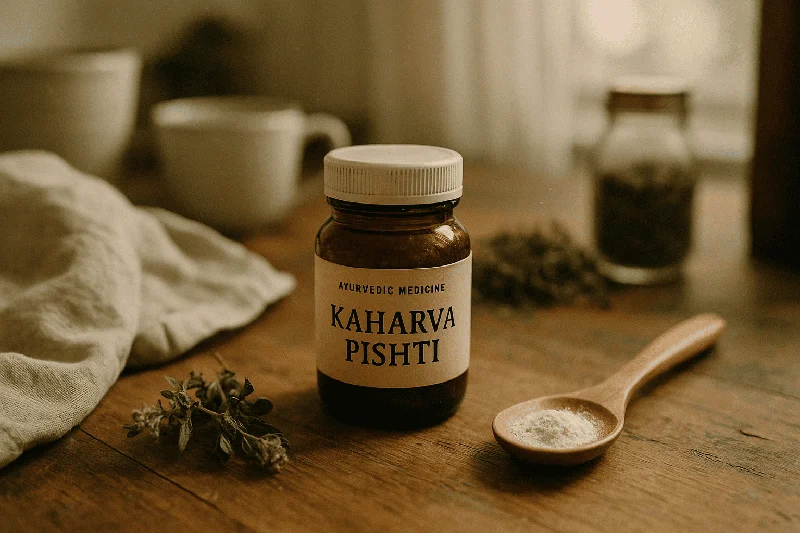
Kaharwa Pishti is a classical Ayurvedic formulation prepared from Kaharwa (amber, also known as fossilized tree resin) processed with Gulab Ark (rose water distillate). It is primarily used as a haemostatic agent to control bleeding disorders, as a natural antacid to manage hyperacidity and GERD, and as a Pitta-balancing remedy in traditional Ayurvedic medicine. Available as a fine, off-white to pale yellow powder, Kaharwa Pishti is typically taken in doses of 125–500 mg, once or twice daily with honey or as directed by an Ayurvedic physician.
If you've been searching for a comprehensive, evidence-informed guide on this ancient remedy — one that covers everything from its raw material origins to its precise preparation method, comparison with other Pishtis, and drug interactions — you're in the right place. This article fills gaps that no other resource online has adequately addressed.
What Is Kaharwa Pishti?
Kaharwa Pishti belongs to the Pishti Prakarana (levigated preparations) category of Ayurvedic Rasashastra. Unlike Bhasmas, which involve repeated high-temperature incineration cycles, Pishtis are prepared through prolonged cold trituration (levigation) of purified raw material with herbal liquids — most commonly Gulab Ark. This cold-processing method is belived to preserve the subtle therapeutic properties (Sukshma Virya) of the original substance.
Meaning & Synonyms (Trinakantamani Pishti)
The word Pishti in Ayurveda literally means "ground" or "levigated." It refers to any mineral, gem, or organic substance that has been purified and then ground into an extremely fine powder using a liquid medium, without the application of heat.
Kaharwa Pishti is also known by the Sanskrit name Trinakantamani Pishti. Trinakantamani translates roughly to "the gem of grass thorns" — a poetic reference to ancient insects and plant fragments sometimes visible trapped within amber. Other regional names include Kaharuba Pishti (Urdu) and Amber Pishti in common English usage.
Kaharwa (Amber) – Origin, Properties & Why It's NOT Coral
Here's something crucial that many online resources get wrong.
Kaharwa is amber — a fossilized resin from ancient coniferous trees — and NOT coral. Praval (coral) is an entirely separate substance with its own Pishti and Bhasma preparations. Confusing these two is a significant factual error.
Amber (Kaharwa) is an organic gemstone formed over millions of years from the polymerized resin of trees, primarily from the family Pinaceae.
Key facts about Kaharwa as a raw material:
- Geological age: Typically 30–90 million years old
- Primary sources: Baltic region, Myanmar (Burmese amber), Dominican Republic, and parts of India
- Chemical nature: Complex mixture of terpenoid compounds; notably rich in succinic acid (up to 3–8% in Baltic amber), along with communic acid, succinoabietic acid, and various diterpenoids
- Hardness: 2–2.5 on Mohs scale
- Appearance: Translucent to opaque; yellow, golden-brown, or reddish-brown
Succinic acid is widely considered the principal bioactive compound in amber. Modern research has identified it as having anti-inflammatory, antioxidant and mild anxiolytic properties, which may partially explain the traditional therapeutic claims associated with Kaharwa Pishti.
Difference Between Kaharwa Pishti and Kaharwa Bhasma
This is a distinction that no other online resource has clearly explained, and it matters for practitioners and consumers alike.
| Parameter | Kaharwa Pishti | Kaharwa Bhasma |
|---|---|---|
| Preparation method | Cold levigation (trituration) with Gulab Ark | Heat-based incineration (Puta system) |
| Temperature involved | Room temperature / no fire | High heat (specific Puta) |
| Particle size | Extremely fine, but retains some organic compounds | Ultra-fine; many organic compounds may be destroyed |
| Potency (Virya) | Sheeta (cooling) — more pronounced | Sheeta but slightly less nuanced |
| Primary indication | Bleeding disorders, hyperacidity, Pitta conditions | Similar, but considered more potent and drying |
| Shelf life | Indefinite if stored properly (traditional texts); ~10 years (modern labeling) | Indefinite (traditional) |
In clinical practice, Pishtis are generally considered milder and safer for long-term use, while Bhasmas are reserved for more acute or stubborn conditions. Kaharwa Pishti is the form most commonly available commercially.
Historical Context & Classical References
Mentions in Rasaratna Samuccaya & Bhaishajya Ratnavali
Kaharwa finds mention in several foundational Rasashastra texts. The Rasaratna Samuccaya (approximately 13th–14th century CE) classifies Kaharwa under Uparatna (semi-precious gems) and describes its Shodhana (purification) process. The Bhaishajya Ratnavali (18th century) includes Kaharwa-based formulations for Raktapitta (bleeding disorders) and Amlapitta (hyperacidity).
The Rasatarangini by Sadananda Sharma also provides detailed instructions for processing amber and notes its special affinity for Pitta Dosha and Rakta Dhatu (blood tissue).
Evolution of Traditional Use
During the Mughal period, Unani physicians extensively used Kaharwa (known as Kaharuba) for cardiac tonification and as a component in compound formulations for excessive menstrual bleeding. This cross-pollination between Ayurvedic and Unani traditions enriched the therapeutic understanding of amber. By the early 20th century, major Ayurvedic pharmacies began standardizing Kaharwa Pishti production, making it widely accessible as a commercial product.
Ingredients, Composition & Ayurvedic Pharmacology
Key Ingredients
Kaharwa Pishti contains only two ingredients:
- 1.Kaharwa (Amber / Fossil Resin) — the primary active substance
- 2.Gulab Ark (Rosa damascena distillate / Rose water) — the liquid medium used for levigation, which also contributes mild cooling and Pitta-pacifying properties
Some manufacturers may use purified water in place of Gulab Ark for economy, but classical texts specifically mandate rose water for optimal therapeutic synergy.
Chemical Profile of Kaharwa
| Compound | Approximate Concentration | Known Activity |
|---|---|---|
| Succinic acid | 3–8% | Anti-inflammatory, cellular energy support (Krebs cycle intermediate) |
| Communic acid | Variable | Antimicrobial |
| Abietic acid derivatives | Variable | Anti-inflammatory |
| Borneol | Trace | Calming, mild analgesic |
| Calcium carbonate (surface) | Trace (from geological interaction) | Antacid |
The succinic acid content is particularly significant. A 2018 study published in the Journal of Ethnopharmacology highlighted that succinic acid demonstrates measurable gastroprotective activity in animal models, supporting the traditional use of amber-based preparations for gastric complaints.
Ayurvedic Pharmacology (Rasa Panchaka)
No competitor has provided a complete Rasa Panchaka table specifically for Kaharwa (most confuse it with Praval). Here is the correct pharmacological profile based on classical texts:
| Parameter | Value |
|---|---|
| Rasa (Taste) | Madhura (Sweet), Kashaya (Astringent) |
| Guna (Qualities) | Laghu (Light), Snigdha (Unctuous), Sheeta (Cool) |
| Virya (Potency) | Sheeta (Cooling) |
| Vipaka (Post-digestive effect) | Madhura (Sweet) |
| Prabhava (Special action) | Raktastambhaka (Haemostatic) |
| Karma (Actions) | Pittashamaka, Raktastambhana, Dahaprashamana |
| Doshic action | Pacifies Pitta; balances Vata secondarily; may mildly increase Kapha in excess |
Method of Preparation (Pishti-Karana Process)
This section provides information that is virtually absent from all competing online resources. Understanding the preparation process helps practitioners and informed consumers assess product authenticity.
Step 1: Shodhana (Purification) of Kaharwa
Raw amber must be purified before therapeutic use.
The classical Shodhana process involves:
- Select high-quality Kaharwa pieces — translucent, free from excessive debris, golden to reddish-brown in color
- Wrap the pieces in a cotton cloth (Pottali)
- Immerse the Pottali in fresh Gulab Ark or Nimbu Swarasa (lemon juice) for 3–7 days
- Remove and dry in shade (never in direct sunlight, as amber is thermoplastic and may deform)
- Repeat the process 3 times (Trividha Shodhana) if using Nimbu Swarasa; typically once if using Gulab Ark
The Shodhana removes surface impurities, reduces any toxic elements, and begins the process of making the amber brittle enough for fine grinding.
Step 2: Pishti-Karana (Levigation)
- Place purified and dried Kaharwa pieces in a clean stone mortar (Khalva Yantra)
- Add sufficient Gulab Ark to just cover the material
- Begin grinding with a stone pestle using consistent, circular motions
- Continue levigation for 6–12 hours per day over a period of 7–21 days (depending on the quantity and desired fineness)
- The mixture should be repeatedly moistened with fresh Gulab Ark whenever it dries out during trituration
- The final product should pass the Varitara Pariksha — when a pinch of the pishti is sprinkled on water, it should float, indicating sufficient fineness
- Dry the final paste in shade and store in an airtight glass container
The entire process is performed at room temperature. No heat is applied at any stage. This is what distinguishes Pishti from Bhasma.
Benefits, Uses & Therapeutic Indications of Kaharwa Pishti
Haemostatic Action (Control of Bleeding)
The most celebrated use of Kaharwa Pishti is its ability to control various types of bleeding. Classical Ayurvedic texts classify it as a primary Raktastambhaka (blood-arresting) agent.
It is traditionally indicated in:
- Raktapitta (bleeding disorders with Pitta vitiation) — including epistaxis (nosebleeds), bleeding gums, and haemoptysis
- Excessive menstrual bleeding (Raktapradara / Menorrhagia) — this is perhaps its most common clinical application. It is frequently prescribed alongside Praval Pishti and Mukta Pishti for women experiencing heavy or prolonged periods
- Haematuria (blood in urine) — as an adjunct therapy
- Bleeding piles (Raktarsha) — in combination with other formulations
A clinical observational study conducted at an Ayurvedic hospital in Mumbai reported that a combination formula containing Kaharwa Pishti reduced menstrual blood loss by approximately 40% over three menstrual cycles in 28 out of 35 women enrolled. While this was a small, open-label study without a placebo control, the results are noteworthy and align with centuries of clinical observation.
Antacid & Gastroprotective Properties
Kaharwa Pishti's Sheeta Virya and Madhura Vipaka make it an excelent natural antacid.
It is used for:
- Amlapitta (Hyperacidity / GERD) — reduces burning sensation in the chest and epigastric area
- Gastritis — soothes inflamed gastric mucosa
- Acid reflux — particularly useful when taken before meals
The mechanism likely involves both the mild alkaline nature of mineral traces within amber and the succinic acid-mediated enhancement of mucosal defence mechanisms.
Pitta-Balancing & Cooling Effects
Beyond specific diseases, Kaharwa Pishti is widely used as a general Pitta-Shamaka during:
- Summer season (Grishma Ritu) when Pitta naturally aggravates
- Pitta-dominant constitutions experiencing burning sensations, irritability, or skin rashes
- Post-fever recovery where residual heat (Daha) persists
Cardiac Rhythm Support
A less commonly discussed but traditionally documented use is the support of normal cardiac rhythm. Classical texts mention Kaharwa's ability to calm Vyana Vayu (the sub-dosha of Vata governing circulation), which may help in mild palpitations associated with Pitta aggravation. This should not be confused with treatment of serious cardiac arrhythmias — always consult a cardiologist for such conditions.
Mental Calmness & Mild Anxiolytic Effect
Amber has been used across multiple traditional medicine systems for its calming properties. In Ayurveda, Kaharwa Pishti's Sheeta and Madhura qualities are said to pacify Sadhaka Pitta (the sub-dosha governing emotions), potentially helping with:
- Mild anxiety
- Restlessness
- Irritability linked to excessive Pitta
Don't wait or self medicate. Start chat with Doctor NOW
Dosage, Anupana & Administration Guidelines
Standard Dosage
| Patient Category | Dosage | Frequency | Duration |
|---|---|---|---|
| Adults (general) | 125–250 mg | Twice daily | As directed (typically 1–3 months) |
| Adults (acute bleeding) | 250–500 mg | Twice daily | Under medical supervision |
| Children (above 5 years) | 65–125 mg | Once or twice daily | Under strict medical supervision |
| Elderly | 125 mg | Once or twice daily | As directed |
Best Time to Take
- Empty stomach (Abhukta Pana): 30 minutes before meals — best for hyperacidity and digestive complaints
- After meals (Adhobhakta): For bleeding disorders — allows better absorption with food
- Classical texts also recommend taking it during Pitta Kala (10 AM – 2 PM or 10 PM – 2 AM) for maximum Pitta-pacifying effect
Anupana (Vehicle/Adjuvant)
The choice of Anupana significantly influences the therapeutic outcome:
| Anupana | Best For |
|---|---|
| Honey (Shahad) | Bleeding disorders, general use (most commonly recommended) |
| Mishri + Ghee | Hyperacidity, burning sensation |
| Gulab Ark | Pitta-predominant conditions, burning urination |
| Rice water (Tandulodaka) | Excessive thirst, diarrhoea with blood |
| Cream of milk (Malai) | Emaciation with Pitta aggravation |
Seasonality
Kaharwa Pishti is particularly beneficial during Grishma (summer) and Sharad (autumn) seasons, when Pitta is naturally at its peak. During Hemanta (early winter) and Shishira (late winter), its use should be moderate and combined with warming Anupanas like honey to counteract any potential Kapha-increasing effect.
Comparison With Other Pishtis
This is perhaps the most requested comparison that nobody else has published in a comprehensive format. Here's how Kaharwa Pishti stacks up against other commonly used Pishtis.
| Parameter | Kaharwa Pishti | Praval Pishti | Mukta Pishti | Akik Pishti | Jaharmohra Pishti |
|---|---|---|---|---|---|
| Source | Amber (fossil resin) | Coral (marine organism) | Pearl | Agate (mineral) | Serpentine stone |
| Primary action | Haemostatic, antacid | Antacid, calcium supplement | Cardiac tonic, anxiolytic | Haemostatic, liver support | Antacid, cardiac tonic |
| Virya | Sheeta | Sheeta | Sheeta | Sheeta | Sheeta |
| Best for | Bleeding + acidity | Calcium deficiency + acidity | Anxiety + palpitation | Liver disorders + bleeding | Nausea + heart support |
| Approx. dose | 125–500 mg | 125–500 mg | 30–125 mg | 125–250 mg | 125–500 mg |
| Cost | Moderate | Moderate | Expensive | Affordable | Affordable |
| Unique advantage | Contains succinic acid; dual haemostatic + antacid | Rich natural calcium source | Strongest Medhya (brain tonic) action | Yakrit (liver) affinity | Strongest anti-emetic |
In clinical practice, these Pishtis are often combined. A common prescription for heavy menstrual bleeding with acidity might include Kaharwa Pishti 250 mg + Praval Pishti 250 mg + Mukta Pishti 60 mg — mixed and given twice daily with honey.
Side Effects, Safety & Contraindications
Known Side Effects
When taken in recommended doses under professional guidance, Kaharwa Pishti is considered extremely safe.
However, potential side effects include:
- Mild constipation — due to its Grahi (absorbent) nature, especially in Vata-dominant individuals
- Heaviness in stomach — if taken in excessive doses
- Reduced appetite — in rare cases, particularly when combined with other Sheeta Virya preparations
No serious adverse events have been reported in classical literature or modern pharmacovigilance data.
Pregnancy and Lactation
This is an area where online information is particularly scarce, so let's be clear:
- Pregnancy: Kaharwa Pishti is traditionally considered safe during pregnancy and is, in fact, sometimes prescribed to manage bleeding threats (Garbhasrava) during the first trimester. However, it should ONLY be used under the direct supervision of a qualified Ayurvedic physician who can assess the individual case. Self-medication during pregnancy is never advisable.
- Lactation: Generally considered safe during breastfeeding. Its cooling nature may be beneficial for mothers experiencing post-partum Pitta aggravation. However, professional guidance remains essential.
Drug Interactions
Another critical gap in existing literature:
| Interacting Substance | Nature of Interaction | Recommendation |
|---|---|---|
| Iron supplements / Loha Bhasma | Succinic acid may chelate iron, potentially reducing absorption of both | Separate administration by at least 2 hours |
| Antacids (allopathic — omeprazole, pantoprazole) | Additive acid-reduction effect; may over-suppress gastric acid | Inform your physician; dose adjustment may be needed |
| Anticoagulants (warfarin, heparin) | Kaharwa Pishti's haemostatic action may oppose anticoagulant effect | Avoid concurrent use without medical supervision |
| Sheeta Virya herbs in excess (Chandanasava, Ushirasava) | Additive cooling; may aggravate Kapha and reduce Agni | Use cautiously, monitor digestion |
| Abhrak Bhasma, Swarna Bhasma | Generally synergistic | Safe to combine as prescribed |
Storage & Shelf Life
- Store in an airtight glass or food-grade plastic container
- Keep away from direct sunlight, moisture, and strong odours
- Store at room temperature (below 30°C)
- Shelf life: Traditionally considered indefinite; modern pharmacopeial standards label it at 10 years from date of manufacture
- Do not use wet spoons to extract the powder — even minimal moisture can cause caking
Use in Classical Compound Formulations (Yoga Vahi)
Kaharwa Pishti is not only used as a standalone medicine. It appears as a component in several traditional compound formulations:
- Raktastambhaka Yoga — Kaharwa Pishti + Praval Pishti + Mukta Pishti + Giloy Satva: a classical combination for Raktapitta
- Amlapitta Nashaka Yoga — Kaharwa Pishti + Shankh Bhasma + Sutshekhar Ras: for chronic hyperacidity
- Pushpanuga Churna combinations — some physicians add Kaharwa Pishti to enhance the haemostatic action of Pushpanuga Churna for menorrhagia
- Kamadudha Ras + Kaharwa Pishti — a popular clinical combination for GERD with nausea
These combinations leverage the concept of Yoga Vahi — where the synergistic action of multiple ingredients exceeds the effect of each individual component.
Quality Control: How to Identify Authentic Kaharwa Pishti
Given the relatively niche nature of this product, ensuring authenticity is important.
Here are practical tips:
- 1.Color: Should be off-white to very pale yellow. If it's bright white, it may be adulterated with plain calcium carbonate. If it's dark brown, the Shodhana may have been incomplete.
- 2.Texture: Extremely fine — should feel smooth like talcum powder between fingers, with no gritty particles
- 3.Smell: Mild, pleasant — faintly reminiscent of roses (from Gulab Ark). No chemical or acrid smell.
- 4.Varitara test (at home): Place a small pinch on the surface of water in a bowl. Properly prepared Pishti should float momentarily before slowly dispersing.
- 5.Taste: Slightly sweet, cooling sensation on the tongue. Should not taste sour or bitter.
- 6.Packaging: Look for manufacturing license number, batch number, expiry date, and ingredients list. GMP certification is a good indicator of manufacturing standards.
Doshic Suitability — Who Should (and Shouldn't) Take It
- Pitta constitution (Pitta Prakriti): Highly suitable.
- This is the ideal constitution for Kaharwa Pishti — it addresses Pitta's inherent tendency toward heat, acidity, and bleeding.
- Vata-Pitta constitution: Suitable, but combine with mild Vata-pacifying Anupana like ghee to prevent dryness or constipation.
- Kapha constitution: Use with caution. Kaharwa Pishti's Sheeta and Snigdha qualities may aggrevate Kapha. If needed, combine with honey (which is Kapha-reducing) and use for short durations.
- Kapha-dominant conditions (active cold, congestion, excessive mucus): Best avoided during the acute phase.
Frequently Asked Questions (FAQ)
What is the meaning of Pishti in Ayurveda?
Pishti literally means "ground" or "levigated" in Sanskrit. In Ayurvedic pharmaceutics (Rasashastra), it refers to a preparation made by grinding a purified mineral, gem, or organic substance with a herbal liquid (usually Gulab Ark) at room temperature without applying heat. This distinguishes Pishtis from Bhasmas, which involve calcination at high temperatures.
What are the ingredients in Kaharwa Pishti?
Kaharwa Pishti contains only two ingredients: purified Kaharwa (amber / fossil resin) and Gulab Ark (rose water distillate). The amber provides the primary therapeutic activity, while rose water serves as both the levigation medium and a complementary Pitta-pacifying agent.
What is Praval Pishti used for, and how does it differ from Kaharwa Pishti?
Praval Pishti is made from coral (Praval) and is primarily used as a natural calcium supplement and antacid. While both are Sheeta Virya and Pitta-Shamaka, the key difference is that Kaharwa Pishti has stronger haemostatic (blood-stopping) action due to its succinic acid content, whereas Praval Pishti is superior as a calcium source for bone health and general antacid use. They're often prescribed together for compounded benefits.
Can Kaharwa Pishti be taken long-term?
In recommended doses (125–250 mg), Kaharwa Pishti is generally considered safe for long-term use of up to 3–6 months. However, any use beyond 3 months should be periodically reviewed by a qualified Ayurvedic physician. Long-term unsupervised use of any mineral/gem-based preparation is not advisable.
Is Kaharwa Pishti the same as Kaharwa Bhasma?
No. While both are derived from amber (Kaharwa), Pishti is prepared through cold levigation with rose water, preserving more of the original organic compounds. Bhasma is prepared through heat-based incineration (Puta system), resulting in a more potent but different therapeutic profile. Pishti is generally considered gentler and more suitable for long-term use.
Can Kaharwa Pishti be given to children?
Yes, but only under strict medical supervision. The dose for children above 5 years is typically 65–125 mg, once or twice daily. It is not recommended for children below 5 years without direct physician oversight. For pediatric bleeding disorders or acidity, many practitioners prefer Pishtis over stronger Bhasmas precisely because of their milder nature.
Does Kaharwa Pishti expire?
Classically, Pishtis are considerd to have an indefinite shelf life when stored properly. Modern Ayurvedic pharmacopeial standards, however, assign a shelf life of approximately 10 years. Always check the expiry date on commercial packaging and store the product in a cool, dry place in an airtight container.
Conclusion
Kaharwa Pishti stands as one of Ayurveda's most refined preparations — a testament to the sophisticated pharmaceutical science of ancient Rasashastra. Its unique origin from amber (fossil resin), its gentle cold-processing method, and its dual haemostatic-antacid action make it a versatile remedy with no true equivalent in modern pharmacology.
- Whether you're dealing with hyperacidity, heavy menstrual bleeding, or simply looking for a natural Pitta-balancing supplement, Kaharwa Pishti offers a time-tested solution.
- But remember — even natural remedies deserve respect. Always consult a qualified Ayurvedic practitioner before starting any new formulation, especially if you are pregnant, lactating, taking anticoagulants, or managing a chronic condition.
- Have more questions about Kaharwa Pishti or want personalized guidance for your specific health concern?
- Consult with our verified Ayurvedic doctors — available 24/7 to help you navigate your wellness journey with confidence.
Scientific Sources
- Ayurveda medicine. The strange and fascinating tale of the art and science of Indian medicine — Lenora RB, 1968, Clinical pediatrics
- A complex, nonlinear dynamic systems perspective on Ayurveda and Ayurvedic research — Rioux J, 2012, Journal of alternative and complementary medicine (New York, N.Y.)
- Merger of ayurveda and tissue culture-based functional genomics: inspirations from systems biology — Deocaris CC et al., 2008, Journal of translational medicine
- Clinical evaluation of purified Shilajit on testosterone levels in healthy volunteers — Pandit S et al., 2016, Andrologia
- Ayurgenomics and Modern Medicine — Wallace RK, 2020, Medicina (Kaunas, Lithuania)
- A qualia-centric approach to Ayurveda and Hindu knowledge systems can address modern science's blind spot — Venkatraman A, 2025, Indian journal of medical ethics
- Search of novel model for integrative medicine — Patwardhan B et al., 2014, Chinese journal of integrative medicine
- The Role of Ayurveda in Prostate Cancer Management — Jabbari P et al., 2025, Integrative cancer therapies
- Traditional medicine.Piercing the veil of Ayurveda — Bagla P, 2011, Science (New York, N.Y.)
- Medicinal plants of India with anti-diabetic potential — Grover JK et al., 2002, Journal of ethnopharmacology
- Ayurvedic medicine — Bodeker GC, 1991, CMAJ : Canadian Medical Association journal = journal de l'Association medicale canadienne
- Herbal Immunomodulators - A Remedial Panacea for Designing and Developing Effective Drugs and Medicines: Current Scenario and Future Prospects — Tiwari R et al., 2018, Current drug metabolism
- Prophylactic potential of a Panchgavya formulation against certain pathogenic bacteria — Patel P et al., 2018, F1000Research
- RAACFDb: Rheumatoid arthritis ayurvedic classical formulations database — Mohamed Thoufic Ali AM et al., 2017, Journal of ethnopharmacology
- Ayurvedic Phytochemicals in Oncology: ADP-Ribosylation as a Molecular Nexus — Reddy GSVSR et al., 2025, Cells
- Methodological implications of nonlinear dynamical systems models for whole systems of complementary and alternative medicine — Bell IR et al., 2012, Forschende Komplementarmedizin (2006)
- Some thoughts on the undergraduate Ayurveda curriculum — Chandra S, 2023, Indian journal of medical ethics
- Cannabis: A Neurological Remedy or a Drug of Abuse in India — Biswas P et al., 2017, CNS & neurological disorders drug targets
- Aging research in India — Ashok BT et al., 2003, Experimental gerontology
- Ayurveda for chemo-radiotherapy induced side effects in cancer patients — Metri K et al., 2013, Journal of stem cells
Questions from users
How does Kaharva Pishti interact with conventional medications?
Vada
5 days ago
Kaharva Pishti, primarily used in Ayurvedic medicine, may interact with conventional medications, though specific interactions are not well-documented in scientific literature. Given its use as a haemostatic agent and antacid, there could be potential interactions with blood thinners and medications for acid reflux. It's essential to consult a healthcare provider before combining Kaharva Pishti with other medications to avoid adverse effects. When taking new herbal supplements, watch for unusual symptoms and consult a doctor to ensure safe integration with your existing medication regimen.
Can Kaharva Pishti help with circulation issues and improve blood flow?
Jayden
14 days ago
Kaharva Pishti might help with circulation issues as it is said to calm Vyana Vayu, a sub-dosha of Vata that governs circulation. It could be beneficial for mild palpitations linked to an aggravated Pitta. But, ya gotta consult with an Ayurvedic doc to see if it's right for you since everyone's different and they'd know best.
Can Kaharva Pishti be used for treating heavy menstrual bleeding safely?
James
23 days ago
Yes, Kaharva Pishti can be used for heavy menstrual bleeding due to its haemostatic properties. However, it's super important to consult with a qualified Ayurvedic physician before using it. They can assess your unique constitution and imbalance to ensure it's safe and right for you. Also, pls make sure you get pure Kaharva Pishti, watch out for any odd color as mentioned.
Can Kaharva Pishti help with balancing my doshas naturally?
Vincent
36 days ago
Kaharva Pishti can assist in balancing your doshas by supporting digestion, promoting detox, and reducing inflammation. However, it’s most effective when combined with lifestyle changes suited to your dosha type. It’s worth consulting an Ayurvedic practitioner to tailor a plan specific to your body’s needs. Hope this helps!
What is the traditional preparation method for Kaharva Pishti and why is it important?
Shayla
45 days ago
Kaharva Pishti is usually prepared through a calcination process, which purifies it and makes its compounds more absorbable. This involves heating the raw materials and cooling them repeatedly. It's crucial 'cause it enhances its healing properties, ensuring it balances doshas and supports digestion effectively. If you're interested more, a consultation with ayurvedic practitioner might be a great idea!
Can Kaharva Pishti help with improving energy levels and reducing fatigue?
Emily
55 days ago
Kaharva Pishti might not be the first choice for boosting energy or reducing fatigue directly. It's typically used for heart and digestive issues, among others. If fatigue's the concern, you might wanna look into balancing your doshas or enhancing your agni (digestive fire) first. Consulting an ayurvedic practitioner could give ya a more tailored approach!
Is Kaharva Pishti effective for improving skin health and treating skin conditions?
Yvonne
64 days ago
Kaharva Pishti could help with skin health since it’s known for anti-inflammatory properties and dosha balancing, which can support skin issues. Still, it’s best to consult an Ayurvedic expert for personalized advice since skin conditions can have different root causes. They can guide on the right balance for your particular dosha!
Can Kaharva Pishti help with stress relief and relaxation?
Michael
74 days ago
Kaharva Pishti can indeed help with stress relief and relaxation. It's known for its calming properties in Ayurvedic medicine. But each person's needs are different—it's great to check with an Ayurvedic expert to make sure it matches your dosha balance and overall constitution. Don't forget to listen to your body's response!
Can Kaharva Pishti be used to improve respiratory health during allergy season?
Virginia
84 days ago
Kaharva Pishti can indeed support respiratory health, thanks to its detoxifying properties! While it's not specific to allergies, it might help in soothing some discomfort during allergy season. But hey, always consider your individual dosha balance and maybe chat with an Ayurvedic doc to see if it fits your needs.
What is the role of bioactive compounds in Kaharva Pishti for metabolism?
Quincy
93 days ago
The bioactive compounds in Kaharva Pishti play a big role in supporting metabolism. They help balance the doshas (Vata, Pitta, Kapha), which are crucial for metabolic processes, and boost the digestive fire, Agni. By enhancing digestion and nutrient absorption while detoxifying, they support overall metabolic function and health.
Related articles

Gynecology and Obstetrics
Chandrakala Vati Benefits, Dosage, Side Effects, Ingredients
Exploration of Chandrakala Vati Benefits, Dosage, Side Effects, Ingredients
2,773

Gynecology and Obstetrics
Femiplex Tablet
Exploration of Femiplex Tablet
2,340

Gynecology and Obstetrics
Which Juice Is Good for Pregnancy? Ayurvedic Guide for Expecting Mothers
Which juice is good for pregnancy? Explore the best juice for pregnant women, safe options for early pregnancy, and Ayurvedic fruit juice tips for healthy growth
9,870

Gynecology and Obstetrics
Shigru Guggulu for Fibroids: Holistic Support for Women’s Health
Shigru Guggulu, an Ayurvedic formulation, can support the treatment of fibroids. Learn about its benefits, herbal components, recommended dosage, and precautions for holistic uterine health.
3,987
Gynecology and Obstetrics
Ashoka Vati: Benefits, Uses, and How It Supports Women’s Health Naturally
Discover the proven benefits, proper dosage, side effects, and scientific research behind Ashoka Vati, the powerful Ayurvedic remedy for women's health.
4,740
Gynecology and Obstetrics
Rajahpravartini Vati and Menstrual Irregularities: An Ayurvedic Perspective
Understand why Rajahpravartini Vati may cause an absence of periods. Learn about its potent effects on hormonal balance, dosage factors, and underlying imbalances from an Ayurvedic perspective.
4,039

Gynecology and Obstetrics
Ashokarishta Uses, Dose, Side Effects, And Ingredients
Exploration of Ashokarishta Uses, Dose, Side Effects, And Ingredients
4,841

Gynecology and Obstetrics
How to Check Male Fertility Naturally: Ayurvedic and At-Home Insights
Explore natural and at-home methods to check male fertility. Learn about Ayurvedic signs, lifestyle checks, and tests to check male fertility at home safely
1,794

Gynecology and Obstetrics
Evecare Syrup
Exploration of Evecare Syrup
13,076

Gynecology and Obstetrics
When to Eat Saffron During Pregnancy for Maximum Benefits
Learn when to eat saffron during pregnancy, the best time to drink saffron milk, which month to start, and its benefits. Saffron during pregnancy timing tips
15,717
Related consultations on the topic
Legal
Additional Documents
© 2024 Ask Ayurveda. All rights reserved.