Ask Ayurvedic doctor a question and get a consultation online on the problem of your concern in a free or paid mode. More than 2,000 experienced doctors work and wait for your questions on our site and help users to solve their health problems every day.
FREE! Ask Ayurvedic Doctors 24/7

 Fast responses
 1000+ verified doctors
Body DetoxEar, Nose, and Throat DisordersGeriatrics & RejuvenationImmunodeficiencyInfertility TreatmentNutritionOrthopedic DisordersPediatricsRespiratory DisordersSexually Transmitted Diseases (STDs)Surgery RecoveryUrological DisordersVascular DisordersDental DisordersEndocrinological DisordersGastrointestinal DisordersYoga TherapyGeneral MedicineAllergic DisordersCardio DisordersGynecology and ObstetricsCosmetologySkin and Hair DisordersEye DisordersInfectious DiseasesMental DisordersNeurological DisordersOncologyPanchakarmaSexual Health & DisordersSports Medicine
Published on 10/10/24
(Updated on 07/09/26)
3,082
Explaining Dosha Prakriti in Ayurveda
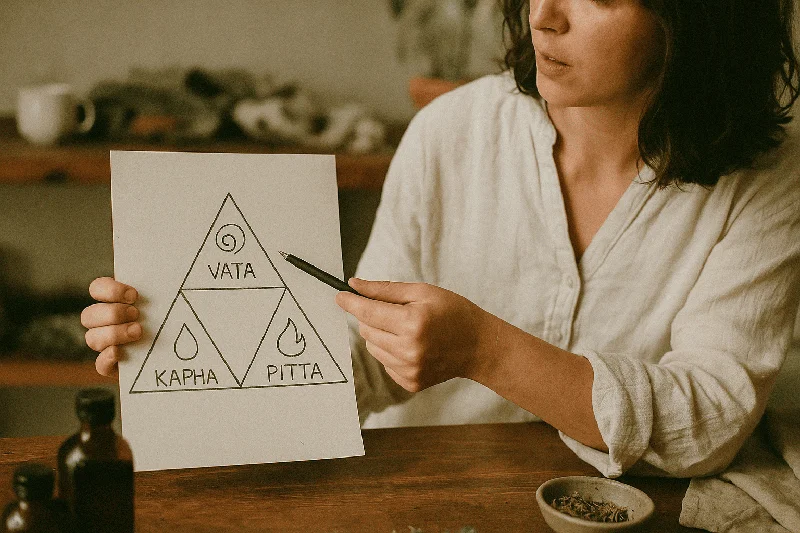
Every person is born with a unique blueprint — a fixed combination of biological energies that shapes everything from your bone structure to your temperament, your appetite to your sleep patterns. In Ayurveda, this innate constitution is called Prakriti (also spelled Prakruti), and it is determined by the relative dominance of three doshas: Vata, Pitta, and Kapha. Unlike your current state of health (which can fluctuate), your Prakriti is set at conception and remains unchanged throughout your entire life. Understanding your Dosha Prakriti is arguably the single most important step in Ayurvedic medicine — it guides diet, lifestyle, disease prevention, and treatment in a way that is deeply personalized. Think of it as Ayurveda's version of precision medicine, centuries before modern genetics came along.
This comprehensive guide covers everything you need to know: what Prakriti actually means, how it forms, the 7 (and sometimes 8) types, how to identify yours, and — critically — how to use that knowledge for better health outcomes.
What Is Prakriti (Dosha Body Type)?
Prakriti, derived from the Sanskrit roots "Pra" (beginning or origin) and "Kriti" (creation or form), literally means "the original creation" or "natural state." In Ayurvedic philosophy, it refers to your inherent psycho-physiological constitution — the fundamental nature you were born with.
The classical Ayurvedic text Charaka Samhita (Vimana Sthana, Chapter 8) states that Prakriti is established at the moment of union between the Shukra (sperm) and Artava (ovum), and once formed, it does not change. Sushruta Samhita (Sharira Sthana, Chapter 4) elaborates further by describing detailed physical, physiological, and behavioral characteristics for each constitutional type — even comparing dosha types to specific animals for easy understanding.
Here's what makes Prakriti so central to Ayurveda: two people can present the same symptoms, but if one is a Vata Prakriti and the other a Kapha Prakriti, the treatment approach will be fundamentally different. It is, in essence, the foundation of individualized medicine.
Meaning and Etymology of Prakriti
The term Prakriti encompasses multiple layers of meaning:
- Biological level: Your physical build, metabolic rate, skin type, digestion strength, and immunity
- Psychological level: Your mental tendencies, emotional patterns, stress responses, and cognitive style
- Philosophical level: Your essential nature as determined by the proportion of Pancha Mahabhutas (five elements) expressed through the three doshas
Acharya Charaka clearly mentions: "Janma-prakriti" (birth constitution) is permanent, while "Deha-prakriti" may appear to shift with disease, age, or season — but that shift is actually Vikriti, not true Prakriti.
Prakriti vs Vikriti — Constitution vs Current Imbalance
This is a distinction that most resources overlook, yet it's absolutely critical for anyone trying to understand Ayurveda properly.
| Aspect | Prakriti | Vikriti |
|---|---|---|
| Definition | Innate, birth-determined constitution | Current state of doshic imbalance |
| Stability | Fixed for life | Changes with diet, season, stress, lifestyle |
| Role | Determines your natural tendencies | Indicates where disease is developing |
| Goal | Understand it | Correct it (bring it back toward Prakriti) |
Example: If you are a Pitta Prakriti person but currently showing symptoms of constipation, dry skin, and anxiety, your Vikriti has a Vata aggravation. Treatment would aim to pacify the Vata imbalance while respecting your underlying Pitta nature — not simply treat the symptoms in isolation.
The classical texts even offer a sobering warning: Sushruta mentions that if a person's Prakriti itself appears to fundamentally change, it is considered an Arishta Lakshana — an ominous sign indicating approaching death. That's how immutable Prakriti is considered to be.
Manas Prakriti (Mental Constitution): Sattva, Rajas, Tamas
Beyond the physical Dosha Prakriti, Ayurveda recognizes a separate mental constitution based on the three Gunas:
- Sattvic Prakriti: Calm, clear-minded, compassionate, truthful, spiritually inclined. These individuals handle stress gracefully and tend toward selflessness.
- Rajasic Prakriti: Ambitious, dynamic, restless, competitive, emotionally reactive. High energy but prone to anger, jealousy, and attachment.
- Tamasic Prakriti: Lethargic, dull, resistant to change, prone to depression, excessive sleep, and ignorance.
- Most people are a blend of these mental qualities, just as they are a blend of physical doshas.
- Charaka Samhita describes 16 subtypes of Manas Prakriti — 7 Sattvic, 6 Rajasic, and 3 Tamasic — each with detailed behavioral profiles. A holistic Prakriti assessment considers both Deha (body) and Manas (mind) prakriti together.
How Is Prakriti Determined? (Factors and Formation)
Your Prakriti isn't random. Multiple factors converge at the time of conception and during fetal development to establish your unique constitutional pattern.
Role of Shukra (Sperm) and Artava (Ovum)
The dosha that predominates in the sperm and ovum at the moment of conception plays the primary role. As Charaka explains, the dominant dosha in the reproductive tissues directly imprints onto the developing embryo. This is why siblings can have different Prakriti types despite sharing the same parents — the doshic state of the parents varies at each conception.
Diet and Lifestyle of the Mother During Pregnancy
- The Garbhini Paricharya (prenatal regimen) significantly influences fetal constitution. If the mother predominantly consumes pungent, light, and dry foods during pregnancy, this favors Vata dominance in the child. Heavy, sweet, and oily dietary patterns may contribute to Kapha tendencies.
- This is remarkably similar to modern epigenetics — the idea that environmental factors during pregnancy can influence gene expression.
Parental Age and Genetic Factors
Classical texts note that parental age affects Prakriti formation. Young parents with robust vitality are more likely to produce children with balanced constitutions, while very old or very young parents may contribute to doshic imbalances in offspring.
Environmental and Seasonal Influences
The season and geographic location at the time of conception and throughout pregnancy also matter. Conception during winter (Kapha season) in a cold, damp climate may favor Kapha Prakriti, while conception during summer in a hot, arid region may lean toward Pitta.
This is referred to as Desha (place) and Kala (time) in classical literature — two of the key factors Charaka lists for Prakriti determination.
Prakriti and Modern Genetics / Epigenetics
A landmark 2014 study published in the Journal of Ayurveda and Integrative Medicine (PMC/NIH) by Rotti et al. attempted to translate Dosha-Prakriti into objective parameters. Their research found approximately 80% concordance between Prakriti classification done by traditional Ayurvedic practitioners and that performed by computational software tools.
The study also revealed interesting correlations:
- Prakriti showed significant correlation with BMI — Kapha Prakriti individuals had higher BMI, while Vata types tended toward lower BMI
- Geographic location correlated with Prakriti distribution in the population
- Interestingly, no significant correlation was found with blood group, debunking a common misconception
The parallel with modern genetics is striking: Genotype + Environment = Phenotype maps almost directly onto the Ayurvedic equation of Parental Dosha + Environmental Factors = Prakriti. Researchers have even begun exploring pharmacogenomic applications — the idea that drug metabolism and response patterns might differ based on Prakriti type, much like they differ based on genetic polymorphisms.
The 7 Types of Prakriti in Ayurveda
While some sources mention 8 types (counting Sama Prakriti or balanced constitution separately), the classical framework describes 7 primary types organized into three categories.
Single Dosha Types (Ekadoshaja Prakriti)
These are individuals where one dosha is significantly dominant. Pure single-dosha types are relatively rare.
1. Vata Prakriti
- Physical features: Thin, light frame; dry, rough skin; cold hands and feet; prominent joints that may crack; thin, dark hair
- Physiological traits: Irregular appetite and digestion; tendency toward constipation; light, interrupted sleep; quick but variable energy
- Psychological traits: Creative, enthusiastic, quick-thinking but also anxious, indecisive, and easily overwhelmed
- Classical analogy (Sushruta): Compared to the goat, hare, and jackal — quick, restless, light-footed
2. Pitta Prakriti
- Physical features: Medium, muscular build; warm, slightly oily skin prone to redness; premature greying or hair thinning; sharp features
- Physiological traits: Strong appetite (irritable when hungry); efficient digestion; moderate, sound sleep; tendency to feel hot
- Psychological traits: Intelligent, focused, goal-oriented but also prone to anger, criticism, and perfectionism
- Classical analogy (Sushruta): Compared to the snake, owl, and cat — intense, penetrating, somewhat solitary
3. Kapha Prakriti
- Physical features: Large, sturdy frame; smooth, thick, moist skin; thick, lustrous hair; large, calm eyes
- Physiological traits: Slow but steady appetite; regular digestion; deep, prolonged sleep; excellent stamina and immunity
- Psychological traits: Calm, loving, patient, loyal but also prone to lethargy, possessiveness, and resistance to change
- Classical analogy (Sushruta): Compared to the lion, elephant, and horse — strong, majestic, steady
Dual Dosha Types (Dvidoshaja Prakriti)
Most people actually fall into dual-dosha categories, where two doshas are co-dominant. These are the most common constitutions encountered in practice.
4. Vata-Pitta Prakriti
- These individuals combine Vata's lightness and variability with Pitta's intensity. They tend to be slim but muscular, energetic but prone to burnout. Digestion is usually strong but can become irregular under stress.
- Mentally they are creative AND driven — but also susceptible to both anxiety and irritability.
5. Pitta-Kapha Prakriti
A powerful combination. These people have Pitta's metabolic fire with Kapha's structural strength. Strong build, excellent digestion, good immunity, and high endurance. They're determined and compassionate but can become domineering or stubborn when imbalanced.
6. Vata-Kapha Prakriti
Perhaps the most challenging combination to balance, since Vata and Kapha are somewhat opposite in qualities. These individuals may alternate between periods of hyperactivity and lethargy. Digestion tends to be variable. They can be creative and nurturing but struggle with consistency.
Tridosha Prakriti (Sama Prakriti)
7. Tridosha or Sama Prakriti
All three doshas exist in near-equal proportion. This is considered the rarest and most ideal constitution — these individuals enjoy excellent health, balanced temperament, and strong adaptability. However, when Tridosha Prakriti does become imbalanced, it can be complex to treat because all three doshas need simultaneous attention.
| Prakriti Type | Prevalence | Key Strength | Key Vulnerability |
|---|---|---|---|
| Vata | Uncommon (pure) | Creativity, adaptability | Anxiety, joint disorders |
| Pitta | Uncommon (pure) | Intelligence, digestion | Inflammation, anger |
| Kapha | Uncommon (pure) | Strength, immunity | Obesity, lethargy |
| Vata-Pitta | Common | Energy, focus | Burnout, acid reflux |
| Pitta-Kapha | Common | Endurance, determination | Hypertension, stubbornness |
| Vata-Kapha | Common | Creativity, compassion | Digestive issues, mood swings |
| Tridosha (Sama) | Very rare | Overall balance | Complex imbalances |
How Do I Know Which Prakriti I Am?
This is probably the most frequently asked question about Dosha Prakriti, and honestly, getting an accurate answer requires more nuance than most online quizzes provide.
Traditional Methods of Prakriti Assessment
Classical Ayurvedic assessment involves Ashtavidha Pariksha (eightfold examination) and Dashavidha Pariksha (tenfold examination), where a trained Vaidya evaluates:
- Pulse (Nadi Pariksha) — the gold standard in many traditions
- Physical examination — body frame, skin, nails, hair, eyes, tongue
- Questions about — appetite, digestion, bowel habits, sleep, sweat, temperature preference, menstrual patterns (for women)
- Psychological assessment — emotional tendencies, memory, decision-making style, stress response
The most reliable approach is consultation with an experienced Ayurvedic practitioner. The 2014 Rotti et al. study demonstrated that trained practitioners achieve around 80% agreement with each other on Prakriti classification — which is comparable to inter-rater reliability in many modern diagnostic assessments.
Self-Assessment Guide (Prakriti Dosha Test)
- While a professional assessment is ideal, you can get a reasonable approximation through careful self-observation.
- Evaluate yourself across these key parameters:
Body Frame and Weight
- Vata: Thin, light, difficulty gaining weight → Score V
- Pitta: Medium, proportionate, can gain or lose → Score P
- Kapha: Large, heavy, gains weight easily → Score K
Skin Quality
- Vata: Dry, rough, cool, thin → Score V
- Pitta: Warm, slightly oily, prone to rashes, moles → Score P
- Kapha: Thick, smooth, moist, cool, pale → Score K
Appetite and Digestion
- Vata: Irregular, variable, prone to gas and bloating → Score V
- Pitta: Strong, sharp, uncomfortable if meals are skipped → Score P
- Kapha: Steady but slow, can skip meals without distress → Score K
Sleep Pattern
- Vata: Light, interrupted, difficulty falling asleep → Score V
- Pitta: Moderate, sound but not excessively long → Score P
- Kapha: Deep, heavy, difficult to wake, loves sleeping → Score K
Stress Response
- Vata: Anxiety, worry, fear → Score V
- Pitta: Anger, irritability, frustration → Score P
- Kapha: Withdrawal, emotional eating, denial → Score K
- Interpreting your results: Tally your V, P, and K scores across all parameters (expand this to 15–20 categories for better accuracy). Your highest score indicates your dominant dosha. If two scores are close, you're likely a dual-dosha type.
- If all three are roughly equal — congratulations, you might be the rare Sama Prakriti.
Important caveat: When self-assessing, think about your lifelong tendencies, not your current state. If you've always been a light sleeper but are currently sleeping heavily due to medication, your Prakriti is still Vata-leaning for sleep — the heavy sleep is Vikriti.
Disease Susceptibility Based on Dosha Prakriti
- One of the most clinically valuable applications of Prakriti is predicting disease vulnerability.
- Each constitutional type has inherent predispositions:
Vata Prakriti — Common Health Risks
- Arthritis and joint disorders (especially osteoarthritis)
- Insomnia and sleep disturbances
- Tachycardia and cardiac arrhythmias
- Constipation and irritable bowel syndrome
- Anxiety disorders, nervous system conditions
- Cracking joints, osteoporosis in later life
Pitta Prakriti — Common Health Risks
- Hyperacidity, peptic ulcers, GERD
- Inflammatory skin conditions — psoriasis, eczema, acne
- Hepatitis, jaundice, liver disorders
- Premature hair greying and hair loss
- Hypertension, migraines
- Anger-related disorders, burnout
Kapha Prakriti — Common Health Risks
- Obesity and metabolic syndrome
- Atherosclerosis, high cholesterol
- Type 2 diabetes (when combined with sedentary lifestyle)
- Respiratory conditions — asthma, bronchitis, sinusitis
- Hypothyroidism
- Depression, emotional eating, anorexia paradoxically (in extreme Kapha aggravation where appetite distortion occurs)
- Understanding these predispositions doesn't mean you will inevitably develop these conditions.
- It means you can take preventive action — which is exactly what Ayurveda's emphasis on Swasthavritta (preventive health) is all about.
Don't wait or self medicate. Start chat with Doctor NOW
Diet and Lifestyle Recommendations by Prakriti Type
- This is where Prakriti knowledge becomes actionable.
- Here are specific, practical recommendations for each type — something most resources fail to provide in detail.
Vata-Balancing Protocol
Diet: Favor warm, cooked, moist, and mildly oily foods. Sweet, sour, and salty tastes are beneficial. Think soups, stews, cooked grains (rice, oats), root vegetables, ghee, sesame oil. Avoid raw salads, cold drinks, dry crackers, and excessive caffeine. Lifestyle: Maintain a strict routine — regular meal times, early bedtime (by 10 PM). Oil massage (Abhyanga) with warm sesame oil is particularly beneficial. Gentle, grounding exercises like yoga, walking, and tai chi work best. Avoid overstimulation, excessive travel, and irregular schedules. Seasonal adjustment: Be extra careful during autumn/early winter (Vata season) — increase oil, warmth, and routine during these months.
Pitta-Balancing Protocol
Diet: Favor cool (not cold), slightly dry, and mild foods. Sweet, bitter, and astringent tastes pacify Pitta. Emphasize cucumbers, coconut, leafy greens, sweet fruits (grapes, melons), milk, and basmati rice. Avoid spicy, fermented, sour, and overly salty foods. Minimize alcohol and coffee.
- Lifestyle: Avoid excessive heat, direct sun exposure, and overcompetitive environments. Moonlight walks, swimming, and gardening are ideal. Practice cooling pranayama (Sheetali, Sheetkari).
- Make time for leisure — Pitta types tend to overwork.
Seasonal adjustment: Summer is Pitta's most vulnerable season. Prioritize cooling foods, aloe vera juice, and avoid midday sun exposure.
Kapha-Balancing Protocol
Diet: Favor light, warm, dry, and well-spiced foods. Pungent, bitter, and astringent tastes are most helpful. Emphasize legumes, leafy greens, barley, millet, honey (in moderation), and warming spices like ginger, black pepper, and turmeric. Reduce dairy, sweets, wheat, and fried foods. Lifestyle: Regular vigorous exercise is essential — running, cycling, HIIT, dynamic yoga. Wake up early (before 6 AM, before Kapha time). Avoid daytime napping. Dry brushing and occasional fasting stimulate sluggish metabolism. Seasonal adjustment: Late winter and spring (Kapha season) require extra vigilance. Increase activity, reduce heavy foods, and consider seasonal Panchakarma cleansing.
Prakriti in Children: Ayurvedic Pediatric Assessment
Determining a child's Prakriti is both important and tricky. Children under 16 are still developing, and doshic patterns may not be fully apparent. However, early identification helps parents make informed choices about diet, education style, and activity levels.
Signs of Vata-dominant child: Thin, restless, creative, easily distracted, picky eater, light sleeper, prone to colic and gas in infancy. Signs of Pitta-dominant child: Medium build, assertive, competitive, sharp intellect, strong hunger (tantrums when hungry), prone to fevers and rashes. Signs of Kapha-dominant child: Sturdy, calm, affectionate, slow to adapt, loves routine and comfort food, prone to respiratory issues and excess mucus.
The Ayurvedic pediatric text Kashyapa Samhita emphasizes that identifying a child's Prakriti early allows for tailored Lehana (herbal supplements), dietary adjustments, and lifestyle habits that support healthy development and prevent constitutional diseases from manifesting later in life.
Prakriti and Seasonal Routines (Ritucharya)
Ayurveda's concept of Ritucharya (seasonal regimen) is directly linked to Prakriti. While everyone should adjust their lifestyle seasonally, the adjustments are specific to your constitutional type.
| Season | Dosha Aggravated | Who Should Be Most Careful | Key Adjustment |
|---|---|---|---|
| Late Autumn/Early Winter | Vata | Vata and Vata-dual types | Increase warmth, oil, routine |
| Summer | Pitta | Pitta and Pitta-dual types | Cooling foods, avoid midday heat |
| Late Winter/Spring | Kapha | Kapha and Kapha-dual types | Increase exercise, lighten diet |
| Monsoon | Vata (primarily) | All types, especially Vata | Avoid raw food, keep warm and dry |
A Pitta-Kapha person, for instance, needs to be particularly cautious during both summer (Pitta aggravation) and spring (Kapha aggravation) — essentially a longer window of vulnerability compared to single-dosha types.
Classical Sources Beyond Sushruta: Charaka, Vagbhata, and Kashyapa
While Sushruta's animal analogies are the most commonly cited, other classical authors offer complementary perspectives:
- Charaka Samhita provides the most systematic framework for Prakriti assessment, listing specific examination criteria and explaining how Prakriti influences prognosis (sadhyasadhyata)
- Ashtanga Hridaya by Vagbhata offers a more concise, clinically oriented approach — his description of dual-dosha types is particularly useful for practitioners
- Kashyapa Samhita uniquely addresses pediatric Prakriti, providing guidance specific to children's constitutions
- Sharangadhara Samhita links Prakriti to drug dosage adjustment — an early form of what we now call personalized pharmacology
Frequently Asked Questions About Dosha Prakriti
What Is Prakriti Analysis of Dosha?
Prakriti analysis is the process of determining your innate Ayurvedic constitution by evaluating physical traits, physiological functions, and psychological tendencies. It involves examination by a trained practitioner through pulse diagnosis, physical observation, and detailed questioning. The goal is to identify your dominant dosha(s) to guide personalized health recommendations.
What Are the 8 Types of Prakriti?
- Some texts count 8 types by adding Sama Prakriti (equal tridosha balance) as distinct from Sannipata (three-dosha combination with slight variations).
- The 8 types are: Vata, Pitta, Kapha, Vata-Pitta, Pitta-Kapha, Vata-Kapha, Tridosha (with mild variation), and Sama (perfectly equal). In clinical practice, 7 types are most commonly referenced.
Can Dosha Prakriti Be Changed?
- No. Your Prakriti is determined at conception and remains fixed for life.
- What changes is your Vikriti — the current state of doshic balance or imbalance. Ayurvedic treatment aims to bring your Vikriti back in alignment with your Prakriti, not to change the Prakriti itself.
What Is Tridosha Prakriti Meaning?
Tridosha Prakriti (also called Sama Prakriti) means all three doshas — Vata, Pitta, and Kapha — are present in approximately equal proportions. This is considered the healthiest and most balanced constitution but is extremely rare. People with Tridosha Prakriti typically enjoy robust health, strong immunity, and balanced temperament.
Is There a Reliable Prakriti Dosha Test Available Online?
Online tests can provide a general indication but should not be considered definitive. The most reliable assessment requires an experienced Ayurvedic practitioner. If using online tools, choose questionnaires with at least 20+ parameters and focus on lifelong patterns rather than current symptoms.
Where Can I Find Prakriti in Ayurveda PDF Resources?
Authentic information can be found in English translations of classical texts — particularly Charaka Samhita (Vimana Sthana Ch. 8), Sushruta Samhita (Sharira Sthana Ch. 4), and Ashtanga Hridaya (Sutra Sthana Ch. 1). Many universities and AYUSH-affiliated institutions offer free PDF resources on their websites.
Final Thoughts: Why Understanding Your Dosha Prakriti Matters
Knowing your Dosha Prakriti isn't just an academic exercise or a fun personality quiz. It's a practical, time-tested framework for understanding your body's unique needs — what foods nourish you, what activities energize you, what environments suit you, and what diseases you need to actively guard against.
- In an era when modern medicine is increasingly moving toward personalized and precision approaches, Ayurveda's Prakriti system offers a sophisticated constitutional framework that has been refined over thousands of years.
- The growing body of research — including genomic and metabolomic studies — is beginning to validate what Ayurvedic practitioners have observed clinically for generations.
Whether you're exploring Ayurveda for the first time or deepening an existing practice, start with your Prakriti. Consult a qualified Ayurvedic doctor for a thorough assessment, and use that knowledge as your compass for every health decision you make.
Your Prakriti is not a limitation — it's your owner's manual.
Scientific Sources
- Translating Ayurveda's Dosha-Prakriti into objective parameters — Lakhotia SC, 2014, Journal of Ayurveda and integrative medicine
Questions from users
What nutritional guidelines should I follow during Kapha season?
Wade
11 hours ago
During Kapha season, which includes late winter and spring, the nutritional focus should be on light and easily digestible foods to balance Kapha’s qualities of heaviness and sluggishness. Foods to emphasize include spicy and warming ingredients like ginger, black pepper, and turmeric. Increasing the intake of vegetables, especially leafy greens, and avoiding heavy, oily, or sweet foods is recommended. Foods like barley, millet, legumes, and a moderate amount of honey can be helpful. If symptoms are unusual or persistent, consult a healthcare provider for tailored advice.
What is the role of Ayurveda in preventing diseases based on one's dosha type?
Allison
10 days ago
Understanding your dosha type—Vata, Pitta, or Kapha—helps discover a lifestyle for you to stay balanced and avoid imbalances that lead to diseases. For example, if you're Pitta, avoid excess heat, spicy foods, and stress, as they can increase your fire, leading to issues like inflammation. Lifestyle choices like diet and exercise tailored to your dosha can prevent imbalances!
What is the impact of parental age on the formation of doshas in Ayurveda?
Uriah
19 days ago
Parental age can influence the Prakriti, or innate constitution, in Ayurveda. As parents age, the dominant dosha in their reproductive tissues could play a stronger role in shaping the baby's constitution. If a parent has more Kapha dominance as they age, for example, this might be passed on. The idea is, them coming together, their doshas have a potential influence on the child's Prakriti. However, there's much more involved, like lifestyle and mental state so it's a complex topic!
Can I change my diet during pregnancy to influence my child's dosha?
Alexander
28 days ago
Yes, you can definitely influence your child's dosha by adjusting your diet during pregnancy. Including more balanced foods that match the dosha balance you aim for is key. For example, eating more grounding, soothing foods might reduce Vata. A balanced mix of cooked, warm, nourishing foods can support overall health and help shape the child's Prakriti!
What is the relationship between dosha types and emotional well-being?
Waylon
37 days ago
The dosha types—Vata, Pitta, and Kapha—are closely tied to emotional well-being. Vatas can be anxious and scattered when imbalanced, Pittas might get angry or stressed, and Kaphas may feel sluggish or depressed. Balance them through diet, lifestyle, and mindfulness practices for better emotional harmony. So it's kinda individual, there's no one-size-fits-all here.
What lifestyle changes can help someone with a dominant Vata dosha improve their sleep quality?
Zuri
52 days ago
For dominant Vata, focus on calming, grounding routines. Try to establish a regular sleep schedule, keeping bedtime consistent. Warm baths, calming teas like chamomile, or even a light oil massage can be helpful. Avoid screens before bed, and eat a warm, nutritious meal a few hours before sleep. Yoga and meditation can also ease Vata and improve sleep.
Can I use supplements to help balance my dosha effectively?
Summer
62 days ago
Yes, supplements can definitely help balance your dosha but it's super important to choose ones that suit your specific requirements! If you're not sure which ones to pick, it might be helpful to consult with an ayurvedic practitioner. Different herbs and minerals can support the balance of Vata, Pitta, or Kapha. Just remember, supplements should complement, not replace, a dosha-appropriate diet and lifestyle.
What happens if I eat the wrong foods for my dosha balance?
Ruby
72 days ago
If you eat the wrong foods for your dosha balance, you might experience disturbances in digestion, mood, or energy levels. For example, Vata people eating cold, dry foods might feel anxious or bloated. It's like adding fire to fire, so to speak. If you're unsure, experiment with small changes and see how your body reacts.
Is it safe to combine different dosha-balancing practices in my daily routine?
Wyatt
81 days ago
Yes, you can definitely combine different dosha-balancing practices in your daily routine! It's actually quite beneficial. Just make sure they don't overwhelm you, and try to listen to your body. Mix things that resonate with you, like diet tweaks, yoga, meditations or lifestyle changes but just pay attention to how you feel overall.
Is it safe to switch my diet if I discover my dosha imbalance?
Ellie
91 days ago
Switching your diet based on your dosha imbalance can be safe and helpful! Just make sure you do it gradually and maybe check in with an ayurvedic practitioner if you can! Peoples bodies react differently, so it's key to listen to yours. Focus on incorporating foods that align with your dosha and see how you feel. 🧘♀️
Related articles
General Medicine
Most Common Diseases
A disease is any detrimental deviation from the normal functional state of the body associated with certain signs and symptoms.
2,752

General Medicine
What Causes Low Blood Sugar Without Diabetes?
What causes low blood sugar without diabetes? Explore non-diabetic hypoglycemia symptoms, causes, and Ayurvedic remedies to restore energy and balance
1,837

General Medicine
Khadiradi Vati
Exploration of Khadiradi Vati
2,669

General Medicine
Yograj Guggul Benefits, Dosage, How to Use, Side Effects, Ingredients, Reference
Exploration of Yograj Guggul Benefits, Dosage, How to Use, Side Effects, Ingredients, Reference
5,310

General Medicine
Chandanasava for Body Heat: Cool Down with Ayurvedic Wisdom
Explore how Chandanasava can balance body heat, its benefits, usage guidelines, potential side effects, and the scientific evidence behind this traditional Ayurvedic remedy.
5,360

General Medicine
Palsinuron Capsules Benefits, Dosage, Ingredients, Side Effects
Exploration of Palsinuron Capsules Benefits, Dosage, Ingredients, Side Effects
3,283

General Medicine
Phalasarpis Benefits – Natural Ayurvedic Rejuvenation & Vitality Booster
Explore the phalasarpis benefits, a traditional Ayurvedic formulation renowned for its rejuvenative, aphrodisiac, and holistic health properties. Enhance vitality and promote overall wellness naturally with phalasarpis.
2,757

General Medicine
Oil Pulling and Its Benefits: Everything You Need to Know!
Forget fancy mouthwashes and electric toothbrushes, for an ancient Ayurvedic secret therapy is making waves in the realm of oral health.
3,214

General Medicine
Vishama Jwara: Ayurvedic & Modern Insights
Explore Vishama Jwara from Ayurvedic roots to modern research. Learn causes, symptoms, and practical management tips for better health.
3,432

General Medicine
Boost Your Energy with Ashwagandhadi Yamakam: An Ayurvedic Solution
Discover Ashwagandhadi Yamakam, its benefits, proper dosage, side effects, and the scientific research supporting its use as an effective Ayurvedic detoxification and wellness formulation.
2,632
Related consultations on the topic
Legal
Additional Documents
© 2024 Ask Ayurveda. All rights reserved.