Ask Ayurvedic doctor a question and get a consultation online on the problem of your concern in a free or paid mode. More than 2,000 experienced doctors work and wait for your questions on our site and help users to solve their health problems every day.
FREE! Ask Ayurvedic Doctors 24/7

 Fast responses
 1000+ verified doctors
Body DetoxEar, Nose, and Throat DisordersGeriatrics & RejuvenationImmunodeficiencyInfertility TreatmentNutritionOrthopedic DisordersPediatricsRespiratory DisordersSexually Transmitted Diseases (STDs)Surgery RecoveryUrological DisordersVascular DisordersDental DisordersEndocrinological DisordersGastrointestinal DisordersYoga TherapyGeneral MedicineAllergic DisordersCardio DisordersGynecology and ObstetricsCosmetologySkin and Hair DisordersEye DisordersInfectious DiseasesMental DisordersNeurological DisordersOncologyPanchakarmaSexual Health & DisordersSports Medicine
Published on 02/27/25
(Updated on 07/07/26)
star_border 4
6,074
Dasamoolarishtam and Jeerakarishtam Benefits – Ayurvedic Tonic for Health
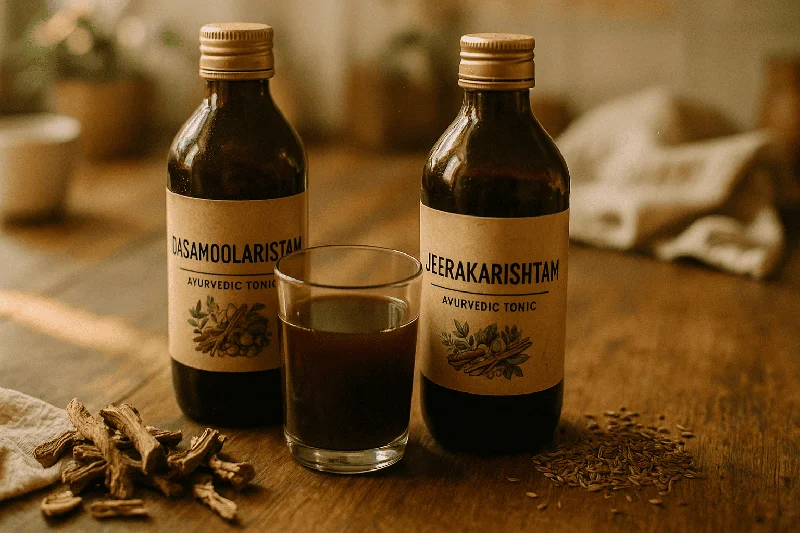
- Dasamoolarishtam and Jeerakarishtam are two classical Ayurvedic fermented tonics most commonly prescribed together for postnatal recovery, digestive support, and overall vitality.
- When combined — either taken side by side or as a single formulation called Dasamoolajeerakarishtam — they address the full spectrum of postpartum needs: uterine healing, appetite restoration, respiratory strength, and emotional balance. This guide covers everything you need to know, including ingredients, Ayurvedic mechanisms, scientific evidence, dosage protocols, brand comparisons, and safety details that no other resource brings together in one place.
What Are Dasamoolarishtam and Jeerakarishtam?
Both formulations belong to the Arishta category in Ayurveda — liquid medicines prepared through natural fermentation (Sandhana Kalpana). Unlike modern alcohol-based tinctures, Arishtas undergo self-generated fermentation where herbs, jaggery (or sugar), and water produce a small percentage of alcohol naturally. This self-generated alcohol (typically 5–10%) acts as a bio-enhancer, improving the absorption of herbal actives into the bloodstream.
What Is Dasamoolarishtam?
Dasamoolarishtam is built around Dasamoola — literally "ten roots" in Sanskrit. These ten roots come from five large trees (Brihat Panchamoola) and five smaller shrubs (Laghu Panchamoola). Together, they are one of the most powerful anti-Vata combinations in Ayurveda.
- The formulation is referenced in classical texts including Bhaishajya Ratnavali and Ashtanga Hridayam, where it is recommended for Sutika Roga (postpartum disorders), respiratory conditions, and general debility.
- It works primarily by pacifying aggravated Vata dosha — the root cause of pain, weakness, and irregular bodily functions after childbirth.
Key therapeutic actions include:
- Uterine tonic — supports involution (the uterus returning to pre-pregnancy size)
- Analgesic and anti-inflammatory — reduces body aches and joint pain
- Respiratory support — clears airways, useful in asthma, bronchitis, and chronic cough
- Nervine tonic — calms the nervous system and supports mental well-being
- Cardiac stimulant — strengthens heart function according to Ayurvedic pharmacology
What Is Jeerakarishtam?
Jeerakarishtam is centered on Jeeraka (Cuminum cyminum — cumin), one of Ayurveda's most trusted digestive herbs. Cumin has been validated by modern research for its carminative, antioxidant, and antimicrobial properties. A 2017 systematic review published in the Journal of Ethnopharmacology confirmed cumin's significant effects on digestive enzyme secretion and gut motility.
This Arishta is specifically designed to:
- Restore Agni (digestive fire) — critical after delivery when digestion is sluggish
- Relieve gas, bloating, and abdominal discomfort
- Act as a galactagogue — stimulate breast milk production
- Provide antioxidant support through ingredients like Triphala, Amla, and grapes
- Improve appetite and nutrient absorption
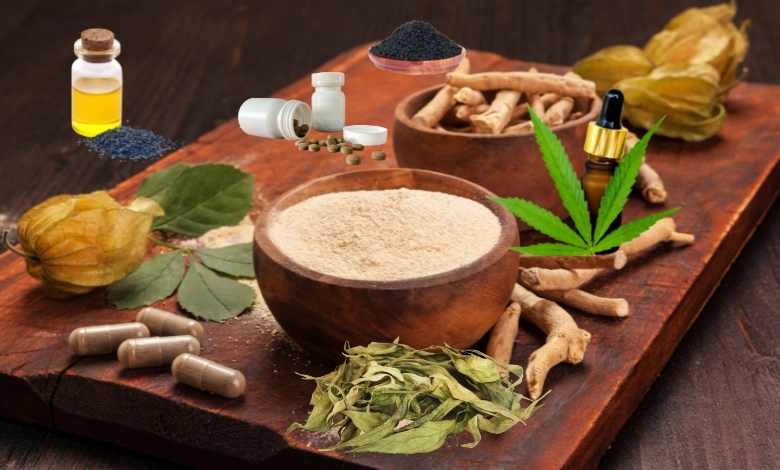
What Is Dasamoolajeerakarishtam (The Combined Formulation)?
Many manufacturers — including AVP (Arya Vaidya Pharmacy), Kottakkal Arya Vaidya Sala, Kerala Ayurveda, and Amrita — produce a single combined product called Dasamoolajeerakarishtam or Dasamoolajeerakadyarishtam. This isn't simply a mixture of the two; it's a unified formulation where all ingredients are fermented together, which some practitioners believe creates superior synergy.
You can also take Dasamoolarishtam and Jeerakarishtam separately (mixing equal parts at the time of consumption). Both approaches are clinically accepted. The combined formulation is simply more convenient.
Key Ingredients and Their Properties
Dasamoola — The Ten Roots
| # | Sanskrit Name | Botanical Name | Primary Action |
|---|---|---|---|
| 1 | Bilva | Aegle marmelos | Anti-inflammatory, digestive |
| 2 | Agnimantha | Premna mucronata | Analgesic, anti-Vata |
| 3 | Shyonaka | Oroxylum indicum | Anti-inflammatory, uterine tonic |
| 4 | Gambhari | Gmelina arborea | Nervine tonic, cardiotonic |
| 5 | Patala | Stereospermum suaveolens | Respiratory support, anti-allergic |
| 6 | Shalaparni | Desmodium gangeticum | Immunity booster, anti-asthmatic |
| 7 | Prishniparni | Uraria picta | Anti-Vata, rejuvenative |
| 8 | Brihati | Solanum indicum | Expectorant, digestive |
| 9 | Kantakari | Solanum xanthocarpum | Bronchodilator, anti-tussive |
| 10 | Gokshura | Tribulus terrestris | Diuretic, urogenital tonic |
The Brihat Panchamoola (first five) primarily targets structural tissues — bones, muscles, and the uterus. The Laghu Panchamoola (last five) focuses more on respiratory and immune functions. Together, they provide comprehensive Vata-Kapha pacification.
Jeeraka (Cumin) and Supporting Herbs
Beyond cumin, Jeerakarishtam typically contains:
- Draksha (Vitis vinifera) — grapes that provide natural sugars and antioxidants
- Triphala — the iconic trio of Amla, Haritaki, and Bibhitaki for detoxification
- Ashwagandha (Withania somnifera) — adaptogenic, supports sleep and emotional recovery
- Dhataki pushpa (Woodfordia fruticosa) — the essential fermentation initiator in all Arishtas
- Guduchi (Tinospora cordifolia) — immunomodulator, fever reducer
- Chavya (Piper chaba) — bio-enhancer, improves absorption
- Chitraka (Plumbago zeylanica) — powerful Agni deepana (digestive fire kindler)
A 2020 pharmacological study on Ashwagandha published in Cureus demonstrated significant anxiolytic effects and cortisol reduction — directly relevant to postpartum stress and emotional wellbeing.
Complete Ingredient List with Benefits
Most branded Dasamoolajeerakarishtam formulations contain 25–29 ingredients total. The exact composition may vary slightly between manufacturers due to regional textual references. Always check the label of your specific product for the complete list.
Benefits of Dasamoolarishtam and Jeerakarishtam
Postnatal Recovery and Uterine Support
- This is the flagship indication.
- After delivery, Vata dosha becomes severely aggravated — the body has lost tissue, blood, and energy. The hollow space left after childbirth is a classical Vata site.
Dasamoolarishtam directly addresses this by:
- Supporting uterine involution (the ten roots have documented uterine-contracting properties)
- Reducing postpartum pain, backaches, and joint stiffness
- Cleansing the uterus and supporting lochia discharge
Jeerakarishtam complements by restoring digestive capacity — because without proper digestion, no recovery is possible.
Practical tip: In traditional Sutika Paricharya (postpartum care protocol), these medicines are typically started from day 3–7 after normal delivery, once the mother can tolerate oral liquids comfortably. For cesarean deliveries, practitioners usually wait until day 7–10 or after the initial wound healing phase. Always confirm with your Ayurvedic physician.
How Does Jeerakarishtam Improve Digestion?
Cumin stimulates the secretion of pancreatic enzymes and bile, which directly enhances fat and protein digestion. In Ayurvedic terms, Jeerakarishtam is a potent Agni deepana (digestive fire kindler) and Ama pachana (toxin digester).
Benefits for digestion include:
- Relief from postpartum constipation and bloating
- Reduction in nausea and appetite loss
- Improved nutrient absorption — critical when the body needs to produce breast milk and heal simultaneously
- Relief from flatulence and abdominal distension
A 2013 randomized controlled trial published in the Middle East Journal of Digestive Diseases found that cumin extract significantly reduced IBS symptoms including bloating and abdominal pain over an 8-week period.
Respiratory Health
The Laghu Panchamoola herbs — particularly Kantakari and Brihati — have well-documented bronchodilatory and expectorant properties.
Dasamoolarishtam is used in:
- Chronic cough and bronchitis
- Asthma (as adjunct therapy)
- Post-COVID respiratory recovery (emerging clinical use)
- Recurrent upper respiratory infections
A 2019 study in Pharmacognosy Reviews confirmed that Solanum xanthocarpum (Kantakari) contains solasodine and other steroidal alkaloids with significant anti-asthmatic activity.
Immunity, Vitality, and Beyond
Both formulations contain powerful Rasayana (rejuvenative) herbs. The fermentation process itself increases bioavailability by 3–5 times compared to raw herbal decoctions, according to pharmacokinetic analyses published in the Journal of Ayurveda and Integrative Medicine (2016).
Additional benefits include:
- Loss of libido — Dasamoolarishtam's Vata-pacifying and nervine-tonic properties help restore sexual health
- Urogenital support — Gokshura in the Dasamoola group supports kidney function and urinary health
- General debility and chronic fatigue — both formulations are prescribed as general health tonics, not exclusively for postpartum women
Ayurvedic Mechanism of Action (Samprapti Vighatana)
No competitor has explained why this combination works from a deep Ayurvedic pharmacological perspective.
Here's the breakdown:
Dosha level: Dasamoolarishtam is primarily Vata-Kapha shamaka. Jeerakarishtam is Vata-Pitta shamaka (cumin is slightly cooling yet digestive). Together, they achieve Tridosha balance without aggravating any single dosha. Agni level: Jeerakarishtam directly kindles Jatharagni (stomach fire). Without functional Agni, Ama (metabolic toxins) accumulate. Ama blocks channels (Srotas), preventing nutrients from reaching tissues. By restoring Agni, the entire downstream recovery process gets activated.
- Dhatu level: The combination nourishes Rasa (plasma), Rakta (blood), Mamsa (muscle), and Asthi (bone) dhatus sequentially.
- This is why the traditional course is 6–12 weeks — it takes time for nourishment to cascade through all seven dhatus.
Srotas level: Dasamoolarishtam opens Pranavaha Srotas (respiratory channels), Annavaha Srotas (digestive channels), and Artavavaha Srotas (uterine/menstrual channels). This multi-channel clearing is what makes it so effective for postpartum recovery, where multiple systems are compromised simultaneously.
Ritucharya — Best Seasons for Use
While these medicines can be used year-round when indicated, Ayurvedic seasonal wisdom suggests:
- Monsoon and early winter (Varsha & Hemanta Ritu) — Vata is naturally high; Dasamoolarishtam is most effective
- Summer (Grishma Ritu) — Use with caution; the warming herbs may aggravate Pitta. Dose reduction or combining with cooling adjuvants may be necessary
- For postpartum care, seasonal adjustments are secondary to the therapeutic need — the medicine is given regardless of season
Dosage and How to Use
Standard Adult Dosage
| Formulation | Dose | Frequency | When to Take | Dilution |
|---|---|---|---|---|
| Dasamoolarishtam | 15–25 mL | Twice daily | After meals | Equal quantity of water |
| Jeerakarishtam | 15–25 mL | Twice daily | After meals | Equal quantity of water |
| Dasamoolajeerakarishtam (combined) | 15–25 mL | Twice daily | After meals | Equal quantity of water |
| Separate mixing | 12–15 mL each | Twice daily | After meals | Small amount of water |
Important: Always dilute with an equal quantity of lukewarm water. Taking it undiluted may cause throat irritation or mild gastric discomfort due to the fermentation-derived alcohol content.
Dosage for Children
For children aged 5–12 years (when prescribed by a physician for respiratory or digestive conditions):
- 5–10 mL of either formulation, diluted with equal water, once or twice daily
- Never self-prescribe for children under 5
How Long Should I Take Dasamoolarishtam and Jeerakarishtam?
Postnatal recovery: Minimum 6 weeks, commonly extended to 12 weeks (90 days). Traditional practice in Kerala often recommends the full 3-month postnatal protocol. General health / respiratory / digestive conditions: 4–8 weeks initially, then reassess with your practitioner. Chronic conditions: Can be continued for 3–6 months under medical supervision.
Results timeline: Most women report improved appetite and reduced bloating within 5–7 days. Uterine recovery and energy restoration typically become noticeable by weeks 2–3.
Can I Drink Dasamoolarishtam Daily?
Yes — Arishtas are designed for daily use during the prescribed course. Because the alcohol is self-generated and in low concentration (5–10%), it is considered safe for regular consumption in Ayurvedic pharmacology. However, indefinite daily use without a specific indication is not recommended. Take it for the prescribed duration, then stop and reassess.
Don't wait or self medicate. Start chat with Doctor NOW
The Alcohol Question: Is It Safe During Breastfeeding?
This is perhaps the most critical safety concern that virtually no online resource addresses adequately.
Arishtas contain 5–10% self-generated alcohol produced during the fermentation process. For context, this is roughly equivalent to a light beer. When you take 15–25 mL of the medicine, you're consuming approximately 0.75–2.5 mL of actual alcohol — a very small amount.
What research says: According to the American Academy of Pediatrics and lactation research published in Basic & Clinical Pharmacology & Toxicology (2014), occasional low-level alcohol intake does not pose significant risk to breastfed infants when the mother waits at least 2 hours after consumption before nursing. Ayurvedic perspective: Classical texts explicitly prescribe Arishtas for postpartum women. The self-generated alcohol (Madya) is considered a Yogavahi — a substance that carries medicinal properties deeper into tissues without producing intoxication at therapeutic doses. Practical advice: Take the medicine immediately after breastfeeding. By your next feeding session (typically 2–3 hours later), the tiny amount of alcohol will have been metabolized. If you're still concerned, discuss with both your Ayurvedic practitioner and pediatrician.
Dasamoolarishtam vs Jeerakarishtam: Key Differences
| Parameter | Dasamoolarishtam | Jeerakarishtam |
|---|---|---|
| Primary ingredient | 10 roots (Dasamoola) | Cumin (Jeeraka) |
| Main dosha target | Vata-Kapha | Vata-Pitta |
| Primary action | Structural recovery, pain relief, respiratory | Digestive restoration, appetite, anti-nausea |
| Uterine support | Strong (direct tonic) | Indirect (through improved nutrition) |
| Respiratory benefits | Strong | Mild |
| Digestive benefits | Moderate | Strong |
| Galactagogue effect | Mild | Moderate to strong |
| Used alone for | Body pain, respiratory issues, weakness | Digestive disorders, bloating, loss of appetite |
| Used together for | Complete postnatal recovery | Complete postnatal recovery |
Bottom line: They're complementary, not interchangeable. Dasamoolarishtam rebuilds the body's structure and strength. Jeerakarishtam ensures the body can actually absorb and utilize nutrition. Together, they cover both sides of recovery.
Can Dasamoolarishtam Be Used for Weight Loss?
This is a frequently asked question, and the answer requires some nuance. Dasamoolarishtam is not a weight-loss medicine per se.
However, it can support healthy metabolism through:
- Vata regulation, which normalizes irregular eating patterns
- Improved Agni, which prevents Ama accumulation (a cause of metabolic sluggishness)
- Reduction of Kapha-related heaviness and water retention
If weight management is your primary goal, this should be part of a broader Ayurvedic program including dietary modifications, exercise, and possibly other formulations like Triphala or Guggulu preparations. Don't rely on it as a standalone weight loss remedy.
Applications Beyond Postpartum: For Men and Non-Pregnant Women
While postpartum care dominates the conversation, both formulations have broader applications:
For men:
- Chronic respiratory conditions (bronchitis, recurrent colds)
- General debility after prolonged illness or surgery
- Low libido and fatigue
- Rheumatic and joint pain (Vata-dominant conditions)
For non-pregnant women:
- Menstrual irregularities and painful periods
- Post-surgical recovery (especially gynecological procedures)
- Chronic indigestion and IBS-like symptoms
- Low immunity and recurrent infections
Contraindications and Safety Precautions
Who Should Avoid These Formulations?
- During pregnancy — Dasamoolarishtam has uterine-stimulating properties; strictly avoid until delivery
- Active gastritis or peptic ulcer — the alcohol content and warming herbs can aggravate existing ulcers
- Ulcerative colitis during flare-ups — inflammatory conditions of the gut may worsen
- Diabetic patients — these formulations contain jaggery/sugar; consult your doctor and monitor blood sugar levels
- Severe hepatic (liver) disorders — even low alcohol content may be problematic
Drug Interactions to Be Aware Of
No competitor covers this, but it matters in real-world clinical practice:
- Iron and calcium supplements: Take Arishtas at least 2 hours apart from iron/calcium tablets. Tannins in herbal ingredients can reduce mineral absorption
- Antidiabetic medications: The sugar content may require dose adjustment of your diabetes medication
- Antibiotics: Generally no direct interaction, but the fermented alcohol may theoretically affect absorption of certain antibiotics. Maintain a 1-hour gap
- Antihypertensives: No known significant interactions, but inform your doctor about concurrent use
- Other Ayurvedic formulations: Usually compatible; your practitioner will design the protocol
Comparing Brands: AVP vs Kottakkal vs Kerala Ayurveda vs Amrita
| Feature | AVP (Arya Vaidya Pharmacy) | Kottakkal (Arya Vaidya Sala) | Kerala Ayurveda | Amrita |
|---|---|---|---|---|
| Textual reference | Sahasrayogam | Ashtanga Hridayam | Sahasrayogam | Sahasrayogam |
| Available sizes | 450 mL, 200 mL | 450 mL | 450 mL | 450 mL |
| Combined product | Yes (Dasamoolajeerakadyarishtam) | Yes (Dasamoolajeerakarishta) | Yes (Dasamoolajeerakarishta) | Yes (Dasamoolajeerakarishtam) |
| GMP Certified | Yes | Yes | Yes | Yes |
| Approximate price (450 mL) | ₹145–175 | ₹150–180 | ₹140–170 | ₹130–160 |
| Widely available online | Yes | Yes | Yes | Limited |
Key differences: The core formulation is standardized across classical texts, so the active ingredients are essentially the same. Variations exist in fermentation duration, water source, and jaggery quality — subtle factors that traditional Vaidyas consider important but that lack standardized quality metrics. All four brands are reputable. Choose based on availability and your practitioner's recommendation.
Storage and Shelf Life
Arishtas are among the most stable Ayurvedic dosage forms thanks to their self-preserving alcohol content.
However:
- Shelf life: Typically 5–10 years from manufacture (check label). Some classical texts suggest Arishtas actually improve with age
- - Storage conditions: Keep in a cool, dry place away from direct sunlight.
- Room temperature is fine — no refrigeration needed
- After opening: Use within 6–12 months. Keep the bottle tightly closed. If you notice an unusual smell, excessive sediment, or mold, discard it
- Do not store in plastic containers for extended periods; glass bottles are ideal
Frequently Asked Questions
Can We Mix Dasamoolarishtam and Jeerakarishtam Together?
Absolutely yes. Mixing equal parts (12–15 mL each) with lukewarm water is a widely practiced method. In fact, many Ayurvedic physicians specifically prescribe them this way to get the combined benefits in a single dose. The pre-mixed commercial products (Dasamoolajeerakarishtam) follow this same principle.
Is Jeerakarishtam Good for Gas and Bloating?
- Yes, this is one of its primary indications.
- Cumin is one of the most effective carminative herbs — it directly reduces gas formation and helps expel trapped gas. Combined with Chitraka and other Agni-kindling herbs in the formulation, Jeerakarishtam provides reliable relief from flatulence, abdominal distension, and post-meal heaviness. Most users report improvement within 3–5 days of regular use.
Is Jeerakarishtam Effective for Nausea and Vomiting?
Yes. Jeerakarishtam's cumin base is a traditional anti-emetic in Ayurveda. It's particularly effective for postpartum nausea, appetite loss, and general queasiness. However, for pregnancy-related morning sickness, do not self-prescribe — consult your Ayurvedic physician first, as the alcohol content and some herbs may not be appropriate during pregnancy.
Can I Use These Formulations Without a Doctor's Prescription?
While Arishtas are available over the counter in India and are generally safe, Ayurveda fundamentally believes in individualized medicine. Your Prakriti (constitution), current Vikruti (imbalance), Agni status, and coexisting conditions all matter. Self-medication for general wellness at standard doses is relatively low-risk for healthy adults, but for specific health conditions — especially postpartum recovery — professional guidance is strongly recommended.
Do These Medicines Cause Any Side Effects?
- At prescribed doses, side effects are rare.
- However, some individuals may experience:
- Mild gastric warmth (usually resolves in a few days)
- Loose stools (if Agni is very sensitive)
- Slight drowsiness (due to the mild alcohol content)
If any discomfort persists beyond 3–4 days, reduce the dose or discontinue and consult your practitioner.
Conclusion: A Time-Tested Combination for Modern Recovery
Dasamoolarishtam and Jeerakarishtam represent over a thousand years of Ayurvedic clinical wisdom distilled into two complementary formulations. Whether you're a new mother navigating postnatal recovery, someone dealing with chronic respiratory or digestive issues, or simply seeking a natural vitality boost — this combination delivers evidence-informed, time-tested results.
The key is to use them correctly: proper dosage, appropriate duration, right dilution, and ideally under the guidance of a qualified Ayurvedic practitioner who can tailor the protocol to your unique constitution.
Ready to start your recovery journey? Consult a certified Ayurvedic doctor to determine the right combination, dosage, and duration for your specific needs. Your body's healing wisdom, supported by these classical formulations, can do remarkable things when given the right tools.
Scientific Sources
- Ayurveda in Contemporary Healthcare: A Narrative Overview of Select Therapeutic Interventions and Their Emerging Clinical and Mechanistic Perspectives — Anirudhan R et al., 2026, Cureus
- Ayurvedic treatments for diabetes mellitus — Sridharan K et al., 2011, The Cochrane database of systematic reviews
- AYUSH for COVID-19: Science or Superstition? — Priya R et al., 2020, Indian journal of public health
- Wellness or medicine?Use and perception of Ayurveda in Germany: data from an online-representative cross-sectional study — Schiele JK et al., 2024, Frontiers in medicine
- Use of Ayurveda in the Treatment of Type 2 Diabetes Mellitus — Gordon A et al., 2019, Global advances in health and medicine
- Exploring the Role of “Brahmi” (Bacopa monnieri and Centella asiatica) in Brain Function and Therapy — Shinomol GK et al., 2011, Recent patents on endocrine, metabolic & immune drug discovery
- Exploring the Promising Role of Guggulipid in Rheumatoid Arthritis Management: An In-depth Analysis — Sahu A et al., 2024, Current rheumatology reviews
- Dual impact of Ashwagandha: Significant cortisol reduction but no effects on perceived stress - A systematic review and meta-analysis — Albalawi AA, 2025, Nutrition and health
- Shatavari (Asparagus racemosus Willd) root extract for postpartum lactation: A randomised, double-blind, placebo-controlled study — Ajgaonkar A et al., 2025, Journal of obstetrics and gynaecology : the journal of the Institute of Obstetrics and Gynaecology
- Efficacy and safety of ayurvedic intervention (Sarpgandha Mishran) vs amlodipine for Stage-I primary hypertension- study protocol for a prospective Double-Dummy, Double-Blind, placebo-controlled Randomized Clinical Trial — Yadav B et al., 2025, BMC complementary medicine and therapies
- Neuronutrient impact of Ayurvedic Rasayana therapy in brain aging — Singh RH et al., 2008, Biogerontology
- Nyctanthes arbor-tristis Linn--a critical ethnopharmacological review — Agrawal J et al., 2013, Journal of ethnopharmacology
- Medical Cannabis: A plurimillennial history of an evergreen — Pisanti S et al., 2019, Journal of cellular physiology
- Insights on personalized medicine from Ayurveda — Sumantran VN et al., 2013, Journal of alternative and complementary medicine (New York, N.Y.)
- Transmission modes of COVID-19 disease pandemic in the light of ancient wisdom of Ayurveda medicine: a review — Joshi N et al., 2021, Journal of complementary & integrative medicine
- Ayush Indian System of Medicines Prophylaxis Against COVID-19: A Living Systematic Review and Meta-Analysis (Second Update)(https://pubmed.ncbi.nlm.nih.gov/38422192/) — Thakar A et al., 2024, Journal of integrative and complementary medicine
- Withanone as an Emerging Anticancer Agent and Understanding Its Molecular Mechanisms: Experimental and Computational Evidence — Stephen A et al., 2025, Current cancer drug targets
- Integrating ayurvedic medicine into cancer research programs part 1: Ayurveda background and applications — Arnold JT, 2023, Journal of Ayurveda and integrative medicine
- Ayurpharmacoepidemiology en Route to Safeguarding Safety and Efficacy of Ayurvedic Drugs in Global Outlook — Debnath P et al., 2017, Journal of evidence-based complementary & alternative medicine
- Legal status of ayurveda in the healthcare system — Pashkov VМ et al., 2025, Polski merkuriusz lekarski : organ Polskiego Towarzystwa Lekarskiego
Questions from users
Can I take Dasamoolarishtam for enhancing athletic performance?
Mateo
6 days ago
Dasamoolarishtam is traditionally used in Ayurveda to manage respiratory issues and support overall healing and recovery, but there is no scientific evidence supporting its use for enhancing athletic performance. It contains a mix of herbal preparations believed to balance bodily systems, though its effects on athletic abilities remain unproven. If you are looking to boost athletic performance, focus on proven methods like tailored fitness training, balanced nutrition, and adequate rest. If tackling specific performance concerns, consult with a healthcare professional or a sports nutritionist. Use Dasamoolarishtam cautiously and under the guidance of a knowledgeable healthcare provider, especially if you experience any adverse effects.
What is the sugar content in Jeerakarishtam and how does it affect diabetes management?
Mckenzie
15 days ago
Jeerakarishtam usually contains some sugar due to the fermentation process. If you have diabetes, it could affect your blood sugar levels, so it's smart to talk to your doc about adjusting any of your medications or you might need a closer watch on your blood sugar. It can be beneficial, but like anything, balance is key!
Can I take Dasamoolarishtam for asthma relief alongside other asthma medications?
Phoenix
25 days ago
You can take Dasamoolarishtam with asthma meds, but it's always best to check with your doctor first. It provides respiratory support, but mixing remedies needs caution. Keep an eye on how your body reacts and adjust if needed. Ayurveda works best when harmonized with your body's unique needs!
Can I take Jeerakarishtam with other digestive supplements safely?
Sofia
34 days ago
You can likely take Jeerakarishtam with other digestive supplements, but it's smart to be cautious. It’s generally good for enhancing digestion and reducing bloating. But mixing supplements can sometimes cause unexpected effects, so it might be a good idea to chat with an ayurvedic practitioner first, just to be safe!
Can I use Jeerakarishtam to boost my immune system along with its digestive benefits?
Aubrey
44 days ago
Jeerakarishtam is mainly great for digestion, helping with metabolism and bloating, but for boosting immunity, Dasamoolarishtam might be a better bet 'cause it's designed to enhance immunity along with respiratory health. If immunity's your main concern, Dasamoolarishtam is likely the go-to. Maybe consider using both for a balance. Always best to consult with your doc too!
Can Dasamoolarishtam be used for improving gut health in children?
Wallace
53 days ago
It can be helpful, but be careful with kids! Dasamoolarishtam is generally used to support digestion, but in children it's always best to consult a pediatrician or Ayurvedic practitioner before introducing new herbal remedies. Kids have different needs and sensitivities, you know? Always safe than sorry!
What is the recommended duration for taking Dasamoolarishtam for energy boost?
Yvonne
63 days ago
Typically, Dasamoolarishtam is suggested for a few weeks to a couple of months if you’re looking for that energy boost, but it’s best to chat with an Ayurvedic practitioner who knows your specific needs and dosha, as these can affect the duration. Make sure to also pay attention to your body and how it feels during the usage!
Can Jeerakarishtam be used to relieve anxiety or stress-related digestive issues?
Avery
72 days ago
Jeerakarishtam is known for boosting digestion, but it may not directly relieve anxiety or stress. However, by improving digestion and balance digestive issues, it might indirectly help reduce stress-related symptoms. If anxiety is a big problem, consider other Ayurvedic options like Ashwagandha too.
What is the best way to use Jeerakarishtam for improving energy levels?
Reid
82 days ago
Jeerakarishtam is great for boosting energy! You can take 15-20ml once or twice a day after meals. It's good for improving Agni, but if you have a specific dosha imbalance, like high Pitta, you might want to check with an Ayurvedic practitioner first. And remember, balance is key, so if you notice any discomfort, adjust accordingly.
Can I take Dasamoolarishtam for respiratory issues if I have a high Pitta condition?
Isaac
92 days ago
Taking Dasamoolarishtam could be tricky with high Pitta since it may worsen acidity. It’s great for breathing issues, but since you're prone to acidity, it might be a good idea to consult an ayurvedic practitioner. They might recommend combining it with something cooling or suggest an alternative. Better safe than sorry!
Related articles

Gastrointestinal Disorders
Shaddharana Tablets for Weight Loss: Ayurvedic Slimming Solution
Discover Shaddharana Tablets for weight loss. Learn about their benefits, usage guidelines, dosage, and scientific insights for effective and natural slimming.
2,769

Gastrointestinal Disorders
Is Coconut Water Good for Acid Reflux and Acidity? Ayurvedic Insights
Exploration of Exploring the Benefits of Coconut Water for Acid Reflux Relief
19,296

Gastrointestinal Disorders
Parinama Shoola: Causes, Symptoms, and Ayurvedic Insights
Discover Parinama Shoola, its symptoms, scientific insights, and holistic management strategies backed by current research and Ayurvedic wisdom.
2,639

Gastrointestinal Disorders
Patolakaturohinyadi Kashayam – Benefits, Dose, Side Effects, Ingredients
Exploration of Patolakaturohinyadi Kashayam – Benefits, Dose, Side Effects, Ingredients
3,497

Gastrointestinal Disorders
Nephrotic Syndrome Ayurvedic Treatment & Remedies
Explore Ayurvedic treatments for nephrotic syndrome, including benefits, proper dosage, uses, and scientific evidence supporting these natural remedies.
3,236

Gastrointestinal Disorders
Jatiphaladi Churna – Traditional Ayurvedic Powder for Digestive & Systemic Health
Discover the benefits and uses of Jatiphaladi Churna, a traditional Ayurvedic powder known for promoting digestive health, detoxification, and overall vitality through a blend of potent herbs.
2,711

Gastrointestinal Disorders
Mahashankha Vati Benefits, Dosage, Ingredients, Side Effects
Exploration of Mahashankha Vati Benefits, Dosage, Ingredients, Side Effects
8,411
Gastrointestinal Disorders
Panchavalkala Kwatha Churna: Benefits, Dosage & Ayurvedic Insights
Explore the benefits, proper dosage, uses, and Ayurvedic foundations of Panchavalkala Kwatha Churna, a traditional herbal powder for digestive and overall health.
6,099

Gastrointestinal Disorders
Ayurveda's Guide to Conception
Ayurveda emphasizes the balance of doshas to support reproductive health, highlighting the importance of harmony in the body for fertility.
2,683

Gastrointestinal Disorders
H Pylori and Ayurveda – Natural Gut Health Solutions
Explore how Ayurveda addresses H. pylori infection naturally. Learn about holistic treatments, herbal remedies, dosage, precautions, and scientific perspectives.
7,291
Related consultations on the topic
Legal
Additional Documents
© 2024 Ask Ayurveda. All rights reserved.