Ask Ayurvedic doctor a question and get a consultation online on the problem of your concern in a free or paid mode. More than 2,000 experienced doctors work and wait for your questions on our site and help users to solve their health problems every day.
FREE! Ask Ayurvedic Doctors 24/7

 Fast responses
 1000+ verified doctors
Body DetoxEar, Nose, and Throat DisordersGeriatrics & RejuvenationImmunodeficiencyInfertility TreatmentNutritionOrthopedic DisordersPediatricsRespiratory DisordersSexually Transmitted Diseases (STDs)Surgery RecoveryUrological DisordersVascular DisordersDental DisordersEndocrinological DisordersGastrointestinal DisordersYoga TherapyGeneral MedicineAllergic DisordersCardio DisordersGynecology and ObstetricsCosmetologySkin and Hair DisordersEye DisordersInfectious DiseasesMental DisordersNeurological DisordersOncologyPanchakarmaSexual Health & DisordersSports Medicine
Published on 03/10/25
(Updated on 07/08/26)
2,469
Kankayan Gutika – Unlocking the Power of Traditional Ayurvedic Healing
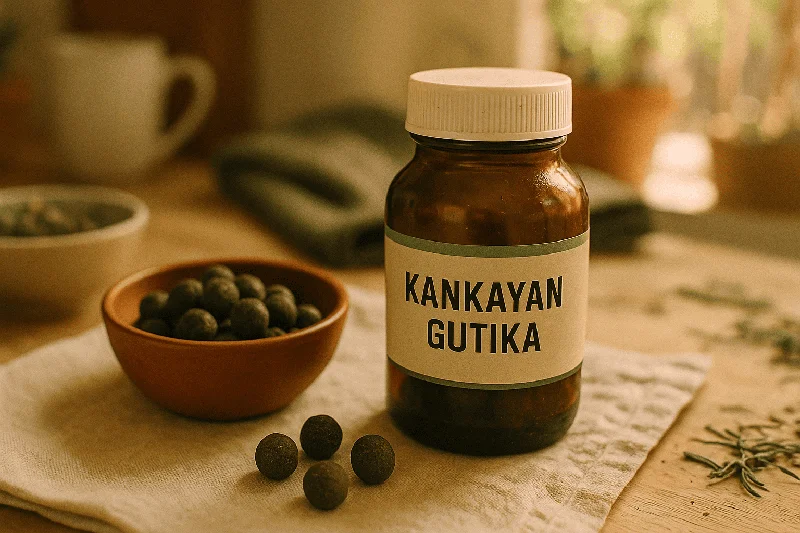
Kankayan Gutika is a classical Ayurvedic tablet formulation primarily used for the management of hemorrhoids (Arsha), fistula-in-ano (Bhagandara), and various digestive disorders. Rooted in ancient Sanskrit texts like Bhaishajya Ratnavali and Chakradatta, this time-tested preparation combines potent herbs and minerals to balance Vata and Kapha doshas, strengthen the digestive fire (Agni), and promote healthy elimination. If you've been searching for a comprehensive, evidence-based guide on Kankayan Gutika — covering everything from its classical origins and full ingredient breakdown to dosage, side effects, and how it compares across brands — you're in the right place.
In this guide, we'll go far beyond what's currently available online. We'll explain the pharmacological mechanism of action, clarify the confusion between "Kankayan Gutika" and "Kankayan Vati," compare major manufacturers, cite available clinical research with actual data, and answer every common question patients ask.
What Is Kankayan Gutika?
Kankayan Gutika (also spelled Kankayan Vati, Kankayanam Gulika, or Kankayan Vatika) is a polyherbal-mineral Ayurvedic formulation classified under the Gutika/Vati (tablet) category of Ayurvedic pharmacy. The word "Kankayan" is derived from Sanskrit, and the preparation has been described in multiple classical Ayurvedic pharmacopoeias.
At its core, Kankayan Gutika is a Vata-Kapha Shamak (pacifying) and Agni Deepan (digestive fire-enhancing) medicine. It works by correcting the root cause of anorectal and gastrointestinal diseases as understood in Ayurveda: weakened digestive fire leading to the accumulation of toxins (Ama) and obstruction of channels (Srotorodha).
Is Kankayan Gutika an Ayurvedic Medicine?
- Yes, absolutely.
- Kankayan Gutika is a classical Ayurvedic medicine — meaning its formula is not proprietary but is derived directly from ancient Sanskrit texts. Any licensed Ayurvedic manufacturer can produce it following the original formulation. It is recognized by the Ayurvedic Pharmacopoeia of India and is widely prescribed by Ayurvedic physicians (Vaidyas) across the country.
Kankayan Gutika vs Kankayan Vati — Is There a Difference?
This is one of the most common points of confusion, and surprisingly no other resource online explains it clearly.
Here's the truth:
- "Gutika" and "Vati" both mean "tablet" in Ayurvedic pharmaceutical terminology. Gutika is the more classical Sanskrit term, while Vati is commonly used in modern parlance.
- When you see "Kankayan Gutika" and "Kankayan Vati" — they refer to the same fundamental formulation.
However, there is an important nuance. Some manufacturers market a specific variant called "Kankayan Vati (Arsh)" — this denotes that the formulation is specifically indicated and optimized for hemorrhoids (Arsh). The base ingredients remain the same, but the anupan (adjuvant/vehicle) and sometimes minor compositional tweaks may differ between manufacturers. We'll cover manufacturer comparisons in detail below.
Historical & Textual Origins
Kankayan Gutika finds mention in several foundational Ayurvedic texts:
- Bhaishajya Ratnavali — Chapter 32 (Arsha Rogadhikara), Shlokas 67–73 (भै.र.32/67-73). This is the most commonly cited source and provides the detailed formulation with specific ingredient proportions.
- Chakradatta — Chapter 30, Shloka 56 (च.द.30/56), authored by Acharya Chakrapani Datta (11th century CE). This earlier text presents a similar formulation for Arsha Chikitsa (hemorrhoid treatment).
- Sharangdhara Samhita — References to similar formulations appear in the context of Gulma (abdominal masses) and Arsha management.
The fact that this formulation has been documented across multiple authoritative texts spanning several centuries speaks to its enduring clinical relevance in Ayurvedic practice.
Main Ingredients of Kankayan Gutika
The formulation is a carefully balanced blend of herbs, spices, and mineral components. Below is the comprehensive ingredient list as described in Bhaishajya Ratnavali, along with the therapeutic role of each:
| Ingredient | Latin/Scientific Name | Quantity | Key Therapeutic Role |
|---|---|---|---|
| Pippali (Long Pepper) | Piper longum | 1 part | Agni deepan, Vata-Kapha shamak, bioenhancer |
| Pippali Mool (Long Pepper Root) | Piper longum (root) | 1 part | Digestive stimulant, anti-inflammatory |
| Chavya | Piper chaba | 1 part | Carminative, relieves bloating and flatulence |
| Chitraka (Leadwort) | Plumbago zeylanica | 1 part | Powerful Agni deepan, burns Ama, anti-hemorrhoidal |
| Shunthi (Dry Ginger) | Zingiber officinale | 1 part | Anti-inflammatory, digestive, Vata-shamak |
| Maricha (Black Pepper) | Piper nigrum | 1 part | Kapha-shamak, improves metabolism, bioenhancer |
| Haritaki (Chebulic Myrobalan) | Terminalia chebula | 1 part | Mild laxative, Tridosha balancer, Rasayana |
| Bibhitaki (Beleric Myrobalan) | Terminalia bellirica | 1 part | Astringent, Kapha-shamak, supports GI health |
| Amalaki (Indian Gooseberry) | Emblica officinalis | 1 part | Rich in Vitamin C, Pitta-shamak, Rasayana |
| Pushkarmool | Inula racemosa | 1 part | Vata-shamak, supports respiratory and cardiac function |
| Yavakshar (Barley Alkali) | Alkali of Hordeum vulgare | 1 part | Digestive, breaks down Ama, alkalizing |
| Sauvarchala Lavana (Black Salt) | Sochal salt | 1 part | Appetizer, carminative, improves taste |
| Loha Bhasma (Iron Calx) | Processed iron ash | 1 part | Hematinic, strengthens Rasa and Rakta dhatu |
| Danti (Red Physic Nut) | Baliospermum montanum | 1 part | Mild purgative, relieves constipation |
| Hingu (Asafoetida) | Ferula assa-foetida | Q.S. | Powerful Vata-shamak, antispasmodic, carminative |
Note: "Q.S." means quantum satis (as much as sufficient). Proportions may vary slightly across manufacturers, but the core formula remains consistent with classical references.
Why This Combination Works: The Pharmacological Logic
Each ingredient isn't randomly selected — there's a methodical rationale:
- 1.The Trikatu Group (Shunthi, Maricha, Pippali): Acts as the metabolic engine. These three together dramatically enhance Agni, improve bioavailability of other ingredients, and clear Kapha-related obstructions in the digestive channels.
- 2.The Triphala Group (Haritaki, Bibhitaki, Amalaki): Provides gentle bowel regulation without dependency, balances all three doshas, and acts as a Rasayana (rejuvenative). Crucially important in hemorrhoids where constipation is a major aggravating factor.
- 3.Chitraka and Danti: The heavy hitters for anorectal disorders. Chitraka is considered one of the most potent Agni-deepan herbs in Ayurveda, while Danti ensures smooth evacuation — directly addressing the root cause of hemorrhoid formation.
- 4.Loha Bhasma: Addresses the anemia that often accompanies bleeding hemorrhoids. This is a clinically thoughtful addition that many people overlook.
- 5.Hingu and Yavakshar: Target Vata directly — reducing spasm, pain, and the irregular peristalsis that contributes to constipation and straining.
Kankayan Gutika Benefits and Uses
Primary Use: Hemorrhoids (Piles / Arsha)
This is the flagship indication. Kankayan Gutika is prescribed for both dry hemorrhoids (Shushka Arsha) and bleeding hemorrhoids (Sravi/Rakta Arsha).
It works through multiple mechanisms:
- Enhances digestive fire to prevent Ama formation
- Reduces venous congestion in the anorectal area
- Softens stool and prevents straining
- Shrinks hemorrhoidal mass over time (Arsha Shoshan)
- Controls bleeding through the astringent properties of Triphala
- A clinical study published in the International Journal of Ayurvedic Medicine (IJAM) evaluated Kankayan Vati in patients with hemorrhoids and reported significant improvement in symptoms including bleeding per rectum, pain, constipation, and pile mass size over the study period.
- While the sample size was modest — as is common with Ayurvedic clinical research — the results were statistically meaningful and align with centuries of clinical observation.
Fistula-in-Ano (Bhagandara)
Kankayan Gutika is also indicated in the supportive management of fistula-in-ano. While fistula often requires surgical intervention (like Kshar Sutra therapy), Kankayan Gutika plays a valuable adjuvant role by:
- Improving local tissue healing through enhanced Agni
- Preventing recurrence by addressing the underlying digestive dysfunction
- Reducing inflammation and discharge
Digestive Disorders: Bloating, Gas, Constipation, and Low Appetite
Beyond anorectal conditions, Kankayan Gutika is highly effective for:
- Mandagni (Low digestive fire): The Trikatu and Chitraka combination directly strengthens Jatharagni
- Adhmana (Bloating/Flatulence): Hingu and carminative herbs rapidly relieve trapped gas
- Vibandha (Constipation): Triphala and Danti gently regulate bowel movements
- Aruchi (Loss of appetite): Sauvarchala Lavana and Pippali stimulate appetite naturally
Abdominal Masses & Gulma
Classical texts specifically mention Kankayan Gutika in the context of Gulma (abdominal masses/tumors). This includes conditions that in modern terms might correlate with abdominal lumps, intestinal polyps, or functional abdominal pain syndromes.
Skin Disorders and Blood Purification
Kankayan Gutika's combination of Triphala and Loha Bhasma provides blood-purifying (Rakta Shodhak) properties. Some practitioners prescribe it as a supportive therapy for acne, eczema, and other skin conditions rooted in impure blood and poor digestion.
Respiratory Support
Pushkarmool, a key ingredient, is one of Ayurveda's premier respiratory herbs. Combined with Trikatu's Kapha-liquefying properties, Kankayan Gutika can offer supportive benefits in conditions like bronchitis, cough with congestion, and even mild asthmatic symptoms — though this is considered a secondary benefit rather than the primary indication.
Liver Support and Detoxification
The formulation supports hepatic function through Chitraka (which stimulates liver enzymes), Triphala (which supports bile flow), and Yavakshar (which has an alkalizing effect). This makes it a useful adjunct in general detoxification protocols.
How to Take Kankayan Gutika: Dosage and Method
Standard Dosage
| Category | Dosage | Frequency | Timing |
|---|---|---|---|
| Adults (General) | 1–2 tablets (250–500 mg each) | Twice daily | After meals |
| Severe hemorrhoid cases | 2 tablets | Twice daily | After meals |
| Mild digestive complaints | 1 tablet | Once or twice daily | After meals |
| Children | Not generally recommended without physician guidance | — | — |
Vehicle (Anupan): Typically taken with lukewarm water. However, classical texts describe differentiated anupans based on the specific condition — and this is a critically important aspect that most resources miss entirely.
Classical Anupan (Vehicle) Based on Condition Type
This information comes directly from Bhaishajya Ratnavali and is a goldmine for practitioners and informed patients:
| Condition / Dosha Type | Recommended Anupan | Rationale |
|---|---|---|
| Vata-dominant Gulma | Madhya (medicated wine/fermented preparation) | Vata shamak, enhances absorption |
| Pitta-dominant Gulma | Milk | Pitta shamak, cooling vehicle |
| Kapha-dominant Gulma | Gomutra (cow's urine, processed) | Kapha-liquefying, Lekhana (scraping) |
| Sannipata (Tridoshic) | Triphala Kashaya (decoction) | Tridosha balancer |
| Rakta Gulma (blood-related) | Camel's milk | Rakta Shodhak, specific for Rakta dushti |
| General Arsha (Hemorrhoids) | Warm water or buttermilk | Digestive, easy vehicle |
| With Ghee | For Vata-type hemorrhoids | Snigdha (unctuous), Vata-pacifying |
This differentiated anupan system is unique to classical Ayurvedic prescribing and significantly enhances therapeutic outcomes. Always consult a qualified Ayurvedic physician to determine the right anupan for your specific condition.
Duration of Treatment
This is another area where existing online resources are frustratingly vague.
Based on classical guidelines and clinical practice:
- Mild hemorrhoids / digestive issues: 4–6 weeks
- Moderate to severe hemorrhoids: 2–3 months
- Fistula (as adjuvant): 3–6 months alongside primary therapy
- Chronic digestive disorders: 2–3 months, with periodic reassessment
The medication is generally considered safe for long-term use under medical supervision, but periodic evaluation is essential.
Mechanism of Action: How Kankayan Gutika Works
Understanding how this medicine works — not just what it does — is key to appreciating its therapeutic value.
At the Ayurvedic Level (Doshic Mechanism)
- 1.Vata Shamana (Pacification): The primary dosha involved in hemorrhoids is Vata (specifically Apana Vayu, the downward-moving energy governing elimination). Ingredients like Hingu, Shunthi, and Pippali directly pacify Vata and restore normal Apana Vayu function.
- 2.Kapha Lekhana (Scraping): Hemorrhoidal masses are considered Kapha-predominant growths. Chitraka, Maricha, and Yavakshar have Lekhana (scraping/reducing) properties that help shrink these masses gradually.
- 3.Agni Deepana (Digestive Fire Enhancement): Weak Agni is the fundamental root cause. Almost every ingredient in the formulation contributes to strengthening Agni, which breaks the pathological chain at its origin.
- 4.Srotorodha Nashana (Clearing Channel Blockages): Ama (toxins from incomplete digestion) blocks the micro-channels and contributes to mass formation. Trikatu and Chitraka are potent Ama-pachana (toxin-digesting) agents.
At the Pharmacological Level (Modern Understanding)
While large-scale clinical trials are still limited, available research and pharmacological studies on individual ingredients support several mechanisms:
- Anti-inflammatory activity: Zingiber officinale (Shunthi) has well-documented COX-2 inhibitory effects. A 2015 systematic review in the Journal of Medicinal Food confirmed ginger's potent anti-inflammatory properties.
- Venotonic effect: Terminalia chebula (Haritaki) has shown venotonic and vascular-protective properties in preclinical studies.
- Hemostatic action: The tannic acid content in Triphala fruits contributes to astringent and hemostatic (bleeding-stopping) effects.
- Iron supplementation: Loha Bhasma provides bioavailable iron, directly addressing hemorrhoid-related anemia. A study published in Ayu journal (2011) confirmed the safety and hematological efficacy of properly processed Loha Bhasma.
- Prokinetic and laxative effects: Danti and Haritaki stimulate peristalsis, preventing the constipation that worsens hemorrhoids.
Don't wait or self medicate. Start chat with Doctor NOW
Side Effects and Contraindications of Kankayan Gutika
Known Side Effects
Kankayan Gutika is generally well-tolerated when taken in prescribed doses.
However, some individuals may experience:
- Mild gastric irritation or burning sensation, particularly in Pitta-prakriti individuals (due to the heating nature of Trikatu and Chitraka)
- Loose stools if the dosage is excessive (due to Danti's purgative action)
- Metallic taste in rare cases (due to Loha Bhasma)
These side effects are usually mild and self-limiting. Reducing the dose or taking the medicine with milk typically resolves them.
Contraindications and Precautions
| Situation | Recommendation |
|---|---|
| Pregnancy | Contraindicated. Contains Danti (purgative) and heating herbs that may stimulate uterine contractions |
| Lactation | Use only under strict medical supervision |
| Children under 12 | Not recommended without a physician's prescription |
| Pitta-prakriti individuals | Use with caution; may need cooling anupan (milk) or reduced dose |
| Active gastric/duodenal ulcers | Avoid — the heating herbs may aggravate |
| Patients on anticoagulant therapy | Consult doctor — Loha Bhasma and some herbs may interact |
Interaction with Allopathic Medications
This is a gap that no other resource addresses. While Kankayan Gutika is an Ayurvedic preparation, it contains pharmacologically active compounds that can potentially interact with modern medications:
- Anticoagulants/Antiplatelets (Warfarin, Aspirin): Pippali and Shunthi may potentiate blood-thinning effects. Monitor INR if co-administering.
- Antidiabetic medications: Some ingredients may have hypoglycemic effects, potentially requiring dose adjustments.
- Iron supplements: Loha Bhasma already provides iron; additional supplementation may cause iron overload in susceptible individuals.
- Antacids/PPIs: These reduce stomach acid, which may impair the activation of certain herbal components that require an acidic environment.
Bottom line: always inform your doctor — both Ayurvedic and allopathic — about all medications you are taking.
Comparison of Kankayan Gutika Across Major Manufacturers
This is something no other guide covers, and it's a major source of confusion for consumers.
Here's an honest breakdown:
| Feature | Baidyanath | Dabur | Patanjali (Divya) | Dhootapapeshwar |
|---|---|---|---|---|
| Formulation Base | Classical (Bhaishajya Ratnavali) | Classical | Classical | Classical |
| Tablet Weight | ~250–500 mg | ~250–500 mg | ~500 mg | ~250–500 mg |
| Key Differentiator | Widely available, trusted legacy brand | Pharmaceutical-grade manufacturing | Affordable, mass market | Premium quality, GMP certified |
| Approximate Price (40–80 tabs) | ₹80–150 | ₹90–160 | ₹50–100 | ₹120–200 |
| Availability | Offline + Online | Offline + Online | Offline + Online (Patanjali stores) | Primarily online + select Ayurvedic pharmacies |
| Variant Name | Kankayan Vati / Kankayan Gutika | Kankayan Vati | Kankayan Gutika (Arsh) | Kankayan Vati |
Key takeaway: The base formulation is standardized by classical texts, so the core ingredients should be the same across manufacturers. Differences arise in manufacturing practices (GMP compliance, quality of raw materials, Bhasma processing standards), excipients, and price.
For serious anorectal conditions, practitioners often prefer Baidyanath or Dhootapapeshwar for their established quality control. For general digestive support, any reputable brand should suffice.
Lifestyle and Dietary Tips to Enhance Kankayan Gutika's Effectiveness
Medicine alone isn't enough. Ayurveda emphasizes Pathya (compatible diet and lifestyle) as equally important as the medicine itself.
Here's what to follow:
Diet (Aahara)
- Increase fiber intake: Whole grains, leafy vegetables, fruits like papaya and figs
- Stay well-hydrated: Minimum 8–10 glasses of warm or room-temperature water daily
- Include buttermilk (Takra): Classical texts call buttermilk "the best treatment for hemorrhoids" (Takram Shakrasya Durlabham)
- Avoid: Spicy, oily, fried foods; excessive red meat; refined flour (maida); and alcohol
Lifestyle (Vihara)
- Avoid prolonged sitting: Take breaks every 30–45 minutes if you have a desk job
- Practice Sitz baths: Warm water sitz baths for 10–15 minutes can complement the medication
- Yoga Asanas: Sarvangasana, Matsyasana, and Pavanamuktasana improve pelvic blood flow and aid digestion
- Pranayama: Kapalbhati and Agnisar Kriya specifically enhance Agni
- Avoid straining during defecation: Use a footstool to elevate feet (squat-like position)
Frequently Asked Questions (FAQ)
What is Kankayan Vati used for?
Kankayan Vati (same as Kankayan Gutika) is primarily used for the treatment of hemorrhoids (piles), fistula-in-ano, and digestive disorders including bloating, constipation, low appetite, and abdominal masses (Gulma). It strengthens digestive fire and balances Vata-Kapha doshas.
What are the main ingredients of Kankayan Gutika?
The main ingredients include Pippali (Long Pepper), Pippali Mool, Chavya, Chitraka, Shunthi (Dry Ginger), Maricha (Black Pepper), Haritaki, Bibhitaki, Amalaki (collectively Triphala), Pushkarmool, Yavakshar, Sauvarchala Lavana, Loha Bhasma, Danti, and Hingu. See the full ingredient table above for Latin names and therapeutic roles.
How long does Kankayan Gutika take to show results?
Most patients begin noticing improvement in digestive symptoms (bloating, gas, appetite) within 1–2 weeks. For hemorrhoids, visible reduction in symptoms like bleeding and pain typically takes 3–4 weeks, with optimum results at 2–3 months of consistent use.
Does Kankayan Gutika help with fistula?
Yes, it is used as an adjuvant therapy in fistula-in-ano (Bhagandara). It helps improve local healing and prevents recurrence by addressing the underlying digestive dysfunction. However, fistula often requires primary surgical interventions like Kshar Sutra alongside the internal medication.
Can I take Kankayan Gutika with allopathic medicines?
Generally yes, but with precautions. It contains Loha Bhasma (iron calx) and heating herbs that may interact with blood thinners, antidiabetics, iron supplements, and antacids. Always inform both your Ayurvedic and allopathic doctors about all medications you take. A gap of at least 30 minutes between Ayurvedic and allopathic medicines is typically recommended.
Is Kankayan Gutika safe during pregnancy?
No. It is contraindicated during pregnancy. The formulation contains Danti (a purgative herb) and multiple Ushna Virya (heating) ingredients that may stimulate uterine contractions and pose a risk to the pregnancy.
What is the price of Kankayan Gutika?
Prices vary by manufacturer and pack size. Generally, a bottle of 40–80 tablets ranges from ₹50–200 depending on the brand. Patanjali's Divya Kankayan Gutika is among the most affordable (~₹50–100), while Dhootapapeshwar tends to be at the premium end (~₹120–200).
When should I consult a doctor?
Consult an Ayurvedic physician before starting Kankayan Gutika if you have active bleeding from the rectum, if you're on blood-thinning medications, if you have a known Pitta-predominant constitution, or if symptoms don't improve within 4–6 weeks. Severe hemorrhoids (Grade III–IV) and fistula always require professional medical evaluation — self-medication is not advisable for these conditions.
Final Thoughts: Is Kankayan Gutika Right for You?
Kankayan Gutika represents one of the most well-documented, time-tested formulations in the Ayurvedic pharmacopoeia. With a history spanning centuries across multiple classical texts and a logical, synergistic combination of ingredients, it offers genuine therapeutic value for hemorrhoids, digestive disorders, and related conditions.
- That said, Ayurveda is inherently personalized medicine. The same formulation may work differently for different prakriti types, and the choice of anupan (vehicle) can significantly influence outcomes.
- This is why working with a qualified Ayurvedic practitioner — rather than self-prescribing — will always yield the best results.
If you're dealing with hemorrhoids, chronic digestive issues, or related complaints, Kankayan Gutika is absolutely worth discussing with your Vaidya. Combined with the right diet, lifestyle modifications, and appropriate anupan, it can be a powerful ally in your journey toward lasting digestive health.
Disclaimer: This article is for informational and educational purposes only and is not a substitute for professional medical advice. Always consult a qualified Ayurvedic physician before starting any new medication.
Scientific Sources
- Bangladeshi medicinal plant dataset — Borkatulla B et al., 2023, Data in brief
- Extraction, phytochemical characterization and anti-cancer mechanism of Haritaki churna: An ayurvedic formulation — Khan MRUZ et al., 2023, PloS one
- Unique aspect of Tibetan medicine — Dakpa T, 2014, Acupuncture & electro-therapeutics research
- The Ayurvedic medicines Haritaki, Amala and Bahira reduce cholesterol-induced atherosclerosis in rabbits — Thakur CP et al., 1988, International journal of cardiology
- Triphala's characteristics and potential therapeutic uses in modern health — Bairwa VK et al., 2025, International journal of physiology, pathophysiology and pharmacology
- Therapeutic Uses of Triphala in Ayurvedic Medicine — Peterson CT et al., 2017, Journal of alternative and complementary medicine (New York, N.Y.)
- Evaluation of the anti-hyperlipidemic effects of Triphala in high fat diet fed rats: Studies with two combinations — Rana S et al., 2022, Ayu
- Scientific validation of the ethnomedicinal properties of the Ayurvedic drug Triphala: a review — Baliga MS et al., 2012, Chinese journal of integrative medicine
- Effect of Triphala on dextran sulphate sodium-induced colitis in rats — Rayudu V et al., 2014, Ayu
- Evaluation of antioxidant profile and activity of amalaki (Emblica officinalis), spirulina and wheat grass — Shukla V et al., 2009, Indian journal of clinical biochemistry : IJCB
- Influence of Amalaki Rasayana on telomerase activity and telomere length in human blood mononuclear cells — Guruprasad KP et al., 2017, Journal of Ayurveda and integrative medicine
- Amalaki rasayana, a traditional Indian drug enhances cardiac mitochondrial and contractile functions and improves cardiac function in rats with hypertrophy — Kumar V et al., 2017, Scientific reports
- Ayurvedic formulations amalaki rasayana and rasa sindoor improve age-associated memory deficits in mice by modulating dendritic spine densities — Verma B et al., 2022, Journal of Ayurveda and integrative medicine
- Ginger — 2006
- Ashwagandha (Withania somnifera) and Shunthi (Zingiber officinale) in mild and moderate COVID-19: An open-label randomized controlled exploratory trial — Singh H et al., 2023, Complementary therapies in medicine
- Establishment of the mechanism of purification and levigation of green chemistry-assisted biocomposites of red ochre (Gairika): synthesis, characterization, and antibacterial, prebiotic, antioxidant, and antacid activities of the traditional Ayurvedic medicine Laghu Sutashekhara Rasa — Charde V et al., 2023, Frontiers in chemistry
- Pharmaceutical preparation of Saubhagya Shunthi Churna: A herbal remedy for puerperal women — Shukla K et al., 2010, International journal of Ayurveda research
- Safety and efficacy of herbal extracts to restore respiratory health and improve innate immunity in COVID-19 positive patients with mild to moderate severity: A structured summary of a study protocol for a randomised controlled trial — Rangnekar H et al., 2020, Trials
- Efficacy of Pippali in vardhamana and fixed dosage pattern in primary hypothyroidism - A randomized clinical trial — Shah SB et al., 2022, Journal of Ayurveda and integrative medicine
- Piper longum L.: A comprehensive review on traditional uses, phytochemistry, pharmacology, and health-promoting activities — Biswas P et al., 2022, Phytotherapy research : PTR
- Management of giardiasis by a herbal drug 'Pippali Rasayana': a clinical study — Agarwal AK et al., 1997, Journal of ethnopharmacology
- Ayurvedic management of systemic sclerosis - A case report — Parmar JR et al., 2024, Journal of Ayurveda and integrative medicine
- Role of Agni Karma with Pippali on Kadara- An open labeled clinical trial — Ganjoo N, 2017, Ayu
Questions from users
What are the financial costs associated with Kankayan Gutika over time?
Brooklyn
4 days ago
The financial costs for using Kankayan Gutika will depend on the dosage and length of treatment. Typically, a bottle containing 40 to 80 tablets costs between ₹50 and ₹200. For adults taking the standard dose of 1–2 tablets twice daily, a single bottle could last 10 to 40 days. This would translate to a monthly expense of roughly ₹100–₹400 if taken continuously. It's important to consider that health outcomes can vary, and additional costs may arise if combined with other treatments. Consult a healthcare provider if prolonged use or higher doses are intended to ensure safety and efficacy.
Is it safe to take Kankayan Gutika with other medications or supplements?
Luke
14 days ago
Merging Kankayan Gutika with other meds or supplements can be a bit tricky, as there might be interactions. It's generally best to chat with an Ayurvedic practitioner or healthcare provider before combining them. They can check if it fits well with your body's needs and what's safe based on your current regimen.
What is the best way to store Kankayan Gutika to maintain its potency?
Nora
26 days ago
Store Kankayan Gutika in a cool, dry place away from direct sunlight to maintain its potency. You don't want moisture or heat messing with it. Maybe avoid the bathroom, where it's humid! If you have a airtight container, that's perfect. Just think of it like keeping your herbs or spices fresh!
What is the role of antioxidants in Kankayan Gutika for boosting immunity?
Titus
35 days ago
Antioxidants in Kankayan Gutika help boost immunity by neutralizing free radicals, which can damage cells and weaken immune response. This support helps maintain vitality and balance your doshas, keeping your body's defenses nice and strong. Think of it as giving your immune system a little extra armor!
What is the traditional preparation process for Kankayan Gutika in Ayurvedic medicine?
Paul
44 days ago
Kankayan Gutika is traditionally prepared by mixing a complex blend of herbs tailored to balance the patient's doshas. Typically, ingredients are powdered, combined, and sometimes mixed with a base like honey or water to form pills. For exact recipe, usually ayurvedic texts like Bhaisajya Ratnavali can be a good starting point to explore.
Can Kankayan Gutika help with weight management in conjunction with a healthy diet?
Una
53 days ago
Kankayan Gutika might support weight management as it improves digestion and helps balance doshas, which are crucial in weight control. But, it's not a magic pill - really works best with a healthy diet and lifestyle changes. Always a good idea to consult an Ayurvedic doctor too, as they can tailor recos to your specific needs!
What is the recommended dosage of Kankayan Gutika for best results?
Addison
63 days ago
Generally, the recommended dosage of Kankayan Gutika might be 1 to 2 tablets twice a day after meals, but this can vary based on your unique constitution and condition. It's best to consult an Ayurvedic practitioner who can assess your dosha balance, agni, and other factors to tailor the dosage for you. Always good to listen to your body too!
What are some common misconceptions about using Kankayan Gutika for health benefits?
Jayden
73 days ago
One common misconception is thinking it's safe for everyone. While Kankayan Gutika supports digestion and detox, it might not be suitable for people with different constitutions or pre-existing conditions. It's also often believed that more is better, but dosing should be tailored to individual needs by a professional. Always best to consult a practitioner first!
What is the role of Agni in digestion according to Ayurvedic principles?
Presley
82 days ago
Agni in Ayurveda is kind of like the digestive fire - it's key for breaking down food and turning it into energy and nutrients. When Agni is balanced, digestion runs smoothly, preventing toxin buildup. If it's weak or too strong, it can lead to digestion issues, so herbs like in Kankayan Gutika help keep it balanced and healthy!
What are the main health benefits of using Kankayan Gutika regularly?
Yvonne
92 days ago
Kankayan Gutika offers some cool health benefits! It primarily aids in detoxification, supports a strong immune system, and helps boost your digestive and metabolic processes by activating Agni, your digestive fire. Just remember to take it with warm water before or after meals for best results!
Related articles

Gastrointestinal Disorders
Santarpana Janya Vyadhi – Understanding the Ayurvedic Approach to Nutritional Imbalances
Explore the concept of Santarpana Janya Vyadhi in Ayurveda, a category of diseases caused by excessive nourishment, and learn about its causes, symptoms, and treatment options.
2,643
Gastrointestinal Disorders
Ayurvedic Medicine for Gastritis: What Actually Works (And What Doesn’t)
One day, I’m sipping my second coffee on an empty stomach (bad idea, by the way), and the next, I’m curled up in bed, feeling like my insides are staging a protest. Burning, bloating, that weird nausea that doesn’t quite become vomiting—it was all there.
5,638

Gastrointestinal Disorders
Pilex Tablet Uses: Dosage, Duration, and Ayurvedic Benefits
Explore Pilex tablet uses, dosage instructions, and duration of intake. Learn how it helps with piles and what to know before use during pregnancy
16,408

Gastrointestinal Disorders
Kalamegha Strong: Benefits, Dosage & Science-Backed Insights
Discover the proven benefits, proper dosage, uses, and scientific research behind Kalamegha Strong, the powerful Ayurvedic formulation for liver health and overall wellness.
3,988
Gastrointestinal Disorders
Natural Ayurvedic Medicine for Creatinine: Lower Levels Safely & Effectively
Explore how Ayurvedic medicine addresses high creatinine levels naturally, with insights on herbs, dosage, benefits, and scientific evidence behind these remedies.
2,472

Gastrointestinal Disorders
Vata Prakopa Lakshana: A Comprehensive Guide to Symptoms, Causes, and Management
Discover Vata Prakopa Lakshana, its root causes, and evidence-based tips for managing Vata imbalance to enhance overall health and well-being.
3,086

Gastrointestinal Disorders
Vilwadi Gutika: Scientific Insights & Practical Applications
Explore the science behind Vilwadi Gutika, its Ayurvedic origins, research findings, and expert tips for safe, effective use in holistic healthcare.
3,009

Gastrointestinal Disorders
Shaddharanam Gulika – Benefits, Uses & Dosage in Ayurveda
Learn about Shaddharanam Gulika, an Ayurvedic remedy known for its detoxifying, digestive, and therapeutic properties, and how it supports overall health.
3,586

Gastrointestinal Disorders
Virechana Dravya: A Comprehensive Ayurvedic Detox Guide
Discover the benefits of Virechana Dravya for Ayurvedic detoxification, backed by scientific insights, safety guidelines, and expert tips.
2,874

Gastrointestinal Disorders
Liver & Gall
The liver is closely linked to other organs and body systems.
3,034
Related consultations on the topic
Legal
Additional Documents
© 2024 Ask Ayurveda. All rights reserved.