Ask Ayurvedic doctor a question and get a consultation online on the problem of your concern in a free or paid mode. More than 2,000 experienced doctors work and wait for your questions on our site and help users to solve their health problems every day.
FREE! Ask Ayurvedic Doctors 24/7

 Fast responses
 1000+ verified doctors
Body DetoxEar, Nose, and Throat DisordersGeriatrics & RejuvenationImmunodeficiencyInfertility TreatmentNutritionOrthopedic DisordersPediatricsRespiratory DisordersSexually Transmitted Diseases (STDs)Surgery RecoveryUrological DisordersVascular DisordersDental DisordersEndocrinological DisordersGastrointestinal DisordersYoga TherapyGeneral MedicineAllergic DisordersCardio DisordersGynecology and ObstetricsCosmetologySkin and Hair DisordersEye DisordersInfectious DiseasesMental DisordersNeurological DisordersOncologyPanchakarmaSexual Health & DisordersSports Medicine
Published on 03/18/25
(Updated on 06/19/26)
2,560
Dhanwanthararishtam: An Ayurvedic Elixir Explained
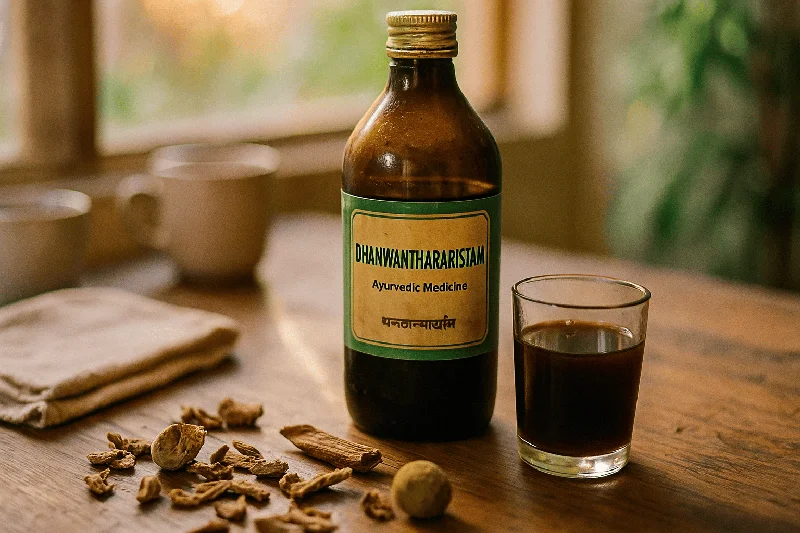
Dhanwanthararishtam is a classical Ayurvedic fermented liquid medicine (arishtam) primarily used to balance Vata dosha and treat conditions like postpartum weakness, hernia, digestive disorders, urological problems, and neurological issues. Originally described in the ancient text Ashtanga Hridayam, it combines a powerful base of Dashamoola (ten roots) with over 30 herbs, self-generated alcohol from natural fermentation, and honey — making it one of the most comprehensive polyherbal formulations in traditional Indian medicine. Whether you're exploring it for chronic Vata imbalances or postpartum recovery, this guide covers everything you need to know: from its complete ingredient list and pharmacological mechanisms to dosage, side effects, drug interactions, and how to choose the right manufacturer.
What Is Dhanwanthararishtam and What Is It Used For?
Dhanwanthararishtam (also spelled Dhanwantararishtam or Dhanwantharam Arishtam) is a self-generated alcohol-based herbal preparation belonging to the Arishtam category of Ayurvedic medicines. The name derives from Dhanwantari, the Hindu deity of medicine, signaling the formulation's esteemed status in classical pharmacopoeia.
- Unlike modern tinctures where alcohol is added externally, the 5–10% alcohol content in Dhanwanthararishtam is produced through natural fermentation of herbs with jaggery or sugar.
- This self-generated alcohol serves a dual purpose: it acts as a preservative (giving the medicine a shelf life of several years) and as a bioavailability enhancer that helps the body absorb active phytochemicals more efficiently.
Classical References and Historical Context
The primary textual reference for Dhanwanthararishtam is Ashtanga Hridayam (Uttarasthana, Chapter 1), composed by Acharya Vagbhata around the 7th century CE. Additional references appear in Bhaishajya Ratnavali, Yogaratnakara, and Chakradatta — indicating that the formulation was widely accepted across multiple Ayurvedic traditions.
In Kerala, Dhanwanthararishtam has a particularly deep cultural footprint. Historical records suggest that temple-affiliated vaidyasalas (traditional pharmacies) in Kerala were among the first to standardize its production. During the colonial period, British medical officers in Malabar documented its use for "post-delivery weakness and abdominal complaints," though they lacked the framework to understand its mechanism of action. Medieval South Indian manuscripts also reference it in the context of Vatavyadhi chikitsa (treatment of Vata disorders), cementing its reputation as a primary Vata-balancing arishtam.
Key Indications at a Glance
Dhanwanthararishtam's therapeutic scope is remarkably broad.
Here are the primary conditions it addresses:
- Postpartum care — weakness, uterine recovery, lactation support
- Hernia (Inguinal hernia / Āntravr̥ddhi)
- Digestive disorders — bloating, flatulence, loss of appetite
- Urological conditions — urinary retention, painful urination
- Gynecological issues — menstrual irregularities, leucorrhea
- Neurological concerns — tremors, numbness, pediatric neurological conditions
- Musculoskeletal problems — fracture healing, joint stiffness, low back pain
- Fever — chronic and intermittent fevers with Vata predominance
Complete Ingredients of Dhanwanthararishtam
- Understanding the composition is essential for appreciating how Dhanwanthararishtam works.
- The formulation can be broadly divided into three categories: Kwath Dravyas (decoction herbs), Prakshep Dravyas (adjuvant herbs added during fermentation), and Madhur Dravya (sweetening and fermentation agents).
Kwath Dravyas (Decoction Base)
| Sanskrit Name | Botanical Name | Key Action |
|---|---|---|
| Bala | Sida cordifolia | Strengthens muscles, nourishes nerves |
| Bilva | Aegle marmelos | Digestive, anti-inflammatory |
| Agnimantha | Premna mucronata | Stimulates digestive fire |
| Shyonaka | Oroxylum indicum | Anti-inflammatory, analgesic |
| Gambhari | Gmelina arborea | Nervine tonic, diuretic |
| Patala | Stereospermum suaveolens | Antipyretic, digestive |
| Brihati | Solanum indicum | Carminative, bronchodilator |
| Kantakari | Solanum xanthocarpum | Respiratory support, anti-inflammatory |
| Gokshura | Tribulus terrestris | Urinary tract support, rejuvenative |
| Shalaparni | Desmodium gangeticum | Anti-Vata, febrifuge |
| Prishnaparni | Uraria picta | Anti-Vata, anti-diarrheal |
| Amalaki | Emblica officinalis | Antioxidant, vitamin C source |
| Haritaki | Terminalia chebula | Mild laxative, rejuvenative |
| Vibhitaki | Terminalia bellirica | Astringent, respiratory support |
| Manjishtha | Rubia cordifolia | Blood purifier, anti-inflammatory |
| Katurohini | Picrorhiza kurroa | Hepatoprotective, bitter tonic |
The above list forms the Dashamoola (ten roots) plus Triphala and supporting herbs. Dashamoola itself is divided into Brihat Panchamoola (five large-tree roots: Bilva, Agnimantha, Shyonaka, Gambhari, Patala) and Laghu Panchamoola (five smaller-plant roots: Brihati, Kantakari, Gokshura, Shalaparni, Prishnaparni).
Prakshep Dravyas and Fermentation Agents
- Dhataki pushpa (Woodfordia fruticosa) — the critical fermentation initiator
- Shilajeet (mineral pitch) — adaptogen, mineral source, rejuvenative
- Gud (jaggery) or Sharkara (sugar) — provides substrate for fermentation
- Madhu (honey) — added post-fermentation as Madhur Dravya; enhances bioavailability and adds its own antimicrobial properties
Benefits of Key Individual Ingredients
Bala (Sida cordifolia): Often called the "strength-giver," Bala is the signature herb in this formulation. It contains ephedrine-like alkaloids that support neuromuscular function, making it particularly relevant for postpartum weakness and Vata-type neurological conditions. Dashamoola complex: This ten-root combination is one of Ayurveda's most potent anti-Vata and anti-inflammatory groups. A 2016 study published in the Journal of Ayurveda and Integrative Medicine confirmed significant anti-inflammatory activity of Dashamoola extract in animal models, with effects comparable to standard NSAIDs. Shilajeet: Rich in fulvic acid and over 84 trace minerals, Shilajeet contributes adaptogenic and mineral-replenishing properties. Its presence in Dhanwanthararishtam is particularly meaningful for postpartum mineral depletion and bone healing. Dhataki pushpa: Beyond initiating fermentation, Dhataki flowers contribute their own tannins and flavonoids, adding to the formulation's overall antioxidant profile.
How Dhanwanthararishtam Works: Mechanism of Action
This is where most sources fall short. While traditional texts describe the action in terms of dosha balancing, modern pharmacology can explain the mechanisms in more accessible language.
Anti-Inflammatory Pathway
The Dashamoola complex in Dhanwanthararishtam inhibits cyclooxygenase (COX-2) and lipoxygenase (LOX) enzymes, thereby reducing prostaglandin and leukotriene synthesis. This is the same pathway targeted by modern NSAIDs like ibuprofen — but without the gastric ulcer risk, because accompanying herbs like Bilva and Amalaki simultaneously protect the gastric mucosa.
Antioxidant Activity (Research Evidence)
A 2024 study published in PMC (National Center for Biotechnology Information) conducted ABTS, DPPH, and FRAP assays on Dhanwanthararishtam and found significant free-radical scavenging activity. The DPPH assay showed dose-dependent radical scavenging, while the FRAP analysis confirmed strong ferric-reducing antioxidant power. These results suggest that Dhanwanthararishtam's polyherbal composition creates a synergistic antioxidant effect greater than what individual herbs achieve alone.
Neuroprotective and Adaptogenic Action
Bala and Shilajeet together provide neuroprotective effects through multiple pathways: stabilization of cell membranes, modulation of acetylcholinesterase activity, and support for myelin sheath integrity. This explains the classical indication for neurological conditions, including pediatric cerebral palsy and tremor disorders.
Cytokine Modulation and Immunoregulation
Preliminary in-vitro studies on individual ingredients (notably Amalaki and Picrorhiza kurroa) suggest the formulation may modulate pro-inflammatory cytokines like TNF-α and IL-6. While no direct clinical trial has been conducted on Dhanwanthararishtam for immunomodulation specifically, the pharmacological profiles of its constituent herbs strongly support this mechanism.
Dhanwanthararishtam Dosage: How Much and When to Take
Standard Adult Dosage
The typical recommended dose is 15–30 mL (approximately 3–6 teaspoons), taken once or twice daily, preferably after meals. Most practitioners advise mixing it with an equal quantity of lukewarm water.
Dosage for Children
For children aged 5–12, the dose is generally reduced to 5–10 mL, once or twice daily, always under the guidance of a qualified Ayurvedic practitioner. For pediatric neurological conditions, some physicians prescribe as low as 2–3 mL for toddlers.
Dosage for the Elderly
Elderly patients, especially those with reduced digestive capacity, may benefit from starting at 10–15 mL once daily and gradually increasing based on tolerance.
Anupana (Vehicle for Administration)
The choice of anupana (carrier substance) can significantly influence how the medicine works:
| Anupana | Best For | Season |
|---|---|---|
| Lukewarm water | General Vata disorders, digestive issues | All seasons, especially winter |
| Ghee (clarified butter) | Nerve disorders, severe debility | Winter, monsoon |
| Coconut water | Pitta-Vata conditions, UTI | Summer |
| Honey-water | Respiratory congestion with Vata | Monsoon |
Duration of Treatment
A typical course runs 4–12 weeks, depending on the condition being treated. Postpartum care protocols in Kerala Ayurvedic hospitals often prescribe it for 6–8 weeks continuously. Chronic conditions like hernia or recurrent Vata disorders may require longer courses with periodic breaks.
Dhanwanthararishtam Side Effects and Contraindications
Known Side Effects
Dhanwanthararishtam is generally considered safe when taken in recommended doses.
However, some individuals may experience:
- Mild gastric irritation in those with sensitive stomachs (taking it after meals minimizes this)
- Slight burning sensation in people with aggravated Pitta dosha
- Loose stools in rare cases, particularly when doses exceed 30 mL
- Headache or dizziness — uncommon, but reported when taken on an empty stomach
Who Should Avoid It?
- Pregnant women — the formulation contains herbs that may stimulate uterine contractions
- Individuals with predominant Pitta constitution — unless specifically prescribed by a practitioner
- People with active gastric ulcers or acid reflux — the fermented base may aggravate symptoms
- Individuals with alcohol dependence or liver disease — due to the self-generated alcohol content (5–10%)
- Diabetic patients — should consult their physician, as jaggery/sugar is used in preparation (though the fermentation process converts most sugars)
Interaction with Allopathic Medicines
This is a critically overlooked topic.
Here's what you should know:
- NSAIDs (Ibuprofen, Diclofenac): Since Dhanwanthararishtam itself has anti-inflammatory action via the COX pathway, concurrent use may have additive effects. Space them at least 2 hours apart and inform your doctor.
- Antibiotics: No direct contraindication is documented, but the alcohol content may interfere with metronidazole and certain cephalosporins. Avoid concurrent use with these specific antibiotics.
- Hormonal medications (HRT, oral contraceptives): Some ingredients like Shatavari (when present in modified versions) may have phytoestrogenic activity. Discuss with your prescriber.
- Anti-diabetic drugs: The residual sugar content may affect blood glucose. Monitor levels more frequently when starting this arishtam.
- Anti-epileptic drugs: Given the neuroprotective herbs in the formulation, there is a theoretical risk of pharmacodynamic interaction. Always consult your neurologist.
> Important: Always inform both your Ayurvedic practitioner and allopathic doctor about all medications you're taking. Drug-herb interactions are understudied, and caution is warranted.
Don't wait or self medicate. Start chat with Doctor NOW
Dhanwanthararishtam vs Other Arishtam Preparations: A Comparison
One of the most common questions is how Dhanwanthararishtam differs from similar fermented preparations.
Here's a straightforward comparison:
| Feature | Dhanwanthararishtam | Dasamoolarishtam | Ashwagandhaarishtam |
|---|---|---|---|
| Primary Dosha | Vata | Vata-Kapha | Vata-Kapha |
| Key Hero Herb | Bala + Dashamoola | Dashamoola alone | Ashwagandha |
| Best For | Postpartum care, hernia, neurology | Respiratory issues, fever, general Vata | Anxiety, insomnia, debility |
| Unique Ingredient | Shilajeet | Lodhra, Chitrak | Ashwagandha, Mushali |
| Classical Reference | Ashtanga Hridayam | Ashtanga Hridayam | Bhaishajya Ratnavali |
| Postpartum Use | Primary choice | Secondary option | Not typically used |
| Neurological Use | Strong | Moderate | Moderate-Strong |
| Alcohol Content | 5–10% | 5–10% | 5–10% |
When to choose Dhanwanthararishtam over others: If your primary concern is postpartum recovery, hernia, or pediatric neurological conditions, Dhanwanthararishtam is the first-line arishtam. For primarily respiratory issues, Dasamoolarishtam may be more appropriate. For anxiety and stress-related conditions, Ashwagandhaarishtam is often preferred.
How to Choose the Right Manufacturer
Not all Dhanwanthararishtam products are created equal. The quality of raw herbs, adherence to classical proportions, fermentation duration, and GMP compliance all affect efficacy.
Here is a practical guide:
Top Manufacturers and What Sets Them Apart
| Manufacturer | Strengths | Available Sizes | GMP Certified |
|---|---|---|---|
| Kottakkal Arya Vaidya Sala | Gold standard in Kerala Ayurveda; 120+ years of heritage; strict classical formulation | 200 mL, 450 mL | Yes |
| Vaidyaratnam Oushadhasala | Temple-tradition lineage; consistent quality; widely trusted | 450 mL | Yes |
| Nagarjuna Ayurveda | Modern quality control; good distribution network | 450 mL | Yes |
| Santhigiri Ayurveda | Ashram-based production; emphasis on organic sourcing | 450 mL | Yes |
| Oushadhi (Govt. of Kerala) | Government-owned; affordable pricing; standardized production | 450 mL | Yes |
What to Check Before Buying
- 1.GMP certification — non-negotiable. Look for the AYUSH GMP logo.
- 2.Batch number and manufacturing date — avoid products without clear labeling.
- 3.Classical reference mentioned on label — reputable manufacturers cite the source text.
- 4.Color and clarity — authentic Dhanwanthararishtam is dark brown with a slightly sweet, aromatic smell. Cloudiness or an excessively sour smell may indicate quality issues.
- 5.Price — be wary of prices significantly below market average (₹80–₹180 for 450 mL is the typical range). Extremely cheap products may use inferior raw materials.
Storage, Shelf Life, and Practical Tips
Storage Conditions
- Store in a cool, dry place away from direct sunlight
- Ideal temperature: 15–30°C (room temperature in most Indian climates)
- Keep the bottle tightly closed after each use
- Do not refrigerate — cold temperatures can disrupt the fermented compound balance
Shelf Life
- Unopened: Generally 3–5 years from the date of manufacture (arishtams actually improve with age up to a point, similar to wine)
- After opening: Use within 6–12 months for optimal potency
- Signs of spoilage: Excessive sour or vinegar-like smell, visible mold on the cap area, unusual taste
Effect on Lactation and Breast Milk
Dhanwanthararishtam is one of the few Ayurvedic medicines traditionally prescribed during the postpartum period specifically to support lactation. The Bala (Sida cordifolia) and Shatavari (when included in some formulations) have galactagogue properties — they may help stimulate prolactin pathways and improve breast milk quality. However, the alcohol content (5–10%) deserves attention. At standard doses (15–30 mL diluted with water), the actual alcohol intake is minimal — comparable to the alcohol naturally present in ripe fruits or fermented foods like idli batter. Studies on similar fermented Ayurvedic preparations suggest negligible alcohol transfer to breast milk at therapeutic doses.
That said, breastfeeding mothers should always take this under medical supervision.
Dhanwanthararishtam: Myths vs. Reality
| Myth | Reality |
|---|---|
| "It contains harmful alcohol" | The 5–10% self-generated alcohol is a natural byproduct of fermentation, similar to kombucha. It serves as a preservative and bioavailability enhancer. |
| "It's only for women after delivery" | While postpartum care is a major indication, it's equally effective for hernia, Vata disorders, and neurological conditions in men and children. |
| "You can self-prescribe it freely" | Despite being available OTC, proper dosage and duration should ideally be guided by an Ayurvedic practitioner, especially for chronic conditions. |
| "Modern medicine and arishtam can't be taken together" | They can, but timing and specific drug interactions must be considered. Always maintain a 2-hour gap. |
| "Older arishtam is always better" | While arishtams do mature well, extremely old bottles (10+ years) with broken seals may have degraded. Check for spoilage signs. |
Frequently Asked Questions (FAQ)
Can I take Dhanwanthararishtam during breastfeeding?
Yes, it is traditionally prescribed during the postpartum period to support recovery and lactation. The alcohol content at therapeutic doses is negligible. However, always consult your Ayurvedic doctor before starting, especially if your baby has any health conditions.
Does Dhanwanthararishtam contain alcohol?
Yes, it contains approximately 5–10% self-generated alcohol produced through natural fermentation of herbs with jaggery and Dhataki flowers. This is not externally added alcohol. It acts as a natural preservative and helps the body absorb the herbal compounds more effectively.
How long should I take Dhanwanthararishtam?
A typical course lasts 4–12 weeks. Postpartum protocols usually run 6–8 weeks. Chronic conditions may require longer treatment with breaks. Your practitioner will adjust duration based on your specific condition and response.
Can diabetic patients take Dhanwanthararishtam?
While jaggery or sugar is used in the fermentation process, most of the sugar is converted to alcohol during fermentation. However, some residual sugar may remain. Diabetic patients should monitor blood glucose levels more frequently and consult both their Ayurvedic practitioner and endocrinologist before use.
What is the difference between Dhanwanthararishtam and Dhanwantharam Kashayam?
Dhanwantharam Kashayam is a water-based decoction (no fermentation, no alcohol) with a shorter shelf life, typically used for acute conditions. Dhanwanthararishtam is the fermented version with longer shelf life and broader applications. The kashayam form may be preferred when alcohol avoidance is necessary.
Is Dhanwanthararishtam available as a syrup?
The term "syrup" is sometimes loosely used in online listings, but Dhanwanthararishtam is technically an arishtam (fermented preparation), not a syrup. Some manufacturers produce non-fermented liquid versions, but these differ pharmacologically from the classical formulation.
Can children take Dhanwanthararishtam?
Yes, it is indicated for pediatric neurological conditions, but at significantly reduced doses (2–10 mL depending on age). Pediatric use should always be supervised by a qualified Ayurvedic physician.
What is the reference text for Dhanwanthararishtam?
The primary reference is Ashtanga Hridayam, Uttarasthana, Chapter 1 (Bala Graha Chikitsa). It is also referenced in Bhaishajya Ratnavali, Yogaratnakara, and Chakradatta.
Can I take it on an empty stomach?
It is generally recommended to take Dhanwanthararishtam after meals to minimize gastric irritation. Taking it on an empty stomach may cause dizziness or mild nausea in some individuals.
Is Kottakkal Dhanwanthararishtam better than other brands?
Kottakkal Arya Vaidya Sala is considered one of the most reputable manufacturers due to their 120+ year heritage and strict adherence to classical formulation methods. However, Vaidyaratnam, Oushadhi, and Nagarjuna also produce high-quality products. The "best" brand depends on availability, price, and your practitioner's recommendation.
Final Thoughts
Dhanwanthararishtam represents one of Ayurveda's most sophisticated polyherbal formulations — a medicine where ancient wisdom and emerging pharmacological evidence genuinely converge. Its broad therapeutic scope, strong safety profile, and centuries of documented clinical use make it a valuable tool in the Ayurvedic practitioner's arsenal.
However, like any medicine, it is not a cure-all. Its effectiveness depends on correct diagnosis, proper dosage, appropriate anupana, and — perhaps most importantly — guidance from a qualified practitioner who understands your individual constitution and health status.
If you're considering Dhanwanthararishtam for a specific health concern, consult a certified Ayurvedic doctor who can evaluate your Prakriti (constitution), current Vikriti (imbalance), and any concurrent medications before prescribing. This personalized approach is, after all, the very foundation of Ayurvedic medicine.
Disclaimer: This article is for informational purposes only and does not replace professional medical advice. Always consult a qualified healthcare practitioner before starting any new medication or supplement.
Scientific Sources
- Antioxidant Studies of Ayurvedic Medicine, Dhanwanthararishtam — Devi BI et al., 2024, Journal of pharmacy & bioallied sciences
Questions from users
What conditions can Dhanwanthararishtam help with according to Ayurvedic texts?
Patrick
5 days ago
Dhanwanthararishtam's basically a versatile remedy in Ayurveda. It's often used for joint pain, nerve issues like sciatica, post-surgery recovery, and even supports digestion. It's great for postpartum care too. So if you're dealing with Vata disorders, it might be helpful! Of course, best to consult an Ayurvedic practitioner for personal advice.
Is Dhanwanthararishtam suitable for children, and are there any specific dosage guidelines?
Samantha
14 days ago
Dhanwanthararishtam can be given to children, but it's best to consult with an ayurvedic doctor first for an appropriate dosage. Dosage can vary based on the child's age, weight, and specific health needs. It's crucial to approach this with care, adapting based on their constitution and any dosha imbalance.
What is the role of Dhanwanthararishtam in managing gastrointestinal issues?
Joshua
23 days ago
Dhanwanthararishtam can be pretty helpful for gastrointestinal stuff like indigestion, gas, and bloating. It generally helps balance agni (digestive fire) and supports smoother digestion. If you're experiencing these, it might worth a try, but do consider your dosha balance too 'cause that can affect how it'll work for you!
Can Dhanwanthararishtam be taken with other herbal supplements safely?
Audrey
33 days ago
It's possible to take Dhanwanthararishtam with other herbal supplements, but it's safest to do so under the guidance of an Ayurvedic practitioner. They can ensure everything complements your dosha and won't disrupt your digestive fire (agni). Different combos suit different constitutions, so best to get that personalized advice!
How does Dhanwanthararishtam support overall wellness in daily health routines?
Rae
43 days ago
Dhanwanthararishtam supports wellness mainly by boosting digestion and helping the body's natural healing. It's designed to balance your doshas and strengthen the digestive fire, Agni. Its blend of herbs can help the body maintain overall balance and harmony. Some ppl find it helps with everyday stress too! But for anyone it's best to consult a practitioner to see if it fits to your unique constitution.
Is it safe to use Dhanwanthararishtam during pregnancy?
Vada
52 days ago
It's generally recommended to avoid Dhanwanthararishtam during pregnancy unless advised by a healthcare professional. Each person's situation is unique, and pregnancy requires extra caution due to potential effects on the baby. Best to consult with an Ayurvedic doctor who knows your specific condition before considering it!
What is the traditional preparation method for Dhanwanthararishtam in Ayurveda?
Nevaah
62 days ago
Dhanwanthararishtam is traditionally made through an Ayurvedic fermentation process known as "Asava-Arishta." First, herbs like bala, yashtimadhu, and dasamoola, among others, are boiled with water to create a decoction. Then, sweeteners like jaggery or sugar are added, and it’s fermented naturally for about a month. This turns it into a self-fermenting herbal wine, chock full of beneficial components tailored to balance doshas and support digestion. The whole process reflects the careful attention Ayurvedic practices place on harmonizing the body's systems, and it’s a neat blend of science and tradition!
Can Dhanwanthararishtam help with anxiety or stress management?
Zoe
71 days ago
Dhanwanthararishtam is mostly aimed at improving digestion and supporting joint health, not directly for anxiety or stress. But keep in mind, it could help indirectly by improving overall balance. For anxiety, working with your dosha (like reducing excess Vata) might offer better results! Consider consulting an Ayurvedic practitioner for lasting relief.
What is the history and cultural significance of Dhanwanthararishtam in Ayurveda?
John
81 days ago
Dhanwanthararishtam, named after Dhanwantari, the god of medicine, is considered vital in Ayurveda for its healing properties. Historically, it's been used for digestion, immunity, and recovery post-childbirth. It's deeply rooted in Ayurvedic texts that focus on balancing doshas and enhancing agni. The cultural significance lies in its link to holistic health and tradition.
What should I consider when choosing a healthcare professional to consult about Dhanwanthararishtam?
Avery
159 days ago
When choosing a healthcare pro for advice on Dhanwanthararishtam, look for someone with good Ayurveda knowledge, ideally an Ayurvedic doctor familiar with herbs and formulations. Check their credentials, experience, and approach to integrating Ayurveda with other health practices. It can also help if they understand your unique dosha balance and prakriti.
Related articles
Gastrointestinal Disorders
Chavikasavam Uses: Benefits, Research, and Practical Insights
Discover the science-backed benefits, traditional roots, and safe usage of Chavikasavam. Learn how this Ayurvedic tonic may support holistic health.
2,223
Gastrointestinal Disorders
Pittashamak Vati: Balance Your Pitta with Effective Ayurvedic Remedies
Discover Pittashamak Vati, an Ayurvedic remedy to balance Pitta dosha. Learn its benefits, usage guidelines, dosage, and scientific insights for optimal health.
4,182

Gastrointestinal Disorders
Sama Pitta Lakshana – Symptoms, Causes & Treatment in Ayurveda
Learn about Sama Pitta Lakshana, the symptoms, causes, and treatment for Pitta imbalances in Ayurveda, and how to restore harmony to your body and mind.
3,888

Gastrointestinal Disorders
Pancreatitis Ayurveda: Natural Treatments for Pancreatic Health
Discover Ayurvedic treatments for pancreatitis, focusing on natural remedies to reduce inflammation, support digestion, and promote healing of the pancreas.
5,957

Gastrointestinal Disorders
Does Black Tea Cause Acidity?
Discover if black tea causes acidity, its effects on digestion, and ways to reduce discomfort. Learn when black tea is good for acidity and Ayurvedic tips
13,186

Gastrointestinal Disorders
How to Heal a Fistula Without Surgery: Ayurvedic Methods and Recovery
Learn how to heal a fistula without surgery using Ayurvedic remedies, herbal treatments, and lifestyle changes. Discover safe and natural ways to support recovery
5,601

Gastrointestinal Disorders
Annadrava Shoola – Ayurvedic Approach to Managing Deep-Seated Pain
Discover targeted Ayurvedic therapies for managing chronic pain and restoring balance with annadrava shoola solutions.
2,209
Gastrointestinal Disorders
Ayurvedic Treatment for Gastritis: A Real Talk on Gut Healing
Let’s not sugarcoat it—gastritis sucks. Whether it hits you like a slow burn or drops you with sudden, stabbing upper-abdominal pain, it’s no walk in the park. Technically speaking, gastritis is inflammation of the stomach lining. But if you’ve dealt with
3,153

Gastrointestinal Disorders
Ras Pachak Vati Uses: An Ayurvedic Solution for Digestive Wellness
Ras Pachak Vati is a time-tested Ayurvedic remedy for digestive wellness. Its ability to relieve indigestion, acidity, and bloating makes it a must-have for those seeking natural and holistic solutions for gut health
3,671

Gastrointestinal Disorders
Drakshasava Uses, Side Effects, Dose, And Ingredients
Exploration of Drakshasava Uses, Side Effects, Dose, And Ingredients
3,330
Related questions on the topic
Legal
Additional Documents
© 2024 Ask Ayurveda. All rights reserved.