7-Day PCOS Diet Plan: Full Meal Plan (No PDF Needed)

Below is a complete seven-day PCOS meal plan — breakfast, lunch and dinner for every day — written the way an Ayurvedic practitioner would build it: low glycaemic load, protein at every meal, anti-inflammatory spices, and warm cooked food that a sluggish digestion can actually absorb.
We have deliberately put the whole plan on this page rather than behind a PDF download. You can read it, screenshot it, or print the page. Nothing to sign up for.
One thing to understand before you start. PCOS is not one condition with one diet. In Ayurveda it is usually a kapha–meda disturbance — heaviness, sluggish metabolism, fluid and fat accumulation blocking the channels that carry hormones — but it presents differently in a lean, anxious, irregular-cycle woman than in a woman with insulin resistance and steady weight gain. The plan below is the sound general framework. The refinements that make it work for your pattern are what a consultation is for.
Why Diet Changes PCOS at All
Insulin Is the Lever
In most women with PCOS, insulin resistance sits upstream of everything else. High circulating insulin pushes the ovaries to produce more androgens, and that drives the acne, the hair changes and the irregular ovulation. Lower the insulin load of your meals and you are pulling the lever closest to the cause — which is why diet is not a supporting act in PCOS, it is the main treatment alongside medical care.
Ama, Agni and Blocked Channels
Ayurveda describes the same process differently. Weak agni (digestive fire) leaves ama — the residue of incompletely digested food — which obstructs the artava vaha srotas, the channels governing the menstrual system. Clear the obstruction and the cycle reorganises itself.
Practically, the plan below is not just carbohydrate counting. It is eating food your digestion can process, at times it can process it.
Weight Loss Helps, but It Is Not the Whole Story
Even a modest weight reduction often restores ovulation, and this is one of the better-supported findings in the field. But lean women get PCOS too. For them the work is insulin sensitivity, stress and cycle regularity, not the scale.
The Rules Behind the Plan
| Principle | What it looks like on the plate |
|---|---|
| Protein at every meal | Eggs, paneer, dal, fish, chicken, Greek yoghurt, tofu |
| Fibre-rich carbs, not none | Oats, barley, millet, quinoa, brown rice, legumes |
| Non-starchy vegetables at lunch and dinner | Greens, cauliflower, zucchini, beans, peppers |
| Healthy fats | Ghee, olive oil, nuts, seeds, avocado |
| Anti-inflammatory spices | Turmeric, cinnamon, fenugreek, ginger, cumin |
| Largest meal at midday | When agni is strongest |
| Light early dinner | Finished by 7–7:30 pm where possible |
| No grazing | Three meals, one optional snack |
| Warm and cooked | Cold, raw and dry food aggravates the pattern |
Foods to reduce: refined flour, sugar and sweetened drinks, fruit juice, deep-fried food, ultra-processed snacks, excess dairy if acne is prominent, and alcohol. Not because they are forbidden, but because each one raises insulin or ama or both.
The 7-Day PCOS Diet Plan
Portions are for an average adult woman. Adjust up if you are active or breastfeeding, down if you are sedentary. Drink warm water through the day and CCF tea (cumin, coriander, fennel) after meals.
| Day | Breakfast | Lunch | Dinner |
|---|---|---|---|
| 1 | Two eggs scrambled in ghee with spinach and turmeric; half an avocado; cinnamon tea | Grilled chicken or paneer, quinoa, roasted cauliflower and green beans, olive oil and lemon | Split mung dal with cumin and ginger, sautéed zucchini, one small millet roti |
| 2 | Steel-cut oats cooked with cinnamon and ground flaxseed; a handful of walnuts; unsweetened Greek yoghurt | Chickpea and vegetable curry, brown rice, cucumber and mint salad | Baked salmon or tofu, steamed broccoli, roasted sweet potato |
| 3 | Vegetable besan chilla (chickpea-flour pancake) with coriander chutney; fenugreek tea | Lentil soup, barley, sautéed kale with garlic, a small portion of paneer | Chicken or mushroom stew with carrots and celery, one small whole-grain roti |
| 4 | Greek yoghurt with chia seeds, pumpkin seeds and a few berries; green tea | Kitchari (mung dal and rice with turmeric, cumin, ghee), plus a side of cooked greens | Grilled fish or tempeh, roasted Brussels sprouts, quinoa |
| 5 | Two-egg omelette with onion, tomato and turmeric; a slice of sprouted-grain toast | Rajma or black bean curry, brown rice, steamed spinach, buttermilk (takra) | Vegetable and lentil soup, one small millet roti, sautéed green beans |
| 6 | Millet or amaranth porridge with cinnamon, almonds and a spoon of ghee | Grilled chicken or paneer salad bowl: mixed greens, chickpeas, olive oil, seeds, quinoa | Moong dal khichdi with plenty of vegetables and ginger |
| 7 | Savoury oats with peas, carrots and cumin; boiled egg or a spoon of nut butter | Fish curry or chana masala, barley, roasted vegetables, cucumber raita | Light vegetable soup, paneer or tofu, small serving of quinoa |
Optional Afternoon Snack
Only if genuinely hungry, and only once a day: a small handful of soaked almonds and walnuts, roasted chana, unsweetened yoghurt, or one small apple or pear with a few seeds. Skip it entirely if you are working on insulin resistance and can comfortably go from lunch to dinner.
Vegetarian Swaps
Every animal protein above swaps cleanly. Chicken and fish become paneer, tofu, tempeh, or a doubled portion of dal or chickpeas. Eggs become besan chilla, a tofu scramble, or yoghurt with seeds. The plan does not lose anything nutritionally, but keep an eye on B12 and iron if you eat no animal products at all.
Indian-Style Version
The plan is already built with Indian staples throughout — dal, khichdi, chilla, rajma, chana, millet roti, takra. If you want it fully Indian, swap quinoa for jowar or bajra roti, brown rice for hand-pounded rice, and salmon for local oily fish. The principle is unchanged: low glycaemic load, high fibre, warm and spiced.
What Is the Best Breakfast for PCOS?
Protein-first, always. The single most common PCOS diet mistake is a carbohydrate-heavy breakfast — cereal, toast and jam, a fruit smoothie, a pastry with coffee. It spikes insulin at the point in the day when you are most sensitive to it, and sets up a crash and a craving by 11 am.
The best PCOS breakfasts share one feature: 20 grams or more of protein.
- Eggs cooked in ghee with greens and turmeric
- Besan chilla with chutney
- Greek yoghurt with chia, flax and pumpkin seeds
- Savoury oats with vegetables and a boiled egg
- Paneer bhurji with a small millet roti
Add cinnamon where it fits. It is one of the few kitchen spices with reasonable trial evidence for insulin sensitivity in PCOS, and it costs nothing.
How Many Eggs Per Day for PCOS?
One to two whole eggs a day is a reasonable and well-tolerated amount for most women with PCOS, and dietary cholesterol from eggs has a far smaller effect on blood lipids than was once assumed. If you have a diagnosed lipid disorder or familial hypercholesterolaemia, that is a conversation to have with your doctor rather than a rule to apply from an article.
Is a Low-Carb Diet Necessary for PCOS?
No — but a low-glycaemic-load diet is close to essential.
The difference matters. Very low-carb and ketogenic diets can improve insulin markers quickly, and some women feel excellent on them. They are also hard to sustain, can worsen the dryness and anxiety of a vata-dominant woman, and frequently disturb the cycle further in lean PCOS. Ayurveda would say you have replaced one imbalance with another.
The version that holds up over years is the one in the plan above: carbohydrates present, but slow ones, in moderate portions, always alongside protein, fat and fibre. That flattens the insulin curve without the fragility of restriction.
What About Intermittent Fasting?
A modest eating window — finishing dinner early and leaving twelve to fourteen hours until breakfast — sits naturally with Ayurvedic practice and helps many women with PCOS. Aggressive fasting protocols are a different matter. In women with a thin, anxious, irregular-cycle presentation, long fasts commonly aggravate vata and can push the cycle further out. If you want to try it, start with the overnight window, not with skipping meals.
Dairy, Gluten and Soy
There is no universal need to remove any of them. Reduce dairy if acne is prominent — buttermilk tolerates far better than cheese or cold milk. Gluten removal helps some women and does nothing for others. Whole-food soy is fine for most. Test one at a time, three weeks each.
How Long Until It Works
Expect this order, roughly.
| Timeframe | What usually changes |
|---|---|
| 2–4 weeks | Energy steadier, fewer cravings, less bloating |
| 6–8 weeks | Skin begins to settle, sleep improves, modest weight change |
| 3 months | Cycle length starts to regularise for many women |
| 6 months | Ovulatory pattern and androgen symptoms shift more clearly |
Anyone promising twenty pounds fast or a cycle fixed in a fortnight is selling something. PCOS responds well to diet, but on the timescale hormones actually move.
Herbs and Supports Ayurveda Uses Alongside Diet
Diet is the foundation. These are the classical additions, and every one of them needs matching to your constitution and your medication before you start.
- Shatavari (Asparagus racemosus) — the principal female reproductive tonic, generally better suited to the depleted, vata-type presentation
- Ashwagandha (Withania somnifera) — for the stress and cortisol axis, which drives PCOS more than most women realise
- Fenugreek (methi) — seeds soaked overnight; traditional support for insulin sensitivity
- Cinnamon — a genuine kitchen intervention for glucose handling
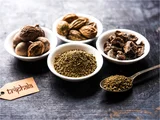
- Triphala — regular elimination, which matters because oestrogen is cleared through the bowel
- Guggulu and trikatu — kapha-reducing, used where heaviness and sluggish metabolism dominate
Caution is warranted. Shatavari and ashwagandha do not suit everyone, several of these interact with thyroid medication, diabetes drugs and blood thinners, and PCOS commonly coexists with thyroid disorder. Do not stack them from an online list.
When to See a Doctor
Diet sits alongside medical care in PCOS, not instead of it. Book a proper medical review if you have periods more than three months apart, no periods at all, rapid weight gain, sudden severe acne or male-pattern hair loss, marked facial hair growth, dark velvety skin patches at the neck or armpits, or if you are trying to conceive without success for twelve months (six if you are over 35).
Get individual advice before starting any herb if you are pregnant or breastfeeding, on metformin, thyroid medication or hormonal contraception, or have an autoimmune condition.
Frequently Asked Questions
What is the best diet for PCOS?
A low-glycaemic-load, high-fibre, protein-adequate, anti-inflammatory diet of warm cooked food, with the largest meal at midday and an early light dinner. That is the plan above.
Can diet really improve PCOS symptoms?
Yes, and it is one of the most effective interventions available. Cycle regularity, acne, energy and fertility all respond to sustained dietary change — usually over months rather than weeks.
What is the best PCOS meal plan for weight loss?
The same plan, with the optional snack removed, portions of grain kept to about a cupped handful per meal, and a daily walk after dinner. Extreme restriction backfires in PCOS because it raises cortisol.
What is the best PCOS meal plan to get pregnant?
Broadly the same framework, with more emphasis on healthy fats, adequate calories, iron and folate, and less on aggressive weight loss. Ayurveda adds shatavari and ojas-building foods such as ghee, soaked almonds and dates — but conception plans need individual supervision.
Is there a 21-day or 30-day PCOS detox?
There is no evidence for a "PCOS detox" as a product. What genuinely helps over three or four weeks is a kitchari-based reset, regular meal times, and clearing ama — the same work, without the marketing.
Who can help me with a PCOS diet?
Ideally two people together: a doctor or endocrinologist managing the diagnosis and any medication, and an Ayurvedic practitioner matching the food, herbs and daily routine to your constitution.
Can I follow this plan while taking metformin?
Generally yes, and diet makes metformin work better. Tell your prescriber what you are doing, particularly if you add fenugreek or cinnamon, because both can lower blood glucose further.
Do I have to give up rice?
No. Portion and pairing matter more than banning. A modest serving of brown or hand-pounded rice alongside dal, vegetables and ghee produces a very different glucose response from a large plate of white rice alone.
The Bottom Line
You now have the whole seven-day plan — no download, no email address, nothing to unlock. Follow it as written for a fortnight and you will already notice steadier energy and fewer cravings. Keep going for three months and the cycle usually starts to answer.
What a printed plan cannot tell you is which PCOS you have. The heavy, insulin-resistant kapha pattern and the lean, anxious, vata pattern need the plan tilted in opposite directions — one toward lightening and spice, the other toward nourishment and grounding. Get that backwards and you will work hard for months in the wrong direction.
Book a consultation with an Ask Ayurveda practitioner to have this plan fitted to your constitution, your season, your thyroid status and your current medication. That is the difference between a diet you follow and a diet that works.
Scientific Sources
- Lifestyle management in polycystic ovary syndrome - beyond diet and physical activity — Cowan S et al., 2023, BMC endocrine disorders
- Effect of Diet on Insulin Resistance in Polycystic Ovary Syndrome — Shang Y et al., 2020, The Journal of clinical endocrinology and metabolism
- Ketogenic Diet as Medical Prescription in Women with Polycystic Ovary Syndrome (PCOS) — Barrea L et al., 2023, Current nutrition reports
- High Fat Diet and Polycystic Ovary Syndrome (PCOS) in Adolescence: An Overview of Nutritional Strategies — Calcaterra V et al., 2024, Nutrients
- Diet and lifestyle modifications for effective management of polycystic ovarian syndrome (PCOS) — Shahid R et al., 2022, Journal of food biochemistry
- Diet and nutrition in polycystic ovary syndrome (PCOS): pointers for nutritional management — Farshchi H et al., 2007, Journal of obstetrics and gynaecology : the journal of the Institute of Obstetrics and Gynaecology
Ask Ayurvedic doctor a question and get a consultation online on the problem of your concern in a free or paid mode.
More than 2,000 experienced doctors work and wait for your questions on our site and help users to solve their health problems every day.
Related articles