Ask Ayurvedic doctor a question and get a consultation online on the problem of your concern in a free or paid mode. More than 2,000 experienced doctors work and wait for your questions on our site and help users to solve their health problems every day.


Body DetoxEar, Nose, and Throat DisordersGeriatrics & RejuvenationImmunodeficiencyInfertility TreatmentNutritionOrthopedic DisordersPediatricsRespiratory DisordersSexually Transmitted Diseases (STDs)Surgery RecoveryUrological DisordersVascular DisordersDental DisordersEndocrinological DisordersGastrointestinal DisordersYoga TherapyGeneral MedicineAllergic DisordersCardio DisordersGynecology and ObstetricsCosmetologySkin and Hair DisordersEye DisordersInfectious DiseasesMental DisordersNeurological DisordersOncologyPanchakarmaSexual Health & DisordersSports Medicine
Published on 02/27/25
(Updated on 08/15/26)
3,476
Utkshepa Marma – Understanding Its Role in Ayurvedic Therapy and Health Benefits
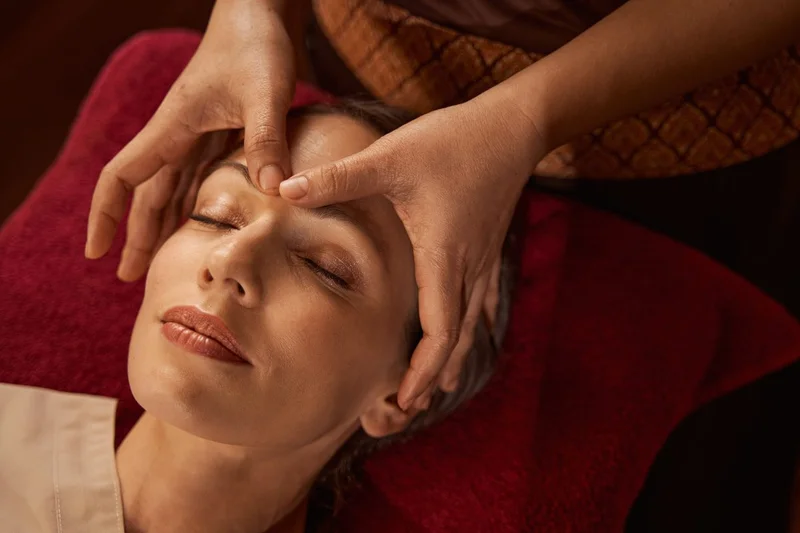
Utkshepa Marma is a paired vital point (marma) located above the temple region on both sides of the head, just along the hairline. Classified as a Vishalyaghna Marma in Sushruta Samhita, it carries a unique and somewhat paradoxical quality: if a foreign body (shalya) penetrates this point, the person survives as long as the object remains lodged in place — but forceful removal can cause instant death. This single characteristic makes Utkshepa Marma one of the most clinically significant and surgically relevant marma points described in classical Ayurveda, with direct implications for modern neurosurgery and emergency medicine.
In this comprehensive guide, we'll explore everything about Utkshepa Marma — its exact location, anatomical correlation with the pterion (the thinnest and most vulnerable point of the skull), the pathophysiological mechanism behind the Vishalyaghna effect, therapeutic applications, and practical protocols for marma therapy. Whether you're an Ayurvedic practitioner, a medical student, or someone interested in holistic healing, this article covers what no single competitor has put together in one place.
What Is Utkshepa Marma? Definition & Etymology
- Utkshepa Marma is one of the 107 marma points described in Ayurvedic anatomy (Rachana Sharir).
- It is a paired point — meaning there are two Utkshepa Marma points, one on each side of the head — bringing the total count to 2 out of the 107 marma points in the body.
The point belongs to the Shiro-Greeva Gata Marma category (marma points of the head and neck region) and is considered critical due to its location over major vascular and neural structures of the temporal region.
Sanskrit Origin and Meaning
The word Utkshepa (उत्क्षेप) is derived from two Sanskrit roots:
- "Ut" (उत्) — meaning upward
- "Kshepa" (क्षेप) — meaning to throw or to project
Together, Utkshepa literally translates to "that which throws upward" or "upward projection." This name likely refers to the anatomical location of the point — situated above the Shankha (temple) region, projecting upward toward the superior part of the temporal area along the hairline.
Some scholars also interpret the name as referencing the upward movement of Vayu (vital air) and Prana that occurs at this site, connecting it to higher cognitive and sensory functions.
Classical References in Sushruta Samhita
The primary classical reference for Utkshepa Marma comes from Sushruta Samhita, Sharira Sthana, Chapter 6, Shloka 27 (Su.Sha.6/27).
The original Sanskrit verse describes:
> "Shankhayoruparishtaadutkshepa sangnou vishalyaghnau"
This shloka establishes three critical facts about Utkshepa Marma:
- 1.Location — above the Shankha (temple) region
- 2.Number — it is a paired point (sangnou = two)
- 3.Classification — it is a Vishalyaghna type marma
Acharya Sushruta further explains that when a shalya (foreign body such as an arrow, bone fragment, or weapon) is embedded in this marma, the person continues to live. However, if the shalya is extracted forcefully, the person dies. If the wound heals naturally and the foreign body falls out on its own, the person survives.
This description, written over 2,500 years ago, shows a remarkably sophisticated understanding of what modern medicine now recognizes as the tamponade effect in penetrating head injuries.
Exact Location of Utkshepa Marma
Understanding the precise location of Utkshepa Marma is essential for both clinical assessment and therapeutic application.
Description from Ayurvedic Texts
According to Sushruta Samhita, Utkshepa Marma is located "Shankhayoh Uparishtaat" — which translates to "above the Shankha (temple) region." The point sits along the hairline in the temporal area, superior to the zygomatic arch and the ear.
More specifically:
- It lies in the Shankha Pradesh (temporal region) of the head
- It is positioned above the ear, near the junction of the temporal, parietal, sphenoid, and frontal bones
- It is a bilateral point — present on both left and right sides of the head
- It lies just at or slightly above the temporal hairline
To locate it practically, place your fingers about 2–3 finger-widths above the ear, along the hairline in the temporal region. You'll be approximately over the Utkshepa Marma zone.
Measurement (Pramana) — ½ Angula
The Pramana (size or dimension) of Utkshepa Marma is ½ Angula.
In Ayurvedic measurement, one Angula equals the width of the middle phalanx of the patient's own middle finger (roughly 1.5–2 cm in most adults). Therefore, Utkshepa Marma covers an area of approximately 0.75–1 cm in diameter.
This small size is clinically significant — it explains why even minor penetrating injuries in this specific zone can have catastrophic consequences, while injuries just a centimeter away may be far less dangerous.
Correlation with the Pterion in Modern Anatomy
Here is where things get truly fascinating — and where classical Ayurveda and modern anatomy converge in a remarkable way.
The location described for Utkshepa Marma corresponds closely to the Pterion — a point on the lateral aspect of the skull where four bones meet:
| Bone | Contribution |
|---|---|
| Frontal bone | Anterior boundary |
| Parietal bone | Superior boundary |
| Temporal bone (greater wing squamous portion) | Inferior boundary |
| Sphenoid bone (greater wing) | Central area |
- The pterion is widely recognized in modern anatomy as the thinnest and most vulnerable point of the skull. It is clinically critical because the middle meningeal artery runs directly beneath it, within the epidural space.
- Trauma to this area — even relatively minor blunt force — can rupture this artery, leading to epidural hematoma, a life-threatening neurosurgical emergency.
No competitor has explicitly drawn this correlation in detail, but it is arguably the most important anatomical relationship for understanding why Utkshepa Marma behaves the way classical texts describe.
Classification of Utkshepa Marma
Marma points in Ayurveda are classified according to multiple systems. Utkshepa Marma falls into specific categories under each classification scheme.
By Region — Shiro-Greeva Gata Marma
Utkshepa Marma belongs to the Shiro-Greeva Gata Marma group, which includes all marma points located in the head (Shiro) and neck (Greeva) region. There are 37 marma points in this regional category. The head and neck region is considered the most vital area in Ayurveda, as it houses the brain, sensory organs, and the gateway for Prana Vayu.
By Structural Composition — Snayu Marma
Based on the predominant anatomical structure, Utkshepa Marma is classified as a Snayu Marma (tendon/ligament-predominant marma point).
While the site contains all five types of tissues:
| Tissue (Sanskrit) | Modern Equivalent | Present at Site |
|---|---|---|
| Snayu | Tendons, ligaments, fascial layers | Predominant |
| Mamsa | Muscles | Yes |
| Sira | Blood vessels | Yes |
| Asthi | Bones | Yes |
| Sandhi | Joints/sutures | Yes |
The temporal fascia and the tendinous attachments of the temporalis muscle dominate the structural composition, which is why it falls under the Snayu Marma category. There are 27 Snayu Marma points in total across the body.
By Effect of Injury — Vishalyaghna Marma
This is the most distinctive and clinically important classification. Utkshepa Marma is one of only 3 Vishalyaghna Marma points in the entire body.
The term Vishalyaghna literally means "that which is destroyed (aghna) by removal of the foreign body (Vishaly/Shalya)." In other words, the person dies not from the injury itself, but from the extraction of the penetrating object.
The three Vishalyaghna Marma points are:
| Marma Point | Location | Number | Pramana |
|---|---|---|---|
| Utkshepa Marma | Above the temple (Shankha), bilateral | 2 | ½ Angula |
| Sthapani Marma | Between the eyebrows (Bhru-madhya) | 1 | ½ Angula |
| Total | — | 3 | — |
Note: Some texts count Utkshepa as 2 points (bilateral), making the total Vishalyaghna category = 3 marma points contributing to 3 spots.
This comparison has not been presented in a consolidated table by any existing competitor article, yet it is essential for students and practitioners who need to understand the Vishalyaghna group as a whole.
Anatomical Structures at the Site of Utkshepa Marma
A detailed understanding of the modern anatomy at Utkshepa Marma's location explains both its vulnerability and its clinical significance.
Bones: The Pterion Complex
- As discussed, the site overlies the junction of four cranial bones.
- The bone here is remarkably thin — sometimes less than 2–3 mm in thickness. Cadaveric dissection studies, including the study published in the Journal of Ayurveda and Integrated Medical Sciences (JAIMS), have confirmed that the bony surface at Utkshepa Marma is among the thinnest areas of the calvarium.
Muscles and Fascia
- Temporalis muscle — a large, fan-shaped muscle of mastication that covers the temporal fossa
- Temporal fascia (deep temporal fascia) — a dense fibrous layer overlying the temporalis muscle
- Epicranial aponeurosis — the fibrous sheet connecting the frontalis and occipitalis muscles
These structures correspond to the Snayu and Mamsa components described in classical texts.
Blood Vessels: The Critical Middle Meningeal Artery
This is the most dangerous anatomical relationship at Utkshepa Marma:
- Superficial temporal artery — runs superficially in this region, a terminal branch of the external carotid artery
- Middle meningeal artery (MMA) — runs deep to the pterion, within the epidural space between the skull and the dura mater
The middle meningeal artery is the single most important structure explaining the Vishalyaghna effect. When a penetrating object damages this artery but remains in place, it essentially acts as a tamponade — physically plugging the bleeding site and preventing massive epidural hemorrhage. Remove the object, and the arterial bleeding becomes uncontrolled, leading to rapidly expanding epidural hematoma, brain compression, and death.
Nerves
- Zygomaticotemporal nerve — a branch of the zygomatic nerve (from the maxillary division of the trigeminal nerve, CN V2), providing sensory innervation to the skin of the temporal region
- Auriculotemporal nerve — another sensory nerve in the area, a branch of the mandibular division (CN V3)
- Deep temporal nerves — motor nerves supplying the temporalis muscle
Intracranial Structures
Beneath the bone at this site lie:
- Dura mater (the outermost meningeal layer)
- Epidural space (potential space between skull and dura — where epidural hematomas form)
- Temporal lobe of the cerebral cortex
- Middle meningeal vessels embedded in dural grooves
Why Does Removal of a Foreign Body Cause Death? The Vishalyaghna Effect Explained
This is perhaps the most intellectually compelling aspect of Utkshepa Marma — and the one area where no competitor has provided a thorough modern explanation.
The Classical Explanation
Sushruta explains that when a shalya (foreign body) is embedded in Utkshepa Marma:
- 1.Shalya present → Patient lives — the foreign body prevents the escape of Prana Vayu
- 2.Shalya forcefully removed → Patient dies — Prana Vayu escapes rapidly, causing death
- 3.Shalya falls out naturally after healing → Patient survives — the body has compensated and healed around the injury
The Modern Neurosurgical Explanation
Modern medicine provides a strikingly parallel explanation through the concept of vascular tamponade and epidural hematoma:
Step 1: Penetrating injury at the pterion
A sharp object (arrow, weapon, bone fragment) penetrates the thin temporal bone and damages the middle meningeal artery. The object remains lodged.
Step 2: Tamponade effect
- The foreign body physically occludes the damaged artery, preventing significant hemorrhage into the epidural space.
- The patient remains conscious and neurologically stable — effectively, the shalya is keeping them alive.
Step 3: Premature extraction
If the foreign body is pulled out before the artery has healed or thrombosed, the tamponade is released. The middle meningeal artery begins bleeding freely into the epidural space. An epidural hematoma forms rapidly.
Step 4: Neurological deterioration and death
The expanding hematoma compresses the temporal lobe, causes uncal herniation (displacement of brain tissue through the tentorial notch), compresses the brainstem, and leads to respiratory arrest and death. This can happen within minutes to hours.
Step 5: Natural healing (the third scenario)
If the foreign body is left in place long enough, the damaged artery may thrombose (clot off naturally), granulation tissue forms around the wound, and eventually the foreign body may be expelled as the wound heals. By this time, the vascular injury has sealed itself, and removal is no longer fatal.
Clinical Correlation: The "Lucid Interval"
Modern neurosurgery recognizes a classic presentation of epidural hematoma called the "lucid interval":
- Initial trauma → brief loss of consciousness
- Patient appears to recover and seems neurologically normal (the lucid interval)
- Sudden rapid deterioration — severe headache, vomiting, contralateral hemiparesis, ipsilateral pupil dilation (anisocoria)
- Coma and death if not treated with emergency craniotomy
This clinical pattern is entirely consistent with what Sushruta described thousands of years ago — a patient who seems fine with the shalya in place but deteriorates catastrophically when the tamponade is disrupted.
Don't wait or self medicate. Start chat with Doctor NOW
Surgical and Clinical Significance for Modern Practitioners
Understanding Utkshepa Marma isn't just an academic exercise. It has real implications for trauma management and neurosurgical practice.
Practical Recommendations for Penetrating Temporal Injuries
Based on the convergence of Ayurvedic principles and modern neurosurgical knowledge:
| Scenario | Action |
|---|---|
| Penetrating object lodged in temporal region | DO NOT remove in the field. Stabilize the object, prevent movement, transport to neurosurgical facility. |
| Patient conscious with embedded object | Treat as surgical emergency despite stable appearance. CT angiography to assess vascular injury. |
| Object already removed, patient stable | Monitor closely for delayed epidural hematoma. Serial neurological exams. Repeat imaging at 6–12 hours. |
| Signs of raised intracranial pressure | Emergency craniotomy and evacuation of hematoma. |
These recommendations align perfectly with Sushruta's Vishalyaghna principle — the foreign body should not be removed hastily.
Diagnostic Signs of Utkshepa Marma Injury
Clinicians should watch for these warning signs after temporal region trauma:
- Progressive headache (especially worsening after initial improvement)
- Nausea and projectile vomiting
- Anisocoria — unequal pupil size (ipsilateral dilation)
- Contralateral motor weakness or hemiplegia
- Decreasing consciousness (GCS drop)
- Seizures
- Cushing's triad in late stages (hypertension, bradycardia, irregular breathing)
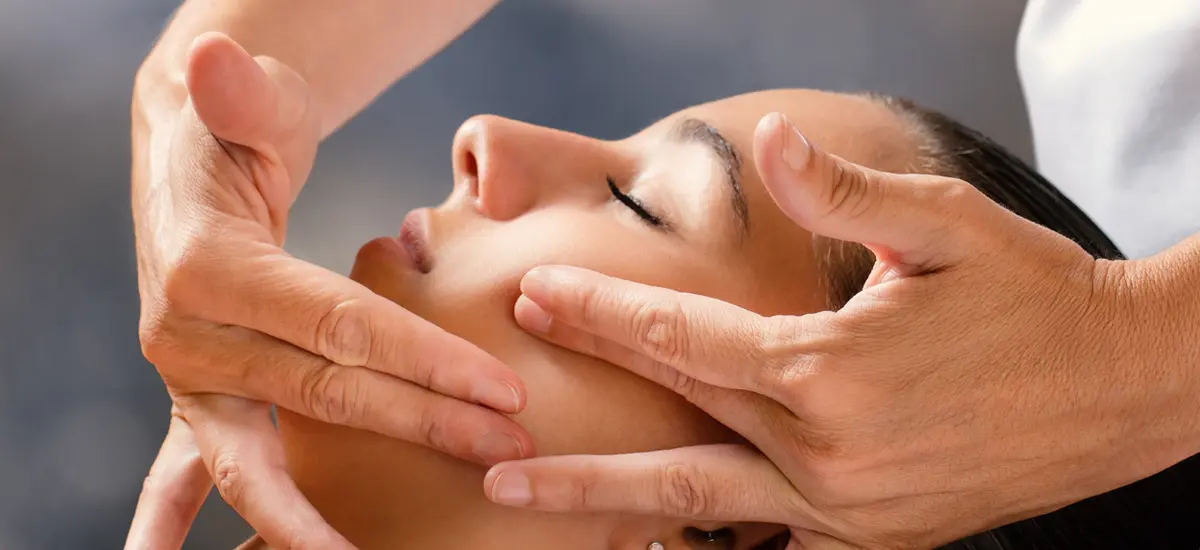
Therapeutic Applications: Marma Therapy at Utkshepa Marma
Beyond its significance in trauma, Utkshepa Marma is an important therapeutic point in Ayurvedic marma therapy (Marma Chikitsa). When stimulated correctly and gently, this point offers several healing benefits.
Techniques for Stimulating Utkshepa Marma
Oil Massage (Abhyanga)
- Gentle circular massage with medicated oils over the temporal region.
- Recommended oils include:
- Bala Taila — strengthening and Vata-pacifying
- Ashwagandha Taila — calming and nourishing for the nervous system
- Brahmi Taila — enhancing cognitive function and reducing mental fatigue
- Ksheerabala Taila — excellent for neurological conditions
Apply warm oil to the temporal area and massage with light to moderate pressure using the pad of the thumb or middle finger in slow, clockwise circles for 3–5 minutes on each side.
Acupressure
Sustained gentle pressure applied to the Utkshepa Marma point for 1–2 minutes, combined with deep rhythmic breathing. This is particularly useful for acute tension headaches.
Pinda Swedana
Warm herbal boluses (Pottali) applied to the temporal region. The combination of heat, herbal actives, and gentle pressure stimulates the marma point while promoting local circulation and muscle relaxation.
Pranayama Connection
Practices like Nadi Shodhana (alternate nostril breathing) and Bhramari (humming bee breath) are believed to activate the energy channels connected to Utkshepa Marma, promoting a calming effect on the temporal region.
Conditions Treated Through Utkshepa Marma Therapy
| Condition | Mechanism of Benefit |
|---|---|
| Temporal headaches and migraines | Improves local circulation, reduces muscle tension, balances Vata |
| Stress and anxiety | Calms the nervous system, promotes Prana flow |
| Temporal arteritis (adjunctive) | Improves vascular circulation in temporal region |
| Trigeminal neuralgia (supportive) | Modulates sensory nerve activity in the distribution area |
| Mental fatigue and brain fog | Enhances Prana Vayu flow to higher brain centers |
| Insomnia | Reduces Vata aggravation, promotes relaxation |
| Asthma and respiratory issues | Classical texts link Utkshepa to upward Prana movement; stimulation may support respiratory function |
Influence on Emotional and Mental Health
Utkshepa Marma therapy is particularly valued for its effects on mental and emotional well-being.
The temporal region is associated with:
- Vata Dosha regulation — Vata governs all movement in the body, including nerve impulses and thought processes
- Prana Vayu — the sub-dosha of Vata responsible for higher mental functions, perception, and consciousness
- Sadhaka Pitta — involved in emotional processing and intellectual discrimination
Regular gentle stimulation of Utkshepa Marma is reported to reduce anxiety, improve emotional resilience, and enhance mental clarity. It's considered especially beneficial for individuals with Vata-predominant constitutions who tend toward overthinking, worry, and nervousness.
Contraindications — Who Should NOT Stimulate This Point
This is a critical safety consideration that no competitor article has adequately addressed:
- Recent head trauma or skull fracture — manipulation could worsen an existing hematoma or fracture
- Known or suspected intracranial aneurysm — pressure changes could trigger rupture
- Uncontrolled hypertension — risk of cerebrovascular events
- Active temporal region infection or abscess — manipulation could spread infection
- Post-craniotomy patients — until fully healed and cleared by a neurosurgeon
- Patients on anticoagulant therapy (warfarin, heparin) — increased bleeding risk
- Pregnancy — some marma therapy traditions consider head marma stimulation contraindicated during pregnancy (consult a qualified practitioner)
Always consult a trained Ayurvedic practitioner or physician before attempting marma therapy, especially on head marma points.
Correlation with Other Medical Traditions
Chinese Acupuncture: Gallbladder Meridian Points
The temporal region where Utkshepa Marma is located corresponds to several acupuncture points along the Gallbladder (GB) meridian in Traditional Chinese Medicine (TCM):
- GB 4 (Hanyan) — at the junction of the hairline and the temporal region
- GB 5 (Xuanlu) — on the temporal surface, midway along the curve from GB 4 to GB 7
- GB 6 (Xuanli) — also on the temporal region
These points are commonly used in acupuncture for treating migraine, temporal headaches, facial pain, and trigeminal neuralgia — conditions remarkably similar to those addressed through Utkshepa Marma therapy in Ayurveda.
This cross-traditional correlation suggests that multiple ancient medical systems independently identified the temporal region as a critical therapeutic zone, lending further credibility to the clinical significance of Utkshepa Marma.
Tibetan Medical Tradition
Tibetan medicine (Sowa Rigpa), which shares historical roots with Ayurveda, also identifies vulnerable points on the head that correspond closely to marma points. The temporal region is considered one of the key sites where life-channels (rtsa) converge, and injury to this area is recognized as potentially fatal — again, a parallel acknowledgement of what Sushruta described.
Scientific Evidence and Research
Cadaveric Dissection Studies
A notable cadaveric study published in the Journal of Ayurveda and Integrated Medical Sciences (JAIMS) conducted anatomical dissection at the Utkshepa Marma site and confirmed that the location corresponds to the pterion area, with the following structures identified:
- Temporal fascia and temporalis muscle
- Superficial temporal artery and vein
- Zygomaticotemporal nerve
- Thin temporal bone overlying the middle meningeal artery
- Epidural space with middle meningeal vessels
The study validated the classical Ayurvedic descriptions and confirmed the Snayu-predominant nature of the site.
Modern Neurosurgical Literature
While no randomized controlled trial specifically tests the "Vishalyaghna hypothesis," the neurosurgical literature on epidural hematomas provides robust indirect evidence:
- Epidural hematomas account for approximately 1–4% of traumatic head injuries but carry a mortality rate of 5–40% depending on the speed of intervention (Bullock et al., Neurosurgery, 2006)
- The pterion fracture is identified as the cause in the majority of temporal epidural hematomas
- Case reports of penetrating injuries where objects were left in situ until surgical extraction in a controlled environment consistently show better outcomes than field extraction — precisely what Sushruta advised
Frequently Asked Questions (FAQ)
Where is the Utkshepa Marma located?
- Utkshepa Marma is located above the Shankha (temple) region, along the hairline, on both sides of the head.
- It corresponds anatomically to the area near the pterion — the junction of the frontal, parietal, temporal, and sphenoid bones. There are two Utkshepa Marma points, one on each side.
What is Utkshepa Marma?
Utkshepa Marma is one of the 107 vital marma points described in Ayurveda. It is a paired Vishalyaghna type marma classified under Shiro-Greeva Gata (head and neck) and Snayu (ligament/tendon-predominant) categories. It is known for its unique property where the presence of a foreign body keeps the patient alive, while premature removal causes death.
What are the 107 marma points?
The 107 marma points are vital anatomical sites described in Sushruta Samhita that serve as junctions of muscles, bones, joints, blood vessels, and tendons. They are categorized by location (upper limb, lower limb, trunk, head/neck), by predominant tissue type (Mamsa, Sira, Snayu, Asthi, Sandhi), and by effect of injury (Sadyah Pranahara, Kalantara Pranahara, Vishalyaghna, Vaikalyakara, and Rujakara).
What is marma therapy used for?
Marma therapy is used for pain management, stress relief, improved circulation, detoxification, emotional balancing, and treatment of specific conditions like headaches, musculoskeletal disorders, neurological complaints, and respiratory issues. It involves gentle stimulation of marma points through massage, acupressure, warm oils, and herbal applications.
Where is the Sthapani Marma located?
Sthapani Marma is located at the center of the forehead, between the two eyebrows (the "third eye" area). Like Utkshepa, it is also a Vishalyaghna type marma with a pramana of ½ Angula. It is associated with cognitive function, concentration, and the regulation of Prana Vayu.
Where is the Shankha Marma located?
Shankha Marma is located at the temple region itself — slightly below and anterior to Utkshepa Marma. While they are in close proximity, Shankha Marma is classified differently (as a Sadyah Pranahara marma — causing immediate death on injury), highlighting how even small differences in location within the temporal area lead to vastly different clinical outcomes.
Conclusion
- Utkshepa Marma stands as a remarkable example of how ancient Ayurvedic wisdom and modern anatomical science converge.
- Sushruta's description of the Vishalyaghna effect — written millennia before the invention of CT scans or the understanding of epidural hematomas — accurately predicted what modern neurosurgeons now know about penetrating temporal injuries and the tamponade effect of embedded foreign bodies.
For Ayurvedic practitioners, this marma point offers powerful therapeutic potential when stimulated correctly — from relieving migraines and temporal headaches to reducing anxiety and improving mental clarity. For modern medical professionals, understanding Utkshepa Marma's correlation with the pterion provides a bridge between traditional and contemporary medicine that enriches clinical practice.
Whether you approach this knowledge from the perspective of ancient wisdom or modern science, one thing is clear: the temple region demands both respect and careful handling. The same point that can heal through gentle therapeutic touch can kill through careless surgical intervention.
If you're interested in exploring marma therapy for your specific health concerns, consult a qualified Ayurvedic practitioner who can assess your constitution (Prakriti), current imbalances (Vikriti), and design an appropriate treatment protocol. Never attempt deep marma stimulation on head points without proper training and guidance.
Scientific Sources
- Ayurveda for Animals — Dohmen L, 2025, The Veterinary clinics of North America. Small animal practice
- Botanical drugs in Ayurveda and Traditional Chinese Medicine — Jaiswal Y et al., 2016, Journal of ethnopharmacology
- Ayurvedic plumbism — Sadler M et al., 2017, Internal medicine journal
- Cancer--an ayurvedic perspective — Balachandran P et al., 2005, Pharmacological research
- Traditional Chinese Medicine and Traditional Indonesian Medicine: A Comparative Review of Herbal Medicines Restricted in Pregnancy — Jun P et al., 2021, Chinese journal of integrative medicine
Questions from users
How does the location of Utkshepa Marma affect its therapeutic outcomes?
Client_cdb473
23 days ago
The location of the Utkshepa Marma, situated at a vital anatomical junction, significantly affects its therapeutic outcomes due to its classification as a Vishalyaghna Marma. This means the removal of a foreign object from this point should be approached with extreme caution. Therapeutic outcomes largely depend on correct diagnosis and treatment approach; incorrect handling can result in severe complications or even death. If you're dealing with trauma near marma points or suspect marma-related complications, it's crucial to seek medical advice immediately, often from a practitioner familiar with both conventional and Ayurvedic medicine.
What are the potential risks of performing Utkshepa Marma incorrectly?
Client_c526b2
32 days ago
Performing Utkshepa Marma incorrectly carries significant risks, primarily due to its location. As it involves marma points in the head and neck (Shiro-Greeva Gata Marma), mishandling can lead to severe complications, such as neurological damage or even an epidural hematoma. An epidural hematoma is a type of traumatic brain injury that can expand rapidly, potentially leading to uncal herniation, brainstem compression, respiratory arrest, and death. If you experience severe headaches, neurological symptoms, or any sudden changes in consciousness after attempting any marma therapy, seek immediate medical attention. Always consult a trained professional before trying marma therapy to avoid complications. Ayurveda can offer guidelines, but safety should be the primary concern.
How does Utkshepa Marma therapy promote overall wellness and health?
Client_6253c3
42 days ago
Utkshepa Marma therapy involves stimulating two vital points above the temple region, which may promote wellness by potentially enhancing mental clarity and relieving tension headaches. Marma therapy, part of traditional Ayurvedic practices, is thought to balance energy flow and relieve stress. While some people report benefits, scientific evidence supporting specific wellness outcomes from therapy targeting Utkshepa Marma is limited. If headaches or stress persist, consult a healthcare provider for a comprehensive evaluation.
How effective is CT angiography for detecting vascular injuries?
Client_1cda1b
52 days ago
CT angiography is highly effective for detecting vascular injuries, offering detailed visualization of blood vessels and identifying issues like occlusions, dissections, and active bleeding. It's often used in trauma settings due to its speed and non-invasiveness. Results may be available within hours, aiding prompt decision-making. However, false positives or negatives can occur, so it's crucial to interpret results with clinical correlation. Seek medical advice if there's sudden severe pain, swelling, or loss of function in the limbs post-injury. Ayurveda's historical texts like Sushruta Samhita may mention concepts related to injury, but modern diagnostic imaging remains the standard.
What herbal remedies complement Utkshepa Marma therapy for relaxation?
Client_113d3c
61 days ago
For relaxation alongside Utkshepa Marma therapy, you might find herbal remedies like Ashwagandha, Brahmi, and Chamomile useful. These herbs are known for their calming properties that help alleviate stress and induce relaxation. Ashwagandha may help reduce cortisol levels, Brahmi can aid in easing mental tension, and Chamomile is often used for its soothing effects. Typically, these remedies can take a few weeks to show noticeable effects. If you experience persistent relaxation issues or your symptoms worsen, consider consulting a healthcare professional. Always ensure any supplement is appropriate for you, especially if you're pregnant, nursing, or on medication.
Is it safe to transport a patient with a penetrating object in their temporal region?
Client_e81f98
71 days ago
It's generally not safe to remove a penetrating object from the temporal region out in the field. This is like a real-world Vishalyaghna marma situation from Ayurveda. If the object is stabilized and left in place, it should bring brought to a neurosurgical facility for safe handling. Trying to take it out could cause major harm, even lead to death. Better to focus first on preventing movement during transport!
What is the best time of day to stimulate the Utkshepa Marma point for stress relief?
Client_638840
88 days ago
Stimulating the Utkshepa Marma point is especially effective at sunrise or sunset. These times help naturally balance Vata dosha due to their calm and still energy. But if time is tight, anytime during your daily routine could work too! Just remember to be gentle and listen to your body.
What is the connection between Utkshepa Marma and improving digestion in Ayurveda?
Client_31a13f
97 days ago
Utkshepa Marma, located near the shoulders, has a unique role in Ayurveda as it helps balance Vata, Pitta, and Kapha. This balance can aid in digestion by normalizing the body's energy flow and reducing stress, which is often linked to digestive issues. It doesn't directly improve digestion, but interacts with body energy to support it.
What is Pinda Swedana and how does it relate to Utkshepa Marma therapy?
Client_628e9c
107 days ago
Pinda Swedana is a treatment using warm herbal boluses for massaging, which can soothe Vata dosha imbalances. While it’s great for relaxing muscles, Clearing tension, and promoting blood flow, Utkshepa Marma therapy focuses more on targeted stimulation of energy points, particularly around shoulders and neck, enhancing energy flow. They both offer unique but complementary benefits. Curious to know more?
Can Utkshepa Marma help with chronic fatigue and low energy levels?
Client_5524b2
117 days ago
Utkshepa Marma might help with chronic fatigue and low energy by releasing blocked energy and promoting circulation, but it's not a guaranteed fix. It's worth exploring if your energy feels stagnant or you're experiencing low prana. But consider looking at lifestyle, diet, and stress factors too – it's all connected in ayurveda!
Related articles

Panchakarma
Ksheerabala 101 Thailam Benefits, How To Use, Ingredients, Side Effects
Exploration of Ksheerabala 101 Thailam Benefits, How To Use, Ingredients, Side Effects
4,567
Panchakarma
Piccha Basti Ingredients – Ayurvedic Enema Formulation for Vata Balance
Explore the key piccha basti ingredients used in Ayurvedic enema therapy. Discover the herbal decoctions, oils, and natural compounds that balance Vata and promote detoxification.
2,968

Panchakarma
Ayurveda: The Science of Life
Ayurveda, known as the science of life, is an ancient Indian healing system emphasizing the balance of body, mind, and spirit through natural remedies.
2,753

Panchakarma
Ksheerabala Thailam (Kshirabala Oil)
Exploration of Ksheerabala Thailam (Kshirabala Oil)
7,603

Panchakarma
Panchgun Tail Benefits, Dosage, Ingredients, Side Effects
Exploration of Panchgun Tail Benefits, Dosage, Ingredients, Side Effects
3,434
Panchakarma
Mustadi Yapana Basti Ingredients – Rejuvenating Ayurvedic Enema for Holistic Wellness
Discover the essential ingredients of Mustadi Yapana Basti, a potent Ayurvedic enema formulation designed for rejuvenation, nourishment, and overall well-being.
4,248

Panchakarma
Panchatikta Guggulu Ghrita – Benefits, Dosage, How To Use, Side Effects, Ingredients, Reference
Exploration of Panchatikta Guggulu Ghrita – Benefits, Dosage, How To Use, Side Effects, Ingredients, Reference
3,913

Panchakarma
Panchakola Choornam Benefits, Dosage, Ingredients, Side Effects
Exploration of Panchakola Choornam Benefits, Dosage, Ingredients, Side Effects
3,102
Panchakarma
Shastika Shali Pinda Sweda: Ayurvedic Therapeutic Insight
Explore Shastika Shali Pinda Sweda, an Ayurvedic warm compress therapy with evidence-based benefits, guidelines, and practical tips for holistic well-being.
4,166

Panchakarma
Panchamrut Loha Guggul Benefits, Dosage, Ingredients, Side Effects
Exploration of Panchamrut Loha Guggul Benefits, Dosage, Ingredients, Side Effects
4,968
Related consultations on the topic
What Are The Early Signs Of Nervous System Deterioration?
10 days ago
Can I resume oil treatments after my period ends if I started virechana and got my period after 3 days of oiling?
82 days ago
How much can Panchakarma treatment improve quality of life for a 92-year-old with atypical Parkinson's and diabetes?
83 days ago
Legal
Additional Documents
© 2024 Ask Ayurveda. All rights reserved.