Ask Ayurvedic doctor a question and get a consultation online on the problem of your concern in a free or paid mode. More than 2,000 experienced doctors work and wait for your questions on our site and help users to solve their health problems every day.
FREE! Ask Ayurvedic Doctors 24/7

 Fast responses
 1000+ verified doctors
Body DetoxEar, Nose, and Throat DisordersGeriatrics & RejuvenationImmunodeficiencyInfertility TreatmentNutritionOrthopedic DisordersPediatricsRespiratory DisordersSexually Transmitted Diseases (STDs)Surgery RecoveryUrological DisordersVascular DisordersDental DisordersEndocrinological DisordersGastrointestinal DisordersYoga TherapyGeneral MedicineAllergic DisordersCardio DisordersGynecology and ObstetricsCosmetologySkin and Hair DisordersEye DisordersInfectious DiseasesMental DisordersNeurological DisordersOncologyPanchakarmaSexual Health & DisordersSports Medicine
Published on 08/18/25
(Updated on 07/09/26)
star_border 5
12,722
Is Honey Good for Constipation? Benefits, Uses, and Precautions

Constipation is one of those everyday health issues that can make life feel heavy, uncomfortable, and honestly just plain frustrating. People are always looking for natural ways to ease digestion, and one common question that comes up is: is honey good for constipation? Many swear by honey for constipation, saying it helps regulate bowel movement, while others worry—does honey cause constipation instead? With so many mixed opinions floating around, it can be confusing.
The good news is, honey has been used for centuries in natural medicine, not only for sweetening foods but also for its possible digestive benefits. This article explores whether honey is good for constipation, how to use it, the best time to take honey for constipation, and the potential risks. If you’ve ever wondered about the link between honey and constipation, you’ll find helpful insights here.

Is Honey Good for Constipation and How It Works
Honey contains natural enzymes, antioxidants, and trace minerals that may support digestion. Some experts say that honey for constipation works because it acts as a mild laxative. Its natural sugars, particularly fructose, draw water into the intestines, which can soften stools. This makes bowel movements easier and more comfortable.
But there’s more. Honey also feeds beneficial gut bacteria, which play a big role in digestion. A healthy gut microbiome keeps things moving smoothly, so in theory, adding honey to your daily diet could help if you’re struggling with irregularity.
Honey and Constipation: Myths and Facts
There are a lot of myths out there. For example, some believe honey instantly clears constipation after one spoonful — but that’s not quite true. While honey may help in constipation, it usually works best when combined with other healthy habits like drinking water, eating fiber, and exercising.
Another myth is that honey always helps everyone equally. That’s not accurate either. Some people might feel relief, while others notice little to no change. It depends on your overall diet, lifestyle, and how severe the constipation is.
So, does honey help in constipation? Yes, in many cases, but it’s not a magical cure. Think of it as a natural aid, not a quick fix.
Best Ways to Use Honey for Constipation
If you’re curious about how to use honey for constipation, there are simple and practical ways to add it into your routine. What matters is consistency and timing.
How to Use Honey for Constipation Relief at Home
The easiest method is to mix a tablespoon of raw honey in warm water and drink it on an empty stomach in the morning. Some people even add a squeeze of lemon, which can enhance digestion further.
Another option is to take honey directly, but it may feel too sweet on its own. Pairing it with warm liquids tends to work better because it helps the honey move through your digestive tract more smoothly.
Best Time to Take Honey for Constipation
Most natural health practitioners recommend taking honey early in the morning or right before bed. Morning intake gives your digestive system a gentle kick-start, while taking it before sleep may work overnight to soften stools. Either way, choosing the best time to take honey for constipation depends on your body. Try both and see which works better for you.
Honey Combinations for Better Digestion
Honey pairs well with other natural remedies. A few popular combinations include:
-
Honey with lemon water – boosts hydration and digestion.
-
Honey with warm milk – a traditional remedy that promotes bowel movement.
-
Honey with ginger tea – reduces bloating and improves gut motility.
These simple pairings can make honey even more effective for digestive support.
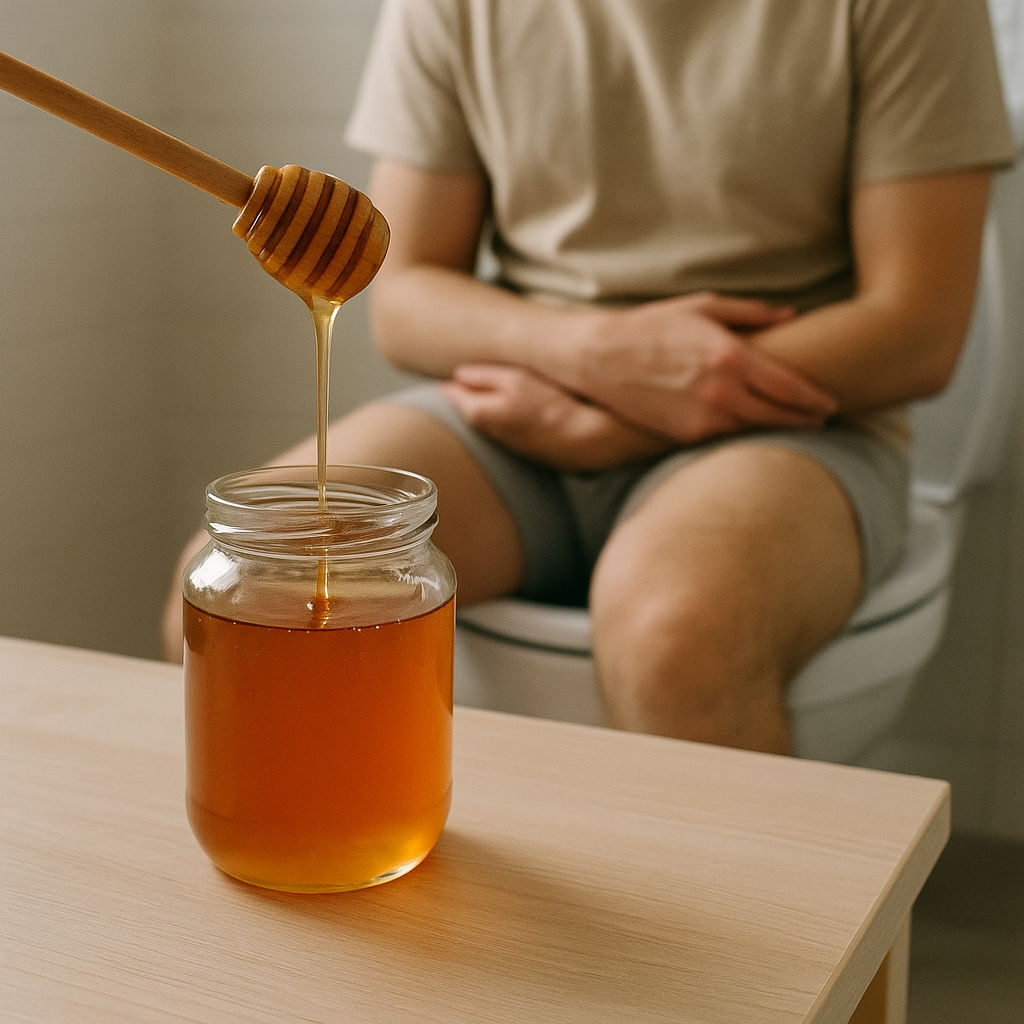
Does Honey Cause Constipation? Understanding the Risks
Here’s where things get a bit tricky. While many people find that honey is good for constipation, others ask the opposite: does honey cause constipation? The answer depends on how much you consume and your body’s unique response.
Honey is mostly made of natural sugars (fructose and glucose). In small amounts, these sugars may help the digestive system pull in water, softening stool. But when you take too much honey, the story can flip. Excess sugar can actually dehydrate the body and slow digestion, especially if you aren’t drinking enough water. That’s why moderation is important.
Another factor to consider is sensitivity. Some people with irritable bowel syndrome (IBS) or fructose intolerance might find that honey worsens bloating, gas, or even irregular bowel movements. So yes, in rare cases, honey in constipation management can backfire if the body doesn’t tolerate it well.
Honey Side Effects for Digestion and Bowel Movement
While generally safe, honey does have a few side effects worth noting:
-
Overconsumption – Eating large amounts (think 5–6 tablespoons daily) can lead to dehydration, which may make constipation worse.
-
Fructose Malabsorption – For people who struggle to digest fructose, honey can cause diarrhea or abdominal pain instead of relief.
-
Blood Sugar Spikes – Because honey is high in sugar, overuse can affect blood glucose, which indirectly influences digestion.
-
Children and Infants – Babies under one year old should never be given honey due to the risk of botulism. For older children, moderation is still key.
So, does honey helps in constipation for everyone? Not exactly. It depends on your health background, diet, and how much honey you actually consume.
Conclusion
Honey is a fascinating natural remedy with a long history in traditional medicine. When used properly, honey for constipation can be a gentle, safe, and effective aid for many people. It works by softening stools, feeding healthy gut bacteria, and supporting overall digestion. The best time to take honey for constipation is usually in the morning or before bed, and combining it with warm water, milk, or lemon can make it even more effective.
At the same time, it’s important to remember that more honey does not equal better results. Overuse may lead to bloating, irregular bowel movements, or even worsen constipation in some individuals. In short: moderation is the secret.
If you’re still wondering how to use honey for constipation, start simple—try one tablespoon with warm water daily and observe your body’s response. And of course, pair it with good hydration, fiber-rich foods, and a little movement during the day.
Natural remedies work best when they’re part of a bigger healthy lifestyle, not a stand-alone solution.
Don't wait or self medicate. Start chat with Doctor NOW
FAQs
Is honey good for constipation relief in children?
Yes, but only for children over 1 year old. Younger babies should not consume honey. For older kids, small amounts of honey mixed with warm water can be safe and effective.
Does honey help in constipation during pregnancy?
In moderation, yes. Honey can be a natural way to ease digestion. However, pregnant women should always check with their doctor before using it regularly, especially if they have gestational diabetes.
Can too much honey cause constipation?
Yes. Overconsumption can lead to dehydration and digestive imbalances, which may worsen constipation instead of fixing it.
How to use honey for constipation relief quickly?
The fastest method is mixing a spoonful of raw honey in warm water and drinking it on an empty stomach in the morning. Pairing it with lemon juice may boost results.
Questions from users
How does honey promote healthy digestion in pregnant women?
Mateo
4 days ago
Honey may aid digestion in pregnant women by feeding beneficial gut bacteria, thanks to its prebiotic properties. This can contribute to a healthier digestive system. However, moderation is key, as consuming too much honey could lead to constipation or other digestive issues. Pregnant women, particularly those with gestational diabetes, should consult their doctor before incorporating honey regularly into their diet to ensure it aligns with their overall health plan and does not increase their blood sugar levels unnecessarily.
Can honey interact with other medications for constipation relief?
Reese
13 days ago
Honey is generally safe and doesn't usually interact with medications for constipation relief. However, every individual is different. It’s probably best to check with a healthcare provider if you have any concerns, especially if you're on meds. Moderation is key here, and make sure to listen to your body's signals.
Can honey help resolve constipation caused by a poor diet or dehydration?
Claire
23 days ago
Honey can help with constipation for some people because it draws water in and might soften stools. But, it really depends on what's causing your constipation. Poor diet or dehydration? Try adding more water and fiber first. Honey won't solve everything, but a little in warm water might offer a gentle assist. Just don't overdo it—too much can have the opposite effect!
Can I use honey in smoothies to help with constipation relief?
Carter
32 days ago
Sure, you can add honey to your smoothies. Just make sure to use it moderately as too much sweet stuff might upset your doshas. Also, honey’s best with warm liquids, so it might not be as effective cold. Try combining it with foods that support digestion, like ginger or flaxseeds, to keep that Agni strong!
Can honey help relieve constipation after childbirth, and is it safe to use?
Michael
41 days ago
Honey can be soothing but it’s not a miracle worker for constipation, especially after childbirth. It's safe in small amounts if you're not allergic, but it can't replace good hydration, fiber, and exercise. Always listen to your body and maybe chat with a healthcare pro if you're unsure.
What is the best way to use honey for constipation relief effectively?
Raven
50 days ago
To use honey for constipation, try mixing a tablespoon in warm water or tea and drink it on an empty stomach, maybe in the mornings. Everybody's different, so see how your body reacts. If there's no change, listening to your body and experimenting with other remedies could be helpful too.
Can honey help with constipation symptoms in elderly individuals?
Vanessa
60 days ago
Yeah, honey can help with constipation in elderly folks since it acts as a mild laxative by pulling water into the digestive system. It's not a one-size-fits-all solution though. Some might find it effective while others may not. Try adding fiber, drinking water, and moving around for best results. If unsure, chat with a doc!
Can honey worsen digestive issues in people with fructose intolerance?
Ruby
70 days ago
Yes, honey can worsen digestive issues for people with fructose intolerance. Honey contains fructose, which can be tricky to digest if you have fructose intolerance. So it's best to be cautious and see how your body reacts, especially if you're prone to bloating or gas. Always listen to your body!
Is it safe to use honey for constipation if I have diabetes?
Paul
79 days ago
If you’ve got diabetes, honey could be tricky 'cuz it might spike your blood sugar. Bit of a balancing act there. You might wanna chat with a healthcare pro before trying it for constipation. Other gentle options might be safer, like drinking warm water with lemon or adding more fiber to your meals! 😊
What are the risks of using honey for constipation relief regularly?
Seth
89 days ago
Using honey regularly for constipation could cause dehydration and digestive imbalances, which might make things worse. If you rely on it too much, you might upset your unique body balance. It’s good to consider changes in diet and lifestyle along with using honey, staying mindful of how your body reacts and adjusting accordingly.
Related articles

Gastrointestinal Disorders
Narasimha Rasayanam Side Effects: A Comprehensive Guide
Discover the latest evidence on Narasimha Rasayanam side effects, including its safety profile, clinical insights, and tips for responsible use.
4,765

Gastrointestinal Disorders
Hutabhugadi Churnam: Powerful Ayurvedic Powder for Optimal Health
Learn about the benefits, proper dosage, uses, and scientific evidence behind Hutabhugadi Churnam, a powerful Ayurvedic herbal powder for holistic health.
2,359

Gastrointestinal Disorders
Sooranadi Lehyam: A Comprehensive Guide
Sooranadi Lehyam is a traditional Ayurvedic herbal jam that combines the goodness of natural ingredients to support digestive health.
3,180

Gastrointestinal Disorders
Sthoulyahara Kashaya: The Comprehensive Guide to Benefits, Uses, Dosage, and Ayurvedic Insights
Discover the benefits, proper dosage, uses, and Ayurvedic foundations of Sthoulyahara Kashaya, a traditional herbal decoction for digestive and overall health.
4,839

Gastrointestinal Disorders
Viscovas Capsule: Uses, Dose, Ingredients, Side Effects
Exploration of Viscovas Capsule: Uses, Dose, Ingredients, Side Effects
2,827

Gastrointestinal Disorders
Amrutadi Guggul Uses: Bridging Ayurvedic Tradition and Modern Science
Explore Amrutadi Guggul Uses from an Ayurvedic and scientific perspective. Learn about traditional benefits, research insights, dosage guidelines, and practical tips for wellness.
2,706

Gastrointestinal Disorders
Kutajarishta Uses, Dose, Side Effects, And Ingredients
Exploration of Kutajarishta Uses, Dose, Side Effects, And Ingredients
3,135

Gastrointestinal Disorders
How to Reduce Bile Naturally: Ayurvedic Remedies and Home Treatments
Exploration of Natural Remedies and Lifestyle Changes to Manage Bile Reflux
5,598

Gastrointestinal Disorders
Kutaj Parpati Vati Uses – Natural Ayurvedic Remedy for Digestive & Hepatic Health
Explore Kutaj Parpati Vati uses in Ayurveda, a traditional remedy for digestive disorders, dysentery, and hepatic detoxification. Learn about its key benefits, ingredients, and usage guidelines for holistic well-being.
2,492

Gastrointestinal Disorders
How to Cure IBS Permanently: Ayurvedic Approach to Digestive Relief
How to cure IBS permanently? Learn Ayurvedic approaches to irritable bowel syndrome, including diet, lifestyle and herbal remedies for lasting digestive balance
2,538
Related consultations on the topic
Legal
Additional Documents
© 2024 Ask Ayurveda. All rights reserved.