Ask Ayurvedic doctor a question and get a consultation online on the problem of your concern in a free or paid mode. More than 2,000 experienced doctors work and wait for your questions on our site and help users to solve their health problems every day.
FREE! Ask Ayurvedic Doctors 24/7

 Fast responses
 1000+ verified doctors
Body DetoxEar, Nose, and Throat DisordersGeriatrics & RejuvenationImmunodeficiencyInfertility TreatmentNutritionOrthopedic DisordersPediatricsRespiratory DisordersSexually Transmitted Diseases (STDs)Surgery RecoveryUrological DisordersVascular DisordersDental DisordersEndocrinological DisordersGastrointestinal DisordersYoga TherapyGeneral MedicineAllergic DisordersCardio DisordersGynecology and ObstetricsCosmetologySkin and Hair DisordersEye DisordersInfectious DiseasesMental DisordersNeurological DisordersOncologyPanchakarmaSexual Health & DisordersSports Medicine
Published on 11/12/24
(Updated on 07/04/26)
3,254
Unlocking Secrets of Ayurvedic Hair Care
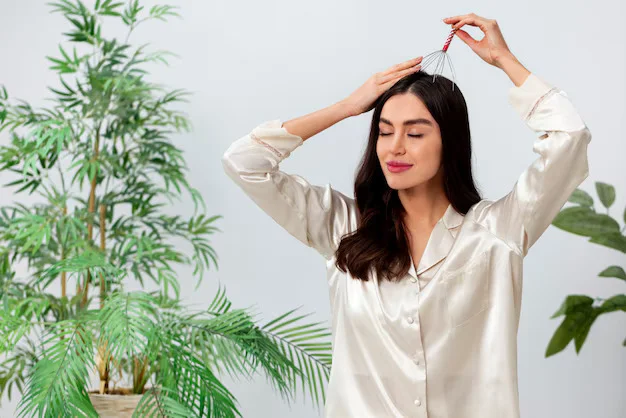
Ayurvedic hair care is a holistic system rooted in 5,000-year-old Indian medicine that treats hair problems — from hair fall and dandruff to premature greying — by addressing their root cause: doshic imbalance. Unlike conventional products that mask symptoms with silicones and sulfates, Ayurveda works from the inside out, combining herbal oils, plant-based cleansers, dietary adjustments, and lifestyle practices to restore your hair's natural vitality.
Whether you're dealing with thinning hair, an oily scalp, or stubborn dryness that won't go away, this guide covers everything — the science-backed herbs, step-by-step routines, DIY recipes with exact proportions, seasonal care protocols, and even professional Panchakarma treatments that most guides completely ignore.
Let's get into it.
What Is Ayurvedic Hair Care and How Does It Work?
Ayurvedic hair care isn't simply about switching to herbal shampoo. It's an integrated approach that connects the health of your hair to the health of your entire body — your digestion, your stress levels, your sleep quality, and even the season you're in.
- In Ayurveda, hair is considered a byproduct (mala) of Asthi dhatu (bone tissue). This means that the same metabolic processes nourishing your bones also nourish your hair.
- When these processes get disrupted — through poor diet, stress, hormonal changes, or seasonal shifts — hair problems follow.
The system works on three levels simultaneously:
- 1.External care — herbal oils, natural cleansers, and hair masks applied directly to the scalp and hair
- 2.Internal nourishment — dietary changes, herbal supplements, and fermented tonics that strengthen hair from within
- 3.Lifestyle balance — stress management, sleep optimization, and seasonal adjustments
The Three Doshas and Your Hair Type
- Every person has a unique constitution (Prakriti) governed by three bio-energies called doshas: Vata, Pitta, and Kapha.
- Your dominant dosha determines your hair type — and more importantly, which problems you're most prone to.
| Dosha | Hair Characteristics | Common Problems | Key Signs of Imbalance |
|---|---|---|---|
| Vata | Thin, dry, curly or frizzy, dark | Dryness, split ends, breakage, frizz, scanty growth | Rough texture, tangling, brittle ends |
| Pitta | Medium thickness, straight, reddish or light brown | Premature greying, receding hairline, inflammation | Heat on scalp, early thinning, color loss |
| Kapha | Thick, wavy, oily, dark and lustrous | Excess oiliness, dandruff, heavy/limp hair | Greasy scalp, itching, slow but dense growth |
Understanding your dosha isn't just interesting theory — it directly determines which oils, herbs, and routines will actually work for you. A Vata-dominant person using astringent herbs meant for Kapha hair will only make their dryness worse.
The 80/20 Rule in Ayurveda
- The 80/20 rule in Ayurveda refers to a dietary and lifestyle principle: roughly 80% of your health outcomes come from consistent daily practices (Dinacharya), while only about 20% depends on specific treatments or products.
- For hair care, this means your daily habits — what you eat, how you sleep, whether you oil your hair regularly — matter far more than which expensive product you buy. Consistency beats intensity, every single time.
Essential Ayurvedic Herbs and Ingredients for Hair
These aren't trendy "superfoods." These are time-tested botanicals with actual research backing their efficacy.
Bhringraj (Eclipta alba) — The "King of Herbs" for Hair
Bhringraj literally translates to "king of hair," and the science supports the title. A 2009 study published in the Journal of Ethnopharmacology found that Eclipta alba extract showed superior hair growth-promoting activity compared to standard minoxidil (2%) in animal models. The methanol extract of the herb initiated hair growth faster and produced longer hair follicles.
Best for: Hair fall, thinning, premature greying How to use: As infused oil for scalp massage, or as powder mixed into hair masks
Amla (Emblica officinalis) — The Antioxidant Powerhouse
Amla contains one of the highest concentrations of Vitamin C found in any natural source — roughly 600-700 mg per fruit. A 2017 study in the Journal of Chemical and Pharmaceutical Research confirmed its potent antioxidant properties, which help neutralize free radical damage to hair follicles. It also inhibits 5-alpha reductase, the enzyme linked to androgenetic alopecia.
Best for: Strengthening hair shaft, preventing premature greying, adding shine How to use: As oil, in herbal rinses, or consumed internally (1-2 tsp of amla powder in warm water daily)
Brahmi (Bacopa monnieri)
Brahmi nourishes hair roots, thickens hair strands, and helps reduce anxiety — which is itself a major contributor to hair fall. Research in the Indian Journal of Psychiatry (2014) confirmed Brahmi's adaptogenic properties, which indirectly support hair health by lowering cortisol levels.
Hibiscus (Japapushpa)
Both the flower and leaves of hibiscus are rich in amino acids that nourish hair, stimulate blood flow to the scalp, and condition strands naturally. In traditional Ayurveda, hibiscus paste was applied as Shiro lepa (scalp mask) to prevent premature greying.
Other Key Ingredients
- Neem — Antifungal and antibacterial; excellent for dandruff and scalp infections
- Shikakai — Natural cleanser with low pH; cleans without stripping oils
- Reetha (Soapnut) — Produces natural lather; gentle sulfate-free washing
- Fenugreek (Methi) — Rich in proteins and nicotinic acid; stimulates hair growth
- Coconut Oil — The traditional base oil in Ayurvedic preparations; proven to penetrate the hair shaft and reduce protein loss (a 2003 study in the Journal of Cosmetic Science confirmed this)
Ayurvedic Hair Care Routine: Step-by-Step Guide
A proper Ayurvedic hair care routine follows a specific sequence. Skipping steps or doing them out of order reduces effectiveness significantly.
Step 1: Scalp Oiling and Massage (Shiro Abhyanga)
- This is the cornerstone of Ayurvedic hair care.
- The scalp contains several marma points — vital energy points recognized in Ayurveda — and massaging them with warm herbal oil stimulates blood circulation, calms the nervous system, and helps balance excess doshas.
How to do it:
- Warm your chosen oil slightly (not hot — just lukewarm)
- Part your hair into sections
- Apply oil directly to the scalp using fingertips
- Massage in circular motions for 10-15 minutes, applying gentle pressure
- Work from the crown (Adhipati marma) outward toward the temples and nape
- Leave on for minimum 30 minutes; overnight is ideal
Choose your oil by dosha:
- Vata: Sesame oil infused with Bhringraj and Ashwagandha
- Pitta: Coconut oil infused with Brahmi, Amla, and Hibiscus
- Kapha: Light mustard or sesame oil infused with Neem and Rosemary
Frequency: 2-3 times per week minimum
Step 2: Gentle Cleansing
Ayurveda strongly discourages harsh sulfate-based shampoos. Instead, use herbal cleansers that remove excess oil and impurities without disrupting the scalp's natural microbiome.
Options for Ayurvedic Hair Cleansing
- Shikakai paste — Mix 2 tbsp shikakai powder with water to form a paste. Apply to wet hair, massage gently, rinse
- Reetha (soapnut) water — Soak 8-10 soapnuts in 2 cups of warm water overnight. Strain and use the liquid as shampoo
- Ayurvedic herbal shampoo — Look for formulations free from SLS, parabens, and silicones; containing Bhringraj, Amla, or Shikakai as active ingredients
Step 3: Conditioning and Hair Masks (Shiro Lepa)
Shiro lepa is the Ayurvedic practice of applying herbal pastes to the scalp and hair for deep conditioning and therapeutic benefit.
- Basic conditioning rinse: Mix 2 tbsp of Amla powder in 500ml warm water.
- Use as a final rinse after washing.
- Don't rinse out — let it dry naturally.
Deep conditioning mask (weekly):
- 2 tbsp yogurt (natural probiotic conditioning)
- 1 tbsp raw honey
- 1 tbsp Amla powder
- 1 tsp Bhringraj powder
- Mix into a smooth paste, apply to damp hair, leave for 30-45 minutes, wash off with mild cleanser
Step 4: Drying and Styling
Ayurveda advises against blow-drying whenever possible. Air-dry your hair, preferably in shade rather than direct sunlight. Avoid tight hairstyles that pull on the roots, as this aggravates Vata dosha and can lead to traction alopecia.
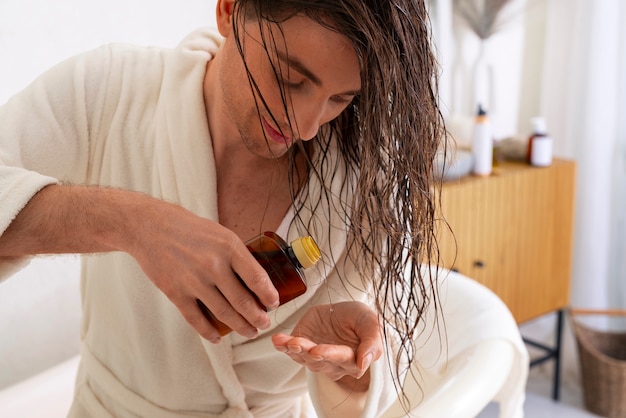
How to Take Care of Hair as Per Ayurveda: 10 Daily Practices
Beyond the washing routine, Ayurveda prescribes daily habits (Dinacharya) that cumulatively make a massive difference:
- Oil your hair before bed at least 2-3 times a week
- Use a wide-tooth wooden comb — never plastic, which creates static and damages cuticles
- Drink warm water throughout the day to support digestion and nutrient absorption
- Eat iron-rich foods — spinach, pomegranate, dates, jaggery
- Include healthy fats daily — ghee, almonds, walnuts, flaxseeds
- Avoid washing hair with very hot water — it aggravates Pitta and strips natural oils
- Practice Nasya — apply 2 drops of Anu taila (medicated nasal oil) each morning; this nourishes the channels connected to hair growth
- Manage stress through meditation, Pranayama, or yoga — chronic stress is one of the biggest Pitta-aggravating factors
- Sleep before 10 PM — Pitta time begins at 10 PM; staying up late increases Pitta-related hair fall
- Avoid excessive heat styling and chemical treatments
Ayurvedic Treatment for Hair Loss and Regrowth
Hair loss (Khalitya in Ayurveda) is primarily attributed to aggravated Pitta dosha, which "burns" the hair follicle. However, Vata and Kapha imbalances also play roles.
How Does Ayurveda Treat Telogen Effluvium?
Telogen effluvium — where large numbers of hair follicles simultaneously enter the resting phase, causing diffuse shedding — is understood in Ayurveda as a Pitta-Vata imbalance, often triggered by stress, illness, or nutritional deficiency.
The treatment protocol includes:
- Pitta-pacifying diet: Increase cooling foods — coconut, cucumber, watermelon, coriander, mint, fennel seeds. Reduce spicy, fried, and acidic foods
- Bhringraj oil massage: 3-4 times weekly, left overnight when possible
- Internal herbs: Bhringaraj churna (1/2 tsp with warm milk at bedtime), Amalaki capsules, or Brahmi tablets
- Stress management: Daily Sheetali pranayama (cooling breath) and Shavasana
Recovery typically takes 3-6 months of consistent practice — Ayurveda is not a quick fix, but results tend to be more sustainable than conventional treatments.
Internal Remedies Most Guides Don't Mention
This is where Ayurveda's depth really shows. Beyond topical treatments, several internal formulations directly support hair health:
| Internal Remedy | Type | Primary Action | Typical Dosage |
|---|---|---|---|
| Bhringarajasava | Fermented herbal tonic | Nourishes Asthi dhatu, promotes hair growth | 15-20 ml with equal water, twice daily after meals |
| Narasimha Rasayanam | Herbal jam (Ghritham) | Rejuvenates hair follicles, delays greying | 1 tsp twice daily with warm milk |
| Lohasava | Iron-containing tonic | Addresses iron deficiency linked to hair fall | 15 ml with equal water, twice daily |
| Amalaki Rasayana | Rejuvenative tonic | Antioxidant support, Pitta pacifying | 1-2 tsp daily with honey or warm water |
> Important: These internal formulations should be taken under guidance of a qualified Ayurvedic practitioner. Self-medication with potent Ayurvedic medicines can cause side effects — especially the iron-containing tonics.
Don't wait or self medicate. Start chat with Doctor NOW
Seasonal Ayurvedic Hair Care (Ritucharya)
This is something almost no hair care guide covers — and it's a significant gap, because Ayurveda explicitly prescribes different care routines for different seasons.
Summer (Grishma Ritu) — Pacify Pitta
Pitta dosha naturally aggravates in summer. Hair becomes more prone to greying, thinning, and scalp inflammation.
- Use coconut oil as your primary hair oil (cooling effect)
- Apply sandalwood paste mixed with rose water to the scalp once weekly
- Eat more cooling foods: coconut water, sweet fruits, dairy
- Avoid midday sun exposure to hair
Monsoon (Varsha Ritu) — Balance Kapha
Humidity increases Kapha, leading to fungal infections, dandruff, and oily, limp hair.
- Switch to neem oil or neem-infused sesame oil
- Use triphala rinse after washing (1 tbsp Triphala powder boiled in 500ml water, cooled and strained)
- Wash hair more frequently — every 2-3 days
- Avoid leaving hair damp for long periods
Winter (Hemanta/Shishira Ritu) — Calm Vata
Cold, dry air severely aggravates Vata, causing dryness, static, breakage, and scalp flaking.
- Use warm sesame oil generously — apply thick, massage deeply, leave overnight
- Add Ashwagandha powder to your hair oil for extra nourishment
- Deep condition with a banana-honey-yogurt mask weekly
- Increase intake of warm, oily foods — ghee, soups, stews, warm milk with turmeric
DIY Ayurvedic Hair Care Recipes (With Exact Proportions)
Bhringraj Hair Growth Oil
Ingredients:
- 200 ml cold-pressed coconut oil (or sesame oil for Vata types)
- 30g Bhringraj powder
- 15g Amla powder
- 10g Brahmi powder
- 500 ml water
Method:
- Make a decoction: boil the three powders in 500ml water until reduced to 125ml. Strain
- Add this decoction to 200ml oil in a heavy-bottomed pan
- Cook on the lowest flame, stirring occasionally, until all water evaporates (you'll notice no more bubbling or steam — this can take 2-3 hours)
- Let it cool. Strain through muslin cloth
- Store in a glass or, traditionally, a copper vessel — copper is believed to impart its own trace minerals into the oil
In ancient times, Ayurvedic physicians would have their students collect fresh herbs at dawn, prepare oils exactly this way, and store them in copper pots for weeks before use. The slow preparation was considered essential to the medicine's potency.
Anti-Dandruff Neem Rinse
- 2 tbsp Neem leaves (dried or fresh)
- 1 tbsp Fenugreek seeds
- 500ml water
Boil together for 15 minutes. Cool, strain, use as final rinse after shampooing. Do not wash out.
Amla-Hibiscus Deep Conditioning Mask
- 2 tbsp Amla powder
- 3-4 fresh Hibiscus flowers (or 1 tbsp dried powder)
- 2 tbsp plain yogurt
- 1 tbsp coconut milk
Blend to a smooth paste. Apply root to tip. Leave 40 minutes. Wash with shikakai or mild shampoo.
Professional Ayurvedic Hair Treatments (Panchakarma)
For severe hair problems — aggressive hair fall, alopecia areata, chronic dandruff — Ayurvedic clinics offer specialized Panchakarma-based treatments that go far beyond home care.
Shirodhara
A continuous stream of warm medicated oil is poured onto the forehead for 30-45 minutes. While primarily known for stress relief, Shirodhara directly calms Pitta dosha — the main culprit behind hair fall and premature greying. The deep relaxation it induces also lowers cortisol levels, creating a physiological environment conducive to hair regrowth.
Shirolepa
A thick paste of medicinal herbs is applied to the scalp and covered with a banana leaf or lotus leaf to retain moisture and heat. The herbs penetrate deeply into the follicles. Common herbs used include Bhringraj, Amalaki, Yashtimadhu (licorice), and Jatamansi.
Nasya
Medicated oils or herbal preparations are administered through the nasal passages. This might seem unrelated to hair, but Ayurveda considers the nose the direct gateway to the head (Shirah). Nasya with Anu taila or Shadbindu taila nourishes the channels that feed the scalp and hair follicles.
Sessions needed: Typically 7-14 sessions for noticeable results. Always consult a qualified Ayurvedic physician (Vaidya) before undergoing Panchakarma.
Ayurvedic vs Conventional Hair Care: What's the Real Difference?
| Factor | Conventional Hair Care | Ayurvedic Hair Care |
|---|---|---|
| Cleansing agents | SLS/SLES (strip natural oils) | Shikakai, Reetha (gentle, pH-balanced) |
| Conditioning | Silicones (coat hair artificially) | Natural oils, herbal rinses (penetrate and nourish) |
| Preservatives | Parabens, formaldehyde releasers | Natural preservatives or short-shelf-life products |
| Approach | Symptom-focused (anti-dandruff, anti-hairfall) | Root-cause focused (dosha balancing) |
| Personalization | One-size-fits-all (by "hair type") | Dosha-based (considers whole body constitution) |
| Internal support | Usually none | Diet, herbs, tonics, lifestyle changes |
| Timeline | Quick visible results (often temporary) | Gradual, lasting results (3-6 months) |
| Side effects | Chemical buildup, scalp sensitivity, dependency | Minimal when used correctly; rare herb allergies possible |
- This isn't about demonising modern products.
- Conventional products have their place — especially in acute situations. But for long-term, sustainable hair health, the Ayurvedic approach addresses root causes that no shampoo bottle ever will.
Precautions and Contraindications
No other guide mentions this, but it's genuinely important.
- Allergies: Some individuals may react to specific herbs.
- Always do a patch test — apply a small amount of any new herbal preparation to the inner wrist, wait 24 hours, check for redness or itching
- Pregnancy: Certain herbs like Bhringraj and Fenugreek should be used cautiously during pregnancy. Consult an Ayurvedic doctor before using any internal remedies
- Medication interactions: Ayurvedic iron tonics (like Lohasava) can interact with conventional iron supplements or blood thinners. Inform both your Ayurvedic and allopathic doctors about all medications
- Scalp conditions: If you have open wounds, severe psoriasis, or active infections on the scalp, avoid oil application until the acute phase resolves — oil can trap bacteria and worsen infection
- Children: Dilute all herbal oils to half-strength for children under 12. Avoid internal herbal formulations for children without professional guidance
Frequently Asked Questions
What are the best Ayurvedic hair care products in India?
- Look for products from established Ayurvedic brands that list classical formulations and source ingredients transparently.
- Key ingredients to look for on labels: Bhringraj, Amla, Brahmi, Coconut Oil, Shikakai. Avoid any product claiming to be "Ayurvedic" but listing SLS, parabens, or synthetic fragrances in the ingredients. The best product is honestly the one matched to your specific dosha — a Vata person needs very different formulation than a Kapha person.
How long does it take to see results with Ayurvedic hair care?
For mild issues (dryness, lack of shine, minor dandruff), you may notice improvement within 3-4 weeks of consistent practice. For hair fall, thinning, and premature greying, expect a minimum of 3-6 months. Hair growth cycles are approximately 3 months long, so you need at least one full cycle for follicles to respond to the new nourishment.
Can Ayurvedic hair care work for curly, African, or European hair types?
- Absolutely.
- The dosha system is universal — it's about your constitutional type, not your ethnicity. Curly, coily hair types often have a strong Vata component (dryness, porosity), so they benefit tremendously from heavy oiling with sesame or coconut oil bases.
- The key adaptation: use slightly warmed oils for better penetration into tighter curl patterns, and detangle only when hair is oiled and wet using a wide-tooth wooden comb.
Is there a good Ayurvedic hair care book for deeper study?
Bhaisajya Ratnavali and Sahasrayogam are classical texts with detailed hair treatment formulations. For modern readers, The Ayurvedic Hair Care Guide by Pratima Raichur and Absolute Beauty offer accessible introductions. Many classical texts are available in PDF translations online through the Ministry of AYUSH digital library.
What's inside a customised Ayurvedic hair care kit?
A properly customised kit — based on dosha analysis — typically includes: a dosha-specific hair oil, an herbal cleanser, a hair mask or lepa, and sometimes an internal supplement. The customisation matters because using the wrong combination can actually aggravate your dominant dosha rather than balance it.
Final Thoughts: Start Simple, Stay Consistent
Ayurvedic hair care can feel overwhelming when you first encounter it — doshas, marma points, seasonal protocols, internal tonics. But remember the 80/20 rule.
Start with three things:
- Oil your scalp 2-3 times a week with a dosha-appropriate oil
- Switch to a sulfate-free, herbal cleanser
- Add one Pitta-pacifying food to your daily diet (amla juice, coconut water, or fennel tea)
Do this consistently for 90 days. Then gradually layer in the seasonal adjustments, the DIY masks, the internal herbs.
- Your hair didn't get damaged overnight, and it won't heal overnight.
- But Ayurveda offers something no quick-fix product can — a system that treats you as a whole person, not just a scalp with problems. And that approach, over time, delivers results that last.
This article is for informational purposes only and does not replace professional medical advice. For persistent hair problems, consult a qualified Ayurvedic practitioner (BAMS/MD Ayurveda) who can assess your individual constitution and recommend personalized treatment.
Scientific Sources
- Traditional uses, bioactive composition, pharmacology, and toxicology of Phyllanthus emblica fruits: A comprehensive review — Saini R et al., 2022, Journal of ethnopharmacology
- Herbal Remedies for Hair Loss: A Review of Efficacy and Safety — Ahmed A et al., 2025, Skin appendage disorders
- A Canadian Consensus on Androgenetic Alopecia: Approach and Management — Landells I et al., 2025, Journal of cutaneous medicine and surgery
- Therapeutic potential of Phyllanthus emblica (amla): the ayurvedic wonder — Krishnaveni M et al., 2010, Journal of basic and clinical physiology and pharmacology
- Phytotherapy in periodontics as an effective and sustainable supplemental treatment: a narrative review — Gawish AS et al., 2024, Journal of periodontal & implant science
- Identification and evaluation of anti hepatitis C virus phytochemicals from Eclipta alba — Manvar D et al., 2012, Journal of ethnopharmacology
- Green approach for the synthesis of zinc oxide nanoparticles and their enhanced sun protection factor in the presence of octocrylene — Pasupathi M et al., 2025, Cutaneous and ocular toxicology
- Green-synthesized Tio₂ Nanoparticles for Sunscreen: Eco-Friendly Approach to Spf Enhancement — Murugesan P et al., 2026, Applied biochemistry and biotechnology
- Enhanced sun protection factor of octocrylene with green tea and bhringraj extracts — M P et al., 2024, Cutaneous and ocular toxicology
- LC-MS/MS method for the simultaneous quantification of luteolin, wedelolactone and apigenin in mice plasma using hansen solubility parameters for liquid-liquid extraction: Application to pharmacokinetics of Eclipta alba chloroform fraction — Cheruvu HS et al., 2018, Journal of chromatography. B, Analytical technologies in the biomedical and life sciences
- Rosemary and neem: an insight into their combined anti-dandruff and anti-hair loss efficacy — Hashem MM et al., 2024, Scientific reports
- Bangladeshi medicinal plant dataset — Borkatulla B et al., 2023, Data in brief
- Formulation and Evaluation of Turmeric- and Neem-Based Topical Nanoemulgel against Microbial Infection — Giri S et al., 2024, Gels (Basel, Switzerland)
- Molecular insights into anti-inflammatory activities of selected Indian herbs — Upadhyay S et al., 2025, Journal of Ayurveda and integrative medicine
Questions from users
Can I use hibiscus oil on my scalp if I have open wounds or infections?
Tenley
8 days ago
I'd avoid putting hibiscus oil on open wounds or active infections on your scalp. Oils can trap bacteria and make infections worse. Let those areas heal first, then u can enjoy ur hibiscus oil freely! If in doubt, chat with ur doc for the best advice. Take care!
What is the best way to use Brahmi for promoting hair growth and reducing hair fall?
William
18 days ago
For promoting hair growth and reducing hair fall, Brahmi can be really effective. You can apply Brahmi oil directly to your scalp, massaging it in gently, which helps nourish hair roots and reduce stress. Also, consider adding Brahmi powder to your herbal hair rinse. Remember to be consistent and patience is key!
What is the connection between digestion and hair health in Ayurveda?
Brooklyn
27 days ago
In Ayurveda, digestion is super important for hair health. It’s all about that agni (digestive fire). Good digestion helps nutrients from food nourish your dhatus (tissues), including asthi dhatu (bones), from which hair is a byproduct, or mala. So if your digestion is off, your hair might suffer too! Keeping your digestion healthy can naturally support better hair.
What is the best way to prepare a Reetha rinse for hair and what are its benefits?
Jackson
36 days ago
To make a Reetha rinse, soak 8-10 soapnuts in 2 cups of warm water overnight and then strain it. After shampooing, use this strained water as your final rinse, applying from root to tip. It helps with hair fall and adds shine by balancing scalp's pH. It's full of natural saponins that cleanse without stripping natural oils. Give it a few months to really see benefits!
Can I use Ayurvedic herbs for colored hair and how might they help?
Hannah
46 days ago
Yes, you definitely can use Ayurvedic herbs for colored hair! Herbal options like hibiscus, amla, and brahmi can help maintain healthy hair by adding shine and even supporting natural color retention. Just be sure to gently incorporate these into your routine; sometimes colored hair can be sensitive. They nourish without chemicals, keeping your doshas in balance and your hair vibrant!
What is the best way to prepare a hair mask using hibiscus for hair health?
Titus
56 days ago
To make a hibiscus hair mask, grind hibiscus flowers and leaves into a smooth paste. Mix it with a little water or aloe vera gel for extra moisture. Apply it from tips to roots and leave it for about 30 min before washing with a mild shampoo. This can help strengthen your hair, prevent hair fall, and add shine! Just be sure not to let it dry completely on your hair, as it can become tough to rinse out. Enjoy your lush locks!
Can I use hibiscus petals in my hair care routine, and how do they benefit my hair?
Nevaah
65 days ago
Yep, you can definitely use hibiscus petals in your hair care routine! They're wonderful for nourishing the scalp, promoting hair growth, and reducing dandruff. You can make a paste out of them or use hibiscus oil for a massage. Just make sure to rinse it out well, or your hair might get a lil' sticky.💁🏻♂️
Can I use neem oil on my scalp daily for dandruff and how does it help?
Harper
75 days ago
Yes, you can use neem oil daily for dandruff! Its antifungal and antibacterial properties tackle the root cause by keeping your scalp clean and healthy. Just be careful if you notice any irritation or dryness, maybe cut it back to a few times a week and see how that goes. Neem also strengthens hair, so it’s like a little bonus! Hope this helps :)
What is the role of scalp massages in Ayurvedic hair care and how often should I do them?
Sebastian
85 days ago
Scalp massages are huge in Ayurvedic hair care! They boost blood circulation, nourish hair follicles, and calm your mind. You can do them 2-3 times a week using warm oils like coconut or sesame, which helps balance doshas too. Just listen to what feels right for ur hair and how it reacts—sometimes less is more!
Is it safe to use aloe vera gel on the scalp every day for hair health?
Logan
94 days ago
Using aloe vera gel daily on your scalp can generally be safe, but everyone's different, so it's good to keep tabs on how your scalp reacts. Ayurveda sees aloe as cooling, which might help soothing and balancing if you have a pitta imbalance. If any irritation occurs, reduce usage or consult a professional.
Related articles
Skin and Hair Disorders
Discover the Amazing Health & Beauty Benefits of Chandanbala Lakshadi Oil
Discover the proven chandanbala lakshadi oil benefits, proper usage, side effects, and scientific research behind this powerful Ayurvedic remedy.
2,982

Skin and Hair Disorders
Ayurvedic Treatment for Ichthyosis Vulgaris: Skin Healing Guide
Explore Ayurvedic approaches for ichthyosis vulgaris. Discover natural remedies, herbal treatments, and lifestyle tips to manage dry, scaly skin and promote healthy complexion.
3,990

Skin and Hair Disorders
Dhurdhurapatradi Oil Uses: Benefits, Research, and Application
Explore Dhurdhurapatradi oil uses, potential benefits, and current research. Learn how this Ayurvedic remedy supports scalp health and hair care naturally.
4,403
Skin and Hair Disorders
Scalp Psoriasis Ayurveda Treatment: Herbal Remedies & Tips
Explore Ayurvedic solutions for scalp psoriasis. Discover natural remedies, herbal treatments, and lifestyle tips to manage symptoms, reduce inflammation, and promote scalp health.
2,986

Skin and Hair Disorders
Chicken Pox Treatment in Ayurveda: Natural Remedies for Relief
Discover effective chicken pox treatment in Ayurveda with herbal remedies, dietary tips, and lifestyle practices that soothe symptoms, boost immunity, and restore balance.
7,152

Skin and Hair Disorders
Sarivadyasava Benefits – Ayurvedic Tonic for Women's Health & Wellness
Discover the benefits of Sarivadyasava, an Ayurvedic fermented herbal tonic. Learn how it supports women's health, balances hormones, boosts immunity, and promotes overall well-being.
3,365

Skin and Hair Disorders
How to Prepare Rosemary Oil for Hair Growth: Recipes, Benefits, and Ayurvedic Uses
Exploration of Unlock the Benefits of Rosemary Oil for Hair Growth and Care
6,662

Skin and Hair Disorders
What Happens If You Use Anti-Aging Products at a Young Age?
Is it safe to use anti-aging products at a young age? Learn about side effects, ideal age to start, and Ayurvedic views on skin rejuvenation and prevention
2,962
Skin and Hair Disorders
Marichyadi Oil: Benefits, Uses & Science-Based Insights
Discover the benefits, uses, dosage, and scientific research behind Marichyadi Oil, an Ayurvedic remedy for skin health, inflammation, and more.
5,633

Skin and Hair Disorders
Kasisadi Taila – Ayurvedic Oil for Treating Piles, Corns, Warts & Skin Conditions
Kasisadi Taila offers a natural and effective solution for managing piles, corns, warts, and other skin conditions. Its unique blend of herbal extracts and nourishing base oil works synergistically to reduce inflammation
3,783
Related consultations on the topic
Legal
Additional Documents
© 2024 Ask Ayurveda. All rights reserved.