Ask Ayurvedic doctor a question and get a consultation online on the problem of your concern in a free or paid mode. More than 2,000 experienced doctors work and wait for your questions on our site and help users to solve their health problems every day.
FREE! Ask Ayurvedic Doctors 24/7

 Fast responses
 1000+ verified doctors
Body DetoxEar, Nose, and Throat DisordersGeriatrics & RejuvenationImmunodeficiencyInfertility TreatmentNutritionOrthopedic DisordersPediatricsRespiratory DisordersSexually Transmitted Diseases (STDs)Surgery RecoveryUrological DisordersVascular DisordersDental DisordersEndocrinological DisordersGastrointestinal DisordersYoga TherapyGeneral MedicineAllergic DisordersCardio DisordersGynecology and ObstetricsCosmetologySkin and Hair DisordersEye DisordersInfectious DiseasesMental DisordersNeurological DisordersOncologyPanchakarmaSexual Health & DisordersSports Medicine
Published on 12/11/24
(Updated on 07/04/26)
star_border 3
3,412
Dhanwantara Vati: Ayurvedic Remedy for Holistic Healt
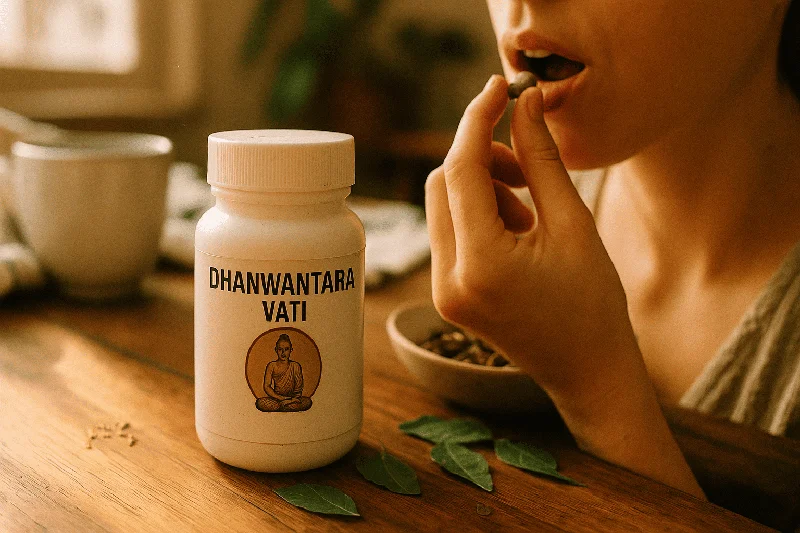
Dhanwantara Vati (also known as Dhanvantari Gutika) is a classical Ayurvedic tablet formulation described in the ancient text Sahasrayogam. It is primarily used to treat digestive and respiratory disorders rooted in aggravated Vata and Kapha doshas — including bloating, flatulence, hiccups, persistent cough, vomiting, and breathlessness. This polyherbal preparation combines camphor, musk deer extract, cardamom, ginger, and several other potent botanicals into a synergistic formula that has been trusted by Ayurvedic practitioners for centuries.
- If you've been searching for a comprehensive, evidence-informed guide on this classical formulation, you're in the right place.
- Below, we cover everything — from the exact Sanskrit reference and full ingredient breakdown to pharmacological mechanisms, dosage protocols, side effects, and dietary recommendations that no other guide currently addresses.
What Is Dhanwantara Vati?
Dhanwantara Vati is a Gutika (pill/tablet) preparation belonging to the Gutika Prakarana section of the Sahasrayogam, one of the most authoritative Ayurvedic formularies from the Kerala tradition of medicine. The name "Dhanwantara" pays homage to Lord Dhanvantari, the divine physician and patron deity of Ayurveda, while "Vati" simply means tablet or pill.
This formulation is not to be confused with Dhanwantaram Kashayam or Dhanwantaram Tailam, which are entirely different preparations with different ingredient profiles and therapeutic targets. Dhanwantara Vati specifically targets disorders of the Annavaha Srotas (digestive channels) and Pranavaha Srotas (respiratory channels).
Classical Reference — Sahasrayogam
The exact reference for this formulation is found in Sahasrayogam, Gutika Prakarana, Shloka 8/130–134 (सहस्रयोगम् ८/१३०-१३४). The original Sanskrit verses describe twelve key ingredients along with the method of preparation, the specific adjuvant (Anupana) to be used, and the diseases for which it is indicated.
This textual traceability is important. Unlike many commercially marketed "Ayurvedic supplements" that lack classical backing, Dhanwantara Vati has a verified literary pedigree spanning several centuries.
Meaning and Etymology
- Dhanwantara / Dhanvantari — Named after Lord Dhanvantari, who emerged from the ocean during Samudra Manthan (the churning of the cosmic ocean) carrying the pot of Amrita (nectar of immortality). The name signals that this formulation is considered a potent healer.
- Vati / Gutika — Refers to the pharmaceutical dosage form: a pill or tablet prepared by grinding herbs into a fine paste and rolling them into uniform units.
Dosha Action (Vata-Kapha Shamaka)
Dhanwantara Vati primarily pacifies Vata and Kapha doshas. Most of its ingredients possess Ushna Virya (hot potency), Katu and Tikta Rasa (pungent and bitter tastes), and Laghu-Ruksha Guna (light and dry qualities). This pharmacological profile makes it ideal for conditions where Vata causes erratic movement (hiccups, flatulence, tremors) and Kapha causes obstruction (congestion, excessive mucus, heaviness).
Ingredients of Dhanwantara Vati (Complete Composition)
The formulation contains twelve principal ingredients, each contributing specific therapeutic properties. Below is the complete ingredient list with Sanskrit names, botanical identifications, and the parts used:
| # | Sanskrit Name | Botanical / English Name | Part Used | Key Action |
|---|---|---|---|---|
| 1 | Ela | Elettaria cardamomum (Cardamom) | Seed | Digestive stimulant, anti-emetic |
| 2 | Shunti (Vishwa) | Zingiber officinale (Dry Ginger) | Rhizome | Carminative, anti-inflammatory |
| 3 | Haritaki | Terminalia chebula (Chebulic Myrobalan) | Fruit rind | Mild laxative, Vata-anulomana |
| 4 | Jati | Myristica fragrans (Nutmeg / Jatiphala) | Seed | Anti-diarrheal, nervine sedative |
| 5 | Brihati | Solanum indicum (Indian Nightshade) | Whole plant | Expectorant, anti-asthmatic |
| 6 | Jeeraka | Cuminum cyminum (Cumin) | Seed | Carminative, appetizer |
| 7 | Kakkola | Piper cubeba (Tailed Pepper) | Fruit | Anti-spasmodic, digestive |
| 8 | Bhunimba | Andrographis paniculata (Kalmegh) | Whole plant | Hepatoprotective, bitter tonic |
| 9 | Rudraksha | Elaeocarpus ganitrus (Rudraksha) | Seed | Nervine, anxiolytic |
| 10 | Devadaru | Cedrus deodara (Himalayan Cedar) | Heartwood | Anti-inflammatory, Vata-pacifying |
| 11 | Karpura | Cinnamomum camphora (Camphor) | Crystalline extract | Bronchodilator, counter-irritant |
| 12 | Mrigaretas (Kasturi) | Moschus moschiferus (Musk Deer secretion) | Glandular secretion | Cardiac tonic, nervine stimulant |
Note: Mrigaretas (musk) is a controlled substance in many countries due to wildlife conservation laws. Many modern manufacturers substitute it with synthetic musk or omit it entirely. Always check the label for compliance with local regulations.
Key Pharmacological Properties (Rasa, Guna, Virya, Vipaka)
Understanding WHY this formula works requires looking at the Ayurvedic pharmacological profile of its dominant ingredients:
- Predominant Rasa (Taste): Katu (Pungent), Tikta (Bitter) — these tastes stimulate Agni (digestive fire) and counteract Kapha stagnation.
- Guna (Qualities): Laghu (Light), Ruksha (Dry), Tikshna (Penetrating) — these qualities oppose the heavy, moist, dull nature of aggravated Kapha and the cold, erratic nature of aggravated Vata.
- Virya (Potency): Predominantly Ushna (Hot) — this drives the formula's ability to kindle digestion and expel gas.
- Vipaka (Post-digestive effect): Katu (Pungent) — ensures the therapeutic effect continues through the entire digestive process, not just the initial phase.
This is a critical detail that no competing resource currently explains. The synergy of hot potency + pungent post-digestive effect + light-dry qualities is precisely what makes Dhanwantara Vati effective for conditions involving Ama (metabolic toxins) combined with Vata-Kapha vitiation.
How Dhanwantara Vati Works — Mechanism of Action
Rather than simply listing benefits, lets understand the actual mechanism through the Ayurvedic lens of Srotas (channels) and Agni (metabolic fire):
Action on Annavaha Srotas (Digestive System)
The combination of Shunti, Ela, Jeeraka, and Kakkola acts as a powerful Deepana-Pachana complex — it simultaneously kindles the digestive fire (Deepana) and digests accumulated Ama (Pachana). When Vata pushes undigested food in the wrong direction (causing hiccups, vomiting, or upward-moving gas), this formula redirects Apana Vayu downward through its Anulomana action. Haritaki plays a key role here, as it is considered the supreme Vata-anulomana drug in Ayurveda.
Action on Pranavaha Srotas (Respiratory System)
- Karpura (camphor) and Brihati are the primary respiratory-acting ingredients.
- Camphor has well-documented bronchodilatory properties — a 2017 study published in Cough journal confirmed that camphor activates cold-sensitive TRPM8 receptors in the respiratory tract, producing a sensation of airway opening. Brihati (Solanum indicum) has demonstrated expectorant and anti-asthmatic activity in preclinical studies (Jain & Sharma, 2013, Journal of Ethnopharmacology).
Action on Manovaha Srotas (Nervous System)
Rudraksha and Jatiphala (Nutmeg) contribute mild nervine and anxiolytic effects. A 2018 study in Pharmacognosy Research demonstrated that Elaeocarpus ganitrus seed extracts exhibit significant anxiolytic activity in animal models, likely mediated through GABAergic pathways. This explains why Dhanwantara Vati can be helpful in stress-related digestive disorders where anxiety triggers bloating and dyspepsia.
Benefits and Indications of Dhanwantara Vati
Digestive Disorders
- This is the primary domain of Dhanwantara Vati.
- The classical indications include:
- Adhmana (Bloating/Abdominal Distension): The carminative ingredients expel trapped gas and prevent its re-accumulation.
- Atopa (Flatulence): Jeeraka and Ela relax intestinal smooth muscle, allowing gas to pass naturally.
- Chardi (Vomiting): Ela (cardamom) is one of Ayurveda's premier anti-emetic drugs. Interestingly, a 2019 randomized controlled trial published in Complementary Therapies in Medicine found cardamom significantly reduced chemotherapy-induced nausea and vomiting compared to placebo.
- Aruchi (Anorexia / Loss of Appetite): The bitter and pungent ingredients stimulate taste buds and gastric secretions.
- Hikka (Hiccups): Hiccups in Ayurveda result from upward-moving Vata (Udana Vayu). The formula's Anulomana action redirects this energy downward.
Use During Pregnancy-Related Nausea
One classical indication mentions its use for suppressing nausea during pregnancy. However, this is a nuanced recommendation. Given that the formulation contains Karpura (camphor) and potentially Mrigaretas (musk), which have stimulant properties that could theoretically affect uterine tone, use during pregnancy should ONLY be done under strict supervision of a qualified Ayurvedic physician. Self-medication during pregnancy is strongly discouraged.
Respiratory Disorders
- Kasa (Cough): Particularly effective for productive cough with white/clear sputum (indicating Kapha involvement).
- Shwasa (Dyspnea / Breathlessness): Camphor and Brihati open airways and reduce bronchial congestion.
- Pratishyaya (Common Cold / Rhinitis): The hot-potency herbs help dry excessive nasal secretions.
Vata-Vyadhi (Neurological/Musculoskeletal Conditions)
Devadaru and Rudraksha contribute anti-inflammatory and nervine properties. While Dhanwantara Vati is not a primary treatment for joint disorders, it can be used as adjuvant therapy in conditions where Vata aggravation manifests as both digestive symptoms and body aches simultaneously.
Dosage of Dhanwantara Vati
Standard Adult Dosage
| Parameter | Recommendation |
|---|---|
| Dose | 1–2 tablets (each approximately 250 mg, or 1 Masha = ~1 gram traditionally) |
| Frequency | 2–3 times daily |
| Timing | Before meals or after meals, as directed by physician |
| Anupana (Adjuvant) | Warm water, or traditionally — decoction of Panasa Patra (Jackfruit leaves), Bhunimba, or Jeeraka |
| Duration of Course | Typically 2–4 weeks for acute conditions; up to 8–12 weeks for chronic issues |
Dosage for Children
For children aged 5–12 years, the dose is generally reduced to half a tablet, once or twice daily, with warm water or honey. Children below 5 years should not take this formulation without direct prescription from an Ayurvedic pediatric specialist.
Dosage for Elderly Patients
Elderly patients with weak digestion may start with 1 tablet once daily and gradually increase based on tolerance. The hot potency of the formula can sometimes cause mild gastric burning in individuals with sensitive stomachs.
Anupana — The Forgotten Adjuvant
Most online resources mention the dose but completely ignore the Anupana (co-drink or vehicle) which is a crucial part of classical Ayurvedic dispensing. The Sahasrayogam specifically recommends taking Dhanwantara Vati with a decoction of:
- Panasa Patra (Jackfruit leaves — Artocarpus heterophyllus)
- Bhunimba (Andrographis paniculata)
- Jeeraka (Cuminum cyminum)
This decoction potentiates the formulation's digestive and hepatoprotective effects. In modern practice, most practitioners simply recommend warm water as a practical alternative.
Duration of Course — How Long Should You Take It?
This is a question that none of the existing guides answer, despite being critically important.
- Acute conditions (sudden bloating, food poisoning recovery, acute cough): 5–14 days
- Sub-acute conditions (recurring indigestion, chronic hiccups): 2–4 weeks
- Chronic conditions (long-standing IBS-like symptoms, chronic bronchitis): 4–12 weeks, with monthly reassessment
As a general Ayurvedic principle, any Vati/Gutika preparation should not be taken continuously beyond 3 months without reassessment. Prolonged use of Ushna Virya formulations can gradually aggravate Pitta dosha.
Don't wait or self medicate. Start chat with Doctor NOW
Side Effects and Contraindications
This is perhaps the most important section — and the one that every existing resource on Dhanwantara Vati completely ignores.
Potential Side Effects
- When taken in recommended doses under proper guidance, Dhanwantara Vati is generally well-tolerated.
- However, the following side effects may occur:
- Mild gastric burning or acidity — due to the predominant hot potency; more likely in Pitta-prakriti individuals
- Dry mouth — from the Ruksha (dry) quality of the formula
- Excessive warmth or sweating — especially in summer or in tropical climates
- Loose stools — Haritaki has mild laxative properties, which may manifest in sensitive individuals
Contraindications
| Contraindication | Reason |
|---|---|
| Pitta-predominant conditions (hyperacidity, peptic ulcer, gastritis with burning) | The Ushna Virya will aggravate Pitta further |
| Bleeding disorders (Raktapitta) | Hot-potency drugs can worsen bleeding tendencies |
| Pregnancy (without supervision) | Camphor and certain ingredients may affect uterine tone |
| Children under 5 years | Concentrated herbal formulation not suitable for immature digestive systems |
| Known allergy to any ingredient | Particularly camphor sensitivity, which is not uncommon |
Drug Interactions
While formal pharmacokinetic interaction studies for Dhanwantara Vati do not exist, the following theoretical interactions should be considered:
- Antacids and PPIs (Omeprazole, Pantoprazole): These drugs reduce stomach acid, while Dhanwantara Vati stimulates it — potentially conflicting mechanisms.
- Blood thinners (Warfarin, Aspirin): Camphor and ginger both have mild anti-platelet activity; concurrent use may increase bleeding risk.
- Anti-diabetic medications: Bhunimba (Andrographis) has hypoglycemic properties — monitor blood sugar closely if combining.
- Sedatives and anxiolytics: Rudraksha and Nutmeg have mild CNS-depressant effects; additive sedation is theoretically possible.
Always inform your physician about all medications — both allopathic and Ayurvedic — that you are currently taking.
Dhanwantara Vati vs. Similar Ayurvedic Formulations
Choosing the right Ayurvedic digestive formula can be confusing. Here's how Dhanwantara Vati compares to other commonly used formulations:
| Feature | Dhanwantara Vati | Hingwashtak Churna | Shankha Vati | Lavanbhaskar Churna |
|---|---|---|---|---|
| Dosage Form | Tablet (Vati) | Powder (Churna) | Tablet (Vati) | Powder (Churna) |
| Primary Action | Carminative + Expectorant | Carminative + Appetizer | Antacid + Digestive | Digestive + Mild Laxative |
| Best For | Bloating + Cough + Hiccups | Pure digestive complaints | Hyperacidity + Indigestion | Constipation + Weak appetite |
| Dosha Target | Vata-Kapha | Vata | Pitta-Kapha | Vata-Kapha |
| Respiratory Benefits | Yes (significant) | No | No | No |
| Nervine Action | Yes (mild) | No | No | No |
| Classical Text | Sahasrayogam | Ashtanga Hridaya | Rasa Tarangini | Sharangdhara Samhita |
- Key takeaway: If your symptoms are purely digestive (no respiratory component), Hingwashtak Churna or Lavanbhaskar Churna may be more targeted choices.
- If you have overlapping digestive AND respiratory symptoms — particularly bloating combined with cough or breathlessness — Dhanwantara Vati is the more appropriate selection.
Method of Preparation (Traditional Manufacturing)
According to the Sahasrayogam, the traditional preparation method involves:
- 1.Individual Processing: Each of the twelve ingredients is cleaned, dried, and powdered separately to a fine mesh.
- 2.Combining: All powdered ingredients are mixed together in equal proportions (Samabhaga) unless otherwise specified in specific recensions.
- 3.Grinding with Liquid Medium: The mixed powder is triturated (ground) in a stone mortar with a decoction (Kwatha) of Jeeraka (cumin) and Chandana (sandalwood) until a homogeneous, pliable mass is formed.
- 4.Pill Formation: Small pills are rolled from the mass, each weighing approximately 1 Masha (roughly 1 gram in traditional weight, though modern tablets are often standardized to 250–500 mg).
- 5.Drying: Pills are dried in shade — not direct sunlight — to preserve the volatile compounds, particularly camphor.
Modern GMP-certified manufacturers follow these classical steps but use mechanized grinding and tablet-pressing machinery for uniformity and hygiene compliance.
Diet and Lifestyle Recommendations During Treatment (Pathya-Apathya)
No Ayurvedic treatment works optimally without supportive diet and lifestyle modifications. Here's what to follow and what to avoid while taking Dhanwantara Vati:
Pathya (Favorable)
- Light, warm, freshly cooked meals
- Cumin-coriander-fennel tea after meals
- Moderate physical activity — a 20-minute walk after dinner significantly aids Vata-anulomana
- Regular meal timings (especially not skipping breakfast)
- Warm water throughout the day
Apathya (Unfavorable)
- Cold beverages and iced foods — they directly suppress Agni
- Heavy, oily, fermented foods (deep-fried items, cheese, yogurt at night)
- Excessive raw salads (raw food increases Vata in susceptible individuals)
- Late-night eating or irregular meal patterns
- Suppression of natural urges (flatulence, belching, urination) — a major cause of Vata aggravation per Ashtanga Hridaya
- Day-time sleeping immediately after meals
Storage and Shelf Life
| Parameter | Detail |
|---|---|
| Storage | Cool, dry place away from direct sunlight and moisture |
| Temperature | Below 30°C (86°F); camphor is volatile and degrades in heat |
| Container | Airtight glass or food-grade plastic container |
| Shelf Life | 2–5 years from date of manufacture (varies by manufacturer) |
| Signs of Degradation | Loss of characteristic camphor aroma, color change, crumbling texture |
Since camphor is a volatile compound, improper storage can significantly reduce the formulation's potency. If your tablets have lost their strong aromatic smell, they may have lost therapeutic efficacy as well.
Price and Availability in India
- Dhanwantara Vati is manufactured by several classical Ayurvedic pharmacies across India.
- Typical price ranges:
| Pack Size | Approximate Price (INR) |
|---|---|
| 50 tablets | ₹85 – ₹150 |
| 100 tablets | ₹150 – ₹280 |
| 1000 tablets | ₹1,200 – ₹2,000 |
| 2000 tablets (bulk) | ₹2,200 – ₹3,200 |
Available at Ayurvedic pharmacies, hospital dispensaries, and online platforms like 1mg, AyurCentral, and others. When purchasing, always verify that the product carries a valid AYUSH manufacturing license number and batch details.
Frequently Asked Questions (FAQ)
What is Dhanwantara Vati used for? (धनवंतरी वटी क्या है?)
Dhanwantara Vati is used primarily for digestive disorders like bloating, flatulence, hiccups, and vomiting, as well as respiratory conditions like cough and breathlessness. It works by pacifying Vata and Kapha doshas and strengthening digestive fire.
How long does Dhanwantara Vati take to show effects?
For acute symptoms like bloating or hiccups, relief may be noticed within 30–60 minutes of taking the tablet. For chronic conditions, consistent use for 2–4 weeks is typically needed before significant improvement becomes apparent. Ayurvedic medicines generally work gradually by addressing root causes rather than just masking symptoms.
Can Dhanwantara Vati be taken daily?
Yes, it can be taken daily as part of a prescribed treatment course. However, continuous daily use beyond 3 months is not recommended without periodic reassessment by a qualified practitioner, as prolonged use may aggravate Pitta dosha.
Is Dhanwantara Vati safe during pregnancy?
One classical reference mentions its use for pregnancy-related nausea, but this should only be done under the direct supervision of a qualified Ayurvedic obstetrician. The presence of camphor and other potent ingredients means self-medication during pregnancy carries risks.
What is the difference between Dhanwantara Vati and Chandraprabha Vati?
These are completely different formulations targeting different conditions. Dhanwantara Vati focuses on digestive and respiratory disorders (Vata-Kapha). Chandraprabha Vati is primarily used for urinary disorders, reproductive health, and metabolic conditions (particularly involving Kapha and Medas/fat tissue). They should not be used interchangeably.
Can I take Dhanwantara Vati with allopathic medicines?
There is no absolute contraindication, but potential interactions exist — particularly with antacids, blood thinners, anti-diabetic drugs, and sedatives. Maintain a gap of at least 30–60 minutes between allopathic and Ayurvedic medications, and always consult both your allopathic doctor and Ayurvedic practitioner.
Does Dhanwantara Vati have any scientific research backing?
While there are no clinical trials on the complete formulation as a whole, several individual ingredients have robust scientific evidence. Zingiber officinale (ginger) has over 2,500 PubMed-indexed studies, Andrographis paniculata has demonstrated anti-inflammatory and hepatoprotective effects in multiple RCTs, and Elettaria cardamomum has shown anti-emetic and gastroprotective activity in controlled trials. The classical formula itself relies on centuries of documented clinical observation within the Ayurvedic tradition.
Final Thoughts
Dhanwantara Vati is a time-tested classical Ayurvedic formulation with genuine therapeutic value for digestive and respiratory complaints. Its strength lies in the synergistic combination of twelve carefully chosen ingredients that work across multiple body systems — something that single-ingredient supplements simply cannot replicate.
However, like any medicine — natural or synthetic — it is not a one-size-fits-all solution. Your unique Prakriti (constitution), current Vikriti (imbalance), coexisting conditions, and concurrent medications all influence whether this formulation is right for you.
- The wisest approach? Consult a qualified Ayurvedic practitioner who can assess your individual condition, prescribe the correct dosage and Anupana, recommend supportive diet and lifestyle changes, and monitor your progress over time.
- Ayurveda works best when it's personalized — not when it's self-prescribed based on internet articles alone.
Disclaimer: This article is for educational and informational purposes only. It is not intended as a substitute for professional medical advice, diagnosis, or treatment. Always consult a qualified healthcare provider before starting any new medication or supplement.
Scientific Sources
- Exploring the Role of “Brahmi” (Bacopa monnieri and Centella asiatica) in Brain Function and Therapy — Shinomol GK et al., 2011, Recent patents on endocrine, metabolic & immune drug discovery
- Panchgavya: A precious gift to humankind — Bajaj KK et al., 2022, Journal of Ayurveda and integrative medicine
- Ashwagandha as an Adaptogenic Herb: A Comprehensive Review of Immunological and Neurological Effects — Jamnekar PP et al., 2025, Cureus
- Treatment of the common cold with herbs used in Ayurveda and Jamu: monograph review and the science of ginger, liquorice, turmeric and peppermint — Wardani RS et al., 2023, Drugs in context
- The use of curcumin as an effective adjuvant to cancer therapy: A short review — Bashang H et al., 2020, Biotechnology and applied biochemistry
- An Insight of Clinical Evidence of Ayurveda Interventions in the Management of COVID-19 Patients — Maideen NMP et al., 2022, Infectious disorders drug targets
- Ayurveda management of post TURP urethral stricture: A case report — Sushendra T et al., 2025, Journal of Ayurveda and integrative medicine
- Evaluating Ayurveda — Bodeker G, 2001, Journal of alternative and complementary medicine (New York, N.Y.)
- Use of Ayurveda in the Treatment of Type 2 Diabetes Mellitus — Gordon A et al., 2019, Global advances in health and medicine
- Ayurveda-modern medicine interface: A critical appraisal of studies of Ayurvedic medicines to treat osteoarthritis and rheumatoid arthritis — Chopra A et al., 2010, Journal of Ayurveda and integrative medicine
- Optimizing Health - Integrative Medicine & Poor Performance — Henneman K, 2022, The Veterinary clinics of North America. Equine practice
- Integrating ayurvedic medicine into cancer research programs part 1: Ayurveda background and applications — Arnold JT, 2023, Journal of Ayurveda and integrative medicine
- Natural products as alternative treatments for metabolic bone disorders and for maintenance of bone health — Putnam SE et al., 2007, Phytotherapy research : PTR
- Natural Medicines for Psychotic Disorders: A Systematic Review — Hoenders HJR et al., 2018, The Journal of nervous and mental disease
- Ayurvedic and Chinese Herbs against Coronaviruses — Gasmi A et al., 2024, Current pharmaceutical design
- Do Ayurveda drugs induce liver injury? — Ruknuddin G, 2018, World journal of hepatology
- Ayurveda in Early Life to Prevent Noncommunicable Diseases From Epigenetical Alterations — Kuldeep C et al., 2021, Alternative therapies in health and medicine
- Ayurveda for management of migraine: A narrative review of clinical evidence — Soman A et al., 2022, Journal of family medicine and primary care
- A comprehensive review on Phyto-MAP: A novel approach of drug discovery against Mycobacterium avium subspecies paratuberculosis using AYUSH heritage — Srivastava V et al., 2024, Journal of ethnopharmacology
- Exploring larger evidence-base for contemporary Ayurveda — Singh RH, 2010, International journal of Ayurveda research
Questions from users
Can Dhanwantara Vati help with digestive issues related to stress?
Madison
8 days ago
Yes, Dhanwantara Vati can help with digestive issues related to stress because it can balance Vata. Stress can increase Vata dosha, affecting your digestion. Dhanwantara Vati includes ingredients that support the digestive agni, but it's always good to check with an Ayurvedic practitioner first, as individual needs vary!
Can Dhanwantara Vati be used for nausea caused by motion sickness?
Lila
18 days ago
Dhanwantara Vati could potentially help with nausea due to its Anulomana action. It's often used to manage nausea by redirecting energy downward. But, it's always best to consult with an Ayurvedic practitioner first, especially since motion sickness might involve different doshic imbalances than pregnancy nausea.
What is the traditional use of Dhanwantara Vati in Ayurvedic medicine?
Joseph
27 days ago
Dhanwantara Vati is traditionally use to support post-natal recovery, aiding in digestion, and maintaining health of women during & after pregnancy. It's focus on balancing Vata dosha especially, and strengthening agni (digestive fire). It can be tricky to use, so best to consult with a practitioner for your unique needs!
What is the best way to store Dhanwantara Vati to maintain its potency?
Genesis
36 days ago
Storing Dhanwantara Vati isn't too hard, just keep it in a cool and dry place, away from direct sunlight. Airtight containers are a good bet to safeguard it against moisture. Make sure it's out of reach from kids and pets too. Just like pantry spices, temperature and humidity can affect its potency.
Can Dhanwantara Vati help improve my sleep quality or reduce insomnia?
Emily
45 days ago
Dhanwantara Vati can help in reducing stress and anxiety, which often improves sleep quality indirectly! If insomnia's more due to stress or anxiety, it might be beneficial. But for hardcore insomnia, it's best to combine with other Ayurveda practices like meditation or using herbs like Ashwagandha. Always worth checking with a practitioner!
What is Dhanwantara Vati and how does it improve overall health?
Grace
55 days ago
Dhanwantara Vati is an Ayurvedic remedy known to boost digestion and reduce digestive discomfort, helping prevent seasonal illnesses and improve overall health. It aids postpartum recovery by reducing pain, inflammation, and rejuvenating the body. It also strengthens the nervous system, offering calming effects. Always take it under the guidance of an Ayurvedic practitioner to get the best out of it!
What is the role of Dhanwantara Vati in balancing the three doshas in Ayurveda?
Matthew
64 days ago
Dhanwantara Vati is a classic ayurvedic formulation that helps balance Vata, Pitta, and Kapha doshas. By supporting digestion, boosting immunity, and benefiting reproductive health, it creates harmony in the body. Its holistic approach means it can prevent seasonal illnesses too. It’s a wonderful addition to maintaining health, but do consult a pro before use!
Is it safe to take Dhanwantara Vati for improving immunity while on a diet?
Mya
74 days ago
Yes, it should be generally safe, but every person is different. If you're on a diet, just ensure it's balanced so it doesn't clash with Dhanwantara Vati. This supplement strengthens immunity and balances doshas but chat with a healthcare pro before starting it. Taking it with lukewarm water helps the body absorb it better.
Can Dhanwantara Vati interact with other medications I’m currently taking?
Savannah
84 days ago
Dhanwantara Vati can indeed interact with other medications, like many herbal remedies. While it's generally safe, I'd recommend chatting with your doctor or an Ayurvedic practitioner. They can advise based on your current medications and ensure everything's harmonized. Better safe than sorry, right? 🌿
Is Dhanwantara Vati suitable for children and what dosage should be used?
Madison
93 days ago
Dhanwantara Vati can be used for kids but it's super important to do it right! For dosage, I'd really recommend talking to an Ayurvedic doctor. They can check the child’s dosha and overall health to make sure it's safe and effective. Dosages can really vary with kids, so getting expert advice is key here.
Related articles

Gastrointestinal Disorders
Pilex Tablet
Exploration of Pilex Tablet
4,405

Gastrointestinal Disorders
Ulset Tablet: Effective Ayurvedic Treatment for Ulcers
Learn about Ulset Tablet, an Ayurvedic remedy for ulcers. Discover its benefits, usage guidelines, dosage, and scientific insights for effective ulcer management.
3,015
Gastrointestinal Disorders
How to Stop Diarrhea: Ayurvedic Remedies and Recovery Tips
How to stop diarrhea naturally? Discover Ayurvedic remedies, what to eat during diarrhea, and how to treat chronic or post-meal symptoms holistically
3,612

Gastrointestinal Disorders
Jatamayadi Choornam – Benefits, How to Use, Side Effects and Ingredients
Exploration of Jatamayadi Choornam – Benefits, How to Use, Side Effects and Ingredients
1,734

Gastrointestinal Disorders
Shankh Vati Benefits, Dosage, Ingredients and Side Effects
Exploration of Shankh Vati Benefits, Dosage, Ingredients and Side Effects
3,126

Gastrointestinal Disorders
Sarvatobhadra Ras – Powerful Ayurvedic Formula for Rejuvenation & Healing
Learn about Sarvatobhadra Ras, an Ayurvedic formulation known for its rejuvenating and healing properties. Discover its benefits, ingredients, uses, and how it supports overall health and vitality.
2,837

Gastrointestinal Disorders
Herbolax Capsule
Exploration of Herbolax Capsule
2,601

Gastrointestinal Disorders
Trivrit Lehyam: Benefits, Dose, Side Effects, How to Use, Ingredients
Exploration of Trivrit Lehyam: Benefits, Dose, Side Effects, How to Use, Ingredients
3,167

Gastrointestinal Disorders
Kapardika Bhasma: Seashell-Based Ayurvedic Remedy for Digestive Health
Discover Kapardika Bhasma, an Ayurvedic mineral preparation made from conch shell. Learn about its benefits, traditional uses, dosage guidelines, and safety precautions for holistic health.
2,986
Related consultations on the topic
Legal
Additional Documents
© 2024 Ask Ayurveda. All rights reserved.