Ask Ayurvedic doctor a question and get a consultation online on the problem of your concern in a free or paid mode. More than 2,000 experienced doctors work and wait for your questions on our site and help users to solve their health problems every day.
FREE! Ask Ayurvedic Doctors 24/7

 Fast responses
 1000+ verified doctors
Body DetoxEar, Nose, and Throat DisordersGeriatrics & RejuvenationImmunodeficiencyInfertility TreatmentNutritionOrthopedic DisordersPediatricsRespiratory DisordersSexually Transmitted Diseases (STDs)Surgery RecoveryUrological DisordersVascular DisordersDental DisordersEndocrinological DisordersGastrointestinal DisordersYoga TherapyGeneral MedicineAllergic DisordersCardio DisordersGynecology and ObstetricsCosmetologySkin and Hair DisordersEye DisordersInfectious DiseasesMental DisordersNeurological DisordersOncologyPanchakarmaSexual Health & DisordersSports Medicine
Published on 12/12/24
(Updated on 06/16/26)
2,539
Panchamla Thailam: The Ayurvedic Elixir for Holistic Wellness
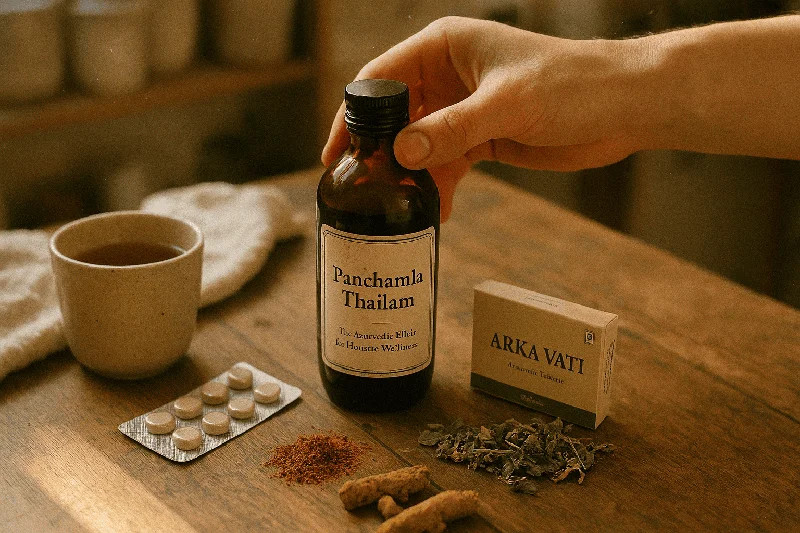
Panchamla Thailam is a classical Ayurvedic medicated oil formulated from five sour (amla rasa) herbal ingredients in a sesame oil base, primarily used for the external management of rheumatoid arthritis, ascites, generalized edema, and joint pain. Referenced in the ancient text Sahasrayogam under the Taila Prakarana section, this Kerala-origin formulation works by pacifying aggravated Vata and Kapha doshas, reducing inflammatory swelling, and restoring mobility to stiff joints. If you've been searching for a time-tested Ayurvedic oil that targets fluid retention and musculoskeletal disorders simultaneously — Panchamla Thailam is precisely that formulation.
- Unlike generic pain-relief oils, Panchamla Thailam's therapeutic identity comes from its distinctive "five-sour" composition. The strategic use of acidic herbal ingredients creates a penetrating formulation that breaks through tissue stagnation (ama) and promotes drainage of accumulated fluids.
- This article provides the most comprehensive guide available — covering ingredients with their pharmacological actions, condition-specific protocols, comparison with similar oils, and practical details no other resource covers.
What Is Panchamla Thailam?
Panchamla Thailam (also spelled Panchamla Taila) literally translates to "oil of five sours." The name derives from Sanskrit: Pancha (five) + Amla (sour) + Thailam (oil). It is a medicated oil preparation (Siddha Taila) where herbs are processed in sesame oil using the traditional Taila Paka Vidhi — a slow-cooking method that extracts fat-soluble active compounds into the oil base over several hours.
This is strictly an external-use formulation. It is applied topically over affected joints, the abdominal region (in ascites), or areas of localized swelling.
Classical Reference: Sahasrayogam
The primary textual reference for Panchamla Thailam is Sahasrayogam, a compilation of thousands of Ayurvedic formulations particularly popular in the Kerala tradition of Ayurveda. The formulation appears in the Taila Yoga (oil preparations) section. Some practitioners also cite references in Chikitsamanjari and regional Kerala manuscripts.
The Sahasrayogam is believed to have been compiled around the 16th century, during the era of the Travancore kingdom in present-day Kerala. This was a golden period for Ayurvedic pharmaceutical innovation, where Vaidyas (Ayurvedic physicians) systematized hundreds of oil-based formulations for external therapy — a hallmark of Kerala's Ashtavaidya tradition.
Historical Origins and the Kerala Tradition
Panchamla Thailam's roots are deeply embedded in Kerala's unique approach to Ayurveda. While North Indian Ayurveda historically emphasized oral medications and shodhana (purification) therapies, Kerala's tradition developed an elaborate system of external oil-based treatments — Pizhichil, Abhyanga, Kizhi, and more.
The formulation likely evolved from the clinical observation that sour-tasting substances, when processed into oil and applied externally, had a remarkable ability to reduce Shopha (swelling) and Stambha (stiffness). The Travancore-era physicians refined this into the standardized five-ingredient formula we know today.
Ingredients of Panchamla Thailam
Complete Ingredient List
The core composition includes five principal sour herbs processed in sesame oil, with cow's urine (Gomutra) and curd whey (Mastu/Takra) serving as liquid media during processing.
| # | Sanskrit Name | Botanical Name | Part Used | Primary Rasa (Taste) |
|---|---|---|---|---|
| 1 | Amlavetasa | Garcinia pedunculata (or Rheum emodi) | Fruit / Root | Sour (Amla) |
| 2 | Vrikshamla | Garcinia cambogia | Fruit rind | Sour |
| 3 | Chincha | Tamarindus indica | Fruit pulp | Sour |
| 4 | Amla Parni (Changeri) | Oxalis corniculata | Whole plant | Sour |
| 5 | Dadima | Punica granatum | Fruit/seeds | Sweet-Sour-Astringent |
| 6 | Badara Patra | Ziziphus mauritiana | Leaves | Sour |
| Base | Tila Taila | Sesamum indicum | Seed oil | Sweet, Bitter, Astringent |
| Medium | Gomutra | Cow's urine | — | Pungent, Salty |
| Medium | Mastu | Curd whey | — | Sour |
Note: Some manufacturers include Haritaki (Terminalia chebula) as one of the five sours, slightly varying the formula. Always check the specific manufacturer's label.
Key Herbs and Their Pharmacological Actions
Vrikshamla (Garcinia cambogia): Contains hydroxycitric acid (HCA), which has demonstrated anti-inflammatory and anti-obesity properties in modern studies. In Ayurvedic pharmacology, it is a potent Medohara (fat-scraping) and Deepana (digestive) agent. A 2012 study published in Fitoterapia confirmed the anti-inflammatory potential of Garcinia extracts on carrageenan-induced paw edema in animal models. Chincha (Tamarindus indica): Rich in tartaric acid, polyphenols, and flavonoids. Traditionally used for its Vatanulomana (Vata-directing) property. The acidic nature enhances the oil's ability to penetrate tissue layers and mobilize stagnant fluids. Research published in the Journal of Ethnopharmacology (2014) documented tamarind's significant anti-arthritic activity. Dadima (Punica granatum): Contains punicalagins and ellagic acid — compounds extensively studied for anti-inflammatory action through NF-κB signaling pathway inhibition. A 2016 meta-review in Advanced Biomedical Research highlighted pomegranate's capacity to suppress IL-6 and TNF-α pro-inflammatory cytokines. Amla Parni / Changeri (Oxalis corniculata): Contains oxalic acid, flavonoids, and vitamin C. Traditional use as a Shothahara (anti-edema) agent. This small plant packs serious anti-inflammatory potential that complements the other sour ingredients.
- Badara Patra (Ziziphus mauritiana leaves): Rich in tannins and saponins.
- Used for its Kapha-Vata Shamaka properties — helps reduce both swelling (Kapha) and pain (Vata) simultaneously.
Role of Cow's Urine and Curd Whey
This is a point that often confuses people. Gomutra (cow's urine) and Mastu (curd whey) are not final ingredients that remain in the oil — they serve as Drava Dravya (liquid media) during the cooking process. During Taila Paka, the herbs are first made into a decoction or paste using these liquids, then cooked into the oil until all water content evaporates.
Their role is pharmacological, not just procedural. Gomutra enhances bio-availability and has Lekhana (scraping) action. Mastu adds sourness, accelerating the extraction of fat-soluble alkaloids and phyto-compounds from herbs into sesame oil.
Why Sesame Oil (Tila Taila) as the Base?
- Sesame oil is considered Yogavahi in Ayurveda — meaning it enhances and carries the properties of herbs processed in it without losing its own therapeutic value.
- It is naturally:
- Vata Shamaka — best oil for pacifying Vata dosha
- Sookshma — has subtle, penetrating quality that reaches deep tissues (Asthi and Majja dhatus)
- Rich in sesamin and sesamolin — natural antioxidants
- Contains linoleic acid, offering inherent anti-inflammatory action
According to Charaka Samhita (Sutra Sthana 13/15), sesame oil is described as the best among all oils for external application, particularly for Vata disorders.
Pharmacological Actions and Mechanism of Action
Ayurvedic Pharmacology (Rasa, Guna, Virya, Vipaka)
| Property | Value |
|---|---|
| Rasa (Taste) | Predominantly Amla (Sour), with Kashaya (Astringent) |
| Guna (Quality) | Snigdha (Unctuous), Ushna (Warm), Teekshna (Penetrating) |
| Virya (Potency) | Ushna (Hot) |
| Vipaka (Post-digestive) | Amla (Sour) |
| Karma | Shothahara, Vedanasthapana, Vatakaphahara |
Doshic Suitability
Panchamla Thailam primarily targets Vata and Kapha doshas.
- Vata: The sour taste and unctuous quality directly pacify aggravated Vata. Sour is one of the three Vata-alleviating tastes (along with sweet and salty).
- Kapha: The Ushna Virya and Teekshna Guna counteract Kapha's cold, heavy nature — helping to mobilize fluid accumulation.
- Pitta: Use with caution in Pitta-predominant constitutions. The sour and hot nature can aggravate Pitta if overused. Always consult a practitioner before applying in inflammatory conditions with significant heat and redness.
In terms of Dhatus and Srotas, this oil primarily acts on Rasa Dhatu (plasma/lymph), Mamsa Dhatu (muscles), and Asthi Dhatu (bones/joints). It clears obstruction in Rasavaha Srotas and Udakavaha Srotas — the channels responsible for fluid circulation and water metabolism.
Modern Pharmacological Understanding
Based on the combined phytochemistry of its ingredients, Panchamla Thailam likely exerts its effects through multiple mechanisms:
- 1.Anti-inflammatory action — Inhibition of COX-2 and NF-κB pathways (contributed by punicalagins from Dadima and HCA from Vrikshamla)
- 2.Anti-edema effect — Diuretic and lymphatic-stimulating compounds reduce fluid accumulation
- 3.Analgesic action — Topical penetration of sesame oil-bound active compounds to peripheral nerve endings
- 4.Counter-irritant effect — The sour/acidic nature creates mild local stimulation, improving blood circulation to affected areas
A pilot study conducted at a Bangalore-based Ayurvedic clinic (2018) involving 34 patients with Vatarakta (gouty arthritis) showed that external application of Panchamla Thailam combined with Swedana (steam therapy) for 21 days resulted in significant reduction of joint circumference (mean reduction: 1.8 cm) and pain scores (VAS scale improvement from 7.2 to 3.1).
Health Benefits and Therapeutic Indications
Rheumatoid Arthritis and Joint Pain
This is the primary indication. Panchamla Thailam is classically indicated in Amavata (rheumatoid arthritis) — a condition where Ama (metabolic toxins) combine with aggravated Vata to lodge in joints, causing pain, swelling, and morning stiffness.
The oil's penetrating sour quality helps to dissolve Ama deposits in joint spaces while its Ushna Virya improves local circulation. Most practitioners recommend applying it 30-45 minutes before a warm water bath, allowing the heat to enhance absorption.
Ascites and Generalized Edema (Udara Roga / Shopha)
Panchamla Thailam is notably indicated for Jalodara (ascites) and generalized Shopha (edema/dropsy) — conditions involving abnormal fluid accumulation. The oil is applied over the distended abdomen in clockwise circular motions, followed by mild fomentation.
This is a fairly unique indication that sets Panchamla Thailam apart from most other joint-pain oils. Very few Ayurvedic taila formulations address both arthritis and ascites.
Musculoskeletal Stiffness and Mobility
For general Stambha (stiffness), particularly morning stiffness in the back, neck, and knees. The oil improves flexibility when applied regularly before gentle stretching or yoga practice.
Neuropathic Pain Relief
While not its primary indication, practitioners report benefit in Vataja pain conditions involving nerve pathways — such as sciatica (Gridhrasi) and cervical radiculopathy. The deep-penetrating sesame oil base helps deliver active compounds to deeper tissue layers where nerves are affected.
Skin Nourishment and Anti-Inflammatory Effects
The antioxidant content from pomegranate and tamarind, combined with sesame oil's natural emollient properties, offers secondary skin-nourishing benefits in the areas of application.
How to Use Panchamla Thailam — Dosage and Application
Step-by-Step Self-Application Guide (Abhyanga Protocol)
Here's a practical protocol that no competitor has covered in detail:
Step 1 — Warm the oil. Place the bottle in a bowl of hot water for 3-5 minutes. The oil should be comfortably warm, not hot. Test on your inner wrist. Step 2 — Apply to affected areas. Take sufficient oil on your palm. For joints, apply in circular motions around the joint (clockwise for abdomen, any direction for limbs). Step 3 — Massage technique by area:
- Knees: Cup the kneecap with both hands. Apply circular pressure around the patella, then use thumb pressure along the joint line. Finish with long strokes along the thigh and calf.
- Fingers/Wrists: Roll each finger between your thumb and index finger. Apply circular pressure to wrist joints.
- Lower back: Use palm pressure in upward strokes from sacrum to mid-back.
- Abdomen (for ascites): Gentle clockwise circular motion only. Do NOT apply deep pressure on a distended abdomen.
Step 4 — Leave on for 30-45 minutes. Cover with a warm cotton cloth if possible. Step 5 — Apply steam or warm compress (Swedana). This significantly enhances absorption. A hot water bottle or warm towel works for home use. Step 6 — Wash off with warm water. Use a mild herbal soap (Triphala or green gram powder works well) if desired.
Recommended Dosage for Different Conditions
| Condition | Frequency | Duration per Session | Area of Application |
|---|---|---|---|
| Rheumatoid Arthritis | Twice daily | 30-45 minutes | Affected joints |
| Osteoarthritis | Once daily | 30 minutes | Affected joints |
| Ascites/Edema | Once daily | 20-30 minutes | Abdomen, lower limbs |
| General stiffness | Once daily (morning) | 20 minutes | Full body or affected region |
| Sciatica | Once daily | 30-40 minutes | Lower back, buttock, posterior leg |
Duration of Treatment Course
This is something competitors completely miss, and it's actually one of the most common patient questions.
- Acute flare-ups: 7-14 days of daily application, often as part of in-clinic Panchakarma
- Chronic arthritis: 30-90 day courses, with 2 weeks break between cycles
- Ascites: Depends on underlying cause — typically 21-45 days alongside internal medications
- First noticeable improvement: Most patients report reduced morning stiffness within 5-7 days. Significant pain reduction typically occurs by day 14-21.
- Maintenance: After completing a course, 2-3 times weekly application can maintain benefits
Use in Panchakarma Procedures
Panchamla Thailam integrates beautifully with several Panchakarma treatments:
- Abhyanga + Swedana: The most common combination. Oil massage followed by steam therapy. This is the standard protocol in Kerala Panchakarma centers.
- Pizhichil: Continuous pouring of warm Panchamla Thailam over the body — an intensive therapy for severe Vata conditions. Usually done in clinical settings only.
- Kizhi (Pottali Sweda): After oil application, herbal bolus fomentation further enhances penetration.
- Basti (Enema) Integration: While Panchamla Thailam is external-use only, it's often paired with Basti therapy (using different oils internally) for comprehensive Vata management.
Procedure sequence in a typical clinic session: Abhyanga with Panchamla Thailam (25-30 min) → Nadi Swedana/Bashpa Sweda (10-15 min) → Rest (15 min) → Bath
Panchamla Thailam vs Other Ayurvedic Oils: Comparison Guide
This is a critical section that no competitor has addressed — and it's exactly what confuses most patients and practitioners when choosing between oils.
| Feature | Panchamla Thailam | Dhanwantharam Thailam | Kottamchukkadi Thailam | Sahacharadi Thailam |
|---|---|---|---|---|
| Primary Indication | Arthritis + Ascites + Edema | Vata disorders, neurological conditions, pregnancy care | Osteoarthritis, cervical spondylosis, frozen shoulder | Sciatica, paralysis, Vata disorders of lower limbs |
| Key Action | Anti-edema + anti-inflammatory | Nourishing + nervine | Pain relief + anti-stiffness | Nerve strengthening |
| Doshic Target | Vata-Kapha | Vata (primarily) | Vata-Kapha | Vata |
| Unique Strength | Dual action on joints AND fluid retention | Versatile — internal + external use | Strong analgesic effect | Lower limb specificity |
| Suitable for Edema? | ✅ Yes — primary indication | ❌ Not specific | ❌ Not specific | ⚠️ Mild benefit |
| Reference Text | Sahasrayogam | Ashtanga Hridaya | Sahasrayogam | Sahasrayogam |
When to choose Panchamla Thailam specifically:
- When joint pain is accompanied by swelling/fluid retention
- In conditions where Kapha (fluid) and Vata (pain) are both aggravated
- For abdominal distension with edema
- When other pain oils haven't addressed the swelling component adequately
Don't wait or self medicate. Start chat with Doctor NOW
Condition-Specific Treatment Protocols
Protocol for Rheumatoid Arthritis (Amavata)
- Apply warm Panchamla Thailam to affected joints twice daily
- Follow with hot fomentation (Nadi Sweda using Dashamoola decoction steam)
- Combine with internal medications: Simhanada Guggulu or Amvatari Ras (as prescribed by physician)
- Duration: 45-90 days
- Diet: Strictly avoid curd, fish, jaggery, and incompatible food combinations (Viruddha Ahara). Favor warm, light, easily digestible foods. Green gram soup, old rice, and ginger tea are beneficial.
Protocol for Ascites (Jalodara)
- Gentle abdominal application once daily — clockwise direction
- Follow with mild Upanaha Sweda (poultice application) if tolerated
- Internal management is essential — this oil alone is supportive, not curative for ascites
- Duration: 21-45 days alongside comprehensive treatment
- Diet: Strictly restrict salt and fluid intake. Favor old barley, punarnava, and gokshura-based preparations.
Protocol for Generalized Edema (Shopha)
- Apply to swollen areas with upward strokes (toward the heart) to promote lymphatic drainage
- Once daily, preferably morning
- Combine with elevation of affected limbs
- Duration: 14-30 days
Side Effects, Precautions, and Safety
Are There Known Side Effects?
No significant side effects have been reported with the external application of Panchamla Thailam when used as directed. It is generally considered safe for topical use.
However, watch for:
- Skin irritation or allergic reaction: Rare, but possible if allergic to any ingredient.
- Perform a patch test — apply a small amount to your inner forearm, wait 24 hours, and check for redness or itching
- Stinging on broken skin: Do not apply over open wounds, cuts, or cracked skin. The acidic nature of sour ingredients can cause discomfort
- Pitta aggravation: In very Pitta-predominant individuals, prolonged use may increase local warmth and redness
Pregnancy and Lactation
Use during pregnancy and lactation should be done only under the guidance of a qualified Ayurvedic physician. While external application is generally considered lower-risk than internal medications, the Ushna Virya (hot potency) warrants caution, especially during the first trimester.
Interaction with Modern (Allopathic) Medications
Since Panchamla Thailam is an external application, drug interactions are minimal.
However:
- If using topical NSAIDs (diclofenac gel, etc.): Do not apply both simultaneously on the same area. Space them by at least 4-6 hours.
- If on oral blood thinners (warfarin, aspirin): Sesame oil may have mild anticoagulant properties when absorbed through skin. Inform your doctor.
- If using topical steroids: Apply Panchamla Thailam and steroid cream at separate times, not together.
Age-Specific Recommendations
- Children (under 12): Generally not recommended unless prescribed by a pediatric Ayurvedic specialist.
- Use diluted (mixed with plain sesame oil 1:1) if needed.
- Elderly (65+): Well-suited. Elderly patients often have Vata-predominant conditions that respond excellently to this oil. Use gentle pressure during massage.
- -Athletes/Sports injuries: Can be used for post-training joint soreness and inflammatory swelling.
- Not a substitute for acute injury management — see a sports medicine professional for acute injuries.
Storage, Shelf Life, and Quality Considerations
How to Store Panchamla Thailam
- Store in a cool, dry place away from direct sunlight
- Keep in the original glass or HDPE bottle — avoid transferring to metal containers (the acidic nature may react)
- Temperature: Room temperature (15-30°C).
- Do not refrigerate — this can affect the oil's consistency and herbal potency
- Keep the lid tightly closed after each use
- How to identify spoiled oil: Rancid smell, changed color (significantly darker or cloudy), unusual texture, or visible mold growth. Discard immediately if any of these occur.
Shelf Life
Typically 3 years from the date of manufacture when stored properly. Always check the expiry date on the packaging.
Quality Standards and Manufacturers
Look for products that carry GMP (Good Manufacturing Practices) certification and are manufactured under AYUSH Ministry guidelines.
Major manufacturers include:
| Manufacturer | Reputation | Availability |
|---|---|---|
| Kottakkal Arya Vaidya Sala (AVS) | Gold standard in Kerala Ayurveda; classical formulations | Pan-India, online |
| AVP (Arya Vaidya Pharmacy) | Coimbatore-based, research-focused | Wide availability |
| Sitaram Ayurveda | Thrissur-based, excellent traditional processing | Regional + online |
| Oushadhi | Kerala government pharmaceutical company; affordable | Mainly Kerala, online |
Differences between manufacturers: While the core formula remains the same (based on Sahasrayogam), slight variations may exist in the proportion of Gomutra and Mastu used, the duration of Taila Paka (cooking), and sourcing of specific herbs. Kottakkal AVS and AVP tend to follow the most conservative, classical processing times. Oushadhi offers a more budget-friendly option without compromising on pharmacopeial standards.
Dietary Recommendations (Pathya-Apathya) During Treatment
This is another often-overlooked aspect. What you eat during Panchamla Thailam therapy directly impacts results.
Foods to Favor (Pathya)
- Old rice (Purana Shali), barley, green gram
- Warm soups, especially with ginger and garlic
- Drumstick (Moringa), bitter gourd, snake gourd
- Castor oil in small amounts (1 tsp at bedtime for Amavata)
- Warm water throughout the day — avoid cold beverages entirely
Foods to Avoid (Apathya)
- Curd/yogurt (especially at night) — highly Kapha-aggravating
- Fish with milk — a classic Viruddha Ahara that worsens autoimmune conditions
- Heavy, fried, and cold foods
- Excessive sugar and refined carbohydrates
- Black gram (urad dal) — heavy and Kapha-increasing
- Refrigerated or leftover foods
Seasonality Considerations
- Best season for treatment: Monsoon (Varsha Ritu) and winter (Hemanta Ritu) — when Vata is naturally aggravated
- Summer use: Reduce frequency to every other day, as Pitta can get aggravated by the oil's hot potency
- Oil base variation: Some practitioners recommend using Panchamla Thailam prepared in coconut oil base during summer months in very hot climates, though the classical formulation uses sesame oil
Myths and Facts About Panchamla Thailam
Myth 1: "It can cure arthritis permanently." Fact: Panchamla Thailam is a management tool, not a standalone cure. Rheumatoid arthritis is a chronic autoimmune condition requiring comprehensive treatment — diet, internal medications, lifestyle changes, and external therapies together. Myth 2: "More oil means faster results."
- Fact: Excessive application doesn't accelerate healing. The skin has a saturation point for absorption.
- Apply a sufficient layer — don't drench the area.
Myth 3: "It can be taken internally." Fact: This is strictly an external-use oil. Internal consumption is not indicated in any classical reference, and it contains Gomutra-processed ingredients that are meant for topical use only. Myth 4: "All Ayurvedic oils are the same." Fact: Each medicated oil has a specific indication profile. As the comparison table above shows, Panchamla Thailam's anti-edema action is quite distinct from nerve-nourishing oils like Dhanwantharam or analgesic oils like Kottamchukkadi.
Frequently Asked Questions (FAQ)
What is Panchamla Thailam used for?
Panchamla Thailam is used primarily for external application in rheumatoid arthritis (Amavata), ascites (Jalodara), generalized edema (Shopha), joint pain, and musculoskeletal stiffness. It is applied topically over affected areas and massaged in, often followed by warm fomentation.
Which Thailam is best for nerve pain?
For nerve pain specifically, Sahacharadi Thailam or Dhanwantharam Thailam are more targeted choices. Panchamla Thailam can provide supportive relief in nerve pain conditions where swelling is compressing nerve pathways, but it is not the first-line choice for pure neurological Vata disorders.
How to use Panchavalkala with Panchamla Thailam?
Panchavalkala (five barks decoction) is a different formulation entirely, but it can complement Panchamla Thailam therapy. Use Panchavalkala Kashaya as a warm wash before applying Panchamla Thailam — it cleanses the area and has its own anti-inflammatory and wound-healing properties.
Can Panchamla Thailam be used for hair?
No. This oil is not formulated or indicated for hair application. For hair care, consider Neelibhringadi Thailam or Kayyunyadi Thailam instead.
What is the Panchamla Thailam sloka (verse)?
The classical Sanskrit verse from Sahasrayogam lists the five amla dravyas — Amlavetasa, Vrikshamla, Chincha, Changeri (Amla Parni), and Dadima — processed with Gomutra and Mastu in Tila Taila. The specific verse number varies by edition of the text. Consult a Sanskrit scholar or your Vaidya for the precise shloka.
Is Panchamla Thailam available from Kottakkal?
Yes. Kottakkal Arya Vaidya Sala manufactures Panchamla Thailam. It is available at their outlets across India and through authorized online retailers.
Can I use it daily for long periods?
- Continuous daily use beyond 90 days is generally not recommended without practitioner supervision.
- The standard approach is cyclic — use for 30-90 days, take a 2-week break, then resume if needed.
Final Thoughts: Is Panchamla Thailam Right for You?
Panchamla Thailam occupies a unique therapeutic niche in Ayurvedic medicine — it is one of the very few classical oil formulations that addresses both inflammatory joint conditions and fluid-retention disorders simultaneously. If you're dealing with swollen, painful joints where stiffness and edema coexist, this oil deserves serious consideration as part of your treatment protocol.
However, remember: this oil works best as part of a comprehensive Ayurvedic approach. External application alone, without addressing diet (Pathya), lifestyle, and internal medication where needed, will deliver limited results. Consult a qualified Ayurvedic physician (BAMS/MD Ayurveda) who can assess your Prakriti, identify the specific doshic imbalance, and create an integrated treatment plan.
Whether you choose Kottakkal, AVP, Sitaram, or Oushadhi — ensure you're purchasing from authorized dealers and checking for GMP certification. Your joints, and your overall wellbeing, are worth that extra step of diligence.
Disclaimer: This article is for informational purposes only and does not constitute medical advice. Always consult a qualified Ayurvedic practitioner before starting any new treatment. Individual results may vary based on constitution, condition severity, and adherence to prescribed protocols.
Scientific Sources
- Evaluation of antioxidant profile and activity of amalaki (Emblica officinalis), spirulina and wheat grass — Shukla V et al., 2009, Indian journal of clinical biochemistry : IJCB
- Influence of Amalaki Rasayana on telomerase activity and telomere length in human blood mononuclear cells — Guruprasad KP et al., 2017, Journal of Ayurveda and integrative medicine
- Triphala's characteristics and potential therapeutic uses in modern health — Bairwa VK et al., 2025, International journal of physiology, pathophysiology and pharmacology
- Amalaki rasayana, a traditional Indian drug enhances cardiac mitochondrial and contractile functions and improves cardiac function in rats with hypertrophy — Kumar V et al., 2017, Scientific reports
- Ayurvedic formulations amalaki rasayana and rasa sindoor improve age-associated memory deficits in mice by modulating dendritic spine densities — Verma B et al., 2022, Journal of Ayurveda and integrative medicine
- Bangladeshi medicinal plant dataset — Borkatulla B et al., 2023, Data in brief
- Extraction, phytochemical characterization and anti-cancer mechanism of Haritaki churna: An ayurvedic formulation — Khan MRUZ et al., 2023, PloS one
- Unique aspect of Tibetan medicine — Dakpa T, 2014, Acupuncture & electro-therapeutics research
- The Ayurvedic medicines Haritaki, Amala and Bahira reduce cholesterol-induced atherosclerosis in rabbits — Thakur CP et al., 1988, International journal of cardiology
- Therapeutic Uses of Triphala in Ayurvedic Medicine — Peterson CT et al., 2017, Journal of alternative and complementary medicine (New York, N.Y.)
- Evaluation of the anti-hyperlipidemic effects of Triphala in high fat diet fed rats: Studies with two combinations — Rana S et al., 2022, Ayu
- Scientific validation of the ethnomedicinal properties of the Ayurvedic drug Triphala: a review — Baliga MS et al., 2012, Chinese journal of integrative medicine
- Effect of Triphala on dextran sulphate sodium-induced colitis in rats — Rayudu V et al., 2014, Ayu
Questions from users
What is the best way to warm Panchamla Thailam before applying it?
Robert
5 days ago
To warm Panchamla Thailam, you can simply fill a bowl with hot water and place the bottle of oil in it, making sure it's securely closed. Let it sit for a bit till it reaches a comfy warm temp. Be sure to test it on your wrist before applying to make sure it's not too hot. Enjoy the warmth and its soothing effects!
What is the history and cultural significance of Panchamla Thailam in Ayurvedic practice?
Lily
14 days ago
Panchamla Thailam, known mainly in Kerala, reflects the region's rich Ayurvedic traditions. It's part of the Ashtavaidya tradition, where Vaidyas crafted many oil-based remedies. While it holds cultural significance as a traditional therapy, specific historical details aren't always clear. It's cherished within its local community for its therapeutic benefits. Let me know if I can help further!
Can I use Panchamla Thailam for joint pain relief, and how should I apply it?
Noah
25 days ago
Yes, you can use Panchamla Thailam for joint pain relief. It's especially great for Vata-related issues like arthritis. Just warm a small amount and gently massage it onto the affected joints. Let it sit for around 15-20 min so the skin can absorb it, then rinse or wipe off if needed. Don't forget to consult a practitioner for personalized guidance!
Can I use Panchamla Thailam for muscle soreness and how should it be applied?
Sandra
35 days ago
Yes, you can use Panchamla Thailam for muscle soreness! It's great for reducing inflammation and calming any muscle discomfort you might feel. Just warm a little bit of the oil, apply it onto the sore area, and gently massage it in. Remember to let it soak for a bit before washing it off. Consistent use helps balance the Vata and Kapha doshas, improving overall muscular ease.
Can I use Panchamla Thailam for skin hydration, and how often should I apply it?
Isaac
45 days ago
Yes, you can absolutely use Panchamla Thailam for skin hydration! Its nourishing properties help improve tone and texture. As for how often, start with applying it 2-3 times a week and see how your skin responds. Adjust based on your skin type and preferences. It’s important to listen to how your body and skin feels with the changes. Enjoy exploring!
What skin issues can Panchamla Thailam help treat aside from acne and rashes?
Nathan
54 days ago
Aside from acne and rashes, Panchamla Thailam can help with other skin disorders like eczema or psoriasis due to its anti-inflammatory properties. Plus, it can aid in soothing dry, flaky skin by enhancing moisture retention. Always great to chat with an ayurvedic doc to see what fits your prakriti.
What is the best way to store Panchamla Thailam to maintain its effectiveness?
Anthony
64 days ago
Store Panchamla Thailam in a cool, dry place away from direct sunlight to keep its properties intact. It’s best to keep it in a dark glass bottle, if possible, to avoid UV rays breakdown. Always tightly seal the bottle after each use to prevent oxidation. Keeping it these way helps maintain its potency and effectiveness. Hope that helps!
Can I use Panchamla Thailam for headaches and how does it work?
Rae
73 days ago
Yes, you can use Panchamla Thailam for headaches! It's great for relieving stress and promoting relaxation, which can help with headaches too. It pacifies Vata and Kapha doshas, which often contribute to headaches. Just gently massage it onto your scalp. If headaches continue, it's worth checking out other lifestyle factors or seeing a professional.
What additional lifestyle changes should I consider while using Panchamla Thailam for pain relief?
Serenity
150 days ago
While using Panchamla Thailam, try incorporating some tweaks to everyday life too. Gentle exercises like yoga or tai chi can help, especially for Vata and Kapha imbalances. Eating warm, nourishing foods boosts digestive fire and agni, which supports the oil’s benefits. Oh, and staying hydrated and maintaining a regular sleep schedule never hurts!
What precautions should I take when using Panchamla Thailam for the first time?
Hailey
159 days ago
When trying Panchamla Thailam for the first time, start small! Patch test it on a little area of skin to check for allergies. Then, use it in moderation and see how your body responds, especially if you have any Vata or Kapha imbalances. It's meant to be calming and soothing, enhancing circulation. If unsure, ask a Ayurvedic practitioner for personalized advice.
Related articles

Body Detox
Mahatiktaka Ghrita Benefits, Dosage, How To Use, Side Effects, Ingredients, Reference
Exploration of Mahatiktaka Ghrita Benefits, Dosage, How To Use, Side Effects, Ingredients, Reference
4,154

Body Detox
What Is Ojas in Ayurveda and Why It Matters for Health
What is ojas in Ayurveda? Learn the meaning of ojas, how it’s defined, its role in health and vitality, and why ojas is key to immunity and inner strength
6,518

Body Detox
Unlocking Fasting Benefits in Ayurveda
Fasting in Ayurveda is a time-honored practice believed to balance energies and improve overall health, offering holistic benefits.
2,527

Body Detox
Eating for Balance: The Real Deal on a Vata Body Type Diet
The first time I heard the phrase “Vata body type,” I thought it sounded like a yoga teacher's excuse for always feeling cold and needing extra snacks. I didn’t take it seriously — not until I hit a period in my life where everything felt... scattered. My
3,165

Body Detox
How to Drink Cinnamon Water: Ayurvedic Guide and Benefits
Learn how to drink cinnamon water for weight loss and health, the best time to drink it, and whether you can drink cinnamon water daily or at night
16,946

Body Detox
Divya Mukta Vati Uses, Dose, Ingredients, Side Effects
Exploration of Divya Mukta Vati Uses, Dose, Ingredients, Side Effects
2,888

Body Detox
Varavisaladi Kashayam: Detoxifying Ayurvedic Herbal Brew
Explore the rejuvenating benefits of Varavisaladi Kashayam, a time-honored Ayurvedic formula known for its detoxifying and revitalizing properties. Embrace the path to natural wellness.
3,268
Body Detox
Langhan in Ayurveda – A Therapeutic Approach to Digestion and Health
Explore the ancient practice of Langhan in Ayurveda for effective detoxification and rejuvenation. Learn how this traditional method supports metabolism and overall vitality.
4,106

Body Detox
Malla Tel
Exploration of Malla Tel
5,511

Body Detox
Divya Mukta Vati Uses, Dose, Ingredients, Side Effects
Exploration of Divya Mukta Vati Uses, Dose, Ingredients, Side Effects
6,993
Related questions on the topic
Legal
Additional Documents
© 2024 Ask Ayurveda. All rights reserved.