FREE! Ask Ayurvedic Doctors 24/7

 Fast responses
 1000+ verified doctors
Unlocking Fasting Benefits in Ayurveda
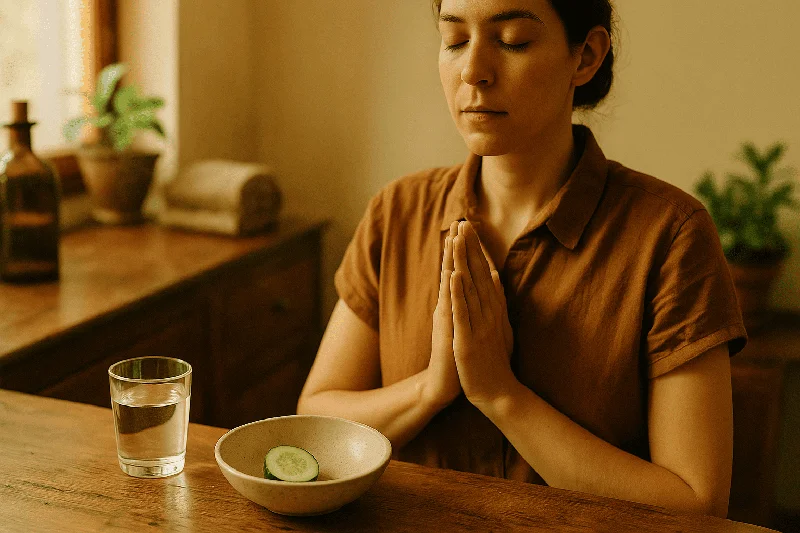
Fasting in Ayurveda — known as Upvaas or Langhana — is a deliberate, therapeutic pause from food designed to reignite your digestive fire (Agni), burn away accumulated toxins (Ama), and restore balance across body, mind, and spirit. Unlike modern crash diets or extreme water fasts, Ayurvedic fasting is personalized to your unique constitution (Prakriti), your dominant dosha, the current season, and your present state of health. It is not about starving yourself. It's about giving your system the space it needs to heal.
In this guide, we go far beyond surface-level tips. You'll find dosha-specific fasting protocols, a day-by-day fasting schedule, seasonal adjustments rooted in Ritucharya, herbal tea formulas for each dosha, scientific research backing these ancient practices, and practical recipes — everything the existing literature online has been missing.
What Is Fasting in Ayurveda (Upvaas)?
The Meaning of Upvaas and Pratyahara
- The Sanskrit word Upvaas is composed of two roots: Upa (near) and Vaas (to stay).
- So Upvaas literally means "staying near" — near to the Divine, near to your own awareness. This reframes fasting from a purely physical act into a spiritual discipline.
There's a deeper philosophical layer here, too. Ayurveda connects fasting with Pratyahara, one of the eight limbs of Yoga described by Patanjali. Pratyahara itself breaks down into prati (against, away) and ahara (food, or more broadly, anything taken in). In this context, fasting isn't just about withdrawing from food — it's about consciously reducing all sensory input: excessive screen time, noise, even compulsive thinking. This is why traditional Upvaas often includes silence, meditation, and gentle pranayama alongside dietary restriction.
As Rumi once wrote, "Fasting is the first door of worship." And Mahatma Gandhi famously stated, "What the eyes are for the outer world, fasts are for the inner." These perspectives echo exactly what Ayurveda has taught for thousands of years.
How Ayurvedic Fasting Differs from Regular Fasting
Many people conflate Ayurvedic fasting with modern intermittent fasting or water-only fasts. They share some principles, but the differences are significant.
| Feature | Ayurvedic Fasting (Upvaas) | Modern Intermittent Fasting | Water Fasting |
|---|---|---|---|
| Personalization | Fully customized to dosha, season, and health status | One-size-fits-all time windows | Same protocol for everyone |
| Duration | Typically 1–3 days; sometimes just sunrise to sunset | Daily (16:8, 14:10) or weekly (5:2) | 24–72 hours or longer |
| What's consumed | Warm water, herbal teas, kitchari, fruits, light soups | Any food within eating window | Only water |
| Goal | Strengthen Agni, clear Ama, spiritual growth | Weight loss, metabolic health | Autophagy, rapid weight loss |
| Support practices | Abhyanga, pranayama, meditation, rest | Exercise often encouraged | Rest |
| Exit protocol | Gradual, structured reintroduction over equal days | No formal exit plan | Variable |
| Contraindication awareness | Extensive, dosha-specific | Minimal in popular sources | Often overlooked |
- Ayurveda also distinguishes between fasting and cleansing.
- A fast is typically short-term — one to three days — and involves reducing or eliminating food intake. A cleanse (like Panchakarma or a kitchari mono-diet) is a longer, more structured protocol lasting seven to twenty-one days, with specific preparatory and post-cleanse phases. Understanding this difference prevents confusion and ensures you choose the right approach.
Agni, Ama, and Why Fasting Matters
Two concepts sit at the heart of Ayurvedic fasting: Agni (digestive fire) and Ama (metabolic toxins).
- When Agni is strong, food is digested completely, nutrients are absorbed efficiently, and waste is eliminated properly.
- When Agni weakens — through overeating, eating at irregular times, consuming incompatible foods, stress, or seasonal changes — partially digested material accumulates. This sticky, heavy residue is Ama.
Ama coats the intestinal walls, clogs the channels (Srotas), dulls the mind, and according to Ayurvedic texts, becomes the root cause of most diseases. The classical text Ashtanga Hridayam states that Langhana (lightening therapy, including fasting) is one of the primary treatments for Ama-related conditions.
Fasting works because when you stop adding fuel, the existing digestive fire can burn through the backlog. Think of it like letting a fireplace burn down its accumulated ash before adding new logs.
The Role of Doshas: Which Fasting Approach Suits Your Constitution?
- Not everyone should fast the same way.
- This is perhaps the most critical insight Ayurveda offers — and the one most frequently ignored in modern wellness culture.
Fasting for Vata Dosha
Vata types are naturally light, dry, cold, and mobile. Extended fasting or dry fasting can severely aggravate Vata, leading to anxiety, insomnia, constipation, dizziness, and joint pain.
Recommended approach:
- Duration: Short fasts only — 12 to 14 hours maximum (a 14:10 intermittent fasting pattern works well)
- Type: Never dry fast. Always include warm liquids
- Best foods during fast: Warm mung dal soup, stewed fruits, ghee-based preparations, cooked vegetables
- Herbal tea formula: 1 tsp fresh grated ginger + ½ tsp cinnamon + ¼ tsp cardamom in 2 cups hot water. Steep 5 minutes, strain, add a small spoon of raw honey once cooled to drinkable temperature
- Frequency: No more than once every two weeks
- Supporting practices: Warm oil Abhyanga (sesame oil), gentle yoga, Nadi Shodhana pranayama
Fasting for Pitta Dosha
Pitta types run hot, sharp, and intense. They generally have strong Agni but can become irritable, acidic, and hypoglycemic during aggressive fasting.
Recommended approach:
- Duration: Moderate — 14 to 16 hours (14:10 is ideal; 16:8 is acceptable for experienced fasters)
- Type: Fruit fasts or juice fasts work particularly well
- Best foods during fast: Fresh sweet fruits (grapes, pomegranate, pear), coconut water, cucumber, cooling soups
- Herbal tea formula: ½ tsp coriander seeds + ½ tsp fennel seeds + ½ tsp cumin seeds (the classic CCF tea). Boil in 3 cups water for 5 minutes, strain, sip throughout the day
- Frequency: Once a week is generally safe, especially during hot seasons
- Supporting practices: Coconut oil Abhyanga, Sheetali pranayama (cooling breath), moonlight meditation

Fasting for Kapha Dosha
Kapha types benefit the most from fasting. Their naturally slow, heavy, oily constitution means Ama accumulates more readily, and Agni tends to be sluggish. Fasting is deeply therapeutic here.
Recommended approach:
- Duration: Longer fasts are tolerated well — 16:8 or even 18:6 intermittent fasting; full-day liquid fasts once a week
- Type: Dry fasting for short periods (sunrise to sunset) is acceptable for healthy Kapha individuals. Warm water fasts are excellent
- Best foods during fast: Honey-lemon water, spiced buttermilk (takra), vegetable broth with turmeric and black pepper, steamed greens
- Herbal tea formula: 1 tsp dried ginger powder + ½ tsp black pepper + ½ tsp turmeric + ¼ tsp cinnamon. Boil in 2 cups water for 7 minutes. Add ½ tsp raw honey after cooling slightly
- Frequency: Weekly fasting is highly recommended
- Supporting practices: Dry brushing (Garshana), vigorous pranayama (Kapalabhati), brisk walking
> Important note: These are general guidelines based on dominant dosha. Most people are dual-doshic (e.g., Vata-Pitta or Pitta-Kapha), and your current state of imbalance (Vikriti) matters as much as your birth constitution. Consult an Ayurvedic practitioner for truly personalized advice.
Benefits of Fasting in Ayurveda: What Does the Science Say?
Physical Benefits
- Ayurvedic texts list extensive benefits of properly conducted fasting.
- Modern science has begun validating many of these claims:
- Enhanced digestion and metabolism: A 2014 review published in Cell Metabolism demonstrated that periodic fasting triggers metabolic switching, where the body shifts from glucose-based to ketone-based energy, improving metabolic flexibility and digestive efficiency
- Detoxification and Ama clearance: A 2016 study by Yoshinori Ohsumi (Nobel Prize in Physiology or Medicine) elucidated autophagy — the cellular self-cleaning mechanism activated during fasting. This is essentially the molecular equivalent of what Ayurveda calls "burning Ama"
- Reduced inflammation: A 2019 study in Cell found that a 24-hour fast in humans reduced circulating monocytes, leading to lower systemic inflammation — directly supporting Ayurveda's claim that fasting reduces Shotha (inflammatory conditions)
- Improved immunity: Research published in Cell Stem Cell (2014) by Valter Longo's team showed that prolonged fasting cycles (2–4 days) triggered stem cell-based regeneration of new immune cells
- Weight management: A 2020 meta-analysis in the Annual Review of Nutrition confirmed that intermittent fasting produces comparable weight loss to continuous caloric restriction, with potentially superior metabolic biomarker improvements
Mental and Emotional Benefits
This is an area most existing resources barely touch, despite it being central to the Ayurvedic understanding of Upvaas.
- During fasting, the body produces fewer digestive demands, which according to Ayurveda frees up Prana (vital energy) for higher cognitive and spiritual functions.
- Practitioners consistently report:
- Mental clarity and sharpness — attributed to ketone bodies crossing the blood-brain barrier and serving as efficient neuronal fuel
- Emotional processing — fasting can surface suppressed emotions; Ayurveda recommends pairing fasting with journaling, mantra chanting (particularly the Gayatri Mantra), and Yoga Nidra to process these experiences constructively
- Reduced anxiety and improved mood — a 2018 study in Nutritional Neuroscience found that Ramadan-type intermittent fasting was associated with reduced anxiety and depression scores, alongside decreased cortisol levels
- Heightened self-awareness — the Pratyahara aspect of Upvaas trains the mind to observe cravings without acting on them, building the same "muscle" that meditation develops
Spiritual Dimensions
- In Ayurveda, fasting is never purely physical. The classical texts describe how lightening the body through Langhana creates conditions for Sattva (clarity, purity) to predominate over Rajas (agitation) and Tamas (inertia).
- Specific practices recommended during fast days include:
- Pranayama: Anulom Vilom for 10–15 minutes morning and evening
- Mantra: Repeating "Om" or a personal mantra 108 times using a mala
- Meditation: Silent sitting for 20–30 minutes, preferably at dawn (Brahma Muhurta, approximately 4:00–6:00 AM)
- Svadhyaya: Self-study through reading sacred or philosophical texts
A Complete Day-by-Day Fasting Schedule
One of the biggest gaps in existing resources is the lack of a concrete, actionable fasting plan. Here's a detailed 3-day protocol suitable for beginners (adjust based on dosha):
Day 1: Preparation (Purvakarma)
| Time | Activity |
|---|---|
| 6:00 AM | Wake up, scrape tongue, drink warm lemon-ginger water |
| 7:00 AM | Light breakfast: stewed apples with cinnamon or soaked oats with cardamom |
| 10:00 AM | Herbal tea (dosha-appropriate, see formulas above) |
| 12:30 PM | Light lunch: kitchari (recipe below) with steamed vegetables |
| 3:00 PM | Herbal tea or warm water |
| 6:00 PM | Early, light dinner: vegetable soup or mung dal with rice |
| 8:00 PM | Gentle walk, 10 minutes pranayama |
- | 9:30 PM | Sleep.
- No screens after 8:30 PM |
Key: Eliminate caffeine, sugar, alcohol, processed foods, heavy meats, and dairy (except ghee) on this day.
Day 2: The Fast Day
| Time | Activity |
|---|---|
| 5:30 AM | Wake at Brahma Muhurta. Tongue scraping, warm water |
| 6:00 AM | Self-Abhyanga with warm sesame oil (Vata/Kapha) or coconut oil (Pitta). Shower after 15 min |
| 6:30 AM | Pranayama (15 min) + meditation (20 min) |
| 8:00 AM | Herbal tea with honey (Kapha), or fruit juice (Pitta), or warm mung broth (Vata) |
| 10:30 AM | Warm water or herbal tea |
- | 12:00 PM | If doing a liquid fast: vegetable broth or diluted fruit juice.
- If doing a complete fast: warm water only |
| 2:00 PM | Rest, read, journal. Avoid vigorous exercise |
|---|---|
| 4:00 PM | Herbal tea |
| 6:00 PM | Light broth or warm water. Gentle 15-minute walk |
| 7:30 PM | Evening meditation or mantra practice |
| 9:00 PM | Sleep |
Day 3: Breaking the Fast (Paschat Karma)
This day is as important as the fast itself. Rushing back to regular food can shock the system and undo all benefits.
| Time | Activity |
|---|---|
| 6:00 AM | Warm water with lemon |
| 7:30 AM | Small portion of stewed fruit (apple, pear) — no raw fruits |
| 10:00 AM | Herbal tea |
| 12:30 PM | Small bowl of plain kitchari (well-cooked, soupy consistency) |
| 3:00 PM | Herbal tea or warm water |
| 6:00 PM | Slightly larger portion of kitchari with steamed vegetables and a teaspoon of ghee |
| 9:00 PM | Sleep |
Day 4 onward: Gradually reintroduce normal foods over 1–2 days. Add grains first, then legumes, then dairy, then heavier items. Avoid fried foods, processed food, and caffeine for at least 48 hours after completing the fast.
Kitchari Recipe for Fasting Days
This is the gold-standard Ayurvedic fasting food — easy to digest, balances all three doshas, and provides complete protein.
Ingredients:
- ½ cup split yellow mung dal (soaked 2 hours)
- ½ cup basmati rice (rinsed well)
- 1 tbsp ghee
- ½ tsp turmeric
- ½ tsp cumin seeds
- ½ tsp coriander powder
- ¼ tsp black pepper
- ¼ tsp rock salt (Sendha namak)
- 1 inch fresh ginger, grated
- 4 cups water
- Fresh cilantro for garnish
Method:
- Heat ghee in a heavy-bottomed pot. Add cumin seeds and let them splutter
- Add grated ginger, turmeric, coriander, and black pepper. Stir for 30 seconds
- Add drained mung dal and rice. Stir to coat with spices
- Add 4 cups of water and salt. Bring to a boil
- Reduce heat to low, cover, and cook for 25–30 minutes until both dal and rice are very soft and porridge-like
- Garnish with fresh cilantro. Serve warm
Cooking time: 35 minutes | Serves: 2–3 portions
Fasting by Season (Ritucharya): How to Adapt Your Practice Year-Round
- Ayurveda's concept of Ritucharya (seasonal regimen) is crucial for fasting — yet almost no online resource explains how to adjust your fasting practice seasonally.
- Here is a practical breakdown:
Spring (Vasanta Ritu — March to May)
This is the best season for fasting, especially for Kapha types. As winter's accumulated Kapha begins to melt with rising temperatures, Agni naturally weakens. Fasting helps clear this seasonal Ama buildup.
- Recommended: Longer fasts (16–24 hours), dry fasts for Kapha types, honey-lemon water fasts
- Avoid: Heavy, oily foods during breaking fast
- Herbal support: Trikatu tea (ginger, black pepper, long pepper)
Summer (Grishma Ritu — May to July)
Agni is at its weakest. The body is already depleted by heat. Extended fasting is not recommended for most people.
- Recommended: Light, short fasts (12–14 hours); fruit fasts with cooling fruits like watermelon, grapes, coconut
- Avoid: Dry fasting, spicy teas, prolonged fasts
- Herbal support: Mint-coriander-fennel infusion, coconut water
Monsoon/Rainy Season (Varsha Ritu — July to September)
Agni is variable and Vata begins to aggravate. Digestive issues are common. Light fasting can be helpful but should be approached cautiously.
- Recommended: Warm liquid fasts, kitchari mono-diets (1–2 days), ginger tea fasts
- Avoid: Raw food fasts, cold juices
- Herbal support: Ginger-tulsi tea with a pinch of rock salt
Autumn (Sharad Ritu — September to November)
Pitta accumulated during summer begins to aggravate. This is an excellent time for moderate fasting with cooling protocols.
- Recommended: Fruit fasts, CCF tea fasts, 14:10 intermittent fasting
- Avoid: Spicy, heating fasting beverages
- Herbal support: CCF tea (cumin, coriander, fennel), aloe vera juice
Winter (Hemanta & Shishira Ritu — November to March)
- Agni is naturally strongest in winter. The body needs nourishment.
- Aggressive fasting is contraindicated — you'd be fighting your body's natural intelligence.
- Recommended: Short, mild fasts only (12 hours overnight). Warm soup fasts if needed
- Avoid: Extended fasts, dry fasts, juice fasts with cold drinks
- Herbal support: Ashwagandha milk, warm turmeric-ginger tea with ghee
When Should You NOT Fast? (Contraindications)
- Ayurveda is very specific about who should avoid fasting.
- This isn't optional guidance — it's considered essential safety information in classical texts:
- Pregnant and breastfeeding women — the developing child and milk production demand consistent nourishment
- Women during active menstruation — Apana Vata (downward-moving energy) needs support, not depletion
- Children under 14 and elderly people over 70 — insufficient reserves for safe fasting
- People with chronic debilitating diseases — tuberculosis, advanced cancer, HIV/AIDS
- Those suffering from underweight or malnutrition — fasting would worsen Vata and tissue depletion
- During acute illness with fever — Agni is already engaged fighting infection
- People with active eating disorders — fasting can trigger or worsen disordered eating patterns
- Immediately after surgery or major medical procedures
Fasting and Specific Health Conditions
This is another area where existing resources fall short. Here are brief Ayurvedic perspectives (always work with a qualified practitioner):
Type 2 Diabetes
Intermittent fasting (14:10 or 16:8) has shown promise. A 2021 study in Endocrine Reviews found that IF improved insulin sensitivity and glycemic control. Ayurveda recommends Kapha-pacifying fasting protocols with bitter gourd juice and fenugreek water. However, those on insulin or sulfonylureas must consult their doctor — hypoglycemia risk is real.
Arthritis (Amavata)
Fasting is actually a classical first-line treatment for Amavata in Ayurvedic texts. Short fasts with warm water and Dashamoola tea help clear the Ama from joints. A 2006 Scandinavian study published in Rheumatology showed that fasting followed by vegetarian diet significantly reduced rheumatoid arthritis symptoms.
Skin Conditions (Kushtha)
Conditions like eczema, psoriasis, and acne are often Pitta-Ama related. Juice fasts with bitter greens (neem, amla, aloe vera) for 1–2 days, combined with Virechana (purgation therapy), are traditionally recommended.
Digestive Disorders (Agnimandya)
Weak digestion is perhaps the primary indication for Ayurvedic fasting. Even a half-day fast with ginger tea can reset sluggish Agni. For chronic IBS, a 2019 pilot study in BMC Complementary Medicine found that participants following Ayurvedic dietary protocols (including periodic fasting) reported significant symptom improvement.
Fasting in Ayurveda: Frequently Asked Questions
What does Ayurveda say about fasting?
- Ayurveda considers fasting (Langhana) one of the foundational therapeutic interventions. The Charaka Samhita lists it as the first treatment for conditions caused by Ama (toxins) and excess Kapha.
- It's not about deprivation — it's a conscious, therapeutic tool to restore Agni and bring the doshas into balance.
Is fasting good for Pitta dosha?
- Yes, but with important modifications. Pitta types should avoid long fasts and dry fasting, as these can increase acidity and irritability. Short fruit fasts or juice fasts with cooling ingredients (pomegranate, cucumber, coconut water) are ideal.
- The 14:10 intermittent fasting window suits most Pitta individuals well.
What about intermittent fasting for Vata dosha?
- Vata types need to be the most cautious.
- A gentle 12:12 or 14:10 eating window is usually the maximum. Always include warm, nourishing liquids during the fasting period.
- Never attempt OMAD (One Meal a Day) or extended dry fasts — these can cause serious Vata aggravation including anxiety, insomnia, and digestive disturbances.
Is dry fasting recommended in Ayurveda?
Only for healthy Kapha-dominant individuals, and only for short durations (sunrise to sunset). Vata and Pitta types should generally avoid dry fasting. Even for Kapha, dry fasting should not extend beyond 12–14 hours and should not be practiced in hot weather.
Can fasting help with autoimmune disease?
- Emerging research is promising. A landmark 2014 study by Valter Longo showed fasting can regenerate immune cells. Ayurvedically, autoimmune conditions are seen as deep-seated Ama affecting the immune tissue (Ojas).
- Carefully supervised fasting — combined with Rasayana (rejuvenation) therapy — may support healing, but this absolutely requires professional guidance.
How often should I fast according to Ayurveda?
This depends entirely on your dosha. Kapha types can fast weekly. Pitta types can fast every 10–14 days. Vata types should fast no more than once or twice a month. The Ayurvedic tradition of Ekadashi fasting (every 11th day of the lunar cycle) is considered universally beneficial when adapted to individual constitution.
What are the signs that I should start a fast?
Classic Ayurvedic diagnostic signs include: thick white coating on the tongue upon waking, feeling heavy or sluggish after meals, persistent bloating, brain fog, body aches without clear cause, skin dullness, and loss of appetite. Seasonal transitions (especially winter-to-spring) are also traditional fasting times.
How does Ayurvedic fasting differ from regular fasting?
Regular fasting focuses primarily on caloric restriction for weight loss. Ayurvedic fasting is personalized to your constitution, considers season and time of day, includes supportive practices (Abhyanga, pranayama, meditation), uses specific herbs and foods rather than complete abstinence, and emphasizes a structured exit protocol that's just as important as the fast itself.
Final Thoughts: Making Fasting Work for You
- Fasting in Ayurveda is neither a trend nor a punishment. It's a sophisticated, personalized healing tool with thousands of years of clinical wisdom behind it — now increasingly validated by modern science.
- The key principles to remember:
- 1.Know your dosha before choosing a fasting protocol
- 2.Start gently — even skipping dinner once is a form of Langhana
- 3.Prepare and exit properly — the transition days matter as much as the fast itself
- 4.Support the process with warm liquids, Abhyanga, pranayama, and rest
- 5.Listen to your body — if you feel faint, excessively cold, or anxious, break the fast gently with warm broth
- 6.Choose the right season — spring is ideal; winter requires caution
- 7.Seek guidance — especially if you have existing health conditions or are new to fasting
The beauty of Ayurvedic fasting is that it meets you where you are. Whether you're a robust Kapha type ready for a weekly 24-hour fast, or a delicate Vata constitution who benefits from simply eating an early, light dinner — there's a practice suited exactly to you. This individualized approach is what makes Ayurveda's fasting wisdom so enduringly relevant, even in our modern world.
This article was reviewed by certified Ayurvedic physicians. For personalized fasting guidance based on your Prakriti and current health status, consult a qualified Ayurvedic practitioner before beginning any fasting protocol.
Scientific Sources
- Contention and collaboration: the tenuous encounter of modern Ayurveda and Western medicine in the twentieth and twenty-first centuries — Katial JM, 2024, Medical humanities
- Healthcare and disease management in Ayurveda — Mishra L et al., 2001, Alternative therapies in health and medicine
- Is ayurveda the key to universal healthcare in India? — Bhandari N, 2015, BMJ (Clinical research ed.)
- Give truth a chance — Krishna GL, 2023, Indian journal of medical ethics
- An overview on ashwagandha: a Rasayana (rejuvenator) of Ayurveda — Singh N et al., 2011, African journal of traditional, complementary, and alternative medicines : AJTCAM
- The interplay of triphala and its constituents with respect to metabolic disorders and gut-microbiome — Gurjar S et al., 2025, Fitoterapia
- Ayurveda and yoga in cardiovascular diseases — Mamtani R et al., 2005, Cardiology in review
- Sleep medicine in ayurveda — Kumar VM et al., 2016, Sleep medicine reviews
- Plants containing pyrrolizidine alkaloids used in the traditional Indian medicine--including ayurveda — Roeder E et al., 2013, Die Pharmazie
- Introducing Hybrid Problem-Based Learning Modules in Ayurveda Education: Results of an Exploratory Study — More VR et al., 2020, Journal of alternative and complementary medicine (New York, N.Y.)
- Ayurveda in Cancer Care in India: Scope, Challenges, and Suggested Approaches — Gundeti MS et al., 2018, Journal of alternative and complementary medicine (New York, N.Y.)
- Ayurveda and Dietary Modification for T2DM Management — Rohit S et al., 2021, The Journal of the Association of Physicians of India
- Ayurveda and Yoga Approaches for Managing Generalized Anxiety Disorder with Short Temperament in a School-Going Child: A Case Report — Khatri AN et al., 2024, Alternative therapies in health and medicine
- Determination of trace and heavy metals in some commonly used medicinal herbs in Ayurveda — Nema NK et al., 2014, Toxicology and industrial health
- Confused mystification of Ayurvedic concepts — Krishna GL, 2025, Indian journal of medical ethics
- Ayurvedic and Chinese Herbs against Coronaviruses — Gasmi A et al., 2024, Current pharmaceutical design
- Some excerpts from Charaka Samhita - An ancient treatise on Ayurveda & healthy living — Katiyar CK et al., 2017, Journal of ethnopharmacology
- Surgery in Ayurveda/Homoeopathy curriculum — Raju NS, 1990, Journal of the Indian Medical Association
- Overview of Ayurveda and Ashwagandha: Bioactive Phytochemicals and Potential Applications to Gliomas — Newton HB, 2025, Molecules (Basel, Switzerland)
- Stress and Ayurveda: Selye--Mehta dialogue in context of the current findings — Dhuri KD et al., 2000, The Journal of the Association of Physicians of India
Ask Ayurvedic doctor a question and get a consultation online on the problem of your concern in a free or paid mode.
More than 2,000 experienced doctors work and wait for your questions on our site and help users to solve their health problems every day.
Related articles