Ask Ayurvedic doctor a question and get a consultation online on the problem of your concern in a free or paid mode. More than 2,000 experienced doctors work and wait for your questions on our site and help users to solve their health problems every day.
FREE! Ask Ayurvedic Doctors 24/7

 Fast responses
 1000+ verified doctors
Body DetoxEar, Nose, and Throat DisordersGeriatrics & RejuvenationImmunodeficiencyInfertility TreatmentNutritionOrthopedic DisordersPediatricsRespiratory DisordersSexually Transmitted Diseases (STDs)Surgery RecoveryUrological DisordersVascular DisordersDental DisordersEndocrinological DisordersGastrointestinal DisordersYoga TherapyGeneral MedicineAllergic DisordersCardio DisordersGynecology and ObstetricsCosmetologySkin and Hair DisordersEye DisordersInfectious DiseasesMental DisordersNeurological DisordersOncologyPanchakarmaSexual Health & DisordersSports Medicine
Published on 02/28/25
(Updated on 07/07/26)
6,801
Gandmool Meaning – Astrological Insights into Ganda Mool Nakshatras
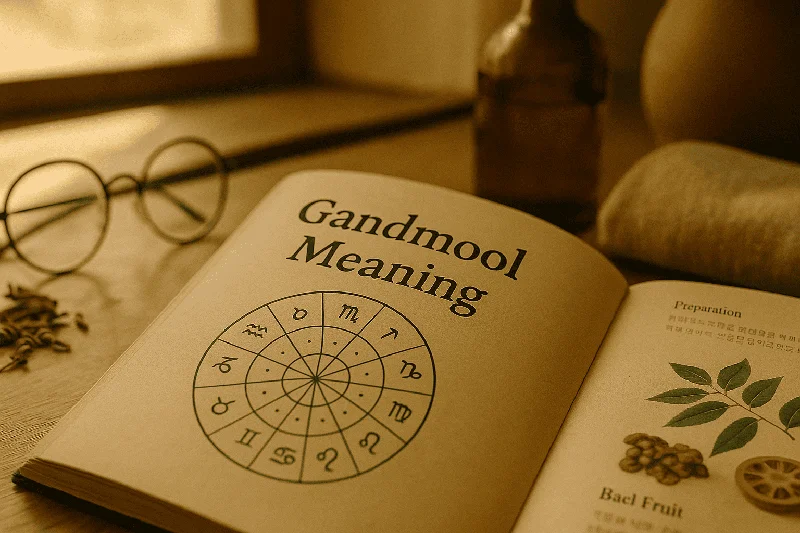
If your child was born under a Gandmool Nakshatra — or if someone told you that you carry Gandmool Dosha in your birth chart — the first thing you need to know is this: Gandmool is not a curse, and it does not doom anyone to a life of suffering. It is a specific astrological condition in Vedic astrology where the Moon occupies one of six particular nakshatras (lunar mansions) at the time of birth. These nakshatras fall at transitional junctures between zodiac signs, which is why traditional texts consider them energetically intense and potentially challenging.
- That said, fear-based interpretations have been exaggerated over centuries. The reality is far more nuanced. Whether Gandmool Dosha actually creates problems depends on the specific nakshatra, its pada (quarter), the degree of the Moon, planetary aspects in the full Kundali, and the Dasha periods running at birth.
- In this comprehensive guide, we break down everything — from the etymology and astrological mechanics to detailed remedies, real-world examples, and a step-by-step action plan for parents.
What Is Gandmool Dosha? Definition & Etymology
Meaning of Gandmool (Gandha + Antha)
The word "Gandmool" is derived from two Sanskrit roots: Gandha (गण्ड) meaning "knot" or "joint," and Mool (मूल) meaning "root" or "beginning." Some scholars also trace the compound to Ganda + Antha, where Antha means "end." Either way, the core idea is the same — Gandmool refers to a junction point, a place where something ends and something new begins.
In Vedic astrology, this junction occurs where specific nakshatras sit at the boundary between two zodiac signs. The Moon positioned at these transition points is believed to carry unstable energy — like standing at a crossroads where two powerful currents collide. This instability is what traditional astrologers call Gandmool Dosha.
A child born when the Moon occupies any of these six nakshatras is said to be "Gandmool born." According to classical texts like Brihat Parashara Hora Shastra, such births require specific remedial measures (Shanti Pooja) to neutralize potential negative effects.
Gandmool Dosha vs Gandanta — Key Differences
These two terms are often used interchangeably, but they are distinct concepts that overlap:
| Feature | Gandmool Dosha | Gandanta |
|---|---|---|
| Definition | Birth under any of the 6 Ganda Mool Nakshatras | Birth specifically at the junction degree (last 3°20' to first 3°20') between water and fire signs |
| Scope | Covers the entire span of 6 nakshatras (each ~13°20') | Covers only a narrow band of ~6°40' at three specific sign transitions |
| Severity | Variable — depends on pada, degree, and planetary position | Generally considered more intense because the transition is exact |
| Nakshatras involved | Ashwini, Ashlesha, Magha, Jyeshtha, Moola, Revati | Only the nakshatras at the three water-fire junctions (Ashlesha-Magha, Jyeshtha-Moola, Revati-Ashwini) |
| Remedy | Gandmool Shanti Pooja | Gandanta-specific rituals, often more elaborate |
- Think of it this way: all Gandanta births are Gandmool births, but not all Gandmool births are Gandanta. A baby born under Ashwini Nakshatra at 10° Aries has Gandmool Dosha but is not in the Gandanta zone.
- A baby born under Ashwini at 0°30' Aries — right at the Pisces-Aries junction — has both.
This distinction matters because the intensity of the dosha, and consequently the remedies required, differ significantly.
The 6 Ganda Mool Nakshatras Explained
Six out of the 27 nakshatras in Vedic astrology are classified as Ganda Mool. They are grouped into two sets based on their planetary rulers:
- Ketu-ruled nakshatras: Ashwini, Magha, Moola
- Mercury (Budh)-ruled nakshatras: Ashlesha, Jyeshtha, Revati
Let's examine each in detail — something most resources fail to do comprehensively.
Ashwini Nakshatra
- Zodiac span: 0°00' – 13°20' Aries
- Ruling planet: Ketu
- Presiding deity: Ashwini Kumaras (celestial twin physicians)
- Symbol: Horse's head
- Nature: Swift, healing, pioneering
- Ashwini marks the very beginning of the zodiac.
- Its Gandmool quality comes from the Pisces-Aries transition — the end of one complete cycle and the start of another. Traditionally, birth in Ashwini's 1st pada (0°–3°20' Aries) is considered most intense because it falls in the Gandanta zone.
When dosha is stronger: First pada, especially if Moon is within 1° of the Aries start. When Jupiter aspects the Moon or the nakshatra lord Ketu is well-placed, the dosha is considerably weakened. Affected family member: Father (according to traditional texts)
Ashlesha Nakshatra
- Zodiac span: 16°40' – 30°00' Cancer
- Ruling planet: Mercury (Budh)
- Presiding deity: Naga (serpent deities)
- Symbol: Coiled serpent
- Nature: Intense, mystical, sometimes secretive
Ashlesha sits at the very end of Cancer, making its 4th pada (26°40'–30° Cancer) the Gandanta zone where Cancer transitions to Leo. This is one of the most sensitive Gandanta points in the zodiac because it involves the junction of the Moon's own sign (Cancer) with the Sun's sign (Leo).
When dosha is stronger: 4th pada, particularly the last 3°20'. Mercury and Moon conjunctions or afflictions amplify effects. Affected family member: Mother
Magha Nakshatra
- Zodiac span: 0°00' – 13°20' Leo
- Ruling planet: Ketu
- Presiding deity: Pitris (ancestral spirits)
- Symbol: Royal throne
- Nature: Authoritative, ancestral, regal
Magha begins Leo right after Ashlesha ends Cancer. Its 1st pada (0°–3°20' Leo) is the Gandanta zone. Interestingly, Magha's connection to Pitris (ancestors) makes Gandmool effects here strongly linked to ancestral karma and paternal lineage issues.
When dosha is stronger: 1st pada with afflicted Ketu. Affected family member: Father / paternal grandfather
Jyeshtha Nakshatra
- Zodiac span: 16°40' – 30°00' Scorpio
- Ruling planet: Mercury (Budh)
- Presiding deity: Indra (king of gods)
- Symbol: Circular talisman / earring
- Nature: Protective, senior, intense
- Jyeshtha occupies the end of Scorpio, one of the most emotionally intense signs. Its 4th pada (26°40'–30° Scorpio) forms the Gandanta with Moola.
- This particular Gandanta — Scorpio to Sagittarius — is widely considered the most powerful and challenging of all three Gandanta zones by many traditional astrologers.
When dosha is stronger: 4th pada, especially with Mars affliction (Scorpio's ruler). Affected family member: Elder brother or elder sibling
Moola Nakshatra
- Zodiac span: 0°00' – 13°20' Sagittarius
- Ruling planet: Ketu
- Presiding deity: Nirriti (goddess of destruction/dissolution)
- Symbol: Tied bunch of roots
- Nature: Investigative, uprooting, transformative
- Moola is perhaps the most feared of all Gandmool nakshatras. Its very name means "root," and its deity Nirriti represents dissolution.
- However, this destructive energy is not always negative — it can manifest as the ability to get to the root of problems, making excellent researchers, surgeons, and investigators.
When dosha is stronger: 1st pada (Gandanta zone), especially if Ketu is conjunct or aspected by malefics. Affected family member: Father-in-law (for females), mother-in-law (for males) — though some texts say the father Recommended mantra: "Om Nirrityai Namah" — recited 108 times daily during the Ketu Dasha period
Revati Nakshatra
- Zodiac span: 16°40' – 30°00' Pisces
- Ruling planet: Mercury (Budh)
- Presiding deity: Pushan (nourishing form of the Sun god)
- Symbol: Fish / drum
- Nature: Nurturing, spiritual, compassionate
- Revati is the final nakshatra of the zodiac — the 27th. Its 4th pada (26°40'–30° Pisces) creates the Gandanta with Ashwini at 0° Aries.
- This is the grand transition: the end of the entire zodiac cycle and the beginning of a new one. Symbolically, it represents the soul's journey from dissolution (Pisces) to new creation (Aries).
When dosha is stronger: 4th pada, particularly when Mercury is debilitated or combust. Affected family member: Mother / maternal relations
Gandanta Zones — Why These Transitions Are Critical
Ashlesha–Magha (Cancer to Leo)
This is the transition from a water sign (Cancer) to a fire sign (Leo). Water and fire are fundamentally incompatible elements. The soul energy at this junction experiences what astrologers describe as a "drowning of fire" or "evaporation of water" — neither element can fully express itself.
Children born in the last degrees of Ashlesha or first degrees of Magha may experience emotional turbulence in early childhood, often manifesting as health challenges or family disruptions within the first few years.
Jyeshtha–Moola (Scorpio to Sagittarius)
Considered the most intense Gandanta by most classical texts. Scorpio's deep, hidden waters meet Sagittarius's transformative fire. The deity association shifts from Indra (protector) to Nirriti (destroyer), creating a profound energetic shift.
A 2018 survey by the Astrological Magazine of India noted that among astrologers surveyed, 78% ranked the Jyeshtha-Moola junction as the most problematic Gandanta point. (Worth noting: this is practitioner opinion, not scientific evidence.)
Revati–Ashwini (Pisces to Aries)
The cosmic "reset button." The last nakshatra of the zodiac meets the first. Pisces dissolves all boundaries; Aries charges forward with new energy. Children born here often display a peculiar mix of extreme sensitivity and fierce independence.

Effects of Gandmool Dosha on Life, Family & Marriage
Impact on Father, Mother, Siblings & Family
Traditional texts associate each Gandmool Nakshatra with potential difficulties for a specific family member:
| Nakshatra | Traditionally Affected Relative | Nature of Effect |
|---|---|---|
| Ashwini | Father | Financial or health challenges for the father |
| Ashlesha | Mother | Emotional or health difficulties for the mother |
| Magha | Father / paternal lineage | Ancestral property disputes or paternal health issues |
| Jyeshtha | Elder siblings | Strained relationship or challenges faced by elder brother/sister |
| Moola | Father-in-law / parents | In-law relationship difficulties; some texts say the father |
| Revati | Mother / maternal side | Issues related to maternal family |
- Important caveat: These are generalizations from classical texts.
- In practice, many astrologers today — including Dr.
- K.N.
- Rao, one of India's most respected Vedic astrologers — have emphasized that a complete Kundali analysis is essential. The mere presence of Gandmool does not guarantee these effects.
When Is Gandmool Dosha Strongest? (Role of Pada, Degree & Planetary Aspects)
Not all Gandmool births are equal.
The dosha is strongest when:
- The Moon falls in a Gandanta pada (1st pada of Ashwini/Magha/Moola or 4th pada of Ashlesha/Jyeshtha/Revati)
- The Moon is within the first or last 1° of the sign junction — the closer to 0° or 30°, the more intense
- The nakshatra lord (Ketu or Mercury) is afflicted — conjunct or aspected by malefic planets like Saturn, Rahu, or Mars
- No benefic aspects on the Moon — absence of Jupiter's or Venus's protective gaze
- The birth occurs during an eclipse or amavasya (new Moon)
Conversely, the dosha is significantly mitigated when Jupiter aspects the Moon, when the nakshatra lord is well-placed, or when the Moon is in a strong pada but away from the exact Gandanta degrees.
How Does Gandmool Affect Marriage?
This is one of the most asked questions, and rightfuly so. In Indian matchmaking (Kundali Milan), Gandmool Dosha is considered during compatibility analysis.
Here's what you should know:
- Double Gandmool matching: If both partners have Gandmool Dosha, some traditions consider it neutralized (similar to the Manglik-Manglik cancellation principle). However this is not universally accepted.
- Gandmool and Ashtakoota matching: Gandmool is not one of the 8 Gunas in Ashtakoota matching, but astrologers often check it separately as an additional factor.
- Practical impact: Gandmool natives may experience delays in marriage, disagreements with in-laws, or initial adjustment difficulties — but these are tendencies, not certainties.
- Remedial effect: If Shanti Pooja has been performed, most astrologers consider the dosha significantly reduced for marriage purposes.
Gandmool Dosha Remedies: Shanti Pooja, Mantras & Pariharas
Gand Mool Nakshatra Shanti Pooja — Procedure & Timing
The primary remedy for Gandmool Dosha is the Gandmool Shanti Pooja, a Vedic ritual specifically designed to pacify the energies of the birth nakshatra.
Here's how it works:
Ideal timing:
- Best: On the 27th day after birth, when the Moon returns to the same nakshatra
- Alternative: On the 27th month after birth
- Extended window: Up to 27 years after birth (though earlier is considered better)
Basic procedure (Vidhi):
- 1.Sankalp — Declaration of intent by the family priest
- 2.Ganesh Puja — Invocation of Lord Ganesha for obstacle removal
- 3.Nakshatra Shanti Japa — Recitation of the specific mantra for the birth nakshatra
- 4.Homam/Havan — Fire ritual with prescribed offerings
- 5.Donation (Daan) — Giving specific items to Brahmins or the needy
- 6.Navagraha Shanti — Pacification of all nine planets
Three Variations of Pooja by Level
| Variation | Japa Count | Duration | Approx. Cost (INR) |
|---|---|---|---|
| Simple Shanti Pooja | 11,000 mantras | 1 day | ₹8,000 – ₹15,000 |
| Medium Shanti Pooja | 27,000 mantras | 1–2 days | ₹15,000 – ₹30,000 |
| Maha Shanti Pooja | 81,000 mantras | 3 days | ₹30,000 – ₹45,000 |
- Costs vary by location, number of priests, and temple.
- Prices as of 2024-2025 for Gokarna, Varanasi, and Ujjain — three popular locations for this ritual.
Unique Ritual Elements
Some traditional Gandmool Shanti procedures include fascinating specific requirements:
- 27 types of plants/herbs placed during the Havan
- Water collected from 27 different places (rivers, wells, tanks) used for Abhishekam
- 27 Brahmins invited for the Maha Shanti variation
- Donation of a cow, gold, and sesame seeds — though modern adaptations often substitute monetary donations
Specific Mantras for Each Gandmool Nakshatra
Most resources vaguely mention "chanting the right mantra" without actually providing them.
Here are the primary mantras:
- Ashwini: "Om Ashwini Kumarabhyam Namah"
- Ashlesha: "Om Sarpebhyo Namah" (or "Om Naga Rajaya Namah")
- Magha: "Om Pitriganaya Namah"
- Jyeshtha: "Om Indraya Namah"
- Moola: "Om Nirritaye Namah"
- Revati: "Om Pushne Namah"
Each mantra is typically chanted 108 times daily as part of personal practice, in addition to the formal Pooja.
Don't wait or self medicate. Start chat with Doctor NOW
A Step-by-Step Guide for Parents: What to Do If Your Baby Is Born Under Gandmool
Here's your practical checklist — from the moment of birth to the completion of remedial measures:
Immediately after birth (Day 1):
- Record the exact time of birth (to the minute) — this is essential for accurate nakshatra calculation
- Get the birth chart (Kundali) prepared by a qualified Jyotish
- Do not panic. Approximately 1 in 4.5 births statistically falls under a Gandmool Nakshatra (6 out of 27 nakshatras)
Within the first week:
- Consult an experienced astrologer to determine the specific pada and degree of the Moon
- Ask about the Gandanta involvement — is the Moon in the junction degrees?
- Get clarity on which variation of Shanti Pooja is recommended
- Begin booking a priest/pandit for the 27th day ceremony
Day 27 (or closest auspicious date):
- Perform Gandmool Shanti Pooja
- The baby's naming ceremony (Namkaran) is often combined with this Pooja
- Complete prescribed donations
Ongoing:
- If suggested by the astrologer, chant the nakshatra-specific mantra regularly
- Annual Nakshatra Shanti on the child's birth nakshatra day (optional but recommended by some traditions)
What if you missed the 27th day? Don't worry — the Pooja can be performed at the 27th month or anytime up to the 27th year. Many families perform it when they first learn about the dosha, regardless of the child's age.
Famous Personalities Born Under Gandmool Nakshatras
One of the biggest fears surrounding Gandmool is that it guarantees misfortune.
Historical and contemporary examples suggest otherwise:
- Dalai Lama — Born under Moola Nakshatra. Despite the "most feared" Gandmool nakshatra, he became one of the world's most revered spiritual leaders.
- Jawaharlal Nehru — Noted by several astrologers to have had Gandmool involvement in his chart, yet became India's first Prime Minister.
- Amitabh Bachchan — Various astrologers have discussed his chart's connection to Gandmool nakshatras. His career had significant ups and downs (including near-bankruptcy in the early 2000s) but ultimate triumph.
These examples don't disprove Gandmool effects — but they demonstrate that Gandmool birth does not prevent extraordinary achievement. The energy of these nakshatras, when channeled correctly, can actually fuel intense drive, resilience, and transformation.
Regional Differences: North India vs South India
Gandmool is interpreted and handled quite differently across India:
| Aspect | North India | South India |
|---|---|---|
| Term used | Gandmool / Ganda Mool Dosha | Ganda Moola Dosham |
| Level of concern | Very high — widespread fear, almost universal Pooja recommendation | Moderate — assessed more carefully with full chart analysis |
| Timing of Pooja | Strictly 27th day preferred | More flexible; some traditions prefer specific Muhurtas regardless of the 27-day rule |
| Rituals | Emphasis on Japa and Homam | Greater emphasis on temple worship and Archana at specific Nakshatra temples |
| Popular Pooja locations | Varanasi, Ujjain, Haridwar | Gokarna, Rameswaram, Kumbakonam |
| Astrologer approach | Often categorical — "Dosha hai, Pooja karo" | More analytical — considers Dasha, Bhukti, and overall chart strength |
The Rational Perspective: A Balanced View
It would be irresponsible to write about Gandmool without acknowledging the sceptical viewpoint.
Here's a balanced assessment:
What traditional belief says: Gandmool birth creates inherent challenges for the native and their family. Remedial Pooja is essential.
What modern/reformist astrologers say: Scholars like Dr. K.N. Rao and Gayatri Devi Vasudev (former editor of The Astrological Magazine) have argued that Gandmool effects are overstated in popular practice.
They emphasize that:
- The full Kundali must be assessed — a strong Jupiter, well-placed Moon, or beneficial Dasha sequence can completely override Gandmool effects
- Statistical studies of Gandmool-born individuals do not show consistently worse life outcomes compared to non-Gandmool births
- The fear industry around Gandmool causes unnecessary anxiety for parents
What science says: There is currently no peer-reviewed scientific study that demonstrates a causal link between lunar nakshatra position at birth and life outcomes. Astrology as a whole remains outside the scope of empirical science.
- Our recommendation: Respect the tradition if it brings peace of mind. The Shanti Pooja is a beautiful, meaningful ceremony. But do not let fear drive your decisions.
- A qualified astrologer who analyzes the complete chart — rather than declaring doom based solely on the birth nakshatra — is worth their weight in gold.
How to Check Gandmool Dosha
To determine if you or your child has Gandmool Dosha:
- 1.Know the exact birth time and date — even a few minutes' difference can change the nakshatra
- 2.Generate a Vedic birth chart (Kundali) — use any reputable Jyotish software or website (Jagannatha Hora is a free, highly accurate option)
- 3.Identify the Moon's nakshatra — check if it falls under Ashwini, Ashlesha, Magha, Jyeshtha, Moola, or Revati
- 4.Check the pada — note which quarter (1st, 2nd, 3rd, or 4th) the Moon occupies
- 5.Consult an astrologer for full interpretation — the nakshatra alone is not sufficient for determining severity
Online Gandmool Dosha calculators can give a quick yes/no answer, but they cannot assess severity, mitigation factors, or recommended remedies specific to your chart.
Frequently Asked Questions (FAQ)
Is Gandmool Nakshatra good or bad?
- Neither inherently good nor bad. Gandmool nakshatras carry intense, transformative energy.
- This energy can manifest as challenges — or as exceptional drive, resilience, and depth of character. The outcome depends on the full birth chart, not just the nakshatra alone.
What happens if a child is born in Gandmool?
Traditional belief holds that the child and/or a specific family member may face health, financial, or relationship challenges. The standard remedy is performing Gandmool Shanti Pooja on the 27th day after birth. However, many Gandmool-born individuals lead perfectly normal, even extraordinary lives.
Can you marry a person with Gandmool Dosha?
Yes. Gandmool Dosha is not a marriage prohibition. Most astrologers recommend that the Shanti Pooja be completed before marriage. If both partners have Gandmool Dosha, some traditions consider the effects neutralized.
Does Gandmool Dosha go away with age?
The dosha itself doesn't "expire," but its effects are believed to diminish after the Shanti Pooja and after the native crosses certain Dasha periods. Many astrologers note that the most critical period is the first 27 years of life.
What if the Shanti Pooja was not done on the 27th day?
It can still be performed. The 27th month after birth is the next preferred window, but the Pooja is considered valid up to the 27th year. Some astrologers perform it for adults who never had it done in childhood.
Are all 6 Gandmool Nakshatras equally dangerous?
No. Moola (especially 1st pada) and Ashlesha (4th pada) are traditionally considered the most intense. Revati and Ashwini in non-Gandanta padas are generally milder.
What is Gandmool Dasha?
This refers to the planetary Dasha (major period) of the nakshatra lord — Ketu or Mercury — running during or shortly after birth. When a Gandmool-born person enters Ketu Dasha or Mercury Dasha, the dosha's effects may become more pronounced, making it an important period for remedial measures.
Final Thoughts
Gandmool Dosha is one of the most discussed — and most misunderstood — concepts in Vedic astrology. The six Ganda Mool Nakshatras (Ashwini, Ashlesha, Magha, Jyeshtha, Moola, and Revati) represent powerful transitional energies. Yes, traditional texts recommend caution and prescribe remedies. But context is everything.
- If you're a parent whose child was born under Gandmool, take a breath. Get the full chart analyzed.
- Perform the Shanti Pooja if it aligns with your beliefs — it's a beautiful tradition that brings families together.
- And remember: some of history's most accomplished individuals carried this so-called dosha.
Need personalized guidance? Consult a qualified Vedic astrologer who will look at your complete Kundali — not just the birth nakshatra. A thorough analysis considers Dasha periods, planetary aspects, house placements, and divisional charts before making any predictions or remedy recommendations.
Scientific Sources
- Ayurvedic herbal medicine and lead poisoning — Gunturu KS et al., 2011, Journal of hematology & oncology
- Safety assessment of ethanolic extract of Canarium strictum Roxb. leaves: Acute and subchronic toxicity studies — Selvam R et al., 2023, Pakistan journal of pharmaceutical sciences
- Safety and Efficacy of the Ayurvedic Formulation Guduchi Ghana Vati as a Preventive Remedy in COVID-19 — Sharma S et al., 2024, Cureus
- Efficacy and safety of eight-week therapy with Ashwagandha root extract in improvement of sexual health in healthy men: Findings of a prospective, randomized, double-blind, placebo-controlled study — Mutha AS et al., 2025, Journal of Ayurveda and integrative medicine
- Herbal Remedies: A Complementary Approach to Diabetes Mellitus Management — Sivakumar A et al., 2025, Journal of pharmacy & bioallied sciences
- Bioactive Molecules from the Alpinia Genus: A Comprehensive Review — Dash S et al., 2020, Current pharmaceutical biotechnology
- Oral healthcare challenges for older Punjabi-speaking immigrants — MacEntee MI et al., 2014, Canadian journal on aging = La revue canadienne du vieillissement
- Severe lead poisoning caused by ayurvedic medicine(https://pubmed.ncbi.nlm.nih.gov/35226924/) — Scherbaum CR et al., 2022, Deutsche medizinische Wochenschrift (1946)
- Natural therapeutics and nutraceuticals for lung diseases: Traditional significance, phytochemistry, and pharmacology — Rahman MM et al., 2022, Biomedicine & pharmacotherapy = Biomedecine & pharmacotherapie
- Herbal Remedies, Nutraceuticals, and Dietary Supplements for COVID-19 Management: An Update — Chavda VP et al., 2022, Clinical complementary medicine and pharmacology
- Anticancer activity of Nigella sativa (black seed) - a review — Randhawa MA et al., 2011, The American journal of Chinese medicine
- Fear of COVID 19 Infection Across Different Cohorts: A Scoping Review — Quadros S et al., 2021, Frontiers in psychiatry
- Triphala's characteristics and potential therapeutic uses in modern health — Bairwa VK et al., 2025, International journal of physiology, pathophysiology and pharmacology
- Chemistry and pharmacology of Withania coagulans: an Ayurvedic remedy — Maurya R, 2010, The Journal of pharmacy and pharmacology
- Eco-friendly synthesized nanoparticles as antimicrobial agents: an updated review — Borehalli Mayegowda S et al., 2023, Frontiers in cellular and infection microbiology
- Withaferin A: From Ancient Remedy to Potential Drug Candidate — Sultana T et al., 2021, Molecules (Basel, Switzerland)
- Complementary and alternative medicine in the (symptomatic) treatment of acute tonsillitis in children: A systematic review — Büttner R et al., 2023, Complementary therapies in medicine
- Medicinally Important Herbal Flowers in Sri Lanka — Gunawardana SLA et al., 2019, Evidence-based complementary and alternative medicine : eCAM
- Global hazards of herbal remedies: lessons from Aristolochia: The lesson from the health hazards of Aristolochia should lead to more research into the safety and efficacy of medicinal plants — Grollman AP et al., 2016, EMBO reports
- Psoralea corylifolia Linn.-"Kushtanashini" — Khushboo PS et al., 2010, Pharmacognosy reviews
Questions from users
How does Jyeshtha Nakshatra influence career choices and success?
Logan
5 days ago
Jyeshtha Nakshatra alone doesn't precisely dictate career choices or success; it must be considered within the full natal chart to understand broader influences. Its association with Mercury suggests analytical skills and communication can be strengths in careers like writing, business, or teaching. The emotionally intense nature of its Scorpio placement can drive ambition and resilience, valuable traits for leadership or crisis management roles. Consult an astrologer for personalized insights and be cautious of decisions based solely on this factor without considering real-world skills and goals.
What is the relationship between Gandmool Dosha and family dynamics?
Rory
15 days ago
Gandmool Dosha can affect family dynamics, especially involving the father or paternal grandfather as you noted. It might stir emotional intensity, seen more in nakshatras like Jyeshtha. It's like how that one family member seems to have a gravitational pull in the emotional climate. Addressing it might involve rituals or mindfulness practices.
What is the role of communication skills in the influence of Mercury on Ganda Mool nakshatras?
Hannah
30 days ago
Mercury’s influence on Ganda Mool nakshatras, like Ashwini, Magha, and Mool, generally highlights communication and intellectual skills. With Mercury’s energy, individuals might experience strong analytical and expressive abilities but also a bit of mental restlessness or indecision due to these nakshatras' dual-sign nature. It’s a mix of strengths and some challenges!
What is the impact of Ketu on relationships for those born under Ganda Mool nakshatras?
Dylan
38 days ago
Ketu's influence on relationships, especially for Ganda Mool nakshatras like Ashwini, Magha, and Mool, can bring complexity. It might lead to feelings of detachment, creating challenges in emotional connections. Relationships may face sudden changes or transformations. It's helpful to cultivate patience, communication, and understanding to balance these effects. Taking time for meditation or spiritual practices can also help.
What does the conjunction of two zodiac signs mean for Ganda Mool nakshatras?
Uriah
48 days ago
Ah, the conjunction of two zodiac signs in Ganda Mool nakshatras is pretty interesting! It means that these nakshatras are located where two zodiac signs meet, like a transition zone. This spot may make their energy feel intense or turbulent. But don’t worry too much – the effects can vary, depending on other influences like planets and doshas in your chart, sometimes balancing out the challenges. Hope this helps!
What is the connection between Ganda Mool nakshatras and mental restlessness?
Stella
58 days ago
Ganda Mool nakshatras' link to mental restlessness can partly come from their position at the junction of two signs. This transition can cause inner turbulence and indecisiveness. Plus, the influence of planets like Mercury adds to it. But they're also about growth and overcoming these challenges, so it's not all bad! Consider focusing on grounding practices to balance this energy.
What is the significance of ancestral heritage in Magha nakshatra individuals?
Samuel
67 days ago
Ancestral heritage is super important in Magha nakshatra folks! Magha is tied to ancestry, authority, and tradition. This connection gives them leadership qualities and respect for their roots. People with this nakshatra often feel a deep responsibility to uphold their family legacy. It's like having powerful ancestral energies guiding them forward! 🌟
How does being born under Ashwini nakshatra influence my personality and relationships?
Natalie
77 days ago
Being born under Ashwini nakshatra often brings you a natural inclination for new beginnings and rapid movement, thanks to its ruling planet, Ketu. You're likely to be energetic and adventurous, which can make you a go-getter in relationships and life in general. However, this same energy can sometimes lead to quick decisions, so balancing this with patience can be helpful. Spiritual growth is a big opportunity here too, so always stay open to transformation!
What transformations can I expect from Ketu's influence in my life?
Claire
87 days ago
With Ketu's influence, you might notice a push towards spiritual growth and letting go of old habits or attachments. It's not always easy, cause Ketu can bring sudden disruptions or changes, but it’s about evolving and finding deeper meaning. It's like clearing out space in your life for something new and meaningful! So, watch for shifts and embrace the journey. Keep an open heart!
Is it safe to make major life decisions during a Ganda Mool nakshatra phase?
Zoey
96 days ago
Making major life decisions during a Ganda Mool nakshatra can be a bit tricky. It's a phase associated with transformation and challenge. But remember, it's not all bad! It's best to look at the whole natal chart and maybe talk to an astrologer who can give insights tailored to your specific circumstances.
Related articles

Body Detox
Krimighatini Vati: Effective Ayurvedic Treatment for Digestive Health
Explore the benefits, proper dosage, uses, and scientific research behind Krimighatini Vati, a potent Ayurvedic medicine for skin health and detoxification.
2,942

Body Detox
Punarnavadi Guggulu Benefits, Dosage, Ingredients, Side Effects
Exploration of Punarnavadi Guggulu Benefits, Dosage, Ingredients, Side Effects
3,245

Body Detox
Shweta Parpati Benefits, Dosage, Ingredients, Side Effects
Exploration of Shweta Parpati Benefits, Dosage, Ingredients, Side Effects
3,167

Body Detox
Nitya Virechana – Daily Ayurvedic Detoxification & Purgation Therapy
Explore the benefits of Nitya Virechana, a daily Ayurvedic purgation process designed to detoxify the body, balance doshas, and promote overall wellness through natural healing
3,489

Body Detox
What Is Ayurveda? Ancient Wisdom for Modern Wellness
What is Ayurveda? Discover its meaning, doshas, and philosophy. Learn how this ancient holistic system brings balance to mind, body, and modern life
2,051

Body Detox
Pancha Nimba Churna Benefits, Dosage, Ingredients, Side Effects
Exploration of Pancha Nimba Churna Benefits, Dosage, Ingredients, Side Effects
2,372

Body Detox
Sookshma Triphala: A Potent Ayurvedic Blend for Holistic Wellness
Sookshma Triphala is a versatile and potent Ayurvedic remedy that supports holistic health. Its ability to detoxify, rejuvenate, and balance bodily functions makes it a valuable addition to your wellness routine.
2,635

Body Detox
Pitta Body Part: The Ayurvedic Key to Balance, Energy, and Vitality
In Ayurveda, pitta dosha governs transformation. It’s the element that takes the raw materials of life — food, information, sunlight, even emotions — and cooks them into something we can actually use. It’s metabolism, digestion, comprehension. Pitta’s pla
2,631

Body Detox
Kapha Dosha in Ayurveda: How to Balance It with Diet, Lifestyle & Real-Life Tools
If you’ve ever felt sluggish, bloated, emotionally stuck, or just plain heavy — like your body’s moving through molasses — chances are Kapha might be at play. No, it’s not some trendy new supplement or obscure Instagram health hack. Kapha is one of the th
3,170

Body Detox
Swarjika Kshara – Traditional Ayurvedic Alkaline Formulation & Uses
Explore Swarjika Kshara, a traditional Ayurvedic alkaline preparation, its therapeutic benefits, preparation methods, and applications in holistic healing.
4,655
Related consultations on the topic
Legal
Additional Documents
© 2024 Ask Ayurveda. All rights reserved.