Ask Ayurvedic doctor a question and get a consultation online on the problem of your concern in a free or paid mode. More than 2,000 experienced doctors work and wait for your questions on our site and help users to solve their health problems every day.
FREE! Ask Ayurvedic Doctors 24/7

 Fast responses
 1000+ verified doctors
Body DetoxEar, Nose, and Throat DisordersGeriatrics & RejuvenationImmunodeficiencyInfertility TreatmentNutritionOrthopedic DisordersPediatricsRespiratory DisordersSexually Transmitted Diseases (STDs)Surgery RecoveryUrological DisordersVascular DisordersDental DisordersEndocrinological DisordersGastrointestinal DisordersYoga TherapyGeneral MedicineAllergic DisordersCardio DisordersGynecology and ObstetricsCosmetologySkin and Hair DisordersEye DisordersInfectious DiseasesMental DisordersNeurological DisordersOncologyPanchakarmaSexual Health & DisordersSports Medicine
Published on 02/27/25
(Updated on 07/07/26)
3,446
Katakakhadiradi Kashayam Uses – A Natural Ayurvedic Remedy
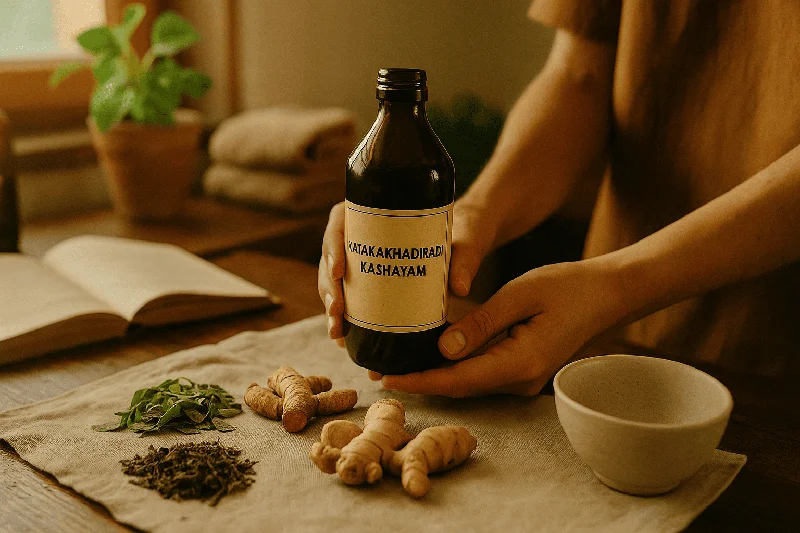
Katakakhadiradi Kashayam is a classical Ayurvedic decoction (kashayam) primarily used for managing diabetes mellitus (Prameha) and related metabolic disorders. Rooted in the ancient text Sahasrayogam, this polyherbal formulation combines herbs like Kathaka, Khadira, Amalaki, and Haridra to help regulate blood sugar levels, purify the blood, and prevent diabetic complications. If you're searching for a time-tested Ayurvedic approach to blood sugar management — backed by both classical wisdom and emerging research — this guide covers everything you need to know, from ingredients and dosage to clinical evidence and safety.
What Is Katakakhadiradi Kashayam?
- Katakakhadiradi Kashayam is a traditional Ayurvedic water-based herbal decoction belonging to the Kashayam (Kwath) category of formulations. The preparation involves boiling coarsely powdered herbs in water, reducing the volume to one-quarter, and filtering the liquid.
- This process extracts water-soluble active phytochemicals — tannins, alkaloids, flavonoids, and curcuminoids — into a concentrated, bioavailable form.
Unlike single-herb remedies, Katakakhadiradi Kashayam uses a synergistic blend of botanicals that work on multiple pathways simultaneously: improving insulin sensitivity, protecting pancreatic beta cells, purifying blood, and balancing the Kapha and Pitta doshas that Ayurveda identifies as the root cause of Prameha (diabetes).
Classical Reference & Origin
The formulation is documented in Sahasrayogam, one of the most widely referenced Ayurvedic formularies, particularly popular in the Kerala tradition of Ayurveda. The text categorizes it under Kashaya Prakarana (the chapter on decoctions) and prescribes it specifically for Prameha and Prameha-related complications.
Some scholars also reference related formulations in Ashtanga Hridayam by Vagbhata, though the specific combination as "Katakakhadiradi" with its full ingredient list is most precisely documented in Sahasrayogam. The Shloka (Sanskrit verse) listing the ingredients confirms its authenticity as a classical — not proprietary — formulation, meaning any qualified Ayurvedic pharmacy can prepare it following traditional guidelines.
Meaning of the Name
The name itself reveals the key ingredients:
- Kataka — refers to Strychnos potatorum (clearing nut tree)
- Khadira — refers to Acacia catechu (catechu tree)
- Adi — a Sanskrit suffix meaning "and others" (indicating additional herbs in the formula)
- Kashayam — means decoction
So the name literally translates to "a decoction beginning with Kataka and Khadira, along with other herbs."
Kashayam (Liquid) vs Kashayam Tablets — Which Form to Choose?
This is a question almost no one answers clearly, but it matters a lot practically.
| Feature | Kashayam (Liquid) | Kashayam Tablet (Kwatham) |
|---|---|---|
| Form | Concentrated herbal decoction | Dried, compressed tablet |
| Bioavailability | Higher — pre-extracted, readily absorbed | Slightly lower — must dissolve first |
| Taste | Bitter and astringent (can be unpleasant) | Minimal taste, easier to swallow |
| Convenience | Requires measuring, diluting, warming | Portable, no preparation needed |
| Shelf Life | Shorter (typically 2–3 years if sealed) | Longer (usually 3–5 years) |
| Traditional Preference | Considered more potent by classical texts | Modern adaptation for compliance |
| Best For | Patients comfortable with traditional medicine | Those who travel often or dislike bitter taste |
- Bottom line: If potency is your priority and you can handle the taste, liquid Kashayam is traditionally considered superior.
- Tablets are a practical modern alternative for convenience — and they do work, just possibly with slightly delayed absorption. Consult your Ayurvedic practitioner (Vaidya) to decide which suits your constitution.
Key Ingredients & Their Roles
Understanding what goes into Katakakhadiradi Kashayam helps you appreciate why it's effective. Each herb plays a specific pharmacological role, and together they create a multi-targeted anti-diabetic formulation.
Kathaka (Strychnos potatorum) — Clearing Agent & Blood Sugar Support
Known as the "clearing nut tree," Kathaka has been traditionally used as a water purifier in Indian villages — and it functions similarly inside the body. It acts as a "bio-purifier," helping to clear metabolic toxins (Ama) from the blood and supporting healthy glucose metabolism. Research has identified that seed extracts of Strychnos potatorum exhibit hypoglycemic activity by enhancing peripheral glucose utilization.
Khadira (Acacia catechu) — Blood Purifier & Skin Protector
Khadira is one of the most respected blood-purifying herbs in Ayurveda.
Its heartwood is rich in catechins and epicatechins — powerful antioxidants that:
- Purify blood and lymphatic tissue (Rakta and Rasa Dhatu)
- Protect against diabetic skin manifestations such as carbuncles, boils, and slow-healing wounds
- Exhibit anti-inflammatory properties that benefit diabetic neuropathy-related inflammation
In classical Ayurveda, Khadira is considered the herb of choice for any condition where blood impurity contributes to disease.
Amalaki (Emblica officinalis) — Rasayana & Antioxidant Powerhouse
Amalaki (Indian gooseberry or Amla) needs little introduction. It's one of nature's richest sources of vitamin C and functions as a Rasayana (rejuvenating agent).
In the context of diabetes:
- It reduces oxidative stress on pancreatic beta cells
- A 2011 study published in the International Journal of Food Sciences and Nutrition found that 1–3 grams of amla powder daily significantly reduced fasting and post-prandial blood glucose levels in both diabetic and non-diabetic subjects
- It improves lipid profiles — a critical benefit since diabetics often have dyslipidemia
Haridra (Curcuma longa) — Anti-inflammatory & Insulin Sensitizer
Turmeric's active compound, curcumin, has been extensively studied for its role in diabetes management.
In this formulation, Haridra:
- Reduces insulin resistance by improving insulin receptor sensitivity at the cellular level
- Decreases inflammatory markers (TNF-α, IL-6) that contribute to metabolic syndrome
- A 2012 randomized controlled trial published in Diabetes Care demonstrated that curcumin supplementation in pre-diabetic individuals significantly reduced the number who progressed to Type 2 diabetes over a 9-month period
Other Important Ingredients
Beyond the primary herbs, Sahasrayogam lists several supporting ingredients that enhance the formulation's efficacy:
| Sanskrit Name | Botanical Name | English Name | Primary Role |
|---|---|---|---|
| Kataka | Strychnos potatorum | Clearing Nut | Hypoglycemic, bio-purifier |
| Khadira | Acacia catechu | Catechu / Black Cutch | Blood purifier, skin protector |
| Amalaki | Emblica officinalis | Indian Gooseberry | Antioxidant, Rasayana |
| Haridra | Curcuma longa | Turmeric | Anti-inflammatory, insulin sensitizer |
| Daruharidra | Berberis aristata | Indian Barberry | Berberine source, hepatoprotective |
| Lodhra | Symplocos racemosa | Lodh Tree | Astringent, supports Kapha balance |
| Devadaru | Cedrus deodara | Himalayan Cedar | Anti-inflammatory, analgesic |
| Nyagrodha | Ficus benghalensis | Banyan Tree | Hypoglycemic, astringent |
| Udumbara | Ficus racemosa | Cluster Fig | Hypoglycemic, wound healing |
| Ashwattha | Ficus religiosa | Sacred Fig / Peepal | Antioxidant, antidiabetic |
Note that several Ficus species are included — this is significant because Ficus bark and leaf extracts have demonstrated consistent hypoglycemic activity across multiple in-vivo studies.
Ayurvedic Pharmacology (Rasa Panchaka)
This is an area that no competitor covers properly, yet it's fundamental to understanding how the medicine works from an Ayurvedic perspective.
Dosha Action (Kapha-Pitta Shamaka)
Ayurveda classifies diabetes (Prameha) primarily as a Kapha-Pitta disorder. Excess Kapha leads to sluggish metabolism, insulin resistance, and accumulation of Meda (fat tissue), while vitiated Pitta causes inflammatory damage to tissues.
Katakakhadiradi Kashayam acts as a Kapha-Pitta Shamaka — it pacifies both these doshas without significantly aggravating Vata. This is clinically important because many anti-diabetic herbs are bitter (Tikta Rasa) and astringent (Kashaya Rasa), which can aggravate Vata in long-term use. The inclusion of Rasayana herbs like Amalaki helps counterbalance this tendency.
Rasa, Guna, Veerya, Vipaka
| Parameter | Predominant Quality |
|---|---|
| Rasa (Taste) | Tikta (Bitter), Kashaya (Astringent), with Amla (Sour) secondary note |
| Guna (Properties) | Laghu (Light), Ruksha (Dry) |
| Veerya (Potency) | Sheeta (Cooling) |
| Vipaka (Post-digestive effect) | Katu (Pungent) |
| Prabhava (Special action) | Pramehahara (Anti-diabetic) |
The cooling potency (Sheeta Veerya) is therapeutically significant — it counters the inflammatory "heat" component of metabolic syndrome, while the light and dry qualities (Laghu, Ruksha Guna) directly oppose the heavy, oily qualities of excess Kapha that drive insulin resistance.
Uses & Benefits of Katakakhadiradi Kashayam
Diabetes Mellitus (Prameha) — Primary Indication
- The foremost indication for Katakakhadiradi Kashayam is Prameha, which correlates closely with diabetes mellitus in modern medicine.
- Ayurveda describes 20 types of Prameha — 10 caused by Kapha, 6 by Pitta, and 4 by Vata. This formulation is particularly effective for Kapha and Pitta types, which correspond clinically to Type 2 diabetes mellitus and pre-diabetic metabolic syndrome.
The formulation works by addressing the Samprapti (pathogenesis) at multiple levels: clearing Ama from Meda Dhatu (fat tissue), restoring Agni (metabolic fire), and reducing Kleda (excess biological moisture that manifests as glycosuria).
Blood Sugar Level Management
Beyond the Ayurvedic framework, the herbs in this kashayam have demonstrable effects on blood sugar through modern pharmacological mechanisms:
- Enhancing insulin secretion from surviving beta cells
- Improving peripheral glucose uptake in muscle and adipose tissue
- Inhibiting intestinal alpha-glucosidase, slowing carbohydrate absorption
- Reducing hepatic glucose output (gluconeogenesis)
A study published in the Journal of Pharmaceutical Research International (JPRI) evaluated the antidiabetic activity of Katakakhadiradi Kashayam in streptozotocin-induced diabetic rats. The results showed significant reduction in fasting blood glucose levels, with the herbal decoction group showing improvement comparable to standard anti-diabetic drugs over a 28-day study period.
Reducing Insulin Resistance
Insulin resistance — where cells stop responding efficiently to insulin — is the hallmark of Type 2 diabetes.
Two key ingredients target this specifically:
- Curcumin (from Haridra) activates AMPK (AMP-activated protein kinase), a master metabolic regulator that improves insulin signaling
- Amalaki reduces oxidative stress-mediated damage to insulin receptors
This dual mechanism makes the kashayam relevant not just for diagnosed diabetics but also for individuals with metabolic syndrome or pre-diabetes who want to intervene early.
Prevention of Diabetic Complications
One of the most valuable — and often overlooked — benefits of Katakakhadiradi Kashayam is its potential to prevent or delay diabetic complications.
Diabetic Neuropathy
Chronic hyperglycemia damages peripheral nerves, causing numbness, tingling, and pain (especially in feet and hands). The anti-inflammatory properties of Khadira and the neuroprotective effects of curcumin may help reduce nerve inflammation and oxidative damage that drives neuropathy progression.
Diabetic Carbuncles & Skin Manifestations
Diabetic patients frequently develop recurrent skin infections, boils, carbuncles, and slow-healing wounds due to impaired immunity and poor circulation. Khadira's blood-purifying action (Rakta Shodhaka) and Amalaki's immune-boosting properties address this vulnerability directly.
Dyslipidemia & Cardiovascular Risk
A ResearchGate-indexed study examined the effect of Katakakhadiradi Kashayam on lipid profiles in Type 2 diabetic patients and found improvements in total cholesterol, triglycerides, and LDL-C levels. Since cardiovascular disease is the leading cause of death in diabetics, this lipid-modulating activity is clinically very significant.
Blood Purification & Skin Health
While diabetes management is the primary use, the kashayam also benefits skin conditions related to blood impurity — including chronic urticaria, mild eczema, and acne — largely through Khadira's potent Rakta Shodhaka (blood-purifying) action. This makes it occasionally prescribed for non-diabetic conditions where blood purification is indicated.
Dosage, Administration & Duration
Standard Dosage for Adults
| Parameter | Recommendation |
|---|---|
| Liquid Kashayam dose | 10–15 ml per dose |
| Dilution | Mix with 30–45 ml lukewarm water (1:3 ratio) |
| Frequency | Twice daily |
| Timing | Before meals (empty stomach preferred), typically 30 minutes before breakfast and dinner |
| Tablet form dose | 1–2 tablets, twice daily, with warm water |
- Important: Always follow your Vaidya's (Ayurvedic physician's) prescribed dosage.
- The above is a general guideline — your practitioner may adjust based on your Prakriti (constitution), severity of condition, and concurrent medications.
Anupana (Adjuvants)
In Ayurveda, the vehicle used to take medicine (Anupana) can enhance its action.
For Katakakhadiradi Kashayam:
- Lukewarm water is the standard anupana
- Honey (1 teaspoon) may be added as anupana in Kapha-dominant Prameha — honey has its own mild hypoglycemic properties and improves palatability
- Avoid cold water, milk, or fruit juices as vehicles, as they can interfere with the kashayam's astringent action
Recommended Duration of the Course
This is a gap that almost every other source leaves unaddressed.
Here's what classical and clinical practice suggests:
- Initial course: 1–3 months minimum for noticeable, consistent blood sugar regulation
- Maintenance: Many practitioners recommend 3–6 months for sustained benefits, with periodic breaks (e.g., 3 months on, 2 weeks off)
- Chronic management: For established Type 2 diabetes, some Vaidyas prescribe it as a long-term adjunct therapy with periodic reassessment every 3 months
- Pre-diabetes/prevention: A shorter 6–8 week course may be sufficient, combined with diet and lifestyle modifications
Blood sugar levels should be monitored regularly throughout the course to track response and adjust dosage.
Storage & Shelf Life
- Liquid Kashayam: Store in a cool, dry place away from direct sunlight. Once opened, keep refrigerated and use within 30–60 days. Sealed bottles typically have a 2–3 year shelf life.
- Tablets: Store at room temperature (below 30°C), in the original container. Shelf life is usually 3–5 years.
- Signs of spoilage (liquid form): Unusual odor, mold growth, change in color to very dark brown/black, or fizzing when opened — discard immediately if any of these are observed.
Don't wait or self medicate. Start chat with Doctor NOW
Katakakhadiradi Kashayam vs. Other Anti-Diabetic Ayurvedic Formulations
- Patients often wonder how this kashayam compares to other popular Ayurvedic anti-diabetic medicines.
- Here's an honest comparison:
| Feature | Katakakhadiradi Kashayam | Nishakatakadi Kashayam | Chandraprabha Vati |
|---|---|---|---|
| Primary Focus | Blood sugar + blood purification | Blood sugar + urinary disorders | Urinary & metabolic disorders broadly |
| Form | Liquid decoction / tablet | Liquid decoction / tablet | Tablet (Vati/Gutika) |
| Dosha Target | Kapha-Pitta | Kapha-Pitta-Vata | Tridosha |
| Key Differentiator | Strong blood-purifying (Khadira) component; good for skin complications | Nisha (Turmeric) emphasis; often preferred for urinary Prameha symptoms | Broad-spectrum; also for reproductive & urinary issues |
| Classical Source | Sahasrayogam | Sahasrayogam | Sharangdhara Samhita |
| Diabetic Skin Issues | ★★★★★ (excellent) | ★★★ (moderate) | ★★ (limited) |
| Blood Sugar Control | ★★★★ | ★★★★★ | ★★★ |
Key takeaway: Katakakhadiradi Kashayam is particularly well-suited when diabetes is accompanied by skin problems, blood impurity, or when a strong Kapha-Pitta balancing action is needed. Nishakatakadi Kashayam may be preferred when urinary symptoms (polyuria, turbid urine) dominate. Your Vaidya should select the formulation based on your specific presentation.
Who Should Take It — and Who Should Not
Ideal Patient Profile
- Adults diagnosed with Type 2 diabetes mellitus (as adjunct therapy)
- Pre-diabetic individuals with elevated fasting glucose or HbA1c
- Diabetic patients with recurring skin infections, boils, or slow-healing wounds
- Individuals with metabolic syndrome (obesity + insulin resistance + dyslipidemia)
- Patients with Kapha-Pitta Prakriti showing early Prameha symptoms
Contraindications & Cautions
| Group | Recommendation |
|---|---|
| Pregnant women | Avoid unless specifically prescribed by a qualified Vaidya — some ingredients may stimulate uterine activity |
| Breastfeeding mothers | Use with caution; consult practitioner |
| Children (under 12) | Generally not recommended; pediatric Prameha is managed differently |
| Type 1 diabetes | This formulation targets insulin resistance (Type 2 pathology); not a substitute for insulin in Type 1 |
| Severe kidney disease | Use cautiously — herbal decoctions add to renal processing load |
| Severe liver disease | Use only under medical supervision |
| Known allergy to any ingredient | Discontinue immediately if allergic reactions (rash, itching, swelling) occur |
Interaction with Allopathic Diabetes Medications
This is arguably the most important safety question patients have — and one that almost no source addresses properly.
Can I take Katakakhadiradi Kashayam along with Metformin, Glimepiride, or other oral hypoglycemics?
- In clinical practice, many Ayurvedic physicians prescribe this kashayam alongside conventional anti-diabetic drugs, especially during the transition period
- The risk: Additive hypoglycemia. Both the kashayam and drugs like Glimepiride lower blood sugar — together, they could cause blood sugar to drop too low
- Practical advice: If you're on allopathic medications, do NOT start or stop this kashayam without informing both your Ayurvedic and allopathic doctor. Monitor blood glucose more frequently during the initial 2–4 weeks. Watch for symptoms of hypoglycemia (dizziness, sweating, trembling, confusion)
- Never abruptly stop prescribed allopathic medications and replace them with this kashayam. Any transition should be gradual and medically supervised
Side Effects of Katakakhadiradi Kashayam
Katakakhadiradi Kashayam is generally well-tolerated when taken in prescribed doses.
However, some individuals may experience:
- Mild gastrointestinal discomfort — nausea, stomach upset, or loose stools, particularly in the first few days. This usually resolves as the body adjusts.
- Bitter taste and mild throat irritation — the liquid form has a pronounced bitter-astringent taste that some find unpleasant. Diluting properly with warm water helps.
- Hypoglycemia — if combined with strong anti-diabetic medications or if the dosage is excessive, blood sugar may drop below normal. Symptoms include sweating, shakiness, and dizziness.
- Allergic reactions — rare, but possible if you're sensitive to any ingredient. Discontinue and seek medical attention if you develop skin rash, itching, or breathing difficulty.
- Aggravation of Vata — long-term use without breaks can increase Vata dosha (causing dryness, constipation, or joint stiffness) due to the predominance of Tikta and Kashaya Rasa. This is why periodic breaks and Rasayana supplementation are recommended.
Pathya-Apathya: Diet & Lifestyle During the Course
Ayurveda considers dietary and lifestyle discipline (Pathya) as half the treatment. Taking the kashayam without dietary changes is like, as classical texts put it, "building a dam with one hand and breaking it with the other."
Foods to Favor (Pathya)
- Old rice (Purana Shali) — 1+ year old rice has lower glycemic index
- Barley (Yava) — the single best grain for Prameha according to Charaka Samhita
- Bitter gourd (Karela), drumstick, fenugreek leaves
- Green gram (Moong dal) — light, easy to digest
- Turmeric milk (in moderation) — reinforces the kashayam's action
- Warm water throughout the day
Foods to Avoid (Apathya)
- Sugar, jaggery, and all sweeteners (obviously)
- New rice, refined wheat flour (Maida)
- Curd/yogurt (especially at night) — increases Kapha
- Excessive oil, ghee, and fried food
- Daytime sleep — strongly contraindicated in Prameha; increases Kapha
- Sedentary lifestyle — daily exercise (even brisk walking for 30–45 minutes) is essential
Clinical Research & Scientific Evidence
While Ayurvedic classical evidence for this formulation spans centuries, modern scientific validation is also emerging:
- 1.Antidiabetic activity study (animal model): A study indexed on ResearchGate evaluated Katakakhadiradi Kashayam in streptozotocin-induced diabetic rats. The treatment group showed statistically significant reductions in fasting blood glucose, with improvements in pancreatic histopathology — suggesting the formulation may help protect and regenerate damaged beta cells.
- 2.Lipid profile improvement: The same research line demonstrated significant reductions in total cholesterol and triglycerides in the treatment group compared to diabetic controls, indicating a secondary cardioprotective benefit.
- 3.JPRI published research: A study in the Journal of Pharmaceutical Research International confirmed the kashayam's hypoglycemic activity and suggested mechanisms including alpha-glucosidase inhibition and enhanced insulin sensitivity.
- 4.Individual ingredient evidence: Beyond the whole-formulation studies, each key ingredient (curcumin, amla, Acacia catechu catechins, Ficus species extracts) has substantial independent research supporting anti-diabetic activity — collectively representing hundreds of published studies.
Honest assessment: The whole-formulation clinical evidence is still in the early stages. Most studies are animal models or small-sample clinical observations. Large-scale, randomized, double-blind clinical trials on the complete Katakakhadiradi Kashayam formulation in human Type 2 diabetic patients are needed. However, the ingredient-level evidence and centuries of clinical use provide a reasonable basis for therapeutic confidence.
Frequently Asked Questions (FAQ)
What is Katakakhadiradi Kashayam used for?
It is primarily used for managing Type 2 diabetes mellitus (Prameha), blood sugar regulation, blood purification, and prevention of diabetic complications like skin infections and neuropathy. Some practitioners also prescribe it for metabolic syndrome and skin conditions related to blood impurity.
Is there any permanent cure for diabetes in Ayurveda?
Ayurveda does not typically frame diabetes as "curable" vs. "incurable" in the Western sense. For newly diagnosed Type 2 diabetes (Apathya Nimittaja Prameha), strict adherence to Pathya (diet/lifestyle), Panchakarma, and herbal medicines like Katakakhadiradi Kashayam can sometimes bring blood sugar levels to normal ranges without medication — what modern medicine might call "remission." However, for advanced cases with beta cell damage, long-term management rather than "permanent cure" is the realistic goal.
Which Kashayam is best for diabetics?
Katakakhadiradi Kashayam and Nishakatakadi Kashayam are the two most commonly prescribed kashayams for diabetes. Katakakhadiradi is preferred when skin complications or blood impurity are present, while Nishakatakadi may be chosen when urinary symptoms are dominant. The best choice depends on the individual patient's Dosha imbalance and clinical presentation.
Can I take this kashayam along with my regular diabetes medicines?
Yes, many patients take it alongside allopathic medications under medical supervision. However, concurrent use requires careful blood sugar monitoring due to the risk of additive hypoglycemia. Never make changes to your prescribed medications without consulting both your doctors.
What is the classical textual reference for this formulation?
Katakakhadiradi Kashayam is referenced in Sahasrayogam, a comprehensive Ayurvedic formulary widely used in the Kerala tradition, under the Kashaya Prakarana (chapter on decoctions).
Are there any research papers on Katakakhadiradi Kashayam?
Yes, studies have been published in journals including the Journal of Pharmaceutical Research International and indexed on ResearchGate, examining its antidiabetic activity in animal models and its effects on lipid profiles and pancreatic tissue in Type 2 diabetes. However, large-scale human clinical trials are still limited.
How long should I continue taking it?
Most practitioners recommend a minimum of 1–3 months for initial benefit assessment, with courses of 3–6 months being common for sustained results. Long-term use is possible with periodic breaks, ideally guided by your Ayurvedic physician with regular blood sugar monitoring.
Conclusion — Is Katakakhadiradi Kashayam Right for You?
Katakakhadiradi Kashayam stands out among Ayurvedic anti-diabetic formulations for its multi-targeted approach: blood sugar regulation, blood purification, skin protection, and metabolic correction through Kapha-Pitta balancing. Backed by classical Ayurvedic authority (Sahasrayogam), emerging scientific research, and centuries of clinical practice in Kerala and across India, it offers a credible complementary option for Type 2 diabetes management.
That said, this is not a magic potion. It works best as part of a comprehensive approach that includes proper diet (Pathya), regular exercise, stress management, and — when necessary — coordination with conventional medical care. If you're considering Katakakhadiradi Kashayam, consult a qualified Ayurvedic practitioner who can assess your individual constitution, disease stage, and current medications to create a personalised treatment plan.
Disclaimer: This article is for informational purposes only and does not constitute medical advice. Always consult a qualified healthcare practitioner before starting any new medication or supplement, especially if you are currently taking prescription drugs for diabetes or other conditions.
Scientific Sources
- Effect of Ayurveda water purification method on total dissolved solutes in water — Pruthi Z et al., 2022, Ayu
- Ayurvedic herbal formulations Haridra Khanda and Manjisthadi Kwath (brihat) in the management of allergic rhinitis: A pharmacological study — Bhowmik R et al., 2024, Heliyon
- Inter relationship of Ayurveda and Astrology — Dwivedi JN, 2013, Ayu
- Effect of Neem oil and Haridra on non-healing wounds — Singh A et al., 2014, Ayu
- Role of Dantabija, Haridra, and Zingiber (DHZ) combination to restore health and immunity in mild to moderate COVID-19 patients — Kumar Y et al., 2022, Journal of family medicine and primary care
- Anti-diabetic formulations of Nāga bhasma (lead calx): A brief review — Rajput D et al., 2013, Ancient science of life
- Novel subgroups of adult-onset diabetes and their association with outcomes: a data-driven cluster analysis of six variables — Ahlqvist E et al., 2018, The lancet. Diabetes & endocrinology
- ChatGPT's role in alleviating anxiety in total knee arthroplasty consent process: a randomized controlled trial pilot study — Gan W et al., 2025, International journal of surgery (London, England)
- Theaflavin-3,3'-digallate stabilizes vulnerable plaques by reprogramming metabolic homeostasis in neovascularization via HK2/TIGAR — Cen K et al., 2025, Phytomedicine : international journal of phytotherapy and phytopharmacology
- Ultrasound in placental disorders — D'Antonio F et al., 2014, Best practice & research. Clinical obstetrics & gynaecology
- Kidd Blood Group System — Maheshwari A et al., 2026
- Can Guduchi (Tinospora cordifolia), a well-known ayurvedic hepato-protectant cause liver damage? — Panneer Selvam K et al., 2023, Journal of Ayurveda and integrative medicine
- Medicinal and Beneficial Health Applications of Tinospora cordifolia (Guduchi): A Miraculous Herb Countering Various Diseases/Disorders and its Immunomodulatory Effects — Dhama K et al., 2017, Recent patents on endocrine, metabolic & immune drug discovery
- Humoral immune and adjuvant responses of mucosally-administered Tinospora cordifolia immunomodulatory protein in BALB/c mice — Aranha I et al., 2020, Journal of Ayurveda and integrative medicine
- Indian Ayurvedic medicine: Overview and application to brain cancer — Newton HB, 2024, Journal of Ayurveda and integrative medicine
- Using Guduchi (Tinospora cordifolia) as an eco-friendly feed supplement in human and poultry nutrition — Saeed M et al., 2020, Poultry science
Questions from users
What are the potential side effects of taking Katakakhadiradi Kashayam?
Mia
6 days ago
Katakakhadiradi Kashayam, a traditional Ayurvedic formulation, is generally considered safe when used as directed. However, potential side effects may include gastrointestinal discomfort, such as nausea or diarrhea, especially if taken in high doses. Some individuals may experience allergic reactions to specific herbs in the formulation. It is important to monitor your response and consult a healthcare provider if you experience severe or persistent symptoms. Since large-scale clinical trials are limited, discussing its use with a healthcare professional, especially if you have underlying health conditions or are on other medications, is advisable. Always purchase from reputable sources to avoid contamination risks.
What is the best way to store Katakakhadiradi Kashayam after opening?
Vesper
15 days ago
Once you open the Katakakhadiradi Kashayam, you gotta pop it in the fridge to keep it fresh! Aim to use it within 30 to 60 days after opening. Make sure it’s sealed tight to keep out any moisture or air, which can mess with its potency. Enjoy and take care!
Can I take Katakakhadiradi Kashayam for seasonal allergies or skin reactions?
Alexander
30 days ago
Sure, Katakakhadiradi Kashayam could help with seasonal allergies or skin reactions, especially if they're related to imbalances in Pitta or Kapha doshas. It's got detoxifying properties but make sure you're taking it under advice from an Ayurvedic practitioner. They'll consider your individual constitution (prakriti) and any other imbalances you may have.
What is the role of Katakakhadiradi Kashayam in balancing doshas?
Landon
39 days ago
Katakakhadiradi Kashayam plays a role in balancing doshas by purifying the blood and enhancing liver function, which helps detoxify the body. This process can pacify excess pitta and kapha, improving issues like skin clarity and digestion. For individual needs, it's best paired with other treatments a practitioner might suggest.
What is the best time of day to take Katakakhadiradi Kashayam for skin health?
Jack
48 days ago
For taking Katakakhadiradi Kashayam, it’s usually best in the morning on an empty stomach or maybe in the evening before dinner. This helps it work better with your body's natural rhythms. But hey, everyone's different, so see what works best for you and consult a local practitioner if you're unsure.
Is it safe to take Katakakhadiradi Kashayam on an empty stomach?
Xander
58 days ago
Yeah, you can take Katakakhadiradi Kashayam on an empty stomach, but just keep in mind it can sometimes cause mild digestive upset 'cause it’s detoxifying. If you feel discomfort, try having it after meals instead. Everybody's different, so listen to your body!
Can Katakakhadiradi Kashayam help improve respiratory issues like asthma or bronchitis?
Zuri
68 days ago
Katakakhadiradi Kashayam is crafted with herbs like Vasa that could help with respiratory issues. While it's mainly known for detoxifying properties, Vasa is the standout for respiratory health. It isn't a guaranteed fix for asthma or bronchitis, but it might support your system. Think of this alongside lifestyle changes and professional consultation.
Can I use Katakakhadiradi Kashayam to support my immune system?
Dylan
77 days ago
Katakakhadiradi Kashayam can support the immune system, but it is more known for digestive benefits and detoxifying properties. If you're looking to boost immunity, consider also looking into herbs like Ashwagandha or Tulsi, which are famousmore for immunity support. Always good to chat with an Ayurvedic practitioner for tailored guidance!
Is it safe to use Katakakhadiradi Kashayam during pregnancy or breastfeeding?
Zara
87 days ago
It's a good question! While Katakakhadiradi Kashayam has amazing benefits for detox and skin health, it's best to be cautious during pregnancy and breastfeeding. These are sensitive times, so I'd recommend checking in with an Ayurvedic practitioner or healthcare provider to make sure it's safe for your unique situation. Better to be safe :)
Can Katakakhadiradi Kashayam help with weight loss or maintaining a healthy weight?
Paul
97 days ago
Katakakhadiradi Kashayam isn't specifically for weight loss, but it helps improve digestion and balance doshas, which can indirectly support a healthy weight. By detoxifying the body and improving gut health, it might help you feel lighter and support better metabolism. But for weight loss, a holistic approach including diet, exercise, and lifestyle is key!
Related articles

Body Detox
Which Vegetable Is Good for Gastric Problem and Digestion
Find out which vegetable is good for gastric problem, a full gastric vegetables list, and foods to avoid. Learn best choices and Ayurvedic tips for digestion
6,225

Body Detox
How to Drink Cinnamon Water: Ayurvedic Guide and Benefits
Learn how to drink cinnamon water for weight loss and health, the best time to drink it, and whether you can drink cinnamon water daily or at night
17,869

Body Detox
Navaka Guggulu – Benefits, Dosage, How To Use, Side Effects, Ingredients
Exploration of Navaka Guggulu – Benefits, Dosage, How To Use, Side Effects, Ingredients
4,956
Body Detox
Guggulu Panchapala Churnam: Ayurvedic Benefits and Uses
Guggulu Panchapala Churnam is a powerful Ayurvedic remedy with multiple health benefits, from weight management and pain relief to improved digestion and detoxification.
4,236

Body Detox
Manjishtadi Thailam Benefits, How To Use, Ingredients, Side Effects
Exploration of Manjishtadi Thailam Benefits, How To Use, Ingredients, Side Effects
2,091

Body Detox
Is Clove Good for Health: Ayurvedic Benefits and Modern Uses
Discover if clove is good for health, its benefits, and Ayurvedic uses. Learn about clove water, oil, and dental health properties, plus safe consumption tips
8,038
Body Detox
What Is Kava? Benefits, Effects & How to Use It
Learn what kava is, how it works, and its benefits for anxiety, stress, and sleep. Explore Ayurvedic insights, effects, dosage, and safe use. Find out how it compares to other calming herbs
4,040

Body Detox
What Is Basti in Ayurveda: Panchakarma Therapy and Its Benefits
What is Basti in Ayurveda? Discover its role in Panchakarma, different types, health benefits, and how Basti therapy is used for detox and Vata balancing
9,869

Body Detox
Which Oil Is Best for Navel? Ayurvedic Guide to Navel Oiling
Which oil is best for the navel? Explore Ayurvedic benefits of coconut, castor, mustard, and sesame oils, and how navel oiling supports skin, digestion, and mood
24,400

Body Detox
How to Prepare Fenugreek Water: Ayurvedic Recipes and Benefits
Learn how to prepare fenugreek water at home for hair, weight loss, and daily health. Discover methi water recipe, tips, and Ayurvedic benefits
17,202
Related consultations on the topic
Legal
Additional Documents
© 2024 Ask Ayurveda. All rights reserved.