FREE! Ask Ayurvedic Doctors 24/7

 Fast responses
 1000+ verified doctors
Guggulu Panchapala Churnam: Ayurvedic Benefits and Uses
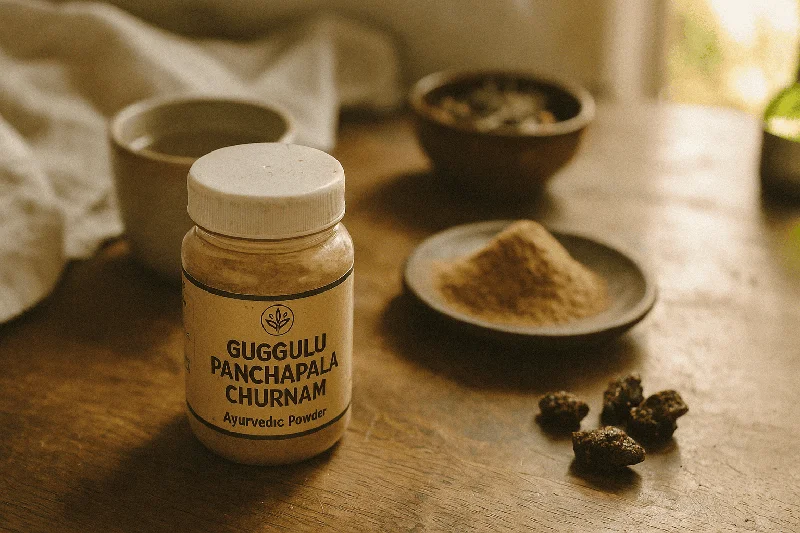
Guggulu Panchapala Churnam is a classical Ayurvedic polyherbal powder formulation primarily used for skin disorders, anorectal conditions, blood purification, and worm infestations. Referenced in the ancient text Sahasrayogam under the Churna Prakarana (powder preparations) section, this churnam combines the resinous power of Guggulu (Commiphora mukul) with Triphala, long pepper, cinnamon, and cardamom. Unlike many Ayurvedic formulations that remain obscure, Guggulu Panchapala Churnam has gained renewed attention due to emerging research on guggulsterones and Triphala's pharmacological properties — making it one of the more scientifically interesting classical powders available today.
In this comprehensive guide, we'll break down everything from its etymology and classical roots to its exact ingredients, mechanism of action, dosage protocols, and how it compares with similar Guggulu-based formulations. Whether you're a practitioner, a student of Ayurveda, or someone considering this churnam for a specific health concern, this article covers what competitors don't.
What Is Guggulu Panchapala Churnam?
- Guggulu Panchapala Churnam is a finely powdered Ayurvedic medicine belonging to the Churna (powder) category of preparations.
- It's a compound formulation — meaning multiple herbs are processed together in specific ratios to create a synergistic therapeutic effect. The formulation has been traditionally prescribed by Ayurvedic physicians for conditions ranging from chronic skin diseases and anal fistula to intestinal parasites and sluggish metabolism.
Etymology and Meaning of the Name
The name reveals the formulation's identity quite clearly when you break it down:
- Guggulu — refers to the oleo-gum resin of Commiphora mukul, the primary and most therapeutically active ingredient
- Pancha — the Sanskrit word for "five"
- Pala — an ancient Ayurvedic unit of measurement equal to approximately 48 grams
- Churnam — means powder
So the name literally translates to "the powder in which Guggulu is used in the quantity of five Palas (approximately 240 grams)." This naming convention was common in classical Ayurvedic texts to help practitioners identify formulations by their distinguishing characteristic — in this case, the unusually large proportion of Guggulu relative to other ingredients.
Classical Reference: Sahasrayogam
- The formulation is documented in Sahasrayogam, a renowned Ayurvedic compendium originating from the Kerala tradition of Ayurveda.
- Specifically, it appears in the Churna Prakarana — the chapter dedicated to powder preparations. Sahasrayogam (literally "a thousand formulations") is one of the most widely referenced texts by Kerala Ayurvedic pharmacies and practitioners. The text provides the ingredient list, proportions, and primary indications, though — as with many classical sources — the pharmacological explanations are encoded in traditional terminology of doshas and dhatus rather than modern biochemistry.
Historical Context in Ayurvedic Tradition
- Guggulu itself has been used in Indian medicine for over 2,500 years, with references dating back to the Atharvaveda and later elaborated in Sushruta Samhita. The combination of Guggulu with Triphala and digestive spices reflects a classical Ayurvedic compounding philosophy: pairing a potent but potentially irritating resin (Guggulu) with digestive herbs (Pippali, Cinnamon, Cardamom) and cleansing agents (Triphala) to enhance bioavailability while reducing gastrointestinal side effects.
- This is not just tradition — it's remarkably similar to modern pharmacological principles of adjuvant therapy.
Ingredients of Guggulu Panchapala Churnam
Understanding the individual ingredients is crucial because each component serves a specific therapeutic role within the formulation. The synergy between these herbs is what makes the churnam more effective than any single ingredient alone.
Complete Ingredient Table with Proportions
| Ingredient | Sanskrit Name | Botanical Name | Part Used | Approximate Quantity |
|---|---|---|---|---|
| Guggulu | Guggulu | Commiphora mukul | Oleo-gum resin | 5 Pala (~240 g) |
| Haritaki | Haritaki | Terminalia chebula | Fruit rind | 1 part |
| Bibhitaki | Vibhitaka | Terminalia bellirica | Fruit rind | 1 part |
| Amalaki | Amalaki | Emblica officinalis | Fruit | 1 part |
| Long Pepper | Pippali | Piper longum | Fruit | 1 part |
| Cinnamon | Twak | Cinnamomum zeylanicum | Bark | 1 part |
| Cardamom | Ela | Elettaria cardamomum | Seed | 1 part |
Note: Many online sources omit cinnamon and cardamom from the ingredient list. However, the classical Sahasrayogam reference includes these as integral components. This discrepancy often arises because some manufacturers follow simplified versions of the original formula.
Guggulu (Commiphora mukul)
Guggulu is the star ingredient and the reason this formulation carries its name. The oleo-gum resin contains active compounds called guggulsterones (E and Z isomers), which have been the subject of significant modern research. A landmark study published in Science (2001) identified guggulsterone as a farnesoid X receptor (FXR) antagonist, which partly explains its cholesterol-lowering properties. Beyond lipid metabolism, Guggulu demonstrates potent anti-inflammatory, antimicrobial, and wound-healing activities.
In Ayurvedic pharmacology, Guggulu is classified as having Tikta (bitter) and Katu (pungent) rasa, Ushna virya (hot potency), and Katu vipaka. It is considered one of the most powerful Ama-digesting substances — meaning it helps break down and eliminate metabolic toxins.
Triphala (Haritaki, Bibhitaki, Amalaki)
- Triphala is arguably the most well-studied Ayurvedic formulation in modern science. A 2017 review in the Journal of Alternative and Complementary Medicine documented its antioxidant, anti-inflammatory, antibacterial, and laxative properties across numerous studies.
- In this churnam, Triphala serves multiple roles:
- Haritaki (Terminalia chebula) — the primary blood purifier and mild laxative; balances all three doshas but especially Vata
- Bibhitaki (Terminalia bellirica) — particularly effective for Kapha-related conditions, respiratory issues, and parasitic infections
- Amalaki (Emblica officinalis) — one of the richest natural sources of vitamin C; powerful antioxidant and Pitta-pacifier
Pippali — Long Pepper (Piper longum)
Pippali functions as a bioavailability enhancer in this formulation — similar to how modern pharmacology uses piperine to increase drug absorption. It contains piperine and piperlongumine, compounds shown in a 2018 Phytomedicine study to enhance the bioavailability of co-administered substances by inhibiting hepatic and intestinal glucuronidation. In traditional terms, Pippali acts as a powerful Deepana (appetite stimulator) and Pachana (digestive) agent while also addressing Kapha and Vata imbalances.
Cinnamon and Cardamom
- These two ingredients are sometimes overlooked but serve important roles. Cinnamon (Cinnamomum zeylanicum) contributes antimicrobial and blood-sugar-regulating properties, while Cardamom (Elettaria cardamomum) acts as a carminative and enhances the flavor profile of the churnam.
- Together, they improve palatability — which might seem trivial, but in Ayurveda, the rasa (taste) experience is itself considered part of the therapeutic action.
Ayurvedic Properties (Rasa, Guna, Virya, Vipaka, Doshic Action)
No competitor has provided a complete Ayurvedic pharmacological profile of this formulation.
Here it is:
| Property | Classification |
|---|---|
| Rasa (Taste) | Predominantly Tikta (Bitter), Katu (Pungent), with secondary Kashaya (Astringent) and Amla (Sour) notes |
| Guna (Qualities) | Laghu (Light), Ruksha (Dry), Tikshna (Sharp/Penetrating) |
| Virya (Potency) | Ushna (Hot) |
| Vipaka (Post-digestive effect) | Katu (Pungent) |
| Doshic Action | Primarily Kapha-Vata Shamaka (reduces Kapha and Vata); may mildly aggravate Pitta in excess doses |
| Primary Action on Dhatus | Rasa (Plasma), Rakta (Blood), Mamsa (Muscle), Meda (Fat) |
| Srotas (Channels affected) | Raktavaha, Purishavaha, Medovaha Srotas |
The overall formulation is predominantly Ushna (heating) in nature due to the dominance of Guggulu, Pippali, and Cinnamon. The Triphala components provide a balancing effect, particularly Amalaki which is cooling. This makes the formula suitable for Kapha and Vata constitutions but requires caution with Pitta-dominant individuals, especially those with active gastritis or acid reflux.
Method of Preparation
The traditional method of preparing Guggulu Panchapala Churnam follows precise steps:
- 1.Individual Processing — Each herb (Haritaki, Bibhitaki, Amalaki, Pippali, Cinnamon bark, Cardamom seeds) is cleaned, dried, and powdered separately to achieve the correct fineness
- 2.Guggulu Purification — Raw Guggulu resin is first purified (Shodhana) by boiling in Triphala Kashaya (decoction) or cow's milk, then dried. This step removes impurities and reduces its potential to irritate the gastric mucosa
- 3.Mixing — The individual powders are combined in the prescribed ratios and mixed thoroughly until completely homogenous
- 4.Sieving — The mixed powder is passed through a fine mesh sieve (traditionally a clean cloth) to ensure uniform particle size
- 5.Storage — The finished churnam is stored in airtight, moisture-proof containers, preferably glass or food-grade plastic, away from direct sunlight
The shelf life of properly prepared and stored Guggulu Panchapala Churnam is generally 2 years from the date of manufacture, according to the Ayurvedic Formulary of India guidelines. Once opened, it should ideally be consumed within 3-4 months. Signs of degradation include clumping, discoloration, rancid smell, or loss of the characteristic aromatic pungency.
Health Benefits and Indications
Skin Disorders (Eczema, Dermatitis, Scabies, Acne)
This is the most frequently cited indication across classical and contemporary sources. The formulation addresses chronic skin conditions through multiple pathways:
- Blood purification — Guggulu and Triphala work as Raktashodhaka (blood cleansers), addressing what Ayurveda considers the root cause of most skin diseases: toxins in the Rakta dhatu (blood tissue)
- Anti-inflammatory action — Guggulsterones have demonstrated inhibition of NF-κB pathway activation in a 2003 study published in The Journal of Biological Chemistry, which directly relates to reduced skin inflammation
- Antimicrobial activity — Particularly relevant for infectious skin conditions like scabies and secondary bacterial infections in eczema
Conditions it's traditionally prescribed for include eczema (Vicharchika), dermatitis, psoriasis, scabies (Pama), non-healing wounds (Dushta Vrana), and chronic acne.
Anorectal Disorders (Anal Fistula, Hemorrhoids, Fissures)
This is an indication that most competitors mention only briefly, but it's actually one of the primary classical uses. In Ayurveda, anal fistula is known as Bhagandara, and it's considered a condition involving all three doshas with predominant vitiation of Pitta and Kapha.
Guggulu Panchapala Churnam addresses anorectal disorders by:
- Reducing inflammation and swelling in the rectal tissues
- Promoting wound healing from inside out — Guggulu's proven wound-healing properties are key here
- Regulating bowel movements through Triphala's gentle laxative effect, preventing straining
- Clearing Ama (toxins) that contribute to fistula tract formation
For hemorrhoids specifically, the churnam's ability to improve venous tone (a property attributed to guggulsterones' effect on vascular smooth muscle) may contribute to symptom relief.
Blood Detoxification and Toxin Removal
- The concept of Raktashodhana (blood purification) in Ayurveda doesn't have a perfect modern equivalent, but it closely aligns with supporting hepatic detoxification pathways and antioxidant defense systems.
- Triphala is a potent antioxidant — a 2005 study in the Journal of Ethnopharmacology showed it scavenges free radicals and chelates iron ions. Combined with Guggulu's hepatoprotective properties, the formulation supports the body's natural detoxification processes.
Worm Infestation (Krimi Roga)
The Katu (pungent) and Tikta (bitter) rasa dominance of this formulation creates an internal environment that's inhospitable to intestinal parasites, according to Ayurvedic theory. Pippali, in particular, has demonstrated anthelmintic activity in preclinical studies. Triphala's laxative action helps expel dead parasites from the intestinal tract.
Cholesterol and Lipid Metabolism
- This is where the modern research on Guggulu gets particularly interesting.
- Guggulsterones have been shown to:
- Lower serum LDL cholesterol and triglycerides (a 1994 study in Cardiovascular Drug Reviews documented a 12-25% reduction in total cholesterol)
- Increase HDL cholesterol levels
- Inhibit hepatic cholesterol biosynthesis through FXR receptor antagonism
While these studies used isolated guggulsterone or standardized Guggulu extracts rather than the full Panchapala Churnam formulation, the presence of Guggulu as the major ingredient (5 Pala, representing the bulk of the formulation) makes this benefit clinically relevant.
Joint Pain and Inflammation (Arthritis)
Guggulu-based formulations have a long history in managing Amavata (rheumatoid arthritis) and Sandhivata (osteoarthritis). The anti-inflammatory mechanism involves inhibition of both COX and LOX pathways — offering a dual anti-inflammatory action that's comparable in mechanism (though not necessarily in potency) to NSAIDs. The warming nature (Ushna virya) of the formulation helps counteract the cold, stiff qualities associated with Vata-type joint disorders.
Digestive Health and Bloating
Pippali, Cinnamon, and Cardamom collectively act as powerful digestive agents. They stimulate Agni (digestive fire), reduce Ama (undigested metabolic waste), and relieve gas and bloating. This makes the churnam useful not just for its primary indications but also as a supportive digestive formula.
Weight Management Support
- The combination of Guggulu's metabolism-boosting properties and Triphala's gentle detoxifying action makes this churnam a supportive aid in weight management programs. A 2009 study in Complementary Therapies in Medicine showed that Guggulu supplementation led to modest but statistically significant reductions in body weight and BMI.
- However, it's important to note — this churnam is not a magic weight-loss powder. It works best as part of a broader program including dietary modification and regular exercise.
Abdominal Tumors (Gulma)
Classical texts mention Gulma as an indication. In Ayurvedic pathology, Gulma refers to abdominal masses or tumors, not necessarily malignant. The churnam's ability to reduce Kapha accumulation and break down abnormal tissue growth (Lekhana action) is the basis for this traditional indication, but any abdominal mass should absolutely be evaluated by a qualified healthcare professional before relying on herbal treatment alone.
How Guggulu Panchapala Churnam Works: Mechanism of Action
Understanding the mechanism requires bridging Ayurvedic and modern pharmacological frameworks.
From the Ayurvedic Perspective:
The formulation works primarily through Deepana (kindling digestive fire), Pachana (digesting toxins), Raktashodhana (blood purification), and Lekhana (scraping/reducing excess tissue). It pacifies Kapha and Vata doshas while stimulating Pitta's digestive aspect without excessively aggravating its inflammatory aspect — a delicate balance achieved through careful ingredient selection.
- The concept of Ama (metabolic toxins) is central. When Agni (digestive fire) is weak, partially digested food creates Ama that circulates and lodges in tissues, causing disease.
- This churnam addresses Ama at multiple levels: Pippali and spices strengthen Agni, Triphala clears Ama from the gut, and Guggulu scrapes Ama from deeper tissues like blood and fat.
From the Modern Pharmacological Perspective:
- Guggulsterones act as nuclear receptor modulators (FXR, pregnane X receptor), influencing cholesterol metabolism, inflammation, and cell differentiation
- Gallic acid and ellagic acid (from Triphala) provide potent antioxidant and anti-inflammatory effects through NF-κB inhibition
- Piperine/Piperlongumine (from Pippali) enhance bioavailability of co-administered compounds and exhibit independent anti-inflammatory and immunomodulatory effects
- Cinnamaldehyde (from Cinnamon) demonstrates antimicrobial and anti-diabetic properties
- The combined effect is multi-target pharmacology — the formulation doesn't act through a single pathway but through simultaneous modulation of multiple biological systems
Dosage and Administration
Standard Adult Dosage
The generally recommended dose is 3–6 grams per day, divided into two doses (morning and evening), taken before or after meals depending on the condition being treated.
| Condition | Dose | Anupana (Vehicle) | Timing |
|---|---|---|---|
| Skin disorders | 3–5 g/day | Warm water or honey | After meals |
| Anorectal disorders | 3–6 g/day | Warm water or buttermilk | Before meals |
| Worm infestation | 3–5 g/day | Honey | On empty stomach |
| Cholesterol management | 3–5 g/day | Warm water | After meals |
| Joint pain | 3–6 g/day | Warm water or castor oil (Eranda taila) | After meals |
| General detox | 2–3 g/day | Warm water | Before meals |
Understanding Anupana (Adjuvants) in Detail
Anupana — the substance used to carry or accompany the medicine — is not a trivial detail in Ayurveda. It significantly impacts how the medicine is absorbed and which tissues it reaches:
- Honey (Madhu) — acts as a Yogavahi (carrier) that enhances penetration into deeper tissues; particularly useful for Kapha conditions and when scraping action is desired. Importantly, honey should never be heated
- Warm water (Ushna Jala) — the most common and safest vehicle; supports Agni and enhances dissolution of the powder
- Buttermilk (Takra) — ideal for anorectal and digestive conditions; its probiotic properties complement the churnam's action
- Ghee (Ghrita) — used when Pitta pacification is needed alongside the churnam's action; also enhances fat-soluble compound absorption
- Castor oil — specifically for Vata-dominant joint conditions; its own anti-inflammatory properties synergize with the churnam
Dosage for Children
For children above 5 years, the dose is typically reduced to 1–2 grams per day, always administered with honey or warm milk. This formulation is generally not recommended for children under 5 years of age without direct supervision from a qualified Ayurvedic practitioner.
Dosage for Elderly Patients
Elderly patients should begin with a lower dose of 2–3 grams per day and gradually increase based on tolerance. The Ushna virya (heating potency) of the formulation can sometimes cause mild acidity in elderly individuals with weakened digestive capacity.
Guggulu Panchapala Churnam vs. Similar Formulations
- One gap that no competitor has addressed is how this formulation compares to other Guggulu-based preparations.
- Here's a practical comparison:
| Formulation | Primary Focus | Key Differentiator | Best For |
|---|---|---|---|
| Guggulu Panchapala Churnam | Skin, anorectal, blood purification | Broad-spectrum with Triphala + spices | Multi-system detoxification |
| Triphala Guggulu | Fistula, hemorrhoids, weight | Simpler formula (Triphala + Guggulu + Pippali) | Focused anorectal treatment |
| Kaishore Guggulu | Gout, skin, blood purification | Contains Guduchi, Ginger, additional herbs | Pitta-type inflammation and gout |
| Yogaraj Guggulu | Joint pain, neuromuscular | Contains 28+ herbs including Chitrak, Rasna | Vata disorders and complex joint conditions |
| Navaka Guggulu | Obesity, lipid metabolism | Contains Triphala + Trikatu + Musta + Vidanga | Aggressive fat metabolism |
The key takeaway: Guggulu Panchapala Churnam is broader in its scope than Triphala Guggulu but more focused than Yogaraj Guggulu. Its inclusion of cinnamon and cardamom gives it better palatability and additional metabolic benefits compared to simpler Guggulu formulations.
Side Effects and Contraindications
Known Side Effects
At recommended doses, Guggulu Panchapala Churnam is generally well-tolerated.
However, potential side effects include:
- Mild gastric irritation — particularly if taken on an empty stomach by Pitta-constitution individuals
- Loose stools — due to the laxative effect of Triphala, especially at higher doses
- Skin rash — rare allergic reaction, usually in individuals sensitive to Guggulu resin
- Excessive body heat — the Ushna virya can cause sensations of warmth, especially during summer months
Contraindications
- Pregnancy — Guggulu has traditionally been contraindicated in pregnancy due to its potential uterine-stimulating properties
- Lactation — insufficient safety data; avoid unless specifically prescribed by a practitioner
- Active gastritis or peptic ulcers — the heating nature and pungent components may aggravate mucosal inflammation
- Bleeding disorders — Guggulu may have mild antiplatelet activity
Compatibility with Modern Medications
This is a critical area that no competitor has addressed adequately:
- Anticoagulants (Warfarin, Heparin) — Guggulu may potentiate blood-thinning effects; concurrent use requires medical supervision
- Hypolipidemic drugs (Statins, Fibrates) — Since guggulsterone independently lowers cholesterol, combining with statins could lead to excessive lipid reduction or increased risk of myopathy. Monitor lipid levels closely
- Thyroid medications (Levothyroxine) — Guggulu has thyroid-stimulating properties; may interfere with thyroid medication dosing
- Antidiabetic drugs — Cinnamon and Guggulu both have hypoglycemic potential; blood sugar monitoring is advisable
- Antibiotics — Pippali's bioavailability-enhancing effect could theoretically increase antibiotic absorption; consult your doctor
Always inform your physician about any Ayurvedic medicines you are taking alongside conventional drugs.
Differences Between Manufacturers
- Several reputable Kerala-based and pan-Indian Ayurvedic pharmacies manufacture Guggulu Panchapala Churnam.
- Key differences include:
- Kottakkal Arya Vaidya Sala (AVS) — One of the most trusted names; follows classical Sahasrayogam proportions strictly. Known for rigorous quality control
- Sitaram Ayurveda — Popular in Kerala; offers 50g packaging that's convenient for personal use
- Vaidyaratnam — Another traditional Kerala manufacturer; their formulation closely follows classical texts
- SNA (Oushadhasala) — Known for affordability without compromising on classical preparation methods
- AVN Ayurveda — Offers both traditional churnam and sometimes tablet forms
The core formulation should be identical across manufacturers if they follow Sahasrayogam. Differences typically arise in raw material sourcing quality, Guggulu purification methods, and storage conditions. When choosing a brand, look for GMP certification and, ideally, third-party lab testing for heavy metals and microbial contamination.
Panchakarma and Supportive Therapies
- Guggulu Panchapala Churnam works best when integrated into a broader therapeutic program.
- Here's how it synergizes with other Ayurvedic interventions:
- Vamana (Therapeutic Emesis) — For Kapha-dominant skin conditions, Vamana before starting the churnam can dramatically improve outcomes
- Virechana (Therapeutic Purgation) — Clears Pitta from the gut and blood; an excellent preparatory procedure before long-term churnam use for skin disorders
- Raktamokshana (Bloodletting) — Specifically indicated for chronic, stubborn skin conditions; traditionally done via leech therapy (Jaloukavacharana) in conjunction with internal medicines like this churnam
- Basti (Medicated Enema) — Particularly useful when the churnam is being used for anorectal disorders; Ksharasutra therapy combined with this churnam is a well-known protocol for anal fistula
Dietary and Lifestyle Recommendations
To maximize the churnam's effectiveness:
- Follow an anti-inflammatory diet — reduce processed foods, excessive sugar, and fried items
- Stay well-hydrated — drink warm water throughout the day to support the detoxification process
- Practice Yoga asanas like Pawanmuktasana (wind-relieving pose) and Bhujangasana (cobra pose) for digestive and skin health
- Pranayama — Kapalabhati and Anulom-Vilom support metabolic balance
- Avoid incompatible food combinations (Viruddha Ahara) — particularly fish with milk, or fruit with meals
Is Guggulu Good for Fatty Liver?
This is a commonly searched question that deserves a dedicated answer. Yes, Guggulu has shown hepatoprotective properties in preclinical studies. A 2012 study published in Food and Chemical Toxicology demonstrated that guggulsterone protected liver cells against oxidative damage and reduced hepatic lipid accumulation in animal models. The Triphala component adds additional liver support through its antioxidant and bile-flow-stimulating actions.
However, Guggulu Panchapala Churnam is not specifically formulated for fatty liver. For targeted fatty liver management, formulations like Arogyavardhini Vati or Punarnavadi Kashayam may be more appropriate. That said, if you're taking this churnam for another condition and also have mild fatty liver, it may provide ancillary benefit.
Frequently Asked Questions (FAQ)
What is the use of Guggul Panchapalam?
Guggul Panchapalam (another spelling of the same formulation) is used primarily for chronic skin diseases like eczema and dermatitis, anorectal conditions like anal fistula and hemorrhoids, intestinal worm infestations, blood purification, and as a supportive aid in cholesterol management. It acts as a broad-spectrum detoxification formula.
Can Guggulu Panchapala Churnam help with weight loss?
It can support weight management as part of a comprehensive program, but it's not a standalone weight-loss remedy. The Guggulu component boosts metabolism and supports lipid breakdown, while Triphala aids gentle detoxification. For meaningful weight loss, combine it with dietary changes, regular exercise, and possibly more targeted formulations like Navaka Guggulu or Medohar Guggulu.
Is Guggulu Panchapala Churnam available in tablet form?
Some manufacturers do offer tablet versions (Vatika or Gulika) for convenience. However, the traditional churnam (powder) form is generally considered more effective in Ayurveda because it begins interacting with the digestive system from the moment it contacts the tongue — the taste (rasa) itself initiates the therapeutic process.
How long should I take Guggulu Panchapala Churnam?
The typical course duration is 4–12 weeks, depending on the condition and severity. Chronic conditions like eczema or recurring fistula may require longer courses with periodic breaks (take for 8 weeks, pause for 2 weeks, then resume). Long-term use beyond 3 months should be monitored by a qualified Ayurvedic physician.
What is the classical reference for Guggulu Panchapala Churnam?
The classical reference is Sahasrayogam, Churna Prakarana. This is a widely used Ayurvedic text from the Kerala tradition that catalogs thousands of formulations across different preparation categories (churna, kashaya, taila, ghrita, etc.).
Can I take this churnam during pregnancy?
No. Guggulu is traditionally contraindicated during pregnancy due to potential uterine-stimulating effects. If you are pregnant or planning to conceive, consult your Ayurvedic practitioner for safer alternatives.
Are there any scientific studies specifically on Guggulu Panchapala Churnam?
A 2023 review article published on ResearchGate examined the role of Guggulupanchapala Choornam in managing complications of Type 2 Diabetes Mellitus, suggesting emerging clinical interest. However, most available research focuses on individual ingredients (Guggulu, Triphala, Pippali) rather than the complete compound formulation. More clinical trials on the whole formula are needed.
Final Thoughts
Guggulu Panchapala Churnam represents a sophisticated example of Ayurvedic polypharmacy — where carefully selected herbs work together in specific proportions to achieve therapeutic outcomes that no single ingredient could accomplish alone. Its classical pedigree, combined with growing scientific validation of its key ingredients, makes it one of the more compelling traditional formulations available today.
Whether you're dealing with stubborn skin conditions, anorectal issues, or simply looking for a systematic detoxification support, this churnam deserves serious consideration — ideally under the guidance of a qualified Ayurvedic practitioner who can tailor the dosage, anupana, and duration to your unique constitutional profile.
Disclaimer: This article is for educational purposes only and does not replace professional medical advice. Always consult a qualified Ayurvedic practitioner or healthcare provider before starting any new supplement or herbal formulation.
Scientific Sources
- Efficacy of Pippali in vardhamana and fixed dosage pattern in primary hypothyroidism - A randomized clinical trial — Shah SB et al., 2022, Journal of Ayurveda and integrative medicine
- Piper longum L.: A comprehensive review on traditional uses, phytochemistry, pharmacology, and health-promoting activities — Biswas P et al., 2022, Phytotherapy research : PTR
- Management of giardiasis by a herbal drug 'Pippali Rasayana': a clinical study — Agarwal AK et al., 1997, Journal of ethnopharmacology
- Ayurvedic management of systemic sclerosis - A case report — Parmar JR et al., 2024, Journal of Ayurveda and integrative medicine
- Role of Agni Karma with Pippali on Kadara- An open labeled clinical trial — Ganjoo N, 2017, Ayu
- Chinese herbal medicine-derived extracellular vesicles as novel biotherapeutic tools: present and future — Zhang J et al., 2024, Journal of translational medicine
- Efficacy of herbal medicine (cinnamon/fennel/ginger) for primary dysmenorrhea: a systematic review and meta-analysis of randomized controlled trials — Xu Y et al., 2020, The Journal of international medical research
- A critical review of Ginger's (Zingiber officinale) antioxidant, anti-inflammatory, and immunomodulatory activities — Ayustaningwarno F et al., 2024, Frontiers in nutrition
- Ayurvedic Herbal Medicines: A Literature Review of Their Applications in Female Reproductive Health — Patibandla S et al., 2024, Cureus
- Zingiber officinale var. rubrum: Red Ginger's Medicinal Uses — Zhang S et al., 2022, Molecules (Basel, Switzerland)
- Piperine: A review of its biological effects — Haq IU et al., 2021, Phytotherapy research : PTR
- Health Benefits of Culinary Herbs and Spices — Jiang TA, 2019, Journal of AOAC International
- [Liver Injury Associated with Turmeric-A Growing Problem: Ten Cases from the Drug-Induced Liver Injury Network [DILIN]](https://pubmed.ncbi.nlm.nih.gov/36252717/) — Halegoua-DeMarzio D et al., 2023, The American journal of medicine
- Herbal formulation "turmeric extract, black pepper, and ginger" versus Naproxen for chronic knee osteoarthritis: A randomized, double-blind, controlled clinical trial — Heidari-Beni M et al., 2020, Phytotherapy research : PTR
- Aromatherapy and Essential Oils: Holistic Strategies in Complementary and Alternative Medicine for Integral Wellbeing — Caballero-Gallardo K et al., 2025, Plants (Basel, Switzerland)
Ask Ayurvedic doctor a question and get a consultation online on the problem of your concern in a free or paid mode.
More than 2,000 experienced doctors work and wait for your questions on our site and help users to solve their health problems every day.
Related articles