
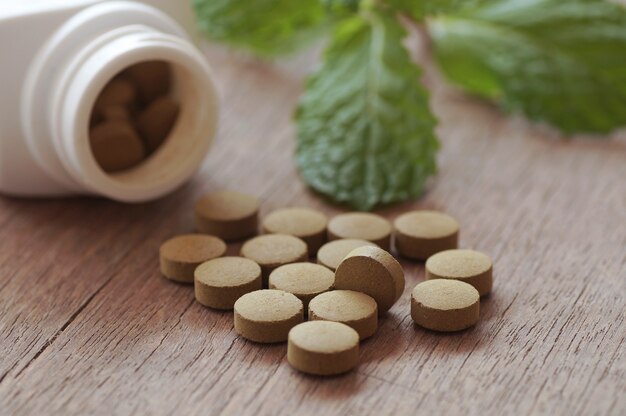
Ask Ayurvedic doctor a question and get a consultation online on the problem of your concern in a free or paid mode. More than 2,000 experienced doctors work and wait for your questions on our site and help users to solve their health problems every day.
FREE! Ask Ayurvedic Doctors 24/7

 Fast responses
 1000+ verified doctors
Body DetoxEar, Nose, and Throat DisordersGeriatrics & RejuvenationImmunodeficiencyInfertility TreatmentNutritionOrthopedic DisordersPediatricsRespiratory DisordersSexually Transmitted Diseases (STDs)Surgery RecoveryUrological DisordersVascular DisordersDental DisordersEndocrinological DisordersGastrointestinal DisordersYoga TherapyGeneral MedicineAllergic DisordersCardio DisordersGynecology and ObstetricsCosmetologySkin and Hair DisordersEye DisordersInfectious DiseasesMental DisordersNeurological DisordersOncologyPanchakarmaSexual Health & DisordersSports Medicine
Published on 03/06/25
(Updated on 07/07/26)
2,709
Dasamoolakatutrayam – Natural Ayurvedic Respiratory Relief & Detoxification
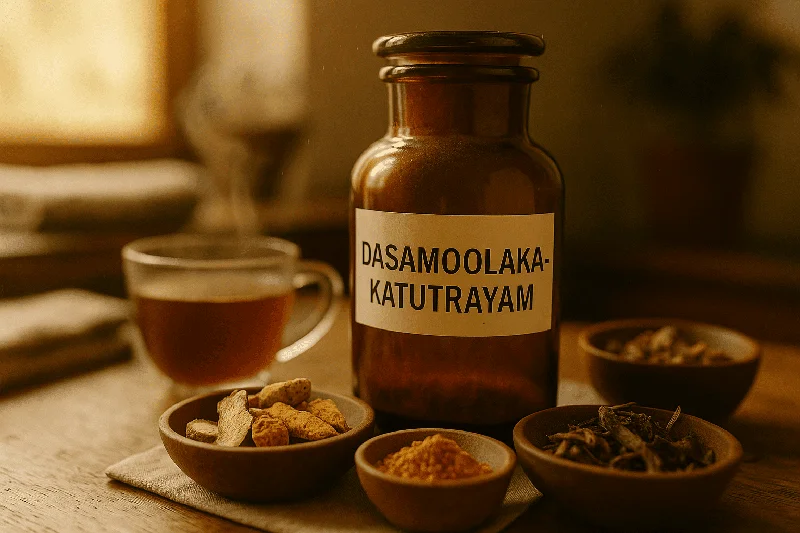
Dasamoolakatutrayam is a classical Ayurvedic herbal formulation primarily used for respiratory disorders such as cough, asthma, bronchitis, rhinitis, and chest congestion. It combines the anti-inflammatory power of Dasamoola (a group of ten medicinal roots) with the expectorant and bioavailability-enhancing action of Katutraya (Trikatu — three pungent herbs) and the bronchodilatory properties of Vasa (Adhatoda vasica). Originally documented in Sahasrayogam, a foundational text of the Kerala Ayurveda tradition, this formula works by pacifying aggravated Kapha and Vata doshas, clearing airway obstruction, and supporting the body's natural detoxification pathways.
If you've been searching for a natural, time-tested remedy for recurrent coughs, sinus headaches, or wheezing — this guide covers everything you need to know. From the exact ingredients and pharmacological mechanisms to dosage, side effects, drug interactions, and even the best season to take it.
What Is Dasamoolakatutrayam Kashayam?
- Dasamoolakatutrayam Kashayam is a polyherbal decoction (kashayam) that belongs to the vast pharmacopoeia of classical Ayurvedic medicine.
- It's available in multiple forms — liquid decoction, compressed tablets (kwath tablets), and gulika (pills) — each designed for convenience while preserving therapeutic efficacy.
But what exactly does the name mean? And where does it come from?
Meaning of the Name: Dasamoola + Katutraya + Am
The name is a Sanskrit compound word, and breaking it down reveals the formula's logic:
- Dasam (दश) = Ten
- Moola (मूल) = Roots
- Katu (कटु) = Pungent
- Traya (त्रय) = Three (a group of three)
- Am = a grammatical suffix indicating "containing" or "made of"
So, Dasamoolakatutrayam literally translates to "that which is made of ten roots and three pungent substances." This isn't random nomenclature — it's a precise pharmacological descriptor. The ten roots provide deep-tissue anti-inflammatory and analgesic action, while the three pungent herbs (ginger, black pepper, long pepper) enhance digestion of the formula itself, boost bioavailability, and act as potent expectorants.
No other Ayurvedic formulation combines these two classical groups in quite this ratio for respiratory health, which is why the name is so specific — it's essentially the formula's identity card.
Classical Reference & Origin in Sahasrayogam
Dasamoolakatutrayam finds its primary reference in the Sahasrayogam (सहस्रयोगम्), a classical Ayurvedic text that compiles over a thousand formulations and is considered one of the most authoritative compendiums of the Kerala Ayurveda tradition. The text is attributed to the scholarly lineage of Kerala Vaidyas and has been a cornerstone of clinical Ayurvedic practice in South India for centuries.
The original Sanskrit sloka describing this formulation reads:
> दशमूलकटुत्रयं वासा काषायसाधितम् |
> कासश्वासप्रतिश्यायशिरःशूलकटीग्रहान् |
> गलग्रहस्वरभेदपार्श्वशूलांश्च नाशयेत् ||
Translation: The kashayam prepared from Dasamoola (ten roots), Katutraya (three pungents), and Vasa destroys cough, asthma, rhinitis, headache, low back pain (stiffness of waist), throat congestion, hoarseness of voice, and pain in the flanks.
This sloka is notable because it lists the exact therapeutic indications right alongside the ingredients — something that makes it clinically actionable even without additional commentary.
History in the Kerala Ayurveda Tradition
Kerala has a unique position in the Ayurvedic world. While North Indian traditions lean heavily on texts like Charaka Samhita and Sushruta Samhita, Kerala Vaidyas developed an extensive parallel tradition rooted in Ashtanga Hridayam (by Vagbhata) and regional compilations like Sahasrayogam and Chikitsamanjari.
Dasamoolakatutrayam emerged from this tradition as a first-line respiratory formula — one that practitioners in Kerala have been prescribing for generations, long before it became commercially available in tablet form. The humid, tropical climate of Kerala makes respiratory conditions particularly prevalent during the monsoon (Varsha Ritu) and late winter (Shishira Ritu), which likely drove the development of specialized formulas like this one.
Key Ingredients & Composition
Understanding Dasamoolakatutrayam requires knowing its three pillars: the Dasamoola group, the Katutraya (Trikatu) group, and Vasa. Each has a distinct role, and together they create a synergy that no single herb can achieve alone.
Dasamoola — The Group of 10 Roots
Dasamoola is itself a classical grouping divided into two sub-groups of five:
Brihat Panchamoola (Five Greater Roots — from trees):
| Sanskrit Name | Botanical Name | Part Used | Key Action |
|---|---|---|---|
| Bilva | Aegle marmelos | Root | Anti-inflammatory, digestive |
| Agnimantha | Premna integrifolia | Root | Analgesic, anti-arthritic |
| Shyonaka | Oroxylum indicum | Root | Anti-inflammatory, antipyretic |
| Patala | Stereospermum suaveolens | Root | Bronchodilatory, antioxidant |
| Gambhari | Gmelina arborea | Root | Immunomodulatory, anti-edema |
Laghu Panchamoola (Five Lesser Roots — from shrubs/herbs):
| Sanskrit Name | Botanical Name | Part Used | Key Action |
|---|---|---|---|
| Shalaparni | Desmodium gangeticum | Root | Anti-asthmatic, cardiotonic |
| Prishniparni | Uraria picta | Root | Anti-inflammatory, febrifuge |
| Brihati | Solanum indicum | Root | Expectorant, Kapha-reducing |
| Kantakari | Solanum surattense | Root | Bronchodilatory, anti-tussive |
| Gokshura | Tribulus terrestris | Root | Diuretic, anti-inflammatory |
The combined Dasamoola group is traditionally understood to pacify both Vata and Kapha doshas while being anti-inflammatory (shothaghna), analgesic (vedanasthapana), and detoxifying. A 2016 review published in the Journal of Ayurveda and Integrative Medicine confirmed that Dasamoola possesses significant anti-inflammatory and analgesic activity in preclinical models, supporting its centuries-old traditional use.
Katutraya (Trikatu) — The Three Pungents
| Sanskrit Name | Botanical Name | Part Used | Proportion |
|---|---|---|---|
| Shunti (Dry Ginger) | Zingiber officinale | Rhizome | Equal part |
| Maricha (Black Pepper) | Piper nigrum | Fruit | Equal part |
| Pippali (Long Pepper) | Piper longum | Fruit | Equal part |
Trikatu is arguably the most well-researched Ayurvedic combination in modern pharmacology.
Here's why it's so critical in this formula:
- Piperine from black pepper increases the bioavailability of co-administered compounds by up to 2,000% (Shoba et al., 1998, Planta Medica). This means the active compounds from the Dasamoola roots get absorbed more efficiently.
- 6-Gingerol and 6-Shogaol from ginger have demonstrated potent anti-inflammatory activity by inhibiting COX-2 and 5-LOX pathways (Grzanna et al., 2005, Journal of Medicinal Food).
- Piperlongumine from long pepper has shown bronchodilatory and anti-asthmatic effects in animal studies (Sunila & Kuttan, 2004).
In Ayurvedic terms, Trikatu is classified as Deepana (appetite-stimulating) and Kaphaghna (Kapha-destroying) — it essentially "burns through" the thick, sticky mucus that characterizes Kapha-type respiratory conditions.
Vasa (Adhatoda vasica) — The Respiratory Powerhouse
Vasa is often called the "Ayurvedic bronchodilator," and for good reason. The leaves of Adhatoda vasica contain vasicine and vasicinone, two alkaloids that have been extensively studied for their:
- Expectorant action — they stimulate bronchial secretions, making mucus thinner and easier to expel
- Bronchodilatory action — a 2011 study in Phytomedicine showed that vasicine produces relaxation of bronchial smooth muscle comparable to theophylline
- Anti-tussive action — vasicine demonstrates cough-suppressant activity through central and peripheral mechanisms
Fun fact: the modern pharmaceutical drug bromhexine (found in common OTC cough syrups) was actually developed as a synthetic derivative of vasicine. So when you take Dasamoolakatutrayam, you're consuming the natural precursor of a widely used allopathic expectorant.
Why This Combination Works: Synergistic Action
The genius of Dasamoolakatutrayam lies in its multi-target approach:
- Dasamoola reduces inflammation in the respiratory tract and relieves pain (headache, back pain, flank pain)
- Trikatu enhances absorption, stimulates Agni (digestive fire), and liquefies thick Kapha secretions
- Vasa directly acts on the bronchial tree to relax smooth muscle, promote expectoration, and suppress unproductive coughing
This three-pronged mechanism — anti-inflammatory + bioenhancer/expectorant + bronchodilator — is why the formula is so effective for a wide range of respiratory and pain conditions simultaneously. It's not just treating symptoms; it's addressing the root pathology of Kapha-Vata imbalance.
Benefits & Therapeutic Uses of Dasamoolakatutrayam
Respiratory Health: Cough, Asthma & Bronchitis
This is the primary indication. Dasamoolakatutrayam is particularly effective for productive cough with thick mucus, chronic bronchitis with Kapha accumulation, and mild-to-moderate bronchial asthma. The combination of Vasa's bronchodilatory action and Trikatu's mucus-liquefying properties creates rapid relief from wheezing and chest tightness.
Practitioners in Kerala commonly prescribe it as a first-line kashayam for Tamaka Shwasa (bronchial asthma) and Kasa (cough of various etiologies).
Relief from Cold, Flu & Rhinitis
Acute rhinitis (Pratishyaya), nasal congestion, and seasonal flu respond well to this formulation. The warming nature of Trikatu helps to open up blocked nasal passages, while the anti-inflammatory roots reduce mucosal swelling. Taking it at the onset of cold symptoms can significantly reduce the duration and severity.
Headache & Sinusitis
The sloka specifically mentions Shirahshoola (headache) as an indication. Sinus headaches caused by Kapha congestion in the frontal and maxillary sinuses are particularly responsive. The formula works by draining accumulated Kapha from the sinus cavities and reducing inflammatory pressure.
Tonsillitis & Hoarseness of Voice
Galagrahah (throat congestion/tonsillitis) and Swarabheda (hoarseness or voice change) are classical indications listed in the original sloka. The anti-inflammatory action of Dasamoola combined with Vasa's local soothing effect on the pharyngeal and laryngeal mucosa makes this formula valuable for recurrent tonsillitis and voice strain.
Low Back Pain (Kati Shoola)
- This might surprise people who think of Dasamoolakatutrayam as purely a respiratory medicine. But the original text clearly lists Katigraha (stiffness/pain of the waist) as an indication.
- This makes pharmacological sense — the Dasamoola group has well-documented analgesic and anti-inflammatory properties that work on musculoskeletal pain, particularly when driven by Vata aggravation.
Pain in the Flanks (Parshva Shoola)
Flank pain — whether from muscular causes or referred pain from respiratory conditions like pleurisy — is another traditional indication. The combined Vata-Kapha pacifying action addresses both the pain component (Vata) and the congestion component (Kapha).
How Dasamoolakatutrayam Works — Mechanism of Action
Action on Kapha Dosha
Kapha, when aggravated, produces excessive mucus, congestion, heaviness, and sluggish metabolism. Dasamoolakatutrayam is predominantly Kapha Shamaka (Kapha-pacifying) through:
- The Ushna Virya (hot potency) of Trikatu, which directly opposes Kapha's cold, heavy qualities
- The Katu Rasa (pungent taste) of multiple ingredients, which is the strongest taste for reducing Kapha
- Vasa's Tikta Rasa (bitter taste), which dries excess moisture and helps scraping action (Lekhana)
Action on Vata Dosha
While the formula's primary target is Kapha, the Dasamoola group specifically addresses Vata imbalance — which manifests as pain, spasm, and irregular movement of Prana Vayu (the sub-dosha governing respiration). By calming Vata in the chest region, the formula helps normalize breathing patterns and relieve bronchospasm.
Pharmacological Properties: The Modern Lens
From a modern pharmacological perspective, Dasamoolakatutrayam demonstrates:
- Anti-inflammatory action — Multiple ingredients inhibit pro-inflammatory mediators (COX-2, TNF-α, IL-6). A 2017 in vitro study on Dasamoola showed significant inhibition of nitric oxide production in macrophages.
- Expectorant/mucolytic action — Vasicine from Vasa and piperine from Trikatu both stimulate mucociliary clearance
- Bronchodilatory action — Vasicine relaxes bronchial smooth muscle; Kantakari and Brihati from Dasamoola also contribute bronchodilatory effects
- Analgesic action — Dasamoola's roots demonstrate central and peripheral analgesic mechanisms in animal models
- Bioavailability enhancement — Piperine from Maricha dramatically increases absorption of co-administered phytochemicals
- Immunomodulatory action — Gokshura and Gambhari have shown immunomodulatory activity, supporting the body's defense against recurrent respiratory infections
Dosage of Dasamoolakatutrayam
- Dosage varies based on the form of the medicine, the patient's age, body constitution (Prakriti), and severity of the condition.
- Below are general guidelines — always consult an Ayurvedic practitioner for personalized dosing.
Standard Dosage for Adults
| Form | Typical Dose | Frequency | Adjuvant (Anupana) |
|---|---|---|---|
| Kashayam (liquid decoction) | 12–24 mL (diluted with equal water) | Twice daily, before food | Warm water or honey |
| Kashayam Tablet (Kwath tablet) | 2 tablets | Twice daily, before food | Warm water |
| Gulika (pill form) | 1–2 pills | Twice daily | Warm water or honey |
Dosage for Children
For children aged 5–12, the dose is generally half the adult dose. For children below 5, this formulation is typically not recommended without direct supervision from an Ayurvedic physician. The kashayam (liquid) form may be diluted further and mixed with honey to improve palatability for children.
Dosage for Elderly Patients
Elderly patients or those with weakened digestion (Mandagni) should start with the lower end of the dosage range and gradually increase as tolerated.
- Adjuvant (Anupana): Honey is the preferred adjuvant for respiratory conditions, as it is itself Kaphahara (Kapha-reducing) and enhances the formula's action on the respiratory tract.
- However, never mix honey with hot liquids — Ayurveda considers heated honey to be toxic (Ama-producing). Use lukewarm or room-temperature water when combining with honey.
Recommended Duration of Treatment
This is a significant gap in most online resources, so here's practical guidance based on clinical experience:
- Acute conditions (cold, flu, acute bronchitis): 7–14 days
- Sub-acute conditions (lingering cough, sinusitis): 2–4 weeks
- Chronic conditions (chronic bronchitis, recurrent asthma): 1–3 months, with periodic reassessment by a practitioner
Long-term use beyond 3 months should only be under medical supervision, as the formula's warming and drying qualities may over time aggravate Pitta dosha or deplete body tissues if taken excessively.
Don't wait or self medicate. Start chat with Doctor NOW
Comparing Dasamoolakatutrayam vs. Dashamula Kashayam
This is one of the most common points of confusion. People often confuse Dasamoolakatutrayam with plain Dashamula Kashayam (also called Dashamoola Kashayam).
Here's a clear comparison:
| Feature | Dasamoolakatutrayam Kashayam | Dashamula Kashayam |
|---|---|---|
| Ingredients | Dasamoola + Trikatu + Vasa | Dasamoola only (10 roots) |
| Primary Focus | Respiratory disorders (cough, asthma, rhinitis) | General pain, inflammation, post-partum care |
| Dosha Action | Kapha-Vata Shamaka | Primarily Vata Shamaka |
| Key Addition | Trikatu (bioenhancer, expectorant) + Vasa (bronchodilator) | None — pure Dasamoola |
| Classical Reference | Sahasrayogam | Multiple texts (Charaka, Sushruta, Ashtanga Hridayam) |
| Best For | Chest congestion, bronchitis, wheezing | Joint pain, body aches, post-delivery recovery |
Bottom line: If your primary complaint is respiratory, Dasamoolakatutrayam is the more specific and effective choice. If you're dealing with generalized pain or post-partum Vata conditions, plain Dashamula Kashayam is more appropriate.
Comparing Forms: Kashayam vs. Tablet vs. Gulika
| Parameter | Liquid Kashayam | Kwath Tablet | Gulika |
|---|---|---|---|
| Bioavailability | Highest (direct absorption) | Moderate | Moderate |
| Convenience | Low (needs preparation, tastes bitter) | High (easy to carry and consume) | High |
| Shelf Life | Short (use within specified period) | Longer | Longer |
| Potency | Strongest — traditional form | Slightly reduced due to processing | Moderate |
| Best For | Acute/severe conditions | Mild-moderate conditions, traveling patients | Patients who can't tolerate bitter taste |
Practitioners generally recommend the liquid kashayam for acute or severe conditions where maximum potency is needed, and tablets for maintenance therapy or mild conditions where convenience matters.
Side Effects, Contraindications & Drug Interactions
Side Effects
Dasamoolakatutrayam is generally well-tolerated when taken in prescribed doses.
However, potential side effects include:
- Gastric irritation or heartburn — due to the pungent nature of Trikatu, especially in Pitta-predominant individuals
- Loose stools — occasionally, particularly if taken on an empty stomach in sensitive individuals
- Excessive dryness of mucous membranes with prolonged use
- Mild nausea — particularly with the liquid kashayam form, which has a strong bitter taste
These side effects are typically mild and resolve upon dose adjustment or discontinuation.
Contraindications
- Pregnancy: Not recommended during pregnancy. The formula contains ingredients with Ushna Virya (hot potency) that may stimulate uterine contractions. Pippali and Maricha are particularly cautioned in pregnancy.
- Lactation: Use only under medical supervision. Some compounds may pass into breast milk.
- Active gastric ulcers or severe acidity (Amlapitta): The pungent ingredients can aggravate existing ulceration.
- Pitta-predominant conditions: High fever with Pitta vitiation, bleeding disorders (Raktapitta) — the warming nature of the formula may worsen these conditions.
- Known allergy to any of the constituent herbs.
Interaction with Other Medicines
This is an area no competitor has addressed, yet it's crucial for patient safety:
- With allopathic bronchodilators (salbutamol, theophylline): Use with caution. Vasicine from Vasa has bronchodilatory effects that may potentiate these drugs. Consult both your Ayurvedic and allopathic doctor.
- With anticoagulants (warfarin, aspirin): Ginger (Shunti) has mild blood-thinning properties. Monitor if on anticoagulant therapy.
- With anti-diabetic medications: Some components of Dasamoola may mildly lower blood sugar. Diabetic patients should monitor levels closely.
- With other Ayurvedic formulations: Generally safe to combine with complementary formulations like Sitopaladi Churna, Talisadi Churna, or Haridrakhandam — your practitioner will design the appropriate combination.
General rule: Maintain a gap of at least 30 minutes between Dasamoolakatutrayam and any allopathic medication to minimize interaction risk.
Seasonality: When Is Dasamoolakatutrayam Most Effective?
Ayurveda places tremendous importance on Ritucharya (seasonal regimen), and understanding when to use this formula can significantly improve outcomes.
- Shishira Ritu (Late Winter, Jan–Feb): Kapha begins accumulating in the body. Prophylactic use can prevent seasonal respiratory issues.
- Vasanta Ritu (Spring, Mar–Apr): Accumulated Kapha liquefies and causes maximum respiratory problems — colds, allergies, sinusitis, asthma exacerbations. This is the peak season for Dasamoolakatutrayam.
- Varsha Ritu (Monsoon, Jul–Aug): Vata aggravation combined with Kapha creates a perfect storm for respiratory infections. The formula addresses both doshas simultaneously.
During Grishma Ritu (Summer, May–Jun), when Pitta is naturally high, this formula should be used cautiously or in reduced doses to avoid overheating the system.
Storage & Shelf Life
- Liquid Kashayam: Store in a cool, dry place away from direct sunlight. Once opened, consume within the timeframe specified on the label (typically 2–3 years for commercially packed versions). Homemade kashayam should be consumed fresh or within 24 hours.
- Tablets & Gulika: Store in an airtight container in a cool, dry place. Shelf life is generally 3–5 years from manufacturing date.
- Keep all Ayurvedic medicines away from moisture, which can promote fungal growth in herbal products.
Popular Manufacturers & Price Range
| Manufacturer | Form Available | Approximate Price (INR) |
|---|---|---|
| AVP (Arya Vaidya Pharmacy) | Kashayam liquid, Tablets | ₹90–₹180 |
| AVN Arogya (Arya Vaidya Nilayam) | Kashayam Tablets | ₹80–₹150 |
| Vaidyaratnam Oushadhasala | Kashayam liquid, Tablets | ₹70–₹160 |
| Kerala Ayurveda (SD Pharmacy) | Kwath Tablets | ₹120–₹200 |
| Sitaram Ayurveda | Kashayam Tablets | ₹90–₹170 |
| Kottakkal (Arya Vaidya Sala) | Kashayam liquid | ₹80–₹150 |
Prices may vary by region, pack size, and retailer. Always purchase from authorized dealers to ensure authenticity.
Diet & Lifestyle Recommendations During Treatment
For maximum benefit while taking Dasamoolakatutrayam, follow these Ayurvedic dietary and lifestyle guidelines:
Foods to Favor:
- Warm, freshly cooked meals
- Light soups and broths (Yusha)
- Ginger tea, tulsi tea
- Steamed vegetables
- Old rice (Purana Shali), moong dal
Foods to Avoid:
- Cold foods and beverages (ice cream, cold milk, refrigerated items)
- Heavy, oily, fried foods
- Curd/yogurt (especially at night — it increases Kapha)
- Bananas and other Kapha-aggravating fruits
- Processed and packaged foods
Lifestyle Tips:
- Avoid exposure to cold wind and dust
- Practice Pranayama (breathing exercises), especially Kapalbhati and Anulom Vilom
- Steam inhalation with eucalyptus oil can complement the formula's action
- Avoid daytime sleeping (Diwaswapna), which aggravates Kapha
- Light exercise or walking is beneficial; avoid strenuous activity during acute illness
Frequently Asked Questions (FAQ)
What is Dasamoolakaduthrayam Kashayam used for?
Dasamoolakatutrayam Kashayam is primarily used for respiratory conditions including cough, bronchial asthma, rhinitis (running nose), chest congestion, and bronchitis. It is also indicated for headache, sinusitis, tonsillitis, hoarseness of voice, low back pain, and pain in the flanks. Its multi-action formula addresses both the respiratory symptoms and the underlying dosha imbalance.
Is Dasamoolakatutrayam safe for children?
It can be given to children above 5 years of age at half the adult dosage, preferably under the guidance of an Ayurvedic physician. The liquid kashayam form may be diluted and mixed with a small amount of honey to mask the bitter taste. For children under 5, consult a qualified practitioner before administration.
Can I take Dasamoolakatutrayam with honey?
- Yes, honey is actually the preferred adjuvant (anupana) for this formulation when used for respiratory conditions. Honey is itself Kapha-reducing and enhances the expectorant action.
- However, critically important — never mix honey with hot water. Use lukewarm or room-temperature water only.
What is the difference between Dasamoolakatutrayam and Dasamoolajeerakarishtam?
While both contain the Dasamoola group, they are very different formulations. Dasamoolajeerakarishtam is an Arishtam (fermented herbal wine) primarily used for post-partum care, digestive issues, and general debility. Dasamoolakatutrayam is a Kashayam (decoction) focused specifically on respiratory conditions. The active ingredients, preparation method, and indications differ significantly.
What is the reference text for Dasamoolakatutrayam?
The primary classical reference is Sahasrayogam, a traditional compilation of Ayurvedic formulations from the Kerala tradition. The formula is listed under the Kashaya Prakarana (chapter on decoctions) with its complete ingredient list and therapeutic indications described in a Sanskrit sloka.
What is Dasamoolakatutrayam Kashayam Choornam?
Choornam refers to the fine powder form of the same herbal combination. Instead of preparing a decoction, the dried ingredients are finely powdered and mixed. The choornam can be used to prepare fresh kashayam at home by boiling the powder in water and reducing it to the appropriate concentration. Some practitioners prefer this for freshly-prepared decoctions.
Can Dasamoolakatutrayam be taken long-term?
For chronic conditions, it can be taken for 1–3 months under medical supervision. However, long-term unsupervised use is not recommended due to the formula's strong Ushna (heating) and drying properties, which may aggravate Pitta dosha over time. Periodic reassessment and possible treatment breaks are advisable.
Are there any side effects of Dasamoolakatutrayam Kashayam tablets?
When taken in recommended doses, side effects are rare and typically mild — occasional gastric irritation, heartburn, or loose stools, primarily in Pitta-predominant individuals. Reducing the dose or taking the medicine after food usually resolves these issues. Discontinue and consult your doctor if you experience any persistent discomfort.
Conclusion: Is Dasamoolakatutrayam Right for You?
Dasamoolakatutrayam stands out as one of the most well-designed classical Ayurvedic formulations for respiratory health — backed by centuries of clinical use in the Kerala tradition and increasingly supported by modern pharmacological research on its individual components. Its unique three-pillar approach (Dasamoola for inflammation, Trikatu for bioenhancement and expectoration, Vasa for bronchodilation) makes it a comprehensive respiratory remedy that addresses not just symptoms but the underlying Kapha-Vata imbalance.
Whether you're dealing with a stubborn seasonal cough, chronic sinusitis, recurrent bronchitis, or even the low back pain that sometimes accompanies respiratory illness — this formula offers a natural, holistic solution worth considering.
- However, remember: No article replaces personalized medical advice.
- Ayurveda is inherently individualized — your Prakriti (constitution), Vikriti (current imbalance), Agni (digestive strength), and coexisting conditions all matter. Consult a qualified Ayurvedic physician to determine whether Dasamoolakatutrayam is the right formulation for your specific situation, the appropriate form and dosage, and how long you should take it.
This article is for informational and educational purposes only and should not be considered a substitute for professional medical advice, diagnosis, or treatment.
Scientific Sources
- Phytochemical and antimicrobial study of Oroxylum indicum — Radhika LG et al., 2011, Ancient science of life
Questions from users
What should I know about storing Dasamoolakatutrayam for potency?
Lucy
5 days ago
To maintain the potency of Dasamoolakatutrayam, store it in a cool, dry place away from direct sunlight and moisture, as these conditions can degrade its active compounds. Typically, an airtight container is recommended to preserve its efficacy. Over time, even with ideal storage, some loss of potency is natural, so using it within its expiry date is crucial. If you notice changes in color, smell, or consistency, consult a healthcare professional. Ayurveda suggests using fresh batches within a year for best effects, but always follow modern storage and usage guidelines for safety.
Can Dasamoolakatutrayam be used for digestive issues as well?
Sage
15 days ago
Yes, Dasamoolakatutrayam can help with some digestive issues too. It combines warming herbs that might improve digestive fire, or agni, and reduce ama (toxins) in the body. Still, it's mainly noted for respiratory issues, so it's best to check with a practitioner for your specific needs. 😊
Can I use Dasamoolakatutrayam for long-term respiratory support?
Landon
30 days ago
Yes, you can use Dasamoolakatutrayam for long-term support, but it's good to check in with an Ayurvedic practitioner first. Everybody's different, you know? It works by balancing doshas, especially vata and kapha. Watch how your body reacts, and adjust as needed - always trust your own body, it knows best!
What is the role of diet in enhancing the effects of Dasamoolakatutrayam for respiratory health?
Isabella
39 days ago
Diet plays a big role in enhancing the effects of Dasamoolakatutrayam for respiratory health. Eating a diet that helps balance your dosha can enhance the overall effects. For Vata, focus on moist, warm foods. For Pitta, go for cooling, less spicy meals, and for Kapha, lighter, warm foods with more spices can be good. Also, avoiding mucous-forming foods like dairy can help clear the respiratory system!
Can Dasamoolakatutrayam help with post-nasal drip, and how should I take it for that?
Ryan
48 days ago
Dasamoolakatutrayam might help with post-nasal drip since it works on respiratory issues and balances doshas. It's best to consult with an Ayurvedic practitioner for exact dosage and form, as it can be taken as a powder or decoction. They'll consider your dosha balance and other factors to recommend what's best for you!
What are the best time and method to take Dasamoolakatutrayam for respiratory support?
Peyton
58 days ago
You might wanna take Dasamoolakatutrayam in the morning on an empty stomach for better absorption or after a light meal if you have a sensitive digestion. It's usually taken in a lukewarm water or herbal tea. But, always check with your Ayurvedic doc 'cos your dosha and current imbalances can change the best timing!
Is it safe to use Dasamoolakatutrayam during pregnancy?
Tanner
67 days ago
When it comes to pregnancy, it's always best to be extra cautious. Some Ayurvedic herbs can be too strong or have effects that aren't ideal for pregnancy. Dasamoolakatutrayam is usually aimed at respiratory health and balancing doshas, but I’d recommend chatting with a qualified Ayurvedic practitioner before taking it while pregnant. They can give you advice tailored to your specific needs!
What is the best way to prepare Dasamoolakatutrayam for maximum effectiveness?
Charles
77 days ago
Ah, great question! For max effectiveness, you can prepare Dasamoolakatutrayam as a decoction. Boil the herbs in water until half remains, then strain it. It's best taken warm and on an empty stomach to help absorption. Always consider your dosha & consult with a practitioner if unsure. Adjust for your personal needs and health balance.
Can Dasamoolakatutrayam improve overall wellness beyond just lung health?
Christopher
87 days ago
Absolutely, Dasamoolakatutrayam can definitely help with overall wellness, not just lung health. By detoxifying the body and balancing doshas, it can support better digestion and overall energy levels due to its effects on metabolism. The balancing act helps harmonize your body's systems, which could lead you to feel better and more vibrant generally!
What is the history of Dasamoolakatutrayam in Ayurvedic medicine?
Mia
96 days ago
Dasamoolakatutrayam has been around in Ayurveda for centuries. Ancient texts mention similar formulas aimed at cleansing respiratory system and balancing doshas. Dasamoola helps to eliminate toxins and cut down inflammation, while Katutrayam works on digestion. Seems like these herbs were trusted go-tos for lung health way back!
Related articles

Body Detox
Krimighatini Vati: Effective Ayurvedic Treatment for Digestive Health
Explore the benefits, proper dosage, uses, and scientific research behind Krimighatini Vati, a potent Ayurvedic medicine for skin health and detoxification.
2,942

Body Detox
Punarnavadi Guggulu Benefits, Dosage, Ingredients, Side Effects
Exploration of Punarnavadi Guggulu Benefits, Dosage, Ingredients, Side Effects
3,245

Body Detox
Shweta Parpati Benefits, Dosage, Ingredients, Side Effects
Exploration of Shweta Parpati Benefits, Dosage, Ingredients, Side Effects
3,167

Body Detox
Nitya Virechana – Daily Ayurvedic Detoxification & Purgation Therapy
Explore the benefits of Nitya Virechana, a daily Ayurvedic purgation process designed to detoxify the body, balance doshas, and promote overall wellness through natural healing
3,489
Body Detox
What Is Ayurveda? Ancient Wisdom for Modern Wellness
What is Ayurveda? Discover its meaning, doshas, and philosophy. Learn how this ancient holistic system brings balance to mind, body, and modern life
2,051

Body Detox
Pancha Nimba Churna Benefits, Dosage, Ingredients, Side Effects
Exploration of Pancha Nimba Churna Benefits, Dosage, Ingredients, Side Effects
2,372
Body Detox
Sookshma Triphala: A Potent Ayurvedic Blend for Holistic Wellness
Sookshma Triphala is a versatile and potent Ayurvedic remedy that supports holistic health. Its ability to detoxify, rejuvenate, and balance bodily functions makes it a valuable addition to your wellness routine.
2,635

Body Detox
Pitta Body Part: The Ayurvedic Key to Balance, Energy, and Vitality
In Ayurveda, pitta dosha governs transformation. It’s the element that takes the raw materials of life — food, information, sunlight, even emotions — and cooks them into something we can actually use. It’s metabolism, digestion, comprehension. Pitta’s pla
2,631
Body Detox
Kapha Dosha in Ayurveda: How to Balance It with Diet, Lifestyle & Real-Life Tools
If you’ve ever felt sluggish, bloated, emotionally stuck, or just plain heavy — like your body’s moving through molasses — chances are Kapha might be at play. No, it’s not some trendy new supplement or obscure Instagram health hack. Kapha is one of the th
3,170

Body Detox
Swarjika Kshara – Traditional Ayurvedic Alkaline Formulation & Uses
Explore Swarjika Kshara, a traditional Ayurvedic alkaline preparation, its therapeutic benefits, preparation methods, and applications in holistic healing.
4,655
Related consultations on the topic
Legal
Additional Documents
© 2024 Ask Ayurveda. All rights reserved.