Ask Ayurvedic doctor a question and get a consultation online on the problem of your concern in a free or paid mode. More than 2,000 experienced doctors work and wait for your questions on our site and help users to solve their health problems every day.
FREE! Ask Ayurvedic Doctors 24/7

 Fast responses
 1000+ verified doctors
Body DetoxEar, Nose, and Throat DisordersGeriatrics & RejuvenationImmunodeficiencyInfertility TreatmentNutritionOrthopedic DisordersPediatricsRespiratory DisordersSexually Transmitted Diseases (STDs)Surgery RecoveryUrological DisordersVascular DisordersDental DisordersEndocrinological DisordersGastrointestinal DisordersYoga TherapyGeneral MedicineAllergic DisordersCardio DisordersGynecology and ObstetricsCosmetologySkin and Hair DisordersEye DisordersInfectious DiseasesMental DisordersNeurological DisordersOncologyPanchakarmaSexual Health & DisordersSports Medicine
Published on 04/29/25
(Updated on 07/12/26)
2,051
What Is Ayurveda? Ancient Wisdom for Modern Wellness

You’ve probably heard the term tossed around in yoga classes or seen it printed on wellness tea packaging. Maybe your friend swears by something called "Ashwagandha," or you’ve stumbled upon a dosha quiz at 2 a.m. while scrolling through health blogs. But what is Ayurveda, really? And why does it seem like more and more people — from biohackers to burned-out office workers — are turning to it as if it’s the holy grail of balance and healing?
Well, here’s the short version: Ayurveda is an ancient holistic healing system that looks at the whole person — body, mind, and spirit — not just symptoms. And the long version? That’s what we’re diving into here. If you've ever wondered how to feel more grounded, energized, and, well, yourself, this 5,000-year-old science might just hold something for you.
In this article, we’ll break down the core ideas behind Ayurveda, explore its unique mind-body philosophy, and figure out whether any of it actually makes sense in the chaos of modern life. Along the way, I’ll share some personal thoughts and reflections — because honestly, this stuff gets weirdly real the more you learn about it.

What Is Ayurveda?
Definition and Historical Background
So, first things first: what is Ayurveda — literally? The word itself comes from Sanskrit: "Ayus" meaning life, and "Veda" meaning knowledge or science. So, Ayurveda translates to "the science of life." Not the science of disease — life. That’s a pretty important distinction. While modern medicine often kicks in once something’s broken, Ayurveda starts way before that — aiming to keep your entire system in harmony so things don’t break down in the first place.
Ayurveda’s roots run deep in Indian culture. It was developed thousands of years ago by sages who studied nature, the elements, human behavior, and the cosmos. There’s no single "founder" — it evolved as an oral tradition, passed down through generations, eventually compiled in texts like the Charaka Samhita and Sushruta Samhita, which are still referenced today. Yeah, that’s some serious longevity.
Ayurveda as a Holistic System of Health
Here’s where it gets interesting — or maybe confusing, depending on your worldview. Ayurveda doesn’t separate the mind and body the way Western medicine often does. It sees everything as connected. Your digestion affects your mood. Your thoughts influence your immune system. Your morning routine can shift your hormones. It’s all one big, interactive feedback loop.
In Ayurveda, disease doesn’t just "happen." It creeps in when there’s a loss of balance — between your internal energies, your environment, your diet, your sleep, even your thoughts. That’s what makes it a holistic healing system. It’s not just about treating illness — it’s about understanding yourself on a deeper level and adjusting how you live so that your natural state of health can return.
Is it scientific? Depends who you ask. Is it effective? That’s a better question. Plenty of people swear by Ayurvedic lifestyle changes, from improving digestion to reducing anxiety to just feeling more in sync. And hey, if it’s been around for 5,000 years, maybe there’s something to it, right?
The Doshas
Vata, Pitta, and Kapha
Alright, now here’s where Ayurveda gets a little... quirky. And honestly, a little bit magical too. It introduces the concept of doshas — three fundamental energies that govern all biological function. These aren’t just abstract ideas; they’re very real forces you can actually feel at work in your body if you start paying attention.
The three doshas are Vata, Pitta, and Kapha. Every person has all three doshas within them, but in unique proportions. That’s why some people are naturally slim and restless, others are fiery and intense, and some are calm and sturdy like a rock (seriously, you probably know someone for each).
Here’s the basic breakdown:
-
Vata = Air + Ether (Space)
Think movement, creativity, dryness, lightness.
When in balance: lively, imaginative, quick-thinking.
When out of balance: anxiety, constipation, dry skin. -
Pitta = Fire + Water
Think transformation, digestion, focus, heat.
When in balance: sharp mind, strong metabolism, leadership.
When out of balance: anger, inflammation, heartburn. -
Kapha = Earth + Water
Think structure, stability, nurturing, heaviness.
When in balance: calm, loyal, strong immunity.
When out of balance: sluggishness, weight gain, depression.
Honestly, once you start seeing people through the lens of doshas, it’s hard to unsee it. Your super-energetic friend who can’t sit still? Classic Vata. Your passionate, slightly hot-headed coworker? Total Pitta. Your sweet, steady friend who gives the best hugs but needs like 12 alarms to wake up? That’s 100% Kapha energy.

How Dosha Imbalance Affects Your Well-being
Here’s the kicker: when your doshas are balanced according to your natural constitution (your Prakriti), you feel good. Like, really good. Energy flows, digestion is smooth, sleep is restful, emotions are stable. You’re just... you, at your best.
But when things tip out of balance — too much Vata, too little Kapha, raging Pitta — that’s when symptoms crop up. Ayurveda believes most health issues are simply signs that your doshas need recalibrating.
It’s not always intuitive. For instance, if you’re feeling anxious (a Vata imbalance), you might be tempted to drink a lot of coffee to “power through.” But coffee is super Vata-aggravating! So you end up spiraling even further. Ayurveda teaches you to recognize these patterns and make choices that soothe, not stir up, your imbalances.
One of the coolest (and most humbling) things? Your dominant dosha isn’t inherently good or bad. Every dosha brings strengths and vulnerabilities. It’s not about "fixing" yourself — it’s about understanding your blueprint and living with it, not fighting it.
Core Principles of Ayurveda
Five Elements and the Mind-Body Connection
If you thought the doshas were deep, wait till you hear about the five elements that form the entire basis of Ayurveda. According to this ancient system, everything — you, me, the couch you’re sitting on, the rain tapping at your window — is made up of a blend of Earth, Water, Fire, Air, and Ether (Space).
Each dosha is a particular expression of two of these elements. That’s why Vata (Air + Ether) feels so light and mobile, while Kapha (Earth + Water) is heavier and more stable.
The mind-body connection? Totally inseparable here. Your thoughts are influenced by your physical health. Your body reacts to your emotions. It’s a feedback loop — and understanding your elemental makeup can help you decode why you’re feeling off and what to do about it.
One morning last winter, I woke up cranky, heavy, and sluggish. Classic Kapha overload. Instead of dragging through my day in a fog, I tweaked a few things: spicy food, vigorous movement, light clothes. By evening, my energy lifted. It wasn’t magic. It was applying simple Ayurvedic principles, based on understanding those underlying elements.
Balance, Prevention, and Harmony
Here’s something that I think makes Ayurveda quietly radical: it’s not disease-focused. It’s balance-focused. Health isn’t just the absence of disease — it’s a dynamic state of harmony where your doshas, your environment, and your mind are flowing together.
Ayurveda is obsessed with prevention. Little daily choices add up. Skip lunch one day? Fine. Make a habit of it, and eventually, digestion weakens, immunity drops, and boom — sickness. Small tweaks matter.
And it’s flexible. You’re not locked into a rigid system. You listen, adjust, observe. It's a lifelong conversation with your body. Some days you need grounding foods, other days lighter meals. Some seasons call for slower routines, others for fiery, passionate energy. Ayurveda gives you the tools, but trusts you to drive.
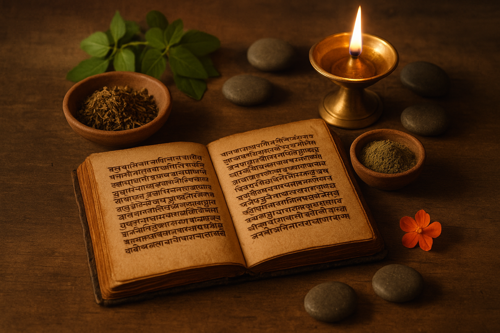
Ayurvedic Philosophy in Daily Life
Dinacharya: Daily Routines for Health
Imagine waking up without an alarm — naturally, energized. You start your morning by scraping your tongue (gross but weirdly satisfying), sipping warm water with lemon, meditating for five minutes, and doing a few yoga stretches. You eat a warm breakfast that feels just right for the season, and you go into your day feeling centered.
That’s Dinacharya — Ayurveda’s name for daily routines. They're designed to sync your body’s rhythms with nature’s cycles. Simple, doable stuff. Not some wild 2-hour ordeal (unless you want it to be).
And it’s surprisingly effective. Just one change — like adjusting your wake-up time closer to sunrise — can radically shift your energy.
Nutrition, Herbs, and Natural Practices
Food is medicine in Ayurveda. But it’s not just about "eating healthy" — it’s about eating for your dosha and the seasons. For example, cooling foods like cucumber and mint soothe fiery Pittas in summer. Warming spices like cinnamon and ginger support chilly Vatas in winter.
Herbs are also huge: Ashwagandha for stress, Triphala for digestion, Brahmi for mental clarity. But it’s not about throwing a bunch of powders into a smoothie. It’s about thoughtful, personalized use.
Natural practices like oil massage (Abhyanga) and nasal cleansing (Neti) might seem strange at first. But once you experience their calming, clearing effects? You kind of wonder why you ever lived without them.
Why Ayurveda Matters Today
In our hyper-connected, over-stimulated, screen-addicted world, a philosophy that says "hey, slow down, listen to your body, honor your nature" feels downright revolutionary.
Ayurveda in modern life isn’t about abandoning technology or living in a hut somewhere (although, honestly, some days that sounds tempting). It's about remembering that health isn’t manufactured in a pill or app. It’s built day by day, breath by breath, meal by meal.
If you're health-conscious, curious about alternatives, or just feeling off and can’t quite put your finger on why — exploring an ayurvedic lifestyle might open doors you didn’t even know were there.
Don't wait or self medicate. Start chat with Doctor NOW
Conclusion
So, what is Ayurveda? It’s a holistic healing system, yes. A timeless philosophy, sure. But maybe more than that — it’s an invitation. An invitation to know yourself better, live more intentionally, and trust that your body carries wisdom older than any trend.
You don’t have to overhaul your whole life. Maybe just start by noticing: how does your body feel today? What would nourish you right now? Ayurveda isn’t about rules. It’s about remembering.
Feeling intrigued? Start simple: take a dosha quiz, try an oil massage, or just swap your icy morning smoothie for a warm bowl of porridge. Tiny shifts, huge rewards.
FAQs
How can Ayurvedic philosophy be applied in daily life?
Start small. Adopt a simple morning routine, eat according to the seasons, and tune into your body’s signals. Ayurveda is all about practical, sustainable daily habits.
Is Ayurveda relevant in modern health practices?
Absolutely. Its focus on prevention, individualized care, and mind-body connection fills major gaps in modern healthcare.
Can Ayurveda be used with modern medicine?
Yes, many people integrate Ayurvedic practices with conventional treatments. Always consult your healthcare provider, especially when using herbs or supplements.
What are the basic principles of Ayurveda?
Balance the doshas, live in harmony with natural rhythms, prioritize prevention, and view the mind, body, and spirit as interconnected.
References
-
National Ayurvedic Medical Association (NAMA) -
Ayurveda Association of Canada -
The Ayurvedic Institute -
World Health Organization - Traditional Medicine
Questions from users
What are the benefits of daily oil massage (Abhyanga) in Ayurveda?
Matthew
15 hours ago
Daily oil massage, or Abhyanga, offers several potential benefits according to Ayurvedic principles. It may improve circulation, promote relaxation, enhance skin health, and support detoxification through lymphatic drainage. Regular practice might also help reduce stress, improve sleep, and support joint health. It's important to choose an oil suitable for your body type and the season, and to massage with gentle, circular motions. If you experience any skin irritation or persistent discomfort, it’s advisable to consult with a healthcare provider to rule out any underlying issues.
Can I use Ayurvedic herbs to boost my energy levels naturally?
Andrew
10 days ago
Absolutely! Ayurvedic herbs like Ashwagandha and Brahmi are great for boosting energy. They help balance your doshas, especially if you feel your vata is out of whack. Just make sure to consider your unique constitution (prakriti) and maybe chat with an Ayurvedic practitioner for personalized advice!
How can I use nasal cleansing (Neti) to improve my sinus health?
Aubrey
19 days ago
Neti can be awesome for sinus health! Use a Neti pot with warm, saline water to gently cleanse your nasal passages. This can help clear out mucus and allergens, supporting healthy breathing. But go slow at first, some folks need time to get used to it. And listen to your body – if it doesn't feel right, maybe try again later or ask an expert.
What is the significance of the morning routine in Ayurveda for hormonal balance?
Penelope
28 days ago
The morning routine in Ayurveda sets the foundation for hormonal balance by synchronizing your body's natural rhythms with nature's cycles. It's about consistency, starting your day with grounding practices like oil pulling or tongue scraping. It helps balance stress levels, digestion, and overall energy, which can prevent hormone imbalances. Hope this helps! 😊
What are the best ways to keep my doshas in harmony throughout the year?
Skylar
38 days ago
To keep your doshas balanced, pay attention to the seasons! Vata increases in fall and winter, so focus on warm, grounding foods like stews and root veggies. Pitta rises in summer, so cooling foods like salads and cucumber are your friends. Kapha gets aggravated in spring, so favor spicy, light meals. Also, Yog, meditation, and adjusting sleep patterns help align everything. Just listen to your body! 🌿
What is the connection between digestion and mood in Ayurveda?
Landon
47 days ago
In Ayurveda, digestion is super important to your mood! When your digestion, or agni, is strong, you usually feel balanced and happy. But if it’s off, like when your doshas imbalance, it can lead to mood swings, anxiety, or depression. Eating right for your dosha, like Vata, Pitta, or Kapha, helps keep both digestion and mood steady. Try to notice how different foods make you feel emotionally, too!
Is it safe to adjust my wake-up time to align with sunrise for better energy?
Chloe
57 days ago
Adjusting your wake-up time to align with sunrise can be beneficial in Ayurveda. It helps tap into the natural rhythms of nature, possibly boosting your energy and aligning with your body's needs. But be gentle with yourself to see how you feel. Listen to your body, and tweak things if needed. Every dosha, remember, has its quirks!
What is the role of herbal medicine in Ayurveda and how can I use it for better health?
Nora
66 days ago
Herbal medicine in Ayurveda is all about balancing your doshas & improving your overall energy naturally. You can use herbs like ashwagandha for stress or tulsi tea for boosting immunity. Think of herbs as tools working with your body's natural tendencies instead of "fixing" you. If you're curious about dosha imbalances, visiting an Ayurvedic practitioner might help.
Is it safe to try an oil massage if I have sensitive skin?
Noah
76 days ago
Yeah, it can be safe to try an oil massage with sensitive skin, but you gotta choose the right oil. Go for something super gentle like coconut or almond oil, and maybe do a patch test first to be safe. Avoid super strong or heated oils, those might irritate. If it still doesn't feel right after trying, might want to consult with someone who's knowledgeable in Ayurveda, like a practitioner.
Can I use ashwagandha every day for managing anxiety?
Mckenzie
86 days ago
Yes, ashwagandha can be used daily for managing anxiety, especially if your anxiety stems from a Vata imbalance. It's known to help calm the mind, but it's important to see how your own body reacts. Listen to your body, maybe start with a small dose and consult a healthcare provider to ensure it suits your constitution!
Related articles

Body Detox
Is Green Tea Good for Health? Benefits, Uses, and Ayurvedic View
Is green tea good for health? Discover its benefits for skin, heart, weight loss, and more. Learn the best time to drink it and potential side effects to avoid
3,140

Body Detox
Pichu in Ayurveda: Therapy Types, Oils, and Healing Benefits
Learn what Pichu is in Ayurveda, how it works, and when it’s used. Explore Shiro Pichu, Yoni Pichu, and more therapies with healing oils and proven benefits
6,192

Body Detox
Pancha Nimba Churna – Benefits, Dosage, Ingredients and Side Effects
Exploration of Pancha Nimba Churna – Benefits, Dosage, Ingredients and Side Effects
3,672

Body Detox
Guggulu Panchapala Churnam: Ayurvedic Benefits and Uses
Guggulu Panchapala Churnam is a powerful Ayurvedic remedy with multiple health benefits, from weight management and pain relief to improved digestion and detoxification.
4,227

Body Detox
Embrace Dinacharya for Well-Being
Dinacharya is an Ayurvedic daily routine designed to harmonize body, mind, and spirit by aligning with natural cycles.
3,055

Body Detox
Panchakarma for Stress Relief: Ayurvedic Therapy for Emotional Healing
Discover how Panchakarma therapy helps relieve stress and calm the mind. Explore Ayurvedic treatments for mental clarity, emotional balance, and inner peace
2,352

Body Detox
How to Consume Fenugreek Seeds for Health, Hair, and Hormones
Learn how to consume fenugreek seeds for hair, breast growth, diabetes, testosterone, and more. Discover the best ways to use soaked seeds daily at home
14,731

Body Detox
How to Purify Blood Naturally at Home: Ayurvedic Remedies and Diet
Learn how to purify blood naturally at home with Ayurvedic foods, juices, vegetables, and pranayama. Simple daily tips for internal cleansing and detox
8,152

Body Detox
Pancha Nimba Churna Benefits, Dosage, Ingredients, Side Effects
Exploration of Pancha Nimba Churna Benefits, Dosage, Ingredients, Side Effects
2,374

Body Detox
Ark Makoy: Traditional Herbal Extract for Detox and Rejuvenation
Unlock the healing potential of Ark Makoy, a traditional herbal extract celebrated for its detoxifying and restorative properties. Experience natural rejuvenation and wellness.
4,250
Related consultations on the topic
Legal
Additional Documents
© 2024 Ask Ayurveda. All rights reserved.