Ask Ayurvedic doctor a question and get a consultation online on the problem of your concern in a free or paid mode. More than 2,000 experienced doctors work and wait for your questions on our site and help users to solve their health problems every day.
FREE! Ask Ayurvedic Doctors 24/7

 Fast responses
 1000+ verified doctors
Body DetoxEar, Nose, and Throat DisordersGeriatrics & RejuvenationImmunodeficiencyInfertility TreatmentNutritionOrthopedic DisordersPediatricsRespiratory DisordersSexually Transmitted Diseases (STDs)Surgery RecoveryUrological DisordersVascular DisordersDental DisordersEndocrinological DisordersGastrointestinal DisordersYoga TherapyGeneral MedicineAllergic DisordersCardio DisordersGynecology and ObstetricsCosmetologySkin and Hair DisordersEye DisordersInfectious DiseasesMental DisordersNeurological DisordersOncologyPanchakarmaSexual Health & DisordersSports Medicine
Published on 12/17/24
(Updated on 07/08/26)
3,253
Swarna Bindu Prashana Benefits: Ayurvedic Immune Booster
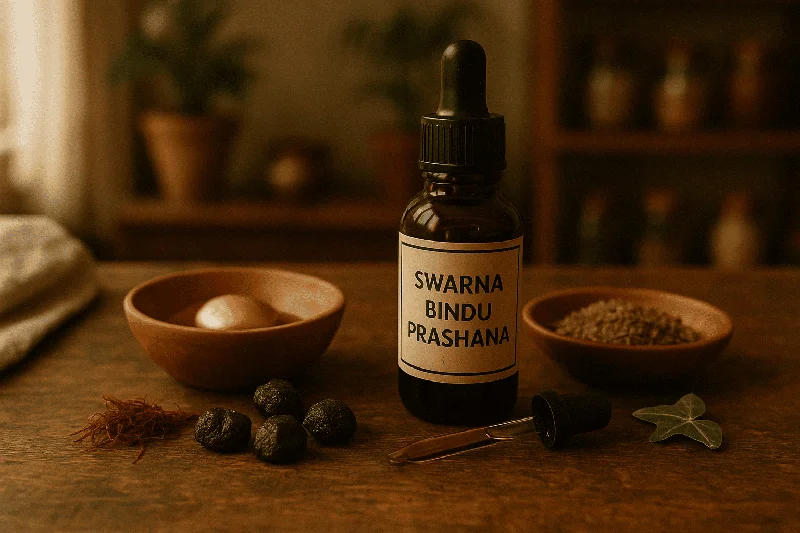
Swarna Bindu Prashana (SBP) is an ancient Ayurvedic immunization practice in which purified gold ash (Swarna Bhasma) is mixed with honey and herbal ghee, then administered as oral drops to children from birth up to 16 years of age. Rooted in the classical text Kashyapa Samhita, this therapy is designed to strengthen immunity, sharpen intellect, and support overall growth — essentially functioning as Ayurveda's answer to preventive immunization. Over the past decade, it has gained significant attention across India, especially after the Ministry of AYUSH began promoting traditional pediatric wellness protocols. But what exactly goes into this formulation, how does it work at a cellular level, and what does the clinical evidence actually say?
This comprehensive guide covers everything parents, practitioners, and researchers need to know — from the original Sanskrit references and ingredient breakdowns to dosage protocols, safety data, regulatory status, and practical buying advice. We've also addressed gaps that no other resource online currently covers, including a direct comparison with modern vaccination, a meta-review of published clinical studies, and storage guidelines.
What Is Swarna Bindu Prashana?
Etymology and Definition
The term "Swarna Bindu Prashana" is derived from three Sanskrit words:
- Swarna — Gold
- Bindu — Drop
- Prashana — The act of consuming or ingesting
So literally, it translates to "consumption of gold drops." In clinical practice, it refers to the oral administration of a preparation containing Swarna Bhasma (gold nanoparticles processed through traditional Ayurvedic calcination) combined with Madhu (honey) and Medhya dravya siddha Ghrita (herbal ghee infused with intellect-boosting herbs).
It's important to note that SBP is not a single medicine — it's a comprehensive immunization protocol described in Ayurvedic pediatrics (Kaumarbhritya).
Historical Origin in Kashyapa Samhita
Swarna Bindu Prashana finds its primary classical reference in the Kashyapa Samhita, one of the foundational texts of Ayurvedic pediatrics, attributed to the sage Kashyapa. The specific reference appears in the Lehana Adhyaya (Sutra Sthana, Chapter 18, Verses 4-5).
Original Sanskrit Shloka with Translation
The original shloka reads:
> "Swarna prashan hi etat medhagnibalavardhanam |
> Ayushyam mangalam punyam vrushyam varnyam grahapaham ||
> Maasat parama medhavi vyaadhirbhirna cha dhrushyate |
> Shadbhir maasaih shrutadhara suvarnaprashan hi tat ||"
> — Kashyapa Samhita, Su. 18/4-5
- Translation: Swarna Prashana enhances intellect (Medha), digestive fire (Agni), and physical strength (Bala). It bestows long life (Aayushya), auspiciousness (Mangala), virtue (Punya), vitality (Vrushya), and good complexion (Varnya), and wards off evil spirits (Grahapaham). If administered for one month, the child becomes supremely intelligent and is not afflicted by diseases.
- If continued for six months, the child becomes Shrutadhara — one who can memorize anything heard only once.
This is perhaps the most cited verse in modern SBP literature and forms the foundational claim for all its purported benefits.
Key Ingredients of Swarna Bindu Prashana
The formulation is deceptively simple in its component list, but the preparation and synergy of ingredients is what makes it unique. Let's break down each one.
Swarna Bhasma (Gold Ash / Gold Nanoparticles)
Swarna Bhasma is gold that has been subjected to the Ayurvedic process of Shodhana (purification) and Marana (calcination) — repeatedly heated with herbal juices and ground until it becomes an ultra-fine ash. Modern analysis reveals that this process produces gold nanoparticles (AuNPs) ranging from 28-56 nanometers in size.
These nanoparticles exhibit remarkable biocompatibility. A 2020 review published in Biological Trace Element Research confirmed that gold nanoparticles demonstrate anti-inflammatory, antibacterial, and immunomodulatory properties. The nano-size ensures they can cross biological membranes and reach target tissues efficiently — something that bulk gold cannot do.
Madhu (Honey)
- Honey serves a dual purpose in the formulation.
- First, it acts as a Yogavahi — a substance that enhances the bioavailability of whatever it's combined with, carrying the active ingredients deeper into body tissues. Second, raw honey contains trace amounts of local pollen, which some researchers believe may contribute to reducing allergic tendencies over time.
Honey also has its own antimicrobial and antioxidant properties, which complement the gold's immunomodulatory action.
Ghrita (Cow's Ghee) Infused with Medhya Dravyas
This is where the formulation gets particularly interesting. Ghee possesses a unique property described in Ayurveda as Samskarasya Anuvartana — the ability to absorb and retain the therapeutic qualities of substances processed with it, without losing its own inherent properties.
- The ghee used in SBP is not plain ghee.
- It is processed (siddha) with Medhya dravyas — herbs specifically classified as intellect-enhancing:
| Herb | Sanskrit Name | Primary Action |
|---|---|---|
| Bacopa monnieri | Brahmi | Memory enhancement, anxiolytic |
| Acorus calamus | Vacha | Speech development, cognitive stimulation |
| Centella asiatica | Mandukparni | Neuroprotection, cerebral circulation |
| Tinospora cordifolia | Guduchi | Immunomodulation, adaptogenic |
| Glycyrrhiza glabra | Yashtimadhu | Anti-inflammatory, adrenal support |
| Convolvulus pluricaulis | Shankhapushpi | Calming, concentration enhancement |
When these herbs are cooked into ghee through the traditional Sneha Paka process, the fat-soluble active compounds are extracted and preserved in a lipid matrix — essentially creating a liposomal delivery system, centuries before modern pharmacology conceptualized one.
Benefits of Swarna Bindu Prashana
Immune System Enhancement
The most well-documented benefit of SBP is immunomodulation. A clinical study conducted at SDM College of Ayurveda, Hassan (Karnataka) in 2012 observed 150 children over a 6-month period and found statistically significant increases in serum IgG levels (from a mean of 696 mg/dL to 892 mg/dL) and IgM levels (from 79 mg/dL to 105 mg/dL) in the SBP group compared to controls.
At a cellular level, gold nanoparticles are believed to promote the maturation of dendritic cells — the "sentinel" cells of the immune system that detect pathogens and activate T-cells. This triggers both cell-mediated (Th1) and humoral (Th2) immune responses, effectively training the immune system in a non-specific manner. Unlike vaccines that target specific pathogens, SBP appears to enhance broad-spectrum immune readiness.
Intellect, Memory, and Cognitive Development
The Medhya herbs in the formulation have been individually validated in modern research. Brahmi (Bacopa monnieri) alone has been studied in over 9 randomized controlled trials for cognitive enhancement in children, with a notable 2014 study in Evidence-Based Complementary and Alternative Medicine showing significant improvements in attention, cognitive processing, and working memory after 16 weeks.
When these herbs are delivered through a gold-enhanced ghee matrix, the synergistic effect is believed to be substantially greater than any single ingredient alone.
Physical Growth, Digestive Strength, and Complexion
Classically, SBP is said to enhance Agni (digestive fire), Bala (physical strength), and Varnya (skin complexion). Observational studies have noted improvements in hemoglobin levels, body weight, and height percentiles in children receiving SBP over 6 months, though these findings need larger, multi-center trials for confirmation.
The Genetic Claim — A Word of Caution
Some practitioners claim SBP can influence genetics and prevent the transmission of hereditary defects to the next generation. While gold nanoparticles have been shown to interact with DNA in laboratory settings, there is currently no clinical evidence in humans to support epigenetic modification claims. Parents should be aware that this particular benefit remains theoretical and unproven.
When to Give Swarna Bindu Prashana: Dosage and Protocol
Age Limit for Swarna Bindu Prashana
SBP can be administered from birth (Day 1) up to 16 years of age. However, most practitioners recommend starting within the first year of life for maximum benefit. There is no minimum weight requirement, though the dosage is adjusted based on age.
Dosage Guidelines
| Age Group | Dosage | Frequency |
|---|---|---|
| 0-1 year | 1-2 drops | Once daily or on Pushya Nakshatra days |
| 1-5 years | 2-4 drops | Once daily or on Pushya Nakshatra days |
| 5-12 years | 4-5 drops | Once daily or on Pushya Nakshatra days |
| 12-16 years | 4-6 drops | Once daily or on Pushya Nakshatra days |
It should be administered on an empty stomach, preferably in the early morning. The drops are placed directly on the tongue.
Can I Give Suvarnaprashan Daily?
Yes.
- The Kashyapa Samhita describes two protocols:
- Daily administration (Nitya Prayoga) — Given every day for 30 days or up to 6 months. This is considered the intensive protocol and is associated with the strongest benefits described in classical texts.
- Monthly administration (Pushya Nakshatra Prayoga) — Given only on the day when the moon transits through the Pushya Nakshatra (star), which occurs approximately every 27 days. This is the more commonly practiced protocol at Ayurvedic clinics across India.
Daily vs Pushya Nakshatra: Which Protocol Is More Effective?
No published study has directly compared the two protocols head-to-head. However, based on classical interpretation, the daily protocol for one month produces "supreme intellect and disease resistance," while the six-month course produces "Shrutadhara" (photographic auditory memory).
The Pushya Nakshatra protocol is often preferred for practical and traditional reasons. In Jyotish Shastra (Vedic astrology), Pushya is considered the most nourishing nakshatra, governed by Brihaspati (Jupiter), and is believed to amplify the potency of any medicine administered on that day. Some practitioners hypothesize that specific cosmic radiation patterns on Pushya Nakshatra days may enhance gold's bioactivity — though this remains a traditional belief rather than a scientifically validated mechanism.
For parents seeking maximum documented benefit, the daily protocol for at least 30 days, followed by monthly Pushya Nakshatra maintenance doses, appears to be the most comprehensive approach.
Swarna Bindu Prashana Dates 2026
- Pushya Nakshatra dates vary each month. Parents should consult their local Ayurvedic clinic or a reliable Panchanga (Hindu calendar) for exact dates.
- Many Ayurvedic hospitals across India — including government AYUSH centers — conduct special SBP camps on Pushya Nakshatra days.
Side Effects and Safety of Swarna Bindu Prashana
Known Side Effects
SBP is generally considered very safe when prepared correctly using standardized Swarna Bhasma. The most commonly reported side effect is mild vomiting or nausea, which typically occurs due to the taste or smell of the formulation rather than any pharmacological toxicity. This is transient and resolves without intervention.
No serious adverse events have been reported in published clinical studies to date.
Contraindications
SBP should not be administered when the child has:
- Active fever (Jwara)
- Diarrhea or dysentery (Atisara / Pravahika)
- Acute indigestion (Ajirna)
- Any acute illness where oral administration is not advisable
Once the acute condition resolves, SBP can be resumed.
Toxicity Concerns: Is Swarna Bhasma Safe?
This is arguably the most important safety question. Properly prepared Swarna Bhasma must pass traditional quality tests (Bhasma Pariksha) including:
- Varitara — it should float on water
- Rekhapurna — fine enough to fill finger lines
- Apunarbhava — cannot be converted back to metallic form
Modern analytical studies using XRD, TEM, and ICP-OES have confirmed that authentic Swarna Bhasma contains gold nanoparticles without toxic heavy metal contamination (mercury, lead, arsenic) when prepared according to classical methods. A 2011 study published in the International Journal of Green Nanotechnology confirmed the non-toxic nature of traditionally prepared gold bhasma in animal models.
However — and this is critical — improperly prepared or counterfeit bhasma can contain toxic levels of heavy metals. This makes sourcing paramount.
SBP vs Modern Vaccination: A Balanced Comparison
This comparison is not meant to suggest that SBP replaces conventional vaccines. Rather, it provides clarity on how these two approaches differ fundamentally.
| Parameter | Swarna Bindu Prashana | Modern Vaccination |
|---|---|---|
| Mechanism | Non-specific immunomodulation (enhances overall immune readiness) | Specific immunization (targets individual pathogens) |
| Type of immunity | Stimulates both innate and adaptive immunity broadly | Primarily adaptive immunity against specific antigens |
| Evidence base | Limited clinical studies; strong traditional evidence base spanning 2000+ years | Extensive RCTs, meta-analyses, and population-level data |
| Safety profile | Minimal side effects when quality-controlled; risk with counterfeit products | Well-documented side effects; rare serious adverse events |
| Disease coverage | Claims broad-spectrum disease resistance; not pathogen-specific | Proven protection against specific diseases (measles, polio, etc.) |
| Regulatory approval | Approved under AYUSH Ministry protocols; no FDA/WHO approval | WHO-approved; regulatory approval in virtually all countries |
| Administration | Oral drops; non-invasive | Injection (mostly); oral (some) |
| Additional benefits | Cognitive enhancement, growth promotion, digestive improvement | None beyond targeted disease prevention |
The responsible position: SBP and modern vaccines serve different purposes and should be viewed as complementary, not competing. Parents should follow the national immunization schedule while exploring SBP as an adjunct wellness protocol. Multiple Ayurvedic hospitals in India administer SBP alongside conventional vaccination without any reported interactions.
Don't wait or self medicate. Start chat with Doctor NOW
How to Choose a Quality SBP Product
This is something no other resource adequately covers, yet it's perhaps the most practical concern for parents.
What to Look For
- 1.GMP Certification — The manufacturing facility should hold a valid GMP (Good Manufacturing Practices) certificate issued by the AYUSH Ministry's Directorate of AYUSH or State Licensing Authority.
- 2.Bhasma Quality Reports — Ask for or verify that the Swarna Bhasma used passes all classical Bhasma Pariksha tests and modern analytical tests (XRD for crystallite size, ICP-OES for heavy metal screening).
- 3.Batch-wise Lab Testing — Reputable manufacturers test each batch for heavy metals (lead, mercury, arsenic), microbial contamination, and gold content.
- 4.Ingredient Transparency — The label should clearly list all Medhya dravyas used in the ghee preparation. Avoid products that list only "herbal ghee" without specifying herbs.
- 5.Practitioner-Administered — Ideally, SBP should be administered by or under the guidance of a qualified Ayurvedic physician (BAMS or MD Ayurveda), especially for infants.
Red Flags
- Products marketed online without any manufacturing license number
- Unusually low prices (authentic Swarna Bhasma is expensive — gold costs money)
- No expiry date or batch number on packaging
- Claims of "instant results" or "guaranteed cure" for specific diseases
Storage and Shelf Life
SBP formulations should be stored in a cool, dry place away from direct sunlight, preferably in glass containers. The ghee-based preparation typically has a shelf life of 1-2 years when stored properly, though this varies by manufacturer. Honey-containing preparations should never be heated above 40°C, as Ayurveda considers heated honey (Ama Madhu) to be toxic.
Once opened, the preparation should ideally be consumed within 3 months.
Regulatory and Legal Status
India
SBP falls under the purview of the Ministry of AYUSH and is regulated under the Drugs and Cosmetics Act, 1940 (Schedule T) as an Ayurvedic medicine. It is legally manufactured, sold, and administered across India. Several state governments, including Gujarat and Karnataka, have actively promoted SBP camps through government Ayurvedic hospitals.
The National AYUSH Mission has included Swarna Prashana as part of its pediatric health outreach programs.
FSSAI
FSSAI (Food Safety and Standards Authority of India) does not regulate SBP since it is classified as a drug, not a food supplement.
International Status
SBP does not have FDA (U.S.) or EMA (European) approval. In countries outside India, gold-containing preparations may fall under dietary supplement or traditional medicine regulations depending on local laws. Parents in the diaspora seeking SBP should consult local regulations before importing or using such products.
Review of Clinical Evidence
Let's be transparent about what the science actually shows — because parents deserve honesty, not hype.
Published Clinical Studies
| Study | Year | Design | Subjects | Key Findings |
|---|---|---|---|---|
| Khandel et al. (SDM Hassan) | 2012 | Prospective, controlled | 150 children | Significant increase in IgG, IgM; improved weight gain and reduced illness episodes |
| Jyothy et al. | 2014 | Observational | 50 children | Improvement in Agni (appetite), reduced frequency of upper respiratory infections |
| Rathi et al. | 2017 | Randomized controlled | 60 children | SBP group showed improved hemoglobin (from 10.2 to 11.8 g/dL) and reduced sick days |
| Abhishek et al. (GAU Jamnagar) | 2019 | Clinical trial | 40 children | Enhanced physical and mental development scores on standardized scales |
Limitations of Current Evidence
- Sample sizes are small (40-150 children)
- Most studies are single-center
- Blinding is often inadequate or absent
- Long-term follow-up data (beyond 1 year) is lacking
- No multi-center randomized, double-blind, placebo-controlled trial has been published yet
The COVID-19 Connection
- During the COVID-19 pandemic, a 2020 review article in PMC (PubMed Central) suggested that SBP's mechanism of non-specific immune enhancement could theoretically provide resistance against novel viral pathogens, including SARS-CoV-2. The authors argued that SBP's ability to activate dendritic cells and promote T-cell maturation might offer "pandemic preparedness" at a population level.
- However, this remains a hypothesis — no clinical trial has tested SBP against COVID-19 or any other specific viral infection.
Frequently Asked Questions (FAQ)
What is the use of Swarna Bindu Prashana?
SBP is used as a preventive health measure for children to boost immunity, enhance intellect and memory, improve digestion and appetite, promote physical growth, and increase overall disease resistance. It is not a treatment for any specific disease but rather a wellness and prevention protocol.
What is the cost of Swarna Bindu Prashana?
The cost varies significantly based on the quality of Swarna Bhasma used. At government AYUSH hospitals and free camps, it may be administered at no cost. At private Ayurvedic clinics, the per-session cost typically ranges from ₹50 to ₹500 per dose. Monthly Pushya Nakshatra camps usually charge ₹100-300 per session. A full 30-day course with a private practitioner can cost ₹3,000-10,000 depending on the clinic and formulation quality.
Can Swarna Bindu Prashana be given alongside regular vaccines?
There is no documented interaction between SBP and conventional vaccines. Many Ayurvedic pediatricians in India administer both concurrently. However, it is advisable to maintain a gap of at least 2-3 days between a vaccination injection and SBP administration — simply as a precaution to distinguish any potential side effects from either intervention.
How do I find Swarna Bindu Prashana near me?
Search for Ayurvedic hospitals, government AYUSH dispensaries, or recognized Ayurvedic pediatric clinics in your city. Many conduct monthly SBP camps on Pushya Nakshatra days. The websites of state AYUSH directorates often list authorized centers.
Is Swarna Bindu Prashana effective for ADHD and Autism?
Some practitioners use SBP as a supportive therapy for children with ADHD, autism spectrum disorders, and developmental delays. The Medhya herbs in the formulation do have documented nootropic and anxiolytic effects. However, there is no specific clinical trial establishing SBP as a treatment for ADHD or autism. It should be considered a complementary approach, not a replacement for behavioral therapy or other evidence-based interventions.
Can adults take Swarna Bindu Prashana?
Classically, SBP is described for children up to 16 years. For adults, Ayurveda prescribes Swarna Bhasma in different formulations and contexts (such as with Chyawanprash or in Rasayana preparations). Consult a qualified Ayurvedic physician for adult gold supplementation.
Conclusion: Is Swarna Bindu Prashana Worth It?
Swarna Bindu Prashana represents one of Ayurveda's most sophisticated preventive pediatric protocols — combining gold nanotechnology, lipid-based herbal drug delivery, and immunological priming in a single formulation, all conceptualized over 2,000 years ago. The existing clinical evidence, while limited in scale, is consistently positive. The safety profile, when quality is assured, is excellent.
- That said, it is not a magic potion and it is definitely not a replacement for modern vaccination.
- Think of it as an additional layer of health protection — one that also comes with cognitive and developmental benefits that vaccines simply don't offer.
If you're considering SBP for your child, take these steps:
- Consult a qualified Ayurvedic pediatrician (BAMS/MD Kaumarbhritya)
- Verify the quality of the Swarna Bhasma preparation being used
- Follow the recommended protocol — consistency matters more than occasional dosing
- Continue your child's regular vaccination schedule without interruption
- Monitor and document your child's health improvements over the course
The ancient sages gave us this knowledge. Modern science is slowly beginning to validate it. The choice to integrate it into your child's wellness journey, thoughtfully and safely — that's yours to make.
Scientific Sources
- Honey and Health: A Review of Recent Clinical Research — Samarghandian S et al., 2017, Pharmacognosy research
- Honey in dermatology and skin care: a review — Burlando B et al., 2013, Journal of cosmetic dermatology
- Herbal Remedies for Hair Loss: A Review of Efficacy and Safety — Ahmed A et al., 2025, Skin appendage disorders
- Allergies and Natural Alternatives — Jongbloed WM et al., 2022, Otolaryngologic clinics of North America
- Science and Experience: Repairing a Fractured Medicine — Loughlin M, 2021, Complementary medicine research
Questions from users
How is Swarna Bhasma different from other Ayurvedic medicines?
Abigail
4 days ago
Swarna Bhasma differs from other Ayurvedic medicines primarily in its composition and preparation. It is made from gold and processed into fine ash containing gold nanoparticles, a result of Ayurvedic techniques like Shodhana and Marana. Unlike many herbal formulations, Swarna Bhasma has undergone both traditional and modern quality validation to ensure it is free from toxic metals like mercury and lead. When considering its use, consult a healthcare provider due to potential health risks and cost considerations, especially since its effects and safety are not fully understood by modern medicine.
Can I use Swarna Bindu Prashana if my child is taking other Ayurvedic remedies?
Xander
14 days ago
Yes, your child can use Swarna Bindu Prashana (SBP) alongside other Ayurvedic remedies, but it's important to check with an Ayurvedic doctor just to be sure there's no conflict. Different remedies can have different effects depending on your child's dosha and overall health, so a professional's advice is best.
What is the shelf life of Swarna Bindu Prashana and how should it be stored?
Phillip
23 days ago
The shelf life of Swarna Bindu Prashana is usually 1-2 years, depending on the manufacturer. Store it in a cool, dry place away from direct sunlight and preferably in glass containers. Keep an eye on expiry dates and avoid ones without clear labeling on shelf life or contents, that's key!
What happens if I accidentally give my child too much Swarna Bindu Prashana?
Henry
32 days ago
Don't panic too much! If you accidentally gave a bit more Swarna Bindu Prashana, it's generally quite safe. But, keep an eye out for any unusual reactions like upset tummy or irritability. If you notice anything odd or worrisome, just reach out to a healthcare professional or Ayurvedic doctor to be safe.
What are the potential side effects of Swarna Bindu Prashana in children?
Teagan
46 days ago
Swarna Bindu Prashana is generally considered safe, but some kids might have mild side effects like rashes or a tummy upset. It's usually because of dosha imbalances or sensitivity. If you’re worried, it’s best to chat with an experienced Ayurvedic practitioner to look into your child’s unique situation.
Is Swarna Bindu Prashana effective for improving children's respiratory issues like asthma?
Shayla
56 days ago
Yes, Swarna Bindu Prashana can be effective for kids with respiratory issues like asthma. It's thought to strengthen lung function and reduce inflammation. But it's always good to check with ayurvedic practitioners familiar with your child's specific needs for the best approach. Keep an eye on the individual response as well!
Can Swarna Bindu Prashana help improve my child's immune system?
Sierra
66 days ago
Yes, Swarna Bindu Prashana can help boost your child's immune system. The gold in it is thought to enhance immunity and vitality. But always good to get an Ayurvedic doc's opinion before starting, just to be sure it suits your child, especially if they have any previous health concerns or allergies. Stay safe!
Is it safe for children to take Swarna Bindu Prashana during cold or flu season?
Zayden
75 days ago
Yes, it's generally safe for kids to take Swarna Bindu Prashana during cold or flu seasons. It's known to boost immunity, which can help protect against such illnesses. But it’s always wise to consult an Ayurvedic practitioner to consider your child's specific dosha and health needs first. Hope that helps!
What is the best time of day to give my child Swarna Bindu Prashana for optimal results?
Rowan
85 days ago
Giving Swarna Bindu Prashana to your child is usually best during early morning hours, ideally on an empty stomach. This helps the nutrients be absorbed more effectively and works with the body's natural metabolic and digestive cycles. If that's not possible, just try to keep it before a meal! Just remember to check with an Ayurvedic doc to make sure it's right for your little one :)
Is it safe to give Swarna Bindu Prashana to children with food allergies?
Matthew
94 days ago
If your child has food allergies, it's super important to check with a healthcare provider before giving them Swarna Bindu Prashana. The formulation might have ingredients they're sensitive to. Just to be on the safe side, get an expert opinion from an Ayurvedic doctor who knows your child's unique needs.
Related articles

Pediatrics
Ayurvedic Medicine for Adenoids – Natural Remedies for Adenoid Health
Discover Ayurvedic medicine for adenoids, including effective herbs, treatments, and lifestyle changes. Learn natural approaches to alleviate adenoid-related issues and promote overall respiratory wellness.
5,736

Pediatrics
Mebarid Syrup
Exploration of Mebarid Syrup
2,484

Pediatrics
How to Relieve Constipation in Babies Quickly: Ayurvedic Remedies and Parental Tips
How to relieve constipation in babies quickly? Learn Ayurvedic and home remedies, causes, and gentle ways to help newborns and breastfed babies feel better fast
4,305

Pediatrics
Bonnisan Drops
Exploration of Bonnisan Drops
9,826

Pediatrics
Ayurvedic Medicine for Constipation in Babies – Gentle Remedies for Infant Digestive Health
Discover safe Ayurvedic remedies for constipation in babies. Learn about gentle herbal formulations, natural detoxification, and supportive digestive practices designed for infants, with expert guidance.
3,926

Pediatrics
Swarna Prashana: Uses, Benefits & Ayurvedic Insights
Explore Swarna Prashana uses, benefits, proper dosage, and scientific evidence. Learn how this Ayurvedic therapy supports child development and immunity.
3,990

Pediatrics
How to Stop Vomiting Immediately: Ayurvedic Home Remedies for Children
Explore how to stop vomiting immediately using home remedies for child. Learn Ayurvedic tips, baby vomiting relief, and safe natural solutions at home
6,382

Pediatrics
Which Oil Is Best for Baby Massage: Ayurvedic Guide for Parents
Discover which oil is best for baby massage based on skin type and season. Compare almond, olive, mustard, coconut, sesame, and Ayurvedic oils for babies
29,015

Pediatrics
Livosin Syrup
Exploration of Livosin Syrup
2,572
Pediatrics
Swarna Bindu Prashana Benefits: A Holistic Immunity Booster for Children
Swarna Bindu Prashana is an ancient Ayurvedic practice aimed at enhancing immunity, brain development, and overall health in children.
2,934
Related consultations on the topic
Legal
Additional Documents
© 2024 Ask Ayurveda. All rights reserved.