Ask Ayurvedic doctor a question and get a consultation online on the problem of your concern in a free or paid mode. More than 2,000 experienced doctors work and wait for your questions on our site and help users to solve their health problems every day.
FREE! Ask Ayurvedic Doctors 24/7

 Fast responses
 1000+ verified doctors
Body DetoxEar, Nose, and Throat DisordersGeriatrics & RejuvenationImmunodeficiencyInfertility TreatmentNutritionOrthopedic DisordersPediatricsRespiratory DisordersSexually Transmitted Diseases (STDs)Surgery RecoveryUrological DisordersVascular DisordersDental DisordersEndocrinological DisordersGastrointestinal DisordersYoga TherapyGeneral MedicineAllergic DisordersCardio DisordersGynecology and ObstetricsCosmetologySkin and Hair DisordersEye DisordersInfectious DiseasesMental DisordersNeurological DisordersOncologyPanchakarmaSexual Health & DisordersSports Medicine
Published on 12/16/24
(Updated on 07/08/26)
2,935
Swarna Bindu Prashana Benefits: A Holistic Immunity Booster for Children
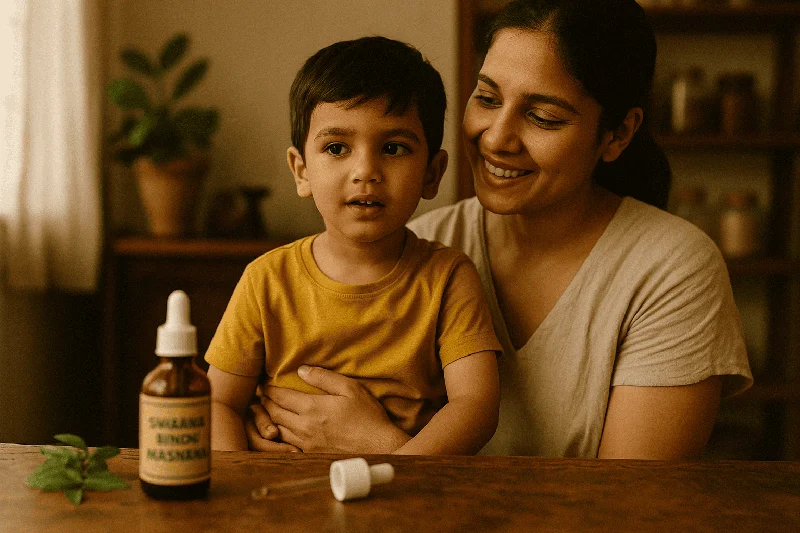
- Swarna Bindu Prashana (SBP) is an ancient Ayurvedic immunization practice where purified gold nanoparticles (Swarna Bhasma), honey, cow ghee, and brain-boosting herbs are administered orally to children — typically from birth to age 16 — to strengthen immunity, enhance intellect, and support overall development. Rooted in the Kashyapa Samhita, one of the oldest pediatric texts in Ayurveda, this practice has surged in popularity across India as parents seek complementary approaches to protect their children's health. But what exactly does SBP contain, how does it work at a cellular level, and is it truly safe?
- This comprehensive guide covers everything — from ingredients and mechanism of action to dosage schedules, Pushya Nakshatra dates, costs, myths, and frequently asked questions that no other resource fully addresses.
What Is Swarna Bindu Prashana?
Meaning and Etymology
The term "Swarna Bindu Prashana" breaks down into three Sanskrit words: Swarna (gold), Bindu (drop), and Prashana (the act of consuming or licking). Literally translated, it means "consuming drops of gold." In some regions of India, you'll hear it called Suvarna Prashana, Swarna Prashan, or Suvarnaprashan — these are all the same practice with regional linguistic variations.
The concept belongs to Kaumarabhritya, the branch of Ayurveda dedicated exclusively to pediatrics and child health. Unlike modern vaccination which introduces weakened pathogens, SBP is classified as a rasayana (rejuvenative) therapy — its goal is to build the child's innate defense system from within rather than targeting specific diseases.
Historical Origins in the Kashyapa Samhita
The practice traces back to Acharya Kashyapa, who documented it in the Kashyapa Samhita (also known as Vriddhajivakiya Tantra), estimated to be over 2,500 years old. The original Sanskrit verse (Kashyapa Samhita, Lehanadhyaya) describes the procedure in remarkable detail — specifying ingredients, method of preparation, timing based on the Pushya Nakshatra constellation, and the progressive benefits based on duration of use.
The verse states that a child given Swarna Prashana for:
- 1 month: becomes Parama Medhavi (supremely intelligent)
- 6 months: becomes Shrutadhara (one who can retain what is heard — photographic memory of auditory information)
- Ongoing use: makes the child immune to diseases, long-lived, and blessed with a strong digestive fire
- These are classical claims.
- Modern science is still investigating them — and some findings are genuinely interesting.
SBP in the Modern Context
- Today, SBP is practiced in thousands of Ayurvedic clinics across India. The Government of India's Ministry of AYUSH has recognized Swarna Prashana under its National Ayush Mission. Several state governments, notably Gujarat and Karnataka, have organized mass SBP camps on Pushya Nakshatra days.
- The practice is also gaining attention in academic research — PubMed lists multiple studies examining its immunomodulatory effects, and a 2020 review article in the Journal of Ayurveda and Integrative Medicine highlighted its potential relevance even during the COVID-19 pandemic as an immune-preparedness strategy.
Ingredients of Swarna Bindu Prashana
Understanding what goes into SBP is crucial — especially for parents who want to make informed decisions. The formulation has four core components, each serving a distinct purpose.
Swarna Bhasma (Gold Nanoparticles)
- This is the star ingredient.
- Swarna Bhasma is not raw gold — it undergoes a complex Ayurvedic purification and incineration process called Shodhana and Marana, which reduces gold to nano-sized particles (typically 28–56 nm based on electron microscopy studies). Modern research has confirmed that this traditional process effectively produces gold nanoparticles (AuNPs) — essentially, Ayurveda was practicing nanotechnology centuries before the term existed.
A 2011 study published in the International Journal of Pharmaceutical Sciences and Research confirmed through TEM (Transmission Electron Microscopy) that properly prepared Swarna Bhasma particles fall within the nanoparticle range. This matters because nanoparticles have dramatically different bioavailability and biological activity compared to bulk metals.
Gou Ghrita (Cow Ghee)
Cow ghee serves as a lipid-based carrier that enhances the bioavailability of gold nanoparticles and fat-soluble herbal compounds. In Ayurvedic pharmacology, ghee is considered the best yogavahi — a substance that carries the properties of other drugs to deeper tissues without losing its own qualities. It also provides essential fatty acids critical for brain development in children.
Madhu (Honey)
- Honey acts as a natural preservative and bio-enhancer.
- In Ayurveda, honey is described as Sukshma Marganusari — meaning it can penetrate the finest body channels. This is remarkably consistent with modern findings that honey's enzymatic composition aids in transmucosal absorption.
- Important note: Ayurvedic texts specify that honey and ghee should not be used in equal proportions (Samana Matra), as this combination is considered incompatible. In SBP, they are always used in unequal ratios.
Medhya Dravyas (Brain-Boosting Herbs)
- Various nootropic herbs are added depending on the practitioner's formulation.
- Common ones include:
| Herb | Sanskrit Name | Primary Action |
|---|---|---|
| Brahmi | Bacopa monnieri | Memory enhancement, neuroprotection |
| Shankhapushpi | Convolvulus pluricaulis | Cognitive function, anxiety reduction |
| Vacha | Acorus calamus | Speech development, intellect |
| Guduchi | Tinospora cordifolia | Immunomodulation, detoxification |
| Ashwagandha | Withania somnifera | Strength, adaptogenic support |
| Yashtimadhu | Glycyrrhiza glabra | Anti-inflammatory, respiratory health |
The exact combination varies between practitioners and brands, which is why standardization remains an ongoing challenge.
Benefits of Swarna Bindu Prashana for Children
Immunity Enhancement (Immunomodulatory Action)
This is the most researched benefit. A randomized controlled study published in AYU Journal (2012) by Patil et al. involving 260 children found that children receiving SBP showed statistically significant improvements in immunity markers compared to the control group. The study observed reduced frequency of upper respiratory infections and fewer sick days among the SBP group.
SBP appears to work as an immunomodulator rather than just an immune stimulant — meaning it helps regulate immune responses up or down as needed. This distinction is clinically important because an overactive immune system (as seen in allergies and autoimmune conditions) is just as problematic as an underactive one.
Intellectual and Memory Development
Multiple Ayurvedic texts classify Swarna Prashana under Medhya Rasayana — therapies specifically targeting brain function. The gold nanoparticles are believed to cross the blood-brain barrier (a property well-documented for AuNPs in modern nanomedicine research), while the Medhya herbs provide synergistic cognitive benefits.
A 2015 observational study at Gujarat Ayurveda University tracked 150 children over 6 months and reported measurable improvements in attention span, learning capacity, and academic performance in the SBP group. While larger trials are needed, these early results are encouraging.
Digestion and Metabolism (Agni Deepana)
SBP is credited with strengthening Jatharagni — the digestive fire. Children who are picky eaters, have frequent stomach upsets, or show signs of poor absorption may particularly benefit. Both ghee and honey in the formulation support gut health, while gold bhasma is traditionally considered a potent digestive stimulant.
Physical Strength and Growth
- The classical texts use the term Bala Vardhana (strength enhancer) when describing SBP's effects. Parents and practitioners frequently report improved weight gain in underweight children, better stamina, and enhanced resistance to seasonal infections.
- A notable finding is improved skin texture and complexion — described in texts as Varna Kara (complexion enhancer).
Long-Term Benefits
Kashyapa Samhita mentions extended benefits including enhanced fertility (Praja Kara), increased lifespan (Ayu Kara), and development of a naturally commanding personality (Grasant Tejas). While these long-term claims are difficult to validate through modern trials due to the decades-long follow-up required, they remain important classical references.
How Does Swarna Prashana Work? Mechanism of Action
Gold Nanoparticles and the Immune System
This is where SBP gets genuinely fascinating from a scientific perspective. A 2020 review published in PMC (PubMed Central) detailed how gold nanoparticles in Swarna Bhasma interact with the immune system through multiple pathways:
- Adjuvant effect: AuNPs act as immunological adjuvants — they enhance the body's immune response to antigens, similar to aluminum salts used in modern vaccines
- Macrophage activation: Gold nanoparticles are taken up by macrophages (the body's first-line defense cells), activating the innate immune response
- Cytokine modulation: AuNPs influence the production of cytokines like IL-2, IL-6, and TNF-α, effectively fine-tuning immune signaling
Dendritic Cell Maturation and T-Cell Activation
- Perhaps the most significant finding from recent research involves the effect on dendritic cells — the master regulators of the immune system. The PMC review described how gold nanoparticles, particularly when conjugated with biological substances (like the proteins in honey and ghee), promote dendritic cell maturation.
- Mature dendritic cells then activate T-cells — both helper T-cells (CD4+) and cytotoxic T-cells (CD8+) — creating a robust adaptive immune response.
Cellular vs. Humoral Immunity
SBP appears to influence both arms of adaptive immunity:
- Cellular immunity (T-cell mediated): Enhanced by dendritic cell activation and direct T-cell stimulation
- Humoral immunity (antibody-mediated): Supported through B-cell activation and increased immunoglobulin production
This dual action may explain why traditionally SBP-treated children seem resistant to a wide range of infections — not just specific diseases.
The Nanotechnology Bridge: Ayurveda Meets Modern Science
- What's remarkable is that Ayurveda essentially developed a method of biological nanoparticle synthesis centuries ago.
- The Shodhana-Marana process for Swarna Bhasma — using repeated cycles of heating, quenching in herbal decoctions, and grinding — produces nanoparticles with biological surface coatings. Modern nanotechnology calls these biologically conjugated nanoparticles, and they are considered safer and more biocompatible than chemically synthesized ones.
- The herbs, honey, and ghee aren't just passive ingredients — they actively serve as capping agents and stabilizers for the gold nanoparticles.
Dosage, Age Limit, and Administration Schedule
What Is the Correct Dosage?
| Age Group | Typical Dose | Frequency |
|---|---|---|
| 0–1 year (infants) | 1–2 drops | On Pushya Nakshatra day (every ~28 days) |
| 1–5 years | 2–4 drops | On Pushya Nakshatra day |
| 5–12 years | 4–5 drops | On Pushya Nakshatra day |
| 12–16 years | 5–6 drops | On Pushya Nakshatra day |
Important: These are general guidelines. The exact dosage should be determined by a qualified Ayurvedic practitioner (BAMS/MD Ayurveda) based on the child's Prakriti (constitution), weight, health status, and specific formulation being used.
What Is the Age Limit for Swarna Bindu Prashana?
- SBP can be started from birth and is traditionally recommended up to age 16.
- Most practitioners recommend beginning as early as possible — ideally within the first month of life. Some clinics set a practical lower limit of 1 month after birth to ensure the infant's digestive system has stabilized.
There is no strict upper age limit mentioned in classical texts. However, the maximum benefit window is 0–6 years, when both immune and neurological systems are developing most rapidly.
Can I Give Suvarnaprashan Daily?
- This is one of the most common questions parents ask.
- The short answer: yes, but the formulation differs.
- Daily administration (Nitya Prashana): A milder formulation with lower gold concentration can be given daily for specific therapeutic periods, usually 30 days to 6 months. This is what Kashyapa Samhita originally described.
- Pushya Nakshatra administration: The more concentrated clinic-grade formulation is typically given on Pushya Nakshatra day only — approximately once every 27-28 days. This is the most common modern practice.
Many practitioners now recommend a combination: clinic visits on Pushya Nakshatra for the concentrated dose, supplemented by daily drops of a milder preparation at home. Consult your practitioner before starting any daily regimen.
Don't wait or self medicate. Start chat with Doctor NOW
Pushya Nakshatra Dates: Why This Timing Matters
The Astrological and Ayurvedic Significance
Pushya Nakshatra is the 8th lunar constellation (nakshatra) in Vedic astrology, ruled by Saturn and presided over by Brihaspati (Jupiter), the Guru of the gods. In Jyotish Shastra, Pushya is considered the most auspicious nakshatra for nourishment, growth, and healing — its name literally means "to nourish."
But why does timing affect a medical procedure?
Ayurveda is deeply connected to chronobiology — the science of biological rhythms. The theory is that the moon's position in Pushya Nakshatra creates optimal conditions for absorption and assimilation of the gold-herb formulation. While this hasn't been validated through modern RCTs comparing Pushya vs. non-Pushya administration, the traditional protocol remains widely followed.
Pushya Nakshatra Dates 2025–2026
| Month | Pushya Nakshatra Date (2025) | Pushya Nakshatra Date (2026) |
|---|---|---|
| January | January 9 | January 3, January 31 |
| February | February 5 | February 27 |
| March | March 5 | March 26 |
| April | April 1, April 28 | April 23 |
| May | May 26 | May 20 |
| June | June 22 | June 16 |
| July | July 19 | July 14 |
| August | August 16 | August 10 |
| September | September 12 | September 6 |
| October | October 9 | October 4, October 31 |
| November | November 6 | November 27 |
| December | December 3, December 31 | December 25 |
Note: Dates may vary slightly based on regional Panchang calculations. Always verify with your local Ayurvedic clinic or Panchang for exact timings.
Side Effects, Safety, and Contraindications
Known Side Effects of Swarna Bindu Prashana
When prepared correctly and administered in proper dosages, SBP is generally considered safe. However, the following side effects have been occasionally reported:
- Mild loose stools (especially during initial doses)
- Temporary increase in salivation
- Rarely, skin rash or mild allergic reaction (more likely related to herbal ingredients than gold)
- Metallic taste that may make some infants fussy
A 2018 safety study published in the Journal of Ayurveda and Integrative Medicine followed 150 children receiving SBP over 6 months and reported no significant adverse events. However, the study authors acknowledged that larger, longer-term safety data is still needed.
Expanded Contraindications
SBP should not be administered in the following situations:
- Active fever (Jwara Avastha)
- Acute diarrhea or dysentery (Atisara)
- Indigestion (Ajirna) — when the child has not digested previous food
- Acute vomiting
- Known allergy to any ingredient in the formulation
- Jaundice or acute liver conditions
- Immediately before or after meals — SBP should be given on an empty stomach, ideally in the morning
SBP for Special Populations
Premature babies: Some practitioners recommend waiting until the baby reaches corrected age of 1 month. There's limited research specifically on preterm infants, so consult a neonatologist alongside your Ayurvedic doctor. Children with allergies: If the child has known food allergies (especially to honey), SBP may need formulation modification. Honey is contraindicated for children under 12 months in modern pediatric guidelines due to botulism risk — this creates a point of debate between Ayurvedic and allopathic perspectives. Discuss with both your pediatrician and Ayurvedic practitioner. Children with autoimmune conditions: Since SBP is an immunomodulator, children with autoimmune disorders require careful evaluation. It should not be used without supervision in conditions like juvenile rheumatoid arthritis or Type 1 diabetes.
Can SBP Be Combined with Modern Vaccines?
This is perhaps the most critical question parents have — and one that no competitor has properly addressed.
- SBP is not a replacement for modern vaccines. It does not provide targeted immunity against specific pathogens like measles, polio, or hepatitis B.
- Think of it this way: modern vaccines are like specialized soldiers trained to fight specific enemies, while SBP is like a general fitness program that makes the entire army stronger.
Most Ayurvedic practitioners recommend:
- Maintaining the regular vaccination schedule as prescribed by your pediatrician
- Administering SBP on different days than vaccination days (ideally a gap of at least 3-5 days)
- Informing both your pediatrician and Ayurvedic doctor about all treatments the child is receiving
Swarna Bindu Prashana vs Modern Immunization: A Comparison
| Parameter | Swarna Bindu Prashana | Modern Vaccines |
|---|---|---|
| Type | Non-specific immunomodulation | Pathogen-specific immunization |
| Mechanism | Enhances overall immune competence | Introduces antigens for specific antibody production |
| Protection | General disease resistance | Targeted protection against specific diseases |
| Ingredients | Gold nanoparticles, herbs, ghee, honey | Attenuated/killed pathogens, adjuvants |
| Administration | Oral drops | Injection (most) or oral (some) |
| Duration | Monthly for years | Scheduled doses with boosters |
| Side Effects | Generally mild | Generally mild; rare serious adverse events |
| Scientific Evidence | Emerging (small-scale studies) | Extensive (global RCTs, decades of data) |
| Regulatory Status | AYUSH approved | WHO/FDA/ICMR approved |
| Can replace each other? | No | No |
Bottom line: They serve different purposes and are best used as complementary, not alternative, approaches.
How to Choose a Quality SBP Product or Clinic
This is an area where many parents feel lost.
Here's what to look for:
For Clinic-Administered SBP
- 1.Practitioner qualifications: Ensure the doctor holds a BAMS or MD (Ayurveda) degree from a recognized university
- 2.Preparation method: Ask if the Swarna Bhasma is prepared in-house or sourced from a certified manufacturer
- 3.GMP certification: The source pharmacy should hold a GMP (Good Manufacturing Practices) certificate under AYUSH guidelines
- 4.Hygiene standards: The administration area should maintain basic clinical hygiene
- 5.Documentation: The clinic should maintain records of batch numbers, dosages, and the child's health history
For SBP Drops (Commercial Products)
- Look for AYUSH license number on the packaging
- Check for batch number and expiry date
- Verify the Swarna Bhasma concentration is clearly stated
- Prefer brands that provide third-party lab testing reports for heavy metal safety
- Avoid products making extravagant claims or those sold without proper labeling
Cost of Swarna Bindu Prashana Across India
| City/Region | Clinic SBP (per dose) | Commercial Drops (per bottle) |
|---|---|---|
| Mumbai | ₹100–₹500 | ₹300–₹1,500 |
| Delhi NCR | ₹100–₹400 | ₹250–₹1,200 |
| Bangalore | ₹50–₹300 | ₹300–₹1,000 |
| Ahmedabad/Gujarat | ₹50–₹200 (often free at camps) | ₹200–₹800 |
| Kerala | ₹100–₹350 | ₹300–₹1,200 |
| Pune | ₹100–₹400 | ₹250–₹1,000 |
| Tier-2/3 Cities | ₹50–₹200 | ₹200–₹800 |
Prices vary significantly based on the gold concentration, herbal formulation, and brand reputation. Government and NGO-organized camps frequently offer SBP free of charge or at nominal rates.
Common Myths and Misconceptions About Swarna Prashana
Myth 1: SBP is a substitute for vaccination. Reality: It is not. SBP and modern vaccines work through fundamentally different mechanisms. Skipping vaccinations in favor of SBP puts your child at risk for preventable diseases. Myth 2: Gold in SBP will cause heavy metal toxicity.
- Reality: Properly prepared Swarna Bhasma contains gold in nanoparticle form that is biologically processed. Multiple toxicity studies, including one published in Toxicology Letters (2013), have found correctly prepared Swarna Bhasma to be non-toxic at therapeutic doses.
- The key word is "correctly prepared" — sourcing from unverified manufacturers is genuinely risky.
Myth 3: SBP works only if given on Pushya Nakshatra.
- Reality: Pushya Nakshatra timing is traditional and widely followed, but the original Kashyapa Samhita text describes daily administration (Nitya Prashana) as a valid protocol.
- The benefits come from the formulation itself — the timing may optimize them according to Ayurvedic principles, but it's not an absolute requirement.
Myth 4: Any Ayurvedic practitioner can prepare Swarna Bhasma at home. Reality: Swarna Bhasma preparation requires specialized training, equipment and dozens of processing cycles. Improperly prepared gold compounds can contain harmful particle sizes or toxic residues. Never attempt to prepare Swarna Bhasma without expert supervision. Myth 5: SBP shows immediate results. Reality: SBP is a rasayana (rejuvenative therapy) — it works gradually over weeks and months. Parents typically report noticeable improvements in appetite, infection frequency, and alertness after 3–6 months of regular administration.
Frequently Asked Questions (FAQ)
What is the use of Swarna Bindu Prashana?
SBP is used primarily to boost innate immunity in children, enhance cognitive development (memory, intelligence, learning ability), improve appetite and digestion, and promote overall physical growth. It is a preventive health practice rather than a curative treatment for specific diseases.
When should I start giving Suvarnaprashan to my baby?
- You can start as early as birth, though many practitioners prefer to begin after the first month.
- Early initiation — ideally within the first 6 months — is considered most beneficial as the infant's immune and nervous systems are in critical developmental stages.
Can Swarna Bindu Prashana be given to adults?
While traditionally designed for children (0–16 years), some Ayurvedic doctors prescribe modified Swarna Bhasma formulations for adults with immunodeficiency or cognitive concerns. However, the standard SBP pediatric protocol is specifically calibrated for developing bodies.
How long should SBP be continued?
The minimum recommended duration is 30 consecutive days (for daily administration) or 12 months of Pushya Nakshatra doses (approximately 13 doses). For maximum benefit, classical texts recommend continuing up to age 16 or at minimum for 6 months.
Is Swarna Prashana scientifically proven?
- There is growing but still limited scientific evidence. Multiple small-scale clinical studies (published in AYU, JAIM, and other indexed journals) have shown positive results for immunity and cognitive function. However, large multicenter randomized controlled trials with rigorous methodology are still needed.
- The mechanistic evidence — particularly around gold nanoparticles and immunomodulation — is stronger and comes from mainstream nanotechnology research.
What should I do if my child develops a reaction after SBP?
Discontinue immediately and consult your Ayurvedic practitioner. Mild reactions like temporary loose stools usually resolve on their own. For skin rashes, breathing difficulty, or any serious symptoms, seek immediate medical attention. Report the reaction with the batch number of the product used.
Can SBP help my child who falls sick frequently?
Recurrent infections in children are one of the primary indications for SBP. Many practitioners report significant reduction in the frequency of common colds, coughs, and respiratory infections after 3–6 months of regular SBP. However, if your child has an underlying immunodeficiency disorder, SBP should be used as a complement — not a substitute — for medical treatment.
Where can I find Swarna Bindu Prashana near me?
Search for "Swarna Prashana camp" or "Swarna Bindu Prashana" along with your city name. Most Ayurvedic hospitals, AYUSH clinics, and many pediatric Ayurvedic practitioners offer SBP, especially on Pushya Nakshatra days. Government Ayurveda hospitals frequently organize free camps.
Final Thoughts: Making an Informed Decision
Swarna Bindu Prashana represents a fascinating convergence of ancient wisdom and modern science. The fact that a 2,500-year-old pediatric practice essentially involves biologically synthesized gold nanoparticles — a concept at the cutting edge of modern nanomedicine — is remarkable by any standard.
But let's be balanced about it. The evidence base, while promising, is not yet at the level of modern vaccine science. What we have are encouraging small-scale studies, solid mechanistic plausibility, thousands of years of documented use, and millions of anecdotal reports from Indian families. What we still need are large, well-designed, multicenter clinical trials.
For parents considering SBP:
- Do consult a qualified BAMS/MD Ayurveda practitioner before starting
- Do maintain your child's regular vaccination schedule
- Do verify the source and quality of the SBP formulation
- Don't use unverified home preparations or products without AYUSH licensing
- Don't expect overnight results — give it at least 3–6 months
Your child's health deserves both the wisdom of tradition and the rigor of evidence. Swarna Bindu Prashana, when used responsibly and from verified sources, can be a valuable addition to your child's wellness routine — complementing, never replacing, modern healthcare.
Have more questions about Swarna Bindu Prashana? Consult a certified Ayurvedic doctor to discuss your child's specific needs and get a personalized recommendation.
Scientific Sources
- Swarna Prashana - faith in the embrace of research — Verma S et al., 2022, Journal of complementary & integrative medicine
- Blood compatibility studies of Swarna bhasma (gold bhasma), an Ayurvedic drug — Paul W et al., 2011, International journal of Ayurveda research
- Swarna Bhasma Induces Antigen-Presenting Abilities of Macrophages and Helps Antigen Experienced CD4(+) T Cells to Acquire Th1 Phenotypes Against Leishmania donovani Antigens — Saini S et al., 2024, Biological trace element research
- Ayurvedic metal nanoparticles could be novel antiviral agents against SARS-CoV-2 — Sarkar PK et al., 2021, International nano letters
- Characterization of Swarna Bhasma and Swarnaprash and Determination of Antimicrobial Properties Against Gut-Pathobiont and Symbiont — Singh K et al., 2025, Biological trace element research
- Honey and Health: A Review of Recent Clinical Research — Samarghandian S et al., 2017, Pharmacognosy research
- Honey in dermatology and skin care: a review — Burlando B et al., 2013, Journal of cosmetic dermatology
- Herbal Remedies for Hair Loss: A Review of Efficacy and Safety — Ahmed A et al., 2025, Skin appendage disorders
- Allergies and Natural Alternatives — Jongbloed WM et al., 2022, Otolaryngologic clinics of North America
- Science and Experience: Repairing a Fractured Medicine — Loughlin M, 2021, Complementary medicine research
- Health benefits of ghee: Review of Ayurveda and modern science perspectives — Kataria D et al., 2024, Journal of Ayurveda and integrative medicine
- From tradition to science: Possible mechanisms of ghee in supporting bone and joint health — Falahatzadeh M et al., 2024, Prostaglandins & other lipid mediators
- Panchgavya: A precious gift to humankind — Bajaj KK et al., 2022, Journal of Ayurveda and integrative medicine
- Preparation and physicochemical characterization of ghee and mūrcchita ghŗ̥ta — Lamsal B et al., 2020, Journal of Ayurveda and integrative medicine
- Further observations on ghee as a risk factor for neonatal tetanus — Bennett J et al., 1995, International journal of epidemiology
Questions from users
What should I discuss with my pediatrician before starting Swarna Bindu Prashana?
Scarlett
4 days ago
Before starting Swarna Bindu Prashana (SBP) for your child, discuss the potential risks and benefits with your pediatrician, focusing on safety and compatibility with your child’s healthcare needs. Modern pediatric guidelines caution against giving honey to children under 12 months due to the risk of botulism, so it's important to address this. Ensure that your pediatrician is aware of SBP's ingredients and how it might interact with any current medications or treatments. Also, discuss the importance of maintaining your child's vaccination schedule, as skipping vaccines in favor of SBP could leave your child vulnerable to preventable diseases. Consult both your pediatrician and an experienced Ayurvedic practitioner to understand SBP's suitability for recurrent infections and immune health.
Can I give Swarna Bindu Prashana to my child if they are sick?
Hudson
14 days ago
If your child is sick, it might be better to hold off on giving Swarna Bindu Prashana. Illness can affect how well their body might respond to it. You can wait until they feel better or check with an Ayurvedic practitioner for more tailored guidance. If in doubt, always a good idea to discuss with both your doctors!
How does Swarna Bindu Prashana help regulate immune responses in children?
Samuel
23 days ago
Swarna Bindu Prashana acts as an immunomodulator, helping balance the immune system — it can boost underactive parts or calm things down if it's overactive, like in allergies. Even though modern science still needs more evidence, Ayurveda has long believed it supports overall health in kids. Just consult with both your pediatrician n Ayurvedic expert to see what's right for your child!
What is the process of preparing Swarna Bhasma for use in children's health treatments?
John
32 days ago
To prepare Swarna Bhasma, gold first goes through Shodhana, which purifies it, and then Marana, which incinerates it to nano-particles. These processes involve traditional Ayurvedic techniques using herbs and heat. The exact method might vary, but working with an experienced practitioner ensures its safety and efficacy, especially when it comes to kids' health.
Can I administer Swarna Bindu Prashana if my child is on a restricted diet?
Grace
46 days ago
If your child is on a restricted diet, it’s best to consult with an Ayurvedic practitioner before giving Swarna Bindu Prashana. The ingredients, like honey and ghee, might not fit certain dietary needs. An expert can guide you on customizing the formulation if necessary to fit your child's diet and health needs.
What ingredients are in Swarna Bindu Prashana and how do they contribute to its effectiveness?
Tucker
56 days ago
Swarna Bindu Prashana includes ingredients like Swarna Bhasma (purified gold ash), honey, and ghee, among others. Swarna Bhasma is believed to boost immunity and cognitive functions, while honey and ghee are considered excellent carriers that enhance the overall effectiveness of the formula. These ingredients together support growth, immunity, and mental abilities in kids, basically helps 'em reach their full potential. However, the exact recipe can vary a bit, so it's always good to chat with an Ayurvedic practitioner for more details!
Is it safe to give Swarna Bindu Prashana on days other than Pushya Nakshatra?
Christopher
66 days ago
It's typically recommended to give Swarna Bindu Prashana during Pushya Nakshatra for maximum benefits, but it's not unsafe to administer it on other days. However, to ensure the best possible outcome, you might wanna consult an Ayurvedic practitioner who can help consider your child's individual constitution and health.
Can Swarna Bindu Prashana be taken during flu season for additional immune support?
James
75 days ago
Yeah, Swarna Bindu Prashana can be a great addition during flu season for some extra immune support! It's known for boosting immunity naturally. But definitely chat with an Ayurvedic practitioner first to make sure it aligns with your child's unique needs and constitution. Always good to have a pro's guidance, ya know?
What is Swarna Bindu Prashana and how does it support a child's emotional growth?
Wyatt
85 days ago
Swarna Bindu Prashana is an Ayurvedic practice that aids in emotional growth by promoting balance and mental clarity. The Swarna Bhasma (purified gold ash) used can help calm the mind, support emotional balance and improve concentration, which contributes to a child's emotional development. Just remember to consult a practitioner first!
Is Swarna Bindu Prashana suitable for infants or only older children?
Zoey
94 days ago
Swarna Bindu Prashana is quite suitable for infants, not just older kids! It's actually often started when they're really young, like even as an infant. The idea's to build up the kid's immune system and boost brain development from an early age. Always good idea to have a chat with a qualified Ayurvedic practitioner for the best advice specific to your child.
Related articles
Pediatrics
Punsavan Medicine for Male Child: Enhance Growth and Health Naturally
Explore the benefits, proper dosage, uses, and scientific evidence behind Punsavan Medicine for male children, a trusted Ayurvedic remedy for growth and vitality.
3,168
Pediatrics
Ksheera Vardhini: A Natural Solution for Lactation Enhancement
Ksheera Vardhini is a traditional Ayurvedic preparation specifically designed to promote lactation in nursing mothers.
5,281

Pediatrics
How to Stop Vomiting Immediately: Ayurvedic Home Remedies for Children
Explore how to stop vomiting immediately using home remedies for child. Learn Ayurvedic tips, baby vomiting relief, and safe natural solutions at home
6,384

Pediatrics
Bonnisan Liquid
Exploration of Bonnisan Liquid
6,268

Pediatrics
Ayurvedic Medicine for Adenoids – Natural Remedies for Adenoid Health
Discover Ayurvedic medicine for adenoids, including effective herbs, treatments, and lifestyle changes. Learn natural approaches to alleviate adenoid-related issues and promote overall respiratory wellness.
5,737
Pediatrics
Benefits of Swarna Prashana
Swarna Prashana is a holistic Ayurvedic practice that offers a natural way to enhance a child’s immunity, cognitive abilities, and overall health
3,945

Pediatrics
Bonnisan Drops
Exploration of Bonnisan Drops
9,826

Pediatrics
Swarna Bindu Prashana Dates: Everything You Need to Know
Swarna Bindu Prashana is a holistic Ayurvedic immunization technique tailored for children. This remedy combines Swarna Bhasma, herbal ghee, and honey to enhance the body's natural defenses
3,322

Pediatrics
How to Relieve Constipation in Babies Quickly: Ayurvedic Remedies and Parental Tips
How to relieve constipation in babies quickly? Learn Ayurvedic and home remedies, causes, and gentle ways to help newborns and breastfed babies feel better fast
4,307
Related consultations on the topic
Legal
Additional Documents
© 2024 Ask Ayurveda. All rights reserved.