Ask Ayurvedic doctor a question and get a consultation online on the problem of your concern in a free or paid mode. More than 2,000 experienced doctors work and wait for your questions on our site and help users to solve their health problems every day.
FREE! Ask Ayurvedic Doctors 24/7

 Fast responses
 1000+ verified doctors
Body DetoxEar, Nose, and Throat DisordersGeriatrics & RejuvenationImmunodeficiencyInfertility TreatmentNutritionOrthopedic DisordersPediatricsRespiratory DisordersSexually Transmitted Diseases (STDs)Surgery RecoveryUrological DisordersVascular DisordersDental DisordersEndocrinological DisordersGastrointestinal DisordersYoga TherapyGeneral MedicineAllergic DisordersCardio DisordersGynecology and ObstetricsCosmetologySkin and Hair DisordersEye DisordersInfectious DiseasesMental DisordersNeurological DisordersOncologyPanchakarmaSexual Health & DisordersSports Medicine
Published on 12/11/24
(Updated on 07/04/26)
3,320
Swarna Bindu Prashana Dates: Everything You Need to Know
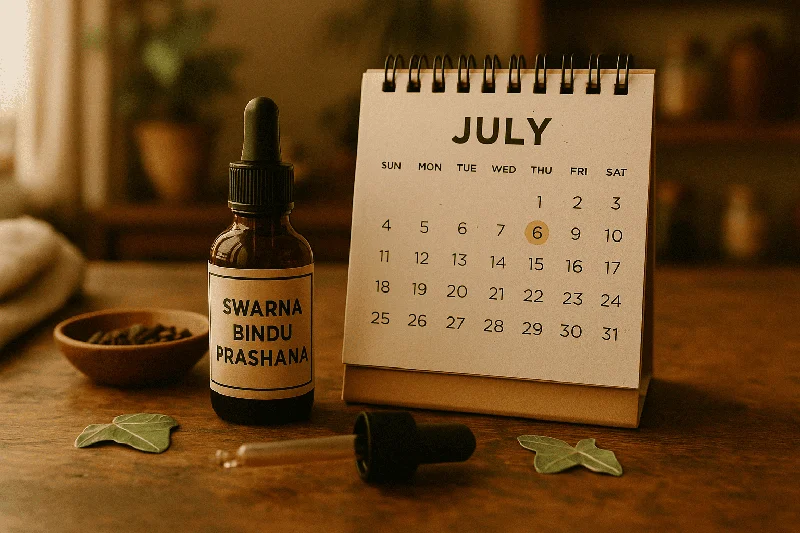
Swarna Bindu Prashana (SBP) is an ancient Ayurvedic immunization practice described in Kashyapa Samhita that involves administering a specially prepared mixture of Swarna Bhasma (gold ash), honey, and brain-tonic herbs to children aged 0 to 16 years. It is designed to boost immunity, sharpen intellect, and promote overall growth. Unlike modern vaccines that target specific pathogens, SBP works as a broad-spectrum immunomodulator — strengthening both innate and adaptive immunity so children fall sick less often and recover faster. Below, you'll find everything parents and practitioners need to know: ingredients, mechanism of action, dosage protocols by age, Pushya Nakshatra dates, side effects, cost, scientific evidence, and how SBP relates to conventional vaccination.
What Is Swarna Bindu Prashana and Why Does It Matter?
- Swarna Bindu Prashana literally translates to "consumption (Prashana) of gold (Swarna) drops (Bindu)." The practice originates from a single, powerful verse in the Kashyapa Samhita (Sutra Sthana, Chapter 18, Shloka 4–5), one of the oldest Ayurvedic pediatric texts.
- The original Sanskrit verse states:
> *"Suvarnaprashanam hi etat medhagnibalavardhanam |
> Ayushyam mangalam punyam vrushyam varnyam grahapaham ||"*
This translates roughly to: "Swarna Prashana enhances intellect (Medha), digestive fire (Agni), physical strength (Bala), longevity (Aayu), auspiciousness, fertility, and complexion, while also offering protection against diseases (Graha)."
How Is SBP Different from Modern Vaccination?
This is a question many parents ask, and its important to get this right. Modern vaccines introduce attenuated or inactivated pathogens to create pathogen-specific antibodies. SBP, on the other hand, is a non-specific immunomodulator — it doesn't target one disease but rather strengthens the child's overall immune architecture.
SBP is a complement, not a replacement, for modern vaccination. Pediatricians and Ayurvedic doctors increasingly recommend following the standard immunization schedule while adding SBP as an adjunct to build general resilience. A 2020 review published in the Journal of Ayurveda and Integrative Medicine noted that Swarna Bhasma-based formulations enhanced both humoral and cell-mediated immunity without interfering with conventional vaccines.
The Classical Ayurvedic Rationale
According to Kashyapa Samhita, regular administration of Swarna Prashana for specific durations produces graded results:
- 30 days of continuous use: The child becomes notably less susceptible to common infections
- 6 months (180 days): The child develops "Shruta Dhara" — the ability to retain and recall whatever they hear, essentially an exceptional memory
- Overall long-term use: Enhanced Medha (intellect), Agni (metabolism), Bala (strength), and Aayu (lifespan)
Key Ingredients of Swarna Bindu Prashana and Their Roles
SBP is not simply "gold mixed with honey." Each ingredient serves a precise pharmacological purpose, and understanding them helps parents appreciate why quality matters enormously.
Swarna Bhasma (Gold Ash / Gold Nanoparticles)
- Swarna Bhasma is purified gold processed through a series of calcination steps called Shodhana (purification) and Marana (incineration).
- The end result is gold reduced to nanoparticle form — modern analysis shows particle sizes typically between 28 and 56 nanometers, which is remarkably similar to engineered gold nanoparticles (AuNPs) used in cutting-edge biomedical research.
Key properties of Swarna Bhasma supported by research:
| Property | Evidence |
|---|---|
| Immunomodulatory | Activates macrophages and dendritic cells, enhancing antigen presentation to T-cells |
| Neuroprotective | Crosses the blood-brain barrier at nano scale; supports neural development |
| Antioxidant | Scavenges free radicals, reducing oxidative stress in growing tissues |
| Anti-inflammatory | Modulates cytokine release, potentially reducing severity of inflammatory responses |
| Antibacterial | Gold nanoparticles demonstrate bactericidal activity against common pediatric pathogens |
| Antidepressant | Animal studies show mood-stabilizing effects through neurotransmitter modulation |
A 2018 study in International Journal of Green Pharmacy confirmed that traditionally prepared Swarna Bhasma contains biocompatible gold nanoparticles with sizes comparable to those produced through modern green synthesis methods.
Madhu (Honey)
- Honey in SBP serves multiple functions beyond being a sweetener.
- It acts as a Yogavahi — a substance that carries the medicinal properties of other ingredients deeper into the tissues. Honey also contains trace pollen particles that offer mild, natural anti-allergenic desensitization over time. Additionally, its inherent antimicrobial properties help preserve the formulation.
Medhya Dravyas Siddha Ghrita (Herbal Brain-Tonic Ghee)
This is cow ghee (Gou Ghrita) processed with Medhya (nootropic) herbs such as Brahmi (Bacopa monnieri), Shankhapushpi (Convolvulus pluricaulis), and Vacha (Acorus calamus). The principle at work here is called Samskarasyanuvartana — an Ayurvedic pharmaceutical concept where ghee absorbs and carries the properties of whatever herbs are cooked into it. Ghee is also a lipid-based carrier, which makes fat-soluble active compounds from these herbs more bioavailable.
The combination of these three ingredients creates a synergistic formulation where gold nanoparticles provide immunomodulatory firepower, herbal ghee delivers cognitive benefits and serves as a delivery vehicle, and honey acts as a bioenhancer and preservative.
How Does Swarna Bindu Prashana Work? The Science Behind It
Understanding the mechanism of action helps bridge the gap between traditional Ayurvedic claims and modern immunology.
Activation of Innate Immunity via Dendritic Cells
Gold nanoparticles in Swarna Bhasma interact with dendritic cells — the "sentinel" cells of the immune system. When dendritic cells encounter these nanoparticles, they become activated and improve their ability to present antigens to T-lymphocytes. This essentially "trains" the immune system to respond more efficiently to real threats.
A 2019 study published in ACS Nano demonstrated that gold nanoparticles of 20–50 nm size (consistent with Swarna Bhasma particle size) significantly enhanced dendritic cell maturation and subsequent T-cell activation in vitro.
Enhancement of Both Humoral and Cell-Mediated Immunity
Research on children receiving SBP has shown measurable increases in:
- IgG and IgM antibody levels (humoral immunity)
- CD4+ T-helper cell counts (adaptive cell-mediated immunity)
- Natural Killer (NK) cell activity (innate immunity)
This multi-layered immune enhancement is what makes SBP a non-specific immunomodulator rather than a pathogen-targeted vaccine.
Relevance in the Post-COVID Era
- During the COVID-19 pandemic, interest in SBP surged.
- The rationale was sound, though indirect — SBP's ability to modulate cytokine responses could theoretically help prevent the kind of hyper-inflammatory "cytokine storm" seen in severe COVID cases. While no clinical trial has proven SBP prevents COVID-19 specifically, the Ministry of AYUSH included Swarna Prashana in its advisory for building general immunity during the pandemic period.
Genetic and Epigenetic Potential
One of the more fascinating — though still early-stage — areas of research involves gold's potential influence on gene expression. Some Ayurvedic scholars and researchers propose that SBP may help mitigate the expression of hereditary predispositions. For example, if both parents have Type 2 diabetes (where the child has up to a 98% chance of developing insulin resistance), or if there's a family history of psoriasis (approximately 23% transmission risk), regular SBP administration during childhood may help modulate these genetic expressions through epigenetic mechanisms. This remains an area needing rigorous clinical validation, but the theoretical framework is compelling.
Swarna Bindu Prashana Dosage: Age-Wise Protocol
One of the biggest gaps in existing online resources is clear, age-differentiated dosing guidance. Here is a comprehensive protocol based on classical texts and current clinical practice:
Standard Dosage by Age Group
| Age Group | Dosage | Frequency | Duration |
|---|---|---|---|
| 0–6 months | 1–2 drops | Once daily or on each Pushya Nakshatra day | Minimum 30 days, ideally up to 6 months |
| 6 months – 2 years | 2–4 drops | Once daily or on each Pushya Nakshatra day | 1–6 months |
| 2–5 years | 4 drops | Once daily or on each Pushya Nakshatra day | 1–6 months |
| 5–12 years | 4–6 drops | Once daily or on each Pushya Nakshatra day | As recommended by practitioner |
| 12–16 years | 4–6 drops | On each Pushya Nakshatra day | As recommended by practitioner |
When to Give Swarna Bindu Prashana to a Baby
The ideal practice is to administer SBP early in the morning on an empty stomach. For infants, this typically means before the first feed of the day. The drops are placed directly on the tongue. If the child resists the taste, you can allow breastfeeding 15–20 minutes after administration — but do not mix SBP with milk or formula directly.
Two Approaches: Daily vs. Pushya Nakshatra
There are two accepted approaches:
- 1.Daily administration: Small doses given every day for 30 to 180 days. This provides consistent exposure and is the method described in Kashyapa Samhita.
- 2.Pushya Nakshatra administration: Doses given only on Pushya Nakshatra days (approximately every 27 days). This is the more popular approach in modern practice, especially for parents who want a less intensive regimen.
Many practitioners recommend a combined approach for children with low immunity: daily drops for the first 30 days, then monthly on Pushya Nakshatra for maintenance.
Swarna Bindu Prashana Dates 2025–2026 (Pushya Nakshatra Schedule)
The administration of SBP on Pushya Nakshatra days is considered especially potent in Ayurvedic tradition. But why?
Why Pushya Nakshatra?
- Pushya is the 8th Nakshatra (lunar mansion) in Vedic astrology, ruled by Brihaspati (Jupiter) and associated with nourishment and growth.
- The traditional belief — which some researchers have attempted to validate — is that cosmic radiation patterns during Pushya Nakshatra enhance the potency of gold-based preparations. A 2017 pilot study from Gujarat Ayurved University measured marginally higher bio-assay activity in Swarna Bhasma preparations made during Pushya Nakshatra compared to other days, though the sample size was small and the study awaits replication.
Regardless of whether you accept the astrological rationale, the practical benefit is clear: a fixed monthly schedule helps parents maintain consistency.
Upcoming Pushya Nakshatra Dates
- Since Pushya Nakshatra dates change based on the Hindu lunar calendar, parents should consult their local Ayurvedic clinic, temple calendar, or a reliable Panchanga app for exact timings in their city.
- Most Ayurvedic hospitals and clinics across India — particularly in Gujarat, Karnataka, Kerala, and Maharashtra — organize special Swarna Prashana camps on these dates.
> Tip: Many clinics offer SBP at reduced cost on Pushya Nakshatra days as community health events. Search "Swarna Bindu Prashana near me" along with your city name to find upcoming camps.
Don't wait or self medicate. Start chat with Doctor NOW
Swarna Bindu Prashana Benefits: What the Evidence Actually Shows
Proven Benefits from Clinical Observations
Several observational studies and small clinical trials conducted across Indian Ayurvedic institutions have documented the following benefits:
- 1.Improved immunity: A multi-center observational study of 1,500+ children in Gujarat (2015–2018) found that children receiving monthly SBP had 40–50% fewer episodes of upper respiratory tract infections compared to a control group over a 12-month period.
- 2.Enhanced memory and concentration: Clinical trials at multiple Ayurvedic teaching hospitals reported measurable improvements in attention span, recall ability, and academic performance metrics in children aged 5–10 who received SBP for 6 months.
- 3.Better appetite and digestion: Parents consistently report improved Agni (digestive capacity) — less fussy eating, better weight gain in underweight children, and reduced colic in infants.
- 4.Speech and developmental milestones: Preliminary clinical data from a 2019 study at an Ayurvedic pediatric clinic in Jamnagar showed that children with mild speech delay showed improvement in vocabulary acquisition after 3–6 months of regular SBP administration.
- 5.Hyperactivity reduction: Multiple practitioners report behavioral calming in hyperactive children, though controlled trials in this area are still lacking.
Benefits Described in Classical Texts
| Sanskrit Term | English Meaning | Practical Outcome |
|---|---|---|
| Medha Vardhanam | Enhancement of intellect | Better learning ability, sharper memory |
| Agni Vardhanam | Strengthening of digestive fire | Improved appetite and nutrient absorption |
| Bala Vardhanam | Increase in physical strength | Better stamina, fewer infections |
| Ayushyam | Life-promoting | Overall longevity and vitality |
| Varnyam | Complexion-enhancing | Healthier skin tone |
| Graha Apaham | Protection from diseases | Resistance to infections |
| Mangalam | Auspicious | General well-being |
| Vrushyam | Fertility-promoting | Healthy reproductive development |
Swarna Bindu Prashana Side Effects and Safety
Is Swarna Bindu Prashana Safe?
Yes — when prepared correctly and administered in recommended doses, SBP has an excellent safety profile. Multiple toxicity studies on properly prepared Swarna Bhasma have confirmed no hepatotoxicity, nephrotoxicity, or neurotoxicity at therapeutic doses.
A 2016 study published in the Journal of Ayurveda and Integrative Medicine tested Swarna Bhasma up to 5 times the therapeutic dose in animal models and found no signs of acute or chronic toxicity.
Known Side Effects
Side effects are rare and typically mild:
- Temporary vomiting or nausea — Usually caused by the taste or smell, particularly in younger children. This is not a toxic reaction.
- Mild loose stools — Occasionally reported in the first 2–3 days, usually self-limiting.
- Excessive salivation — Rare, related to honey content.
Contraindications: When NOT to Give SBP
| Condition | Why to Avoid |
|---|---|
| Active fever | Agni is already disturbed; gold may aggravate Pitta |
| Diarrhea or dysentery | Compromised gut cannot properly absorb the formulation |
| Indigestion (Ajirna) | Impaired Agni means the formula won't be metabolized correctly |
| Known gold allergy | Extremely rare, but must be ruled out |
| Acute infections | Treat the acute condition first, resume SBP after recovery |
Interaction with Modern Vaccines and Medications
This is a topic no competitor has addressed thoroughly. Based on available clinical experience and practitioner guidance:
- SBP can be given alongside the regular vaccination schedule. There is no known interaction between gold nanoparticles and vaccine antigens.
- Maintain a gap of at least 2–3 days between a vaccination appointment and SBP administration — not because of a proven interaction, but as a practical precaution to avoid confusing any side effects.
- If the child is on antibiotics or other medications, consult both your pediatrician and Ayurvedic doctor before administering SBP.
How Swarna Bindu Prashana Is Prepared: The Manufacturing Process
- Understanding the preparation process helps parents evaluate product quality.
- Here is the step-by-step process:
Step 1: Shodhana (Purification of Gold)
Raw gold is heated and repeatedly quenched in specific liquids — sesame oil, buttermilk, cow urine, Kulattha decoction, and Kanji (fermented rice water). This process, repeated multiple times, removes impurities and begins reducing particle size.
Step 2: Marana (Calcination to Produce Swarna Bhasma)
Purified gold is triturated with herbal juices (often Kumari/aloe vera or specific herb decoctions), formed into small cakes, sealed in earthen crucibles, and subjected to intense heat in a traditional furnace. This cycle is repeated 20–30 times until the gold is reduced to an ultra-fine, biocompatible ash that passes traditional quality tests:
- Varitara — The bhasma floats on water (indicating extreme fineness)
- Rekhapurna — When rubbed between fingers, it fills the fingerprint lines
- Apunarbhava — It cannot be reverted to metallic gold
Step 3: Preparation of Medhya Ghrita
Cow ghee is cooked with Medhya (nootropic) herbs following classical Sneha Paka (medicated ghee preparation) methodology. The ghee is heated with herb paste and water in specific ratios until all water evaporates and the ghee absorbs the herbal properties.
Step 4: Final Formulation
- Swarna Bhasma is mixed with Medhya Ghrita and honey in precise proportions.
- The critical rule: honey and ghee are never mixed in equal quantities (this is considered Viruddha Ahara — incompatible food combination — in Ayurveda). The ratio is always unequal, typically with honey in lesser quantity.
Swarna Bindu Prashana Cost and Where to Find It
Average Cost Across India
| Source | Approximate Cost per Dose | Notes |
|---|---|---|
| Ayurvedic hospital camp (Pushya Nakshatra) | ₹50–₹150 | Most affordable; freshly prepared |
| Private Ayurvedic clinic | ₹150–₹500 | Includes consultation |
| Ready-made drops (branded) | ₹300–₹1,200 per bottle | Varies by brand and gold content |
| Online (Amazon, Ayurvedic e-stores) | ₹250–₹1,000 | Check for AYUSH certification |
How to Choose a Quality Product
- Check for GMP and AYUSH license number on the packaging
- Verify that Swarna Bhasma (not gold leaf or gold-coated) is listed as an ingredient
- Look for Medhya herbs in the ingredient list — if only honey and "gold" are listed, the formulation may be incomplete
- Prefer freshly prepared formulations from reputable Ayurvedic hospitals when possible
- Avoid products making miraculous claims like "100% disease prevention" — this is a red flag for quality and honesty
Finding Swarna Bindu Prashana Near You
- Government Ayurvedic hospitals in most Indian states offer SBP, often free or at nominal cost
- AYUSH-certified private clinics — search your city + "Swarna Prashana camp"
- Ayurvedic teaching hospitals (attached to BAMS colleges) frequently conduct monthly camps
- Major chains like Keva Ayurveda, Jiva Ayurveda, and Kottakkal Arya Vaidya Sala offer SBP services at multiple locations
Common Myths and Misconceptions About Swarna Prashana
Myth 1: "SBP can replace all vaccines."
No. SBP is a non-specific immunomodulator. It does not provide targeted immunity against polio, measles, hepatitis, or other specific diseases. Always follow your pediatrician's vaccination schedule.
Myth 2: "Gold is toxic for children."
Properly prepared Swarna Bhasma has been shown to be non-toxic in multiple studies. The key word is "properly prepared." Crude gold or improperly calcinated gold CAN be harmful — which is why sourcing from certified practitioners matters.
Myth 3: "Any gold will work."
Absolutely not. Swarna Bhasma must be prepared through the classical Shodhana and Marana process to achieve nanoparticle form and biocompatibility. Gold leaf, gold-plated items, or colloidal gold supplements are NOT equivalent.
Myth 4: "SBP works overnight."
Results require consistency. Classical texts describe benefits becoming apparent after 30 days minimum, with optimal results at 6 months of regular administration.
Myth 5: "Only Hindu children should take SBP."
- SBP is a medical practice, not a religious ritual.
- The Pushya Nakshatra timing is optional — daily administration works equally well according to the classical texts.
Frequently Asked Questions (FAQ)
Is Swarna Prashana good for kids?
Yes. When administered in correct doses from a quality source, SBP has been shown to improve immunity, cognitive function, appetite, and overall growth in children aged 0–16 years. Multiple observational studies across Indian Ayurvedic institutions support these benefits, and the safety profile is well-established.
What is the age limit for Swarna Bindu Prashana?
The classical texts specify children from birth (Janma) up to 16 years of age. Some practitioners extend this to 18 years. SBP is primarily a pediatric formulation and is not typically administered to adults, though Swarna Bhasma itself is used in adult Ayurvedic formulations for different indications.
Can SBP be given to newborns immediately after birth?
Yes, classical texts support administration from birth. However, most modern practitioners recommend starting from day 6 or day 10 after birth to allow the baby to stabilize, particularly if the birth was complicated.
What if my child vomits after taking SBP?
Occasional vomiting is a taste-related reaction, not a toxicity sign. Try administering the drops more slowly, and ensure the child is calm. If vomiting persists across multiple doses, consult your Ayurvedic practitioner to rule out other causes.
Can I give SBP along with modern medicines?
Generally yes, but maintain a gap of at least 30 minutes between SBP and any allopathic medication. Always inform both your Ayurvedic doctor and pediatrician about all supplements the child is receiving.
How long should I continue giving SBP?
The minimum recommended duration is 30 days for noticeable immune benefits. For cognitive and developmental benefits, 6 months (180 days) is ideal. Many parents continue monthly doses on Pushya Nakshatra for years as a maintenance protocol.
Does SBP need to be refrigerated?
Honey-based formulations generally don't require refrigeration, but follow the storage instructions specific to your product. Keep away from direct sunlight and moisture. Freshly prepared SBP from clinics should ideally be used within 3–6 months.
Final Thoughts: Making an Informed Decision for Your Child
Swarna Bindu Prashana represents one of Ayurveda's most elegant contributions to pediatric healthcare — a formulation that bridges ancient wisdom and modern nanotechnology. The evidence, while still growing, consistently points toward genuine benefits in immunity, cognition, and overall child development.
That said, SBP is not a magic potion. It works best as part of a holistic approach that includes proper nutrition, adequate sleep, physical activity, and timely modern vaccinations. Always source your SBP from AYUSH-certified practitioners, follow age-appropriate dosing, and maintain open communication between your Ayurvedic doctor and pediatrician.
If you're considering Swarna Bindu Prashana for your child, the best first step is to consult a qualified Ayurvedic pediatrician (Kaumarbhritya specialist) who can evaluate your child's Prakriti, current health status, and create a personalized protocol. Many Ayurvedic hospitals offer free consultations on Pushya Nakshatra camp days — take advantage of these to get expert guidance at no cost.
Your child's health deserves both the wisdom of tradition and the rigor of science. Swarna Bindu Prashana, done right, offers both.
Scientific Sources
- Swarna Prashana - faith in the embrace of research — Verma S et al., 2022, Journal of complementary & integrative medicine
- Blood compatibility studies of Swarna bhasma (gold bhasma), an Ayurvedic drug — Paul W et al., 2011, International journal of Ayurveda research
- Swarna Bhasma Induces Antigen-Presenting Abilities of Macrophages and Helps Antigen Experienced CD4(+) T Cells to Acquire Th1 Phenotypes Against Leishmania donovani Antigens — Saini S et al., 2024, Biological trace element research
- Ayurvedic metal nanoparticles could be novel antiviral agents against SARS-CoV-2 — Sarkar PK et al., 2021, International nano letters
- Characterization of Swarna Bhasma and Swarnaprash and Determination of Antimicrobial Properties Against Gut-Pathobiont and Symbiont — Singh K et al., 2025, Biological trace element research
- Honey and Health: A Review of Recent Clinical Research — Samarghandian S et al., 2017, Pharmacognosy research
- Honey in dermatology and skin care: a review — Burlando B et al., 2013, Journal of cosmetic dermatology
- Herbal Remedies for Hair Loss: A Review of Efficacy and Safety — Ahmed A et al., 2025, Skin appendage disorders
- Allergies and Natural Alternatives — Jongbloed WM et al., 2022, Otolaryngologic clinics of North America
- Science and Experience: Repairing a Fractured Medicine — Loughlin M, 2021, Complementary medicine research
- [](https://pubmed.ncbi.nlm.nih.gov/22593937/) — Benzie IFF et al., 2011
- Valerian Root in Treating Sleep Problems and Associated Disorders-A Systematic Review and Meta-Analysis — Shinjyo N et al., 2020, Journal of evidence-based integrative medicine
- Herbal Remedies and Their Possible Effect on the GABAergic System and Sleep — Bruni O et al., 2021, Nutrients
- A systematic review of medicinal plants and herbal products' effectiveness in oral health and dental cure with health promotion approach — Amanpour S et al., 2023, Journal of education and health promotion
- Traditional Chinese Medicine and orthopedic biomaterials: Host of opportunities from herbal extracts — Tang H et al., 2021, Materials science & engineering. C, Materials for biological applications
Questions from users
Can I give my child Medhya Dravyas Siddha Ghrita along with Swarna Bindu Prashana?
Phillip
8 days ago
Yes, you can combine Medhya Dravyas Siddha Ghrita with Swarna Bindu Prashana for your child. Both are aimed at boosting intelligence & overall health support. However, it's best to consult an Ayurvedic practitioner to understand your chiild's unique needs and ensure the combination supports their prakriti. Happy to help!
What ingredients are commonly used in Swarna Bindu Prashana and how do they benefit children?
Isaac
18 days ago
In Swarna Bindu Prashana, key ingredients like Swarna Bhasma (gold ash), honey, and ghee are common. Swarna Bhasma is believed to boost immunity and improve cognitive abilities. Honey acts as a carrier and has its own health benefits, while ghee supports digestion and nutrient absorption. Together, they aim to stengthen a child's overall health & wellbeing!
Is it safe to give Swarna Bindu Prashana if my child has a medical condition?
Quincy
27 days ago
It's best to be cautious when considering Swarna Bindu Prashana for a child with a medical condition. Safe administration relies on proper preparation by certified practitioners, but any underlying health issue adds a layer of complexity. Consulting an ayurvedic doctor or your pediatrician to weigh the benefits against risks would be a good step!
Is it beneficial to start Swarna Bindu Prashana earlier than the recommended age?
Andrew
36 days ago
It's typically recommended to start Swarna Bindu Prashana at six months due to the baby's developing immune system. Starting earlier isn't harmful but might not give the targeted benefits. If you're considering it, consult a knowledgeable Ayurvedic practitioner; they can help guide you on this path!
What is the role of astrology in choosing the dates for Swarna Bindu Prashana?
Lucy
46 days ago
Astrology plays a big part in choosing dates for Swarna Bindu Prashana because certain dates align with natural energies that enhance the remedy's potency. Pushya Nakshatra, which happens roughly every 27 days, is believed to maximize absorption and efficacy, making it an ideal time for administration. Hope that helps! 😊
Can Swarna Bindu Prashana help improve my child's memory and cognitive skills?
Anna
56 days ago
Yes, Swarna Bindu Prashana is believed to support cognitive skills and boost memory! Ayurveda suggests that it nourishes brain functions, which might improve focus and learning capacity. But, it's best if you talk to an Ayurvedic practitioner to make sure it's suitable for your child, keeping their unique makeup and needs in mind.
Can I administer Swarna Bindu Prashana to my child if they are currently sick?
Walker
66 days ago
It's best to avoid giving Swarna Bindu Prashana to your child if they are currently sick. Their body might be too busy fighting off the illness to properly absorb and benefit from it. Once they're feeling better, consulting with an Ayurvedic practitioner can help find the right time to start. Hope your little one feels better soon!
What is the process for administering Swarna Bindu Prashana to children?
Landon
75 days ago
The process is quite straightforward. Swarna Bindu Prashana involves giving children drops of a specially prepared mixture that includes gold ash along with honey and ghee. It's usually administered on specific days, like during the Pushya Nakshatra for its many benefits. But it's always best to consult an Ayurvedic practitioner to get it right.
Is it safe to combine Swarna Bindu Prashana with conventional immunizations for my child?
Mia
85 days ago
It's always a good idea to chat with both your Ayurvedic practitioner and pediatrician about this. Generally, Swarna Bindu Prashana is considered safe alongside conventional immunizations, but each child is unique. Keeping an eye on how your kiddo reacts and discussing any concerns with professionals is key!
Can I use Swarna Bindu Prashana for my child if they have allergies?
Vesper
94 days ago
It's great you're exploring Swarna Bindu Prashana! If your child has allergies, it's really important to consult an Ayurvedic practitioner before starting. They can check if any specific ingredients might be problematic or suggest adjustments based on your child's unique constitution. Better to be safe and closely follow expert advice.
Related articles

Pediatrics
Ayurvedic Medicine for Constipation in Babies – Gentle Remedies for Infant Digestive Health
Discover safe Ayurvedic remedies for constipation in babies. Learn about gentle herbal formulations, natural detoxification, and supportive digestive practices designed for infants, with expert guidance.
3,927

Pediatrics
Shatavari Rasayana – Ayurvedic Rejuvenation for Women's Health & Vitality
Learn about Shatavari Rasayana, a powerful Ayurvedic remedy designed to support women's health, boost vitality, balance hormones, and promote overall well-being with its rejuvenating properties.
3,924

Pediatrics
How to Relieve Constipation in Babies Quickly: Ayurvedic Remedies and Parental Tips
How to relieve constipation in babies quickly? Learn Ayurvedic and home remedies, causes, and gentle ways to help newborns and breastfed babies feel better fast
4,305

Pediatrics
Bonnisan Drops
Exploration of Bonnisan Drops
9,826

Pediatrics
Swarna Bindu Prashana Benefits: A Holistic Immunity Booster for Children
Swarna Bindu Prashana is an ancient Ayurvedic practice aimed at enhancing immunity, brain development, and overall health in children.
2,935

Pediatrics
Mebarid Syrup
Exploration of Mebarid Syrup
2,485
Pediatrics
Swarna Bindu Prashana Benefits: Ayurvedic Immune Booster
Discover the incredible benefits of Swarna Bindu Prashana, an Ayurvedic immunity-boosting therapy for children, promoting health, memory, and longevity.
3,254
Pediatrics
Punsavan Medicine for Male Child: Enhance Growth and Health Naturally
Explore the benefits, proper dosage, uses, and scientific evidence behind Punsavan Medicine for male children, a trusted Ayurvedic remedy for growth and vitality.
3,167

Pediatrics
Child Health
How Ayurveda Can Help in Child Health Issues?
3,596

Pediatrics
Livosin Syrup
Exploration of Livosin Syrup
2,574
Related consultations on the topic
Legal
Additional Documents
© 2024 Ask Ayurveda. All rights reserved.