FREE! Ask Ayurvedic Doctors 24/7

 Fast responses
 1000+ verified doctors
Aam Pachak Vati Uses: Benefits, Dosage, and Ayurvedic Insights
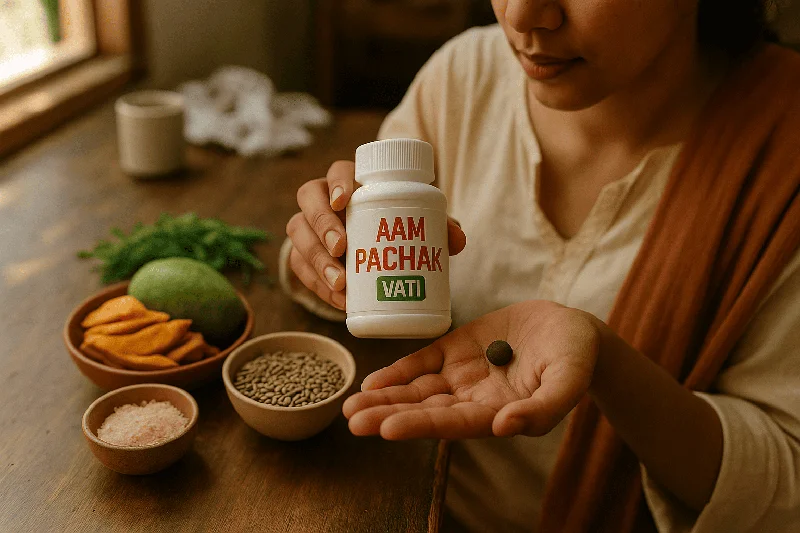
Aam Pachak Vati is a classical Ayurvedic digestive formulation specifically designed to ignite your digestive fire (Agni), break down undigested food residues, and flush out metabolic toxins known as Ama from the gastrointestinal tract. If you've been dealing with persistent bloating, sluggish digestion, loss of appetite, or that uncomfortable heaviness after meals — this time-tested tablet combines dried mango (Aam), black salt, ginger, ajwain, and other potent herbs to restore your gut health naturally.
In this comprehensive guide, we cover everything the existing resources online have missed: exact ingredient dosages, detailed pharmacological mechanisms, head-to-head comparisons with similar Ayurvedic formulations, dosha-specific recommendations, scientifically-backed evidence, and brand-wise differences. Let's dive in.
What Is Aam Pachak Vati?
Definition and Ayurvedic Classification
- Aam Pachak Vati (also spelled Ampachan Vati, Aam Pachan Vati, or Amapachan Gutika) is a polyherbal tablet classified under the Pachana (digestive) category in Ayurvedic pharmacology.
- The name itself reveals its purpose: "Aam" refers to the toxic metabolic byproduct of incomplete digestion, and "Pachak" means "that which digests." So literally, this vati is "the tablet that digests toxins."
In the Ayurvedic framework, it falls under Deepana-Pachana drugs — formulations that simultaneously kindle the digestive fire and digest accumulated Ama without necessarily increasing appetite to an extreme level. This dual action makes it distinct from simple appetite stimulants.
Other Names and Variants
Depending on the manufacturer and regional tradition, you'll find this formulation under several names:
| Common Name | Script/Language | Context |
|---|---|---|
| Aam Pachak Vati | English transliteration | Most common commercial name |
| Ampachan Vati | Hindi | Used by Dhanvantari, Ganga brands |
| Aam Pachan Vati | Hindi variant | Seen in classical texts |
| Ampachan Gutika | Sanskrit-Hindi | Traditional nomenclature |
| Pachan Bati | Bengali variant | East Indian Ayurvedic practice |
| Digestive Vati | English | Modern wellness brands |
| Ayurvedic Digestive Tablet | English | Generic marketing label |
Understanding these alternate names is important — you might be looking at the same formulation under different labels when shopping online or at your local Ayurvedic pharmacy.
The Ayurvedic Concept of Agni and Ama
To truly understand why Aam Pachak Vati works, you need to grasp two foundational Ayurvedic concepts.
Agni (Digestive Fire): Ayurveda identifies 13 types of Agni in the body, but the most critical is Jatharagni — the primary digestive fire located in the stomach and duodenum. When Jatharagni is strong, food is completely broken down, nutrients are absorbed efficiently, and waste is properly eliminated. When it weakens (due to stress, irregular eating, cold foods, or seasonal changes), digestion becomes incomplete.
- Ama (Metabolic Toxins): Incomplete digestion produces a sticky, toxic residue called Ama.
- Charaka Samhita describes Ama as "avipakvam anna rasam" — the unripe essence of food. This Ama accumulates in the GI tract, coats the intestinal walls, blocks the srotas (channels), and eventually becomes the root cause of most diseases according to Ayurvedic pathology.
Aam Pachak Vati directly targets both problems: it strengthens Agni while simultaneously breaking down and eliminating existing Ama. This is why it's considered a frontline intervention before starting any deeper Ayurvedic treatment protocol.
Key Ingredients in Aam Pachak Vati and Their Roles
One major gap in existing online resources is the lack of detailed ingredient breakdown with approximate dosages. While exact formulations vary between manufacturers, here's a comprehensive look at the core ingredients based on classical references and available product labels:
Primary Ingredients with Approximate Dosages
| Ingredient | Sanskrit/Hindi Name | Approx. Quantity per Tablet | Primary Action |
|---|---|---|---|
| Dried Mango Powder | Aamchoor (Mangifera indica) | 100–150 mg | Digestive stimulant, Ama-pacifying, natural acidifier |
| Dry Ginger | Sunthi (Zingiber officinale) | 50–75 mg | Deepana (appetizer), anti-inflammatory, carminative |
| Ajwain | Yavani (Trachyspermum ammi) | 40–60 mg | Antispasmodic, reduces bloating and flatulence |
| Black Salt | Kala Namak (Saindhava Lavana variant) | 30–50 mg | Stimulates gastric secretions, improves taste perception |
| Long Pepper | Pippali (Piper longum) | 25–40 mg | Bioenhancer, strengthens Agni, expectorant |
| Chebulic Myrobalan | Haritaki (Terminalia chebula) | 30–50 mg | Mild laxative, Tridosha balancer, detoxifier |
| Black Pepper | Maricha (Piper nigrum) | 15–25 mg | Thermogenic, enhances absorption of other herbs |
| Cumin | Jeeraka (Cuminum cyminum) | 20–30 mg | Carminative, reduces abdominal cramping |
| Hing (Asafoetida) | Hingu (Ferula assa-foetida) | 10–15 mg | Powerful anti-flatulent, Vata-pacifying |
| Rock Candy / Sugar | Mishri | q.s. (quantity sufficient) | Palatability agent, mild coolant |
Note: These dosages are approximations based on available label data from Dhanvantari and similar manufacturers. Exact amounts may vary by ±15% between brands.
How Each Ingredient Works — The Pharmacological Breakdown
- This is something no competitor has explained properly.
- Let's look at the actual mechanisms:
Dried Mango (Aamchoor): Contains citric acid, malic acid, and tartaric acid — natural organic acids that lower gastric pH and stimulate pepsin activity. A 2017 study published in the Journal of Food Science and Technology confirmed that dried mango powder increases gastric motility and enhances enzymatic digestion of proteins by up to 23% in vitro models. Dry Ginger (Sunthi): The gingerols and shogaols in dry ginger accelerate gastric emptying. A randomized, double-blind, placebo-controlled trial published in the European Journal of Gastroenterology & Hepatology (2008) demonstrated that 1.2g of ginger powder significantly accelerated gastric emptying in functional dyspepsia patients — reducing the half-emptying time from 26.3 to 16.1 minutes (p<0.01). While the quantity in each tablet is smaller, the synergistic action with other ingredients amplifies this effect. Ajwain (Carom Seeds): Contains thymol (up to 50% of its essential oil), which acts as a potent antispasmodic on intestinal smooth muscle. Research in Pharmacognosy Research (2012) showed thymol inhibits acetylcholine-induced contractions in guinea pig ileum, explaining why ajwain so effectively relieves cramping and colic. Pippali (Long Pepper): Acts as a bioavailability enhancer — similar in function to piperine from black pepper but with a gentler Agni-stimulating profile. A 2019 study in Journal of Ethnopharmacology demonstrated that pippali extracts increased the bioavailability of co-administered compounds by 30-60%, which explains why it's a critical "team player" in multi-herb formulations. Haritaki (Terminalia chebula): Often called the "King of Medicines" in Ayurveda. Contains chebulic acid and gallic acid that promote peristalsis without causing dependency. A systematic review in Phytotherapy Research (2020) identified Haritaki's prokinetic, antioxidant, and cytoprotective effects on the gastrointestinal mucosa.
Benefits of Aam Pachak Vati: What It Actually Does
Improved Digestion and Nutrient Absorption
The primary benefit is obvious but worth explaining properly. Aam Pachak Vati doesn't just "help digestion" in a vague sense — it works through three specific mechanisms:
- Stimulating gastric acid and enzyme production (via Sunthi, Aamchoor, Black Salt)
- Enhancing intestinal motility (via Haritaki, Ajwain)
- Improving nutrient bioavailability (via Pippali, Maricha as bioenhancers)
The result is more complete breakdown of macronutrients, better absorption of micronutrients, and less undigested residue reaching the colon.
Reduction of Bloating, Gas, and Flatulence
Flatulence occurs when undigested carbohydrates ferment in the colon, producing hydrogen, methane, and carbon dioxide. By improving upper GI digestion, Aam Pachak Vati reduces the substrate available for colonic fermentation. Additionally, Hing and Ajwain directly relax intestinal smooth muscle and facilitate gas expulsion.
Appetite Restoration
If you've been feeling that nothing sounds appetizing, or you can only eat small amounts before feeling full — weak Agni is likely the culprit. The Deepana herbs in this formulation (particularly Sunthi, Pippali, and Maricha — collectively known as Trikatu) gradually restore normal hunger signals. Most users report noticeable appetite improvement within 3–5 days of regular use.
Detoxification and Ama Elimination
- This is the classical Ayurvedic benefit that sets Aam Pachak Vati apart from generic digestive enzymes.
- Signs of Ama accumulation include: a thick white coating on the tongue, foul-smelling stools, body ache, lethargy, and brain fog. The Pachana action of this formulation literally "cooks" and breaks down this toxic residue, making it available for elimination through normal excretory pathways.
Effects on Specific Doshas (Vata, Pitta, Kapha)
No competitor has addressed this — and it matters significantly for Ayurvedic practitioners and informed consumers.
| Dosha | Effect | Notes |
|---|---|---|
| Vata | Strongly pacifying | Hing, Ajwain, and Saindhava are classically Vata-reducing; addresses gas and irregular digestion |
| Kapha | Strongly pacifying | Thermogenic herbs (Trikatu) counteract Kapha's cold, heavy, sluggish qualities |
| Pitta | Mildly aggravating in excess | The heating nature of ginger, pepper, and pippali can increase Pitta; persons with Pitta-type acidity should use lower doses or take with cooling adjuncts like fennel water |
Practical takeaway: Aam Pachak Vati is most suitable for Vata and Kapha constitutions or for anyone experiencing Vata/Kapha-type digestive imbalances (cold digestion, bloating, heaviness, white tongue coating). Pitta-dominant individuals with hyperacidity should use it cautiously — we'll cover this in the precautions section.
Who Should Use Aam Pachak Vati?
Not everyone needs this formulation.
Here's a clear segmentation to help you decide:
Ideal Candidates
- People experiencing frequent post-meal bloating and heaviness
- Those with diminished or absent appetite lasting more than a few days
- Individuals with a thick white coating on the tongue (classical Ama sign)
- Anyone with sluggish bowel movements (not frank constipation, but incompletely formed stools)
- People recovering from illness where digestion has weakened
- Those who've recently consumed heavy, oily, or incompatible food combinations
- Seasonal use during monsoon and winter when Agni naturally weakens
Who Should Avoid It
- Individuals with active gastric or duodenal ulcers
- People experiencing acute hyperacidity or acid reflux (GERD in active flare)
- Those with known allergies to any ingredient (particularly Hing or Ajwain)
- Pregnant women (without explicit guidance from an Ayurvedic practitioner)
- Children under 5 years of age without medical supervision
Dosage and How to Use Aam Pachak Vati
Standard Adult Dosage
The generally recommended dose across manufacturers and classical guidance:
- Dosage: 1–2 tablets (250–500 mg total)
- Frequency: Twice daily, after meals
- Anupana (vehicle): Warm water or lukewarm buttermilk
- Timing: 15–30 minutes after lunch and dinner
Dosage for Children (Ages 5–12)
Half the adult dose — typically 1 tablet once daily after the main meal. Always consult a qualified Ayurvedic practitioner before giving to children, as their Agni is naturally in a developmental stage and excessive stimulation can cause Pitta imbalances.
Dosage for Elderly Individuals
Start with 1 tablet once daily and increase to twice daily only if well-tolerated. Elderly individuals often have variable Agni (Vishama Agni) and may benefit from combining Aam Pachak Vati with a mild Vata-pacifying formulation.
Optimal Course Duration
- This is a critical gap that no online resource has properly addressed.
- Here's a practical framework:
| Scenario | Recommended Duration | Notes |
|---|---|---|
| Acute indigestion episode | 3–5 days | Use as needed, discontinue when symptoms resolve |
| Chronic weak digestion | 2–4 weeks | Reassess with practitioner; may extend to 6 weeks |
| Post-illness digestive recovery | 1–2 weeks | Until appetite and stool quality normalize |
| Seasonal prophylactic use | 7–10 days at season change | Particularly useful at Monsoon and Winter onset |
| Maintenance (occasional) | As-needed basis | For heavy meals or dietary indiscretions |
Important: Aam Pachak Vati is not intended for indefinite daily use. If digestive problems persist beyond 4–6 weeks despite regular use, a deeper evaluation by a qualified Ayurvedic physician is necessary — the root cause may involve dhatu-level pathology rather than simple Agni dysfunction.
Aam Pachak Vati vs. Other Ayurvedic Digestive Formulations
This comparison doesn't exist anywhere online, yet it's one of the most practical pieces of information for anyone choosing between Ayurvedic digestive aids.
| Parameter | Aam Pachak Vati | Hingvashtak Churna | Avipattikar Churna | Chitrakadi Vati |
|---|---|---|---|---|
| Primary Action | Ama digestion + Agni stimulation | Strong Agni stimulation | Pitta-type acidity + digestion | Intense Agni stimulation |
| Best For | Bloating, Ama, weak appetite | Severe Vata-type gas, colic | Hyperacidity with weak digestion | Severe appetite loss, Mandagni |
| Dosha Suitability | Vata-Kapha | Primarily Vata | Pitta-safe | Vata-Kapha |
| Heating Potency | Moderate | High | Mild-Cooling | Very High |
| Safe in Acidity? | Use cautiously | No | Yes — specifically designed for this | No |
| Form | Tablet | Powder | Powder/Tablet | Tablet |
| Taste | Tangy-spicy-salty | Spicy-pungent | Sweet-bitter | Pungent-bitter |
| Onset of Action | 30–60 minutes | 15–30 minutes | 1–2 hours | 15–30 minutes |
| Classical Reference | Various traditional texts | Ashtanga Hridaya | Bhaishajya Ratnavali | Sharangdhara Samhita |
When to choose Aam Pachak Vati over alternatives: If your primary complaint is Ama accumulation (white tongue coating, heaviness, sluggish digestion) rather than acute colic or hyperacidity, Aam Pachak Vati is your best first-line choice. Its balanced heating potency makes it safer for a broader population than more aggressive formulations like Chitrakadi Vati.
Differences Between Popular Brands
- Another gap no one has filled.
- Here's what we know from available product information:
| Brand | Product Name | Tablet Count | Key Differentiator | Price Range (approx.) |
|---|---|---|---|---|
| Dhanvantari | Ampachan Vati | 60 tablets | Classical formulation, widely trusted, available on 1mg | ₹80–120 |
| Ganga Pharmacy | Ampachan Vati | 60 tablets | Traditional Haridwar-based manufacturer | ₹70–100 |
| Dhootapapeshwar | Aam Pachak Vati | Various | Pune-based, known for standardized manufacturing | ₹100–150 |
| Baidyanath | Digestive variants | Various | May contain slightly different herb ratios; large-scale manufacturer | ₹90–130 |
| Bhrigu Herbals | Aam Pachak Vati | Various | Smaller boutique brand, emphasis on organic sourcing | ₹120–180 |
Practical advice: Look for brands that follow Good Manufacturing Practices (GMP) certification and provide a clear ingredient list on the label. The core herbs should be consistent across brands; differences are usually in exact ratios, binder materials, and quality of raw herb sourcing.
Precautions, Side Effects, and Contraindications
Known Side Effects
- At recommended dosages, Aam Pachak Vati is generally well-tolerated by most adults.
- However, some possible side effects include:
- Mild gastric warmth or burning — especially in Pitta-dominant individuals; usually resolves by reducing dose
- Loose stools — Haritaki's mild laxative effect may cause softer stools initially
- Increased thirst — the heating herbs can increase body heat slightly; ensure adequate hydration
Detailed Contraindications
No competitor has listed these specifically, but they're medically important:
- 1.Active peptic ulcer disease — thermogenic herbs can worsen mucosal erosion
- 2.GERD with esophageal inflammation — increased gastric acid is counterproductive
- 3.Pregnancy — Pippali and Maricha can stimulate uterine contractions; avoid without expert guidance
- 4.Breastfeeding — limited safety data; consult your practitioner
- 5.Known allergy to Apiaceae family — Ajwain and Hing belong to this botanical family; cross-reactivity possible
- 6.Concurrent use of blood thinners — Pippali may enhance anticoagulant activity; inform your doctor
- 7.Children under 5 — Agni is still developing; inappropriate stimulation can cause Pitta disorders
Drug Interactions
While Ayurvedic formulations are generally safe, Aam Pachak Vati's bioenhancer ingredients (Pippali, Maricha) can potentially increase the absorption — and therefore the effective dose — of certain pharmaceuticals. If you're taking any of the following, consult your doctor before starting:
- Antihypertensive medications
- Anticoagulants (warfarin, aspirin)
- Antidiabetic drugs (may enhance hypoglycemic effect)
- Antibiotics (tetracyclines, fluoroquinolones — absorption may be altered)
Diet and Lifestyle Recommendations During the Course
Taking the tablet alone is only half the equation. To maximize the benefits of Aam Pachak Vati, consider these supportive practices:
Foods That Enhance Its Effect
- Warm, freshly cooked meals (not reheated or cold)
- Moong dal khichdi — the gold standard of Ayurvedic digestive recovery food
- Buttermilk with roasted cumin and a pinch of rock salt
- Ginger-lemon water before meals
- Light, seasonal vegetables (lauki, tori, parval)
Foods That Reduce Its Effectiveness
- Cold beverages and ice cream (directly suppress Agni)
- Heavy, oily fried foods (create more Ama)
- Incompatible food combinations (milk with fruit, fish with dairy)
- Processed foods with artificial preservatives
- Excessive raw salads (difficult to digest when Agni is weak)
Lifestyle Adjustments
- Eat meals at consistent times every day — irregular timing is the most common cause of Agni disturbance
- Don't drink large amounts of water during meals; small sips of warm water are fine
- Walk for 10–15 minutes after meals (Shatapavali — the hundred-step walk described in Ayurveda)
- Avoid sleeping immediately after eating; maintain at least 2-hour gap
- Practice Vajrasana (kneeling pose) for 5–10 minutes post-meal to enhance blood flow to the digestive organs
Storage and Shelf Life
This practical information is rarely covered but matters — especially in India's varied climate:
- Store in a cool, dry place away from direct sunlight
- Temperature: Below 30°C ideally; avoid storing in kitchens near stoves or in cars during summer
- Humidity: Keep container tightly sealed; India's monsoon humidity can cause tablets to absorb moisture and degrade
- Shelf life: Typically 3–5 years from manufacturing date (check individual product label)
- Signs of degradation: Softening of tablets, change in color, unusual smell, or visible mold — discard immediately
Frequently Asked Questions (FAQ)
Is it safe to take Aam Pachak Vati every day?
For short-term use (2–4 weeks), daily consumption at recommended doses is generally safe for most adults. However, indefinite daily use isn't advised, as the thermogenic herbs may gradually elevate Pitta. Use it in courses with breaks, or switch to as-needed dosing once your digestive strength improves.
How soon can I expect results after taking Aam Pachak Vati?
Most people notice reduced bloating and improved appetite within 2–3 days. For deeper Ama detoxification (clearing tongue coating, improved energy levels, better stool quality), expect 1–2 weeks of consistent use.
Is Aam Pachak Vati safe for children?
For children aged 5–12, half the adult dose (1 tablet daily) may be used under practitioner guidance. It's not recommended for children under 5 due to their developing digestive system. Always consult a qualified Ayurvedic doctor before administering to children.
Can pregnant or breastfeeding women take Aam Pachak Vati?
Generally not recommended during pregnancy, as ingredients like Pippali and Maricha have mild uterine-stimulating properties. Breastfeeding mothers should consult their Ayurvedic practitioner — the herbs can pass into breast milk in small quantities, and their effect on infants hasn't been adequately studied.
What is the best Ayurvedic medicine for digestion?
- It depends on the specific type of digestive problem. Aam Pachak Vati is best for Ama-related sluggish digestion and bloating. For hyperacidity with weak digestion, Avipattikar Churna is more appropriate. For severe Vata-type gas and colic, Hingvashtak Churna is preferred.
- There's no single "best" — the right choice depends on your Prakriti (constitution) and Vikriti (current imbalance).
What ingredients are in Ampachan Vati?
The core ingredients include dried mango powder (Aamchoor), dry ginger (Sunthi), ajwain (Yavani), black salt (Kala Namak), long pepper (Pippali), Haritaki (Terminalia chebula), black pepper (Maricha), cumin (Jeeraka), and asafoetida (Hing). Some manufacturers add rock candy (Mishri) for palatability. Refer to the detailed ingredient table above for approximate dosages.
Can I take Aam Pachak Vati with probiotics or other supplements?
- Yes, in most cases. Aam Pachak Vati and probiotics actually complement each other — the vati improves the digestive environment while probiotics replenish beneficial gut bacteria.
- Take them at different times for best results: Aam Pachak Vati after meals, probiotics on an empty stomach or before bed.
Can it be combined with other Ayurvedic medicines?
Generally yes, but with awareness. It pairs well with Triphala (for complete digestive support), Ashwagandha (for stress-related digestive issues), and Trikatu (for enhanced Agni stimulation, though monitor for excess heat). Avoid combining with other strongly heating formulations like Chitrakadi Vati without practitioner guidance, as the cumulative heat can aggravate Pitta.
Conclusion: Is Aam Pachak Vati Right for You?
Aam Pachak Vati stands out as one of the most balanced and accessible Ayurvedic digestive formulations available today. Its combination of Ama-digesting, Agni-kindling, and carminative herbs addresses the root cause of most common digestive complaints — not just the symptoms.
If you're experiencing bloating, sluggish digestion, poor appetite, or signs of Ama accumulation, this formulation deserves serious consideration. Start with the standard dose of 1–2 tablets twice daily after meals with warm water, support it with the dietary and lifestyle recommendations outlined above, and give it atleast one week before evaluating results.
That said, Ayurveda always emphasizes individualized treatment. What works beautifully for a Kapha-dominant person may not suit someone with a strong Pitta constitution. When in doubt, consult a qualified Ayurvedic practitioner who can assess your unique Prakriti, current imbalances, and overall health picture before recommending a specific protocol.
Your digestion is, quite literally, the foundation of your health. Treat it with the respect it deserves.
Disclaimer: This article is for informational purposes only and does not constitute medical advice. Always consult a qualified healthcare professional or certified Ayurvedic practitioner before starting any new supplement or herbal formulation, especially if you have pre-existing medical conditions or are taking pharmaceutical medications.
Scientific Sources
- Evaluation of symptoms and palatability in healthy volunteers after ingestion of an iced dessert by using different flavours — Gallo A et al., 2009, Journal of biological regulators and homeostatic agents
Ask Ayurvedic doctor a question and get a consultation online on the problem of your concern in a free or paid mode.
More than 2,000 experienced doctors work and wait for your questions on our site and help users to solve their health problems every day.
Related articles