Ask Ayurvedic doctor a question and get a consultation online on the problem of your concern in a free or paid mode. More than 2,000 experienced doctors work and wait for your questions on our site and help users to solve their health problems every day.
FREE! Ask Ayurvedic Doctors 24/7

 Fast responses
 1000+ verified doctors
Body DetoxEar, Nose, and Throat DisordersGeriatrics & RejuvenationImmunodeficiencyInfertility TreatmentNutritionOrthopedic DisordersPediatricsRespiratory DisordersSexually Transmitted Diseases (STDs)Surgery RecoveryUrological DisordersVascular DisordersDental DisordersEndocrinological DisordersGastrointestinal DisordersYoga TherapyGeneral MedicineAllergic DisordersCardio DisordersGynecology and ObstetricsCosmetologySkin and Hair DisordersEye DisordersInfectious DiseasesMental DisordersNeurological DisordersOncologyPanchakarmaSexual Health & DisordersSports Medicine
Published on 12/17/24
(Updated on 07/08/26)
4,258
Kuberaksha Vati Uses, Benefits, Dosage & Safety Insights
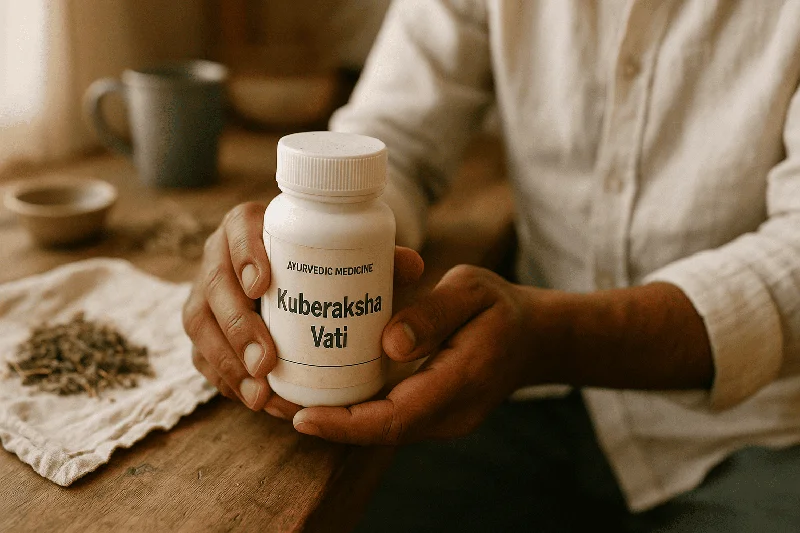
- Kuberaksha Vati is a classical Ayurvedic formulation primarily used to manage dysmenorrhoea (painful menstruation), amenorrhoea (absent periods), PCOS, and various gastrointestinal disorders such as colic, bloating, and irritable bowel syndrome.
- Composed of four potent ingredients — Kuberaksha (Caesalpinia bonduc), Hinga (asafoetida), Lasun (garlic), and Suntha (dry ginger) — this time-tested remedy works through antispasmodic, carminative, and analgesic mechanisms to deliver relief naturally.
If you've been searching for a comprehensive, evidence-backed guide on this formulation — how it works, what's actually inside it, how to take it properly, and what to watch out for — you're in the right place. This article goes far beyond what's currently available online, covering mechanism of action, comparisons with similar formulations, detailed contraindications, recommended course duration, and the correct anupana (adjuvant) for maximum efficacy.
What Is Kuberaksha Vati?
Kuberaksha Vati is a polyherbal tablet formulation belonging to the classical Ayurvedic pharmacopoeia. The name "Kuberaksha" refers to Caesalpinia bonduc (also called Caesalpinia crista), the principal ingredient of this medicine. In Sanskrit, "Kubera" refers to the god of wealth, and "Aksha" means seed — a reference to the round, coin-like seeds of the plant that were historically associated with prosperity.
The formulation is designed to pacify Vata and Kapha doshas, making it particularly effective for conditions involving pain, spasm, and sluggish digestion.
Historical Background in Ayurveda
- Kuberaksha Vati has its roots in the Samhitha period of Ayurvedic literature.
- References to the individual ingredients — especially Kuberaksha — appear across multiple classical texts. Charaka Samhita classifies Kuberaksha under Swedopaga (diaphoretic) and Shothahara (anti-inflammatory) groups. Bhavaprakasha Nighantu describes the seed as Tikta (bitter), Kashaya (astringent), and Ushna Veerya (hot potency).
The complete formulation as a compound tablet appears in regional classical texts, including the Sahasrayogam, a compilation of Ayurvedic formulations widely followed in Kerala and South Indian Ayurvedic practice.
Reference in Classical Texts and Government Protocols
What sets Kuberaksha Vati apart from many obscure Ayurvedic formulations is its mention in the National Clinical Management Protocol published by the Government of India's Ministry of Ayush in 2020. This protocol references Kuberaksha Vati as part of management strategies for specific gynaecological conditions, giving it a level of institutional validation that many classical formulations lack.
- The mention in a government clinical protocol is significant because it signals that the formulation has been reviewed for safety and traditional efficacy by a panel of Ayurvedic experts at the national level.
- This isn't a folk remedy floating in obscurity — it's a recognized therapeutic tool.
Key Ingredients & Composition
Each Kuberaksha Vati tablet typically weighs 250 mg, with each of the four active ingredients contributing 62.50 mg per tablet. The ingredients are triturated (ground together) with water (Q.S. — quantity sufficient) to form a cohesive tablet mass.
| Ingredient | Botanical Name | Quantity per Tablet | Key Properties |
|---|---|---|---|
| Kuberaksha (seed kernel) | Caesalpinia bonduc / crista | 62.50 mg | Antispasmodic, anti-inflammatory, analgesic |
| Hinga (oleo-gum resin) | Ferula narthex / assa-foetida | 62.50 mg | Carminative, antispasmodic, Vata-pacifying |
| Lasun (bulb) | Allium sativum (Garlic) | 62.50 mg | Digestive stimulant, anti-inflammatory, circulatory |
| Suntha (rhizome) | Zingiber officinale (Dry Ginger) | 62.50 mg | Bioavailability enhancer, analgesic, digestive |
- > Note: Some manufacturers (notably Amrita Pharmaceuticals) substitute Suntha with Saindhav Lavan (rock salt) in their formulation.
- This is an important distinction — Saindhav Lavan enhances digestive fire differently than Suntha, and the therapeutic emphasis shifts slightly. Always check the label of the specific brand you purchase.
Kuberaksha (Caesalpinia bonduc) — The Star Ingredient
Kuberaksha is the hero of this formulation, and its pharmacological profile is remarkably rich. The seed kernels contain bonducin, phytosterenin, saponins, phytosterols, and various flavonoids. Research published in multiple pharmacological journals has documented the following properties:
- Antipyretic activity — demonstrated in animal models where seed extracts reduced fever comparable to standard antipyretics
- Hepatoprotective effects — a study showed significant protection of liver cells against induced toxicity in rat models
- Immunomodulatory action — seed extracts were shown to enhance both humoral and cell-mediated immunity
- Anti-BPH (Benign Prostatic Hyperplasia) activity — studies on rats demonstrated reduction in prostate weight, suggesting potential urological applications
- Aphrodisiac and fertility-enhancing properties — traditional use supported by preliminary pharmacological evidence
- Anthelmintic and antimalarial action — the seeds have been historically used in tropical medicine for parasitic conditions
Over 30 scientific publications have investigated various pharmacological aspects of Caesalpinia bonduc, making it one of the more well-researched plants in the Ayurvedic materia medica.
Hinga (Asafoetida) — The Antispasmodic Powerhouse
Hinga is critical to the formulation's antispasmodic action. The oleo-gum resin of Ferula narthex contains ferulic acid and umbelliferone, both of which relax smooth muscle tissue. In the context of dysmenorrhoea, this directly addresses the uterine spasms that cause cramping pain.
Hinga is also a potent Vata-shamaka (Vata-pacifying agent), which aligns perfectly with the Ayurvedic understanding of menstrual pain as primarily a Vata disorder (Vata-dominant Yonivyapad).
Lasun (Garlic) — Circulatory and Digestive Support
Garlic contributes allicin and ajoene compounds that improve blood circulation, reduce platelet aggregation, and stimulate digestive enzyme secretion. In the context of Kuberaksha Vati, Lasun supports the formulation by improving pelvic blood flow (important for menstrual health) and enhancing the digestive fire (Agni), which Ayurveda considers fundamental to all healing.
Suntha (Dry Ginger) — The Bioavailability Enhancer
Dry ginger serves a dual purpose. First, it's a powerful analgesic and anti-inflammatory in its own right — gingerols and shogaols have well-documented pain-relieving properties. Second, and perhaps more importantly, Suntha acts as a Yogavahi — a substance that enhances the absorption and bioavailability of other ingredients in the formulation.
This is a concept modern pharmacology is only beginning to appreciate, but Ayurvedic formulators understood it centuries ago. Suntha ensures that the Kuberaksha, Hinga, and Lasun are properly absorbed and delivered to their target tissues.
How Kuberaksha Vati Works — Mechanism of Action
This is something no other resource adequately explains, so let's break it down.
Kuberaksha Vati works through three primary mechanisms:
1. Smooth Muscle Relaxation (Antispasmodic Action)
The bonducin and saponins from Kuberaksha, combined with the ferulic acid from Hinga, directly relax the smooth musculature of the uterus and intestines. This is why the formulation works for both menstrual cramps AND intestinal colic — the underlying mechanism is the same. When the smooth muscles stop contracting excessively, pain subsides.
2. Carminative and Prokinetic Action
Hinga, Lasun, and Suntha are all powerful carminatives — they reduce gas formation, promote its expulsion, and stimulate orderly peristaltic movement through the gastrointestinal tract. This addresses bloating, flatulence, and the abdominal distension often associated with both digestive disorders and premenstrual symptoms.
3. Deepana-Pachana (Digestive Fire Enhancement)
From an Ayurvedic perspective, all four ingredients are Ushna Veerya (hot potency) and possess Deepana (appetite-stimulating) and Pachana (digestive) properties. By correcting Agni (metabolic fire), the formulation addresses the root cause of Ama (toxin) accumulation, which Ayurveda considers the foundational factor in most diseases.
In the context of PCOS specifically, the correction of Agni helps normalize Rasa and Meda dhatu metabolism (essentially, fluid and fat metabolism), which are disturbed in Artava-kshaya (diminished menstrual flow) and Sthaulya (obesity) — both hallmark features of polycystic ovarian syndrome.
Kuberaksha Vati Benefits and Indications
Benefits for Dysmenorrhoea (Kashtartava)
This is the primary indication for Kuberaksha Vati. A clinical study published in the International Archives of Integrated Medicine (IAMJ) specifically evaluated the role of Kuberaksha Vati in Kashtartava (dysmenorrhoea) and reported positive outcomes in reducing menstrual pain severity and associated symptoms.
The formulation addresses dysmenorrhoea through:
- Direct antispasmodic action on uterine musculature
- Improvement of pelvic circulation via Lasun
- Vata-shamana (pacification of the Vata dosha responsible for pain)
- Reduction of prostaglandin-like inflammatory mediators
Primary vs. Secondary Dysmenorrhoea
Kuberaksha Vati is most effective for primary dysmenorrhoea — painful periods without underlying structural pathology. For secondary dysmenorrhoea (caused by endometriosis, fibroids, or adenomyosis), the formulation can provide symptomatic relief but should be part of a broader treatment protocol under practitioner supervision.
Benefits for PCOS and Menstrual Irregularities
A clinical case study documented the use of Kuberaksha Vati as part of a treatment protocol for PCOS, where it was combined with Ashokarishta to address both the anovulatory and metabolic aspects of the condition. The research, published through Ayurlog, demonstrated improvements in cycle regularity, reduction in ovarian cyst size, and normalization of hormonal parameters.
In PCOS management, Kuberaksha Vati is typically not used alone but as part of a multi-drug Ayurvedic protocol.
Benefits for Gastrointestinal Disorders
The formulation is indicated for:
- Colic pain — both intestinal and biliary
- Irritable bowel syndrome (IBS) — particularly the bloating and cramping variant
- Flatulence and dyspepsia — chronic gas formation and indigestion
- Constipation — by improving peristalsis and reducing spasm
- Nausea and vomiting — Suntha's well-known antiemetic properties contribute here
- Heartburn and acid reflux — though use with caution in Pitta-dominant conditions
Potential Benefits for Male Health
While Kuberaksha Vati is primarily marketed for gynaecological conditions, the pharmacological properties of Caesalpinia bonduc suggest potential benefits for male health conditions as well. The anti-BPH activity demonstrated in animal studies, combined with the plant's traditional use as an aphrodisiac, opens up possibilities for urological and andrological applications — though robust clinical data for the composite formulation in males is still lacking.
Dosage and Administration
Standard Dosage
| Parameter | Recommendation |
|---|---|
| Standard dose | 2 tablets (500 mg total) |
| Frequency | 2–3 times daily |
| Timing | After meals, or as directed by physician |
| Course duration | Typically 1–3 months for menstrual disorders; 2–4 weeks for acute GI complaints |
Anupana (Adjuvant/Vehicle)
- This is a critical detail that no competitor resource covers.
- In Ayurvedic pharmacy, the anupana — the substance used to take the medicine — significantly affects its action.
- For dysmenorrhoea: Take with warm water or decoction of Dashamoola to enhance Vata-pacifying and analgesic effects
- For digestive complaints: Take with warm water or buttermilk (Takra) to augment the carminative action
- For PCOS protocol: Often administered with honey and warm water to support Kapha-reducing action
- General use: Luke-warm water is the standard and safest anupana
Duration of Course
- For menstrual disorders, a minimum of 3 consecutive menstrual cycles (approximately 3 months) is generally recommended before evaluating efficacy.
- Ayurvedic treatment works cumulatively — expecting dramatic results after a single cycle is unrealistic.
For gastrointestinal conditions, shorter courses of 2–4 weeks may be sufficient, with the option to repeat after a gap if needed.
Always consult a qualified Ayurvedic practitioner for personalized duration. Self-medication beyond 4 weeks is not advisable.
Don't wait or self medicate. Start chat with Doctor NOW
Side Effects and Contraindications
Known Side Effects
Kuberaksha Vati is generally well-tolerated when used in recommended doses. However, because all four ingredients are Ushna Veerya (hot potency), the following side effects may occasionally occur:
- Gastric irritation or burning sensation — particularly in individuals with pre-existing hyperacidity or gastritis
- Loose stools — especially in Pitta-dominant constitutions when taken on an empty stomach
- Excessive menstrual flow — the formulation can increase menstrual bleeding in some women; those with already heavy periods (Asrigdara/menorrhagia) should use with caution
- Skin rashes or allergic reactions — rare, but possible in individuals sensitive to garlic or asafoetida
Detailed Contraindications
This section addresses a major gap in existing online resources:
- Pregnancy: Absolutely contraindicated. The antispasmodic and circulatory-stimulating action on uterine smooth muscle could potentially trigger uterine contractions. Do not use during any trimester.
- Lactation: Use with caution. Garlic and asafoetida may pass into breast milk and cause colic or fussiness in the infant. Consult your doctor before using while breastfeeding.
- Pitta-dominant conditions: The Ushna Veerya of all four ingredients can aggravate Pitta. If you have active gastric ulcers, inflammatory bowel disease (Crohn's or ulcerative colitis in active flare), or bleeding disorders, avoid this formulation.
- Children under 12: Not traditionally indicated for pediatric use. Safety data in children is absent.
- Concurrent blood-thinning medication: Garlic has antiplatelet properties. Combined with warfarin, aspirin, or other anticoagulants, there is a theoretical risk of increased bleeding.
- Pre-surgical period: Discontinue at least 2 weeks before any scheduled surgery due to garlic's effect on bleeding time.
Drug Interactions
| Medication Type | Interaction Risk | Recommendation |
|---|---|---|
| Anticoagulants (Warfarin, Heparin) | Moderate — increased bleeding risk | Avoid concurrent use |
| Antidiabetic drugs | Mild — garlic may lower blood sugar | Monitor glucose levels |
| Antihypertensives | Mild — additive blood pressure lowering | Use with monitoring |
| Allopathic analgesics (NSAIDs) | Low — but combined gastric irritation possible | Space doses by 2 hours |
Kuberaksha Vati vs. Similar Ayurvedic Formulations
No other online resource provides this comparison, so here's a practical guide for practitioners and patients:
vs. Rajapravartini Vati (for Dysmenorrhoea)
| Feature | Kuberaksha Vati | Rajapravartini Vati |
|---|---|---|
| Primary action | Antispasmodic, carminative | Emmenagogue, Vata-pacifying |
| Best for | Spasmodic pain, cramping | Scanty or delayed menses |
| Contains metals/minerals | No (purely herbal) | Yes (contains processed mercury and sulfur) |
| Safety profile | Milder, fewer concerns | Requires stricter medical supervision |
| Suitable for long-term use | Yes (up to 3 months) | Generally shorter courses |
Verdict: Kuberaksha Vati is safer for self-care (though practitioner guidance is still ideal), while Rajapravartini Vati is more powerful but demands professional oversight due to its mineral content.
vs. Kumaryasava (for PCOS)
Kumaryasava is an Asava (fermented liquid preparation) containing Aloe vera as its base. While Kumaryasava targets Pitta and Kapha in the reproductive system, Kuberaksha Vati primarily targets Vata and Kapha. In clinical practice, the two are sometimes used together for comprehensive PCOS management — Kumaryasava for hormonal balancing and Kuberaksha Vati for symptom relief (pain, bloating, irregular flow).
vs. Hingwashtak Churna (for GI Disorders)
For purely digestive complaints, Hingwashtak Churna is often a better first-line choice — it's a broader-spectrum digestive formula. Kuberaksha Vati becomes preferable when digestive symptoms coexist with menstrual complaints, or when the antispasmodic action for colic is specifically needed.
Differences Between Brands
Since nobody else compares manufacturer formulations, here is what you should know:
- Arya Ayurved Pharmacy: Uses the classical four-ingredient formula (Kuberaksha, Hinga, Lasun, Suntha), each at 62.50 mg per 250 mg tablet
- - Amrita Pharmaceuticals (available on 1mg): Substitutes Suntha with Saindhav Lavan (rock salt).
- This slightly changes the therapeutic emphasis — Saindhav Lavan is better for Deepana (appetizing) while Suntha is superior for Pachana (digesting) and bioavailability enhancement
- Vidyanand Labs: Available in bulk packs (450 and 900 tablets), suggesting use in clinical/dispensary settings. Follows classical composition
- SB Ayurved (Brahmachaitanya): Smaller pack of 30 tablets, classical composition
- The price range varies from approximately ₹50 for a 60-tablet pack to ₹200+ for bulk packs.
- Pricing should not be the primary selection criteria — check the composition label carefully.
Frequently Asked Questions (FAQ)
What is the composition of Kuberaksha Vati?
Kuberaksha Vati contains four ingredients in equal proportion: Kuberaksha (Caesalpinia bonduc) seed kernel, Hinga (asafoetida) oleo-gum resin, Lasun (garlic) bulb, and Suntha (dry ginger) rhizome. Each ingredient contributes 62.50 mg to a standard 250 mg tablet. Some manufacturers substitute Suntha with Saindhav Lavan (rock salt).
Can Kuberaksha Vati be taken during pregnancy?
No. Kuberaksha Vati is contraindicated during pregnancy. The formulation's antispasmodic and uterine-stimulating properties could potentially affect uterine tone. If you are pregnant or suspect pregnancy, do not take this medicine.
How long does Kuberaksha Vati take to show results?
For menstrual disorders, most practitioners recommend completing at least 3 menstrual cycles (approximately 3 months) before evaluating results. For digestive complaints, improvement is often noticed within 1–2 weeks. Individual results vary based on constitution, severity, and adherence to dietary guidelines.
Is Kuberaksha Vati suitable for men?
While primarily used for gynaecological conditions, the digestive and anti-inflammatory properties are not gender-specific. Men can use it for colic, IBS, and digestive complaints. The potential anti-BPH properties of Kuberaksha also suggest possible male urological applications, though clinical evidence for this specific formulation in men is limited.
Can I take Kuberaksha Vati with allopathic medicine?
Generally yes, but with precautions. Maintain a gap of at least 2 hours between Kuberaksha Vati and any allopathic medication. Specific caution is needed with blood thinners, diabetes medicines, and antihypertensives due to potential additive effects. Always inform both your Ayurvedic and allopathic physicians about all medicines you're taking.
What is the classical textual reference for Kuberaksha Vati?
The formulation finds mention in the Sahasrayogam and related classical compilations. Individual ingredients are referenced across major Ayurvedic texts including Charaka Samhita, Sushruta Samhita, and Bhavaprakasha Nighantu. The Government of India's Ministry of Ayush included it in their National Clinical Management Protocol (2020) for gynaecological conditions.
What are the side effects of Kuberaksha Vati?
When taken in recommended doses, side effects are uncommon. Potential side effects include mild gastric burning, loose stools, and increased menstrual flow. These are more likely in Pitta-dominant individuals or when taken on an empty stomach. Discontinue use and consult a doctor if you experience any persistent discomfort.
Where can I buy authentic Kuberaksha Vati?
Kuberaksha Vati is available at Ayurvedic pharmacies, authorized online retailers like 1mg, and platforms like IndiaMART for bulk purchases. Available brands include Amrita, Arya Ayurved Pharmacy, Vidyanand Labs, and SB Ayurved (Brahmachaitanya). Always purchase from licensed Ayurvedic pharmacies to ensure authenticity and quality.
Conclusion
Kuberaksha Vati is a well-formulated classical Ayurvedic medicine with genuine therapeutic value — particularly for dysmenorrhoea, menstrual irregularities, PCOS support, and gastrointestinal spasmodic conditions. Its strength lies in the synergistic combination of four ingredients that address pain, spasm, digestion, and circulation simultaneously.
Unlike many Ayurvedic formulations that remain buried in classical texts without modern validation, Kuberaksha Vati has both traditional textual support and emerging clinical evidence backing its use. Its inclusion in the Ministry of Ayush's clinical protocols further strengthens its credibility.
That said, it's not a magic pill. Best results come from using it as part of a holistic approach — appropriate diet (Pathya-Apathya), lifestyle modifications, and ideally, guidance from a qualified Ayurvedic practitioner who can tailor the dosage, anupana, and duration to your specific constitution and condition.
If you're dealing with painful periods, irregular cycles, or persistent digestive discomfort and are looking for a natural, time-tested solution — Kuberaksha Vati deserves serious consideration. Consult an Ayurvedic doctor to determine if it's the right fit for your health needs.
Scientific Sources
- Ayurveda management of large endometrioma - A case report — Sanjay Jadhav S, 2023, Journal of Ayurveda and integrative medicine
Questions from users
What are the potential benefits of Kuberaksha Vati for hormonal balance?
Paige
5 days ago
Kuberaksha Vati is traditionally used to address dysmenorrhoea, which may indirectly affect hormonal balance by alleviating menstrual discomfort and regulating associated symptoms. The formulation's antispasmodic properties help reduce menstrual cramps, and it may improve pelvic circulation. While these actions target pain rather than directly altering hormone levels, they can support overall menstrual health. Note that its use is contraindicated in pregnancy and should be discussed with a healthcare provider, especially if combined with blood-thinning medications.
Can Kuberaksha Vati help with improving menstrual flow regulation naturally?
Rory
14 days ago
Yes, Kuberaksha Vati might help regulate menstrual flow naturally due to Lasun's role in improving pelvic blood flow, which is crucial for menstrual health. Plus, the other ingredients support proper absorption and enhance digestive strength, which Ayurveda sees as key to overall health. But, as noted, it might lead to increased menstrual flow, so keep that in mind! If you have any specific concerns, it's good to chat with an Ayurvedic doctor who can consider your unique constitution.
Can Kuberaksha Vati help with managing menstrual pain or discomfort?
Joshua
24 days ago
Yes, Kuberaksha Vati could potentially help with managing menstrual pain or discomfort. The ingredients, like Kuberaksha and Hinga, have smooth muscle relaxation properties, which might help ease uterine cramps. Every body is unique though, so it's good to consult with an Ayurvedic practitioner to check if it's right for you!
Can Kuberaksha Vati help improve my overall energy levels?
Allison
33 days ago
Yes, Kuberaksha Vati might help boost energy, especially if you have a kapha imbalance or sluggish digestion. Its hot potency might support your digestive fire, but just be mindful not to use it beyond 4 weeks without guidance. Balancing overall lifestyle, like diet and rest, helps too. If in doubt, maybe consult a practitioner for personalized advice!
What is the best time of day to take Kuberaksha Vati for optimal benefits?
Savannah
44 days ago
Taking Kuberaksha Vati in the morning on an empty stomach can be beneficial. It helps kickstart your digestion and supports respiratory functions throughout the day. But it's always good to chat with an Ayurvedic practitioner for advice that's specific to your individual health and dosha balance!
Can Kuberaksha Vati help with chronic kidney issues effectively?
Sierra
53 days ago
Kuberaksha Vati might support kidney health, but if it's a chronic kidney issue, it's essential to get personalized advice from an Ayurvedic practitioner. They’d check your dosha balance and overall health to make tailored recommendations. It's better to involve a healthcare provider too, to ensure safety. Take good care!
Can Kuberaksha Vati help with skin inflammation or conditions?
Wallace
63 days ago
Kuberaksha Vati is known to reduce inflammation, which might help with skin conditions, though its primary focus isn't skin-specific. It promotes overall wellness, so if skin issues are linked to digestive imbalance or inflammation, it might be beneficial. It's a good idea to consult with an Ayurvedic practitioner for personalized advice.
How does Kuberaksha Vati help alleviate bloating and indigestion?
Avery
73 days ago
Kuberaksha Vati is great for bloating and indigestion 'cause it helps balance your agni, or digestive fire, boosting overall digestion. This herbal formulation supports healthy gut function and better nutrient absorption, which means less bloating and discomfort. By improving digestion, it naturally reduces the incidence of indigestion. Just make sure to follow the dosage guidelines!
What are the benefits of using Kuberaksha Vati for reducing inflammation?
Dylan
82 days ago
Kuberaksha Vati has anti-inflammatory properties that help reduce swelling and pain, especially in conditions like joint pain or arthritis. It works by balancing the body's doshas and supporting overall well-being. But be cautious, overuse might cause mild digestive issues like nausea. Hope that helps!
Is Kuberaksha Vati effective for boosting immunity?
Ava
92 days ago
Kuberaksha Vati isn't specifically mentioned for boosting immunity in the article, but improving digestion, respiratory function, and reducing stress can all indirectly support immune health. It's a holistic boost! If you're focusing on immunity, consider herbs like Ashwagandha or Tulsi too, which are known for that. Always best to balance according to your dosha.
Related articles

Gastrointestinal Disorders
What Causes Diarrhea: Ayurvedic Insights, Types, and Treatments
What causes diarrhea? Learn about types, Ayurvedic causes, natural remedies, and how to stop diarrhea fast. Discover herbal treatments and diet tips
2,748

Gastrointestinal Disorders
Laghu Sutshekhar Ras Benefits, Dosage, Ingredients, Side Effects
Exploration of Laghu Sutshekhar Ras Benefits, Dosage, Ingredients, Side Effects
9,027

Gastrointestinal Disorders
Patolamooladi Kashayam Benefits, Dose, Side Effects, Ingredients
Exploration of Patolamooladi Kashayam Benefits, Dose, Side Effects, Ingredients
1,572

Gastrointestinal Disorders
Krimi Kuthar Ras Benefits, Dosage, Ingredients, Side Effects
Exploration of Krimi Kuthar Ras Benefits, Dosage, Ingredients, Side Effects
5,959

Gastrointestinal Disorders
Bilwadi Vati – Traditional Ayurvedic Remedy for Holistic Health
Discover the benefits of Bilwadi Vati, an Ayurvedic formulation renowned for supporting digestive health, detoxification, and overall wellness through a unique blend of natural herbs.
3,305

Gastrointestinal Disorders
How to Use Hing: Ayurvedic Remedies and Daily Applications
Exploration of Unveiling the Versatile Benefits of Hing in Ayurveda and Modern Healing
3,929

Gastrointestinal Disorders
Ras Pachak Vati Uses: An Ayurvedic Solution for Digestive Wellness
Ras Pachak Vati is a time-tested Ayurvedic remedy for digestive wellness. Its ability to relieve indigestion, acidity, and bloating makes it a must-have for those seeking natural and holistic solutions for gut health
3,893

Gastrointestinal Disorders
Kutaja Parpati Vati Uses – Traditional Ayurvedic Remedy for Digestive Disorders
Discover the traditional Ayurvedic uses of Kutaja Parpati Vati, a potent remedy for digestive disorders including dysentery and diarrhea. Learn about its benefits, usage guidelines, and expert insights.
2,677

Gastrointestinal Disorders
Comprehensive Guide to Musta Uses in Healthcare: Benefits, Research, and Practical Applications
Discover evidence-based musta uses in healthcare, including digestive support, anti-inflammatory effects, and immune health. Expert insights and practical tips.
4,560

Gastrointestinal Disorders
What Foods Neutralize Stomach Acid Immediately: Ayurvedic Food Guide
Exploration of Foods and Tips to Quickly Neutralize Stomach Acid Naturally
2,509
Related consultations on the topic
Legal
Additional Documents
© 2024 Ask Ayurveda. All rights reserved.