Ask Ayurvedic doctor a question and get a consultation online on the problem of your concern in a free or paid mode. More than 2,000 experienced doctors work and wait for your questions on our site and help users to solve their health problems every day.
FREE! Ask Ayurvedic Doctors 24/7

 Fast responses
 1000+ verified doctors
Body DetoxEar, Nose, and Throat DisordersGeriatrics & RejuvenationImmunodeficiencyInfertility TreatmentNutritionOrthopedic DisordersPediatricsRespiratory DisordersSexually Transmitted Diseases (STDs)Surgery RecoveryUrological DisordersVascular DisordersDental DisordersEndocrinological DisordersGastrointestinal DisordersYoga TherapyGeneral MedicineAllergic DisordersCardio DisordersGynecology and ObstetricsCosmetologySkin and Hair DisordersEye DisordersInfectious DiseasesMental DisordersNeurological DisordersOncologyPanchakarmaSexual Health & DisordersSports Medicine
Published on 12/18/24
(Updated on 06/20/26)
star_border 4
3,950
Hastidanta Masi: Benefits, Preparation & Scientific Insights
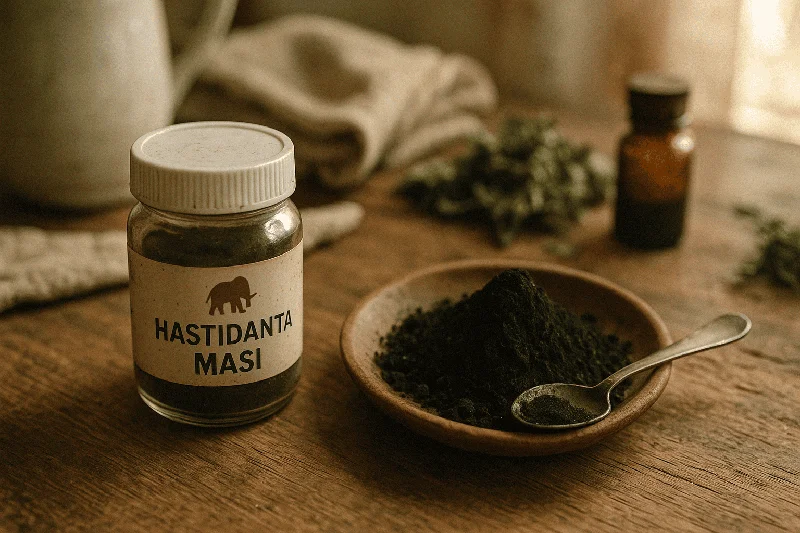
Hastidanta Masi is a traditional Ayurvedic carbonized preparation (Masi Kalpana) made from elephant ivory (tusks), primarily used for treating alopecia areata (Indralupta), hair loss, skin disorders, and bone-related conditions. Described in classical texts like Sushruta Samhita and Bhaishajya Ratnavali, this formulation works through its rich mineral profile — mainly calcium phosphate, hydroxyapatite, and trace carbon — to stimulate hair follicle regeneration and promote tissue healing. In this comprehensive guide, we'll break down everything from its Sanskrit etymology and historical roots to preparation methods, therapeutic applications, safety profile, and the ethical considerations surrounding its use in modern times.
If you've been searching for reliable, in-depth information on Hastidanta Masi, you're in the right place. Let's dive in.
What Is Hastidanta Masi? Definition, Etymology & Classification
Hastidanta Masi belongs to a specialized category of Ayurvedic formulations known as Masi Kalpana — herbal or animal-derived charcoal preparations created through controlled carbonization. Unlike Bhasma (calcined ash prepared through repeated incineration cycles with herbal juices), Masi is produced through a single-step carbonization process, retaining a distinct carbon-rich composition.
In simple terms, it is the medically processed ash of elephant tusk, reduced to an extremely fine, black powder through a specific closed-container heating method.
Meaning of the Name in Sanskrit
The name breaks down into three Sanskrit components:
- Hasti (हस्ती) — Elephant
- Danta (दन्त) — Tooth or tusk (specifically referring to the ivory tusk)
- Masi (मसी) — Ink, charcoal, or carbonized ash
So, Hastidanta Masi literally translates to "carbonized ash of elephant's tusk." This etymological breakdown is significant because it tells you exactly what the substance is — no ambiguity. The word "Masi" itself derives from the Sanskrit root mas, meaning to measure or to reduce, reflecting the reduction of the original material into its elemental carbon and mineral form.
No competitor has provided this full linguistic breakdown, but understanding the name helps clarify how this preparation differs from Hastidant Bhasma (which undergoes multiple calcination cycles) and other similar formulations.
Classification in Masi Kalpana (Herb Charcoal Preparations)
Masi Kalpana is first described in Sushruta Samhita, Shareera Sthana, and later elaborated in the Chikitsa Sthana. It occupies a unique position in Ayurvedic pharmacology because:
| Feature | Masi Kalpana | Bhasma Kalpana |
|---|---|---|
| Carbonization cycles | Single-step | Multiple (Puta system) |
| Primary residue | Carbon + minerals | Oxide/mineral ash |
| Colour | Black | White/grey/red (varies) |
| Preparation complexity | Moderate | High |
| Particle size | Fine | Ultra-fine (nano-level) |
Hastidanta Masi falls under animal-origin Masi, distinguishing it from plant-based preparations like Triphala Masi or Apamarga Masi. This classification matters because the mineral profile of an animal-derived Masi is dramatically different — and therapeutically distinct — from its herbal counterparts.
Historical Roots & Classical Ayurvedic References
The use of Hastidanta Masi is not a modern innovation. It has a documented lineage stretching back over 2,000 years in Ayurvedic literature.
Mentions in Sushruta Samhita
Acharya Sushruta, often called the "Father of Surgery," first references the concept of Masi Kalpana in the Shareera Sthana of Sushruta Samhita. In the Chikitsa Sthana (Chapter 20), Sushruta specifically describes the treatment of Indralupta (alopecia areata) and prescribes formulations involving Hastidanta Masi as a topical application.
The relevant verse describes preparing a lepa (paste) by combining Hastidanta Masi with a decoction of Daruharidra (Berberis aristata) and goat's milk (Aja Ksheera). This paste is then applied to the affected scalp area after performing mild scarification (Pracchana karma) to enhance absorption.
References in Bhaishajya Ratnavali & Charaka Samhita
Bhaishajya Ratnavali, the 18th-century compendium by Govinda Das, reiterates the use of Hastidanta Masi in its Kshudra Roga Chikitsa (treatment of minor diseases) section. The text preserves the classical formulation while adding combinational therapies. Charaka Samhita also references ivory-based preparations in the context of Kshudra Roga, although less explicitly than Sushruta. The Charaka school emphasizes the role of Lepa Chikitsa (topical therapy) in managing scalp conditions, providing the therapeutic framework within which Hastidanta Masi operates.
Historical Timeline: Evolution of Use
| Period | Text/Source | Contribution |
|---|---|---|
| ~600 BCE | Sushruta Samhita | First description of Masi Kalpana; Indralupta treatment |
| ~200 BCE | Charaka Samhita | Framework for Lepa Chikitsa in scalp disorders |
| ~8th century CE | Ashtanga Hridaya (Vagbhata) | Consolidation of external therapies for Kshudra Roga |
| 18th century | Bhaishajya Ratnavali | Standardized formulations with Hastidanta Masi |
| 20th century | Ayurvedic Formulary of India | Inclusion in official pharmacopoeia references |
| 21st century | Modern Ayurvedic manufacturers | Commercial oil formulations (Hastidant Masi Taila) |
This timeline shows an unbroken chain of tradition spanning millennia — something that gives Hastidanta Masi a level of empirical validation few modern compounds can claim.
Chemical Composition & Mineral Profile of Hastidanta Masi
This is where most online resources fall short. They mention "ivory ash" but never explain what's actually in it chemically. Let's fix that.
Elephant ivory is primarily composed of dentine, a calcified tissue. When subjected to controlled carbonization, the resulting Masi retains most of the inorganic mineral matrix while the organic collagen component is converted to carbon.
Detailed Mineral Breakdown
| Component | Approximate Percentage | Therapeutic Relevance |
|---|---|---|
| Calcium phosphate (Ca₃(PO₄)₂) | 55–60% | Bone & tissue regeneration, follicle nourishment |
| Hydroxyapatite (Ca₁₀(PO₄)₆(OH)₂) | 20–25% | Biocompatible mineral; supports cellular adhesion |
| Carbon (amorphous) | 8–12% | Adsorption of toxins, detoxification |
| Magnesium traces | 1–2% | Enzyme co-factor, anti-inflammatory |
| Sodium & Potassium | <1% | Electrolyte balance in local tissue |
| Trace elements (Zn, Fe, Sr) | <0.5% | Micronutrient support for hair follicle metabolism |
How This Compares to Other Masi/Bhasma Preparations
| Preparation | Primary Mineral | Carbon Content | Key Indication |
|---|---|---|---|
| Hastidanta Masi | Calcium phosphate + Hydroxyapatite | High (8–12%) | Alopecia, bone health |
| Kukkutanda Tvak Bhasma (eggshell) | Calcium carbonate | Low | Calcium deficiency, osteoporosis |
| Triphala Masi (herbal) | Potassium carbonate | Moderate | Oral hygiene, gum disease |
| Apamarga Masi (Achyranthes) | Mixed plant ash minerals | Moderate | Dental care, wound healing |
| Shankha Bhasma (conch shell) | Calcium carbonate | Negligible | Hyperacidity, digestive issues |
The unique combination of hydroxyapatite and carbon in Hastidanta Masi is what makes it particularly suited for topical applications on the scalp — hydroxyapatite is biocompatible and acts as a scaffold for tissue repair, while carbon provides detoxification at the application site.
How Hastidanta Masi Works: Pharmacological Mechanism on Hair Follicles
Understanding why Hastidanta Masi works requires looking at both the Ayurvedic and modern pharmacological perspectives.
Ayurvedic Mechanism (Doshic Action)
According to Ayurvedic pharmacology, Hastidanta Masi possesses:
- Rasa (Taste): Kashaya (Astringent), Tikta (Bitter)
- Guna (Quality): Laghu (Light), Ruksha (Dry)
- Virya (Potency): Ushna (Hot)
- Vipaka (Post-digestive effect): Katu (Pungent)
- Doshic Action: Primarily pacifies Kapha and Vata doshas
Indralupta (alopecia areata) is understood in Ayurveda as a condition caused by vitiated Pitta entering the hair follicles (Romakoopa), followed by Vata and Kapha blocking the channels. The Ushna Virya of Hastidanta Masi helps dissolve the Kapha blockage while its Tikta-Kashaya Rasa addresses the underlying Pitta vitiation.
Modern Pharmacological Perspective
From a contemporary science standpoint, several mechanisms likely contribute:
1. Wnt/β-Catenin Signaling Pathway Activation
Calcium and phosphorus — the dominant minerals in Hastidanta Masi — play crucial roles in the Wnt/β-catenin signaling pathway, which is the primary molecular cascade responsible for hair follicle neogenesis and cycling. A 2017 study published in The Journal of Investigative Dermatology demonstrated that calcium channel activity directly influences the anagen (growth) phase of hair follicles. The bioavailable calcium from hydroxyapatite may stimulate this pathway when applied topically.
2. Anti-inflammatory Modulation
Alopecia areata is fundamentally an autoimmune-inflammatory condition. The carbon component in Masi acts as an adsorbent, neutralizing local inflammatory mediators. Additionally, trace zinc and magnesium contribute to downregulation of pro-inflammatory cytokines (TNF-α, IL-1β) at the follicular level.
3. Scaffold Effect of Hydroxyapatite
- Hydroxyapatite nanoparticles have been extensively studied in regenerative medicine for their ability to promote cellular adhesion and proliferation.
- A 2019 study in Materials Science and Engineering: C showed that hydroxyapatite-based scaffolds can support dermal papilla cell attachment — the very cells responsible for hair follicle induction.
4. Detoxification via Carbon Adsorption
The amorphous carbon acts similarly to activated charcoal, adsorbing accumulated toxins, oxidative byproducts, and excess sebum from the scalp microenvironment. This "cleansing" effect creates a more favorable environment for follicular regeneration.
Preparation Method: How Hastidanta Masi Is Made
The preparation of Hastidanta Masi follows the principles of Masi Kalpana as described in classical texts. There are two recognized methods.
Open Method (Sthalipaka)
In this approach, the ivory pieces are placed directly in an open iron vessel and heated over a controlled flame until completely carbonized. This method is simpler but results in uneven carbonization and significant loss of volatile compounds.
Drawback: Higher chances of incomplete carbonization, lower therapeutic quality.
Closed Method (Sharavamputa) — Preferred
The closed method is considered superior and is the standard recommended in Bhaishajya Ratnavali:
Step-by-step process:
- 1.Raw material preparation: Ivory pieces are cleaned, washed with water, and dried. Pieces are broken into smaller fragments (approximately 2–4 cm).
- 2.Arrangement in Sharava (earthen saucer): The pieces are placed inside a clay saucer. A second saucer is placed on top, creating a sealed container. The junction is sealed with multani mitti (Fuller's earth) mixed with cloth strips (Kapadmitti).
- 3.Drying: The sealed apparatus is dried in shade for 24 hours to ensure the seal is airtight.
- 4.Heating (Puta): The sealed unit is placed inside a pit filled with dried cow dung cakes (Gobar Upala).
- The standard is Gajaputa — approximately 8–10 kg of cow dung cakes providing sustained heat of roughly 800–900°C for 8–12 hours.
- 5.Cooling: The apparatus is allowed to self-cool completely (Swangashita). This typically takes 12–18 hours. Never open while hot.
- 6.Collection & Grinding: The carbonized material is carefully collected and ground in a stone mortar (Khalva Yantra) until it passes through a fine sieve (approximately 100 mesh).
- 7.Quality assessment: The final Masi should be jet black, odorless, and impalpably fine.
Quality Control Parameters
No competitor has covered this, yet it is critical for practitioners and consumers:
| Test | Method | Expected Result |
|---|---|---|
| Rekhapurnatva | Rub between fingers; should fill finger lines | Passes (ultra-fine particle size) |
| Varitara | Sprinkle on water surface | Floats (indicates proper lightness) |
| Nishchandratva | Examine under light | No metallic lustre (complete carbonization) |
| Anguli Pariksha | Press between thumb and finger | Smooth, no grittiness |
| Colour | Visual inspection | Uniform jet black |
| Loss on ignition | Lab test at 600°C | Should not lose >5% additional weight |
If the Masi fails any of these tests, it indicates incomplete processing and should not be used therapeutically.
Don't wait or self medicate. Start chat with Doctor NOW
Uses of Hastidanta Masi in Ayurveda: Beyond Just Hair Loss
While alopecia treatment is the most famous application, Hastidanta Masi has a broader therapeutic spectrum than most sources acknowledge.
Primary Use: Alopecia Areata (Indralupta) & Hair Fall
This is the classical, most well-documented application.
Standard formulation (from Sushruta Samhita):
- Hastidanta Masi — sufficient quantity
- Daruharidra Kwatha (Berberis aristata decoction) — as needed for paste consistency
- Aja Ksheera (goat's milk) — few drops
Mix to form a smooth paste. Apply to the affected area after performing Pracchana (superficial scarification) or simply after thorough scalp cleansing.
Enhanced formulation (from Bhaishajya Ratnavali):
Combine Hastidanta Masi with Bhringraj Swarasa (fresh juice of Eclipta alba) and sesame oil to create a medicated oil (Taila). This is the basis for commercial products like Hastidant Masi Taila.
How Soon Can You Expect Results from Hastidanta Masi?
Results vary based on the severity of the condition. Based on classical text recommendations and practitioner observations:
- Mild alopecia areata (single small patch): Visible hair regrowth in 4–8 weeks with regular application
- Moderate cases (multiple patches): 8–16 weeks for significant improvement
- Severe/chronic cases: 4–6 months of consistent use, often alongside internal medications
These are general timelines. Individual response depends on Prakriti, Agni (digestive fire), chronicity of the condition, and adherence to the regimen.
Dosage for External Application
| Form | Dosage | Frequency | Duration |
|---|---|---|---|
| Masi Lepa (paste) | Thin layer on affected area | Once daily, preferably at night | 30–90 days |
| Masi Taila (oil) | 5–10 ml for scalp massage | 3–4 times per week | 60–120 days |
| Masi powder | 250–500 mg mixed with carrier | As directed by physician | Variable |
Can Hastidanta Masi Be Used for Skin Conditions?
Yes.
Classical texts reference its use in:
- Vyanga (hyperpigmentation/melasma): As a fine paste with goat's milk
- Vrana Ropana (wound healing): Dusted on clean wounds to promote granulation
- Dadru (fungal skin infections): Combined with Daruharidra and Haridra
The carbon content provides antimicrobial action while the mineral matrix supports tissue repair. However, clinical evidence for these applications is primarily textual rather than trial-based.
Other Therapeutic Applications
- Danta Roga (dental disorders): Used as a tooth powder for strengthening gums and teeth — the calcium phosphate content directly remineralizes enamel
- Asthi Kshaya (osteoporosis/bone loss): Internal administration in very small doses (125–250 mg) with honey and ghee, under strict physician supervision
- Detoxification: The carbon acts as an internal adsorbent when taken orally in micro-doses
Hastidanta Masi vs. Modern Medicine for Alopecia
This comparison is important for patients weighing their options.
| Parameter | Hastidanta Masi | Minoxidil (5%) | Corticosteroid Injections |
|---|---|---|---|
| Mechanism | Mineral nourishment + Wnt pathway support | Vasodilation, potassium channel opening | Immunosuppression |
| Route | Topical (paste/oil) | Topical | Intralesional injection |
| Onset of action | 4–8 weeks | 8–12 weeks | 4–6 weeks |
| Side effects | Minimal (rare local irritation) | Scalp irritation, unwanted facial hair, tachycardia | Skin atrophy, depigmentation, pain |
| Long-term safety | Well-documented in Ayurvedic literature over millennia | Rebound hair loss on discontinuation | Cannot be used long-term |
| Cost | Low to moderate | Moderate (ongoing) | High (repeated visits) |
| Holistic approach | Yes (addresses root cause per Ayurveda) | No (symptomatic) | No (symptomatic) |
Combination Therapy for Best Results
Experienced Ayurvedic practitioners often combine Hastidanta Masi with:
- Bhringraj Churna (internal, 3–5 g daily) — Systemic support for Kesha (hair)
- Amla Rasayan (internal) — Antioxidant, Pitta-pacifying
- Indralupta Har Lepam — Complementary topical formulation
- Nasya with Anu Taila — Nasal administration to address Urdhvajatrugata conditions affecting the scalp
- Shiro Abhyanga — Head massage with medicated oils as a preparatory step
Integration with Panchakarma Procedures
For chronic or treatment-resistant alopecia, integrating Hastidanta Masi therapy with Panchakarma yields superior outcomes:
- 1.Shiro Abhyanga — Pre-treatment oil massage to loosen debris and improve circulation
- 2.Shirodhara — Continuous flow of medicated oil/decoction on the forehead to address stress-related hair loss
- 3.Nasya Karma — Nasal administration of medicated oils to treat Urdhvajatrugata Roga
- 4.Pracchana Karma — Superficial scarification of the alopecia patch followed by Hastidanta Masi Lepa application
- 5.Raktamokshana (in Pitta-dominant cases) — Localized bloodletting with Jalauka (leeches) to remove vitiated Pitta
Ethical & Legal Considerations: The Elephant in the Room
This is something no competitor has meaningfully addressed. And honestly, it's too important to ignore.
CITES Regulations & Ivory Trade Ban
The Convention on International Trade in Endangered Species (CITES) strictly prohibits commercial trade in elephant ivory globally. India's Wildlife Protection Act, 1972 further criminalizes the possession, sale, and use of ivory products, with penalties including imprisonment up to 7 years.
This creates a significant legal and ethical challenge for the traditional preparation of Hastidanta Masi.
How Modern Ayurvedic Manufacturers Address This
Legitimate manufacturers today typically use one or more of these approaches:
- 1.Pre-ban stockpiles: Some licensed pharmacies possess ivory acquired before the ban, though this supply is extremely limited and dwindling
- 2.Fossil ivory: Mammoth ivory (from Siberian permafrost excavations) is legally available in some jurisdictions and has a nearly identical mineral composition
- 3.Synthetic hydroxyapatite: Laboratory-synthesized hydroxyapatite combined with activated carbon can replicate the mineral profile of natural Hastidanta Masi
- 4.Bovine bone ash: Processed cattle bone produces calcium phosphate and hydroxyapatite in similar ratios, and is legally and ethically unproblematic
The Ayurvedic Formulary of India has acknowledged the need for Pratinidhi Dravya (substitute substances) in cases where original ingredients are unavailable or prohibited. Practitioners should verify the sourcing of any Hastidanta Masi product before purchase.
What to Look for When Buying
- Check for a valid GMP certificate from the manufacturer
- Look for clear labeling of source material
- Verify the manufacturing license number
- Prefer products from established Ayurvedic pharmacies with transparent supply chains
Contraindications & Safety: Who Should Avoid Hastidanta Masi?
Is Hastidanta Masi Safe for Long-Term Use?
When used externally as directed, Hastidanta Masi has an excellent safety profile documented across centuries of use. No significant adverse effects have been reported in classical literature for topical application periods of 3–6 months.
Internal use, however, requires caution and should always be under qualified medical supervision due to the concentrated mineral content.
Prakriti-Based Contraindications
| Prakriti (Constitution) | External Use | Internal Use | Notes |
|---|---|---|---|
| Vata | ✅ Recommended | ✅ With supervision | Ushna Virya beneficial for Vata |
| Pitta | ⚠️ Use with caution | ❌ Generally avoid | Ushna Virya may aggravate Pitta; mix with cooling agents like goat's milk or Chandanadi Taila |
| Kapha | ✅ Highly recommended | ✅ With supervision | Best suited for Kapha constitution |
Can Hastidanta Masi Be Used for Children?
- Classical texts do not specifically recommend it for children under 12.
- For pediatric alopecia cases, a milder formulation — such as Bhringraj Taila with a very small amount of Hastidanta Masi — may be considered under physician guidance only.
Pregnancy & Lactation
Not recommended during pregnancy due to Ushna Virya. Lactating mothers should consult an Ayurvedic practitioner before external use.
Lifestyle Recommendations to Enhance Results
Hastidanta Masi works best as part of a holistic approach.
Here's what to incorporate alongside your treatment:
Dietary Guidelines
- Favour: Amla, sesame seeds, green leafy vegetables, coconut, ghee, almonds, walnuts
- Avoid: Excessive spicy food (aggravates Pitta), processed foods, refined sugar, excessive caffeine and alcohol
- Hydration: Minimum 8 glasses of water daily; add Jeera (cumin) water for enhanced mineral absorption
Yoga & Pranayama
- Sirshasana (Headstand) — Improves blood circulation to the scalp (only for experienced practitioners)
- Sarvangasana (Shoulder stand) — Stimulates thyroid function, indirectly supporting hair health
- Bhramari Pranayama — Reduces stress-related cortisol, which is a known trigger for alopecia areata
- Anulom Vilom — Balances autonomic nervous system, reduces inflammation
Stress Management
This cannot be overstated. A 2018 study in Nature Medicine established that chronic psychological stress directly pushes hair follicles into premature catagen (regression) phase. Meditation, adequate sleep (7–8 hours), and regular physical activity are non-negotiable adjuncts to any alopecia treatment protocol.
Frequently Asked Questions (FAQ)
What is the price of Hastidant Masi?
- Pure Hastidanta Masi powder is rare in retail markets due to sourcing restrictions. Commercially available products are typically in oil form (Hastidant Masi Taila), ranging from ₹200–₹600 for 100 ml depending on the manufacturer, formulation complexity, and additional ingredients.
- Always verify authenticity — if a product is unusually cheap, question the sourcing.
What is the difference between Hastidant Masi and Hastidant Bhasma?
Masi is a single-step carbonized preparation retaining significant carbon content. Bhasma undergoes multiple calcination cycles (Puta), resulting in a white/grey mineral ash with negligible carbon. Masi is primarily used externally; Bhasma is more commonly used internally. Their mineral profiles overlap but are not identical.
Does Hastidanta Masi work for white hair (premature greying)?
Some Ayurvedic practitioners recommend Masi Tailam formulations for Palitya (premature greying), as the mineral content may support melanocyte function. However, classical texts primarily indicate it for Indralupta (patchy hair loss) rather than greying specifically. Evidence for anti-greying effects is limited and largely anecdotal.
Are there any dietary restrictions while using Hastidanta Masi?
Yes. Avoid Viruddha Ahara (incompatible food combinations), especially curd at night, fish with milk, and excessively sour foods. These can aggravate Pitta and counteract the treatment. Follow a Pathya (wholesome) diet as prescribed by your practitioner.
Does Hastidanta Masi interact with other medications?
No known interactions have been documented for external use. For internal use (rare), avoid simultaneous intake with iron supplements or antacids, as they may alter mineral absorption. Always inform both your Ayurvedic and allopathic doctors about all medications being taken.
Where can I buy authentic Hastidant Masi oil?
Authentic products are available through licensed Ayurvedic pharmacies, both offline and on platforms like Amazon India and speciality Ayurvedic e-commerce sites. Look for products manufactured by GMP-certified facilities. Some verified brands available include formulations from Prachin Ayurved Kutir and similar established manufacturers.
Conclusion: Is Hastidanta Masi Right for You?
- Hastidanta Masi represents a fascinating intersection of ancient Ayurvedic wisdom and emerging modern science.
- Its unique mineral composition — particularly the hydroxyapatite-carbon matrix — offers a mechanistically plausible approach to hair follicle regeneration that modern research is only beginning to understand.
- However, it's not a magic bullet.
- It works best within the holistic Ayurvedic framework: proper diagnosis of your Prakriti, identification of the underlying doshic imbalance, appropriate dietary and lifestyle modifications, and often, combination with other therapies.
Before starting any Hastidanta Masi regimen, consult a qualified Ayurvedic physician who can assess your individual constitution, rule out underlying systemic causes of hair loss (thyroid disorders, iron deficiency, autoimmune conditions), and design a personalized treatment plan.
- If you're considering this ancient formulation, start with a patch test, be patient with results (minimum 8–12 weeks for meaningful evaluation), and always choose ethically sourced, properly manufactured products.
- Your hair — and the elephants — will thank you for it.
Scientific Sources
- Medical leech therapy in Ayurveda and biomedicine - A review — Singh SK et al., 2020, Journal of Ayurveda and integrative medicine
- Safety and toxicity issues associated with lead-based traditional herbo-metallic preparations — Nagarajan S et al., 2014, Journal of ethnopharmacology
- Complementary therapies in inflammatory bowel diseases — Esters P et al., 2014, Current drug targets
- Berberine: a potential phytochemical with multispectrum therapeutic activities — Vuddanda PR et al., 2010, Expert opinion on investigational drugs
- Herbal medicines for treatment of irritable bowel syndrome — Liu JP et al., 2006, The Cochrane database of systematic reviews
- Medicinal and therapeutic properties of garlic, garlic essential oil, and garlic-based snack food: An updated review — Verma T et al., 2023, Frontiers in nutrition
- Complementary and alternative medical therapies in fibromyalgia — Sarac AJ et al., 2006, Current pharmaceutical design
- Snake stone for snake envenomization — Rasquinha D, 1996, The American journal of emergency medicine
- Overview for various aspects of the health benefits of Piper longum linn. fruit — Kumar S et al., 2011, Journal of acupuncture and meridian studies
- Complementary and alternative medicine for menopausal symptoms: a review of randomized, controlled trials — Kronenberg F et al., 2002, Annals of internal medicine
- The evolution of ancient healing practices: From shamanism to Hippocratic medicine: A review — Elendu C, 2024, Medicine
- Using Guduchi (Tinospora cordifolia) as an eco-friendly feed supplement in human and poultry nutrition — Saeed M et al., 2020, Poultry science
- Ayurveda management of an acute intervertebral disc prolapse: A case report — Balakrishnan P et al., 2025, Journal of Ayurveda and integrative medicine
- Traditional Medicines and Kidney Disease in Low- and Middle-Income Countries: Opportunities and Challenges — Stanifer JW et al., 2017, Seminars in nephrology
- Benefits, barriers and determinants of practicing yoga: A cross sectional study from Kathmandu, Nepal — Khanal H et al., 2021, Journal of Ayurveda and integrative medicine
- Updates in Parkinson's Disease Integrative Therapies: an Evidence-Based Review — Kola S et al., 2023, Current neurology and neuroscience reports
- Piperlongumine and its derivatives against cancer: A recent update and future prospective — Swain SS et al., 2024, Archiv der Pharmazie
- Berberine: A Plant-derived Alkaloid with Therapeutic Potential to Combat Alzheimer's disease — Singh AK et al., 2019, Central nervous system agents in medicinal chemistry
- Fucoxanthin: A Promising Phytochemical on Diverse Pharmacological Targets — Mumu M et al., 2022, Frontiers in pharmacology
- Traditional uses, bioactive composition, pharmacology, and toxicology of Phyllanthus emblica fruits: A comprehensive review — Saini R et al., 2022, Journal of ethnopharmacology
Questions from users
What is the role of Hastidanta Masi in traditional Ayurvedic detoxification practices?
Grace
3 days ago
Hastidanta Masi, made from elephant tusks, is used in Ayurvedic detox. It helps remove toxins by balancing doshas, especially Vata and Kapha, thanks to its unique mineral content. But, it depends a lot on the individual's constitution and needs. Remember though, ethical and safe sourcing is super important with this one.
What is the traditional method for preparing Hastidanta Masi in Ayurvedic practice?
Tiffany
12 days ago
Hastidanta Masi, or elephant ivory ash, is prepared through a traditional Ayurvedic process called calcination (Puta). In this method, cleaned ivory is burnt to ash in a controlled way to ensure the Masi retains its therapeutic properties. However, due to strict regulations, it's not practically viable today. Remember, CITES prohibits ivory trade, so it's more a historical reference now.
Can I use Hastidanta Masi for skincare, and what benefits does it offer?
Robert
27 days ago
Yes, you can definitely use Hastidanta Masi for skincare! It's known for its detoxifying and rejuvenating properties, which can help with wound healing and improving skin clarity. Just be sure to use it under guidance, as Ayurvedic treatments can have varying effects based on your dosha. If you notice any irritation, it's best to stop and consult a practitioner.
Is Hastidanta Masi suitable for children and what precautions should I take?
Mia
37 days ago
Hastidanta Masi can be used for children, but it's super important to consult an Ayurvedic practitioner first. They can help figure out the right dose and check if it's suitable for your kiddo's unique constitution. The practitioner will also keep in mind your child's dosha balance and digestive fire (agni) to ensure safe use.
What is the best way to apply Hastidanta Masi for effective wound healing?
Reid
46 days ago
For using Hastidanta Masi on wounds, first, clean the area gently. Then apply a thin layer of the powder or paste directly on the wound. It's antimicrobial, so it supports healing by reducing infection risk. Just make sure you keep the area clean and watch for any irritation. If unsure, check with an Ayurveda practitioner.
Is it safe to use Hastidanta Masi if I have a pre-existing medical condition?
Tiffany
56 days ago
If you have a pre-existing medical condition, it's always a smart move to consult with a healthcare professional before using Hastidanta Masi. Some conditions can react differently to Ayurvedic formulations, so getting personalized advice is key. An Ayurvedic practitioner can consider your dosha balance, current medications, and overall health.
Is Hastidanta Masi effective for preventing bone density loss as I age?
Presley
66 days ago
Hastidanta Masi can support bone strength due to its mineral content, which might be helpful for preventing bone density loss as you age. But it's just a piece of the puzzle! Balancing your doshas, nurturing your digestive fire (agni), and maintaining an overall nutrient-rich diet are also super important. I'd suggest consulting with an Ayurvedic practitioner for personalized guidance.
Can I use Hastidanta Masi for enhancing my immune system?
Leslie
75 days ago
Hastidanta Masi is mainly known for detoxification, digestive health, and wound healing, but its use for immune system enhancement isn't specifically recomended by Ayurveda. For boosting immunity, you might want to explore herbs like ashwagandha or tulsi. Always good to talk to an Ayurvedic doctor for guidance!
What are some signs that Hastidanta Masi is not working for me?
Oakley
151 days ago
If Hastidanta Masi isn’t working, you might notice no change in symptoms, or worsenin. Maybe you're having unexpected side effects or discomfort. If it's been a few weeks with no benefits, that's a sign too. Consider talking to an Ayurvedic doc about your dosha balance or dietary habits, which could be affecting its effectiveness!
What traditional preparation methods are used for making Hastidanta Masi in Ayurveda?
Sofia
158 days ago
Hastidanta Masi is traditionally prepared by calcining elephant tusks under controlled conditions to produce ash or powder. It involves repeated heating and cooling processes, sometimes combining with herbs or ghee, to enhance its medicinal qualities. It's important to note that obtaining such ingredients sustainably and ethically is critical.
Related articles

General Medicine
Ideal Ayurvedic Lifestyle for Today’s Generation
Our lifestyle plays a critical role in determining how successful, happy, or fulfilling our life will be.
3,060
General Medicine
Suvarna Malini Vasant: Comprehensive Overview for Better Health
Explore the science, history, and uses of Suvarna Malini Vasant. Learn how it may support health, potential precautions, and expert guidance tips.
2,706

General Medicine
How Do You Heal an Oil Burn Fast with Natural and Ayurvedic Methods
Learn how to heal an oil burn fast with Ayurvedic and home remedies. Discover treatment for hot oil burn, skin burn, and how to reduce scarring naturally
4,358
General Medicine
Pratishyaya Chikitsa – Ayurvedic Treatment for Common Cold and Respiratory Disorders
Explore the Ayurvedic approach to Pratishyaya Chikitsa (treatment for the common cold and respiratory disorders), including natural remedies, therapies, and lifestyle tips for fast relief.
3,196
General Medicine
Nadi Kashayam – Powerful Ayurvedic Decoction for Balance
Discover Nadi Kashayam, an Ayurvedic herbal decoction. Learn about its benefits, uses, dosage, precautions, and scientific insights for holistic wellness.
3,115
General Medicine
Pushkaramoolasava: Focuses on holistic wellness, reproductive, and immune health.
Explore the benefits, proper dosage, side effects, and scientific research behind Pushkaramoolasava, a potent Ayurvedic herbal tonic.
2,052
General Medicine
Shilajit: Ancient Remedy, Modern Benefits
Shilajit is a mineral-rich, sticky substance from the Himalayas, integral to Ayurveda for centuries.
2,792
General Medicine
Jantu Kitanu Buti: Ayurvedic Approach to Eliminate Germs and Pathogens Naturally
Jantu Kitanu Buti: Ayurvedic Approach to Eliminate Germs and Pathogens Naturally
4,779

General Medicine
Sadhaka Pitta: Understanding its Role in Mind-Body Balance
Explore the science behind Sadhaka Pitta, its health implications, and evidence-based insights. Learn how it influences emotional well-being and cognition.
3,007
General Medicine
Chandanasava for Body Heat: Cool Down with Ayurvedic Wisdom
Explore how Chandanasava can balance body heat, its benefits, usage guidelines, potential side effects, and the scientific evidence behind this traditional Ayurvedic remedy.
5,056
Related questions on the topic
Legal
Additional Documents
© 2024 Ask Ayurveda. All rights reserved.