Ask Ayurvedic doctor a question and get a consultation online on the problem of your concern in a free or paid mode. More than 2,000 experienced doctors work and wait for your questions on our site and help users to solve their health problems every day.
FREE! Ask Ayurvedic Doctors 24/7

 Fast responses
 1000+ verified doctors
Body DetoxEar, Nose, and Throat DisordersGeriatrics & RejuvenationImmunodeficiencyInfertility TreatmentNutritionOrthopedic DisordersPediatricsRespiratory DisordersSexually Transmitted Diseases (STDs)Surgery RecoveryUrological DisordersVascular DisordersDental DisordersEndocrinological DisordersGastrointestinal DisordersYoga TherapyGeneral MedicineAllergic DisordersCardio DisordersGynecology and ObstetricsCosmetologySkin and Hair DisordersEye DisordersInfectious DiseasesMental DisordersNeurological DisordersOncologyPanchakarmaSexual Health & DisordersSports Medicine
Published on 01/13/25
(Updated on 07/05/26)
5,440
Chandanasava for Body Heat: Cool Down with Ayurvedic Wisdom
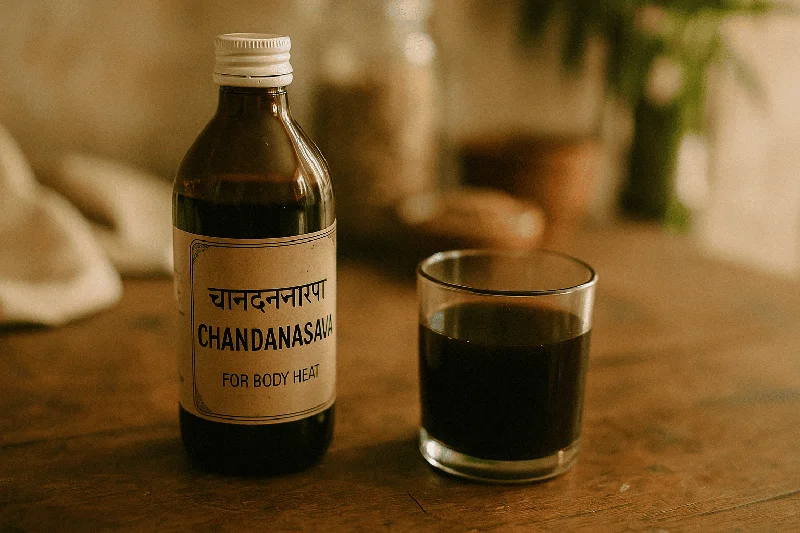
Chandanasava is a classical Ayurvedic fermented liquid medicine (Asava) primarily based on sandalwood (Shweta Chandana) and a blend of 24+ medicinal herbs. It is widely used to manage urinary tract infections, reduce excess body heat, support kidney health, improve digestion, and promote clear skin. If you've been searching for a natural, time-tested remedy for burning urination, recurrent UTIs, or elevated Pitta — Chandanasava is one of the most trusted formulations in the entire Ayurvedic pharmacopoeia.
In this comprehensive guide, we'll cover everything: the historical origins of the formula, its full ingredient list with exact quantities, how it works on a physiological level, dosage instructions, safety precautions, and how it compares to similar Ayurvedic medicines. We've also addressed the gaps that most online resources miss — including the actual mechanism of action, diet recommendations during the course, and the real difference between Asava and Arishta preparations.
What Is Chandanasava Used for in Ayurveda?
- Chandanasava (also spelled Chandanasavam) is a self-generated alcohol-based herbal formulation classified under the "Asava" category of Ayurvedic preparations.
- The word itself breaks down simply: Chandana means sandalwood, and Asava refers to a fermented medicinal liquid prepared from raw (unboiled) herbal juices or decoctions mixed with jaggery or sugar.
In Ayurvedic practice, Chandanasava is primarily prescribed for conditions involving excess heat (Pitta aggravation) in the body — particularly those affecting the urinary system, skin, and digestive tract.
Classical Textual Origins and History
Unlike many popular Ayurvedic formulations whose origins are vaguely cited, Chandanasava's composition is documented in several authoritative classical texts. The most commonly referenced source is Bhaishajya Ratnavali, a comprehensive 18th-century compendium of Ayurvedic formulations compiled by Govinda Dasji. The formula also appears in Sharangdhara Samhita (13th century) and Ayurvedic Formulary of India (AFI), which is the government-approved standardized reference.
Historically, this formulation was developed during an era when urinary tract disorders, kidney stones, and heat-related ailments were extremely common — especially in the tropical Indian subcontinent. Ayurvedic physicians (Vaidyas) recognized that sandalwood's cooling potency (Sheeta Virya) could be significantly enhanced when combined with complementary herbs through the fermentation process, which improves bioavailability and shelf life.
The formula has been in continuous clinical use for over 500 years, making it one of the most battle-tested remedies in the Ayurvedic tradition.
Asava vs Arishta: What's the Actual Difference?
This is a distinction that almost no online resource explains properly, and it's important for understanding what Chandanasava actually is.
| Feature | Asava (e.g., Chandanasava) | Arishta (e.g., Dashmularishta) |
|---|---|---|
| Base material | Fresh herb juice or cold infusion (raw/unboiled) | Kashaya — boiled decoction of herbs |
| Heating involved | No boiling of the primary liquid | Herbs are boiled in water first |
| Fermentation medium | Jaggery (Guda) or sugar with Dhataki flowers | Same — Jaggery/sugar with Dhataki flowers |
| Alcohol content | Typically 5–10% (self-generated) | Typically 5–12% (self-generated) |
| Shelf life | Improves with age; no expiry in classical texts | Same principle |
| Absorption | Slightly faster due to raw extraction | Marginally different |
The key takeaway: Chandanasava uses raw, unboiled herbal material as its base, which preserves certain heat-sensitive phytochemicals that might otherwise degrade during boiling. This is one reason why it retains more of sandalwood's volatile cooling compounds.
Full List of Chandanasava Ingredients with Exact Quantities
One of the most valuable pieces of information — and one that most articles gloss over — is the precise composition of Chandanasava as documented in the Ayurvedic Formulary of India.
Here is the complete breakdown:
Primary and Secondary Herb Components
| Ingredient (Sanskrit) | Botanical/English Name | Quantity |
|---|---|---|
| Shweta Chandana | Santalum album (White Sandalwood) | 120 g |
| Mridvika (Draksha) | Vitis vinifera (Raisins/Grapes) | 2,400 g |
| Dhataki Pushpa | Woodfordia fruticosa (Fire Flame Bush flowers) | 1,800 g |
| Priyangu | Callicarpa macrophylla | 48 g |
| Manjistha | Rubia cordifolia (Indian Madder) | 48 g |
| Musta (Nagarmotha) | Cyperus rotundus | 48 g |
| Raktachandana | Pterocarpus santalinus (Red Sandalwood) | 48 g |
| Nilotpala | Nymphaea stellata (Blue Water Lily) | 48 g |
| Padmaka | Prunus cerasoides (Wild Himalayan Cherry) | 48 g |
| Lodhra | Symplocos racemosa | 48 g |
| Madhuka (Yashtimadhu) | Glycyrrhiza glabra (Licorice) | 48 g |
| Patha | Cissampelos pareira | 48 g |
| Rasanjana | Extract of Berberis aristata (Daruharidra) | 48 g |
| Nyagrodha | Ficus benghalensis (Banyan tree bark) | 48 g |
| Gambhari | Gmelina arborea | 48 g |
| Mocharasa | Silk Cotton Tree resin | 48 g |
| Guda (Jaggery) | Unrefined cane sugar | 6,000 g (6 kg) |
| Sharkara (Sugar) | Refined sugar | 9,000 g (9 kg) |
| Jala (Water) | — | 70 liters |
Additional herbs may vary slightly between manufacturers, but the above represents the standardized AFI formulation.
Key Phytochemical Compounds
The fermentation process in Chandanasava generates and concentrates several bioactive compounds that contribute to its therapeutic action:
- Flavonoids — anti-inflammatory and antioxidant
- Tannins — astringent and antimicrobial
- Glycosides — diuretic and cardioprotective
- Alkaloids — analgesic and anti-spasmodic
- Phytosterols — anti-inflammatory
- Terpenoids and Stilbenes — antimicrobial
- Saponins — enhance absorption of other compounds
- Phenolic compounds — strong antioxidant activity
Research by Vinothkanna et al. (2022) specifically identified piperine and melatonin-related compounds in similar Asava preparations that demonstrate the ability to inhibit bacterial biofilm formation — a critical factor in recurrent urinary tract and kidney infections.
Chandanasava Benefits: Evidence-Based and Traditional
Benefits for Urinary Tract Health and UTI
This is the single most important therapeutic application of Chandanasava.
The formulation addresses urinary issues on multiple levels:
- Burning micturition (Mutradaha): The cooling properties of sandalwood directly soothe the inflamed urinary mucosal lining
- Painful urination (Mutrakrichra): Antispasmodic alkaloids reduce smooth muscle spasm in the ureters and bladder
- Recurrent UTIs: Antimicrobial tannins and phenolics combat E. coli and other uropathogens. Goel and Singh (1991) demonstrated significant antimicrobial activity of sandalwood-based formulations against common urinary pathogens
- Hematuria (blood in urine): The astringent properties of Lodhra, tannins, and Mocharasa help control microscopic bleeding in the urinary tract
Chandanasava is often the first-line Ayurvedic medicine prescribed for Mutrakrichra (dysuria) in clinical practice.
Chandanasava for Body Heat (Pitta Balancing)
Excess body heat — known as Pitta aggravation in Ayurveda — manifests as burning sensations, hot flashes, acidity, skin rashes, and irritability. Chandanasava is considered one of the best Pittashamaka (Pitta-pacifying) formulations because:
- Sandalwood (both Shweta and Rakta Chandana) have Sheeta Virya (cold potency) that directly counteracts internal heat
- Blue Water Lily (Nilotpala) and Licorice (Yashtimadhu) further enhance the cooling effect
- The fermentation medium preserves these cooling properties while making them more bioavailable
This makes Chandanasava particularly beneficial during summer months and in hot climatic regions — something practitioners have observed for centuries.
How Does Chandanasava Actually Work? (Mechanism of Action)
No competitor article explains this properly, so let's break down the pharmacological mechanism:
Step 1 — Absorption: The self-generated alcohol (5–10%) acts as a natural bioenhancer, facilitating rapid absorption of herbal compounds through the gut mucosa into the bloodstream. Step 2 — Anti-inflammatory Cascade: Flavonoids and phytosterols inhibit cyclooxygenase (COX) and lipoxygenase (LOX) enzymes, reducing prostaglandin synthesis. This is the same pathway targeted by modern NSAIDs, but with a much gentler, multi-compound approach. Step 3 — Diuretic Action: Glycosides in sandalwood and Musta increase glomerular filtration rate (GFR) and promote urine output, which helps flush out bacteria, uric acid crystals, and small calculi from the urinary system. Step 4 — Antimicrobial Activity: Tannins, phenolics, and terpenoids directly damage bacterial cell membranes. The 2022 study by Vinothkanna et al. showed that compounds in similar Asava preparations could disrupt bacterial biofilm formation — explaining why Chandanasava helps with chronic and recurrent infections, not just acute episodes. Step 5 — Cooling Effect (Pitta Reduction): Sandalwood's alpha-santalol and beta-santalol compounds have demonstrated thermoregulatory effects in pharmacological studies, reducing core body temperature perception.
Kidney Health and Stone Prevention
Chandanasava supports kidney health through several pathways:
- Mild diuretic action increases urine volume, reducing crystal concentration
- Alkalinizing effect on urine pH discourages calcium oxalate stone formation
- Research in Ayurvedic clinical settings has shown improvement in chronic kidney disease markers when Chandanasava is used as an adjunct therapy (Vinothkanna et al., 2022)
- Helps reduce uric acid levels — users have reported benefits in managing gout-related symptoms
Benefits for Skin Health
The anti-inflammatory and blood-purifying (Rakta Shodhaka) properties of Chandanasava make it useful for:
- Acne and pimples associated with internal heat
- Skin redness and inflammation
- Pitta-type skin rashes
Manjistha, one of the key ingredients, is independently recognized as one of Ayurveda's most powerful blood purifiers and skin tonics.
Digestive Benefits and Appetite Improvement
Chandanasava works as a mild appetizer (Deepana) and digestive aid (Pachana). The fermentation process itself generates enzymes and organic acids that support healthy digestion.
It's useful for:
- Loss of appetite
- Mild digestive discomfort
- Acidity associated with Pitta aggravation
Anti-Ulcer and Anti-Arthritic Potential
Dixit et al. (2012) investigated the anti-ulcer activity of Chandanasava and found that its flavonoid and tannin content provides a gastroprotective effect — reducing gastric acid-induced mucosal damage in a manner comparable to standard anti-ulcer medications.
Some Ayurvedic practitioners also prescribe Chandanasava as a supportive therapy for joint stiffness and mild arthritic complaints, leveraging its anti-inflammatory compounds, though more clinical research is needed in this specific area.
Chandanasava Benefits for Women
Chandanasava holds particular relevance for women's health:
- Leucorrhea (white discharge): The astringent and antimicrobial properties help manage abnormal vaginal discharge
- Burning urination during UTIs — women are significantly more prone to UTIs than men
- Menopausal heat flashes: The cooling property provides relief from hot flashes
- Menstrual discomfort associated with Pitta aggravation
Chandanasava Benefits for Men
For men, the primary applications include:
- Urethral burning and prostatitis-related discomfort
- Burning during urination related to urinary infections
- Kidney stone prevention and management of uric acid
- Excessive body heat and heat-related fatigue
How to Use Chandanasava: Dosage and Administration
Standard Adult Dosage
| Parameter | Recommendation |
|---|---|
| Dose | 12–24 mL (approximately 3–6 teaspoons) |
| Frequency | Twice daily |
| Timing | After meals |
| Dilution | Mix with equal quantity of lukewarm water |
| Duration | As directed by physician; typically 1–3 months |
Dosage Considerations for Specific Groups
Children
Generally, Chandanasava is prescribed at half the adult dose (6–12 mL) for children above 5 years, but only under strict medical supervision due to the self-generated alcohol content.
Pregnant and Lactating Women
Chandanasava should be avoided during pregnancy due to its alcohol content and certain herb interactions. During lactation, use only if specifically prescribed by a qualified Ayurvedic physician.
Elderly Patients
The standard adult dose is generally well-tolerated. However, patients on multiple allopathic medications should consult their doctor to rule out interactions.
Chandanasava Compared to Similar Ayurvedic Formulations
This is information you won't find easily elsewhere. Here's how Chandanasava stacks up against commonly compared alternatives:
| Feature | Chandanasava | Chandraprabha Vati | Punarnavasava | Gokshuradi Guggulu |
|---|---|---|---|---|
| Form | Liquid (Asava) | Tablet (Vati) | Liquid (Asava) | Tablet (Guggulu) |
| Primary Action | Cooling + Urinary | Urinary + Metabolic | Kidney + Edema | Urinary + Reproductive |
| Best For | Burning urination, body heat, UTI | Urinary stones, diabetes, weakness | Kidney disorders, water retention | Kidney stones, prostate issues |
| Pitta Balancing | ★★★★★ | ★★★☆☆ | ★★★★☆ | ★★★☆☆ |
| Kidney Stones | ★★★☆☆ | ★★★★☆ | ★★★★★ | ★★★★★ |
| Cooling Effect | ★★★★★ | ★★☆☆☆ | ★★★☆☆ | ★★☆☆☆ |
| Digestive Support | ★★★☆☆ | ★★★★☆ | ★★☆☆☆ | ★★☆☆☆ |
When to choose Chandanasava: When the primary complaint involves burning — burning urination, burning sensation in the body, excess heat, Pitta-type skin issues, or summer-related aggravations. When Chandraprabha Vati may be better: For metabolic issues, diabetes-related urinary symptoms, or when a non-liquid (alcohol-free) format is preferred.
Don't wait or self medicate. Start chat with Doctor NOW
How Chandanasava Is Manufactured (Fermentation Process)
Understanding the production process helps you appreciate why quality matters:
- 1.Raw material preparation: All 24+ herbs are cleaned, dried, and coarsely powdered
- 2.Water base: 70 liters of water is taken in a large fermentation vessel (traditionally an earthen pot)
- 3.Herb addition: Powdered herbs are added to the water without boiling (this is what makes it an Asava, not an Arishta)
- 4.Sweetening agents: 6 kg of jaggery and 9 kg of sugar are dissolved into the mixture
- 5.Dhataki flowers: 1,800 g of Woodfordia fruticosa flowers are added — these act as the natural fermentation initiator (like yeast in wine-making)
- 6.Sealing: The vessel is sealed airtight
- 7.Fermentation: Left undisturbed for 30–90 days in a cool, dark place
- 8.Filtration: The liquid is filtered through clean cloth after fermentation is complete
- 9.Maturation: The filtered Asava continues to improve with age
The self-generated alcohol content typically ranges between 5–10%, which serves as both a preservative and a bioavailability enhancer. According to classical Ayurvedic texts, Asavas and Arishtas do not have an expiry date and actually improve with age — though modern regulatory standards typically assign a shelf life of 5–10 years.
Storage Guidelines
- Store in a cool, dry place away from direct sunlight
- Glass or food-grade plastic containers are preferable
- Always close the cap tightly after use
- The sediment at the bottom is normal; shake gently before use
Diet and Lifestyle Recommendations While Taking Chandanasava (Pathya-Apathya)
This is a critical aspect that no competitor article covers, yet it can significantly impact the effectiveness of the medicine.
Foods to Favor (Pathya)
- Cooling foods: Cucumber, bottle gourd, watermelon, coconut water, coriander
- Whole grains: Basmati rice, barley (Yava) — barley is especially recommended for urinary disorders
- Dairy: Cow's milk, ghee (in moderation) — both are Pitta-pacifying
- Hydration: Drink at least 2.5–3 liters of water daily to support the diuretic and flushing action
Foods to Avoid (Apathya)
- Excessively spicy foods: Chili, black pepper in large quantities, raw garlic
- Sour and fermented foods: Vinegar, pickles, excessive tamarind, alcohol
- Fried and oily foods: They aggravate Pitta
- Caffeine: Excessive tea and coffee can counteract the cooling effect
- Red meat: Increases internal heat
Lifestyle Tips
- Avoid prolonged sun exposure during the treatment period
- Practice Sheetali or Sheetkari pranayama — these are cooling breathing techniques
- Avoid vigorous exercise during peak afternoon heat
- Use sandalwood paste externally on the forehead for additional cooling (this complements the internal medicine)
Side Effects and Safety Precautions
Chandanasava is generally considered safe when taken in recommended doses under medical guidance.
However, there are some things you should know:
Possible Side Effects
- Mild gastric warmth: Some individuals may feel slight warmth in the stomach initially due to the alcohol content — this usually resolves within a few days
- Allergic reactions: Rare, but possible if you're allergic to any of the herbal ingredients
- Loose stools: Uncommon, but can occur if taken on an empty stomach
Who Should Avoid Chandanasava?
- Pregnant women
- People with known alcohol intolerance or those in recovery from alcohol addiction
- Patients with severe liver disease
- Children under 5 years
- Individuals taking sedatives, blood thinners, or anti-diabetic medications (without medical consultation)
Drug Interactions
While no major drug interactions are formally documented, the alcohol content can theoretically potentiate sedatives, anxiolytics, and certain anti-hypertensive drugs. Always inform your physician about all medications you're taking — both Ayurvedic and allopathic.
Is Chandanasava Safe for Daily Consumption?
Yes, when taken in the prescribed dosage (12–24 mL twice daily after meals, diluted with water), Chandanasava is safe for daily consumption for the recommended duration — which is typically 1 to 3 months. Many Ayurvedic practitioners prescribe it for longer durations in chronic conditions like recurrent UTIs or chronic kidney issues, with periodic monitoring.
That said, it's not advisable to self-medicate indefinitely. A qualified Ayurvedic doctor can assess your Prakriti (constitution), current Vikruti (imbalance), and adjust the formulation or duration accordingly.
Frequently Asked Questions (FAQ)
Can Chandanasava be taken as a syrup without dilution?
While technically possible, it's strongly recommended to dilute it with an equal quantity of water. This reduces the alcohol concentration, makes it easier on the stomach, and actually improves absorption.
How long does Chandanasava take to show results?
For acute conditions like burning urination, many users report relief within 3–7 days. For chronic issues like recurrent UTIs, kidney support, or persistent body heat, a course of 4–8 weeks is typically needed for noticeable improvement.
Can men and women both use Chandanasava?
Absolutely. The benefits apply to both genders. Women may find it particularly helpful for UTIs and leucorrhea; men may benefit more for prostatitis-related burning and uric acid management.
Is Chandanasava the same as Chandraprabha Vati?
No. While both are used for urinary issues, they are completely different formulations. Chandanasava is a liquid fermented preparation focused on cooling and urinary burning. Chandraprabha Vati is a tablet formulation with a broader metabolic and tonic action. They are sometimes prescribed together for complementary benefits.
Does Chandanasava contain alcohol? Is it safe for those who avoid alcohol?
Chandanasava contains 5–10% self-generated alcohol produced through natural fermentation. This alcohol is considered a necessary component of the medicine — it acts as a preservative and enhances herb absorption. The amount consumed per dose (12–24 mL) contains minimal actual alcohol. However, if you strictly avoid alcohol for religious, medical, or personal reasons, discuss alternatives with your Ayurvedic doctor.
Is it especially useful during summer?
Yes. Ayurvedic practitioners have traditionally recommended Chandanasava more frequently during summer (Grishma Ritu) and in hot climates, when Pitta aggravation and heat-related disorders are most prevalent.
Final Thoughts: Is Chandanasava Right for You?
Chandanasava stands as one of the most well-documented, clinically tested, and widely prescribed Ayurvedic formulations for managing urinary disorders, excess body heat, and Pitta-related imbalances. Its 500+ year history, comprehensive ingredient profile, and multi-level mechanism of action make it far more than just a "herbal supplement" — it's a sophisticated therapeutic preparation backed by centuries of clinical experience and emerging modern research.
If you're dealing with burning urination, recurrent UTIs, excessive body heat, kidney concerns, or Pitta-aggravated skin issues, Chandanasava deserves serious consideration as part of your wellness approach. However, always consult a qualified Ayurvedic practitioner before starting any new medicine — personalized guidance makes all the difference between good results and great ones.
Disclaimer: This article is for informational purposes only and does not replace professional medical advice. Always consult a qualified Ayurvedic doctor or healthcare provider before starting any new medication or supplement.
Scientific Sources
- Influence of intrinsic microbes on phytochemical changes and antioxidant activity of the Ayurvedic fermented medicines: Balarishta and Chandanasava — Vinothkanna A et al., 2018, Ayu
- GC-MS and Network Pharmacology Analysis of the Ayurvedic Fermented Medicine, Chandanasava, Against Chronic Kidney and Cardiovascular Diseases — Vinothkanna A et al., 2023, Applied biochemistry and biotechnology
Questions from users
Can I take Chandanasava if I have diabetes?
Nadine
8 days ago
Chandanasava might contain sugar as it's a fermented liquid preparation, which could impact blood sugar levels. If you have diabetes, it's best to consult with an Ayurvedic practitioner who can consider your Prakriti, current condition, and suggest a suitable alternative or dosage. Your health is unique, so it's worth double-checking!
Can I take Chandanasava for kidney support alongside other herbal supplements?
Scarlett
18 days ago
Yes, you can usually take Chandanasava along with other herbal supplements, but it's important to think about your overall dosha balance and any specific health concerns. Like, if you have a pitta imbalance, you might wanna be careful with warming herbs. Always good to double check with a healthcare practitioner to make sure everything harmonizes well together!
Can Chandanasava help prevent recurrent urinary tract infections in the long term?
Phillip
27 days ago
Yes, Chandanasava might be helpful in managing recurrent UTIs due to its antimicrobial properties and ability to cool the body and support kidney health. But it’s key to consult an Ayurvedic doctor for personalized advice and dosages. Long-term effects can vary by individual, keep monitoring with your practitioner's guidance to avoid self-medication pitfalls too.
What is the best way to use Chandanasava to promote better sleep?
Kendall
42 days ago
Chandanasava isn't specifically promoted for sleep, but it can help cool and calm the body, which might indirectly enhance sleep quality. Take 15-30 ml after meals, but watch out for ur specific conditions. Ayurveda is holistic, so consider balancing ur diet and lifestyle too. consulting with an Ayurvedic practitioner can help tailor better to your needs.
Is it safe to take Chandanasava while on a restricted diet?
Mckenzie
51 days ago
Taking Chandanasava on a restricted diet can be okay, but it depends on what your restrictions are. If you're avoiding anything, like sugar or fermented stuff, just be aware that Chandanasava is a fermented preparation, and may contain sugar. If you're not sure, it might be a good idea to check with an Ayurvedic practitioner just to be safe.
Can Chandanasava help with inflammatory skin conditions, and how should I use it?
Sierra
61 days ago
Chandanasava could definitely help with inflammatory skin conditions, especially if they're linked to a Pitta imbalance. It's cooling and works to reduce heat in the body. To use it, usually you take around 15-30 ml after meals. But check with a practitioner for advice tailored to your body type or any other health stuff!
Is it safe to use Chandanasava for children with digestive issues?
Savannah
70 days ago
Chandanasava, if given to children, should be done with caution and preferably under guidance of qualified Ayurvedic practitioner. Children can have sensitive systems, so it’s not always a one-size-fits-all. Look into their dosha balances, overall condition, and start with a small dose. Always good to consult doctor for personalized advice!
Can I use Chandanasava for my child's skin conditions safely?
Robert
80 days ago
Chandanasava might be beneficial for your child's skin conditions due to its cooling and anti-inflammatory properties. But it's essential to be cautious, as kids have more sensitive systems. It's really best to consult with an Ayurvedic practitioner first to ensure it's safe and suitable for your child, considering their unique constitution and any imbalances.
What is the best way to store Chandanasava to maintain its effectiveness?
Jayden
90 days ago
To keep Chandanasava effective, store it in a cool, dry place away from direct sunlight, like a cupboard. Ensure the bottle is tightly sealed to prevent air exposure and maintain potency. Keep it at room temperature and try to consume it within the duration mentioned, usually around a year or so, for best results.
What is the recommended dosage of Chandanasava for reducing body heat?
Hudson
99 days ago
For reducing body heat with Chandanasava, a common dosage is about 15 to 30 ml once or twice daily, after meals—either on its own or diluted with warm water or milk. But remember, it's always a good idea to chat with an Ayurvedic practitioner to make sure it suits your body type and current health condition.
Related articles
General Medicine
Most Common Diseases
A disease is any detrimental deviation from the normal functional state of the body associated with certain signs and symptoms.
2,848

General Medicine
Brihatyadi Kashayam Benefits, Dosage, Side Effects, Ingredients, Reference
Exploration of Brihatyadi Kashayam Benefits, Dosage, Side Effects, Ingredients, Reference
1,484
General Medicine
Agastiprash: Comprehensive Benefits and Ayurvedic Uses Explained
Discover the proven benefits, proper dosage, side effects, and scientific research behind Agastiprash, the powerful Ayurvedic herbal tonic.
2,337

General Medicine
Explaining Dosha Prakriti in Ayurveda
Ayurveda is an ancient Indian system of medicine that emphasizes the importance of balance and harmony in all aspects of life.
3,192

General Medicine
Sanjivani Vati Benefits, Dosage, Ingredients, And Side Effects
Exploration of Sanjivani Vati Benefits, Dosage, Ingredients, And Side Effects
4,669

General Medicine
Ayurveda- A Brief Introduction and Guide
Diseases are one common enemy that one had to fight since the dawn of time to survive. As a measure to fight off diseases, many medicinal systems were developed.
3,242
General Medicine
Ayurvedic Medicine for Heel Pain: Natural Relief for Lasting Comfort
Ayurveda, the ancient Indian system of medicine, offers natural remedies to address heel pain at its root cause.
3,527

General Medicine
Ras Sindoor Benefits, Dosage, Side Effects, Ingredients
Exploration of Ras Sindoor Benefits, Dosage, Side Effects, Ingredients
2,616

General Medicine
Autoimmune Disorders
Autoimmune disorders comprise a diverse range of over 80 conditions, including type 1 diabetes, lupus, and multiple sclerosis.
2,935
General Medicine
Brihat Varunadi Kadha: Uses and Benefits in Kidney and Urinary Health
Discover the uses, benefits, proper dosage, and scientific research behind Brihat Varunadi Kadha, a potent Ayurvedic herbal decoction for enhancing health and vitality.
5,980
Related consultations on the topic
Legal
Additional Documents
© 2024 Ask Ayurveda. All rights reserved.