FREE! Ask Ayurvedic Doctors 24/7

 Fast responses
 1000+ verified doctors
Ayurvedic Foot Drop Treatment: Natural Mobility Solutions
- Ayurvedic foot drop treatment works by correcting the underlying Vata dosha imbalance that causes nerve dysfunction, muscle weakness, and loss of dorsiflexion in the foot.
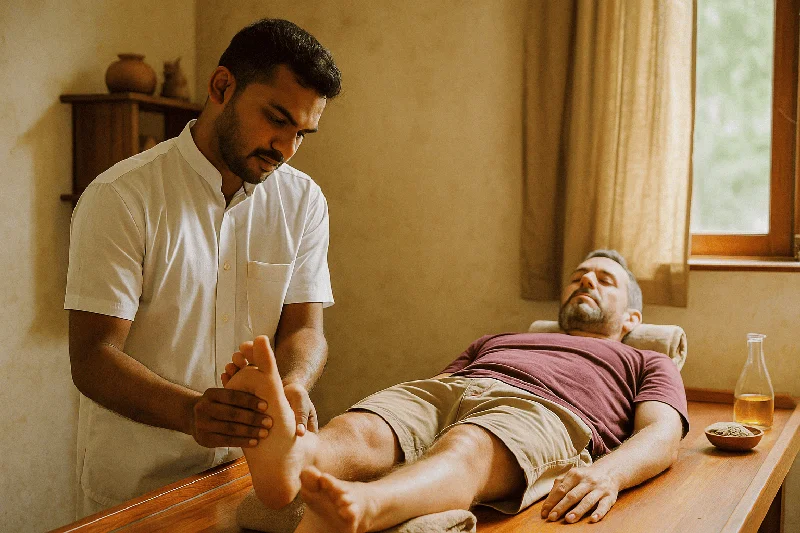
- Through a structured combination of Panchakarma therapies — especially Basti (medicated enemas), Abhyanga (oil massage), and Swedana (herbal fomentation) — along with internal herbal medicines like Ashwagandha, Bala, and Brahmi, Ayurveda aims to regenerate damaged nerves, restore muscle strength, and bring back functional mobility. Unlike conventional approaches that often rely on braces or surgery, Ayurvedic treatment addresses the root cause: the disrupted flow of Vata through the nervous system.
If you or someone you know is struggling with a dragging foot, difficulty walking, or has been told that "nothing more can be done," this comprehensive guide will show you exactly how Ayurveda approaches foot drop — from diagnosis to recovery protocols, timelines, and specific formulations.
What Is Foot Drop?
- Foot drop is not a disease in itself.
- It's a symptom — a sign that something deeper is going wrong in the nervous system, muscles, or spine. The condition involves the inability to lift the front part of the foot (dorsiflexion), which causes the toes to drag along the ground during walking.
The primary muscle responsible for lifting the foot is the tibialis anterior, innervated by the deep peroneal nerve (a branch of the common peroneal nerve, originating from the L4-L5 nerve roots). When this nerve is damaged, compressed, or dysfunctional, the brain's signal simply doesn't reach the muscle. The result? The foot drops.
Foot Drop vs Foot Drag — Key Differences
Many patients confuse foot drop with foot drag, but they're distinct conditions:
| Feature | Foot Drop | Foot Drag |
|---|---|---|
| Primary problem | Inability to lift the front of the foot | Inability to lift the entire leg properly |
| Affected movement | Dorsiflexion (ankle joint) | Hip flexion and knee lift |
| Common cause | Peroneal nerve injury | Stroke, spinal cord injury, muscle dystrophy |
| Gait pattern | Steppage gait (high knee lift to compensate) | Circumduction gait (swinging leg outward) |
| Muscles involved | Tibialis anterior, extensors | Hip flexors, quadriceps |
| Ayurvedic correlation | Khanjata (limping gait) | Pangu (paralysis of limbs) |
Understanding this distinction matters because the treatment protocol differs significantly. Foot drop primarily involves peroneal nerve rehabilitation, while foot drag often requires a broader neurological approach.
How Does a Person Walk with Foot Drop? (Steppage Gait)
A person with foot drop develops what's called a steppage gait — they lift the knee abnormally high to prevent the toes from catching the ground. You'll often hear a characteristic "slapping" sound when the foot hits the floor. Some patients compensate by swinging the affected leg outward in a wide arc (circumduction). Over time, this abnormal walking pattern leads to hip pain, lower back strain, and significant fatigue — even after walking short distances.
Causes and Risk Factors of Foot Drop
Understanding the cause is absolutely critical because it determines both the Ayurvedic treatment protocol and the expected recovery timeline.
Peripheral Nerve Damage (Peroneal Nerve Injury)
The most common cause. The common peroneal nerve wraps around the fibula bone just below the knee, making it extremely vulnerable to compression or injury.
Causes include:
- Habitual leg crossing — prolonged pressure on the nerve
- Tight plaster casts or leg braces
- Surgical injury (especially during knee replacement)
- Prolonged squatting or kneeling
- Trauma or fracture near the knee
A 2014 study published in the Journal of Neurology, Neurosurgery & Psychiatry found that peroneal nerve injury accounts for approximately 20% of all mononeuropathies, making it the most common compressive neuropathy in the lower limb.
Spinal Causes — Herniated Disc and L5 Nerve Root Compression
- This is where many patients don't realize the connection. A herniated disc (slip disc) at the L4-L5 level can compress the L5 nerve root, which is a major contributor to the peroneal nerve.
- The mechanism works like this: the bulging disc material pushes against the nerve root as it exits the spinal canal, disrupting signals before they even reach the leg.
Approximately 4–6% of patients with L4-L5 disc herniation develop foot drop as a complicating symptom, according to research published in Spine Journal (2018). This is important because in these cases, treating only the foot or leg without addressing the spinal pathology will not yield results.
Neurological and Systemic Causes
- Stroke — damage to the brain's motor cortex affecting the contralateral foot
- Diabetes mellitus — diabetic peripheral neuropathy gradually damages the peroneal nerve
- Multiple sclerosis — demyelination of nerve fibers
- Charcot-Marie-Tooth disease — hereditary motor sensory neuropathy
- Motor neuron disease — progressive degeneration of motor neurons
Risk Factors That Increase Vulnerability
- Age over 50
- Diabetes (especially uncontrolled blood sugar)
- Sedentary lifestyle with prolonged sitting
- History of spinal surgery
- Alcohol abuse (alcoholic neuropathy)
- Nutritional deficiencies, particularly Vitamin B12
What Does Ayurveda Say About Foot Drop?
- Ayurveda does not view foot drop as an isolated mechanical problem.
- It's understood as a manifestation of Vatavyadhi — disorders caused by vitiated Vata dosha. Specifically, foot drop correlates with conditions described in classical texts as Khanjata (limping) and Pangu (paralysis of the lower limbs).
The Vata Dosha Connection
- Vata governs all movement in the body — including nerve impulse transmission, muscle contraction, and coordination. When Vata becomes aggravated or obstructed, it disrupts the normal functioning of the nervous system.
- In the context of foot drop, the key subtypes involved are:
- Vyana Vata — responsible for circulation and movement throughout the body, including nerve conduction
- Prana Vata — governs higher neurological functions and coordinates with Vyana Vata
Classical Ayurvedic texts like Charaka Samhita (Vatavyadhi Chikitsa, Chapter 28) describe how aggravated Vata leads to muscle wasting (mamsa kshaya), weakness of ligaments and tendons (snayu daurbalya), and impaired movement.
Kaphavruta Vyana Vata — The Blocked Nerve Signal
- This is a deeper Ayurvedic concept that most practitioners and articles overlook. Kaphavruta Vyana Vata refers to a state where Kapha dosha obstructs the normal pathway of Vyana Vata.
- Think of it like this: the nerve channel exists, but it's "blocked" or "coated" by excess Kapha (mucus-like, heavy, sticky quality), preventing the Vata impulse from traveling through.
This concept is particularly relevant in cases of foot drop caused by:
- Disc herniation (where the disc material — a Kapha structure — compresses the nerve)
- Diabetic neuropathy (where metabolic waste products coat the nerve fibers)
- Post-inflammatory conditions (where swelling obstructs nerve function)
Treatment in such cases must address both the Kapha obstruction and the Vata dysfunction — not just one.
Marma Points and Foot Drop
Ayurvedic surgery texts (Sushruta Samhita) describe Janu Marma — a vital energy point located at the knee joint. Injury to this Marma can directly cause Khanjata. Interestingly, this corresponds perfectly with modern anatomy, as the peroneal nerve is most vulnerable at the knee. Marma therapy (gentle stimulation of these vital points) is sometimes included in treatment protocols for this reason.
Ayurvedic Treatment Protocols for Foot Drop
Here is where Ayurveda truly distinguishes itself — through structured, multi-layered treatment protocols that address the nerve, the muscle, the dosha imbalance, and the mind simultaneously.
Panchakarma Therapies
Panchakarma is the cornerstone of Ayurvedic foot drop treatment. Here's the specific protocol most Ayurvedic hospitals follow, with approximate durations:
Basti (Medicated Enema Therapy)
Basti is considered the most important treatment for Vata disorders — Charaka calls it "Ardha Chikitsa" (half of all therapy).
For foot drop, two types of Basti are used:
- Anuvasana Basti — oil-based enema using Dhanwantharam Tailam, Sahacharadi Tailam, or Ksheerabala Tailam
- Niruha/Kashaya Basti — decoction-based enema using Dashamoola Kashayam or Erandamoola Kashayam
Typical protocol: Kala Basti (16-day course) or Yoga Basti (8-day course), repeated for 2–3 cycles with 15-day gaps. In chronic cases, Karma Basti (30-day course) may be recommended.
Abhyanga (Therapeutic Oil Massage)
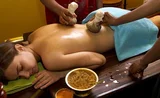
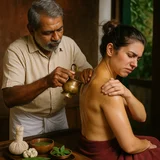
Full-body and localized oil massage using warm medicated oils. The oils penetrate through the skin layers, nourishing the nerves and muscles directly. For foot drop, focus areas include the lower back (lumbar region), hip, thigh, leg, and foot.
Preferred oils:
- Dhanwantharam Tailam — nerve nourishment and pain relief
- Ksheerabala Tailam (101 times processed) — specific for neuromuscular disorders
- Sahacharadi Tailam — strengthens the lower limbs specifically
- Mahamasha Tailam — for severe muscle wasting
Duration: 45–60 minutes daily for 14–21 days per cycle.
Swedana (Herbal Fomentation / Heat Therapy)
Applied after Abhyanga to enhance oil absorption, improve circulation, and reduce stiffness.
Types used include:
- Patra Pinda Swedana (Ela Kizhi) — bolus of herbal leaves and powders applied with warm oil
- Shashtika Shali Pinda Swedana (Navarakizhi) — bolus of cooked Navara rice in medicated milk — specifically nourishes depleted muscle tissue
- Nadi Swedana — directed steam therapy on the affected limb
Duration: 30–45 minutes daily, following Abhyanga.
Kati Basti and Janu Basti
When foot drop is caused by spinal issues (disc herniation), Kati Basti — a procedure where warm medicated oil is pooled over the lumbar spine using a dough dam — is extremely effective. For localized knee-area nerve compression, Janu Basti is performed similarly over the knee joint.
Duration: 30–40 minutes daily for 7–14 days.
Nasya (Nasal Administration of Medication)
Nasya might seem unrelated to foot drop, but in Ayurveda, the nasal passage is the gateway to the brain. For foot drop caused by stroke or central nervous system disorders, Nasya with Anu Tailam or Shadbindu Tailam helps stimulate brain function and improve motor control.
Staging the Treatment — What to Expect
- This is something no other guide tells you.
- Here's the typical treatment staging:
| Stage | Duration | Focus | Expected Outcome |
|---|---|---|---|
| Stage 1: Detox & Preparation | Week 1–2 | Snehapana (internal oleation), mild purgation | Body prepared for main therapies |
| Stage 2: Intensive Panchakarma | Week 3–5 | Abhyanga, Swedana, Basti, Kati Basti | Nerve nourishment begins, pain reduction |
| Stage 3: Strengthening | Week 6–8 | Navarakizhi, internal medicines, exercises | Muscle strength improvement |
| Stage 4: Maintenance | Month 3–6 | Home medicines, exercises, periodic follow-up | Progressive functional recovery |
Total treatment duration: 3–6 months for moderate cases; 6–12 months for chronic or severe cases. Patients with foot drop lasting less than 6 months generally respond better than those with chronic foot drop of over 2 years.
Ayurvedic Herbs and Internal Medicines for Foot Drop
Internal medicines play a crucial supporting role alongside Panchakarma therapies.
Here are the key formulations used, with typical dosages:
Key Single Herbs
| Herb | Action | Typical Dosage | Form |
|---|---|---|---|
| Ashwagandha (Withania somnifera) | Nervine tonic, muscle strengthener, adaptogen | 500 mg – 1 g, twice daily | Churna or capsule |
| Bala (Sida cordifolia) | Strengthens nerves and muscles, specific for Vata disorders | 3–5 g, twice daily | Kashayam or churna |
| Brahmi (Bacopa monnieri) | Neuroprotective, enhances nerve signal transmission | 500 mg, twice daily | Tablet or ghrita |
| Guggulu (Commiphora mukul) | Anti-inflammatory, reduces nerve compression | 250–500 mg, thrice daily | Tablet |
| Shilajit | Nerve regeneration, mineral supplementation | 250–500 mg, twice daily | Capsule or with milk |
> Important note: These dosages are general guidelines. Individual dosage must be determined by a qualified Ayurvedic practitioner based on your Prakriti (constitution), the cause of foot drop, and co-existing conditions. Self-medication is not recommended.
Key Classical Formulations
- Maharasnadi Kashayam — the primary Kashayam for Vatavyadhi affecting the lower limbs; 15 ml with equal water, twice daily before food
- Dhanwantharam Kashayam — for nerve and joint disorders with pain
- Sahacharadi Kashayam — specific for weakness and disorders of the legs
- Ksheerabala 101 Capsules — highly processed oil taken internally for deep nerve nourishment; 1–2 capsules at bedtime with milk
- Ashwagandha Ghrita — medicated ghee for neuromuscular strengthening
- Ekangaveera Rasa — a Rasa Shastra preparation for hemiplegia and nerve weakness; 125–250 mg twice daily with honey
- Bruhat Vata Chintamani Rasa — a gold-based preparation for severe neurological conditions; 125 mg once or twice daily (strict medical supervision required)
Role of Ghee and Hydration in Treatment
One often-overlooked aspect: Vata is inherently dry. Dryness in the tissues (Rukshata) worsens nerve dysfunction. Ayurveda emphasizes internal and external oleation as a foundational principle. Medicated ghee (like Ashwagandha Ghrita or Brahmi Ghrita) is given internally to hydrate the nerve tissue from within. This principle is called Snehana, and without it, other treatments yield significantly reduced results.
Exercises, Yoga, and Lifestyle for Foot Drop Recovery
Medicine and Panchakarma alone are not enough. Active rehabilitation through exercises and yoga accelerates recovery dramatically.
Home Exercises for Foot Drop
Perform these daily, ideally 2–3 times a day, for 15–20 minutes each session:
1. Active Dorsiflexion Practice
Sit with your leg extended. Try to pull your toes upward toward your shin. Even if there's no movement initially, the mental effort helps stimulate neural pathways (this concept is called neuroplasticity). Hold for 5 seconds, repeat 15 times.
2. Towel Stretch
Loop a towel around the ball of your foot while sitting. Gently pull toward you, stretching the calf muscles. Hold for 30 seconds. This prevents contracture of the Achilles tendon.
3. Marble Pickups
Place marbles on the floor and try to pick them up with your toes. This improves fine motor control and strengthens the intrinsic foot muscles.
4. Weight-Bearing Exercises
Stand holding a chair for support. Shift weight to the affected leg and practice mini-squats. This strengthens the entire kinetic chain from hip to ankle.
5. Balance Training
Stand on the affected leg for 10–30 seconds (with support initially). Progress to unstable surfaces like a folded towel or balance board.
6. Gait Training
Practice walking slowly with conscious dorsiflexion. Use a mirror for visual feedback. Focus on heel-strike first, then roll through to toe-off.
Yoga Asanas for Foot Drop
| Asana | Benefit | Caution |
|---|---|---|
| Vajrasana (Thunderbolt pose) | Improves blood flow to legs, stretches tibialis anterior | Avoid if knee pain present |
| Viparita Karani (Legs up the wall) | Reduces swelling, improves venous return to nerves | Safe for most patients |
| Padahastasana (Standing forward bend) | Stretches hamstrings, decompresses lumbar spine | Avoid with active disc herniation |
| Supta Padangusthasana (Supine hand-to-toe pose) | Stretches sciatic nerve pathway, improves flexibility | Use a strap if needed |
| Bhujangasana (Cobra pose) | Strengthens lumbar spine, reduces disc pressure | Modified version for beginners |
| Pranayama (Nadi Shodhana) | Balances Vata, calms the nervous system | No contraindications |
Dietary Recommendations (Pathya-Apathya)
Foods to include (Pathya):
- Warm, cooked, moist foods — soups, stews, kichdi
- Healthy fats — ghee, sesame oil, coconut oil
- Warm milk with turmeric and Ashwagandha at bedtime
- Sweet fruits — bananas, dates, figs, grapes
- Whole grains — wheat, rice (especially aged rice)
- Spices that pacify Vata — ginger, cumin, fenugreek, garlic
Foods to avoid (Apathya):
- Cold, raw, dry foods — salads, crackers, dry cereals
- Excessive caffeine and carbonated beverages
- Bitter and astringent tastes in excess
- Processed and packaged foods
- Fasting or skipping meals (aggravates Vata)
Prognosis: Recovery Timeline Based on Cause
One of the biggest questions patients have — and no one seems to answer clearly — is: "How long will it take to recover?"
The honest answer depends on the cause, duration, and severity.
| Cause of Foot Drop | Severity | Expected Recovery Timeline | Ayurvedic Prognosis |
|---|---|---|---|
| Peroneal nerve compression (mild) | Partial foot drop, <3 months duration | 2–4 months | Sadhya (curable) |
| Peroneal nerve injury (moderate) | Complete foot drop, 3–12 months | 4–8 months | Yapya (manageable with continued treatment) |
| L4-L5 disc herniation | Variable | 3–6 months (with spinal treatment) | Sadhya to Yapya |
| Post-stroke foot drop | Usually part of hemiplegia | 6–12+ months | Yapya to Kashta Sadhya (difficult to cure) |
| Diabetic neuropathy | Progressive, bilateral possible | 6–12 months (management, not full cure) | Yapya |
| Charcot-Marie-Tooth disease | Progressive, hereditary | Symptomatic management only | Asadhya (incurable, but manageable) |
Key prognostic factors:
- Duration before treatment: earlier intervention = better results
- Age: younger patients recover faster
- Cause: compressive neuropathy responds best; degenerative conditions are harder
- EMG/NCS findings: presence of some nerve conduction = better prognosis
- Patient compliance with exercises and medicines
When Ayurvedic Treatment Alone Is Not Enough
This is important to acknowledge. There are situations where Ayurveda should be combined with modern interventions or where surgery becomes necessary:
- Complete nerve transection — requires surgical repair first, then Ayurveda for rehabilitation
- Progressive foot drop with cauda equina syndrome — surgical emergency
- Foot drop due to tumors compressing the nerve — oncological treatment takes priority
- No improvement after 3 months of conservative treatment — re-evaluation with MRI and EMG needed
An AFO (Ankle-Foot Orthosis) brace can be used alongside Ayurvedic treatment to prevent falls and maintain gait during the recovery period. There is no contradiction between wearing an AFO and pursuing Ayurvedic therapy.
Ayurveda vs Conventional Treatment for Foot Drop: A Comparison
| Parameter | Ayurvedic Approach | Conventional Approach |
|---|---|---|
| Philosophy | Treat root cause (Vata imbalance) | Treat structural/functional defect |
| Diagnosis | Nadi Pariksha, Prakriti assessment, clinical examination | EMG, NCS, MRI, clinical examination |
| Primary treatment | Panchakarma, herbal medicines, yoga | Physiotherapy, AFO, surgery |
| Nerve regeneration | Basti, medicated oils, Rasayana herbs | Limited (nerve grafting in severe cases) |
| Side effects | Minimal when administered by qualified practitioner | Surgical risks, medication side effects |
| Time to results | Gradual (weeks to months) | Faster symptom management (brace), slower cure |
| Cost | Moderate (₹30,000–₹1,50,000 for full course in India) | Variable (surgery: ₹1,00,000–₹5,00,000+) |
| Best suited for | Mild to moderate foot drop, post-surgical rehab | Severe structural damage, emergencies |
The ideal approach? Integrative. Use modern diagnostics (MRI, EMG/NCS) to establish the exact cause and severity, then apply Ayurvedic treatment for nerve regeneration and functional recovery, supplemented by physiotherapy and temporary AFO support as needed.
Foot Drop in Special Populations
Foot Drop in Children (Pediatric Considerations)
Foot drop in children is rare but can occur due to:
- Congenital conditions (Charcot-Marie-Tooth disease)
- Trauma or fractures
- Post-infectious neuropathy (Guillain-Barré syndrome)
Ayurvedic treatment for children requires adjusted dosages (typically 1/4 to 1/2 of adult doses depending on age), milder Panchakarma procedures, and extensive use of external therapies like Abhyanga with Bala Tailam. Children generally have a better prognosis due to superior neuroplasticity.
Psychological Impact and Mental Health
- Living with foot drop affects far more than just walking.
- Patients frequently report:
- Depression and anxiety due to loss of independence
- Social isolation from embarrassment about their gait
- Frustration with slow recovery
- Fear of falling
Ayurveda addresses this through Satvavajaya Chikitsa (psychotherapy), Medhya Rasayanas (brain tonics like Brahmi and Shankhapushpi), yoga, and Pranayama. The holistic approach naturally integrates physical and mental recovery — something purely biomechanical approaches often miss.
Frequently Asked Questions
Can Ayurveda Repair Nerve Damage?
Yes, Ayurveda has demonstrated the ability to support nerve regeneration, particularly in cases of compressive neuropathy and mild to moderate nerve damage. A case study published in the International Journal of Ayurveda Research documented significant improvement in bilateral foot drop following a 45-day Panchakarma protocol including Basti, Abhyanga, and internal Rasayana therapy, with EMG showing improved nerve conduction velocity post-treatment. However, in cases of complete nerve transection, surgical repair is necessary before Ayurvedic rehabilitation can be effective.
Which Treatment Is Best for Foot Drop?
The best treatment depends on the cause and severity. For mild to moderate foot drop from nerve compression or disc herniation, Ayurvedic Panchakarma combined with herbal medicines and exercises often produces excellent results. For severe structural damage, an integrative approach combining surgery, physiotherapy, and Ayurvedic rehabilitation yields the best outcomes.
How Does Foot Drop Occur Due to Slip Disc?
A herniated disc at L4-L5 level bulges out and compresses the L5 nerve root as it exits the spinal canal. Since the L5 root is a major contributor to the common peroneal nerve (which controls dorsiflexion), this compression disrupts nerve signals to the tibialis anterior muscle, resulting in foot drop. In Ayurvedic terms, the disc material (a Kapha structure) obstructs the flow of Vyana Vata through the nerve channel.
What Are Foot Drop Exercises in Hindi?
The exercises described in this article — dorsiflexion practice, towel stretch, marble pickups, and balance training — are universally applicable. Hindi-speaking patients can look for guided exercise videos using the term "पैर का ड्रॉप व्यायाम" (pair ka drop vyayam). The key principles remain the same regardless of language.
How to Treat Foot Drop Naturally at Home?
- Home management includes: daily self-massage with warm Sahacharadi Tailam or Dhanwantharam Tailam on the affected leg, performing dorsiflexion exercises 2–3 times daily, taking prescribed Ayurvedic medicines consistently, following a Vata-pacifying diet, and practicing Vajrasana and Pranayama.
- However, home treatment should supplement — not replace — professional Ayurvedic consultation and Panchakarma therapy.
Is Foot Drop Treatment Available in Kerala?
- Kerala is considered the global hub for authentic Ayurvedic Panchakarma treatment.
- Many renowned Ayurvedic hospitals in Kerala — including those in Thrissur, Kottakkal, and Thiruvananthapuram — have extensive experience treating neurological conditions including foot drop. The Kerala tradition of Ayurveda particularly excels in therapies like Navarakizhi and specialized Basti protocols that are highly relevant for foot drop recovery.
Final Thoughts: Your Path to Recovery
Foot drop can feel overwhelming, but it is treatable. Whether your condition stems from a compressed nerve, a herniated disc, or a neurological event, Ayurveda offers a structured, time-tested pathway to recovery that addresses the root cause rather than just managing the symptom.
The key is to act early, be consistent with treatment, and work with a qualified Ayurvedic practitioner who can design a personalized protocol based on your specific cause, severity, and constitution.
Don't wait for the condition to become chronic. The sooner treatment begins, the better the prognosis. If you've been living with foot drop for months or even years, it's still not too late — nerve tissue has a remarkable capacity for regeneration when given the right support.
Consult with an experienced Ayurvedic physician today to get a personalized treatment plan for your foot drop recovery.
Scientific Sources
- EVALUATION OF TOXIC HEAVY METALS IN AYURVEDIC SYRUPS SOLD IN LOCAL MARKETS OF HAZARA, PAKISTAN — Hajra B et al., 2015, Journal of Ayub Medical College, Abbottabad : JAMC
- Bioethics and ayurveda — Valiathan MS, 2008, Indian journal of medical ethics
- 'Indian ginseng' brings royalties for tribe — Jayaraman KS, 1996, Nature
- Ayurvedic medicine and the lung — Lim CY et al., 2014, Respiration; international review of thoracic diseases
- Principle of Hot (Ushna) and Cold (Sheeta) and Its Clinical Application in Ayurvedic Medicine — Rastogi S et al., 2021, Advances in experimental medicine and biology
- Siddha medicine: an overview — Subbarayappa BV, 1997, Lancet (London, England)
- Maharishi Ayur-Veda — 1990, Lancet (London, England)
- Correlating traditional Ayurvedic and modern medical perspectives on cancer: results of a qualitative study — Dhruva A et al., 2014, Journal of alternative and complementary medicine (New York, N.Y.)
- Nano-ayurvedic medicine and its potential in cancer treatment — Lopus M, 2023, Journal of integrative medicine
- Forskolin: from an ayurvedic remedy to a modern agent — Ammon HP et al., 1985, Planta medica
- Maharishi Ayur-Veda — 1991, JAMA
- An Ayurvedic approach to postpartum depression — Posmontier B et al., 2009, Holistic nursing practice
- Ayurvedic college education, reifying biomedicine and the need for reflexivity — Bode M et al., 2018, Anthropology & medicine
- Occurrence of resveratrol and pterostilbene in age-old darakchasava, an ayurvedic medicine from India — Paul B et al., 1999, Journal of ethnopharmacology
- Procedures of complementary medicine in rheumatology (https://pubmed.ncbi.nlm.nih.gov/38935116/) — Keyßer G et al., 2024, Zeitschrift fur Rheumatologie
- Shasti Ma — Chawla J, 2010, Midwifery today with international midwife
- Ayurvedic medicine for rheumatoid arthritis — Basnyat S et al., 2014, Current rheumatology reports
- Ayurvedic medicine for rheumatoid arthritis: a systematic review — Park J et al., 2005, Seminars in arthritis and rheumatism
- Not recommended — Ravikumar N et al., 2009, British dental journal
- Scientific validation of the different purification steps involved in the preparation of an Indian Ayurvedic medicine, Lauha bhasma — Krishnamachary B et al., 2012, Journal of ethnopharmacology
Ask Ayurvedic doctor a question and get a consultation online on the problem of your concern in a free or paid mode.
More than 2,000 experienced doctors work and wait for your questions on our site and help users to solve their health problems every day.
Related articles