Ask Ayurvedic doctor a question and get a consultation online on the problem of your concern in a free or paid mode. More than 2,000 experienced doctors work and wait for your questions on our site and help users to solve their health problems every day.


Body DetoxEar, Nose, and Throat DisordersGeriatrics & RejuvenationImmunodeficiencyInfertility TreatmentNutritionOrthopedic DisordersPediatricsRespiratory DisordersSexually Transmitted Diseases (STDs)Surgery RecoveryUrological DisordersVascular DisordersDental DisordersEndocrinological DisordersGastrointestinal DisordersYoga TherapyGeneral MedicineAllergic DisordersCardio DisordersGynecology and ObstetricsCosmetologySkin and Hair DisordersEye DisordersInfectious DiseasesMental DisordersNeurological DisordersOncologyPanchakarmaSexual Health & DisordersSports Medicine
Published on 01/24/25
(Updated on 08/14/26)
star_border 1
2,340
Sahacharabaladi Kashayam – Ayurvedic Decoction for Mental & Neurological Health
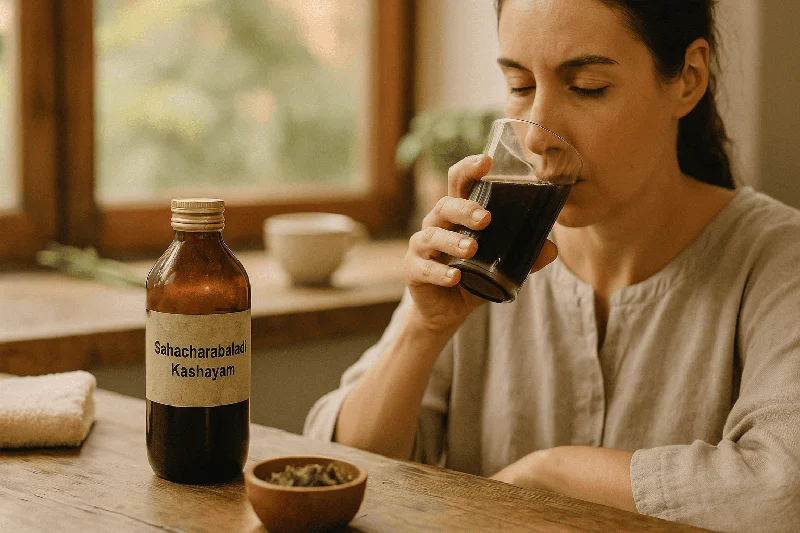
Sahacharabaladi Kashayam is a classical Ayurvedic herbal decoction (kashayam) primarily used to manage Vata-related musculoskeletal and neurological disorders — including rheumatoid arthritis, osteoarthritis, sciatica, cervical spondylitis, and varicose veins. The formulation combines Sahachara (Barleria strigosa), Bala (Sida cordifolia), Guduchi (Tinospora cordifolia), and other potent herbs to deliver anti-inflammatory, analgesic, and nervine-tonic effects. If you're dealing with chronic joint pain, nerve-related discomfort, or post-viral body aches, this time-tested kashayam deserves serious attention.
In this comprehensive guide, we cover everything — from the classical textual origin and detailed ingredient breakdown to home preparation methods, dosage guidelines, side effects, and even a manufacturer comparison table. Information you won't easily find on other pages.
What Is Sahacharabaladi Kashayam?
- Sahacharabaladi Kashayam is a polyherbal water-based decoction (kwatha) used in traditional Ayurvedic practice for centuries.
- The name itself tells you the core ingredients: "Sahachara" + "Bala" + "adi" (meaning "and others") + "Kashayam" (meaning decoction).
- It belongs to the category of kashaya kalpana — one of the five fundamental Ayurvedic pharmaceutical preparations.
The formulation is specifically designed to pacify aggravated Vata dosha, the primary driver of pain, stiffness, and neurological dysfunction in Ayurvedic pathology.
Classical Reference & Textual Origin
One of the most significant gaps in online information about this medicine is its classical source. Sahacharabaladi Kashayam is referenced in Sahasrayogam, one of the most widely used Ayurvedic formulary texts, particularly popular in the Kerala tradition of Ayurveda. The formulation appears in the Kashaya Prakarana (chapter on decoctions) of Sahasrayogam.
Some scholars also trace variations of this formulation to Ashtanga Hridayam by Vagbhata, where Sahachara and Bala are frequently mentioned together in the context of Vatavyadhi chikitsa (treatment of Vata disorders). The specific combination as a standardized kashayam, however, is most authoritatively documented in Sahasrayogam — which remains the primary textual reference used by manufacturers like Kottakkal Arya Vaidya Sala and Vaidyaratnam.
Meaning of the Name
- Sahachara — Barleria strigosa, the principal herb
- Bala — Sida cordifolia, the supporting nervine tonic
- Adi — "and others" (indicating additional herbs in the formula)
- Kashayam — a water decoction prepared by boiling herbs and reducing the liquid
So the name essentially translates to: "The decoction beginning with Sahachara and Bala."
Key Ingredients & Their Therapeutic Properties
The efficacy of Sahacharabaladi Kashayam lies in the synergistic action of its ingredients.
Here is a detailed breakdown of the major components:
Sahachara (Barleria strigosa / Barleria prionitis)
The lead herb. Sahachara is classified as a Vatahara (Vata-pacifying) drug in Ayurveda. It has demonstrated anti-inflammatory and analgesic properties in pharmacological studies. The plant contains bioactive compounds including barlerin, shanzhiside methyl ester, and iridoid glycosides. It particularly supports neuromuscular function and is traditionally indicated for conditions involving nerve compression and muscular weakness.
Ayurvedic properties: Tikta rasa (bitter taste), Ushna veerya (hot potency), Vata-Kapha shamaka.
Bala (Sida cordifolia)
Bala literally means "strength" in Sanskrit — and thats exactly what this herb provides to muscles, nerves, and connective tissues. It is one of Ayurveda's premier Rasayana (rejuvenative) herbs and a powerful nervine tonic. Bala contains ephedrine alkaloids, phytosterols, and mucilage that contribute to its anti-inflammatory and immunomodulatory effects. A 2017 study published in the Journal of Ethnopharmacology confirmed significant anti-inflammatory activity of Sida cordifolia extracts in animal models.
Ayurvedic properties: Madhura rasa (sweet taste), Sheeta veerya (cold potency), Balya (strength-promoting), Brimhana (nourishing).
Guduchi (Tinospora cordifolia)
Also known as Amrita ("the immortal one"), Guduchi is a potent immunomodulator and Ama pachaka (toxin digestant). It contains berberine, tinosporin, and the notable compound tinosporide. Research published in Phytomedicine (2020) has demonstrated its role in modulating inflammatory cytokines like TNF-α and IL-6 — making it valuable in autoimmune conditions such as rheumatoid arthritis.
Ayurvedic properties: Tikta-kashaya rasa, Ushna veerya, Tridosha shamaka (balances all three doshas).
Devadaru (Cedrus deodara)
Known as "Suradruma" (tree of the gods), Devadaru is a key anti-inflammatory and analgesic herb in Ayurvedic orthopedic formulations. The essential oil contains himachalol and atlantone, which possess demonstrated anti-inflammatory activity. It is classified as a Shothahara (anti-inflammatory) and Vedanasthapana (pain-relieving) drug.
Shunti / Nagara (Zingiber officinale)
- Dried ginger. One of the most researched herbs globally. Gingerols and shogaols provide well-documented anti-inflammatory and analgesic effects.
- Shunti also serves as a bioenhancer — it improves the absorption of other herbs in the formulation. In Ayurveda, it's considered Deepana-Pachana (appetite stimulant and digestive), which helps patients with weak Agni (digestive fire) tolerate the kashayam better.
| Ingredient | Botanical Name | Key Action | Dosha Effect |
|---|---|---|---|
| Sahachara | Barleria strigosa | Anti-inflammatory, nervine | Vata-Kapha ↓ |
| Bala | Sida cordifolia | Nervine tonic, muscle strengthener | Vata-Pitta ↓ |
| Guduchi | Tinospora cordifolia | Immunomodulator, Ama pachaka | Tridosha balancer |
| Devadaru | Cedrus deodara | Analgesic, anti-inflammatory | Vata-Kapha ↓ |
| Shunti | Zingiber officinale | Bioenhancer, digestive | Vata-Kapha ↓ |
Uses & Health Benefits
How Does Sahacharabaladi Kashayam Help in Managing Rheumatoid Arthritis?
- Rheumatoid arthritis (Amavata in Ayurveda) involves the accumulation of Ama (metabolic toxins) in joints combined with Vata aggravation.
- Sahacharabaladi Kashayam works on both fronts — Guduchi and Shunti digest Ama while Sahachara and Bala pacify Vata and reduce joint inflammation. The formulation helps reduce morning stiffness, joint swelling, and pain intensity over a course of treatment. Practitioners typically combine it with Rasnasaptakam Kashayam or Gandharvahastadi Kashayam for enhanced results in RA.
Can Sahacharabaladi Kashayam Be Used for Osteoarthritis?
- Absolutely.
- Osteoarthritis (Sandhivata) is a degenerative Vata disorder — making it one of the primary indications for this kashayam. The Bala component nourishes depleted joint tissues (Asthi and Majja dhatus) while Sahachara and Devadaru manage inflammation and pain. Clinical practitioners report significant improvement in knee and hip osteoarthritis when the kashayam is used alongside external therapies like Janu Basti.
Cervical & Lumbar Spondylitis
Spondylitis of the cervical and lumbar spine involves Vata vitiation in the Greeva (neck) and Kati (lower back) regions. The nervine and anti-inflammatory properties of this formulation address nerve root compression, muscle spasm, and radicular pain. It's one of the most commonly prescribed kashayams for these conditions in Kerala Ayurvedic practice.
Sciatica & Slipped Disc
Sciatica (Gridhrasi) responds well to Sahacharabaladi Kashayam due to the formula's affinity for the nervous system. Sahachara and Bala together strengthen the nerve pathways while reducing inflammation around compressed nerve roots. For disc herniation cases, Ayurvedic practitioners often prescibe this kashayam as part of a comprehensive protocol that includes Kati Basti and Panchakarma detoxification.
Varicose Veins
Perhaps a lesser-known indication — but an important one. Varicose veins (Siraja granthi) involve Vata-Rakta pathology. Bala strengthens venous walls, and Sahachara improves circulation in the lower extremities. The kashayam helps reduce heaviness, pain, and swelling in the legs associated with varicose veins.
Bursitis & Diffuse Joint Pain
For bursitis and generalized body pain — especially the kind of diffuse musculoskeletal aches that don't fit a single diagnosis — this kashayam provides broad-spectrum Vata pacification.
Post-Viral Fever Body Pains
This is an often-overlooked use. After viral fevers (including dengue, chikungunya, and COVID-19), many patients experience lingering joint and body pains. Sahacharabaladi Kashayam is particularly useful in this context because Guduchi addresses residual Ama and immune dysregulation while the other herbs manage the Vata-dominant pain pattern.
Neurological & Nervine Support
Beyond musculoskeletal conditions, the formulation supports neurological health. Bala is a well-known Medhya (brain tonic) drug, and Sahachara has neuroprotective properties. Some practitioners use this kashayam as supportive therapy in conditions like peripheral neuropathy and early-stage neurodegenerative disorders.
How It Works — Mechanism of Action
Effect on Doshas (Vata-Pitta Balance)
- The primary pharmacological target is Vata dosha. Most of the herbs possess Ushna veerya (hot potency) and Vatahara properties.
- However, Bala's Sheeta veerya provides a balancing effect — preventing excessive heat generation. This makes the formula suitable even in Vata-Pitta mixed conditions, which is where many competitors get the description wrong.
The formula also addresses Pitta to a moderate degree, primarily through Guduchi's Pitta-shamaka properties. This means patients with inflammatory joint conditions (where Pitta is secondarily involved) can benefit without aggravation.
Anti-inflammatory & Analgesic Action
The bioactive compounds across the formula work through multiple inflammatory pathways. Swertiamarain (from Guduchi), iridoid glycosides (from Sahachara), and gingerols (from Shunti) collectively inhibit COX-2 and lipoxygenase pathways — similar mechanisms to conventional NSAIDs, but without gastric side effects when taken in proper doses.
Nervine & Musculoskeletal Strengthening
Bala and Sahachara together provide a dual action: they reduce nerve irritation (Vedanasthapana) while simultaneously nourishing and strengthening neuromuscular tissue (Balya). This is why the formulation works for both acute pain relief and long-term structural support — a combination conventional pain medicines rarely achieve.
Dosage & How to Take Sahacharabaladi Kashayam
Recommended Dosage for Adults
The standard adult dosage is 12–24 mL (approximately 3–6 teaspoons), taken twice daily, preferably on an empty stomach — typically 30 minutes before meals.
Important: The kashayam should be mixed with an equal quantity of lukewarm water before consumption. Never take it undiluted if you have a sensitive stomach.
Dosage for Children
For children aged 5–12 years: 5–10 mL twice daily, always under physician guidance. Below age 5, this kashayam is generally not recommended unless specifically prescribed by a qualified Ayurvedic practitioner.
Kashayam Liquid vs. Tablet Form (Kashayam Tablet)
Many manufacturers now offer Sahacharabaladi Kashayam in tablet form — pressed kashayam granules.
Heres a quick comparison:
| Feature | Liquid Kashayam | Kashayam Tablets |
|---|---|---|
| Potency | Higher (traditional) | Slightly lower |
| Convenience | Less (taste, storage) | More (portable, no taste) |
| Shelf Life | 2-3 years (unopened) | 3-5 years |
| Absorption | Faster | Moderate |
| Dosage | 12-24 mL twice daily | 1-2 tablets twice daily |
| Best For | Chronic/severe conditions | Mild cases, travelers |
Verdict: For serious musculoskeletal or neurological conditions, the liquid kashayam remains the gold standard. Tablets are a reasonable alternative for maintenance or mild complaints.
Anupana (Adjuvant/Vehicle)
The default anupana is lukewarm water.
However, based on the condition:
- With honey — when Kapha involvement is significant (morning stiffness with heaviness)
- With ghee — for Vata-dominant emaciated patients needing nourishment
- Plain warm water — standard for most musculoskeletal complaints
Your practitioner may customize the anupana based on your Prakriti and disease state.
Duration of the Course
This is something virtually no competitor discusses properly:
- Minimum course: 14–21 days for any noticeable benefit
- Typical course: 1–3 months for chronic joint conditions
- Maximum continuous use: 3–6 months, after which a break of 2–4 weeks is advisable
- Cycles: Many practitioners prescribe in cycles — 3 months on, 1 month off, then reassess
Long-term unsupervised use is not recommended due to potential effects on digestion and the liver.
Don't wait or self medicate. Start chat with Doctor NOW
How to Prepare Sahacharabaladi Kashayam at Home
- This is information you won't find on most commercial websites, for obvious reasons.
- But traditionally, kashayams were prepared fresh at home — and many Vaidyas still consider fresh preparations superior.
Traditional Decoction Method
- Take the coarsely powdered herb mixture (yavakuta choorna) containing Sahachara, Bala, Guduchi, Devadaru, and Shunti in the prescribed proportions.
- Use 1 part herb powder to 16 parts water (e.g., 10 grams of powder to 160 mL water).
- Soak overnight for best extraction (6-8 hours minimum).
- Boil on medium-low heat the next morning.
Water-to-Herb Ratio & Reduction
The classical method requires reducing the liquid to 1/4th of the original volume. So if you start with 640 mL of water (for 40 grams of herbs), you boil it down to approximately 160 mL.
- Maintain a slow, steady simmer — not a rolling boil
- Stir occasionally
- The process typically takes 45–90 minutes
- Strain through a clean cotton cloth while still warm
- Consume the same day; fresh kashayam should not be stored beyond 12 hours
Note: Getting the proportions of individual herbs right is critical. If you dont have access to the exact formula ratios, purchasing from a reputable manufacturer is safer and more consistent.
Side Effects, Contraindications & Precautions
Known Side Effects
When taken in recommended doses under medical guidance, Sahacharabaladi Kashayam is generally well-tolerated.
However, some patients may experience:
- Gastric irritation or mild acidity — due to the Ushna veerya of several ingredients
- Loose stools — particularly in individuals with Pitta constitution
- Bitter/unpleasant taste — may cause nausea in sensitive individuals
- Mild headache — rarely reported, usually transient
These side effects typically resolve within 2–3 days as the body adjusts. If gastric irritation persists, taking the kashayam after food (instead of before) can help, though this may slightly reduce efficacy.
Contraindications (Pregnancy, Lactation, and More)
No competitor has properly listed these, so here they are:
- Pregnancy — contraindicated, particularly in the first trimester. Some herbs in the formula have Ushna veerya and potential uterine-stimulant effects.
- Lactation — use only under strict medical supervision. Herbs may pass into breast milk.
- Active peptic ulcer or gastritis — the bitter and pungent herbs can aggravate existing gastric mucosal damage.
- Uncontrolled diabetes — while some ingredients have hypoglycemic potential, the interaction with diabetic medications needs monitoring.
- Severe liver disease — long-term kashayam use requires hepatic metabolism; impaired liver function warrants caution.
- Known allergy to any of the ingredient herbs.
Interaction with Allopathic & Homeopathic Medicines
A critical topic.
If you are taking allopathic medicines:
- Maintain a gap of at least 30–60 minutes between the kashayam and any allopathic medication
- Particular caution with blood thinners (warfarin, aspirin) — some ingredients may have mild anticoagulant properties
- Anti-hypertensive drugs — Bala contains ephedrine alkaloids that may theoretically interact
- NSAIDs — additive gastric effects possible; stagger dosing
For homeopathic medicines, maintain a 30-minute gap as a general rule. Homeopathic practitioners typically advise avoiding strong-tasting substances close to dose timing.
Interaction with Supplements
Calcium and iron supplements should be taken at least 2 hours apart from the kashayam, as tannins in the decoction may reduce mineral absorption.
Supporting Therapies & Lifestyle Tips
Dietary Recommendations (Pathya-Apathya)
Foods to favor (Pathya):
- Warm, freshly cooked meals
- Sesame oil in cooking
- Whole grains, especially wheat and rice
- Garlic, cumin, fenugreek, and turmeric in daily cooking
- Warm milk with a pinch of turmeric at bedtime
Foods to avoid (Apathya):
- Cold, raw, and refrigerated foods
- Excessive bitter and astringent tastes
- Curd/yogurt at night
- Black gram (urad dal) in excess
- Carbonated drinks and processed food
Complementary Ayurvedic Therapies
Sahacharabaladi Kashayam works best when integrated with:
- Abhyanga — full-body oil massage with Dhanwantharam or Sahacharadi Taila
- Kati Basti / Janu Basti — localized oil pooling therapy for back and knee conditions
- Shirodhara — for cases with neurological involvement or stress-related pain amplification
- Panchakarma — particularly Virechana (purgation) and Basti (medicated enema) for deep-seated Vata disorders. Basti with Sahacharadi Taila is a classic combination.
Yoga & Physical Therapy
Gentle movement is essential alongside internal medicine:
- Pranayama — Nadi Shodhana and Bhramari for nervous system calming
- Asanas — Bhujangasana, Setu Bandhasana, Vrikshasana (modified as needed)
- Walking — 20–30 minutes of gentle walking daily
- Avoid — heavy weight lifting, high-impact exercises, and prolonged sitting during acute phases
Manufacturer Comparison: Which Brand to Choose?
This comparison table is something no competitor currently provides:
| Manufacturer | Volume | Approx. Price (INR) | Key Differentiator |
|---|---|---|---|
| Kottakkal Arya Vaidya Sala | 200 mL | ₹130–160 | Most trusted brand; strict GMP adherence |
| Vaidyaratnam Oushadhasala | 200 mL | ₹110–140 | Traditional Kerala preparation |
| Sitaram Ayurveda | 200 mL | ₹120–150 | Good availability in South India |
| AVP (Arya Vaidya Pharmacy, Coimbatore) | 200 mL | ₹125–155 | ISO-certified manufacturing |
| SNA Oushadhasala | 200 mL | ₹100–130 | Budget-friendly, reliable quality |
- All major manufacturers follow the same classical formulation from Sahasrayogam, so the core composition is identical.
- Differences are minor — primarily in sourcing quality of raw herbs, water quality, and manufacturing standards. Kottakkal remains the most widely recommended by practitioners.
Storage & Shelf Life
Another area competitors mostly ignore:
- Unopened bottle: 2–3 years from manufacture (check label)
- Opened bottle: Use within 2–3 months; refrigerate after opening
- Storage temperature: Below 30°C, away from direct sunlight
- Do not freeze — freezing can alter the chemical composition
- Freshly prepared kashayam: Consume within 12 hours; do not store
Seasonal Recommendations (Ritucharya)
Sahacharabaladi Kashayam is most effective during:
- Varsha Ritu (Monsoon) and Hemanta Ritu (Early Winter) — when Vata naturally aggravates
- It can be taken year-round if prescribed, but many practitioners intensify dosage during Vata-aggravating seasons
- During peak summer (Grishma Ritu), dosage may be reduced as Pitta is already high
Frequently Asked Questions (FAQ)
What is the use of Sahacharabaladi Kashayam?
Sahacharabaladi Kashayam is primarily used for Vata-dominant musculoskeletal and neurological disorders, including rheumatoid arthritis, osteoarthritis, cervical/lumbar spondylitis, sciatica, varicose veins, bursitis, and post-viral body pains. It reduces inflammation, relieves pain, and strengthens nerves and muscles.
What are the side effects of Kashayam?
Most kashayams, including Sahacharabaladi, may cause mild gastric irritation, loose stools, or nausea — especially when taken on an empty stomach by individuals with sensitive digestion. These effects are usually transient. Serious side effects are rare when taken in proper dosage under medical supervision.
Where can I find authentic Sahacharabaladi Kashayam formulations?
Purchase from authorized Ayurvedic pharmacies or directly from manufacturer websites. Kottakkal Arya Vaidya Sala, Vaidyaratnam, AVP, and Sitaram Ayurveda all offer authentic products. Online platforms like AyurvedaForAll.com, 1mg, and AyushArogyam also stock genuine products.
Are there any interactions between Sahacharabaladi Kashayam and conventional medications?
Yes. Maintain a 30–60 minute gap between the kashayam and allopathic medicines. Exercise particular caution with blood thinners, anti-hypertensives, and NSAIDs. Always inform your physician about concurrent Ayurvedic medication use.
Is Sahacharabaladi Kashayam effective for bursitis?
Yes. Bursitis involves inflammation of the bursae (fluid-filled sacs near joints). The anti-inflammatory and Vata-pacifying properties of this kashayam help reduce bursal inflammation and associated pain. It is typically more effective when combined with external oil application and localized fomentation.
How should Sahacharabaladi Kashayam be integrated into daily life for diffuse joint pain?
Take 12–24 mL mixed with equal warm water, twice daily on an empty stomach. Complement with a Vata-pacifying diet (warm, unctuous foods), daily self-massage with sesame oil, gentle yoga, and adequate sleep. Consistency over 4–12 weeks yields the best outcomes.
Does this Kashayam suit people with weak digestion (Mandagni)?
The inclusion of Shunti (ginger) actually supports Agni. However, individuals with very weak digestion may initially experience discomfort. In such cases, start with a lower dose (6–8 mL) and gradually increase. Your practitioner may also add a digestive formulation like Chiruvilwadi Kashayam as a co-prescription.
Final Thoughts
Sahacharabaladi Kashayam represents centuries of Ayurvedic pharmaceutical wisdom — a carefully designed formulation that addresses the root cause of Vata-dominant musculoskeletal and neurological disorders rather than merely suppressing symptoms. Its combination of anti-inflammatory, nervine, and immunomodulatory herbs makes it remarkably versatile.
That said, Ayurvedic medicine works best when personalized. What works for one individual may need modification for another based on Prakriti, Vikriti, Agni status, and coexisting conditions.
Consult a qualified Ayurvedic physician before starting Sahacharabaladi Kashayam — especially if you're on other medications, pregnant, or managing chronic conditions. When used correctly, within a holistic framework of diet, lifestyle, and complementary therapies, this classical formulation can deliver profound and lasting relief. Have questions about whether Sahacharabaladi Kashayam is right for your specific condition? Ask our certified Ayurvedic doctors for personalized guidance.
Scientific Sources
- From ayurvedic folk medicine to preclinical neurotherapeutic role of a miraculous herb, Tinospora cordifolia — Sharma A et al., 2020, Neurochemistry international
- Highlighting the anti-carcinogenic potential of an ayurvedic medicinal plant, Swertia Chirata — Saha P et al., 2010, Asian Pacific journal of cancer prevention: APJCP
- The neuroendocrine system: organization and homeostatic role — Toni R, 2004, Journal of endocrinological investigation
- Rise of Siddha medicine: causes and constructions in the Madras Presidency (1920-1930s) — Kanagarathinam DV et al., 2023, Medical history
- Healthcare the Ayurvedic way — Jayasundar R, 2012, Indian journal of medical ethics
- The biliary system through the ages — Shehadi WH, 1979, International surgery
- Neuroadaptability and Habit: Modern Medicine and Ayurveda — Wallace RK et al., 2021, Medicina (Kaunas, Lithuania)
- From traditional Ayurvedic medicine to modern medicine: identification of therapeutic targets for suppression of inflammation and cancer — Aggarwal BB et al., 2006, Expert opinion on therapeutic targets
- Phyto-chemical and pharmacological applications of Berberis aristata — Potdar D et al., 2012, Fitoterapia
- Overlooked contributions of Ayurveda literature to the history of physiology of digestion and metabolism — Singh A et al., 2023, History and philosophy of the life sciences
- Market Analysis of Medicinal Plants in India — Ravi S et al., 2019, Current pharmaceutical biotechnology
- Ayurveda for diabetes mellitus: a review of the biomedical literature — Elder C, 2004, Alternative therapies in health and medicine
- Conducting literature searches on Ayurveda in PubMed, Indian, and other databases — Narahari SR et al., 2010, Journal of alternative and complementary medicine (New York, N.Y.)
- Ayurveda in changing scenario of diabetes management for developing safe and effective treatment choices for the future — Banerjee S et al., 2015, Journal of complementary & integrative medicine
- Effects of Withania somnifera Extract in Chronically Stressed Adults: A Randomized Controlled Trial — Pandit S et al., 2024, Nutrients
- Therapeutic potential of Phyllanthus emblica (amla): the ayurvedic wonder — Krishnaveni M et al., 2010, Journal of basic and clinical physiology and pharmacology
- Providing alternative health care: an ancient system for a modern age — Titus GW, 1995, Advanced practice nursing quarterly
- Role of selected Indian plants in management of type 2 diabetes: a review — Saxena A et al., 2004, Journal of alternative and complementary medicine (New York, N.Y.)
- Association of L-DOPA with recovery following Ayurveda medication in Parkinson's disease — Nagashayana N et al., 2000, Journal of the neurological sciences
- Adverse events in India's Ayush interventions for cervical and lumbar spondylosis: a systematic review — Ponnaiah M et al., 2024, European journal of medical research
Questions from users
How do I prepare Sahacharabaladi Kashayam at home?
Client_e7e3b3
23 days ago
To prepare Sahacharabaladi Kashayam at home, start with 40 grams of the appropriate herbal blend, which typically includes Sahachara, Bala, and Shunti. Add 640 mL of water, then simmer gently (not boil) until the liquid reduces to about 160 mL, which usually takes 45–90 minutes. Stir occasionally and strain it while warm using a clean cloth. This preparation should be consumed the same day, as its potency can diminish after 12 hours. Accurate proportions of the herbs are essential, so it's advisable to consult a qualified Ayurvedic practitioner to ensure you get them right for optimal benefits.
How long does it take to see results from Sahacharabaladi Kashayam?
Client_1df056
33 days ago
Results from using Sahacharabaladi Kashayam can vary widely depending on individual health conditions and the specific issues being addressed, but many people may start noticing improvements in inflammation and pain within 2-4 weeks of consistent use. It is important to use this herbal formula under the guidance of a qualified Ayurvedic practitioner, especially if you have very weak digestion, as initial discomfort can occur. If your joint pain persists or worsens, it is advisable to consult a healthcare provider to rule out any underlying conditions. Complementary practices like a Vata-pacifying diet, self-massage, and gentle yoga can enhance the effects.
What dietary guidelines should I follow while using Sahacharabaladi Kashayam for joint health?
Client_1e94cb
42 days ago
When using Sahacharabaladi Kashayam for joint health, there are some dietary guidelines that can enhance its benefits. Focus on a Vata-pacifying diet, which generally includes warm, cooked, and mildly spiced foods. Incorporate ginger, cumin, and turmeric for their anti-inflammatory effects, and include whole grains, legumes, and healthy fats like ghee or olive oil. Avoid cold, raw, and processed foods as they can aggravate Vata and diminish the kashayam's effectiveness. If you experience digestive discomfort, it might be necessary to adjust your diet further. If symptoms persist or worsen, consult a healthcare provider.
How does Bala support nerve health and function?
Client_bccffb
52 days ago
Bala, known scientifically as Sida cordifolia, supports nerve health and function primarily through its anti-inflammatory and immunomodulatory properties. This herbal remedy provides strength to muscles, nerves, and connective tissues, and is traditionally used for conditions involving nerve compression and muscular weakness. Optimal effects can be influenced by dosage and individual health status, so consult a healthcare provider for personalized advice. Always inform your physician about any concurrent Ayurvedic use to avoid possible interactions with conventional medications.
Is Sahacharabaladi Kashayam effective for reducing inflammation in sports injuries?
Client_4976da
61 days ago
Sahacharabaladi Kashayam may help reduce inflammation in sports injuries due to its anti-inflammatory and analgesic properties. This herbal decoction contains compounds like gingerols and shogaols, which are known for their ability to address inflammation through multiple pathways. However, its effectiveness can vary based on injury severity and individual response. While relief can sometimes be observed within a few weeks, it is important to monitor the injury's progression. If symptoms persist or worsen, consult a healthcare professional to assess the need for conventional treatments or to avoid any potential interactions with medications like blood thinners.
Is there a specific time of day that's best to take Sahacharabaladi Kashayam for maximum benefit?
Client_ad838f
71 days ago
Morning is generally a good time to take Sahacharabaladi Kashayam, especially on an empty stomach. It’s said to boost the digestive fire or agni when your body's fresh and ready to absorb nutrients. But if you experience any stomach irritation, you might wanna try it after food instead.
Can Sahacharabaladi Kashayam help with muscle strengthening in addition to joint pain?
Client_dba5c5
80 days ago
Yes, Sahacharabaladi Kashayam can help with muscle strengthening! It's primarily used for joint pain and inflammation, but since it pacifies Vata and strengthens muscles and nerves, it can definitely support muscle health too. Just watch out for the mild side effects like gastric irritation—starting with small doses might help.
What is the role of Vata and Pitta doshas in joint disorders according to Ayurveda?
Client_556032
94 days ago
In Ayurveda, joint disorders are often linked to imbalances in the Vata and Pitta doshas. Vata dosha, being air and space, tends to increase dryness and cause degeneration, while Pitta, being fire and water, may lead to inflammation and heat in joints. Addressing these imbalances can help manage joint issues naturally.
Can I use Sahacharabaladi Kashayam for other types of joint disorders besides osteoarthritis?
Client_ff1163
103 days ago
Yes, you can use Sahacharabaladi Kashayam for other joint disorders. It helps balance doshas and reduce inflammation, which is beneficial for various joint issues. However, it's best to chat with an Ayurvedic practitioner to ensure it suits your unique needs and constitution, since everyone is a bit different, you know?
What is the recommended dosage for Sahacharabaladi Kashayam for cognitive enhancement?
Client_59313f
113 days ago
The recommended dosage can vary depending on your constitution (prakriti) and any underlying imbalances. Generally, it's taken as 12-15 ml mixed with an equal amount of warm water, twice a day before meals. But it's best to consult an Ayurvedic practitioner to tailor it to your needs since individual factors can really play a role.
Related articles
Orthopedic Disorders
Shringa Bhasma: Ayurvedic Benefits, Uses, and Dosage Guide
Explore the benefits, proper dosage, uses, and scientific research behind Shringa Bhasma, a potent Ayurvedic mineral preparation for enhancing health and vitality.
4,426

Orthopedic Disorders
Rasnairandadi Kashayam – Benefits, Dosage, Ingredients, Side Effects
Exploration of Rasnairandadi Kashayam – Benefits, Dosage, Ingredients, Side Effects
1,927
Orthopedic Disorders
Vishagarbha Taila – A Powerful Ayurvedic Oil for Pain Relief and Joint Health
Discover the benefits and uses of Vishagarbha Taila, a traditional Ayurvedic oil renowned for its effectiveness in alleviating joint pain, muscle stiffness, and improving overall mobility.
4,606

Orthopedic Disorders
Kottamchukkadi Thailam – Benefits, How To Use, Ingredients, Side Effects
Exploration of Kottamchukkadi Thailam – Benefits, How To Use, Ingredients, Side Effects
4,737
Orthopedic Disorders
Pravala Panchamrita Rasa – Ayurvedic Formulation for Rejuvenation and Balance
Discover Pravala Panchamrita Rasa, a traditional Ayurvedic medicine combining calcined coral and a blend of five potent ingredients for detoxification, rejuvenation, and overall wellness. Learn about its benefits, usage guidelines, and precautions.
2,890

Orthopedic Disorders
Lumbatone: Your Ultimate Guide to Lumbar Health
Discover how Lumbatone enhances lumbar health, backed by science. Learn key insights, usage tips, and evidence-based research in this comprehensive guide.
2,575

Orthopedic Disorders
Gandharvahasthadi Thailam Benefits, How To Use, Ingredients, Side Effects
Exploration of Gandharvahasthadi Thailam Benefits, How To Use, Ingredients, Side Effects
2,284

Orthopedic Disorders
How to Dissolve Bone Spurs Naturally: Ayurvedic and Holistic Approach
How to dissolve bone spurs naturally? Explore Ayurvedic and holistic remedies, diet, oils, and lifestyle changes to get rid of bone spurs and support joints
6,780

Orthopedic Disorders
What Are the 5 Types of Psoriatic Arthritis?
What are the 5 types of psoriatic arthritis? Learn about each type, key symptoms, and Ayurvedic insights into natural psoriatic arthritis treatment and relief
1,726

Orthopedic Disorders
Ayurvedic Treatment for Joint Pain After Chikungunya: Natural Relief and Recovery
Explore effective Ayurvedic treatments for joint pain after chikungunya, including natural remedies, benefits, proper dosage, and scientific evidence supporting holistic recovery.
3,347
Related consultations on the topic
Legal
Additional Documents
© 2024 Ask Ayurveda. All rights reserved.