Ask Ayurvedic doctor a question and get a consultation online on the problem of your concern in a free or paid mode. More than 2,000 experienced doctors work and wait for your questions on our site and help users to solve their health problems every day.


Body DetoxEar, Nose, and Throat DisordersGeriatrics & RejuvenationImmunodeficiencyInfertility TreatmentNutritionOrthopedic DisordersPediatricsRespiratory DisordersSexually Transmitted Diseases (STDs)Surgery RecoveryUrological DisordersVascular DisordersDental DisordersEndocrinological DisordersGastrointestinal DisordersYoga TherapyGeneral MedicineAllergic DisordersCardio DisordersGynecology and ObstetricsCosmetologySkin and Hair DisordersEye DisordersInfectious DiseasesMental DisordersNeurological DisordersOncologyPanchakarmaSexual Health & DisordersSports Medicine
Published on 01/21/25
(Updated on 08/14/26)
3,441
Amrita Guggulu Uses – Ayurvedic Benefits, Applications & Dosage
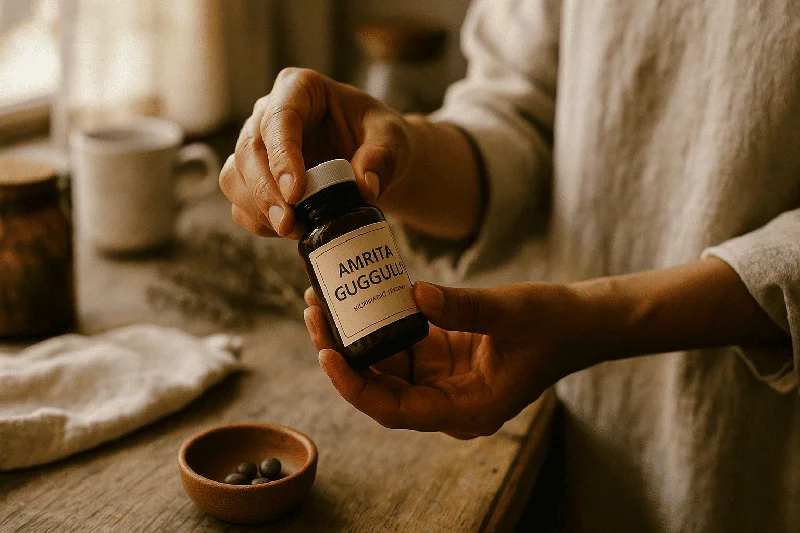
- Amrita Guggulu (also spelled Amrutadi Guggul) is a classical Ayurvedic polyherbal formulation primarily used to manage gout, reduce elevated uric acid levels, support joint health, and treat chronic inflammatory conditions.
- It combines the immunomodulatory power of Amrita — Guduchi (Tinospora cordifolia) — with the deep-penetrating, anti-inflammatory resin of Guggulu (Commiphora mukul). Described in revered texts like Bhavaprakasha Madhyama Khanda and Yogaratnakara, this formula has been prescribed by Ayurvedic physicians for centuries for conditions ranging from rheumatoid arthritis (Amavata) to skin diseases, hemorrhoids, obesity, and non-healing wounds.
If you're searching for a comprehensive, evidence-informed guide on what Amrita Guggulu is, how it works at a pharmacological level, exact dosage protocols, a comparison with similar Guggulu formulations, and what the science actually says — you're in the right place.
What Is Amrita Guggulu?
- Amrita Guggulu is a traditional Ayurvedic tablet or pill-form medicine classified under the Guggulu Kalpana (guggulu-based preparations) category.
- The name itself reveals its core identity: Amrita literally means "nectar of immortality" and refers to Guduchi (Tinospora cordifolia), a plant so revered in Ayurveda that it's considered the answer to degeneration and toxicity. Guggulu refers to the oleoresin of Commiphora mukul, one of the most extensively researched Ayurvedic substances.
Together, they form the backbone of a multi-ingredient formula designed to pacify vitiated doshas, purify blood, and resolve deep-seated inflammatory pathology.
Amrita Guggulu vs Amrutadi Guggulu — Is There a Difference?
- This is a common source of confusion. In practice, Amrita Guggulu and Amrutadi Guggulu refer to the same formulation.
- The variation comes from Sanskrit naming conventions — "Amritadi" means "Amrita and others," indicating a formula where Guduchi is the lead herb among several. Different manufacturers (Kottakkal Arya Vaidya Sala, AVN, etc.) may use either name on their labels, but the classical reference, ingredient list, and therapeutic indications remain identical.
- So if you see both names online, don't worry — it's the same medicine.
Classical Ayurvedic References
The primary textual source for Amrita Guggulu is Bhavaprakasha Madhyama Khanda (Vatavyadhi Adhikara), authored by Bhavamishra around the 16th century CE. The formulation is also referenced in Yogaratnakara, another important compendium of Ayurvedic therapeutics. Both texts describe this preparation specifically in the context of Vatarakta (gout), Amavata (rheumatoid conditions), and Kushta (skin diseases).
The original Sanskrit shloka lists the ingredients with precise proportions and specifies the manufacturing process — a level of pharmaceutical detail that was remarkably advanced for its era.
Key Ingredients and Their Roles
What makes Amrita Guggulu effective is not a single "magic ingredient" but the synergistic interaction of multiple herbs. Each component addresses a different aspect of the disease pathology — some reduce inflammation, some improve digestion and metabolism, others help eliminate toxins.
Full Ingredient Table with Proportions
| Ingredient | Latin / Botanical Name | Part Used | Proportion | Primary Action |
|---|---|---|---|---|
| Guduchi (Amrita) | Tinospora cordifolia | Stem | 1 part | Immunomodulator, anti-inflammatory |
| Guggulu (Shuddha) | Commiphora mukul | Oleo-gum resin | Equal to total of other ingredients | Anti-inflammatory, lipid-lowering |
| Haritaki | Terminalia chebula | Fruit | 1 part | Digestive, mild laxative |
| Vibhitaki | Terminalia bellirica | Fruit | 1 part | Astringent, anti-inflammatory |
| Amalaki | Emblica officinalis | Fruit | 1 part | Antioxidant, vitamin C source |
| Maricha (Black Pepper) | Piper nigrum | Fruit | 1 part | Bioenhancer, digestive fire stimulant |
| Pippali (Long Pepper) | Piper longum | Fruit | 1 part | Bioenhancer, anti-kapha |
| Shunti (Dry Ginger) | Zingiber officinale | Rhizome | 1 part | Anti-inflammatory, carminative |
| Danti | Baliospermum montanum | Root | 1 part | Purgative, detoxifying |
| Vidanga | Embelia ribes | Fruit | 1 part | Anthelmintic, metabolic corrector |
| Tvacha (Cinnamon) | Cinnamomum zeylanicum | Bark | 1 part | Carminative, anti-diabetic |
| Trivrut (Operculina) | Operculina turpethum | Root | 1 part | Therapeutic purgative |
Guduchi — The Lead Herb
Guduchi deserves special attention because it's the pradhana dravya (principal ingredient). A 2016 review published in the Journal of Ethnopharmacology documented its significant immunomodulatory, anti-hyperuricemic, and hepatoprotective activities. The plant contains bioactive compounds including berberine, tinosporin, and columbin that directly modulate inflammatory pathways — particularly by inhibiting COX-2 and NF-κB signaling.
Triphala and Trikatu — The Support Systems
Triphala (Haritaki + Vibhitaki + Amalaki) handles the detoxification and GI-tract component. It ensures proper elimination, which is critical in gout management because uric acid excretion depends on healthy kidney and bowel function. Trikatu (Maricha + Pippali + Shunti) acts as a powerful bioenhancer. It increases the bioavailability of other herbs, stimulates Agni (digestive fire), and helps break down Ama (metabolic toxins) — a concept central to Ayurvedic pathology of joint diseases.
Guggulu — The Carrier and Healer
Purified Guggulu (Shuddha Guggulu) serves a dual role. First, it's the binding agent that holds the formulation together. Second, and more importantly, it contributes guggulsterones (E and Z forms) — compounds that a landmark 1994 study in Science showed have potent hypolipidemic activity. In the context of Amrita Guggulu specifically, guggulsterones add anti-inflammatory action at the joint synovial membrane level and help modulate lipid metabolism, which is often disrupted in patients with gout and metabolic syndrome.
How Amrita Guggulu Is Made (Method of Manufacturing)
Traditional Preparation Process
The classical method described in Bhavaprakasha follows a specific sequence:
- 1.Preparation of herbal powders: All herbs (except Guggulu) are individually dried, powdered, and sieved through fine cloth to get uniform churna (powder).
- 2.Purification of Guggulu: Raw Guggulu is purified (shodhana) by boiling it in Triphala kashaya (decoction) or in milk. This removes impurities and enhances its therapeutic potency while reducing potential GI irritation.
- 3.Mixing: The Shuddha Guggulu is warmed gently until it becomes soft and pliable. The herbal powders are then gradually incorporated into the softened Guggulu mass and mixed thoroughly using a stone mortar and pestle (khalva yantra).
- 4.Pill formation: The homogeneous mass is rolled into uniform pills (vati), typically weighing 250 mg to 500 mg each.
- 5.Drying: Pills are shade-dried — not sun-dried, which could degrade volatile compounds.
Modern Manufacturing Standards
Reputable manufacturers like Kottakkal Arya Vaidya Sala and AVN Ayurveda now follow GMP (Good Manufacturing Practices) protocols. The process remains essentially the same, but includes standardized quality control — testing for heavy metals, microbial contamination, and consistency in active compound concentrations. The shelf life of properly manufactured Amrita Guggulu tablets is typically 3 to 5 years from the date of manufacture.
Health Benefits and Therapeutic Uses
Gout and Uric Acid Management
This is the primary indication. In Ayurvedic pathology, gout corresponds closely to Vatarakta — a condition where vitiated Vata dosha combines with impure Rakta (blood) to cause severe joint pain, swelling, and redness, especially in the big toe and small joints.
Amrita Guggulu addresses gout through multiple mechanisms:
- Guduchi has demonstrated uric acid-lowering activity in animal models (a 2011 study in Fitoterapia showed significant reduction in serum uric acid in hyperuricemic rats)
- Triphala supports renal excretion of uric acid
- Trikatu improves digestion and prevents formation of Ama, which Ayurveda considers a root cause of Vatarakta
Rheumatoid Arthritis (Amavata)
In Amavata, impaired digestion leads to accumulation of Ama, which deposits in joints and triggers chronic inflammation. Amrita Guggulu is prescribed here because it simultaneously improves Agni (digestion), eliminates Ama, and reduces joint inflammation. It is often given alongside Rasnadi Kashayam or Kokilakshaka Kashayam for better results.
Skin Diseases (Kushta)
Classical texts specifically mention Kushta (chronic skin conditions including psoriasis, eczema, and non-healing dermatitis) as an indication. The blood-purifying action of Guduchi, combined with the detoxifying effects of Triphala and the purgative action of Danti and Trivrut, creates a comprehensive blood-cleansing protocol that addresses skin pathology from the inside out.
Hemorrhoids, Fistula, and Fissure
Amrita Guggulu is prescribed for inflammatory anorectal conditions — particularly when there's a Pitta-Kapha predominance with infection tendency. The anti-inflammatory and wound-healing properties of Guggulu, combined with the mild laxative action of Triphala, make this formulation useful as an adjunct therapy.
Obesity and Cholesterol Management
Guggulsterones have documented lipid-lowering activity. A randomized controlled trial published in Complementary Therapies in Medicine (2009) showed that guggul extract significantly reduced total cholesterol and triglycerides in overweight patients over 12 weeks. While this study used isolated guggul extract rather than the full Amrita Guggulu formulation, the pharmacological rationale extends to the compound formula.
Diabetes and Urinary Disorders (Prameha)
In Ayurvedic classification, Prameha encompasses a range of metabolic and urinary disorders, including diabetes mellitus. Guduchi has been shown in a 2012 BMC Complementary and Alternative Medicine study to have significant hypoglycemic activity. The inclusion of Tvacha (cinnamon), which has its own well-documented blood sugar-regulating properties, makes this formulation relevant for pre-diabetic and diabetic conditions.
Non-Healing Wounds, Abscesses, and Nasal Polyps
Chronic wounds that refuse to heal often involve underlying metabolic derangement and poor immune function. Guduchi's immunomodulatory action, combined with Guggulu's proven wound-healing properties, makes Amrita Guggulu useful as an internal medicine for such cases. Some Ayurvedic practitioners also prescribe it for nasal polyps (Nasa Arsha) due to its Kapha-reducing and channel-clearing properties.
Peripheral Vascular Insufficiency and Varicose Veins
This is a less commonly discussed but classically supported indication. The formulation improves blood circulation and reduces inflammatory stagnation in peripheral vessels — a condition that Ayurveda links to Vata-Kapha vitiation in Raktavaha Srotas (blood channels).
How Amrita Guggulu Works — Mechanism of Action
Effect on Tridosha
According to Ayurvedic pharmacology, Amrita Guggulu primarily pacifies Vata and Kapha doshas while having a moderate balancing effect on Pitta. Its rasa (taste) is predominantly bitter (tikta) and pungent (katu), its virya (potency) is ushna (hot), and its vipaka (post-digestive effect) is katu (pungent).
This pharmacological profile — Tikta rasa + Ushna virya — is specifically suited for conditions where Ama (toxins) have combined with Vata to create stiffness, swelling, and pain in joints.
Pharmacological Actions of Key Ingredients — A Modern Perspective
Here's what makes this formulation work at a biochemical level, and this is something no other guide on Amrita Guggulu has explained properly:
- 1.Anti-inflammatory cascade: Guggulsterones inhibit NF-κB activation → reduces TNF-α and IL-6 → decreases synovial inflammation. Guduchi's berberine activates AMPK pathway → further suppresses inflammatory cytokine production.
- 2.Uric acid reduction: Guduchi enhances renal urate excretion (uricosuric effect). Triphala's antioxidant components protect renal tubules from urate-crystal-induced damage.
- 3.Bioenhancement: Piperine from Maricha increases the bioavailability of curcuminoids and other active compounds by inhibiting hepatic and intestinal glucuronidation. This means the other herbs in the formula are absorbed more efficiently.
- 4.Detoxification pathway: Danti and Trivrut act as therapeutic purgatives that promote elimination of lipid-soluble toxins through the GI tract. Vidanga contributes anthelmintic and metabolic-correcting action.
- 5.Immunomodulation: Guduchi polysaccharides activate macrophages and upregulate T-cell function — this is critical for patients with chronic inflammatory conditions where immune dysregulation is a root cause.
Don't wait or self medicate. Start chat with Doctor NOW
Dosage and Administration
Traditional Dosage (Classical Texts)
Classical texts like Bhavaprakasha mention the dosage as one to two Gunja (approximately 1–2 grams per dose), to be taken twice daily.
Modern Recommended Dosage
| Patient Category | Dosage | Frequency | Timing |
|---|---|---|---|
| Adults (general) | 1–2 tablets (250–500 mg each) | Twice daily | After meals |
| Acute gout flare | 2 tablets | Three times daily | After meals, for 7–14 days |
| Chronic maintenance | 1 tablet | Twice daily | After meals |
| Children (above 12 years) | 1 tablet | Once or twice daily | After meals, under supervision |
| Children (below 12) | Not recommended without direct physician guidance | — | — |
Important: Always consult a qualified Ayurvedic practitioner before starting. Self-medication, especially in complex conditions like gout or rheumatoid arthritis, can lead to suboptimal results.
Co-drinks and Adjuvants (Anupana) by Condition
This is a critical aspect of Ayurvedic prescribing that most online resources completely overlook. The anupana (vehicle/co-drink) changes the direction and intensity of the medicine's action:
| Condition | Recommended Anupana |
|---|---|
| Gout (Vatarakta) | Guduchi Kashayam or warm water |
| Rheumatoid Arthritis (Amavata) | Rasnadi Kashayam or Punarnavadi Kashayam |
| Skin diseases (Kushta) | Khadirarishta or Mahamanjisthadi Kashayam |
| Hemorrhoids | Abhayarishta or Triphala Kashayam |
| Obesity | Warm water with honey |
| Prameha (Diabetes/Urinary) | Chandraprabha Vati alongside, with lukewarm water |
Duration of Treatment Course
This is another gap that no other online resource addresses clearly.
Based on classical guidelines and modern clinical practice:
- Acute conditions (gout flare, acute inflammation): 2–4 weeks
- Chronic conditions (rheumatoid arthritis, chronic skin disease): 2–3 months, often in cycles of 6 weeks on, 2 weeks off
- Preventive/maintenance use: 4–6 weeks, repeated 2–3 times per year
Long-term continuous use beyond 3 months should only be done under supervision, as the formula contains purgative ingredients (Danti, Trivrut) that may cause electrolyte imbalance with prolonged use.
Amrita Guggulu vs Other Guggulu Formulations
One of the most frequent questions practitioners receive is: "Which Guggulu preparation should I take?" Here's a detailed comparison that you won't find elsewhere:
| Parameter | Amrita Guggulu | Kaishore Guggulu | Yogaraj Guggulu | Gokshuradi Guggulu |
|---|---|---|---|---|
| Primary Herb | Guduchi | Guduchi + Triphala | Chitraka + Pippalimula | Gokshura |
| Main Indication | Gout, uric acid, skin | Gout, skin, chronic fever | Joint pain, Vata disorders, nerve pain | Urinary disorders, kidney stones, prostate |
| Dosha Focus | Vata-Kapha | Pitta-Kapha | Vata (primary) | Vata-Pitta |
| Contains Purgatives? | Yes (Danti, Trivrut) | Yes (Trivrut) | No | No |
| Best For | Gouty arthritis with skin involvement | Pitta-dominant gout, inflammatory joint conditions | Musculoskeletal pain, sciatica, degenerative arthritis | UTI, renal calculi, BPH |
| Metabolic Action | Strong detox | Moderate detox | Mild detox | Diuretic-dominant |
Key takeaway: Amrita Guggulu is the strongest choice when gout/uric acid is the primary concern, especially when accompanied by skin involvement or obesity. Kaishore Guggulu is very similar but leans more Pitta-pacifying. Yogaraj Guggulu is better for pure Vata conditions like degenerative arthritis and nerve pain. Gokshuradi Guggulu is the go-to for urinary tract related problems.
Diet and Lifestyle During Treatment (Pathya-Apathya)
No Ayurvedic treatment is complete without dietary and lifestyle modifications. This concept of Pathya-Apathya is fundamental yet almost entirely missing from online resources about Amrita Guggulu.
Foods to Favor (Pathya)
- Bitter gourd (karela), pointed gourd (parwal), bottle gourd (lauki)
- Old rice (Purana Shali), barley (yava), green gram (mudga dal)
- Warm water throughout the day
- Moderate use of cow's ghee
- Fruits: pomegranate, amla, papaya
Foods to Avoid (Apathya)
- High-purine foods: Red meat, organ meats, sardines, mackerel
- Alcohol — especially beer, which is a double hit (high purines + dehydrating)
- Curd/yogurt (especially at night)
- Excessive sour, salty, and fried foods
- Urad dal (black gram) — heavy and Kapha-aggravating
- Incompatible food combinations (Viruddha Ahara): fish with milk, fruits with meals
Lifestyle Recommendations
- Regular gentle exercise — walking, swimming, yoga (avoid excessive strain on inflamed joints)
- Avoid daytime sleeping — increases Kapha and Ama formation
- Maintain regular bowel habits
- Practice stress management — chronic stress increases cortisol, which worsens inflammatory conditions
Side Effects, Contraindications, and Drug Interactions
Possible Side Effects
Amrita Guggulu is generally well-tolerated when taken in recommended doses.
However, some individuals may experience:
- Mild gastric irritation or loose stools (due to Danti and Trivrut)
- Occasional nausea, especially if taken on an empty stomach
- Mild burning sensation in patients with Pitta predominance
These side effects are usually transient and resolve by taking the medicine after food or by reducing the dose.
Contraindications
- Pregnancy and lactation: Contraindicated due to the presence of Danti and Trivrut (both have purgative action that could stimulate uterine contractions)
- Children under 5 years: Not recommended
- Severe diarrhea or IBS-D: The purgative ingredients may worsen symptoms
- Acute hepatitis or severe liver disease: Requires caution and physician approval
Drug Interactions
This is a significant gap across all competitor content. While formal drug interaction studies for the full Amrita Guggulu formulation don't exist, the following interactions are plausible based on individual ingredient pharmacology:
- Anticoagulants (Warfarin, Aspirin): Guggulsterones may potentiate blood-thinning effects. Monitor INR if co-prescribed.
- Anti-diabetic medications: Guduchi and Tvacha have hypoglycemic properties — combined use may increase risk of hypoglycemia. Blood sugar monitoring is advised.
- Thyroid medications: Guggulu has thyroid-stimulating activity. Patients on levothyroxine should inform their doctor.
- Lipid-lowering drugs (Statins): Additive lipid-lowering effect — not necessarily dangerous, but should be monitored.
- Immunosuppressants: Guduchi is an immunomodulator; concurrent use with drugs like methotrexate or cyclosporine requires physician oversight.
Available Brands, Packaging, and Price
Amrita Guggulu is manufactured by several reputed Ayurvedic pharmacies across India:
| Manufacturer | Common Pack Size | Approximate Price (INR) |
|---|---|---|
| Kottakkal Arya Vaidya Sala | 100 tablets | ₹180–220 |
| AVN Ayurveda | 100 tablets | ₹160–200 |
| Nagarjuna Ayurveda | 100 tablets | ₹150–190 |
Prices vary by retailer and region. The medicine is available at licensed Ayurvedic pharmacies, and several brands sell online through platforms like 1mg, Amala Earth, and Amazon India. Always check the manufacturing date and ensure the product has an AYUSH license number printed on the packaging.
Frequently Asked Questions (FAQ)
What is the use of Amrutadi Guggul?
Amrutadi Guggul (same as Amrita Guggulu) is primarily used for managing gout, reducing high uric acid levels, treating rheumatoid arthritis, chronic skin diseases, hemorrhoids, and supporting metabolic health including obesity and high cholesterol. It is a multi-action formulation that works on inflammation, detoxification, and immune modulation simultaneously.
Which medicine is called Amrita in Ayurveda?
In Ayurveda, Guduchi (Tinospora cordifolia) is called "Amrita," which translates to "nectar of immortality." It earned this name due to its remarkable rejuvenating, immunomodulatory, and life-enhancing properties. It is considered one of the most important Rasayana (rejuvenation) herbs in the entire Ayurvedic pharmacopoeia.
What are the benefits of using Guggulu?
- Guggulu (Commiphora mukul) resin offers anti-inflammatory, hypolipidemic (cholesterol-lowering), thyroid-stimulating, anti-obesity, and wound-healing benefits.
- Its active compounds — guggulsterones E and Z — are the most researched, with studies showing efficacy in reducing CRP (C-reactive protein), total cholesterol, and joint inflammation markers.
How long does Amrita Guggulu take to show results?
For acute gout flares, noticeable pain reduction may occur within 5–7 days. For chronic conditions like rheumatoid arthritis or skin diseases, expect meaningful improvement after 4–6 weeks of consistent use. Full therapeutic benefits in chronic cases typically emerge after 2–3 months.
Can Amrita Guggulu be taken with allopathic medicines?
Yes, in many cases it can be taken alongside conventional medications, but not without professional guidance. Particularly if you are on blood thinners, diabetes medication, thyroid drugs, or immunosuppressants — consult both your Ayurvedic practitioner and allopathic physician to avoid potential interactions.
Is Amrita Guggulu safe for long-term use?
It is generally safe for courses of up to 3 months. Beyond that, periodic breaks are recommended (typically 2 weeks off after every 6 weeks on). Continuous long-term use without breaks is not advisable due to the purgative ingredients in the formula, which may affect electrolyte balance over time.
How is Amrita Guggulu different from Triphala Guggulu?
Triphala Guggulu contains only Triphala (three fruits) combined with Guggulu and Pippali — it's primarily used for hemorrhoids, fistula, and weight management. Amrita Guggulu is a more complex formula with additional ingredients (Guduchi, Trikatu, Danti, Vidanga, Tvacha, Trivrut) that make it more suited for gout, arthritis, and systemic inflammatory conditions.
Conclusion
Amrita Guggulu stands as one of the most versatile and well-designed polyherbal formulations in the Ayurvedic pharmacopoeia. Its unique combination of immunomodulatory, anti-inflammatory, detoxifying, and metabolic-correcting herbs addresses complex conditions like gout, arthritis, and chronic skin disease from multiple angles simultaneously — something that single-drug approaches often struggle to achieve.
- Whether you're dealing with elevated uric acid, painful joints, stubborn skin conditions, or simply looking for a classical Ayurvedic formulation backed by both traditional wisdom and emerging scientific evidence, Amrita Guggulu deserves serious consideration.
- But remember — Ayurveda is inherently personalized medicine. The dosage, anupana, duration, and accompanying dietary modifications should all be tailored to your unique Prakriti and disease state.
Consult a qualified Ayurvedic practitioner before starting Amrita Guggulu, especially if you have existing health conditions or are taking other medications. The right guidance can make the difference between a medicine that merely helps and one that truly heals.
Scientific Sources
- A comparative study of Kaishora Guggulu and Amrita Guggulu in the management of Utthana Vatarakta — Ramachandran AP et al., 2010, Ayu
Questions from users
How does Amrita Guggulu interact with thyroid medications?
Client_dde97a
23 days ago
Amrita Guggulu can interact with thyroid medications due to its thyroid-stimulating properties. If you are on thyroid medications, it is crucial to monitor your thyroid hormone levels closely. Amrita Guggulu might alter the effectiveness of your thyroid medication, requiring potential dosage adjustments to maintain optimal hormonal balance. Watch for symptoms like changes in energy levels, weight fluctuations, or heart rate irregularities. Consultation with a healthcare provider before starting Amrita Guggulu is essential, especially if you are managing any thyroid conditions, as they can tailor recommendations to your specific health needs.
How long does it take to see results from Amrita Guggulu?
Client_6ba894
33 days ago
The effects of Amrita Guggulu can vary, with some people noticing benefits in as little as two weeks, while others may take up to eight weeks to see improvements. This herbal compound is typically used to support joint health, manage inflammation, and purify the blood. However, results can depend on the individual's health condition, adherence to dosing instructions, and lifestyle factors. If you experience adverse effects or no improvement after eight weeks, consult a healthcare professional. Always use Amrita Guggulu under the guidance of a qualified practitioner.
Is Amrita Guggulu effective for managing chronic inflammation?
Client_875965
42 days ago
Amrita Guggulu may be beneficial for managing chronic inflammation due to its anti-inflammatory properties, but evidence primarily comes from traditional use rather than robust clinical trials. It's typically used in Ayurvedic medicine to address conditions like arthritis. Noticeable effects can take several weeks to become evident, and its efficacy can vary based on individual health conditions. Be cautious of potential interactions with medications such as blood thinners, diabetes medication, and thyroid drugs. Consultation with both an Ayurvedic practitioner and a healthcare provider is advisable, especially for long-term use beyond three months. If symptoms persist or worsen, see a doctor.
What ingredients in Amrita Guggulu aid joint health effectiveness?
Client_6962fa
52 days ago
Amrita Guggulu supports joint health primarily through the anti-inflammatory properties of its key ingredients: Guggulu (Commiphora mukul) and Guduchi (Tinospora cordifolia). Together, they work to reduce inflammation, manage gout, and lower elevated uric acid levels. Guggulu is particularly noted for its role in decreasing inflammation and pain in the joints. Guduchi supports the immune system and further aids in reducing inflammation. The Trikatu combination (Maricha, Pippali, and Shunti) enhances the bioavailability of these active compounds. For persistent or severe joint issues, consultation with a healthcare provider is advised.
What dietary changes can enhance the effectiveness of Amrita Guggulu?
Client_ad835f
62 days ago
To enhance the effectiveness of Amrita Guggulu, focus on a diet that supports its detoxifying and anti-inflammatory properties. Prioritize fresh fruits, vegetables, whole grains, and lean proteins to support overall health. Specifically, including foods rich in antioxidants, such as berries and leafy greens, can complement Amrita Guggulu's actions. Limiting processed foods, caffeine, and alcohol can also aid its effectiveness. If you are uncertain about dietary changes that align with your specific health needs, consult a healthcare provider, particularly if you experience adverse effects or have a chronic health condition.
Can Amrita Guggulu help with weight loss and managing cholesterol levels?
Client_91fe50
71 days ago
Amrita Guggulu can potentially help with weight loss n' managing cholesterol, as it contains guggul, which has been shown to reduce cholesterol levels. While it's promising, everyone's body is different, so it’s best to talk to an ayurvedic practitioner first to consider the right dosha balance for you.
What is the importance of GMP in the production of Ayurvedic medicines like Amrita Guggulu?
Client_08a278
80 days ago
GMP is super important for Ayurvedic meds like Amrita Guggulu cause it ensures the meds are safe and effective. It involves strict rules for cleanliness, quality control, and correct ingredient use. This means you’re getting a product that is consistent in quality and free from contamination. Without GMP, the risk of impurities or variations in potency can be higher, which can mess with the effectiveness and safety of the medicine. So, yeah, it's pretty essential!
What is the role of adaptogens like Amrita in managing stress and anxiety?
Client_b5a872
94 days ago
Adaptogens like Amrita help your body adapt to stress by moderating the stress response, kinda like turning down the volume on stress. They can soothe anxiety by balancing the body's energy and calming the nervous system. Think of it as a way to help your system cope better, increasing resilience without tipping into stress overload.
Is it safe to use Amrita Guggulu for long-term joint pain management?
Client_d26ab6
104 days ago
Yes, Amrita Guggulu can be used safely for long-term joint pain management if you follow advice from an Ayurvedic practitioner. It helps balance toxins and reduces inflammation. Keep an eye out for any digestive issues and make sure you're getting it from a trusted source. It's all about balancing your doshas, so a personalized approach is key!
What are the detoxification benefits of using Amrita for liver support?
Client_a53362
113 days ago
Amrita, or Guduchi, is really great for detoxing! It helps the liver by cleansing the blood, which supports liver function—kind of like giving your liver a little boost to work better. It also strengthens your immune system. Think of it as helping your body's natural cleanup team to be more effective.
Related articles

Orthopedic Disorders
Kasisadi Tailam Benefits, How To Use, Ingredients, Side Effects
Exploration of Kasisadi Tailam Benefits, How To Use, Ingredients, Side Effects
2,213
Orthopedic Disorders
Pushpa Dhanwa Ras: Ayurvedic Joint Health Remedy for Arthritis
Discover the benefits, proper dosage, uses, and scientific research behind Pushpa Dhanwa Ras, a powerful Ayurvedic formulation for joint health.
3,887

Orthopedic Disorders
Patanjali Divya Peedantak Taila
Exploration of Patanjali Divya Peedantak Taila
3,335

Orthopedic Disorders
How to Increase Synovial Fluid Ayurveda – Natural Joint Lubrication Tips
Discover Ayurvedic strategies to increase synovial fluid naturally. Learn about herbs, diet, lifestyle changes, and therapies to support joint health and fluid production.
5,873

Orthopedic Disorders
How to Cure Rheumatoid Arthritis Permanently with Ayurveda
Learn how to cure rheumatoid arthritis permanently using Ayurvedic herbs, therapies, and diet. Discover root causes and holistic treatments for joint relief
2,455

Orthopedic Disorders
How to Massage Feet to Relieve Pain: Ayurvedic Steps and Oils
Learn how to massage feet to relieve pain using Ayurvedic oils and pressure points. Simple at-home techniques to relax legs, reduce fatigue, and ease tension
5,004

Orthopedic Disorders
Joint Pain
According to Ayurveda, joint pain results from an imbalance in Vata, the energy responsible for movement.
3,664

Orthopedic Disorders
How to Cure Lower Back Pain Naturally: Causes, Exercises, and Remedies
Learn how to cure lower back pain with exercises, home remedies, and Ayurvedic treatments. Discover causes, symptoms, stretches, and the best ways for relief
2,471

Orthopedic Disorders
Which Oil Is Best for Knee Pain: Ayurvedic Remedies and Relief
Which oil is good for dandruff? Learn the best oils for dandruff and hair fall. Discover Ayurvedic hair oil remedies and essential oils for scalp health
9,883

Orthopedic Disorders
When to Worry About Leg Cramps: Ayurvedic View on Causes and Relief
When should you worry about leg cramps? Learn Ayurvedic causes, night cramp risks, and natural remedies for relief from painful or recurring leg cramps
3,007
Related consultations on the topic
Legal
Additional Documents
© 2024 Ask Ayurveda. All rights reserved.