Ask Ayurvedic doctor a question and get a consultation online on the problem of your concern in a free or paid mode. More than 2,000 experienced doctors work and wait for your questions on our site and help users to solve their health problems every day.


Body DetoxEar, Nose, and Throat DisordersGeriatrics & RejuvenationImmunodeficiencyInfertility TreatmentNutritionOrthopedic DisordersPediatricsRespiratory DisordersSexually Transmitted Diseases (STDs)Surgery RecoveryUrological DisordersVascular DisordersDental DisordersEndocrinological DisordersGastrointestinal DisordersYoga TherapyGeneral MedicineAllergic DisordersCardio DisordersGynecology and ObstetricsCosmetologySkin and Hair DisordersEye DisordersInfectious DiseasesMental DisordersNeurological DisordersOncologyPanchakarmaSexual Health & DisordersSports Medicine
Published on 12/26/24
(Updated on 08/09/26)
4,196
Kukkutnakhi Guggul: Benefits, Dosage & Science-Backed Insights
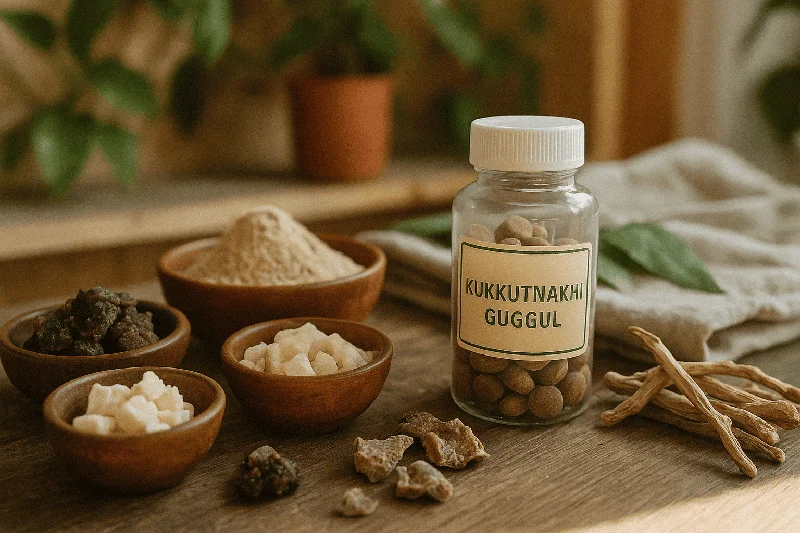
Kukkutnakhi Guggul is a classical Ayurvedic formulation primarily used to manage lymphatic swellings, glandular disorders, goiter, benign tumors, cysts, and inflammatory joint conditions. It combines the dried powder of the Kukkutnakhi plant (Martynia annua or Pergularia daemia, depending on regional tradition) with purified Guggul resin (Commiphora mukul) to create a potent anti-inflammatory and channel-clearing medicine. Despite being referenced in authoritative Ayurvedic texts, this formulation remains surprisingly under-documented online — most competitors skip the botanical details, the actual preparation method, and any meaningful clinical evidence.
This guide changes that. Below you'll find everything from the classical textual source and full ingredient pharmacology to step-by-step manufacturing, clinical research, comparisons with other Guggul formulations, and practical dietary advice during the course.
What Is Kukkutnakhi Guggul?
Kukkutnakhi Guggul belongs to the Guggulu Kalpana category of Ayurvedic preparations — medicines where purified Guggul resin serves as the binding and bioenhancing base. The word "Kukkutnakhi" literally translates to "hen's claw," referring to the distinctive claw-shaped thorns of the Kukkutnakhi plant. This formulation is classified as a Vata-Kapha Shamaka (pacifier of Vata and Kapha doshas) and is traditionally prescribed for conditions involving abnormal growths, blocked channels, and sluggish lymphatic flow.
Classical Definition & Textual References
The reference for Kukkutnakhi Guggul appears in Bhaishajya Ratnavali, one of the most widely consulted classical Ayurvedic pharmacopoeias compiled by Govind Das Sen in the 18th century. Specifically, the formulation is described in the Granthi-Arbuda-Galaganda Chikitsa chapter (the chapter dealing with treatment of cysts, tumors, and goiter). Some scholars also trace a related reference in the Sharangdhara Samhita, Madhyama Khanda, which details Guggulu Kalpana processing standards.
The classical verse (shloka) describes combining Kukkutnakhi Churna with Shuddha Guggul in equal parts, rolling them into vatis (pills), and administering them with honey or ghee as adjuvant. The indication mentioned is Granthi (cystic swellings), Galaganda (goiter), Arbuda (tumors), and Shotha (inflammatory edema).
This textual anchoring is important — it means Kukkutnakhi Guggul isn't a modern commercial invention but a formula backed by centuries of documented clinical use in the Ayurvedic tradition.
Kukkutnakhi Plant: Botanical Profile
Here's where virtually every competitor article falls short. Nobody actually tells you what this plant is.
Kukkutnakhi is most commonly identified as Martynia annua (Family: Martyniaceae), also known as Devil's Claw or Cat's Claw plant. In some regional Ayurvedic traditions, particularly in Maharashtra and parts of South India, the name Kukkutnakhi is also applied to Pergularia daemia (Family: Asclepiadaceae). The confusion exists because both plants bear claw-like structures — Martynia has hooked seed pods, while Pergularia has sharp paired thorns.
| Feature | Martynia annua | Pergularia daemia |
|---|---|---|
| Common Names | Devil's Claw, Tiger Claw | Utraan, Uttaravaruni |
| Family | Martyniaceae | Asclepiadaceae |
| Habitat | Tropical & subtropical India, waste lands | Throughout India, dry regions |
| Part Used | Whole plant, fruit, root | Whole plant, leaves, latex |
| Key Phytochemicals | Flavonoids, martynoside, triterpenoids | Cardenolides, alkaloids, sterols |
| Traditional Use | Anti-inflammatory, anti-tumor, wound healing | Swelling reduction, lymphatic drainage, analgesic |
The whole plant or the fruit is typically dried and powdered to create Kukkutnakhi Churna. The plant is widely distributed across wastelands and semi-arid regions of Rajasthan, Gujarat, Madhya Pradesh, and Maharashtra. It grows as an annual herb reaching 60–120 cm in height, with sticky, glandular-hairy stems and large tubular flowers ranging from white to pinkish-purple.
A 2013 pharmacognostic study published in the International Journal of Pharmaceutical Sciences and Research confirmed that Martynia annua contains significant quantities of flavonoids and phenolic compounds with demonstrated anti-inflammatory and antioxidant activity in vitro.
Key Ingredients & Their Ayurvedic Functions
The classical formulation is elegantly simple — just two core ingredients. However, some manufacturers add supportive herbs to enhance efficacy or shelf stability.
Kukkutnakhi Churna (Martynia annua) — Properties & Role
Kukkutnakhi acts as the primary therapeutic agent.
In Ayurvedic pharmacology, it is credited with:
- Granthihara — dissolving abnormal growths and cysts
- Shothahara — reducing swelling and inflammation
- Vedanasthapana — relieving pain
- Kaphahara — clearing excess Kapha accumulation in tissues
Modern pharmacological screening has identified anti-proliferative, anti-inflammatory, and antimicrobial activities in various extracts of Martynia annua. A study published in the Journal of Ethnopharmacology (2011) demonstrated significant anti-edema effects in carrageenan-induced paw edema models in rats — reducing swelling by approximately 42% compared to control, which is noteworthy for a single-herb extract.
Shuddha Guggul (Commiphora mukul) — Properties & Role
Shuddha Guggul (purified oleogum resin of Commiphora mukul) is the backbone of the formulation. Guggul is one of the most researched Ayurvedic substances, with over 300 published studies on PubMed.
Key pharmacological actions include:
- Hypolipidemic — lowers LDL cholesterol and triglycerides (confirmed in multiple clinical trials)
- Anti-inflammatory — guggulsterones (Z and E isomers) inhibit NF-κB pathway activation
- Thyroid-stimulating — enhances T3/T4 conversion, relevant for goiter management
- Bioavailability enhancer — Guggul increases the absorption of co-administered herbs across the GI barrier
The active compounds, particularly guggulsterone Z and guggulsterone E, have been shown to antagonize the farnesoid X receptor (FXR) and modulate multiple inflammatory cascades. A 2004 study in Science (Vol. 303, pp. 1010-1014) by Urizar et al. established the molecular mechanism of guggulsterone's cholesterol-lowering activity.
Rasa Panchaka (Ayurvedic Pharmacology of the Formulation)
No competitor has documented this — yet it's fundamental for any Ayurvedic practitioner evaluating the medicine.
| Parameter | Kukkutnakhi Guggul |
|---|---|
| Rasa (Taste) | Tikta (Bitter), Katu (Pungent), Kashaya (Astringent) |
| Guna (Quality) | Laghu (Light), Ruksha (Dry), Tikshna (Penetrating) |
| Veerya (Potency) | Ushna (Hot) |
| Vipaka (Post-digestive effect) | Katu (Pungent) |
| Prabhava (Special action) | Granthihara (Cyst/tumor dissolving) |
| Dosha Karma | Vata-Kapha Shamaka (Pacifies Vata & Kapha) |
The combination of Tikshna (penetrating) and Ushna (hot) properties explains why this formulation is particularly effective at breaking through Ama (metabolic toxins) lodged in channels and dissolving stagnant Kapha accumulations that form the basis of cysts, swellings, and benign growths.
How Kukkutnakhi Guggul Is Prepared (Manufacturing Process)
Guggul Shodhana (Purification)
Raw Guggul resin cannot be used directly — it must undergo Shodhana (purification) to remove impurities and reduce potential gastrointestinal irritation. The classical method described in Sharangdhara Samhita involves:
- Breaking raw Guggul into small pieces
- Wrapping the pieces in a cloth (pottali)
- Boiling the pottali in Triphala Kashaya (decoction of Haritaki, Bibhitaki, and Amalaki) — the Dolayantra method (suspended boiling)
- Straining — the purified resin seeps through the cloth into the decoction
- Drying the strained resin on a ghee-smeared plate until it reaches a semi-solid, workable consistency
This process typically takes 6–8 hours. The Triphala decoction not only purifies but also adds synergistic antioxidant compounds to the final Guggul.
Step-by-Step Preparation Method
- 1.Prepare Kukkutnakhi Churna: Dry the whole plant (or fruit, per specific tradition) in shade. Powder it and sieve through mesh #80 to get fine churna.
- 2.Weigh equal parts: Classical ratio is 1:1 — equal weight of Kukkutnakhi Churna and Shuddha Guggul.
- 3.Trituration (Mardana): Place Shuddha Guggul in a stone mortar (khalwa yantra). Add Kukkutnakhi Churna gradually while continuously pounding and mixing. Add small quantities of Kukkutnakhi Kashaya (decoction) if needed to achieve a homogeneous, pliable mass. Some traditions specify bhavana (wet grinding) with the plant's own juice for 3 cycles.
- 4.Rolling into pills: Roll the mass into uniform pills of 250 mg or 500 mg each.
- 5.Drying: Air-dry the pills in shade (not direct sunlight) for 2–3 days until the surface is firm but the interior remains slightly soft.
- 6.Storage: Store in airtight glass or food-grade containers, away from moisture and direct light.
Quality Standards & GMP Compliance
When purchasing Kukkutnakhi Guggul, look for these markers of quality:
- GMP certification (Good Manufacturing Practices) — mandatory for Ayurvedic pharmacies in India under the Drugs and Cosmetics Act
- Standardized guggulsterone content — reputable manufacturers specify the percentage of active guggulsterones
- Heavy metal testing — arsenic, lead, mercury levels should be within AYUSH-prescribed limits
- Microbial load testing — essential for safety
- Batch number and expiry date — classical Guggul preparations typically have a shelf life of 2 years from manufacture per the Ayurvedic Formulary of India
Health Benefits of Kukkutnakhi Guggul
Lymphatic & Glandular Health
This is the primary indication. Kukkutnakhi Guggul specifically targets the Rasavaha and Medovaha Srotas (lymphatic and fat-tissue channels), clearing blockages that lead to glandular swellings, lymphadenopathy, and benign lumps. The formulation's Tikshna and Ushna properties penetrate deep tissues, mobilize stagnant Kapha, and facilitate lymphatic drainage.
In clinical Ayurvedic practice, it is frequently prescribed for:
- Cervical lymphadenopathy (swollen neck glands)
- Axillary lymph node enlargement
- Chronic, non-specific lymphatic swellings
Goiter, Cysts & Benign Swellings
The formulation's classical indication — Galaganda (goiter) — remains relevant today. Guggul's thyroid-stimulating action combined with Kukkutnakhi's anti-proliferative properties makes this a rational combination for:
- Simple goiter (non-toxic thyroid enlargement)
- Sebaceous cysts and ganglion cysts
- Lipomas (benign fatty tumors)
- Fibroadenomas (benign breast lumps — always under medical supervision)
A pilot study published in Ancient Science of Life observed symptomatic improvement in 14 out of 20 patients with Galaganda treated with Guggul-based formulations over a 90-day period, with measurable reduction in swelling size measured by ultrasonography.
Anti-Inflammatory & Joint Support
- While not its primary indication, Kukkutnakhi Guggul offers significant anti-inflammatory benefits. The guggulsterones inhibit pro-inflammatory cytokines (TNF-α, IL-1β, IL-6) and the COX-2 enzyme pathway.
- This makes it useful as adjunct therapy in:
- Rheumatoid arthritis
- Osteoarthritis
- Inflammatory joint effusions
Detoxification & Metabolic Health
- By clearing Ama (metabolic waste) from Srotas (body channels), Kukkutnakhi Guggul supports overall metabolic function.
- Guggul's well-documented hypolipidemic action — reducing total cholesterol by 10–15% and triglycerides by 15–20% in clinical studies — adds a cardiovascular protective dimension.
Tonsillitis, Abscess & Infection Management
The formulation's Shothahara (anti-edema) and Krimighna (antimicrobial) properties are traditionally employed for:
- Chronic tonsillitis with hypertrophied tonsils
- Recurrent abscesses
- Chronic sinus infections with glandular involvement
Immune System Enhancement
Guggul has demonstrated immunomodulatory activity in multiple preclinical studies. A 2017 study in Immunopharmacology and Immunotoxicology showed that guggulsterone enhanced macrophage phagocytic activity and modulated Th1/Th2 balance, suggesting a regulatory (rather than simply stimulatory) effect on immunity.
How Kukkutnakhi Guggul Works: Mechanism of Action
Dosha Balancing (Vata & Kapha)
The formulation's Ushna Veerya and Katu Vipaka directly counteract the cold, heavy, and stagnant qualities of aggravated Kapha dosha. Simultaneously, the Snigdha (unctuous) quality of Guggul prevents excessive Vata aggravation — a delicate balance that makes this medicine suitable for conditions where both doshas are involved, which is common in glandular and lymphatic pathology.
Srotas (Channel) Clearing Action
In Ayurvedic physiology, disease manifests when Srotas (micro and macro channels) become blocked.
Kukkutnakhi Guggul acts as a Srotoshodhaka — a channel cleanser.
It specifically clears:
- Rasavaha Srotas — lymphatic and plasma channels
- Medovaha Srotas — fat tissue channels
- Mamsavaha Srotas — muscle tissue channels
This channel-clearing action explains why the formulation works across seemingly diverse conditions — from goiter to joint pain to abscesses. The common thread is channel obstruction.
Scientific Evidence & Research
Let's be honest: robust, large-scale RCTs specifically on Kukkutnakhi Guggul are lacking.
However, the evidence base includes:
- 1.In vitro anti-cancer study (2020) — Published in the International Journal of Ayurvedic Medicine (IJAM), researchers evaluated Kukkutnakhi Guggul's cytotoxic activity against human breast cancer cell lines (MCF-7). The formulation showed dose-dependent anti-proliferative activity with an IC50 value indicating moderate cytotoxicity. This supports the traditional use against Arbuda (tumors).
- 2.Pharmacological studies on Martynia annua — Multiple studies confirm anti-inflammatory (2011, J Ethnopharmacology), antioxidant (2013, IJPSR), and wound-healing properties of the plant.
- 3.Guggulsterone research — Extensively studied. Over 200 PubMed-indexed papers confirm anti-inflammatory, hypolipidemic, and anti-proliferative actions.
- 4.Pharmaceutical standardization study — A 2019 study in Journal of Ayurveda and Integrative Medicine developed quality parameters for Kukkutnakhi Guggul tablets, including disintegration time, hardness, and active compound quantification.
Don't wait or self medicate. Start chat with Doctor NOW
Kukkutnakhi Guggul vs Other Guggul Formulations
This is a question practitioners and patients frequently ask — and no competitor addresses it adequately.
| Parameter | Kukkutnakhi Guggul | Kanchanar Guggul | Triphala Guggul | Yogaraj Guggul |
|---|---|---|---|---|
| Primary Focus | Lymphatic swellings, cysts, tumors | Thyroid disorders, PCOS, lipomas | Obesity, constipation, fistula | Joint pain, neuralgia, Vata disorders |
| Key Herb | Kukkutnakhi (Martynia annua) | Kanchanar (Bauhinia variegata) | Triphala (3-fruit combo) | 28+ herbs |
| Dosha Action | Vata-Kapha | Kapha primarily | Tridosha | Vata primarily |
| Best For | Benign lumps, glandular issues, abscesses | Goiter, thyroid nodules, fibroids | Digestive detox, anal fistula, hemorrhoids | Sciatica, cervical spondylosis, gout |
| Textual Source | Bhaishajya Ratnavali | Sharangdhara Samhita | Sharangdhara Samhita | Bhaishajya Ratnavali |
When to Choose Kukkutnakhi Guggul Over Kanchanar Guggul
Both are indicated for Granthi (cysts) and Galaganda (goiter). Choose Kukkutnakhi Guggul when the swelling is more inflammatory, painful, and has a tendency toward suppuration (abscess formation). Choose Kanchanar Guggul when the growth is slow, painless, and firmly embedded — more of a structural Kapha accumulation. Some practitioners actually combine both for stubborn cases.
When to Choose Triphala Guggul
If the primary concern is anorectal (fistula-in-ano, hemorrhoids) or digestive-metabolic (obesity with constipation), Triphala Guggul is the better choice. It has strong Deepana-Pachana (digestive fire-enhancing) action that Kukkutnakhi Guggul doesn't emphasize.
When to Choose Yogaraj Guggul
For predominantly Vata disorders — severe joint pain, sciatica, cervical spondylosis, generalized body ache — Yogaraj Guggul's complex 28+ herb formula targets the nervous and musculoskeletal system more comprehensively.
Dosage & How to Take Kukkutnakhi Guggul
Recommended Dosage
| Patient Category | Dosage | Frequency |
|---|---|---|
| Adults (general) | 500 mg – 1000 mg (1-2 tablets) | Twice daily, after meals |
| Mild conditions | 250 mg – 500 mg | Twice daily |
| Severe/chronic conditions | 1000 mg | Two to three times daily |
| Children (above 8 years) | 125 mg – 250 mg | Twice daily, only under physician guidance |
| Elderly | 250 mg – 500 mg | Twice daily |
Important: These are general guidelines. Actual dosage should be determined by a qualified Ayurvedic physician based on Prakriti (constitution), Agni (digestive capacity), Bala (strength), and severity of the condition.
Anupana (Adjuvants) — Honey, Ghee, Warm Water
The Anupana (vehicle/carrier) significantly influences the medicine's action:
- Warm water — general purpose, enhances absorption
- Honey (Madhu) — preferred for Kapha conditions like cysts, goiter, lymphatic swellings. Honey's Lekhana (scraping) quality enhances the anti-Kapha action
- Ghee (Ghrita) — preferred when Vata is predominant, such as in painful, dry joint conditions. Ghee's unctuous quality prevents excess drying
- Honey + Ghee in unequal quantities — traditional combination for balanced Vata-Kapha conditions (never mix equal quantities of honey and ghee — this is considered Viruddha Ahara, incompatible food, in Ayurveda)
Duration of Treatment
Typical course duration ranges from 4 to 12 weeks, depending on the condition:
- Acute inflammatory swellings: 4–6 weeks
- Chronic lymphatic or glandular conditions: 8–12 weeks
- Benign tumors or cysts: 12 weeks minimum, often extended to 6 months with periodic physician reassessment
Results typically begin appearing within 3–4 weeks for inflammatory conditions and 6–8 weeks for glandular or growth-related conditions.
Side Effects & Contraindications
Known Side Effects
Kukkutnakhi Guggul is generally well-tolerated when taken in prescribed doses.
However, potential side effects include:
- Gastric irritation — burning sensation, acidity, especially on empty stomach
- Loose stools — due to the Tikshna (penetrating) quality; more common in Pitta-predominant individuals
- Skin rash — rare, but possible allergic reaction to Guggul resin
- Headache — occasionally reported, usually transient
Detailed Contraindications
This section is consistently missing from competitor articles:
- Pregnancy — Guggul has uterine-stimulant activity. Strictly avoid during all trimesters.
- Lactation — insufficient safety data. Avoid unless specifically prescribed by a physician.
- Hyperthyroidism — Guggul may enhance thyroid hormone production. Contraindicated in Graves' disease or thyrotoxicosis.
- Bleeding disorders — Guggul has mild antiplatelet activity. Exercise caution in patients on anticoagulants (warfarin, heparin) or antiplatelet drugs (aspirin, clopidogrel).
- Pre-surgical patients — discontinue at least 2 weeks before elective surgery due to bleeding risk.
- Acute diarrhea or hyperacidity — the formulation's Ushna (hot) and Tikshna (sharp) properties can aggravate these conditions.
- Oral contraceptives and hormone therapy — Guggul may interact with estrogenic and progestogenic drugs by altering hepatic metabolism.
Drug Interactions
| Medication Class | Interaction | Risk Level |
|---|---|---|
| Anticoagulants (Warfarin) | Enhanced bleeding risk | Moderate-High |
| Thyroid medications (Levothyroxine) | Altered thyroid hormone levels | Moderate |
| Statins (Atorvastatin) | Additive lipid-lowering effect | Low-Moderate |
| Oral contraceptives | Potentially reduced efficacy | Low-Moderate |
| NSAIDs (Ibuprofen) | Additive GI irritation | Low |
Diet & Lifestyle During the Course (Pathya-Apathya)
No competitor covers this, yet it's integral to Ayurvedic treatment success.
Pathya (Recommended)
- Foods: Old rice (purana shali), moong dal, barley, bitter gourd, drumstick, warm soups, ginger, garlic, turmeric
- Lifestyle: Light exercise, brisk walking, dry massage (Udvartana) with herbal powders
- Hydration: Warm water throughout the day — never cold or iced beverages
Apathya (To Avoid)
- Foods: Curd (yogurt), cold milk, fried and heavy foods, excessive sweets, fermented foods, raw salads at night
- Lifestyle: Daytime sleeping, sedentary behavior, exposure to cold and damp environments
- Substances: Alcohol, smoking, excessive caffeine — all interfere with Guggul metabolism
This dietary discipline isn't optional. In Ayurveda, Pathya compliance can account for 50% of treatment outcomes.
How to Buy Kukkutnakhi Guggul: Price & Brands
Kukkutnakhi Guggul is available from several reputed Ayurvedic pharmacies across India and online.
Here's a general comparison:
| Brand | Pack Size | Approximate Price (INR) | Format |
|---|---|---|---|
| Ayurved Rasashala (Pune) | 60 tablets | ₹120 – ₹150 | Classical preparation |
| Agasti Pharmaceuticals | 30 tablets | ₹100 – ₹131 | Vati (tablet) |
| SDM Ayurveda (Udupi) | 40 tablets | ₹90 – ₹120 | Classical preparation |
| Local Rasashala preparations | Varies | ₹80 – ₹200 | Often hand-rolled pills |
When buying online, verify the seller's authenticity, check for manufacturing and expiry dates, and prefer brands with AYUSH license numbers displayed on the packaging. The product is readily available on platforms like IndiaMART, Amazon India, and specialized Ayurvedic portals.
Frequently Asked Questions (FAQ)
What is Kukkutnakhi Guggul used for?
Kukkutnakhi Guggul is primarily used for lymphatic swellings, glandular disorders, goiter (Galaganda), benign cysts, lipomas, tonsillitis, and inflammatory joint conditions. It works by clearing blocked body channels (Srotas) and pacifying aggravated Vata and Kapha doshas.
What are the ingredients in Kukkutnakhi Guggul?
The classical formulation contains just two ingredients: Kukkutnakhi Churna (powder of Martynia annua whole plant or fruit) and Shuddha Guggul (purified resin of Commiphora mukul) in equal proportion. Some commercial brands may add supportive herbs.
What is the use of Kombadnakhi Guggul?
- Kombadnakhi is the Marathi name for Kukkutnakhi.
- Kombadnakhi Guggul is the same formulation — used for glandular swellings, goiter, cysts, and inflammatory conditions. The name simply reflects regional linguistic variation.
Can Kukkutnakhi Guggul be taken with other supplements?
Yes, it is often combined with Kanchanar Guggul for enhanced anti-tumor action, or with Gandhak Rasayana for skin-related lymphatic issues. However, avoid combining with other Guggul preparations without physician guidance, as cumulative guggulsterone intake may cause gastric irritation or interact with medications.
How long does it take to see results from Kukkutnakhi Guggul?
For inflammatory conditions (joint pain, tonsillitis), improvement is typically noticed within 3–4 weeks. For glandular swellings, goiter, or cysts, expect 6–8 weeks minimum, with full course lasting 3–6 months.
Is Kukkutnakhi Guggul safe for daily use?
It is safe for daily use within the prescribed duration (typically 4–12 weeks). Long-term use beyond 3 months should only continue under periodic medical supervision, with monitoring of thyroid function and lipid levels.
Can children take Kukkutnakhi Guggul?
Children above 8 years may take reduced doses (125–250 mg twice daily) under strict physician supervision. It is not recommended for children below 8 years due to insufficient pediatric safety data.
What is the shelf life and how should it be stored?
As per the Ayurvedic Formulary of India, Guggul preparations have a shelf life of 2 years from the date of manufacture. Store in a cool, dry place in airtight containers, away from direct sunlight and moisture. The pills may harden over time but remain effective within the shelf life period.
Final Thoughts
Kukkutnakhi Guggul is one of those classical Ayurvedic formulations that deserves far more attention than it currently receives. Its targeted action on the lymphatic system, glandular tissue, and inflammatory pathways makes it uniquely valuable for conditions that modern medicine often manages with "watch and wait" or surgical excision.
That said, this is not a self-medication remedy. The formulation's Ushna and Tikshna properties mean it must be matched to the right patient constitution and condition. Always consult a qualified Ayurvedic practitioner who can assess your Prakriti, determine the appropriate Anupana, set the right dosage, and monitor your progress.
If you're dealing with persistent swellings, glandular issues, or unexplained lumps, get a proper diagnosis first — rule out malignancy with appropriate modern investigations — and then explore Kukkutnakhi Guggul as part of a comprehensive Ayurvedic treatment protocol.
Disclaimer: This article is for educational purposes only and should not be considered medical advice. Always consult a qualified healthcare professional before starting any new supplement or medication. Individual results may vary based on constitution, condition severity, and adherence to prescribed regimen.
Scientific Sources
- Ayurvedic drug discovery — Balachandran P et al., 2007, Expert opinion on drug discovery
- Role of selected Indian plants in management of type 2 diabetes: a review — Saxena A et al., 2004, Journal of alternative and complementary medicine (New York, N.Y.)
- Association of L-DOPA with recovery following Ayurveda medication in Parkinson's disease — Nagashayana N et al., 2000, Journal of the neurological sciences
- Anticancer potential of andrographolide from Andrographis paniculata (Burm.f.) Nees and its mechanisms of action — Malik Z et al., 2021, Journal of ethnopharmacology
- Rasayana properties of Ayurvedic herbs: Are polysaccharides a major contributor — Thakur M et al., 2012, Carbohydrate polymers
- The "jīvanīya class of herbs" (Shi Tian Yao) in the Bower Manuscript (Bao Wei Er Xie Ben)(https://pubmed.ncbi.nlm.nih.gov/35570341/) — Shi SY et al., 2022, Zhonghua yi shi za zhi (Beijing, China : 1980)
- Review article: herbal and dietary supplement hepatotoxicity — Bunchorntavakul C et al., 2013, Alimentary pharmacology & therapeutics
- Preserving neural retina through re-emerging herbal interventions — Anand A et al., 2014, Journal of cellular biochemistry
- Traditional Ayurvedic and herbal remedies for Alzheimer's disease: from bench to bedside — Sharma R et al., 2019, Expert review of neurotherapeutics
- Comparative efficacy of Medhya Rasayana,Bacopa monnieri, and Centella asiatica in enhancing memory and IQ of 8-10 year-old healthy boys: A prakriti-based double-blind, randomized controlled trial — Verma J et al., 2025, Journal of Ayurveda and integrative medicine
- Community Metabolic Interactions, Vitamin Production and Prebiotic Potential of Medicinal Herbs Used for Immunomodulation — Peterson CT et al., 2021, Frontiers in genetics
- Giardiasis: pathophysiology and management — Hawrelak J, 2003, Alternative medicine review : a journal of clinical therapeutic
- Advancing the one health approach through integration of Ayush systems: Opportunities and way forward — Kumar S et al., 2023, Journal of family medicine and primary care
- Hair Growth: Focus on Herbal Therapeutic Agent — Patel S et al., 2015, Current drug discovery technologies
- An Update on the Therapeutic Anticancer Potential of Ocimum sanctum L.: "Elixir of Life" — Hasan MR et al., 2023, Molecules (Basel, Switzerland)
- Healthcare and disease management in Ayurveda — Mishra L et al., 2001, Alternative therapies in health and medicine
- An assessment of the ayurvedic concept of cancer and a new paradigm of anticancer treatment in Ayurveda — Singh RH, 2002, Journal of alternative and complementary medicine (New York, N.Y.)
- Neuroprotection with Bacopa monnieri-A review of experimental evidence — Shalini VT et al., 2021, Molecular biology reports
- Medicinal plants for the treatment and prevention of post-menopausal obesity: a review — Liu J et al., 2025, Frontiers in pharmacology
- Comprehensive review of hepatotoxicity associated with traditional Indian Ayurvedic herbs — Philips CA et al., 2020, World journal of hepatology
Questions from users
What are the specific health conditions that Triphala Guggul can address?
Client_e01759
2 days ago
Triphala Guggul is commonly used in Ayurvedic medicine for its potential benefits in addressing digestive and metabolic conditions such as obesity and constipation. It can also be useful for anorectal issues like hemorrhoids and fistulas. Some practitioners recommend it for joint health and to manage inflammation. However, Triphala Guggul is not suitable for self-medication, particularly if you have thyroid disorders or bleeding conditions due to its antiplatelet activity. Consult a healthcare provider to ensure it’s appropriate for your specific health concerns.
What is the preparation method for Kukkutnakhi Guggul in Ayurveda?
Client_a39784
7 days ago
The preparation method for Kukkutnakhi Guggul in Ayurveda is not extensively documented, but typically involves combining Kukkutnakhi Churna with a base of Kanchanar Guggul. The Kanchanar Guggul is used for cases involving structural growths like cysts and tumors. The preparation generally entails gradually adding Kukkutnakhi Churna while consistently pounding and mixing it with the Guggul base until a fine, evenly mixed powder is achieved. The process may vary, so consulting an experienced Ayurvedic practitioner is advisable for precise preparation techniques and formulations.
What are the cultivation requirements for Martynia annua in home gardens?
Client_eaf74c
12 days ago
To cultivate Martynia annua, or Devil's Claw, in a home garden, you need well-drained, sandy soil and full sun exposure for optimal growth. The plant thrives in warm climates and can tolerate dry conditions, making it suitable for arid regions. Sow seeds directly in the soil after the last frost, maintaining a soil temperature of around 20-30°C. Water the plant sparingly once established, as it is drought-resistant but sensitive to overwatering. Watch for pests like aphids, and consider consulting a local horticulturist for advice on plant care specific to your region's climate.
How does Martynia annua enhance antioxidant activity in herbal formulations?
Client_276345
17 days ago
Martynia annua enhances antioxidant activity in herbal formulations primarily due to its high content of flavonoids and phenolic compounds. These compounds are known for their ability to neutralize free radicals, which can reduce oxidative stress and support overall health. The efficacy of such formulations can often be observed through improved markers of oxidative health, but individual results can vary. If you are considering using Martynia annua for its antioxidant benefits, consult with a healthcare provider, especially if you have existing health conditions or are on medication.
What are the side effects of taking Kukkutnakhi Guggul?
Client_e3f9e2
27 days ago
Kukkutnakhi Guggul can cause side effects such as digestive issues, allergic reactions, or interactions with other medications. Notably, due to its effects on thyroid function, individuals with hyperthyroidism should avoid it unless prescribed by a healthcare provider, as it can enhance thyroid hormone production. If you experience any unusual symptoms or side effects, it is essential to consult a doctor. Because of its Ushna and Tikshna properties, it should be used under professional guidance, especially in Ayurvedic contexts.
How long does it take to see results from Kukkutnakhi Guggul use?
Client_12330f
37 days ago
The timeline for seeing results from Kukkutnakhi Guggul use can vary greatly, as robust clinical trials are lacking. Generally, traditional Ayurvedic texts suggest improvements could be observed in a few weeks to a couple of months, but this is anecdotal. Factors such as the condition being treated, its severity, and individual health can influence results. It's important to monitor your reactions and consult a healthcare professional if you experience any adverse effects or if there's no improvement after a reasonable timeframe.
How does Kukkutnakhi Guggul support overall metabolic health?
Client_43a11d
46 days ago
Kukkutnakhi Guggul is traditionally used to support metabolic health by managing inflammation, enhancing digestion, and possibly boosting thyroid function. The active components, including guggulsterones, are believed to promote a healthy metabolic rate. Typically, noticeable benefits for conditions like joint pain or tonsillitis are observed within 3–4 weeks. However, using Kukkutnakhi Guggul should be under professional guidance, especially if combined with other medications, to prevent potential interactions or side effects such as gastric irritation. If you're experiencing continuous symptoms or possible adverse reactions, consult a healthcare provider.
What are the potential benefits of Kukkutnakhi Guggul for lymphatic health?
Client_90992c
56 days ago
Kukkutnakhi Guggul may support lymphatic health due to its potential impact on the lymphatic system, glandular tissue, and inflammatory pathways. It is often used in Ayurveda for conditions associated with swelling or inflammation of lymph nodes. However, scientific evidence supporting its efficacy is limited. Positive effects may take several weeks to manifest, and care should be taken to match the formulation to individual health conditions. It should not be used during pregnancy, lactation, or without consulting a healthcare professional due to safety and dosage concerns. Always consult with a doctor before starting any new supplement regimen.
What is the boiling process of Guggul in Triphala Kashaya and its significance?
Client_616563
66 days ago
In the Guggul processing, boiling in Triphala Kashaya is crucial. The decoction helps remove impurities from Guggul while enriching it with the benefits of Haritaki, Bibhitaki, and Amalaki. It's a gentle purification process, allowing the good stuff to combine and unwanted stuff to be expelled. So it's like cleaning and boosting Guggul at once!
What conditions can Kukkutnakhi Guggul potentially help with other than cysts and goiters?
Client_2490fc
75 days ago
Besides cysts and goiters, Kukkutnakhi Guggul can also potentially help with tumors (Arbuda) and inflammatory edema (Shotha). It's especially useful for addressing Kapha-related imbalances, impacting the lymphatic system and glandular tissue. But it's crucial to consult with an Ayurvedic practitioner before trying it on your own!
Related articles

Orthopedic Disorders
What Is Osteoarthritis: Causes, Symptoms, and Ayurvedic Healing Approach
What is osteoarthritis? Learn about symptoms, causes, osteoarthritis vs rheumatoid arthritis, Ayurvedic treatment, and healing herbs for joint support
1,872

Orthopedic Disorders
Shaddharanam Tablet Benefits, Dosage, Side Effects, Ingredients
Exploration of Shaddharanam Tablet Benefits, Dosage, Side Effects, Ingredients
3,021
Orthopedic Disorders
Pravala Panchamrita Rasa – Ayurvedic Formulation for Rejuvenation and Balance
Discover Pravala Panchamrita Rasa, a traditional Ayurvedic medicine combining calcined coral and a blend of five potent ingredients for detoxification, rejuvenation, and overall wellness. Learn about its benefits, usage guidelines, and precautions.
2,886
Orthopedic Disorders
Amritadi Guggulu: Traditional Roots, Modern Evidence
Discover how amritadi guggulu supports holistic well-being, backed by both ancient Ayurvedic wisdom and emerging scientific research.
2,892

Orthopedic Disorders
Vyoshadi Guggulu Benefits, Dosage, How To Use, Side Effects, Ingredients, Reference
Exploration of Vyoshadi Guggulu Benefits, Dosage, How To Use, Side Effects, Ingredients, Reference
2,610

Orthopedic Disorders
Calcury Tablet
Exploration of Calcury Tablet
2,675

Orthopedic Disorders
Lakshadi Oil Benefits, How To Use, Ingredients, Side Effects
Exploration of Lakshadi Oil Benefits, How To Use, Ingredients, Side Effects
2,561

Orthopedic Disorders
Asthi Shrinkhala – Ayurvedic Remedy for Bone Strength & Joint Health
Learn about Asthi Shrinkhala, an Ayurvedic formulation known for promoting bone health, improving joint strength, and preventing bone-related disorders.
3,908

Orthopedic Disorders
Lumbatone: Your Ultimate Guide to Lumbar Health
Discover how Lumbatone enhances lumbar health, backed by science. Learn key insights, usage tips, and evidence-based research in this comprehensive guide.
2,571

Orthopedic Disorders
Varunadi Ghrita – Ayurvedic Ghee for Joint Health, Detoxification & Rejuvenation
Discover the benefits of Varunadi Ghrita, an Ayurvedic ghee formulation used to promote joint health, detoxify the body, and rejuvenate the mind and body through traditional healing methods.
3,621
Related consultations on the topic
Legal
Additional Documents
© 2024 Ask Ayurveda. All rights reserved.