Ask Ayurvedic doctor a question and get a consultation online on the problem of your concern in a free or paid mode. More than 2,000 experienced doctors work and wait for your questions on our site and help users to solve their health problems every day.


Body DetoxEar, Nose, and Throat DisordersGeriatrics & RejuvenationImmunodeficiencyInfertility TreatmentNutritionOrthopedic DisordersPediatricsRespiratory DisordersSexually Transmitted Diseases (STDs)Surgery RecoveryUrological DisordersVascular DisordersDental DisordersEndocrinological DisordersGastrointestinal DisordersYoga TherapyGeneral MedicineAllergic DisordersCardio DisordersGynecology and ObstetricsCosmetologySkin and Hair DisordersEye DisordersInfectious DiseasesMental DisordersNeurological DisordersOncologyPanchakarmaSexual Health & DisordersSports Medicine
Published on 12/27/24
(Updated on 08/09/26)
star_border 4
3,322
Kadali Rasayanam - Ayurvedic Supplement for Digestive Wellness and Strong Bones
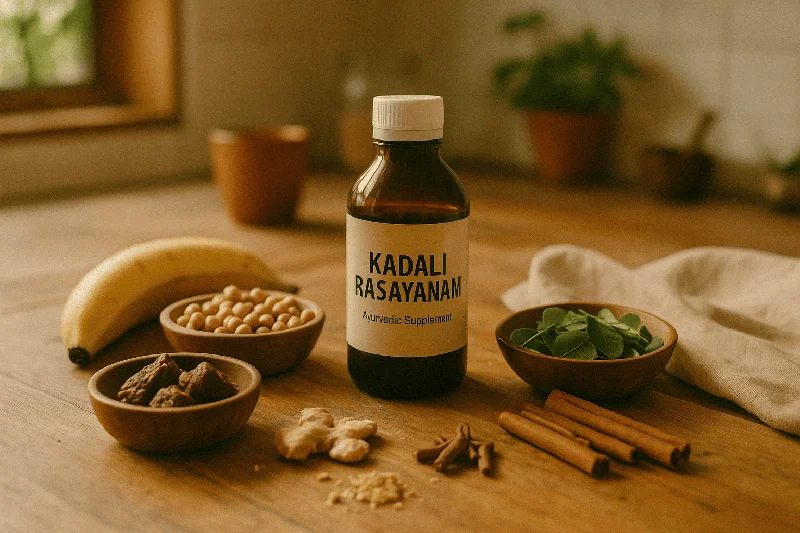
Kadali Rasayanam is a classical Ayurvedic herbal jam (lehyam) primarily prepared from the banana plant (Musa paradisiaca), traditionally used for treating gynecological disorders like leucorrhea, menorrhagia, and urinary tract infections, while also supporting digestive wellness, bone strength, and overall rejuvenation. It balances the Vata and Pitta doshas, making it one of the most valued Rasayana formulations in traditional Indian medicine.
If you've been searching for a natural solution to chronic gynecological issues, persistent weakness, or postpartum recovery — or you simply want to understand what this centuries-old formulation actually does — this is the most comprehensive guide you'll find. We go far beyond what other sources cover, including the Ayurvedic pharmacology, detailed dosha analysis, comparison with similar formulations, and practical dietary guidelines that no other resource online currently provides.
What Is Kadali Rasayanam?
Definition and Ayurvedic Classification
- Kadali Rasayanam belongs to the Rasayana category of Ayurvedic medicines — a class of formulations specifically designed for rejuvenation, tissue nourishment (dhatu pushti), and the promotion of longevity.
- The word "Rasayana" itself is derived from two Sanskrit words: Rasa (essence/plasma) and Ayana (path), literally meaning "the path of nourishment."
In Ayurvedic pharmacology, it's classified as a Lehyam or Avaleha — a semi-solid herbal jam prepared by processing herbs, decoctions, jaggery or sugar, honey, and ghee together. This dosage form ensures better absorption of active compounds and longer shelf life (typically up to 3 years when stored properly).
Kadali Rasayanam is also sometimes referred to as Kadaleekalpa Rasayanam or Kadali Kalpa Rasayanam across different manufacturers and regional traditions.
Historical Background and Classical References
- The Rasayana tradition traces its origins to the Charaka Samhita and Ashtanga Hridayam, two foundational texts of Ayurveda compiled between 600 BCE and 700 CE.
- Charaka dedicated an entire section — the Rasayana Adhyaya — to formulations that promote tissue regeneration and delay aging.
While Kadali Rasayanam as a specific branded formula is primarily associated with Kerala Ayurvedic tradition (particularly manufacturers like Santhigiri Ayurveda and Oushadhi), the use of banana plant in Rasayana preparations has roots in classical texts. The Bhavaprakasha Nighantu (16th century) extensively describes the medicinal properties of Kadali and its various parts — fruit, flower, stem, and root — each having distinct therapeutic applications.
The Role of Kadali (Musa paradisiaca): The Key Ingredient
This is something no other guide adequately explains — why banana?
The Kadali plant (Musa paradisiaca) isn't just any banana. In Ayurveda, it's considered a complete medicinal plant.
Every part carries therapeutic value:
- Fruit (Phala): Rich in potassium, vitamin B6, and dietary fiber. Ayurvedically classified as Madhura rasa (sweet taste), Guru guna (heavy quality), and Sheeta virya (cooling potency).
- Flower (Pushpa): Used traditionally for managing excessive menstrual bleeding and diabetes symptoms.
- Stem (Kanda): Known for its diuretic properties and ability to dissolve kidney stones.
- Root (Moola): Used in formulations targeting urinary disorders and leucorrhea.
A 2017 study published in the Journal of Pharmacognosy and Phytochemistry confirmed that Musa paradisiaca extracts exhibit significant anti-inflammatory, antioxidant, and antimicrobial activity — validating what Ayurvedic practitioners have known for centuries. Additionally, a 2012 study in BMC Complementary and Alternative Medicine demonstrated the plant's anti-ulcerogenic properties, supporting its traditional use in digestive disorders.
The banana plant's naturally cooling, astringent, and nourishing properties make it an ideal base for a Rasayana targeting women's health and tissue regeneration.
Kadali Rasayanam Benefits: Beyond Women's Health
Primary Gynecological Benefits
The most well-documented use of Kadali Rasayanam is in managing gynecological conditions.
Here's a breakdown of the key indications:
| Condition | How Kadali Rasayanam Helps |
|---|---|
| Leucorrhea (Shweta Pradara) | Astringent herbs reduce excessive vaginal discharge; antimicrobial ingredients address underlying infections |
| Menorrhagia (Raktapradara) | Hemostatic (blood-stopping) properties of banana flower and Ashoka help regulate heavy periods |
| Dysmenorrhea | Anti-inflammatory and antispasmodic herbs reduce menstrual cramps and pain |
| Urinary Tract Infections | Diuretic and antimicrobial action of banana stem and other herbs flush pathogens |
| Postpartum Weakness | Nutrient-dense composition restores depleted tissues and boosts energy |
| Premenstrual Syndrome (PMS) | Adaptogenic herbs like Ashwagandha balance hormonal fluctuations |
| Menopausal Symptoms | Cooling and hormone-modulating herbs address hot flashes, mood swings, and vaginal dryness |
Digestive Wellness and Gut Health
Kadali Rasayanam isn't just a gynecological remedy. The banana base combined with digestive herbs like Ela (cardamom) and Jeeraka (cumin) make it a potent digestive tonic. It strengthens Agni (digestive fire) without aggravating Pitta — a rare and valuable combination in Ayurveda.
Patients with chronic indigestion, mild gastritis, or poor nutrient absorption may find it beneficial as a supportive supplement. The mucilaginous nature of banana soothes the gastric lining while the herbal combination promotes healthy peristalsis.
Bone and Joint Support
The calcium, phosphorus, and magnesium naturally present in the banana plant — combined with herbal ingredients like Guggulu (known for its anti-inflammatory effect on joints) — make this formulation relevant for early osteoporosis prevention and joint stiffness. A 2014 study in Molecular Nutrition & Food Research found that guggulsterone compounds in Guggulu inhibit osteoclast activity (bone-resorbing cells), supporting bone density maintenance.
Immunity, Cognitive Function, and Cardiovascular Health
Several ingredients in Kadali Rasayanam contribute to broader systemic benefits:
- Ashwagandha (Withania somnifera): A 2019 study in Medicine (Baltimore) showed it significantly improves stress resilience, cognitive function, and immune markers.
- Curcumin (from Haridra/Turmeric): Extensively researched — over 3,000 published studies — for anti-inflammatory, antioxidant, and cardioprotective effects.
- Amalaki (Emblica officinalis): One of the richest natural sources of vitamin C, supporting immune defense and collagen synthesis.
Can Kadali Rasayanam Help with Weight Management?
This is a frequently asked question and the answer is nuanced. Kadali Rasayanam is not a weight-loss supplement.
However, it can support healthy weight management in two ways:
- 1.For underweight individuals: Its nutrient-dense composition and tissue-nourishing (Brimhana) properties support healthy weight gain, particularly in women recovering from illness or postpartum.
- 2.For metabolic balance: By improving digestion and reducing Ama (metabolic toxins), it helps normalize metabolism — which can indirectly support weight regulation.
If you're specifically looking for weight gain, combining it with a proper diet and lifestyle modifications is essential.
Complete Ingredients List and Their Actions
While formulations vary slightly between manufacturers (Santhigiri, Oushadhi, Kottakkal, etc.), the core ingredients remain consistent with the classical recipe.
Here's the most comprehensive breakdown available:
Primary Ingredients
| Ingredient (Sanskrit) | Botanical Name | Key Action |
|---|---|---|
| Kadali (Banana) | Musa paradisiaca | Base ingredient; astringent, nutritive, cooling |
| Ashoka | Saraca asoca | Uterine tonic; manages menstrual disorders |
| Shatavari | Asparagus racemosus | Female reproductive tonic; galactagogue |
| Ashwagandha | Withania somnifera | Adaptogen; strength and immunity booster |
| Haridra (Turmeric) | Curcuma longa | Anti-inflammatory; antimicrobial |
| Amalaki (Amla) | Emblica officinalis | Antioxidant; vitamin C source |
| Guduchi (Giloy) | Tinospora cordifolia | Immunomodulator; detoxifier |
| Ela (Cardamom) | Elettaria cardamomum | Digestive; flavoring agent |
| Guggulu | Commiphora mukul | Anti-inflammatory; joint support |
| Jeeraka (Cumin) | Cuminum cyminum | Carminative; improves absorption |
| Nagakesara | Mesua ferrea | Hemostatic; anti-bleeding |
| Lodhra | Symplocos racemosa | Astringent; treats leucorrhea |
| Dhataki (Fire Flame Bush) | Woodfordia fruticosa | Uterine astringent; hemostatic |
Adjuvants and Processing Media
- Ghrita (Ghee): Carrier for fat-soluble active compounds; balances Vata and Pitta
- Madhu (Honey): Added after cooling; enhances absorption (Yogavahi property)
- Sharkara (Sugar) or Guda (Jaggery): Preservative and palatability enhancer
- Kashaya (Herbal decoctions): Used during processing to extract water-soluble compounds
> Quality tip: When purchasing Kadali Rasayanam, look for products that are certified organic, free from synthetic preservatives, and manufactured by reputable Ayurvedic pharmacies with GMP certification. Products from Santhigiri, Oushadhi, and established Kerala-based manufacturers are generally reliable.
Ayurvedic Pharmacology: Rasa, Guna, Virya, Vipaka & Dosha Analysis
This is a critical section that no competing resource currently covers — and it matters for anyone trying to understand why this formulation works from an Ayurvedic perspective.
Classical Pharmacodynamic Profile
| Parameter | Property | Clinical Significance |
|---|---|---|
| Rasa (Taste) | Madhura (Sweet), Kashaya (Astringent) | Sweet taste nourishes tissues; astringent taste controls bleeding and discharge |
| Guna (Quality) | Guru (Heavy), Snigdha (Unctuous) | Heavy quality provides grounding and tissue-building; unctuousness combats dryness |
| Virya (Potency) | Sheeta (Cooling) | Cooling potency pacifies Pitta (inflammation, bleeding, burning sensations) |
| Vipaka (Post-digestive effect) | Madhura (Sweet) | Sweet post-digestive effect nourishes all seven dhatus (tissues) |
Which Doshas Does Kadali Rasayanam Balance?
Primarily pacifies Vata and Pitta. Here's the detailed mechanism:
- Vata: The heavy (Guru), unctuous (Snigdha), and sweet (Madhura) properties directly counteract Vata's light, dry, and mobile nature. This explains its effectiveness in conditions like postpartum weakness, general debility, and osteoporosis — all Vata-dominant conditions.
- Pitta: The cooling potency (Sheeta virya) and sweet taste pacify Pitta. This is why it works well for inflammatory gynecological conditions, burning micturition, and excessive bleeding (all Pitta-aggravated symptoms).
- Kapha: Due to its heavy and sweet nature, it may slightly increase Kapha if taken in excess. This is important for individuals with Kapha-dominant constitution or conditions like obesity, PCOS with weight gain, or excessive congestion. Such individuals should use it under medical guidance and in moderated doses.
Dosage, Administration, and Best Practices
Standard Dosage
| Patient Category | Dosage | Frequency | Duration |
|---|---|---|---|
| Adults (general) | 5–10 grams (approx. 1–2 teaspoons) | 1–2 times daily | 1–3 months or as prescribed |
| Postpartum women | 10 grams | 2 times daily | 40–90 days |
| Adolescents (above 12 years) | 5 grams | 1 time daily | As prescribed |
| Elderly women | 5 grams | 1–2 times daily | As prescribed |
When and How to Take It
- Timing: Preferably on an empty stomach or 30 minutes before meals for best absorption. Some practitioners recommend after meals for those with sensitive stomachs.
- Anupana (Vehicle): Can be taken with warm milk or warm water. Milk is preferred for its additional Vata-Pitta pacifying and tissue-nourishing effects.
- Optimal cycle timing for menstrual disorders: Start the course from the 5th day of menstruation (after the period ends) for conditions like leucorrhea and menorrhagia. Continue daily without interruption, even during the next menstrual period.
What If You Miss a Dose?
- If you miss a dose, simply take it as soon as you remember. If it's almost time for your next dose, skip the missed one.
- Do not double the dose to compensate — Rasayana formulations work through consistent, gradual tissue nourishment, not acute dosing.
How Long Does Kadali Rasayanam Take to Show Results?
Most patients report initial improvements within 2–4 weeks of regular use, particularly for symptoms like weakness, fatigue, and mild digestive issues. For gynecological conditions like leucorrhea and menorrhagia, meaningful results typically require 6–12 weeks of consistent use. Chronic conditions may need 3–6 months. Remember that Ayurvedic Rasayanas work by nourishing tissues at a foundational level — they're not quick-fix medications.
Don't wait or self medicate. Start chat with Doctor NOW
Diet and Lifestyle During Treatment (Pathya-Apathya)
This is a classical Ayurvedic principle that every other guide completely ignores, yet it's absolutely essential for optimal results.
Recommended (Pathya)
- Foods: Warm, freshly cooked meals; rice, wheat, moong dal, ghee, milk, seasonal fruits and vegetables, ripe bananas, pomegranate, dates
- Fluids: Warm water, herbal teas (cumin-coriander-fennel tea is excellent), warm milk
- Lifestyle: Regular sleep schedule (by 10 PM), gentle exercise like walking or yoga, stress management through pranayama and meditation
- Specific yoga asanas: Baddha Konasana (Butterfly Pose), Supta Baddha Konasana (Reclining Butterfly), and Viparita Karani (Legs-Up-The-Wall Pose) specifically support reproductive health
Foods and Habits to Avoid (Apathya)
- Foods: Excessively spicy, sour, and fermented foods; stale or leftover food; excessive caffeine, alcohol, and processed foods; raw salads in excess (aggravates Vata)
- Lifestyle: Late nights, excessive physical exertion, skipping meals, emotional stress, suppression of natural urges (especially urination and defecation)
- During menstruation: Avoid heavy exercise, cold foods and drinks, and sexual intercourse for the first 3 days — this is a classical Ayurvedic recommendation for menstrual health
Side Effects, Precautions & Contraindications
Is Kadali Rasayanam Safe?
When taken in recommended doses under proper guidance, Kadali Rasayanam is generally considered safe for most adults. It has a long history of traditional use without significant reported adverse effects.
Potential Side Effects
- Mild heaviness in the stomach if taken in excess (due to its Guru guna)
- Loose stools in rare cases, particularly in individuals with very sensitive digestion
- Weight gain if consumed excessively over long periods without adjusting diet
Specific Contraindications (Important — Not Covered Elsewhere)
| Condition | Concern | Recommendation |
|---|---|---|
| Diabetes mellitus | Contains sugar/jaggery and honey as ingredients | Use only under strict medical supervision; blood sugar monitoring required |
| Pregnancy | Some ingredients may have uterine-stimulating properties | Avoid during pregnancy unless specifically prescribed by an Ayurvedic doctor |
| Kapha-dominant obesity | Heavy, sweet formulation may aggravate Kapha | Use reduced dose with medical guidance; combine with Kapha-reducing lifestyle |
| Severe kidney disease | Potassium content from banana base | Consult nephrologist before use |
| Known allergy to any ingredient | Allergic reactions possible | Review full ingredient list; discontinue if rash, itching or swelling occurs |
Compatibility with Other Medications
Kadali Rasayanam can generally be taken alongside:
- Homeopathic medicines — maintain a 30-minute gap between doses
- Western medications — maintain a 2-hour gap; inform your doctor
- Other Ayurvedic supplements — usually compatible, but have your practitioner review the full regimen to avoid redundancy
Kadali Rasayanam vs. Other Ayurvedic Women's Tonics
No other guide provides this comparison, yet it's exactly what many patients need when choosing between formulations.
| Parameter | Kadali Rasayanam | Ashokarishta | Pushyanuga Churna | Lodhra Powder |
|---|---|---|---|---|
| Form | Lehyam (jam) | Arishta (fermented liquid) | Churna (powder) | Single herb powder |
| Primary Focus | Leucorrhea, general debility, tissue nourishment | Menstrual irregularities, uterine disorders | Excessive bleeding, leucorrhea | Leucorrhea, uterine bleeding |
| Dosha Action | Vata-Pitta pacifying | Pitta-Kapha pacifying | Pitta-Kapha pacifying | Pitta-Kapha pacifying |
| Taste/Palatability | Pleasant, sweet jam | Mildly bitter-astringent liquid | Bitter powder | Astringent powder |
| Additional Benefits | Digestive, bones, immunity | Mood, skin complexion | Primarily uterine | Limited systemic benefits |
| Best For | Chronic weakness + gynecological issues | Primarily menstrual regulation | Acute heavy bleeding | Mild leucorrhea |
| Suitable for Children | Yes (reduced dose, 12+) | Not recommended under 12 (contains self-generated alcohol) | Under guidance | Under guidance |
Bottom line: Kadali Rasayanam is the most holistic option when gynecological symptoms are accompanied by general weakness, poor digestion, or low immunity. For purely menstrual regulation, Ashokarishta might be more targeted. Many practitioners actually prescribe Kadali Rasayanam alongside Ashokarishta or Pushyanuga Churna for comprehensive management.
Manufacturing Process: How Kadali Rasayanam Is Made
Understanding the preparation process helps you appreciate why quality varies between brands.
The classical method involves these stages:
- 1.Kashaya preparation: Specified herbs are coarsely powdered and boiled in water (typically 1:16 ratio of herb to water) until reduced to one-quarter — this concentrated decoction extracts water-soluble active compounds.
- 2.Banana base preparation: Ripe Kadali bananas are peeled, mashed, and cooked with the herbal decoction on low flame.
- 3.Paka (Cooking with sweetener): Jaggery or sugar is added to the banana-herb mixture and cooked until it reaches Lehya paka consistency — a specific stage where the mixture forms a semi-solid mass that doesn't stick to the vessel or fingers.
- 4.Cooling and addition of Prakshepa Dravya: Fine powders of specific herbs (cardamom, cinnamon, etc.) are added after the mixture cools to around 40°C. Honey is added last, as Ayurveda strictly prohibits heating honey above this temperature — heated honey is considered toxic (Ama-producing) according to classical texts.
- 5.Storage: Transferred to clean, airtight containers. Shelf life is typically 3 years from the date of manufacture when stored in a cool, dry place away from direct sunlight.
Real-World Patient Experiences
While controlled clinical trials specifically on Kadali Rasayanam formulation are limited, anecdotal evidence from clinical practice and patient feedback is substantial.
Here are commonly reported outcomes:
- Leucorrhea patients: Significant reduction in vaginal discharge within 4–6 weeks, with most patients reporting near-complete resolution by 8–12 weeks when combined with proper dietary guidelines
- Postpartum recovery: Women report improved energy levels, better lactation, and faster physical recovery when started within the first week after delivery
- General weakness: Patients with chronic fatigue and poor appetite often notice improved stamina and appetite within 2–3 weeks
- Menstrual irregularities: Normalization of cycle length and flow volume typically takes 2–3 complete menstrual cycles
> Note: Individual results vary significantly based on constitution (Prakriti), severity of condition, adherence to dietary guidelines, and overall lifestyle. These observations come from clinical practice patterns and should not be interpreted as guaranteed outcomes.
Frequently Asked Questions (FAQ)
Can Kadali Rasayanam Be Taken Daily?
Yes. It is designed for daily use as a Rasayana (rejuvenative). For general health maintenance, a dose of 5 grams once daily is sufficient. For therapeutic purposes, it can be taken twice daily as prescribed by your Ayurvedic practitioner. Long-term use (beyond 3 months) should be evaluated by a qualified doctor.
Is Kadali Rasayanam Safe for Women of All Ages?
It is safe for women from adolescence (12+ years) through menopause and beyond, with dose adjustments based on age and condition. It is particularly beneficial for women in the 20–45 age group dealing with reproductive health issues, and for post-menopausal women dealing with bone density concerns. However, it should be avoided during pregnancy unless specifically prescribed.
Does Rasayana Increase Weight?
Rasayana formulations like Kadali Rasayanam are tissue-nourishing by nature. They may contribute to healthy weight gain in underweight or depleted individuals. However, in individuals with normal weight who follow an appropriate diet, significant weight gain is unlikely. If you are overweight, discuss modified dosing with your practitioner.
Are There Any Dietary Restrictions While Taking Kadali Rasayanam?
Yes. Avoid excessively spicy, sour, and fermented foods. Minimize processed foods, caffeine, and alcohol. Follow the detailed Pathya-Apathya guidelines described in the section above. These dietary recommendations dramatically influence the effectiveness of the treatment.
Does Kadali Rasayanam Interact with Other Supplements or Medications?
No significant drug interactions have been documented. However, maintain a 2-hour gap between this formulation and any Western pharmaceutical medications. If you're on blood-thinning medications, diabetes drugs, or hormone therapy, consult both your Ayurvedic and allopathic doctors before starting.
What Is the Price Range for Kadali Rasayanam?
Prices vary by manufacturer and quantity. Santhigiri Kadaleekalpa Rasayanam (250g) typically costs ₹180–₹250. Oushadhi Kadali Rasayanam (200g packs) ranges from ₹120–₹200. Prices may differ on platforms like Amazon.in, 1mg, or direct manufacturer websites. Always verify the manufacturing date and ensure the product has at least 18+ months of remaining shelf life.
Final Thoughts and Recommendations
Kadali Rasayanam represents one of Ayurveda's most thoughtfully formulated rejuvenatives — a preparation that addresses gynecological health, digestive function, bone strength, and overall vitality through a single, palatable herbal jam. Its foundation in the Kadali plant provides a uniquely nourishing, cooling, and tissue-building base that distinguishes it from harsher or more narrowly focused formulations.
Here's what to do next:
- Consult an Ayurvedic practitioner to confirm that Kadali Rasayanam is appropriate for your specific constitution and condition
- Purchase from a reputable manufacturer — Santhigiri, Oushadhi, or Kottakkal are trusted brands with GMP-certified facilities
- Follow the Pathya-Apathya guidelines outlined above to maximize the formulation's effectiveness
- Be patient and consistent — give it at least 6–8 weeks before evaluating results
- Track your symptoms weekly so you and your practitioner can monitor progress objectively
Disclaimer: This article is for educational purposes only and should not replace professional medical advice. Always consult a qualified Ayurvedic practitioner or healthcare provider before starting any new supplement, especially if you have pre-existing health conditions or are taking other medications.
Scientific Sources
- Personalized ayurvedic approach involving Sadyo Vamana in COVID-19 management: A case report — Rais A et al., 2022, Journal of Ayurveda and integrative medicine
- Drug discovery from plant sources: An integrated approach — Katiyar C et al., 2012, Ayu
- Ayurvedic Approaches to Holistic Management of Polycystic Ovary Syndrome (PCOS) — Pardhekar AD et al., 2024, Journal of pharmacy & bioallied sciences
- An Overview on Genistein and its Various Formulations — Jaiswal N et al., 2019, Drug research
- Translating Ayurvedic concepts to modern drug structures: A novel paradigm — Morandi A et al., 2025, Journal of Ayurveda and integrative medicine
- Mechanism of action of certain medicinal plants for the treatment of asthma — Usmani K et al., 2023, Journal of ethnopharmacology
- An ayurvedic approach in the management of Siragatavata complicated with Dusta Vrana — Singh SK et al., 2021, Journal of Ayurveda and integrative medicine
- Effectiveness of Ayurveda Intervention in the Management of Infertility: A Systematic Review — Rathi I et al., 2024, Cureus
- Maternal care through mainstreaming Ayurvedic approach — Jayashree KS, 2008, Ancient science of life
- Biotechnological production of bacosides from cell and organ cultures of Bacopa monnieri — Murthy HN, 2022, Applied microbiology and biotechnology
- An alternative treatment for anxiety: a systematic review of human trial results reported for the Ayurvedic herb ashwagandha (Withania somnifera) — Pratte MA et al., 2014, Journal of alternative and complementary medicine (New York, N.Y.)
- Hot and Cold Theory: Evidence in Physiology — Namiranian P et al., 2021, Advances in experimental medicine and biology
- Molecular approach to ayurveda — Tripathi YB, 2000, Indian journal of experimental biology
- Conference report: Dhara - Vision Ayurveda 2047 — Sangle S et al., 2024, Journal of Ayurveda and integrative medicine
- Successful Ayurvedic Management of Dermatophytosis-A case report — Singh NK et al., 2022, Journal of Ayurveda and integrative medicine
- Hot and Cold Theory: A Personalized Medicine Approach — Xiong Y et al., 2021, Advances in experimental medicine and biology
- The practitioner's perspective: introduction to Ayurvedic herbalism — Khalsa KP, 2007, Journal of herbal pharmacotherapy
- Psychoneuroimmunologic effects of Ayurvedic oil-dripping treatment — Uebaba K et al., 2008, Journal of alternative and complementary medicine (New York, N.Y.)
- Ayurvĕdic approach to pathya (ideal diet planning)--an appraisal — Bhat S et al., 2005, Bulletin of the Indian Institute of History of Medicine (Hyderabad)
- Ayurveda and in silico Approach: A Challenging Proficient Confluence for Better Development of Effective Traditional Medicine Spotlighting Network Pharmacology — Sahu R et al., 2023, Chinese journal of integrative medicine
Questions from users
How long does it take to see results from Kadali Rasayanam?
Client_0284f5
2 days ago
The time it takes to see results from Kadali Rasayanam can vary widely depending on the condition being treated. For digestive benefits or minor menstrual support, some users report noticing effects within a few weeks. However, for broader rejuvenative and menstrual health benefits, it might take a few months of consistent daily use to observe significant changes. It's often used as a long-term supplement. If you’re using Kadali Rasayanam for specific health conditions like obesity or menstrual disorders and don't notice improvements after a couple of months, consult a healthcare provider to ensure its suitability for your needs. Always maintain a 2-hour gap between this formulation and any Western medications.
How does age affect the dosage of Kadali Rasayanam?
Client_ca3591
7 days ago
The dosage of Kadali Rasayanam is affected by age and individual health conditions. Typically, adolescents and adults can take 5–10 grams per day, but the specific dosage should be tailored by a healthcare provider, particularly for older adults and those with health concerns. Elderly patients or individuals with specific medical conditions may require adjustments. Long-term use should be monitored by a healthcare professional, and any changes in health while taking Kadali Rasayanam should be discussed with a doctor. For adolescents and adults, it’s important to adhere to the recommended dosages and consult with a healthcare provider for any extended use beyond three months.
What are the benefits of using banana plant stems for kidney health?
Client_5d417a
12 days ago
Banana plant stems are reputed to aid kidney health primarily for their diuretic properties, which can help increase urine production and potentially assist in dissolving kidney stones. These qualities may contribute to alleviating kidney stone symptoms or reducing the likelihood of new formations. The stems contain beneficial compounds like antioxidants that offer additional health support. However, the effectiveness can vary and is not guaranteed. You should seek medical advice if you suspect kidney stones or experience unexplained changes in kidney function.
What ingredients are found in Kadali Rasayanam and their benefits?
Client_812523
17 days ago
Kadali Rasayanam typically includes parts of the banana plant, specifically the flower, stem, and root. The flower is traditionally used for managing excessive menstrual bleeding and symptoms of diabetes. The stem has diuretic properties and can help dissolve kidney stones. The root is employed in treating urinary disorders and leucorrhea. Benefits include anti-inflammatory, antioxidant, and antimicrobial effects, as shown in a 2017 study. For medical advice or specific conditions, consult a healthcare professional.
What are the potential side effects of Kadali Rasayanam?
Client_ef67f3
27 days ago
Kadali Rasayanam generally has minimal side effects when used as directed, but potential side effects can include mild digestive issues like bloating or loose stools. It should be avoided during pregnancy unless prescribed due to its tissue-nourishing nature, which might not be suitable for all individuals. Always check with a healthcare provider if you experience any adverse reactions or if you have pre-existing health conditions. Consult a doctor promptly if side effects persist or worsen.
How long should I take Kadali Rasayanam for osteoporosis?
Client_b9977d
37 days ago
Kadali Rasayanam should be taken for 1-3 months for osteoporosis or as prescribed by a healthcare professional. The dosage is typically 1-2 teaspoons once or twice daily. It's important to take it on an empty stomach or at least 30 minutes before meals for optimal absorption. For any herbal supplement, including Kadali Rasayanam, consult with a doctor, especially if you are pregnant, breastfeeding, or have existing health conditions. Monitor your symptoms, and if there's no improvement or if they worsen, seek medical advice for alternative osteoporosis treatments.
Can I take Kadali Rasayanam with my current medications safely?
Client_2013f6
47 days ago
To safely take Kadali Rasayanam with your current medications, maintain a 2-hour gap between this formulation and any Western pharmaceutical medications. This precaution helps prevent potential interactions between herbal and pharmaceutical ingredients. It's crucial to consult with a healthcare provider before combining Kadali Rasayanam with other medications, especially if you have underlying health conditions or are pregnant. If you experience any adverse effects or if your current medication regimen changes, seek medical advice promptly.
What are the historical uses of banana plants in Ayurvedic practices?
Client_f1c08a
56 days ago
Historically, banana plants have been used in Ayurvedic practices for their nutritional and therapeutic benefits. According to classical texts such as the Charaka Samhita and Ashtanga Hridayam, banana plant preparations, like Kadali Rasayanam, are valued in Rasayana therapy. These formulations are believed to support tissue regeneration, improve digestion, and promote longevity. If you're considering using such remedies, it's essential to consult with an Ayurvedic practitioner, especially if you have existing health conditions or are taking other medications.
What is the nutritional profile of Kadali and its benefits for overall health?
Client_323807
66 days ago
Kadali, or plantain, is quite rich in nutrients like vitamin C, B6, potassium, and fiber. It helps with digestion, acts as a mild laxative, and is soothing for the stomach. In Ayurveda, it's great for balancing vata and pitta doshas. Its rejuvenating benefits support bone health, urinary functions, and even relieves menstrual issues!
Can Kadali Rasayanam improve nutrient absorption in elderly individuals?
Client_049131
75 days ago
Yes, Kadali Rasayanam can help improve nutrient absorption in elderly folks, 'cause it strengthens Agni (your digestive fire) without messing with Pitta levels, which is pretty crucial. Elderly individuals often have weaker Agni, so boosting it helps digestion and nutrient uptake. Always check in with a healthcare pro if you're combining it with meds!
Related articles

Orthopedic Disorders
Vatavyadhi Chikitsa Sutra in Ayurveda Explained
Discover the Ayurvedic principles of Vatavyadhi Chikitsa Sutra for treating neurological and musculoskeletal disorders with classical and modern insights.
3,593
Orthopedic Disorders
Rasnadi Kwath Uses – Ayurvedic Herbal Decoction for Pain Relief
Explore the uses of Rasnadi Kwath in Ayurveda for managing pain and inflammation. Learn how this traditional herbal decoction supports joint health, alleviates discomfort, and promotes overall wellness.
2,806

Orthopedic Disorders
Kokilakshakam Kashayam Uses: A Comprehensive Guide
Discover the benefits, scientific evidence, and best practices for using Kokilakshakam Kashayam in Ayurveda. Learn how it supports holistic health.
2,475

Orthopedic Disorders
Saindhavadi Taila
Exploration of Saindhavadi Taila
2,388

Orthopedic Disorders
Amavatari Ras Benefits, Dosage, Ingredients, Side Effects
Exploration of Amavatari Ras Benefits, Dosage, Ingredients, Side Effects
2,051

Orthopedic Disorders
Amavatari Ras Benefits, Dosage, Ingredients, Side Effects
Exploration of Amavatari Ras Benefits, Dosage, Ingredients, Side Effects
2,466

Orthopedic Disorders
Navaka Guggulu Benefits – Natural Detoxification & Joint Health
Discover Navaka Guggulu benefits, uses, and how this Ayurvedic formulation supports joint health, reduces inflammation, and promotes overall wellness.
4,217

Orthopedic Disorders
Best Ayurvedic Oil for Cervical Spondylosis – Natural Remedies for Pain Relief and Mobility
Discover the best Ayurvedic oils for cervical spondylosis, known for their ability to reduce pain, improve mobility, and promote overall spine health through natural healing.
5,485

Orthopedic Disorders
Ayurvedic Remedies for Amavata: Natural Arthritis Treatment
Learn about the best Ayurvedic medicines for Amavata (rheumatoid arthritis), including anti-inflammatory herbs, Panchakarma therapies, and detox protocols.
3,942

Orthopedic Disorders
Lumbatone: Your Ultimate Guide to Lumbar Health
Discover how Lumbatone enhances lumbar health, backed by science. Learn key insights, usage tips, and evidence-based research in this comprehensive guide.
2,571
Related consultations on the topic
Legal
Additional Documents
© 2024 Ask Ayurveda. All rights reserved.