Ask Ayurvedic doctor a question and get a consultation online on the problem of your concern in a free or paid mode. More than 2,000 experienced doctors work and wait for your questions on our site and help users to solve their health problems every day.
FREE! Ask Ayurvedic Doctors 24/7

 Fast responses
 1000+ verified doctors
Body DetoxEar, Nose, and Throat DisordersGeriatrics & RejuvenationImmunodeficiencyInfertility TreatmentNutritionOrthopedic DisordersPediatricsRespiratory DisordersSexually Transmitted Diseases (STDs)Surgery RecoveryUrological DisordersVascular DisordersDental DisordersEndocrinological DisordersGastrointestinal DisordersYoga TherapyGeneral MedicineAllergic DisordersCardio DisordersGynecology and ObstetricsCosmetologySkin and Hair DisordersEye DisordersInfectious DiseasesMental DisordersNeurological DisordersOncologyPanchakarmaSexual Health & DisordersSports Medicine
Published on 12/31/24
(Updated on 07/02/26)
star_border 5
3,395
Peptic Ulcer Ayurvedic Treatment: Natural Ways to Heal Stomach Ulcers
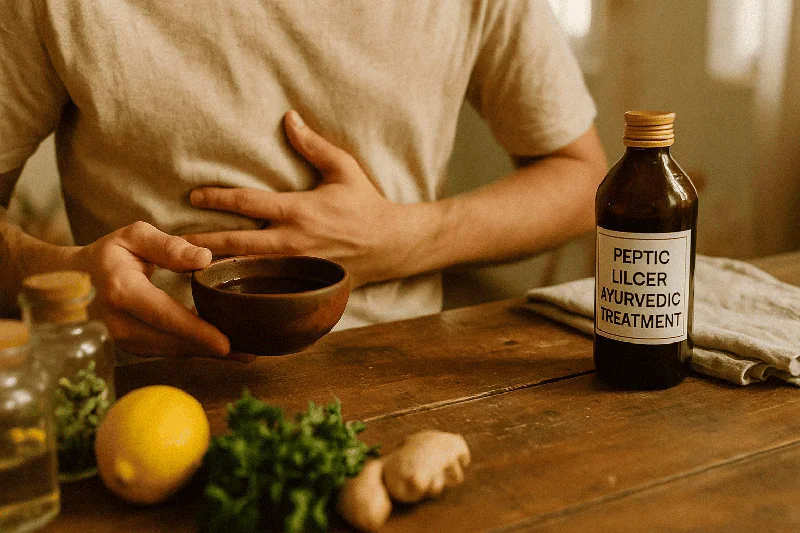
Peptic ulcer is an open sore that develops on the inner lining of your stomach, the upper part of your small intestine (duodenum), or, less commonly, the lower esophagus. It happens when the protective mucous layer that shields your digestive tract from acidic juices breaks down, allowing stomach acid to erode the tissue beneath. The lifetime risk of developing a peptic ulcer is estimated at 5–10% globally, and while the condition has become less common over the past few decades thanks to better treatments, it still affects millions of people every year — particularly in developing countries including India.
If left untreated, peptic ulcers can lead to serious complications like internal bleeding, perforation of the stomach wall, and gastric outlet obstruction. The good news? Most peptic ulcers heal completely with the right medical treatment, and understanding the causes, symptoms, and modern treatment protocols puts you in a strong position to manage this condition effectively.
What Is Peptic Ulcer Disease?
Peptic ulcer disease (PUD) refers to a group of ulcerative conditions affecting the gastrointestinal tract, primarily driven by an imbalance between aggressive factors (stomach acid, pepsin, bile salts) and the defensive mechanisms that protect the mucosal lining (mucus secretion, bicarbonate buffering, epithelial cell renewal, and adequate blood flow).
- Under normal circumstances, the stomach lining produces a thick layer of mucus and bicarbonate ions that act as a barrier against hydrochloric acid.
- When this barrier is compromised — whether by bacterial infection, medication use, or other factors — acid penetrates the mucosa and causes tissue damage that can extend deep into the muscularis mucosa or even beyond.
Types of Peptic Ulcers
| Type | Location | Relative Frequency | Key Feature |
|---|---|---|---|
| Duodenal ulcer | First part of the duodenum (duodenal bulb) | Most common (~80% of PUD cases); ratio of duodenal to gastric ulcers is approximately 4:1 | Pain typically occurs 2–3 hours after eating and is relieved by food or antacids |
| Gastric ulcer | Stomach lining, usually along the lesser curvature | ~20% of PUD cases | Pain typically worsens within 15–30 minutes after eating |
| Esophageal ulcer | Lower esophagus | Uncommon | Often associated with chronic acid reflux (GERD) |
| Jejunal ulcer | Jejunum (second part of the small intestine) | Rare | Usually seen after surgical anastomosis (marginal ulcers) |
The Johnson classification further categorizes gastric ulcers into five types based on location and acid-secretion status:
- Type I — Lesser curvature of the stomach body (most common gastric ulcer; normal/low acid secretion)
- Type II — Gastric body + duodenal ulcer (associated with high acid secretion)
- Type III — Prepyloric region (associated with high acid secretion)
- Type IV — High on the lesser curvature near the gastroesophageal junction
- Type V — Anywhere in the stomach, associated with NSAID use (can be multiple)
What Causes Peptic Ulcers?
Contrary to what many people still beleive, stress and spicy food do not cause peptic ulcers — though they can aggravate symptoms. The two primary causes account for the vast majority of cases.
H. pylori Infection: The Leading Cause
Helicobacter pylori is a spiral-shaped, gram-negative bacterium that colonizes the gastric epithelium. It is the single most important cause of peptic ulcer disease worldwide. In India, H. pylori prevalence is estimated at 60–70% of the adult population, though not everyone infected develops ulcers. How H. pylori damages the stomach lining:
H. pylori possesses several virulence factors that allow it to survive in the acidic gastric environment and cause tissue damage:
- Urease enzyme — Converts urea into ammonia and carbon dioxide, creating a local alkaline microenvironment that protects the bacterium from stomach acid. However, the ammonia itself is toxic to epithelial cells.
- CagA (cytotoxin-associated gene A) — A protein injected directly into gastric epithelial cells that disrupts cell signaling, promotes inflammation, and is strongly linked to a higher risk of gastric cancer.
- VacA (vacuolating cytotoxin A) — Forms pores in epithelial cell membranes, induces cell apoptosis, and suppresses local immune responses.
- Flagella — Enable the bacterium to move through the viscous mucus layer to reach the epithelial surface.
- Adhesins — Surface proteins (like BabA and SabA) that allow H. pylori to bind tightly to gastric cells.
The chronic inflammation triggered by H. pylori weakens the mucosal defense system, making the tissue vulnerable to acid-peptic digestion. Importantly, H. pylori infection is also classified by the WHO as a Group 1 carcinogen — it significantly increases the risk of gastric adenocarcinoma and MALT lymphoma.
NSAIDs: The Second Major Cause
Nonsteroidal anti-inflammatory drugs (ibuprofen, aspirin, naproxen, diclofenac) are the second most common cause of peptic ulcers. These medications work by blocking cyclooxygenase (COX) enzymes — specifically COX-1 and COX-2. While COX-2 inhibition provides pain relief and reduces inflammation, COX-1 inhibition simultaneously reduces the production of prostaglandins that are essential for maintaining gastric mucosal blood flow, mucus secretion, and bicarbonate production.
The result: a weakened mucosal barrier that's vulnerable to acid-peptic injury.
Other Causes
- Zollinger-Ellison syndrome — A rare condition involving gastrin-secreting tumors (gastrinomas) that cause massive acid hypersecretion
- Crohn's disease — Can cause ulceration anywhere in the GI tract
- Hypersecretory conditions — Systemic mastocytosis, hyperparathyroidism, cystic fibrosis, antral G-cell hyperplasia
- Radiation or chemotherapy
- Severe physiological stress — Major burns (Curling's ulcers), head injuries (Cushing's ulcers), critical illness
- Other infections — Rare in immunocompetent individuals but seen in immunocompromised patients (CMV, HSV)
What Are the Signs and Symptoms of a Peptic Ulcer?
The most common symptom of a peptic ulcer is a burning or gnawing epigastric pain — often described as a dull ache in the upper abdomen, between the navel and the breastbone. But the presentation can vary considerably depending on the ulcer's location and severity.
Common Symptoms
- Epigastric pain — The hallmark symptom. May be worse on an empty stomach or at night.
- Bloating and abdominal fullness
- Nausea, sometimes with vomiting
- Heartburn or acid reflux
- Loss of appetite and unintended weight loss
- Feeling hungry shortly after eating (especially with duodenal ulcers)
- Belching
Gastric vs Duodenal Ulcer Symptoms: Key Differences
| Feature | Gastric Ulcer | Duodenal Ulcer |
|---|---|---|
| Timing of pain | 15–30 minutes after eating | 2–3 hours after eating |
| Effect of food | Pain often worsens with eating | Pain often relieved by eating |
| Night pain | Less common | Very common (wakes patient at night) |
| Weight change | Weight loss (patients avoid food due to pain) | Weight gain or stable (patients eat to relieve pain) |
| Nausea/vomiting | More frequent | Less frequent |
Alarm Symptoms — When Should You See a Doctor?
Seek immediate medical attention if you experience any of the following:
- Vomiting blood (hematemesis) — may appear bright red or look like coffee grounds
- Dark, tarry, or black stools (melena) — indicates bleeding in the upper GI tract
- Sudden, severe, sharp abdominal pain — could indicate perforation
- Unexplained weight loss
- Difficulty swallowing (dysphagia)
- Persistent vomiting or inability to keep food down — could suggest gastric outlet obstruction
- Signs of anemia — fatigue, pallor, shortness of breath, dizziness
These symptoms may indicate life-threatening complications that require emergency treatment.
How Are Peptic Ulcers Diagnosed?
Diagnosis of peptic ulcers follows a systematic approach that typically begins with testing for H. pylori and progresses to endoscopy when indicated.
Step-by-Step Diagnostic Algorithm
Step 1: Clinical Assessment
History of epigastric pain, NSAID use, smoking, family history of PUD. Patients under 60 with typical symptoms and no alarm features may be initially tested for H. pylori without endoscopy.
Step 2: Testing for H. pylori
| Test | Type | Sensitivity | Specificity | Notes |
|---|---|---|---|---|
| Urea breath test (UBT) | Non-invasive | 95–97% | 95–97% | Gold standard non-invasive test. Patient ingests C13/C14-labeled urea; if H. pylori is present, urease splits it into labeled CO2 detected in breath. |
| Stool antigen test | Non-invasive | 91–98% | 94–99% | Reliable and widely available. Useful for initial diagnosis and confirming eradication. |
- | Blood antibody test | Non-invasive | 85–95% | 79–90% | Detects IgG antibodies.
- Cannot distinguish between active and past infection — not recommended for confirming eradication. |
| Rapid urease test (CLOtest) | Invasive (biopsy during endoscopy) | 90–95% | 95–100% | Biopsy placed in urea solution; color change indicates H. pylori. |
|---|---|---|---|---|
| Histological examination | Invasive | Very high | Very high | Biopsy with special staining; also assesses degree of inflammation and rules out malignancy. |
> Important: PPIs should be stopped at least 1–2 weeks, and antibiotics at least 4 weeks, before H. pylori testing to avoid false-negative results.
Step 3: Upper Endoscopy (Esophagogastroduodenoscopy — EGD)
- The definitive diagnostic procedure. A thin, flexible tube with a camera is inserted through the mouth to directly visualize the ulcer.
- Biopsies can be taken to:
- Test for H. pylori (rapid urease test, histology, culture)
- Rule out gastric cancer (all gastric ulcers should be biopsied)
Endoscopy is recommended for patients with alarm symptoms, patients over 60, those who fail initial empiric therapy, and those with recurrent symptoms.
Step 4: Upper GI Series (Barium Swallow)
An alternative when endoscopy is unavailable or contraindicated. Less sensitive and doesn't allow biopsy. The patient swallows a barium contrast solution, and X-rays reveal ulcer craters.
Step 5: Additional Investigations
- CT scan — if perforation or other complications are suspected
- Fasting serum gastrin level — if Zollinger-Ellison syndrome is suspected (gastrin >1000 pg/mL is highly suggestive)
Forrest Classification for Bleeding Ulcers
When a bleeding ulcer is found during endoscopy, the Forrest classification guides treatment decisions:
| Class | Description | Rebleeding Risk | Management |
|---|---|---|---|
| Ia | Active spurting hemorrhage | ~90% | Urgent endoscopic therapy |
| Ib | Active oozing hemorrhage | ~50% | Endoscopic therapy |
| IIa | Non-bleeding visible vessel | ~40–50% | Endoscopic therapy |
| IIb | Adherent clot | ~20–30% | Consider removing clot; treat underlying lesion |
| IIc | Flat pigmented spot | ~7–10% | Usually no endoscopic therapy needed |
| III | Clean-based ulcer | ~3–5% | No endoscopic therapy; medical management |
How to Heal a Peptic Ulcer: Treatment Options
- Treatment of peptic ulcers depends on the underlying cause.
- The goals are straightforward: eliminate the cause (eradicate H. pylori or stop NSAIDs), reduce stomach acid to allow healing, protect the mucosal lining, and treat complications.
H. pylori Eradication Therapy — Specific Protocols with Dosages
This is one of the most critical aspects of PUD treatment, yet it's often poorly explained. Here are the standard regimens recommended by the American College of Gastroenterology (ACG) and the Maastricht V/Florence Consensus:
First-Line: Standard Triple Therapy (14 days)
- PPI (e.g., omeprazole 20 mg or esomeprazole 40 mg) — twice daily
- Clarithromycin 500 mg — twice daily
- Amoxicillin 1000 mg — twice daily
OR (if penicillin-allergic):
- PPI + Clarithromycin 500 mg + Metronidazole 500 mg — all twice daily for 14 days
> Note: This regimen is recommended only in areas where clarithromycin resistance is below 15%. In many parts of India, clarithromycin resistance rates exceed 20%, making this regimen less reliable.
First-Line Alternative: Bismuth Quadruple Therapy (14 days)
- PPI — twice daily
- Bismuth subsalicylate 524 mg — four times daily
- Metronidazole 250 mg — four times daily
- Tetracycline 500 mg — four times daily
This is preferred in areas with high clarithromycin resistance.
Concomitant Therapy (Non-Bismuth Quadruple, 14 days)
- PPI — twice daily
- Clarithromycin 500 mg — twice daily
- Amoxicillin 1000 mg — twice daily
- Metronidazole 500 mg — twice daily
Studies show eradication rates of 85–90% with this regimen, even in areas with moderate clarithromycin resistance.
Rescue/Third-Line: Levofloxacin-Based Triple Therapy (14 days)
- PPI — twice daily
- Levofloxacin 500 mg — once daily
- Amoxicillin 1000 mg — twice daily
Used after failure of first-line therapy. Fluoroquinolone resistance is rising, so culture-guided therapy is preferred when available.
Antibiotic Resistance — A Growing Concern
- H. pylori antibiotic resistance is a significant global problem.
- A 2019 systematic review published in Gut found that:
- Clarithromycin resistance is approximately 15–30% in many Asian countries, including parts of India
- Metronidazole resistance can exceed 40% in South Asia
- Amoxicillin resistance remains low (<5% globally)
- Levofloxacin resistance is increasing, particularly in Asia (15–30%)
Clinical implication: Clinicians in India should strongly consider bismuth quadruple therapy or concomitant therapy as first-line rather than standard triple therapy, given local resistance patterns. When possible, culture and sensitivity testing after first-line failure is ideal.
Acid-Suppression Medications
Comparison of Proton Pump Inhibitors (PPIs)
| PPI | Standard Dose | Relative Potency | Key Notes |
|---|---|---|---|
| Omeprazole | 20 mg once or twice daily | Reference standard | Most widely available and studied; affordable |
| Esomeprazole | 20–40 mg once daily | Slightly higher | S-isomer of omeprazole; marginally better intragastric pH control in some studies |
| Lansoprazole | 30 mg once or twice daily | Comparable | Available in orally disintegrating tablet |
| Pantoprazole | 40 mg once or twice daily | Comparable | Fewer drug interactions (preferred in patients on clopidogrel) |
| Rabeprazole | 20 mg once daily | Comparable | Fastest onset of action; less affected by CYP2C19 polymorphisms — may be advantageous in certain Indian populations |
PPIs are the cornerstone of acid suppression. They irreversibly inhibit the H+/K+ ATPase proton pump on gastric parietal cells. For uncomplicated duodenal ulcers, PPIs are typically prescribed for 4–8 weeks. For gastric ulcers, 8–12 weeks is standard because gastric ulcers heal more slowly.
H2-Receptor Antagonists
Ranitidine (withdrawn in many countries due to NDMA contamination), famotidine (20–40 mg twice daily), and cimetidine are less potent than PPIs but can be used as adjuncts or when PPIs are not tolerated.
Cytoprotective Agents
- Sucralfate — Binds to ulcer base and forms a protective barrier; particularly useful for stress ulcer prophylaxis
- Misoprostol — A prostaglandin analog that enhances mucosal defense; specifically used to prevent NSAID-induced ulcers (but contraindicated in pregnancy due to abortifacient properties)
- Bismuth compounds — Have antibacterial properties against H. pylori and form a protective coat over the ulcer
Surgical and Endoscopic Treatment
Surgery for peptic ulcers has become uncommon thanks to effective medical therapy, but it is still necessary in certain situations:
- Endoscopic hemostasis — For actively bleeding ulcers (Forrest Ia, Ib, IIa): includes injection therapy (epinephrine), thermal coagulation, and hemoclip placement
- Angiographic embolization — When endoscopic treatment fails to control bleeding
- Vagotomy — Cutting branches of the vagus nerve to reduce acid secretion (highly selective vagotomy preserves gastric motility)
- Pyloroplasty — Widening the pyloric sphincter, often combined with vagotomy
- Partial gastrectomy — Removal of the ulcer-bearing portion of the stomach; reserved for refractory or malignant ulcers
- Emergency surgery for perforation — Simple closure (Graham patch) with omental reinforcement
Don't wait or self medicate. Start chat with Doctor NOW
Do Peptic Ulcers Go Away on Their Own?
In rare cases, very small ulcers might heal spontaneously — but relying on this is risky. Without treating the underlying cause (particularly H. pylori), the recurrence rate is extremely high: up to 60–80% within one year for duodenal ulcers and 40–60% for gastric ulcers. With successful H. pylori eradication, the annual recurrence rate drops to less than 5%.
Prognosis and Post-Treatment Monitoring
Most uncomplicated peptic ulcers heal within 4–8 weeks of starting appropriate therapy.
Here's what follow-up should look like:
- Confirm H. pylori eradication: Perform a urea breath test or stool antigen test at least 4 weeks after completing antibiotics AND at least 1–2 weeks after stopping PPIs to avoid false negatives
- Follow-up endoscopy for gastric ulcers: Recommended 8–12 weeks after treatment to confirm healing and rule out malignancy (repeat biopsy)
- Duodenal ulcers: Follow-up endoscopy is generally not required unless symptoms persist
- Complicated ulcers (bleeding, perforation): Closer monitoring; repeat endoscopy is usually warranted
How to Prevent Peptic Ulcers
Prevention revolves around addressing the known risk factors.
For H. pylori–Related Ulcers
- Test-and-treat strategy for symptomatic individuals, especially in high-prevalence regions like India
- Improved sanitation and hygiene (H. pylori spreads via fecal-oral and oral-oral routes)
For NSAID-Related Ulcers
- Use the lowest effective dose of NSAIDs for the shortest possible duration
- Co-prescribe a PPI if long-term NSAID use is unavoidable
- Consider using COX-2 selective inhibitors (celecoxib) instead of non-selective NSAIDs — they carry a lower GI risk
- Misoprostol co-therapy as an alternative gastroprotective strategy
Managing Anticoagulant and Antiplatelet Risks
- Patients on dual antiplatelet therapy (aspirin + clopidogrel) or anticoagulants (warfarin, DOACs) face a heightened risk of GI bleeding from peptic ulcers.
- Key strategies include:
- Co-prescribe a PPI (pantoprazole preferred with clopidogrel due to fewer CYP2C19 interactions)
- Test and treat H. pylori before starting long-term antithrombotic therapy
- Regular monitoring for signs of GI bleeding (check stools, hemoglobin levels)
General Lifestyle Measures
- Stop smoking — Smoking impairs ulcer healing, increases recurrence, and raises complication risk
- Limit alcohol — Alcohol irritates the gastric mucosa and increases acid secretion
- Diet: While food does not cause ulcers, spicy, acidic, and fried foods can aggravate symptoms. Eating smaller, more frequent meals may help some patients
- Stress management — While psychological stress alone doesn't cause ulcers, it can worsen symtoms and delay healing
Special Populations: PUD in Pregnancy, Children, and the Elderly
Peptic Ulcers During Pregnancy
- PUD in pregnancy is uncommon — elevated progesterone actually reduces gastric acid secretion
- PPIs: Omeprazole, lansoprazole, and pantoprazole are classified as generally compatible with pregnancy (though older FDA Category B/C labels existed, current evidence supports reasonable safety). Omeprazole has the most human data.
- H2 blockers: Ranitidine (if available) and famotidine are considered safe alternatives
- NSAIDs: Absolutely contraindicated in the third trimester (risk of premature closure of the ductus arteriosus) and best avoided throughout pregnancy
- Antibiotics for H. pylori: Eradication therapy is generally deferred until after delivery, unless clinically urgent. Metronidazole and clarithromycin have limited safety data in pregnancy; amoxicillin is preferred if treatment is necessary
- Misoprostol: Strictly contraindicated — causes uterine contractions
Peptic Ulcers in Children
- Less common than in adults; H. pylori infection and NSAID use remain the primary causes
- Symptoms may be atypical — young children often present with vague abdominal pain, feeding difficulties, or vomiting rather than classic epigastric burning
- Diagnosis relies on endoscopy; non-invasive H. pylori testing is preferred for initial evaluation
- Treatment follows the same principles as adults, with weight-based dosing for PPIs and antibiotics
Peptic Ulcers in the Elderly
- Older adults are at significantly higher risk due to frequent NSAID/aspirin use, polypharmacy, and reduced mucosal defense with aging
- Symptoms are often less pronounced or atypical — many elderly patients present with complications (bleeding, perforation) as the first sign
- Gastric ulcers in the elderly always require biopsy to exclude malignancy
- Drug interactions must be carefully assessed when prescribing PPIs or antibiotics alongside existing medications
Complications of Peptic Ulcer Disease
Without proper treatment, peptic ulcers can cause severe, potentially life-threatening complications:
- 1.Gastrointestinal bleeding — The most common complication. Occurs when the ulcer erodes into a blood vessel. Mortality from bleeding ulcers remains approximately 5–10%.
- 2.Perforation — The ulcer erodes through the full thickness of the stomach or duodenal wall, causing peritonitis. This is a surgical emergency with mortality rates of 5–25%.
- 3.Gastric outlet obstruction — Chronic inflammation and scarring near the pylorus can narrow the gastric outlet, causing recurrent vomiting, early satiety, and weight loss. Accounts for about 5–8% of ulcer complications.
- 4.Penetration — The ulcer erodes into an adjacent organ (e.g., pancreas, liver) without free perforation into the peritoneal cavity.
- 5.Gastric cancer — Long-standing H. pylori infection increases the risk of gastric adenocarcinoma by 2–6 fold.
Differential Diagnosis: What Else Could It Be?
Several conditions can mimic peptic ulcer symptoms and should be ruled out:
- Gastroesophageal reflux disease (GERD)
- Functional dyspepsia
- Gastric cancer
- Pancreatitis
- Biliary colic (gallstones)
- Mesenteric ischemia
- Crohn's disease of the upper GI tract
- Gastroparesis
- Cardiac ischemia (inferior MI can present as epigastric pain)
Frequently Asked Questions (FAQ)
Should I adjust my diet while living with peptic ulcer disease?
- Food does not cause peptic ulcers, but certain dietary choices can influence symptom severity.
- Avoid foods that worsen your individual symptoms — commonly citrus fruits, tomato-based products, spicy dishes, caffeine, and carbonated drinks. There's no single "ulcer diet" that works for everyone. Small, regular meals may reduce symptoms for some people.
- Importantly, do not rely on dietary changes alone — treating the underlying cause (H. pylori eradication or stopping NSAIDs) is essential.
Can peptic ulcer disease be prevented completely?
Not in all cases, but risk can be dramatically reduced. Eradicating H. pylori in infected individuals, using gastroprotective agents when taking NSAIDs, quitting smoking, and moderating alcohol intake are the most effective preventive strategies. In high-risk populations (such as patients starting long-term NSAID or antiplatelet therapy), proactive screening and prophylactic PPI use are recommended.
What is the prognosis after treatment for peptic ulcer disease?
The prognosis is excellent for most patients. With successful H. pylori eradication, more than 95% of duodenal ulcers and approximately 85–90% of gastric ulcers heal completely. Annual recurrence after successful eradication is less than 5%, compared to 60–80% without eradication. Patients with complicated ulcers (bleeding or perforation) generally have good outcomes with prompt treatment, though they require closer follow-up.
How long does it take for a peptic ulcer to heal?
Duodenal ulcers typically heal in 4–6 weeks with PPI therapy. Gastric ulcers generally take 8–12 weeks. Factors that can delay healing include continued smoking, ongoing NSAID use, large ulcer size, and failure to eradicate H. pylori.
Is there a link between peptic ulcers and stomach cancer?
- Yes, but indirectly.
- H. pylori — the most common cause of peptic ulcers — is a recognized carcinogen. Chronic H. pylori infection increases the risk of gastric adenocarcinoma by 2–6 times and is also linked to gastric MALT lymphoma. This is one more reason why H. pylori eradication is so important, even when ulcer symptoms are mild.
Final Thoughts
Peptic ulcer disease is a well-understood condition with highly effective treatments available today. Whether your ulcer is caused by H. pylori infection, NSAID use, or another factor, the path to healing starts with an accurate diagnosis and the right treatment protocol.
Don't ignore persistent stomach pain, especially if it worsens at night or is accompanied by any alarm symptoms like vomiting blood or dark stools. Early diagnosis and treatment can prevent serious complications and, quite literally, save your life.
If you're experiencing symptoms suggestive of a peptic ulcer, consult a gastroenterologist. Ask for H. pylori testing, discuss your NSAID use, and follow through with the full course of prescribed treatment. Your gut will thank you for it.
Scientific Sources
- Helicobacter pylori infection: a dynamic process from diagnosis to treatment — Sun Q et al., 2023, Frontiers in cellular and infection microbiology
- Traditional uses, bioactive composition, pharmacology, and toxicology of Phyllanthus emblica fruits: A comprehensive review — Saini R et al., 2022, Journal of ethnopharmacology
- Review of pharmacological effects of Glycyrrhiza sp. and its bioactive compounds — Asl MN et al., 2008, Phytotherapy research : PTR
- All you need to know about gastrinoma today | Gastrinoma and Zollinger-Ellison syndrome: A thorough update — Chatzipanagiotou O et al., 2023, Journal of neuroendocrinology
- Antimuscarinic drugs — Stockbrügger RW, 1989, Methods and findings in experimental and clinical pharmacology
- A Review on Herbal Drugs Used in the Treatment of Peptic Ulcer — Roy AJ et al., 2023, Current drug discovery technologies
- Secondary metabolites for antiulcer activity — Jain P, 2016, Natural product research
- Treatment of gastric ulcer, traditional Chinese medicine may be a better choice — Gong H et al., 2024, Journal of ethnopharmacology
- Peptic Ulcer Disease: A Brief Review of Conventional Therapy and Herbal Treatment Options — Kuna L et al., 2019, Journal of clinical medicine
- Plants with Anti-Ulcer Activity and Mechanism: A Review of Preclinical and Clinical Studies — Prayoga DK et al., 2024, Drug design, development and therapy
- Spices, herbal xenobiotics and the stomach: friends or foes? — Al Mofleh IA, 2010, World journal of gastroenterology
- The calcium-alkali syndrome — Arroyo M et al., 2013, Proceedings (Baylor University. Medical Center)
- Research progress of potassium-competitive acid blockers in the treatment of Helicobacter pylori — Ma Z et al., 2025, Annals of medicine
- Clinical efficacy and mechanism of Bletilla striata and Chinese herbal compounds in treatment of peptic ulcer — Sun YT et al., 2025, World journal of gastroenterology
- Peptic Ulcer Disease: A Comprehensive Review on Conventional Therapy and Herbal Treatment — Kumar V et al., 2025, Current drug discovery technologies
- Gastroduodenal safety of cyclooxygenase-2 inhibitors — Scheiman JM, 2003, Current pharmaceutical design
- Scientific evaluation of edible fruits and spices used for the treatment of peptic ulcer in traditional Iranian medicine — Farzaei MH et al., 2013, ISRN gastroenterology
- Astible Rivularis: Bioactive Compounds and Pharmacological Functions — Timalsena S et al., 2019, Chinese journal of integrative medicine
- Genetic liability to obesity and peptic ulcer disease: a Mendelian randomization study — Li Z et al., 2022, BMC medical genomics
- Analgesic and anti-inflammatory activities of NPK 500 capsules, a Cassia sieberiana DC. - Based herbal analgesic medicine used to treat dysmenorrhea and peptic ulcer, is mediated through the inhibition of PGE2 and iNOS — Kumatia EK et al., 2024, Journal of ethnopharmacology
Questions from users
Can I use probiotics to help treat peptic ulcers?
Tenley
6 days ago
Probiotics can be helpful alongside other treatments for peptic ulcers. They might support gut health and aid in restoring a healthy balance of bacteria. Always good to consult with a healthcare provider for personal advice! Ayurveda would also consider balancing your doshas and improving agni alongside any treatments.
What causes peptic ulcers and how can I reduce my risk of developing them?
Natalie
16 days ago
Peptic ulcers often happen due to H. pylori infection or frequent NSAID use. To lower your risk, consider limiting NSAIDs and manage stress since both can affect stomach lining. Eradicating H. pylori with medical treatment helps too. Eat a balanced diet that supports your agni (digestive fire), focusing on avoiding spicy and acidic foods. 🤔💡
What can I do to manage pain from peptic ulcers at home?
Harper
25 days ago
To manage pain from peptic ulcers at home, focus on a soothing diet. Include cooling foods like aloe vera juice and coconut water. Avoid spicy or acidic foods that can aggravate symptoms. Small meals can help stabilize the gastric environment. Practicing stress-reducing activities, like gentle yoga or meditation, might also be beneficial. But always contact your doctor before making changes, especially if pain worsens! Mistakes here can lead to more pain.
Is Triphala effective for managing peptic ulcer symptoms?
Nevaah
36 days ago
Triphala might help manage peptic ulcer symptoms due to its anti-inflammatory and healing properties, but it's really important to see an Ayurvedic practitioner to check if it's good for you. They can help assess your dosha and tailor a treatment plan for you. Everyone's body is different, so get personalized advice.
Is it safe to use Triphala for digestive health if I have a sensitive stomach?
Sofia
45 days ago
Yes, Triphala can be safe for someone with a sensitive stomach, but it varies by person. It's known to balance the doshas and support digestion gently. But I’d start with a small dose to see how you feel. It’s always best to talk to an Ayurvedic practitioner or your healthcare provider, especially if you have specific sensitivities.
What is the best way to find high-quality Ayurvedic herbal supplements for digestive health?
Thomas
55 days ago
Finding high-quality Ayurvedic herbal supplements is all about doing your homework. Look for supplements that are certified organic, as they generally follow strict quality standards. Also, check for third-party testing to ensure purity. It's good to consult with an Ayurvedic practitioner who can guide you based on your dosha and digestive needs, too. This ensures you're getting something that truly matches what you need for optimal ah, benefit and health.
What is the importance of using standardized extracts in herbal supplements for peptic ulcers?
Phoenix
65 days ago
Using standardized extracts is crucial 'cause it ensures each dose of the herbal supplement has a consistent amount of active compounds, providing predictable potency and effectiveness. This consistency helps ensure you're getting the proper support for peptic ulcers every time you take a supplement, which is super important for managing the condition.
What is the best way to detoxify the body for improved digestive health in Ayurveda?
Summer
75 days ago
For detoxifying the body in Ayurveda, try a gentle cleanse like a kitchari fast for a few days. Kitchari is a mix of mung dal and rice, easy to digest and nourishing. Also, sip hot water throughout the day, add some triphala at night to cleanse the gut. Support digestive agni (fire) with ginger tea. Remember, balance is key!
Is it safe to use Ayurvedic remedies for peptic ulcers along with over-the-counter medications?
William
84 days ago
Combining Ayurvedic remedies with over-the-counter meds can be safe, but it's important to talk to both your doc and an Ayurvedic practitioner first. They can make sure the remedies and meds won't clash and are right for your specific needs. It's all about balancing your doshas and supporting your body's natural healing process. Stay safe!
What is the role of aloe vera in promoting digestive health and healing peptic ulcers?
Aria
94 days ago
Aloe vera is pretty awesome for digestion! It helps soothe the digestive tract and supports tissue repair, kinda healing inflammation or irritation. With peptic ulcers, it might help by calming things and promoting healing. Just make sure you're using aloe vera juice that's safe for internal use and check with a doc. Aloe can be potent.
Related articles

Gastrointestinal Disorders
Patanjali Divya Gashar Churna
Exploration of Patanjali Divya Gashar Churna
2,823

Gastrointestinal Disorders
What Causes Constipation: Ayurvedic Reasons, Symptoms, and Treatment
What causes constipation? Learn Ayurvedic causes, symptoms, danger signs, and natural remedies for chronic and severe constipation, including diet and lifestyle tips
2,081

Gastrointestinal Disorders
Effective Remedies for Constipation in Ayurveda
Constipation, the unwelcome guest at the digestive table, can disrupt our lives and leave us feeling sluggish and uncomfortable.
3,927

Gastrointestinal Disorders
Hinguvachaadi Gulika
Exploration of Hinguvachaadi Gulika
1,757
Gastrointestinal Disorders
Natural Ayurvedic Medicine for Creatinine: Lower Levels Safely & Effectively
Explore how Ayurvedic medicine addresses high creatinine levels naturally, with insights on herbs, dosage, benefits, and scientific evidence behind these remedies.
2,414

Gastrointestinal Disorders
How to Get Rid of Bloating: Ayurvedic Tips for a Calm, Flat Belly
Learn how to get rid of bloating with Ayurvedic herbs, mindful eating, and natural remedies. Ease digestive discomfort and support gut balance. Discover which foods trigger bloating
2,248

Gastrointestinal Disorders
Pilex Tablet – Uses, Benefits, Ingredients
Exploration of Pilex Tablet – Uses, Benefits, Ingredients
8,424

Gastrointestinal Disorders
Amavatari Kashayam: Uses, Benefits & Ayurvedic Insights
Discover the uses, benefits, proper dosage, and Ayurvedic foundations of Amavatari Kashayam, a traditional herbal decoction for holistic health and wellness.
2,373

Gastrointestinal Disorders
Madiphala Rasayanam – Uses, Dose, Ingredients, Side Effects
Exploration of Madiphala Rasayanam – Uses, Dose, Ingredients, Side Effects
3,471

Gastrointestinal Disorders
Amritarishta – Uses, Ingredients, Dose and Side Effects
Exploration of Amritarishta – Uses, Ingredients, Dose and Side Effects
3,172
Related consultations on the topic
Legal
Additional Documents
© 2024 Ask Ayurveda. All rights reserved.