Ask Ayurvedic doctor a question and get a consultation online on the problem of your concern in a free or paid mode. More than 2,000 experienced doctors work and wait for your questions on our site and help users to solve their health problems every day.
FREE! Ask Ayurvedic Doctors 24/7

 Fast responses
 1000+ verified doctors
Body DetoxEar, Nose, and Throat DisordersGeriatrics & RejuvenationImmunodeficiencyInfertility TreatmentNutritionOrthopedic DisordersPediatricsRespiratory DisordersSexually Transmitted Diseases (STDs)Surgery RecoveryUrological DisordersVascular DisordersDental DisordersEndocrinological DisordersGastrointestinal DisordersYoga TherapyGeneral MedicineAllergic DisordersCardio DisordersGynecology and ObstetricsCosmetologySkin and Hair DisordersEye DisordersInfectious DiseasesMental DisordersNeurological DisordersOncologyPanchakarmaSexual Health & DisordersSports Medicine
Published on 01/14/25
(Updated on 07/06/26)
4,744
Sariva Manjistha Vati – Ayurvedic Detox & Skin Rejuvenation
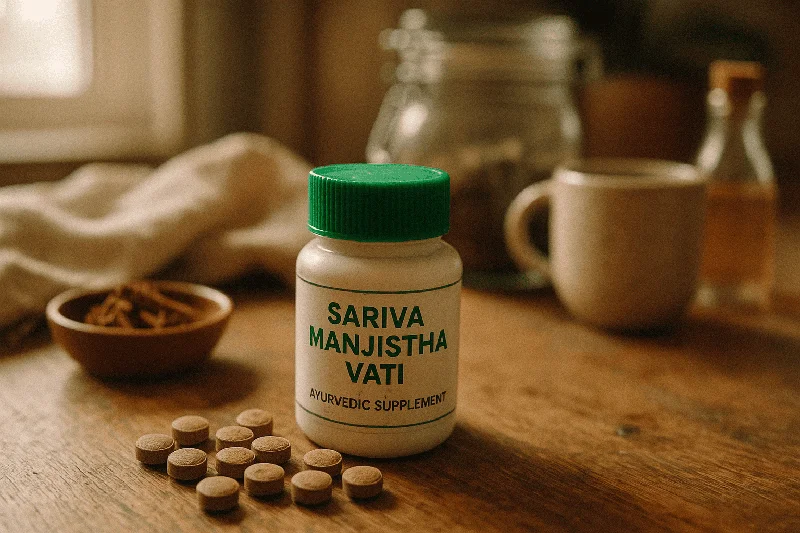
Sariva Manjistha Vati is a classical Ayurvedic tablet formulation that combines the blood-purifying power of Sariva (Hemidesmus indicus) and the skin-rejuvenating properties of Manjistha (Rubia cordifolia) to treat chronic skin disorders, detoxify the body, and balance Pitta dosha. If you're struggling with acne, pigmentation, eczema, or recurring skin flare-ups that don't respond to topical treatments, this formulation works from the inside out — purifying your blood (Rakta Dhatu) and addressing the root cause rather than just the symptoms.
In this comprehensive guide, we cover everything from the classical textual references and phytochemistry to dosage, safety concerns, comparison with similar formulations, and what scientific research actually says about the key ingredients.
What Is Sariva Manjistha Vati?
Sariva Manjistha Vati is a polyherbal Ayurvedic tablet (Vati) primarily used as a Rakta Shodhaka (blood purifier) and skin rejuvenator. The formulation belongs to the Vati/Gutika category of Ayurvedic pharmaceutics, where finely powdered herbs are compressed into tablets — sometimes with the addition of mineral-based catalysts like Kajjali.
The two hero ingredients — Sariva and Manjistha — have been used independently in Ayurveda for thousands of years. Their combination in a single formulation creates a synergistic effect: Sariva cools and soothes the blood, while Manjistha actively clears stagnation and promotes healthy circulation to the skin.
Classical Reference & Origin (Shastra Source)
One of the significant gaps in existing resources online is that nobody tells you where this formulation actually comes from. Sariva Manjistha Vati finds its foundational principles in texts like the Bhaishajya Ratnavali (specifically chapters dealing with Kushtha Chikitsa — treatment of skin diseases) and the Rasa Tantra Sara, which describes mineral-herbal combinations involving Kajjali.
While the exact combination may vary slightly between pharmaceutical manufacturers, the core principle is rooted in Charaka Samhita's concept of Rakta Prasadana (blood purification) described in the Vimanasthana, where both Sariva and Manjistha are classified as prime Rakta Shodhaka Dravyas (blood-cleansing substances).
Ayurvedic Pharmacology (Rasa Panchaka)
Understanding the Rasa Panchaka (five pharmacological parameters) of the key ingredients helps explain why this formulation works the way it does:
| Parameter | Sariva (Hemidesmus indicus) | Manjistha (Rubia cordifolia) |
|---|---|---|
| Rasa (Taste) | Madhura (Sweet), Tikta (Bitter) | Tikta (Bitter), Kashaya (Astringent) |
| Guna (Quality) | Guru (Heavy), Snigdha (Unctuous) | Guru (Heavy), Ruksha (Dry) |
| Virya (Potency) | Sheeta (Cooling) | Ushna (Heating) |
| Vipaka (Post-digestive effect) | Madhura (Sweet) | Katu (Pungent) |
| Prabhava (Special action) | Rakta Prasadana (Blood purification) | Varnya (Complexion enhancer) |
- This is a brillant combination. Sariva's cooling Virya balances Manjistha's heating nature, creating a formula that purifies without aggravating Pitta excessively.
- The complementary Vipaka — sweet and pungent — ensures comprehensive metabolic processing.
Composition & Ingredients of Sariva Manjistha Vati
The exact composition can differ between manufacturers, but the classical and most widely available formulation includes:
| Ingredient | Latin/Scientific Name | Part Used | Typical Quantity per Tablet | Primary Action |
|---|---|---|---|---|
| Sariva | Hemidesmus indicus | Root | 120 mg | Blood purifier, cooling |
| Manjistha | Rubia cordifolia | Root/Stem | 120 mg | Skin rejuvenator, lymphatic cleanser |
| Kajjali | Purified Mercury + Sulphur compound | — | 5 mg | Bio-enhancer, catalytic agent |
| Excipients | Gum Acacia / Guggulu | — | q.s. | Binding agent |
Some manufacturers (such as Agasti Pharmaceuticals) add supportive herbs like Neem (Azadirachta indica), Haridra/Turmeric (Curcuma longa), and Amla (Emblica officinalis) to enhance the blood-purifying and antioxidant action.
The Role of Kajjali — Is It Safe?
- This is something no competitor has adequatly addressed. Kajjali is a finely tritured combination of Parada (purified mercury) and Gandhak (purified sulphur).
- Before you raise safety concerns — understandably so — here's what you need to know:
In Ayurvedic pharmaceutics, both mercury and sulphur undergo rigorous Shodhana (purification) processes described in Rasa Shastra texts. During Shodhana, mercury is ground with specific herbal juices (like aloe vera, garlic, lemon) for extended periods, fundamentally altering its chemical form. The resulting Kajjali is a black, lusterless powder where mercury exists in a sulfide form — mercuric sulfide (HgS) — which is largely insoluble and non-bioavailable compared to organic mercury compounds.
A 2012 study published in the Journal of Ayurveda and Integrative Medicine evaluated Kajjali-containing formulations and found that properly prepared Shodhana-processed mercury compounds showed significantly reduced toxicity compared to raw mercury, with heavy metal levels within permissible limits when manufactured under GMP standards.
Bottom line: Only purchase Sariva Manjistha Vati from manufacturers with valid AYUSH licensing and GMP certification, and ideally those who provide batch-wise heavy metal testing reports.
What Is Sariva Manjistha Vati Used For?
The formulation is primarily indicated for conditions rooted in Rakta Dushti (blood vitiation) and Pitta imbalance. Here's a detailed breakdown of its therapeutic applications.
Blood Purification and Toxin Removal
In Ayurveda, the concept of Ama (metabolic toxins) accumulating in the Rakta Dhatu (blood tissue) is considered a primary cause of chronic disease.
Sariva Manjistha Vati works as a Rakta Shodhaka by:
- Enhancing hepatic (liver) metabolism to process and eliminate toxins
- Supporting kidney filtration for removal of water-soluble waste products
- Clearing lymphatic congestion — Manjistha is one of the best-known lymphatic cleansers in the Ayurvedic pharmacopoeia
- Reducing circulating Ama that manifests as skin eruptions, joint inflammation, and fatigue
Skin Health — Acne, Pigmentation, Eczema, and Psoriasis
This is where Sariva Manjistha Vati truly shines. The formulation addresses multiple skin conditions simultaneously:
- Acne and Pimples: By purifying blood and reducing Pitta-driven inflammation, it reduces the frequency and severity of breakouts
- Hyperpigmentation and Dark Spots: Manjistha's Varnya (complexion-enhancing) property helps even out skin tone over time
- Eczema and Dermatitis: Sariva's cooling action soothes itching and reduces inflammatory flares
- Psoriasis: While not a standalone cure, it supports management by reducing Rakta Dushti and Kapha-Vata involvement in psoriatic plaques
- General Skin Texture: Improved blood quality = better nutrient delivery to skin cells = healthier, more radiant complexion
Balancing Pitta Dosha
Inflammatory skin conditions in Ayurveda are almost always linked to Pitta vitiation. The Sheeta Virya of Sariva directly pacifies aggravated Pitta, while Manjistha's Tikta Rasa (bitter taste) has an inherent Pitta-balancing action according to Charaka Samhita's Rasa-Karma principles.
Anti-inflammatory and Antioxidant Action
The anti-inflammatory benefits aren't just theoretical.
There are specific phytochemical compounds responsible:
- Manjistha contains alizarin, purpurin, and rubiadin — anthraquinone derivatives that have demonstrated anti-inflammatory activity in multiple in-vitro studies. A 2016 study in Pharmacognosy Reviews confirmed that Rubia cordifolia extracts inhibited COX-2 and LOX pathways — the same pathways targeted by modern NSAIDs.
- Sariva contains 2-hydroxy-4-methoxybenzaldehyde (HMBA), a compound shown to exhibit significant free radical scavenging activity. A 2014 study published in the Journal of Ethnopharmacology demonstrated that Hemidesmus indicus root extract showed antioxidant activity comparable to standard ascorbic acid in DPPH assay models.
Immune System Support and Anti-aging Benefits
The antioxidant action translates directly into immune support and anti-aging effects. By neutralizing free radicals and supporting healthy Rakta and Rasa Dhatus, the formulation helps:
- Strengthen the body's natural defenses (Vyadhikshamatva)
- Support collagen synthesis through improved nutrient delivery
- Slow down premature aging signs like fine lines and loss of skin elasticity
How to Use Sariva Manjistha Vati — Dosage & Administration
Standard Adult Dosage
| Patient Category | Dosage | Frequency | Anupana (Vehicle) |
|---|---|---|---|
| Adults (general) | 1–2 tablets (250–500 mg) | Twice daily, after meals | Warm water |
| Adults (acute skin conditions) | 2 tablets | Twice daily, after meals | Luke-warm water or honey |
| Mild / maintenance use | 1 tablet | Once or twice daily | Warm water |
Always take it after food — this reduces any potential gastric irritation and allows the herbs to be absorbed alongside nutrients from your meal.
Dosage for Children
No competitor addresses this, but it's an important consideration. For children aged 5–12 years, the general Ayurvedic principle of dose reduction by age applies:
- 5–8 years: ¼ to ½ tablet, once or twice daily (with physician guidance)
- 8–12 years: ½ to 1 tablet, once or twice daily
Do not administer to children without consulting a qualified Ayurvedic practitioner, especially given the presence of Kajjali in some formulations.
How Long Does It Take to See Results?
This depends on the condition being treated:
- Mild acne and skin impurities: Noticeable improvement typically within 2–4 weeks
- Chronic pigmentation: 4–8 weeks of consistent use
- Eczema, psoriasis, and chronic skin conditions: 1–3 months, often requiring combination therapy
- General detoxification and blood purification: Benefits may be felt within 2–3 weeks in terms of energy, digestion, and skin clarity
- Consistency is key.
- Don't expect overnight results — this is a formulation designed to correct deep-seated imbalances over time.
Ways to Enhance the Effects
You can amplify the benefits by taking Sariva Manjistha Vati with specific Anupanas (vehicles):
- With honey: Enhances absorption and adds additional Kapha-reducing action
- With Amla juice: Boosts vitamin C intake for added antioxidant support
- With Neem powder (¼ tsp in warm water): Intensifies the blood-purifying effect for stubborn skin conditions
Combining with Other Ayurvedic Formulations
Sariva Manjistha Vati works well as part of a broader treatment protocol:
- With Triphala Churna: For enhanced detoxification and digestive support (take Triphala at bedtime)
- With Ashwagandha or Brahmi: For anti-stress and anti-aging benefits alongside skin healing
- With Manjistha Oil (external application): Apply topically on affected areas while taking tablets internally for a dual-action approach
- With Mahamanjisthadi Kashayam: For severe or chronic skin conditions, the liquid decoction can complement the tablet form
Sariva Manjistha Vati vs Other Blood Purifiers — A Comparison
This comparison has never been done by any other resource online, and it's something that can genuinely help you choose the right formulation.
| Feature | Sariva Manjistha Vati | Kaishore Guggulu | Mahamanjisthadi Kashayam | Sarivadyasava |
|---|---|---|---|---|
| Form | Tablet | Tablet | Liquid decoction (Kashayam) | Fermented liquid (Asava) |
| Primary Action | Blood purification + skin rejuvenation | Anti-inflammatory + uric acid reduction | Deep blood purification + chronic skin diseases | Mild blood purification + cooling |
| Best For | Acne, pigmentation, general detox | Gout, joint inflammation, chronic fever | Severe eczema, psoriasis, non-healing wounds | UTI, burning sensation, mild skin issues |
| Pitta Balancing | Strong | Moderate | Strong | Very Strong |
| Ease of Use | Very convenient (tablet) | Convenient (tablet) | Less convenient (liquid, bitter taste) | Moderate (liquid, palatable) |
| Kajjali Content | Some formulations yes | No | No | No |
| Duration of Use | 4–12 weeks | 4–12 weeks | 2–8 weeks | 4–8 weeks |
| Suitable for Mild Cases | Yes | No (more for joint/inflammatory) | No (usually for severe cases) | Yes |
When to choose Sariva Manjistha Vati specifically: It's your best bet when the primary concern is skin-related (acne, pigmentation, mild-to-moderate eczema) combined with general detoxification needs. If you're dealing with severe psoriasis or deep-rooted skin pathology, Mahamanjisthadi Kashayam may be more appropriate — ideally in combination with Sariva Manjistha Vati for comprehensive action.
Side Effects, Contraindications & Safety Precautions
Sariva Manjistha Vati is generally well-tolerated when taken in recommended doses. However, awareness of potential issues is important.
Common Side Effects
- Mild gastric discomfort in some individuals (usually resolves after a few days)
- Loose stools — especially when taken on an empty stomach
- Rare allergic reactions in individuals sensitive to Rubiaceae family plants
Specific Contraindications
No other resource online provides this level of detail on contraindications:
- Pregnancy and Breastfeeding: Avoid use. Manjistha has uterine stimulant properties, and Kajjali-containing formulations should be strictly avoided during pregnancy
- Autoimmune conditions: Since the formulation modulates immune function, those with autoimmune diseases (lupus, rheumatoid arthritis on immunosuppressants) should consult their physician first
- Chronic Kidney Disease: Impaired kidney function may affect clearance of mineral components
- Anticoagulant therapy: Manjistha has mild blood-thinning properties. If you're taking Warfarin, Heparin, or other anticoagulants, concurrent use may increase bleeding risk
- Immunosuppressive drugs: Potential interaction with medications like Cyclosporine or Methotrexate
- Pre-surgical patients: Discontinue at least 2 weeks before scheduled surgery due to potential effects on blood clotting
Is Sariva Manjistha Vati Safe for Long-Term Use?
For formulations without Kajjali, long-term use (up to 3–6 months) under practitioner supervision is generally considered safe. For Kajjali-containing versions, it's advisable to limit continuous use to 8–12 weeks, followed by a break, and periodic monitoring of liver and kidney function through basic blood tests.
Don't wait or self medicate. Start chat with Doctor NOW
Dietary Recommendations While Taking Sariva Manjistha Vati
Diet plays a crucial role in the effectiveness of any Rakta Shodhaka formulation.
Here's what to follow:
Foods to Favor:
- Cooling foods: cucumber, coconut water, coriander, fennel, bitter gourd
- Fresh fruits: pomegranate, grapes, amla, watermelon
- Leafy greens, especially those with a bitter taste
- Adequate water intake — at least 8–10 glasses daily
Foods to Avoid:
- Excessive spicy, fried, and oily foods (they aggravate Pitta and increase Ama)
- Fermented foods and alcohol
- Processed and packaged foods with preservatives
- Excessive caffeine and refined sugar
- Sour and salty foods in excess (they vitiate Pitta and Rakta)
Lifestyle practices that enhance results:
- Regular exercise or yoga (Surya Namaskar, Pranayama — especially Sheetali and Chandrabhedana for Pitta reduction)
- Adequate sleep (7–8 hours)
- Stress management — chronic stress directly aggravates Pitta and worsens skin conditions
Quality Control, Storage & Where to Buy
Manufacturing Standards to Look For
When purchasing Sariva Manjistha Vati, verify:
- AYUSH Ministry license — mandatory for all Ayurvedic manufacturers in India
- GMP (Good Manufacturing Practice) certification — ensures standardized production
- Batch-wise heavy metal testing — especially important for Kajjali-containing formulations
- Expiry date and batch number clearly printed on the packaging
Storage Conditions
- Store in a cool, dry place away from direct sunlight
- Keep the container tightly closed to prevent moisture absorption
- Shelf life: Typically 3–5 years from manufacturing date for Vati/Gutika formulations (as per Sharangadhara Samhita's guidelines on tablet shelf life)
- Do not refrigerate unless specifically mentioned by the manufacturer
Where Can I Purchase Sariva Manjistha Vati?
The formulation is available from multiple sources:
- Online Ayurvedic pharmacies — platforms like 1mg, Amala Earth, and Amazon India
- Directly from manufacturers — Agasti Pharmaceuticals, DG Ayurvedic, Sai Ved Pharma, among others
- Local Ayurvedic dispensaries — especially those attached to Ayurvedic hospitals or clinics
- MedPlus and other pharmacy chains — some carry Ayurvedic products
Always verify authenticity and check for the AYUSH license number on the packaging.
Frequently Asked Questions (FAQ)
What is Sarivadi Vati, and is it the same as Sariva Manjistha Vati?
No. Sarivadi Vati is a different formulation primarily used for ear, nose, and throat (ENT) disorders — particularly tinnitus, hearing loss, and throat infections. While it also contains Sariva, its composition and therapeutic indication are quite different from Sariva Manjistha Vati, which focuses on blood purification and skin health.
What is Sarivadyasava used for?
Sarivadyasava is a fermented liquid preparation (Asava) containing Sariva as the primary ingredient. It's mainly used for urinary tract infections, burning micturition, and mild blood purification. It's gentler than Sariva Manjistha Vati and more suited for Pitta-predominant urinary complaints rather than skin conditions.
Can I take Sariva Manjistha Vati with other medications?
You should exercise caution. Specifically, inform your doctor if you are on anticoagulants, immunosuppressants, or hepatotoxic drugs. For general allopathic medications, maintaining a gap of at least 30–60 minutes between Ayurvedic and conventional medicines is recommended. Always disclose all medications to both your Ayurvedic practitioner and allopathic doctor.
Can lifestyle changes enhance the benefits of Sariva Manjistha Vati?
Absolutely — and significantly so. Regular Pranayama (especially cooling techniques like Sheetali), daily exercise, adequate hydration, stress management, and a Pitta-pacifying diet can amplify the formulation's effectiveness by 2–3 fold. Remember, Ayurveda treats the whole system, not just symptoms.
What are the benefits of Sariva powder alone?
Sariva powder (Anantmool Churna) on its own is an excellent coolant, mild diuretic, and blood purifier. It's particularly useful for burning sensation in the body, excessive thirst, urinary burning, and as a galactagogue (promotes breast milk production). However, when combined with Manjistha in Vati form, the action becomes more targeted toward skin diseases and deep tissue detoxification.
Conclusion — Is Sariva Manjistha Vati Right for You?
Sariva Manjistha Vati represents one of Ayurveda's most elegant approaches to treating skin problems from the inside out. Instead of just suppressing symptoms topically, it addresses the fundamental cause — impure blood and Pitta imbalance.
If you're dealing with persistent acne, stubborn pigmentation, recurring eczema, or simply want a thorough internal cleanse, this formulation deserves serious consideration. Start with the standard dose of 1 tablet twice daily after meals, follow the dietary guidelines outlined above, and give it at least 4–6 weeks before evaluating results.
That said, self-medication is not recommended — especially for chronic conditions or if you're on other medications. Consult a qualified Ayurvedic practitioner (BAMS/MD Ayurveda) who can assess your Prakriti (constitution), evaluate your specific condition, and customize the dosage and duration for your needs.
This article is for educational purposes only and should not replace professional medical advice. Always consult a certified Ayurvedic doctor before starting any new supplement or herbal formulation.
Scientific Sources
- A review on traditional practice of tooth brushing in Ayurveda and its relevance in current era — Devi D et al., 2019, Journal of complementary & integrative medicine
- Flavonoid Myricetin as Potent Anticancer Agent: A Possibility towards Development of Potential Anticancer Nutraceuticals — Trivedi A et al., 2024, Chinese journal of integrative medicine
- Ethnobotanical study of medicinal plants used by the Kenyah community of Borneo — Sundara Rajoo K et al., 2023, Journal of ethnopharmacology
- Ayurvedic medicine and arthritis — Chopra A, 2000, Rheumatic diseases clinics of North America
- Etiopathogenesis and Management of Prameha Poorvaroopa (Prediabetes), Prameha and Madhumeha (Diabetes Mellitus): An Ancient Perspective — Kurian J et al., 2024, Advances in mind-body medicine
- Repurposing phytochemicals of Citrullus colocynthis against maltase-glucoamylase using molecular docking, MMGBSA, MD simulation and linear regression to identify potential anti-diabetic compounds — Sahu P et al., 2024, Journal of biomolecular structure & dynamics
- Prameha purvaroopa as diabetes risk predictor - trends from a retrospective cohort study of newly diagnosed type 2 diabetes patients — Rastogi S et al., 2023, Journal of Ayurveda and integrative medicine
- The mechanistic role of neutrophil lymphocyte ratio perturbations in the leading non communicable lifestyle diseases — Biswas M et al., 2022, F1000Research
- Millets as a dietary supplement for managing chemotherapy induced side effects — Tavhare SD, 2024, Journal of Ayurveda and integrative medicine
- Ancient Indian concepts about phenomenology, biology, and therapeutics of epilepsy — Arya R, 2018, Journal of the history of the neurosciences
- Benefits of antioxidant supplements for knee osteoarthritis: rationale and reality — Grover AK et al., 2016, Nutrition journal
- Desiring foods: Cultivating non-attachment to nourishment in Buddhist Sri Lanka — Van Daele W, 2016, Appetite
- Some excerpts from Charaka Samhita - An ancient treatise on Ayurveda & healthy living — Katiyar CK et al., 2017, Journal of ethnopharmacology
- MANAGING ARTHRITIS PAIN: MEDICATIONS AND LIFESTYLE CHANGES — Goyal B et al., 2023, Georgian medical news
- The Role of Ayurveda in Chronic Disease Management: A Review of Clinical Evidence — Karambhe AD et al., 2026, Cureus
- Bhramari Pranayama - A simple lifestyle intervention to reduce heart rate, enhance the lung function and immunity — Trivedi GY et al., 2021, Journal of Ayurveda and integrative medicine
- Knowledge, attitude and practices of ayurvedic medicine practitioners in Kerala towards millets and millet-based diet: a prospective cross-sectional online survey study — Chettiyam Kandy S et al., 2024, BMJ nutrition, prevention & health
- Swarna Prashana - faith in the embrace of research — Verma S et al., 2022, Journal of complementary & integrative medicine
- Understanding cancer etiology: A review of the evidence-based Ayurvedic framework of cancer etiologies — Aku AM et al., 2022, Ayu
- A review of antidiabetic active thiosugar sulfoniums, salacinol and neokotalanol, from plants of the genus Salacia — Morikawa T et al., 2021, Journal of natural medicines
Questions from users
Is it safe to combine Sariva Manjistha Vati with blood thinners like Warfarin?
Zoey
7 days ago
Combining Sariva Manjistha Vati with blood thinners like Warfarin may not be safe, as it could increase bleeding risk. Maybe chat with your healthcare provider about it to be sure. If you're considering it, keeping a close eye on your blood health would be a good move!
Can I take Sarivadyasava for urinary tract infections along with Sariva Manjistha Vati?
Emma
16 days ago
Yeah, you can take Sarivadyasava and Sariva Manjistha Vati together. Sarivadyasava helps with urinary tract infections and urinary burning, while Sariva Manjistha Vati focuses on blood purification. Just remember to get both your Ayurvedic practitioner's and your allopathic doctor's go-ahead to make sure there's no conflict with anything you're already taking or any conditions you have.
What is the role of Sariva Manjistha Vati in traditional Ayurvedic treatment for urinary issues?
Emily
26 days ago
Sariva Manjistha Vati is great for urinary issues because it cools the body and purifies the blood. Sariva acts as a mild diuretic and soothes irritation, while Manjistha enhances circulation, helping to alleviate burning sensations during urination. This combo aims to balance the pitta dosha often linked to urinary discomforst!
Can Sariva Manjistha Vati be used alongside probiotics for better gut health?
Zachary
41 days ago
Totally! Sariva Manjistha Vati and probiotics can be used together for gut health—often they complement each other. The Vati helps detox and balance doshas, while probiotics support digestion. Just make sure there's no specific concerns for you, maybe check with an Ayurvedic practitioner to be safe.
What are the detoxification benefits of using Sariva Manjistha Vati for overall health?
Presley
50 days ago
Sariva Manjistha Vati is great for detoxifying! It helps cleanse the blood, clear up skin, and reduce inflammation. Both Sariva and Manjistha are powerful in promoting healthy tissues and balancing doshas. If you pair it with a good diet & lifestyle, it can really boost your overall wellness. Always best to consult a practitioner for personal guidance. 😊
Can Sariva Manjistha Vati be used for other health issues besides skin conditions?
Vincent
60 days ago
Yes, Sariva Manjistha Vati can also be used beyond skin issues. It's known for its detoxifying effects, so it can help with conditions related to blood purification, like joint health, healthy digestion, or even support healthy manage inflammation. Always best to consult with a qualified Ayurveda practitioner individual dosha considerations— everyone's different!
Can Sariva Manjistha Vati help improve overall vitality and energy levels?
Addison
70 days ago
Yes, Sariva Manjistha Vati can help with vitality by detoxifying and rejuvenating the body. It balances doshas and purifies the blood which can boost energy levels, but it sorta depends on your personal constitution too. It's always a good idea to chat with an Ayurvedic doctor to see if it's right for you.
What is the role of Sariva Manjistha Vati in traditional blood purification methods?
Sofia
79 days ago
Sariva Manjistha Vati plays a key role in traditional blood purification by removing toxins and impurities, known as Ama. It helps balance doshas and boosts immunity thanks to its anti-inflammatory properties. Because it supports detox and helps reduce inflammation, it promotes a healthier, more resilient body. But for best results, talk to an Ayurvedic practitioner to make sure it fits ur needs!
What is the best time of day to take Sariva Manjistha Vati for maximum effectiveness?
Serenity
89 days ago
For Sariva Manjistha Vati, taking it in the morning is usually recommended, preferably on an empty stomach. This allows the body to absorb the herbs more efficiently and balance your doshas. But hey, individual needs can vary, so it's always a good idea to conuslt with an Ayurvedic practitioner to make sure it suits your unique prakriti or health condition!
Is it safe to take Sariva Manjistha Vati during pregnancy?
Vada
98 days ago
It's not recommended to take Sariva Manjistha Vati during pregnancy without talking to a knowledgeable practitioner first. It's really important during pregnancy to consult someone who knows your specific constitution and can provide tailored advice. Better to be cautious with any herbal supplement while pregnant.
Related articles

General Medicine
Cephagraine Tablet
Exploration of Cephagraine Tablet
1,825

General Medicine
Triphala Ghrita Benefits, Dosage, How To Use, Side Effects, Ingredients, Reference
Exploration of Triphala Ghrita Benefits, Dosage, How To Use, Side Effects, Ingredients, Reference
6,280
General Medicine
Ashwagandhadi Yamakam – Benefits, Uses & Dosage in Ayurveda
Discover the therapeutic benefits of Ashwagandhadi Yamakam, an Ayurvedic formulation known for enhancing vitality, supporting immunity, and promoting overall health.
4,916
General Medicine
Chandanbala Lakshadi Taila: Ayurvedic Oil for Strength and Wellness
Discover the benefits, proper dosage, uses, and scientific evidence behind Chandanbala Lakshadi Tail, a potent Ayurvedic herbal oil for holistic health.
2,779

General Medicine
Coccydynia Treatment in Ayurveda: Remedies for Tailbone Pain Relief
Explore Ayurvedic approaches to treating coccydynia, including uses, benefits, proper dosage, and scientific research supporting these natural remedies.
2,912

General Medicine
Heel Pain Remedies in Ayurveda for Natural Relief
Discover the best Ayurvedic remedies for heel pain, including natural treatments, causes, and lifestyle tips for long-term relief and comfort.
3,060

General Medicine
Ayurvedic Lifestyle: Complete Guide to Daily Practices, Diet, and Holistic Well-Being
The article explores Ayurveda, an ancient holistic medical system from India that promotes balance in mind, body, and spirit. Central to Ayurveda are the three doshas—Vata, Pitta, and Kapha—which represent unique blends of the five elements and influence.
4,279
General Medicine
Suvarna Bindu Therapy: Ayurveda’s Rejuvenating Elixir
Discover Suvarna Bindu therapy, an Ayurvedic rejuvenation technique for vitality, immunity, and overall well-being using gold-based formulations.
2,145

General Medicine
Shringyadi Churna: Evidence, Benefits, and Uses
Explore Shringyadi Churna—an Ayurvedic herbal blend supported by scientific insights. Learn about its uses, benefits, and research-backed evidence.
2,739

General Medicine
Brahmi Thailam Benefits, Use, Ingredients, Side Effects
Exploration of Brahmi Thailam Benefits, Use, Ingredients, Side Effects
1,897
Related consultations on the topic
Legal
Additional Documents
© 2024 Ask Ayurveda. All rights reserved.