Ask Ayurvedic doctor a question and get a consultation online on the problem of your concern in a free or paid mode. More than 2,000 experienced doctors work and wait for your questions on our site and help users to solve their health problems every day.
FREE! Ask Ayurvedic Doctors 24/7

 Fast responses
 1000+ verified doctors
Body DetoxEar, Nose, and Throat DisordersGeriatrics & RejuvenationImmunodeficiencyInfertility TreatmentNutritionOrthopedic DisordersPediatricsRespiratory DisordersSexually Transmitted Diseases (STDs)Surgery RecoveryUrological DisordersVascular DisordersDental DisordersEndocrinological DisordersGastrointestinal DisordersYoga TherapyGeneral MedicineAllergic DisordersCardio DisordersGynecology and ObstetricsCosmetologySkin and Hair DisordersEye DisordersInfectious DiseasesMental DisordersNeurological DisordersOncologyPanchakarmaSexual Health & DisordersSports Medicine
Published on 12/17/24
(Updated on 06/19/26)
2,878
Heel Pain Remedies in Ayurveda for Natural Relief
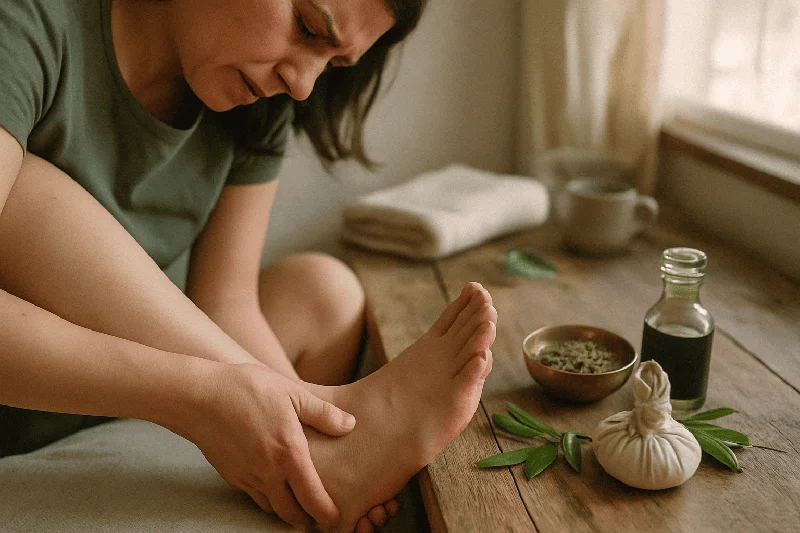
Heel pain is one of those problems that sounds minor — until you experience it. That first step out of bed in the morning feels like stepping on a nail, and by the end of the day, you're limping just to get to the couch. If you've been searching for heel pain remedies in Ayurveda, here's the direct answer: Ayurveda treats heel pain (called Vatakantaka) by pacifying aggravated Vata dosha through warm oil massages, herbal formulations like Guggulu and Dashamoola, Panchakarma therapies such as Abhyanga and Agnikarma, and specific dietary and lifestyle corrections. Most patients experience noticeable relief within 1–2 weeks for acute cases and 3–6 weeks for chronic conditions.
But the real power of the Ayurvedic approach lies in its ability to address the root cause — not just mask the symptom. Conventional painkillers numb the pain temporarily; Ayurveda aims to fix why it's happening in the first place.
This comprehensive guide covers everything from classical Ayurvedic explanations and clinically-backed treatments to exact home remedy recipes with proportions, exercises with precise repetitions, and season-specific protocols that no other guide currently offers.
What Is the Root Cause of Heel Pain According to Ayurveda?
In modern medicine, heel pain is most commonly attributed to plantar fasciitis (inflammation of the thick band of tissue running across the bottom of your foot) or a calcaneal spur (a bony growth on the heel bone). But Ayurveda looks deeper.
The classical Ayurvedic texts, particularly the Sushruta Samhita and Madhava Nidana, describe heel pain as Vatakantaka — a condition caused primarily by the aggravation of Vata dosha in the ankle and heel region. "Vata" governs all movement in the body, and "Kantaka" literally means thorn, which perfectly describes that stabbing sensation.
How Vata Dosha Creates Heel Pain
When Vata becomes aggravated — through excessive walking, standing on hard surfaces, cold and dry weather, irregular eating habits, or aging — it accumulates in the joints and tendons of the foot.
This leads to:
- Degeneration of the soft tissue cushioning the heel
- Reduced blood circulation to the calcaneal (heel) region
- Dryness and stiffness in the plantar fascia
- Progressive calcification, eventually forming a spur
Classification of Heel Pain by Dosha Type
This is a critical distinction that most guides overlook entirely. Not all heel pain is the same in Ayurveda, and the treatment depends on which dosha is dominant:
| Dosha Type | Nature of Pain | Key Symptoms | Aggravating Factors |
|---|---|---|---|
| Vata type | Sharp, cracking, throbbing | Dryness, cracking heels, pain worse in cold weather, stiffness after rest | Cold weather, excessive walking, irregular diet |
| Pitta type | Burning, inflamed | Redness, warmth around heel, pain worse in heat, swelling with tenderness | Hot weather, spicy food, overexertion |
| Kapha type | Dull, heavy, aching | Edema, stiffness with heaviness, pain worse in damp weather | Sedentary lifestyle, excess weight, humid climate |
Understanding your dosha type helps you choose the right oil, diet, and therapy — something we'll cover in detail below.
Heel Pain vs Plantar Fasciitis vs Heel Spur: What's the Difference?
These three terms are often used interchangeably, but they're not the same:
- Heel pain is a symptom — it simply means your heel hurts.
- Plantar fasciitis is a condition — inflammation of the plantar fascia ligament, the most common cause of heel pain (accounts for roughly 80% of cases).
- Calcaneal spur (heel spur) is a structural change — a calcium deposit forming a bony protrusion on the underside of the heel bone. Interestingly, many people have heel spurs with zero pain, and many people have severe heel pain without any spur at all.
In Ayurveda, all three fall under the umbrella of Vatakantaka, but the treatment intensity and duration vary depending on the stage.
What Are the Causes of Heel Pain? (Nidana)
Ayurveda identifies specific causative factors (Nidana) that aggravate Vata and lead to Vatakantaka. Combining classical references with modern understanding, the main causes include:
Lifestyle and Mechanical Causes
- Walking barefoot on hard or uneven surfaces — This is the single most cited cause in classical texts. Walking on rocky, uneven terrain without foot protection directly traumatizes the heel pad.
- Prolonged standing — Teachers, factory workers, surgeons, security guards — anyone standing for 6+ hours daily is at significantly higher risk.
- Inappropriate footwear — Flat shoes with zero arch support, worn-out soles, or high heels that shift body weight forward.
- Sudden increase in physical activity — Starting a running program without proper conditioning, or dramatically increasing walking distance.
- Obesity and excess body weight — Every kilogram of body weight translates to approximately 3–4 kg of force on the heel during walking. A person weighing 90 kg places roughly 270–360 kg of impact force on their heels with each step.
Constitutional and Dietary Causes
- Excessive consumption of cold, dry, and raw foods — Salads, cold drinks, dry crackers, and raw vegetables aggravate Vata.
- Irregular meal timing — Skipping meals or eating at different times each day disturbs Vata rhythm.
- Dehydration and insufficient oil intake — The body's natural lubrication decreases, affecting joint and tendon flexibility.
- Age-related degeneration — The fat pad under the heel naturally thins with age, especially after 40. A 2018 study published in the Journal of Foot and Ankle Research found that heel pad thickness decreased by an average of 1.2 mm per decade after age 40.
Seasonal and Weather Factors
Cold, dry weather significantly aggravates Vata dosha. This is why many people notice their heel pain worsens dramatically during winter months (roughly November through February in most of India). Conversely, warm and moist conditions tend to pacify Vata, which is why monsoon season can bring some natural relief — though the dampness may aggravate Kapha-type heel pain.
Best Ayurvedic Treatments and Panchakarma Therapies for Heel Pain
Ayurvedic treatment for heel pain follows a systematic approach: first reduce the acute pain and inflammation, then address the underlying dosha imbalance, and finally rebuild and strengthen the affected tissues.
Abhyanga (Therapeutic Oil Massage)
Abhyanga is the foundational therapy. Warm medicated oil is massaged into the foot, ankle, and calf in specific directional strokes.
This:
- Improves blood circulation to the heel
- Reduces Vata aggravation through warmth and oleation
- Relaxes the plantar fascia and Achilles tendon
Best oils by dosha type:
| Dosha Type | Recommended Oil | Key Ingredients |
|---|---|---|
| Vata | Mahanarayan Taila, Dhanwantharam Taila | Shatavari, Ashwagandha, sesame oil base |
| Pitta | Chandanadi Taila, Pinda Taila | Sandalwood, licorice, coconut oil base |
| Kapha | Kottamchukkadi Taila, Sahacharadi Taila | Dry ginger, mustard, sesame oil base |
A 2016 study published in Ayu Journal (the official publication of the Institute for Post Graduate Teaching and Research in Ayurveda, Gujarat Ayurved University) showed that 14 days of Abhyanga with Kottamchukkadi Taila resulted in 68% reduction in heel pain scores among 30 patients with Vatakantaka.
Swedana (Fomentation / Steam Therapy)
- Swedana involves applying controlled heat to the affected area, which reduces stiffness and pain.
- Several specific types are used for heel pain:
Ishtika Sweda (Brick Fomentation)
This is a uniquely effective technique. A brick is heated until extremely hot, then placed in a tray. Fermented herbal liquid (Dhanyamla or Dashamoola Kashaya) is poured over the hot brick, generating medicinal steam. The patient holds the affected foot over this steam for 15–20 minutes. The combination of heat and herbal vapors penetrates deep into the calcaneal tissues.
Nadi Swedana (Directed Steam)
Steam from boiling Dashamoola decoction is directed at the heel through a tube, providing focused thermal therapy.
Agnikarma (Therapeutic Thermal Cauterization)
Agnikarma is one of the most effective Ayurvedic procedures for chronic heel pain — especially when other treatments have provided only partial relief. A special metal rod (Shalaka) is heated and briefly applied to specific points on the heel area.
This:
- Creates controlled micro-trauma that stimulates healing
- Destroys fibrotic tissue in the plantar fascia
- Provides immediate pain relief in many cases that lasts 4–8 weeks
A clinical trial published in the International Journal of Ayurveda Research (2011) involving 40 patients found that Agnikarma provided significant pain reduction within 7 days in 85% of patients, with effects lasting an average of 6 weeks before any retreatment was needed.
Important note: Agnikarma must only be performed by a trained Ayurvedic surgeon (Shalya Tantra specialist). It is never a home remedy.
Lepa (Herbal Paste Application)
A warm herbal paste is prepared and applied to the heel, usually bandaged overnight.
Common formulations include:
- Dashamoola Lepa — paste made from the ten roots decoction
- Kolakulathadi Churna Lepa — horse gram and jujube paste, specifically anti-inflammatory
- Rasnadi Churna Lepa — paste featuring Rasna (Pluchea lanceolata), a potent Vata-pacifying herb
Ksheeradhara (Medicated Milk Pouring)
A continuous stream of warm medicated milk is poured over the heel for 20–30 minutes. The milk is typically prepared with Dashamoola or Bala (Sida cordifolia). This therapy is particularly effective for Pitta-type heel pain where there's significant burning sensation and inflammation.
Raktamokshana / Siravedha (Therapeutic Bloodletting)
For severe, chronic cases that haven't responded to other therapies, controlled venous bloodletting (Siravedha) may be performed. A qualified Ayurvedic physician removes 50–100 ml of blood from a vein near the affected area using a scalp vein set, typically with sessions spaced 7 days apart. This removes accumulated toxins (Ama) and aggravated Pitta from the local area. Usually 2–3 sessions are sufficient.
Best Ayurvedic Medicines for Heel Pain
Several classical Ayurvedic formulations are used for managing heel pain. These should ideally be taken under the guidance of a qualified practitioner, as dosage varies based on body constitution, severity, and coexisting conditions.
Internal Medicines (Oral)
| Medicine | Key Action | Typical Dosage | Best For |
|---|---|---|---|
| Yogaraja Guggulu | Anti-inflammatory, Vata-pacifying | 2 tablets (250 mg each), twice daily after meals | Chronic heel pain with stiffness |
| Rasnadi Guggulu | Analgesic, joint-protective | 2 tablets, twice daily after meals | Pain with swelling |
| Dashamoola Kashaya | Reduces Vata, anti-inflammatory | 15 ml with equal water, twice daily before meals | All types of heel pain |
| Ashwagandha Churna | Strengthens tissues, reduces degeneration | 3–5 g with warm milk at bedtime | Age-related heel pain, weak constitution |
| Shallaki (Boswellia serrata) tablets | Proven anti-inflammatory | 400 mg, twice daily | Inflammatory heel pain, plantar fasciitis |
A randomized controlled trial published in Phytomedicine (2003) showed that Boswellia serrata extract reduced pain scores by 64% over 8 weeks compared to 27% in the placebo group among patients with chronic inflammatory conditions.
External Medicines (Topical)
- Kottamchukkadi Taila — the most widely prescribed oil for Vatakantaka in Kerala Ayurvedic tradition
- Mahanarayan Taila — classical Vata-pacifying oil with 30+ herbs
- Murivenna Oil — excellent for acute injuries and pain
- Sahacharadi Taila — specifically indicated for lower extremity pain
Which Oil Is Good for Heel Pain? Home Remedies With Exact Proportions
Here's where most guides fall short — they mention remedies but never tell you exactly how much to use, how long to apply, or how many days to continue. Let's fix that.
Warm Oil Foot Massage (Daily Protocol)
Ingredients:
- 15 ml (1 tablespoon) of sesame oil or Kottamchukkadi Taila
- 2–3 drops of castor oil (optional, for extra anti-inflammatory action)
Method:
- Warm the oil slightly — it should be comfortably warm to touch (approximately 40–42°C), not hot
- Apply to the entire sole of the foot, focusing on the heel and arch area
- Massage in circular motions with moderate pressure for 10–12 minutes
- Use your thumb to apply firm pressure along the plantar fascia (the band running from heel to toes)
- Wrap the foot in a warm towel for 10 more minutes after massage
- Wash off with warm water if desired, or wear cotton socks and leave overnight
Duration: Daily for 21 consecutive days, then 3 times per week for maintenance
Turmeric-Ginger Anti-Inflammatory Paste
Ingredients:
- 1 teaspoon (approximately 5 g) turmeric powder
- ½ teaspoon (approximately 2.5 g) dry ginger powder (Shunthi)
- 1 teaspoon sesame oil
- Warm water — just enough to form a thick paste
Method:
- Mix all dry ingredients, add sesame oil, then warm water gradually
- Apply the paste in a thick layer over the painful heel area
- Cover with a cotton cloth or gauze bandage
- Leave for 30–40 minutes, then wash off with warm water
Frequency: Once daily, preferably in the evening before bed. Continue for 14–21 days.
Epsom Salt Warm Foot Soak
Ingredients:
- 3 tablespoons (approximately 45 g) Epsom salt (magnesium sulfate)
- 1 tablespoon rock salt (Saindhava Lavana)
- 4 liters of warm water (40–43°C)
- 5–6 drops of eucalyptus oil (optional)
Method:
- Dissolve salts in warm water in a basin
- Soak both feet for 15–20 minutes
- Gently massage the heels while soaking
- Pat dry and immediately apply warm sesame oil to the heels
Frequency: Every alternate day for 3 weeks
Golden Milk (Turmeric Milk) — Internal Remedy
Ingredients:
- 200 ml warm milk (cow's milk or almond milk)
- ½ teaspoon turmeric powder
- ¼ teaspoon black pepper powder (enhances curcumin absorption by up to 2000%, per a Planta Medica 1998 study)
- ½ teaspoon ghee
- Jaggery or honey to taste (add honey only after milk cools below 40°C)
Method: Mix all ingredients in warm milk, drink 30 minutes before bedtime. Duration: Daily for a minimum of 30 days.
Don't wait or self medicate. Start chat with Doctor NOW
Which Herb Is Good for Heel Pain?
Several Ayurvedic herbs have demonstrated strong anti-inflammatory and Vata-pacifying properties relevant to heel pain:
Top 7 Herbs for Heel Pain
- 1.Rasna (Pluchea lanceolata) — The primary herb for Vata disorders affecting joints and tendons. Often called the "queen of anti-Vata herbs."
- 2.Shallaki (Boswellia serrata) — Clinically proven anti-inflammatory; inhibits 5-lipoxygenase enzyme, reducing leukotriene production.
- 3.Ashwagandha (Withania somnifera) — Strengthens muscles and tendons, reduces cortisol-mediated inflammation.
- 4.Guggulu (Commiphora mukul) — Penetrates deep tissues, reduces swelling and stiffness.
- 5.Nirgundi (Vitex negundo) — Powerful analgesic; leaf paste applied externally provides rapid pain relief.
- 6.Eranda (Ricinus communis / Castor) — Castor oil is the single best Vata-pacifying oil in Ayurveda.
- 7.Bala (Sida cordifolia) — Strengthens and nourishes weakened tissues; particularly useful for age-related heel degeneration.
Exercises and Yoga Asanas for Heel Pain (Step-by-Step)
- Physical rehabilitation is essential alongside Ayurvedic treatment.
- Here are specific exercises with exact parameters:
Calf Wall Stretch
- Stand facing a wall, arms extended, palms flat against the wall
- Step the affected foot back approximately 2 feet
- Keep the back heel firmly on the ground, knee straight
- Lean forward until you feel a stretch in the calf and heel
- Hold: 30 seconds | Repetitions: 3 per side | Frequency: 3 times daily
Towel Scrunch
- Sit in a chair with a thin towel flat on the floor
- Place the affected foot on the towel
- Scrunch the towel toward you using only your toes
- Spread the towel out again and repeat
- Repetitions: 15 scrunches | Sets: 2 | Frequency: twice daily
Heel Raises
- Stand on a step with the balls of your feet on the edge, heels hanging off
- Slowly lower your heels below the step level (3-second count)
- Rise up onto your toes (2-second count)
- Repetitions: 12 | Sets: 3 | Frequency: once daily (not during acute pain)
Yoga Asanas
- Vajrasana (Thunderbolt Pose) — Sit on your heels for 5–10 minutes after meals. This stretches the plantar fascia and improves circulation to the feet. Start with 2 minutes if painful, gradually increase.
- Bhujangasana (Cobra Pose) — Stretches the entire anterior chain including the foot dorsum. Hold for 20 seconds, 3 repetitions.
- Makarasana (Crocodile Pose) — Deep relaxation pose that reduces overall Vata aggravation. Hold for 3–5 minutes.
Diet and Seasonal Recommendations (Ahara and Ritucharya)
Vata-Pacifying Diet for Heel Pain
Foods to Favor:
- Warm, cooked, moist foods — soups, stews, khichdi, dal
- Healthy fats — ghee (2 teaspoons daily), sesame oil, coconut oil
- Anti-inflammatory spices — turmeric, ginger, cumin, fenugreek, black pepper, asafoetida
- Sweet, sour, and salty tastes (they pacify Vata)
- Warm milk with turmeric and nutmeg at night
Foods to Avoid:
- Cold, raw, dry foods — salads, crackers, popcorn, dry cereals
- Carbonated and cold beverages
- Excessive caffeine (more than 2 cups daily)
- Processed and packaged foods with preservatives
- Bitter and astringent tastes in excess (they aggravate Vata)
Seasonal Protocol (Ritucharya for Heel Pain)
| Season | Vata Status | Dietary Focus | Therapy Focus |
|---|---|---|---|
| Winter (Hemanta/Shishira) — Nov-Feb | Highest aggravation | Extra ghee and oils; warm soups; avoid fasting | Daily oil massage; warm foot soaks; heavier internal medicines |
| Summer (Grishma) — Apr-Jun | Moderate | Cooling but cooked foods; sweet lassi; avoid excess spice | Lighter oils (coconut-based); Ksheeradhara; reduce Agnikarma |
| Monsoon (Varsha) — Jul-Sep | Accumulation phase | Light, warm, easily digestible foods; add ginger and pepper | Dhara therapies; avoid cold water applications; focus on internal medicines |
| Autumn (Sharad) — Oct-Nov | Pitta-Vata transition | Bitter greens to clear Pitta; gradually increase oils | Begin intensive treatments before winter peak |
Ayurveda vs Conventional Medicine for Heel Pain: An Honest Comparison
| Parameter | Ayurvedic Treatment | Conventional Treatment |
|---|---|---|
| Approach | Root cause (dosha imbalance) | Symptom management |
| Time to initial relief | 7–14 days | 1–3 days (NSAIDs) |
| Long-term resolution | 3–6 weeks (70–85% cases) | Variable; 30–40% recurrence within 1 year |
| Side effects | Minimal when guided by a qualified practitioner | NSAIDs: gastric irritation, kidney risk; corticosteroid injections: fat pad atrophy, tendon weakening |
| Approximate cost (India) | ₹3,000–₹15,000 for a full treatment course | ₹2,000–₹50,000+ (if surgery required) |
| Recurrence rate | Lower, as root cause is addressed | Higher if only painkillers used |
| Suitability during pregnancy | Many external therapies are safe (with practitioner guidance) | Limited options; most oral medications contraindicated |
The practical takeaway: Ayurveda works best for mild to moderate, non-emergency heel pain. If you have severe pain with inability to bear weight, numbness, fever, or visible deformity, seek conventional medical evaluation first — then integrate Ayurveda for long-term recovery.
Heel Pain in Special Populations
Heel Pain During Pregnancy
- Pregnancy creates a perfect storm for heel pain: weight gain of 10–15 kg, hormonal changes (relaxin loosens ligaments), and a shifted center of gravity.
- Ayurveda offers several safe options:
- External therapies only: Abhyanga with Dhanwantharam Taila is safe and commonly recommended during pregnancy
- Warm (not hot) foot soaks with rock salt
- Bala Taila massage — specifically nourishing and safe for pregnant women
- Avoid: Agnikarma, Raktamokshana, strong purgatives, and most internal herbal formulations without explicit practitioner approval
Age-Specific Approaches
For Elderly (60+ years)
Focus on nourishing and strengthening — Ashwagandha internally, Bala Taila externally, gentle Swedana. Avoid aggressive therapies. The heel fat pad naturally atrophies with age so cushioned footwear becomes non-negotiable.
For Athletes and Active Individuals
Focus on recovery and tissue repair — Murivenna oil externally, Yogaraja Guggulu internally, progressive calf strengthening. Address biomechanical issues (flat feet, overpronation) alongside Ayurvedic treatment.
For Office Workers (Sedentary Lifestyle)
Focus on circulation improvement — Regular Abhyanga, Vajrasana after meals, hourly foot stretches at the desk, and dietary corrections to reduce Ama (metabolic toxins) from sedentary metabolism.
Daily Routine (Dinacharya) for Heel Pain Recovery
Here's a specific daily schedule optimized for heel pain recovery:
| Time | Activity | Duration |
|---|---|---|
| 6:00 AM | Wake up; drink warm water with ½ tsp ginger powder | 5 min |
| 6:15 AM | Warm sesame oil foot massage (Abhyanga) | 15 min |
| 6:30 AM | Warm foot soak with rock salt | 10 min |
| 6:45 AM | Gentle calf stretches and toe scrunches | 10 min |
| 7:00 AM | Warm breakfast (porridge/upma/poha with ghee) | — |
| 7:30 AM | Take prescribed internal medicines (Guggulu etc.) | — |
| 12:30 PM | Warm lunch (freshly cooked, with anti-inflammatory spices) | — |
| 1:00 PM | Vajrasana for 5–10 minutes after lunch | 5–10 min |
| 6:00 PM | Evening foot exercises (heel raises, towel scrunches) | 10 min |
| 7:00 PM | Warm dinner (light — soup, khichdi) | — |
| 9:00 PM | Apply herbal paste (Lepa) or oil to heel, wear cotton socks | 5 min |
| 9:30 PM | Golden milk (turmeric milk with pepper and ghee) | — |
| 10:00 PM | Sleep (adequate sleep is critical for Vata pacification) | 7–8 hours |
What Is the Fastest Way to Cure Heel Pain?
Let's be honest — there's no overnight cure. But for the fastest possible relief within an Ayurvedic framework:
- 1.Immediate (Day 1–3): Warm Kottamchukkadi Taila massage + Epsom salt foot soak + Dashamoola Kashaya internally. Avoid walking barefoot completely.
- 2.Short-term (Day 4–14): Add Agnikarma therapy (if available and indicated) + Guggulu formulation internally + daily stretching protocol.
- 3.Medium-term (Week 3–6): Continue oil massage and internal medicines + progressive calf strengthening + dietary corrections.
- 4.Long-term maintenance: Weekly oil massage + daily Vajrasana + proper footwear + seasonal dietary adjustments.
Most patients report 50–60% improvement within the first 2 weeks and 80–90% resolution within 6 weeks with consistent, multi-pronged Ayurvedic treatment.
Frequently Asked Questions
What is the best Ayurvedic oil for heel pain?
Kottamchukkadi Taila is the most widely recommended oil for heel pain in Ayurvedic practice, particularly in the Kerala tradition. It contains dry ginger (Kottam), horse gram, and other Vata-pacifying ingredients in a sesame oil base. For Pitta-type burning pain, Pinda Taila (with beeswax and manjishtha) is more suitable. For general Vata-type pain, Mahanarayan Taila is an excellent all-purpose choice.
Can Ayurveda cure heel spurs permanently?
Ayurveda cannot dissolve an existing bony spur — once calcium has deposited, it remains. However, Ayurveda can effectively treat the inflammation and pain caused by the spur, often eliminating symptoms entirely. Many people with heel spurs visible on X-ray live completely pain-free after Ayurvedic treatment because the spur itself isn't always the pain source — the surrounding soft tissue inflammation is.
How long does Ayurvedic treatment take to show results for heel pain?
- For acute heel pain (less than 3 months duration): expect noticeable improvement in 1–2 weeks.
- For chronic conditions (more than 6 months): plan for 3–6 weeks of consistent treatment. For heel pain with a calcaneal spur and significant degeneration: 6–12 weeks may be needed for substantial relief.
Is Vatakantaka the same as plantar fasciitis?
They overlap significantly but aren't identical. Vatakantaka is a broader Ayurvedic concept that encompasses heel pain from Vata aggravation, which includes plantar fasciitis but also covers calcaneal spur pain, Achilles tendinopathy, and heel pad syndrome. Plantar fasciitis is a specific modern diagnosis referring only to the inflammation of the plantar fascia ligament.
When should I see a doctor instead of trying home remedies?
Seek professional medical evaluation if: your heel pain persists beyond 2 weeks of consistent home treatment, you cannot bear any weight on the affected foot, you notice numbness or tingling in the foot, there is fever or redness suggesting infection, you see an open wound or discoloration, or the pain started after an acute injury (possible fracture).
Is walking good or bad for heel pain?
- Gentle walking on soft surfaces in supportive footwear is generally beneficial — it promotes blood circulation and prevents the stiffness that worsens Vata. However, long walks on hard surfaces, walking barefoot, and walking through pain are harmful.
- A good rule: walk only as much as you can without limping. If you're limping, you're doing too much.
Conclusion: Start Your Healing Journey Today
Heel pain doesn't have to be your daily companion. Ayurveda offers a time-tested, systematic approach that goes beyond symptom relief to address the actual root of the problem — whether that's Vata aggravation, tissue degeneration, or inflammatory buildup.
- The most important step? Start today. Even something as simple as a warm sesame oil foot massage tonight, followed by golden milk before bed, can begin shifting the balance.
- You don't need to implement everything at once — pick 2–3 remedies from this guide, practice them consistently for 21 days, and observe the changes.
For persistent or severe heel pain, consult a qualified Ayurvedic physician (BAMS or MD Ayurveda) who can assess your specific dosha imbalance and design a personalized treatment plan including Panchakarma therapies where needed.
Your heels carry you through every single day of your life. It's time to carry them back to health.
Scientific Sources
- Properties of macerated herbal oil — Kantawong F et al., 2017, BioImpacts : BI
- Kampo herbal ointments for skin wound healing — Paul-Traversaz M et al., 2023, Frontiers in pharmacology
- Daily intranasal sesame oil instillation to improve nasal barrier function and mucosal immunity for respiratory health: A pilot randomized trial in healthy adults — Chaturvedi S et al., 2025, Complementary therapies in medicine
- Role of natural products in alleviation of rheumatoid arthritis-A review — Sharma D et al., 2021, Journal of food biochemistry
- Oil pulling for maintaining oral hygiene - A review — Shanbhag VK, 2017, Journal of traditional and complementary medicine
Questions from users
Can Ayurveda treatments help with pain management in severe heel conditions?
Connor
4 days ago
Yes, Ayurveda can definitely help manage heel pain! Using treatments like Mahanarayan Taila for Vata-type pain, Panchakarma, and even gentle dietary changes can really help balance your doshas and reduce discomfort. You may also want to try simple home remedies, like soaking feet in warm water with Epsom salts. 💧
What is the best type of footwear to wear for plantar fasciitis relief?
Dylan
13 days ago
For plantar fasciitis, supportive shoes with good arch and heel cushioning are best. They help balance Vata and reduce stress on the fascia. Soft surfaces also help. Look for shoes with solid arch support, a slight heel rise (not too flat), and avoid hard soles. Every person might feels different comfort so it can vary.
How can Basti therapy effectively reduce heel pain symptoms?
Morgan
27 days ago
Basti therapy can be awesome for heel pain, especially when it's Vata-related. By using medicated oils in an enema, it helps balance the Vata dosha, which can be a root cause of the pain. It flushes out toxins and can lead to long-term pain relief and better joint flexibility. Pairing it with diet and lifestyle changes makes it more effective!
Can I use Mahanarayan oil for other types of joint pain, or is it only for heels?
Vanessa
37 days ago
Mahanarayan oil is actually quite versatile for joint pain, not just for heels! You can use it on knees, elbows, any achy joints. It's great for reducing inflammation and nourishing tissues. Just remember, regular use is key. If you have specific concerns or conditions, considering your dosha type might also help personalize your approach.
What is the process for making a Pinda Sweda poultice for heel pain at home?
Charlotte
46 days ago
To make a Pinda Sweda poultice at home, mix herbs like Ashwagandha, Shatavari, and Dashamoola into a warm paste. Bundle this paste in a clean cloth to form the poultice. Heat it gently before applying to the heel. The warmth and herbal properties aim to reduce pain and swelling. Be gentle and ensure the poultice isn't too hot to avoid burns. If you have specific questions or conditions, consulting an Ayurvedic practitioner is always a good idea.
Can I use turmeric and ginger remedies daily for heel pain?
Mateo
56 days ago
Yes, you can use turmeric and ginger daily, but it's always a good to listen to your body. These spices can be helpful due to their anti-inflammatory properties. Just watch for any digestive discomfort. You could incorporate turmeric paste topically on the heel and enjoy ginger tea to support healing from the inside.
How does self-massage with a tennis ball help relieve heel pain?
Stella
66 days ago
Using a tennis ball for self-massage can actually work wonders for heel pain by gently massaging out the tension and improving blood flow. The pressure from the ball helps to break down any tight knots or fascia that might be causing pain, giving those heels a nice stretch. It's kinda like giving your feet a mini-massage therapist session.
Is it safe to combine Ayurvedic treatments with conventional medicine for heel pain?
Rachael
75 days ago
Yeah, it's generally safe but always a good idea to chat with your doc before mixing treatments. Ayurveda aims to balance your doshas and might boost the effects of conventional medicine. Just keep an eye on any reactions, and stay in tune with your body. Balancing treatments can be great but mix mindfully!
Can gentle yoga really improve flexibility enough to help chronic heel pain, or is it just for mild cases?
Virginia
151 days ago
Yeah, gentle yoga can totally help with flexibility to aid in chronic heel pain, not just mild cases. Over time, poses can improve mobility and stretch the area, reducing tension. It's important to be consistent and patient with practices like Padahastasana. If the pain persists, though, definitely integrating Ayurvedic remedies like turmeric and ginger can also be beneficial.
What lifestyle habits should I avoid to prevent worsening heel pain while using Ayurvedic remedies?
Carter
161 days ago
To prevent worsening heel pain, try avoiding high-impact activities like running, standing long hours, or wearing unsupportive footwear. Keep your feet warm, as cold weakens vata, which can increase pain. Also, stress management is key since stress can exacerbate pain. Maintain balance and consistency in following Ayurvedic treatments.
Related articles

General Medicine
Dashamoola Haritaki Uses, Dose, Side Effects, And Ingredients
Exploration of Dashamoola Haritaki Uses, Dose, Side Effects, And Ingredients
2,321

General Medicine
Karpooradi Choornam Benefits, Dosage, How To Use, Side Effects, Ingredients, Reference
Exploration of Karpooradi Choornam Benefits, Dosage, How To Use, Side Effects, Ingredients, Reference
2,699

General Medicine
Maharanasnadi Kashayam Benefits, Dose, Side Effects, Ingredients, And Reference
Exploration of Maharanasnadi Kashayam Benefits, Dose, Side Effects, Ingredients, And Reference
892
General Medicine
Pippalyadi Churna – An Ayurvedic Remedy for Digestion and Respiratory Health
Learn about Pippalyadi Churna, an Ayurvedic herbal powder used to improve digestion, enhance respiratory health, and balance doshas for overall wellness.
3,594
General Medicine
Ayurvedic Treatment for Heel Pain: A Natural Path to Relief
In Ayurveda, heel pain is often attributed to an imbalance of the Vata dosha, which governs movement and dryness in the body. T
2,503
General Medicine
Ayurvedic Medicine for Heel Pain: Natural Relief for Lasting Comfort
Ayurveda, the ancient Indian system of medicine, offers natural remedies to address heel pain at its root cause.
3,347

General Medicine
Nirocil Tablet
Exploration of Nirocil Tablet
1,990
General Medicine
Best Ayurvedic Medicine for Calcium – Natural Remedies for Bone Health
Discover the best Ayurvedic medicines for calcium that promote bone strength, prevent osteoporosis, and support overall skeletal health with natural, holistic remedies.
4,689

General Medicine
Punarnavadi Kashayam Benefits, Dose, Side Effects, And Ingredients
Exploration of Punarnavadi Kashayam Benefits, Dose, Side Effects, And Ingredients
2,565

General Medicine
Somasav: A Comprehensive Guide to This Emerging Therapy
Explore the science behind Somasav, its potential benefits, clinical evidence, and expert insights. Learn about usage, safety, and latest research findings.
2,833
Related questions on the topic
Legal
Additional Documents
© 2024 Ask Ayurveda. All rights reserved.