Ask Ayurvedic doctor a question and get a consultation online on the problem of your concern in a free or paid mode. More than 2,000 experienced doctors work and wait for your questions on our site and help users to solve their health problems every day.
FREE! Ask Ayurvedic Doctors 24/7

 Fast responses
 1000+ verified doctors
Body DetoxEar, Nose, and Throat DisordersGeriatrics & RejuvenationImmunodeficiencyInfertility TreatmentNutritionOrthopedic DisordersPediatricsRespiratory DisordersSexually Transmitted Diseases (STDs)Surgery RecoveryUrological DisordersVascular DisordersDental DisordersEndocrinological DisordersGastrointestinal DisordersYoga TherapyGeneral MedicineAllergic DisordersCardio DisordersGynecology and ObstetricsCosmetologySkin and Hair DisordersEye DisordersInfectious DiseasesMental DisordersNeurological DisordersOncologyPanchakarmaSexual Health & DisordersSports Medicine
Published on 01/17/25
(Updated on 07/06/26)
2,778
Kokilaksha Kshara: A Powerful Ayurvedic Remedy Explained
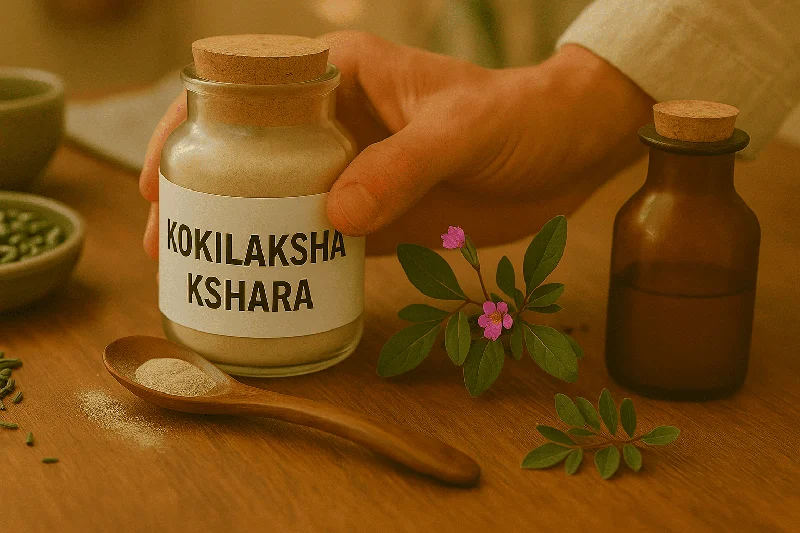
Kokilaksha Kshara is an alkaline preparation (Kshara) derived from the ash of the Kokilaksha plant (Hygrophila auriculata, syn. Asteracantha longifolia), belonging to the family Acanthaceae. It is one of the most referenced Ayurvedic remedies for dissolving gallbladder stones (Pittashmari) and urinary calculi (Ashmari) without surgery. The preparation works through a mechanism called Bhedan Karma — it penetrates, disintegrates, and helps expel stones from the gallbladder and urinary tract. If you've been searching for a non-surgical Ayurvedic approach to gallstones, this comprehensive guide covers everything from how Kokilaksha Kshara is prepared and its precise dosage to the diet you should follow, contraindications nobody else talks about, and how it compares with other popular Kshara formulations.
What Is Kokilaksha Kshara?
Kshara, in Ayurveda, refers to a caustic alkaline substance obtained by processing the ash of specific medicinal plants. When the whole plant of Kokilaksha is burned to ash, dissolved in water, filtered, and then evaporated, the resulting white crystalline residue is Kokilaksha Kshara. It is classified as a Pratisaraneeya Kshara (externally applicable) or Paneeya Kshara (internally consumable) depending on the concentration and intended use.
Acharya Sushruta described Kshara therapy as one of the superior para-surgical techniques because it simultaneously performs the functions of cutting, burning, and scraping — all without a blade.
Kokilaksha Kshara Ingredients and Composition
Despite the name suggesting a single ingredient, the preparation is not as simple as "just ash." The primary source is the whole Kokilaksha plant, but the final product's therapeutic value comes from its rich alkaline mineral content. Chemical analysis of Hygrophila auriculata reveals the presence of:
| Compound | Category | Relevance |
|---|---|---|
| Lupeol | Triterpenoid | Anti-inflammatory, lithotriptic |
| Stigmasterol | Phytosterol | Cholesterol-lowering, gallstone prevention |
| Apigenin-7-O-glucuronide | Flavonoid | Antioxidant, hepatoprotective |
| Potassium carbonate | Alkaline salt (in Kshara) | Stone dissolution |
| Sodium carbonate | Alkaline salt (in Kshara) | Maintains alkaline pH for litholysis |
| Asterol | Steroid | Diuretic action |
| Hispidulin | Flavone | Anti-spasmodic |
The high potassium and sodium carbonate content in the finished Kshara is what gives it the alkaline pH (typically between 10 and 12), which is directly responsible for dissolving calcium- and cholesterol-based stones.
Botanical Identity and Vernacular Names
Kokilaksha is known by different names across India, which often creates confusion.
Here's a quick reference:
| Language | Name |
|---|---|
| Sanskrit | Kokilaksha, Ikshura, Ikshugandha |
| Hindi | Talmakhana, Talimkhana |
| Marathi | Talimkhana, Kolsunda |
| Tamil | Neermulli |
| Telugu | Kokilakshi |
| Kannada | Kolavalihu, Kollimulli |
| Bengali | Kulekhara |
| Malayalam | Vayalchulli |
| Gujarati | Ekharo |
| Latin | Hygrophila auriculata / Asteracantha longifolia |
| Family | Acanthaceae |
The plant is commonly found in marshy and waterlogged areas across India, making it widely accessible — and historically, this accessibility is one reason it became a staple in village-level Ayurvedic practice.
Ayurvedic Pharmacology (Dravyaguna)
Understanding how Kokilaksha works in the Ayurvedic framework helps clinicians select it for the right patient:
| Property (Guna) | Value |
|---|---|
| Rasa (Taste) | Madhura (Sweet), Tikta (Bitter) |
| Guna (Quality) | Snigdha (Unctuous), Guru (Heavy) |
| Veerya (Potency) | Sheeta (Cold) |
| Vipaka (Post-digestive taste) | Madhura (Sweet) |
| Dosha Karma | Balances Vata and Pitta |
| Primary Karma | Bhedana (breaking/splitting), Mutrala (diuretic), Ashmarighna (stone destroying) |
The Kshara form, however, adds a strongly alkaline (Kshara Guna) quality that the raw plant doesn't possess. This is precisely why the Kshara is preferred over simple decoction or powder when dealing with calculi.
How Kokilaksha Kshara Dissolves Gallbladder Stones (Mechanism of Action)
This is where most online resources fall short — they mention it "helps with gallstones" but never explain how. Let's fix that.
The Bhedan Karma Pathway
Bhedan Karma literally means "the action of breaking through." In the context of Pittashmari (gallstones), Kokilaksha Kshara works through a multi-step process:
- 1.Alkaline dissolution: The high pH of the Kshara (10–12) creates an alkaline environment in the bile. Cholesterol gallstones, which comprise roughly 80% of all gallstones, are more soluble in alkaline conditions. The carbonate salts in the Kshara directly interact with the cholesterol matrix of the stone, weakening its structural integrity.
- 2.Fragmentation (Bhedan): Once the outer layers soften, the Kshara progressively fragments the stone into smaller particles — what modern medicine would call "microliths" or sludge.
- 3.Enhanced bile flow (Pitta Rechana): Kokilaksha has inherent hepatoprotective and cholagogue properties. It stimulates bile secretion and flow, which helps flush the fragmented stone particles through the common bile duct into the duodenum.
- 4.Diuretic support (Mutrala Karma): For cases where stones or sludge are present in both the gallbladder and kidneys (a surprisingly common co-occurrence), the diuretic action ensures renal calculi are simultaneously addressed.
A 2019 pharmaceutical study published in the International Journal of Pharmaceutical Research and Applications confirmed that Kokilaksha Kshara maintains a consistent alkaline pH suitable for litholytic activity, and its preliminary analysis showed adequate levels of acid-insoluble ash and water-soluble extractives — both markers of quality for stone-dissolving Kshara preparations.
Beyond Gallstones: Gallbladder Sludge and Polyps
Kokilaksha Kshara isn't limited to formed gallstones.
It is also recommended for:
- Gallbladder sludge — thick, mucousy bile that hasn't yet crystallized into stones but causes similar symptoms (heaviness, nausea, right upper quadrant discomfort). The alkaline action prevents crystallization.
- Small gallbladder polyps — while evidence is more anecdotal here, some Ayurvedic practitioners report polyp reduction with long-term Kshara use, possibly due to the anti-inflammatory action of lupeol and apigenin compounds retained in trace amounts in the Kshara.
The "Alternative to Surgery" Argument
The main benefit cited by experienced Ayurvedic physicians is that Kokilaksha Kshara can, in many cases, provide relief from cholecystectomy (gallbladder removal surgery).
This is particularly relevant for:
- Patients with small to medium stones (under 15 mm)
- Patients with asymptomatic or mildly symptomatic stones discovered on routine ultrasound
- Those who are poor surgical candidates due to age or comorbidities
- Patients who simply want to try conservative management first
That said, large impacted stones, acute cholecystitis with infection, or stones causing bile duct obstruction require immediate surgical evaluation. Kokilaksha Kshara is not a replacement for emergency care.
Step-by-Step Preparation of Kokilaksha Kshara
No competitor website actually walks you through the preparation process in detail. Here it is, based on the classical Sushruta Samhita methodology and modern pharmaceutical standardization:
Collection and Drying
- Harvest the whole plant — root, stem, leaves, flowers, and seeds — during the flowering season (typically July–September in India), when the active constituent concentration peaks.
- Clean the plant thoroughly to remove mud and debris, since Kokilaksha grows in marshy areas.
- Dry completely in shade for 5–7 days until all moisture is eliminated. Sun drying can degrade some heat-sensitive compounds, so shade drying is preferred.
Burning and Ash Preparation
- Burn the dried plant in an open iron vessel until it is reduced to white-grey ash.
- The burning should be complete — no charred black pieces should remain.Collect the ash carefully and store it in an airtight container to prevent moisture absorption.
Dissolution, Filtration, and Evaporation
- Add the ash to water in a 1:6 ratio (1 part ash to 6 parts water). Stir vigorously and let it soak for 24 hours. Filter the solution through a clean cotton cloth (traditionally, 21 filtrations are recommended for maximum purity — this is called Ekavimshati Puta). Heat the filtered liquid on a low flame. Evaporate until a white crystalline or powdery residue remains at the bottom of the vessel.
- Collect the residue — this is Kokilaksha Kshara.
Quality Parameters
The finished Kshara should meet these benchmarks:
| Parameter | Standard |
|---|---|
| Color | White to yellowish-white |
| Taste | Kshara rasa (alkaline/caustic) |
| pH | 10–12 |
| Solubility in water | Freely soluble |
| Acid-insoluble ash | Not more than 2% |
| Moisture content | Below 5% |
| Texture | Fine powder, slightly hygroscopic |
If the Kshara turns dark brown or has a burnt smell, the combustion process was incomplete — and the product should not be used internally.
Kokilaksha Kshara Dosage and Protocol of Administration
Standard Dosage
| Patient Type | Dose | Frequency | Anupana (Vehicle) |
|---|---|---|---|
| Adults (gallstones) | 500 mg – 1 g | Twice daily | Warm water or Gomutra (cow urine) |
| Adults (urinary calculi) | 500 mg – 1 g | Twice daily | Gokshura Kwatha (decoction) |
| Adults (gallbladder sludge) | 250 mg – 500 mg | Twice daily | Warm water with honey |
| Elderly | 250 mg – 500 mg | Once or twice daily | Warm water |
| Children (above 12 years) | 125 mg – 250 mg | Once daily | Warm water with honey |
Children under 12 should not take Kshara preparations unless directly supervised by a qualified Ayurvedic physician, due to the caustic nature of the alkaline salts.
When and How to Take
- Timing: After meals (Paschat Bhakta) to reduce the risk of gastric irritation from the alkaline pH.
- Duration: A typical course runs 8 to 12 weeks for gallbladder stones.
- Urinary calculi may respond faster — often within 4 to 8 weeks. Your physician should order a follow-up ultrasound at the 6-week mark to assess progress.
- Best combination: Many practitioners prescribe Kokilaksha Kshara alongside Arogyavardhini Vati (for liver support) and Shankha Vati (for digestion). This multi-drug protocol addresses the root cause (impaired bile metabolism) rather than just the stones.
Kokilaksha Kshara in Combination Therapy
| Condition | Kokilaksha Kshara + | Purpose |
|---|---|---|
| Gallstones (Pittashmari) | Arogyavardhini Vati + Kumaryasava | Liver detox + bile flow |
| Kidney stones (Mutra Ashmari) | Gokshuradi Guggulu + Punarnava Kwatha | Renal support + diuresis |
| Gallbladder sludge | Shankha Vati + Triphala | Digestive fire + detoxification |
| Recurrent UTI with calculi | Chandraprabha Vati + Varunadi Kwatha | Anti-infective + lithotriptic |
- ## Kokilaksha Kshara vs.
- Other Kshara Preparations: Which One for Which Stones?
This comparison is something you won't find elsewhere. Different Kshara preparations target different types of calculi, and choosing the right one matters.
| Kshara | Source Plant | Best For | pH Range | Special Strength |
|---|---|---|---|---|
| Kokilaksha Kshara | Hygrophila auriculata | Gallbladder stones, urinary calculi | 10–12 | Cholesterol stone dissolution |
| Yavakshara | Hordeum vulgare (Barley) | Urinary calculi, hyperacidity | 9–11 | Alkalinizing urine, reducing Pitta |
| Apamarga Kshara | Achyranthes aspera | Renal calculi, dental calculus | 10–13 | Strong scraping action (Lekhana) |
| Palasha Kshara | Butea monosperma | Intestinal worms, urinary stones | 10–11 | Antihelminthic + lithotriptic |
| Sharpunkha Kshara | Tephrosia purpurea | Splenic disorders, mild urinary stones | 9–11 | Splenomegaly, hepatoprotection |
Bottom line: For gallbladder stones specifically, Kokilaksha Kshara remains the first choice due to its targeted Bhedan Karma on the hepatobiliary system combined with its cholesterol-solubilizing alkaline profile.
Diet and Lifestyle During Kokilaksha Kshara Treatment (Pathya-Apathya)
Taking the Kshara without modifying your diet is like mopping the floor while the tap is still running. Diet is crucial.
Foods to Favor (Pathya)
- Old rice (Purana Shali) and barley (Yava) — easy to digest, Pitta-pacifying
- Moong dal — light protein that doesn't burden the liver
- Ash gourd (Kushmanda) and bottle gourd (Lauki) — cooling, diuretic
- Warm water throughout the day — keeps bile fluid
- Cow's ghee in moderate amounts (1–2 tsp/day) — paradoxically, small amounts of ghee stimulate bile flow and prevent bile stagnation
- Pomegranate, amla, and grapes — antioxidant-rich, Pitta-balancing fruits
Foods to Avoid (Apathya)
- Fried and oily foods — directly increase biliary cholesterol saturation
- Red meat and heavy proteins — overload hepatic metabolism
- Refined sugar and maida-based products — promote sludge formation
- Excessive dairy (especially paneer, cheese, cream) — high saturated fat content
- Alcohol — hepatotoxic, completely counterproductive
- Sour and fermented foods in excess (pickles, vinegar, yogurt at night) — aggravate Pitta
Lifestyle Modifications
- Walk for at least 30 minutes daily — sedentary lifestyle is a known risk factor for gallstones
- Avoid skipping meals, especially breakfast — prolonged fasting concentrates bile
- Practice Bhujangasana (Cobra pose) and Dhanurasana (Bow pose) — these specifically compress and massage the gallbladder area
- Avoid sleeping immediately after meals — allow at least 2 hours
Don't wait or self medicate. Start chat with Doctor NOW
Safety, Side Effects, and Contraindications
Known Side Effects
Kokilaksha as a plant is generally considered safe, and classical texts report no significant side effects when the Kshara is prepared correctly and taken in recommended doses. However, the alkaline nature of any Kshara means certain precautions are non-negotiable:
- Gastric irritation or mild burning sensation — usually occurs when taken on an empty stomach. Always take after food.
- Loose stools — the Bhedan Karma can sometimes increase bowel motility. Reduce dose if this occurs.
- Alkalosis risk — prolonged use at high doses (beyond 12 weeks continuously) without supervision could theoretically shift blood pH. This is rare but worth monitoring.
Contraindications (Who Should NOT Take It)
This information is conspicuously absent from most online sources. Here's what practitioners and pharmacological reasoning indicate:
- Pregnancy and lactation — Kshara preparations are contraindicated due to their Tikshna (sharp) and Ushna (when concentrated) qualities that can disturb fetal development
- Patients with hyperkalemia — the potassium carbonate content could worsen elevated serum potassium
- Severe renal failure (eGFR below 15) — impaired kidneys cannot handle the mineral load
- Active gastric or duodenal ulcers — alkaline Kshara on ulcerated mucosa can cause intense pain and worsen erosion
- Patients on anticoagulant therapy — some constituents of Kokilaksha may have mild blood-thinning properties; combined with warfarin or similar drugs, bleeding risk increases
Drug Interactions
Kokilaksha Kshara can generally be taken alongside allopathic medications, homeopathic remedies, and dietary supplements. However, maintain a gap of at least 30–60 minutes between Kshara intake and any allopathic medicine, especially:
- Antacids (both are alkaline — risk of over-alkalinization)
- Diuretics (additive potassium effects)
- Lithium-based medications (altered excretion)
Always inform both your Ayurvedic and allopathic physician about concurrent medications.
Storage, Shelf Life, and Sourcing
How to Store Kokilaksha Kshara
Kshara is highly hygroscopic — it absorbs moisture from the air rapidly. Poor storage = useless product.
- Store in an airtight glass or food-grade plastic container
- Keep in a cool, dry place away from direct sunlight
- Never use wet spoons to scoop out the powder
- Do not store in metal containers — the alkaline Kshara can react with certain metals
Shelf Life
When stored properly, Kokilaksha Kshara maintains potency for 2 to 3 years from the date of preparation. If it clumps, changes color to dark brown, or loses its characteristic alkaline taste, discard it.
Sourcing Authenticity
Look for products that mention:
- Batch-specific pH testing
- Compliance with Ayurvedic Formulary of India (AFI) standards
- GMP-certified manufacturing facility
- Clear labeling of plant source (Hygrophila auriculata)
Home Remedies Using Kokilaksha (Beyond Kshara)
While Kshara is the most potent form, the plant itself offers several simpler preparations:
Ash Water for Mild Stones
- Burn dried Kokilaksha plant, mix 1 teaspoon of ash in a glass of water, stir, let it settle, and drink the clear supernatant water.
- This is a milder version of the Kshara — suitable for prevention rather than active dissolution.
Root Decoction for Urinary Issues
Boil 10 g of fresh Kokilaksha root in 200 ml water, reduce to 50 ml, strain, and drink. This is traditionally used for dysuria (painful urination) and mild urinary gravel.
Seed Powder with Milk for Vitality
One teaspoon of Kokilaksha seed powder mixed in warm milk at bedtime is a classical Vajikarana (aphrodisiac) remedy, quite separate from the stone-dissolving use but worth mentioning since many patients discover the plant through this application.
Kokilaksha Kshara Reference in Classical Texts
For those interested in the textual authority behind this preparation:
- Sushruta Samhita, Sutra Sthana, Chapter 11 — describes the general principles of Kshara Karma and the criteria for ideal Kshara
- Charaka Samhita, Chikitsa Sthana — references lithotriptic (Ashmarighna) herbs including Kokilaksha
- Bhavaprakasha Nighantu, Guduchyadi Varga — lists Kokilaksha's properties and classification
- Sharangadhara Samhita — provides the general method of Kshara preparation applicable to Kokilaksha
The specific indication of Kokilaksha Kshara for Pittashmari (gallstones) has been further elaborated in commentaries and practice-based texts by later Ayurvedic scholars.
Frequently Asked Questions (FAQ)
What is the correct Kokilaksha Kshara dose for gallbladder stones?
The standard adult dose is 500 mg to 1 gram, taken twice daily after meals with warm water. For smaller or elderly patients, start with 250 mg twice daily. Always consult a qualified Ayurvedic doctor for personalized dosing based on stone size, symptoms, and your overall Prakriti.
What is the price range for Kokilaksha Kshara?
Market prices in India generally range from ₹150 to ₹400 for a 50-gram pack, depending on brand, purity, and GMP certification. Handcrafted artisanal Kshara from traditional pharmacies may cost more but often has superior quality control.
Is Kokilaksha Kshara the same as Talmakhana Kshar?
Yes. Talmakhana is the Hindi name for Kokilaksha. "Talmakhana Kshar" and "Kokilaksha Kshara" are identical preparations — the difference is purely linguistic.
How is Kokilaksha Kshara different from Kokilaksha Kashayam?
Kashayam (Kwatha) is a simple water decoction of the plant. Kshara is the alkaline residue obtained after burning the plant and processing the ash. The Kshara is far more concentrated and specifically used for stones, while the Kashayam is milder and used for urinary infections, inflammation, and general Pitta pacification.
How is Kokilaksha powder different from Kokilaksha Kshara?
- Kokilaksha powder (Churna) is the raw dried plant ground into powder. It retains the plant's full phytochemical profile but lacks the concentrated alkaline salts.
- The Kshara is essentially a mineral extract — much more targeted for calculi dissolution.
- Think of it this way: powder is the broad-spectrum form, Kshara is the precision tool.
Can Kokilaksha Kshara dissolve large gallstones?
Stones under 10–15 mm typically respond well over 8–12 weeks. Larger stones (above 20 mm) or calcified stones may not dissolve completely but can be reduced in size, potentially making them asymptomatic. Very large or multiple stones should be evaluated for surgical options in parallel.
Can I take Kokilaksha Kshara with allopathic medicine?
Generally, yes — but maintain a 30–60 minute gap between the Kshara and any allopathic drug. Specifically avoid simultaneous intake with antacids, diuretics, and blood thinners without medical supervision.
How long does it take for Kokilaksha Kshara to show results?
- Most patients report symptomatic improvement (reduced pain, less nausea, improved digestion) within 2–3 weeks. Actual stone size reduction on ultrasound typically becomes visible at the 6–8 week mark. Complete dissolution of small stones may take 8–12 weeks.
- Patience is essential — this isn't a quick fix, but it can help you avoid the operating table.
Conclusion: Is Kokilaksha Kshara Right for You?
Kokilaksha Kshara represents one of Ayurveda's most precise and well-documented interventions for gallbladder stones and urinary calculi. Its alkaline mechanism of action, backed by both classical textual authority and preliminary modern pharmaceutical analysis, positions it as a genuine non-surgical option for many patients.
But it's not a magic bullet. It works best when combined with proper diet (Pathya), lifestyle modification, and complementary Ayurvedic formulations under the guidance of a qualified practitioner. If your ultrasound shows small to moderate gallstones and you're looking to avoid cholecystectomy, this is one of the first preparations your Ayurvedic doctor should consider.
Consult a certified Ayurvedic physician before starting Kokilaksha Kshara — especially if you have pre-existing kidney disease, are pregnant, or are taking blood thinners. Self-medication with Kshara preparations, given their potent alkaline nature, is not advised. Disclaimer: This article is for educational purposes only and does not replace professional medical advice. Always seek guidance from a qualified healthcare provider for diagnosis and treatment of any medical condition.
Scientific Sources
- Immunomodulatory and therapeutic potentials of herbal, traditional/indigenous and ethnoveterinary medicines — Mahima et al., 2012, Pakistan journal of biological sciences : PJBS
Questions from users
What are the differences between Kokilaksha powder and Kokilaksha Kshara uses?
Paige
2 days ago
Kokilaksha powder, also known as Churna, and Kokilaksha Kshara serve different purposes and are processed differently. Kokilaksha powder is made from the dried and ground Asteracantha longifolia plant and is commonly used for mild conditions like urinary infections, inflammation, and general Pitta-related issues. It is milder and less likely to cause side effects. In contrast, Kokilaksha Kshara is an alkaline preparation made by burning the plant to ash and processing it further. It is more concentrated and used mainly for addressing urinary stones. Kshara can cause gastric irritation and should be used with caution, particularly avoiding consumption on an empty stomach. If you experience any adverse symptoms or if you are considering either of these remedies, consult a healthcare professional, especially if you have existing health conditions.
How can I safely prepare and use the whole Kokilaksha plant for health benefits?
Genesis
11 days ago
Preparing and using the whole Kokilaksha plant is a great idea for health benefits! First, harvest during flowering season. Clean it well as it grows in marshy areas. Dry in shade for about a week. You can make infusions or decoctions from the dried plant, but best to consult with an Ayurvedic practitioner for personal guidance especially considering your dosha balance. Happy to help if you have more questions!
What is Kokilaksha Kshara and how is it used in Ayurvedic treatments?
Elijah
21 days ago
Kokilaksha Kshara is made from the whole Kokilaksha plant; it's burned to ash then processed into a white, crystalline residue. It's rare but used in Ayurveda primarily to balance doshas and manage urinary issues by breaking down stones. Since it's quite potent, it's best used under a practitioner's guidance. You should be cautious when mixing it with other treatments like allopathic medicine.
Can Punarnavashtak Kwath help improve my skin condition?
River
30 days ago
Yes, Punarnavashtak Kwath can potentially help improve your skin condition! Since it promotes detoxification and supports better digestion, it may lead to clearer skin as a side benefit. Just watch out for any mild GI discomfort and maybe get an Ayurvedic practitioner's input on your specific needs. Keep us posted!
Can Punarnavashtak Kwath help with inflammation and fluid retention issues?
Genesis
40 days ago
Yes, Punarnavashtak Kwath can be helpful for inflammation and fluid retention. It works as a natural diuretic that helps reduce excess fluids, supporting balance in the body. Its anti-inflammatory properties also aid in reducing inflammation, helping you feel more at ease! But listen to your body and see how it reacts, it's always a good idea to chat with a practitioner for personalized advice. 🥦
What is the role of Punarnavashtak Kwath in detoxifying the body and improving overall health?
Sierra
49 days ago
Punarnavashtak Kwath is great for detoxifying the body by helping to flush out toxins and excess fluids. This reduces workload on the kidneys, leading to better urinary function and balance. By enhancing digestion and circulation, it also rejuvenates tissues and boosts the body's natural healing. It’s all about balancing those doshas! 🌿
Is it safe to take Punarnavashtak Kwath while pregnant or breastfeeding?
Charles
59 days ago
Hey there! It's best to be cautious with Punarnavashtak Kwath during pregnancy or breastfeeding. Ayurveda generally suggests avoiding certain herbs during these times unless prescribed by a qualified practitioner. It's always good idea to consult with an Ayurvedic expert or healthcare provider before starting it. Stay safe!
Is Punarnavashtak Kwath suitable for children or infants?
Madison
69 days ago
Punarnavashtak Kwath isn’t typically recommended for infants or young children without consulting an Ayurvedic practitioner first. Their systems are more sensitive, and it's crucial to ensure any herbal remedy is safe for them. If you're considreing using it, definitely talk with a healthcare provider who specializes in Ayurveda!
What is the main purpose of using Punarnavashtak Kwath in Ayurvedic medicine?
Nora
78 days ago
Punarnavashtak Kwath is mainly used to support kidney health. It helps purify the body by eliminating toxins, boosts digestion, and acts as a natural diuretic to remove excess fluids. So it's great for cleansing and maintaining healthy kidneys, which in turn supports overall health and vitality! 😊
What is the best way to prepare Punarnavashtak Kwath for maximum effectiveness?
John
88 days ago
To make Punarnavashtak Kwath for best results, boil a tablespoon of the dried herbs in 2-3 cups of water until it reduces by half. Strain it, and drink in the morning on an empty stomach for optimal absorption. But always consider your dosha balance, maybe consult with an ayurvedic doc if unsure about personal adjustments!
Related articles

Gastrointestinal Disorders
Is Coconut Water Good for Acid Reflux and Acidity? Ayurvedic Insights
Exploration of Exploring the Benefits of Coconut Water for Acid Reflux Relief
19,021

Gastrointestinal Disorders
Kutaj Parpati Vati Benefits, Dosage, Side Effects, Ingredients
Exploration of Kutaj Parpati Vati Benefits, Dosage, Side Effects, Ingredients
2,260

Gastrointestinal Disorders
Sooranadi Lehyam: A Comprehensive Guide
Sooranadi Lehyam is a traditional Ayurvedic herbal jam that combines the goodness of natural ingredients to support digestive health.
3,130

Gastrointestinal Disorders
How to Heal a Fistula Without Surgery: Ayurvedic Methods and Recovery
Learn how to heal a fistula without surgery using Ayurvedic remedies, herbal treatments, and lifestyle changes. Discover safe and natural ways to support recovery
5,880

Gastrointestinal Disorders
Amritarishta: Uses, Ingredients, Dose, Side Effects
Exploration of Amritarishta: Uses, Ingredients, Dose, Side Effects
3,151

Gastrointestinal Disorders
Bahusalagulam: Ayurvedic Medicine for Detoxification and Immunity
Discover the uses, benefits, proper dosage, and scientific research behind Bahusalagulam, a potent Ayurvedic formulation for digestive health and metabolic support.
3,265

Gastrointestinal Disorders
Agnitundi Vati – Ayurvedic Medicine for Digestive Health
earn about Agnitundi Vati, an Ayurvedic formulation for digestive wellness. Discover its benefits, usage, and potential side effects to ensure safe and effective treatment.
3,412
Gastrointestinal Disorders
Guggulu Tiktaka Ghrita: Uses, Benefits, and How to Use It Effectively
Explore the uses, benefits, proper dosage, and scientific research behind Guggulu Tiktaka Ghrita, a potent Ayurvedic formulation for joint health and inflammation.
5,553
Gastrointestinal Disorders
Dhatryarishtam: Benefits, Dosage & Science-Backed Insights
Discover the proven benefits, proper dosage, side effects, and scientific research behind Dhatryarishtam, the powerful Ayurvedic herbal tonic.
1,888
Gastrointestinal Disorders
Ayurvedic Medicine for Blood Clots: A Science-Based Overview
Explore how ayurvedic medicine for blood clot prevention complements modern therapies. Learn about research, best practices, and safe usage.
4,060
Related consultations on the topic
Legal
Additional Documents
© 2024 Ask Ayurveda. All rights reserved.