Ask Ayurvedic doctor a question and get a consultation online on the problem of your concern in a free or paid mode. More than 2,000 experienced doctors work and wait for your questions on our site and help users to solve their health problems every day.
FREE! Ask Ayurvedic Doctors 24/7

 Fast responses
 1000+ verified doctors
Body DetoxEar, Nose, and Throat DisordersGeriatrics & RejuvenationImmunodeficiencyInfertility TreatmentNutritionOrthopedic DisordersPediatricsRespiratory DisordersSexually Transmitted Diseases (STDs)Surgery RecoveryUrological DisordersVascular DisordersDental DisordersEndocrinological DisordersGastrointestinal DisordersYoga TherapyGeneral MedicineAllergic DisordersCardio DisordersGynecology and ObstetricsCosmetologySkin and Hair DisordersEye DisordersInfectious DiseasesMental DisordersNeurological DisordersOncologyPanchakarmaSexual Health & DisordersSports Medicine
Published on 01/20/25
(Updated on 07/07/26)
3,809
Godanti Bhasma Dosage: Safe Use and Health Benefits Explained
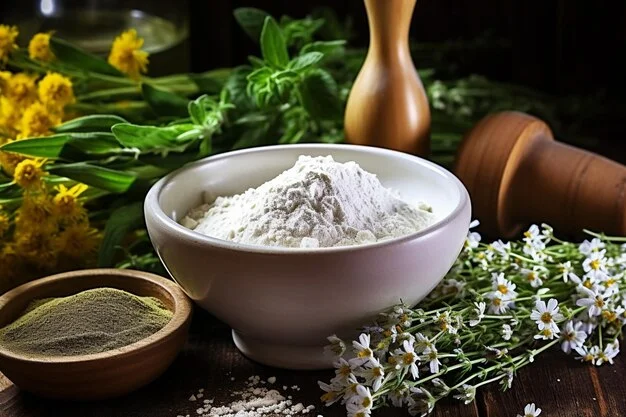
Godanti Bhasma is a classical Ayurvedic calcined preparation made from purified gypsum (calcium sulfate dihydrate, CaSO₄·2H₂O). It is one of the most widely prescribed mineral-based bhasmas in Ayurveda, primarily used to treat chronic and acute fevers, persistent headaches, cough, respiratory disorders, and bleeding conditions. The name "Godanti" literally translates to "cow's tooth" in Sanskrit — a reference to the visual resemblance of raw gypsum crystals to the teeth of a cow. After undergoing rigorous purification (Shodhana) and calcination (Marana), the raw mineral transforms into a bioavailable, nano-sized powder that the human body can safely absorb.
If you've been searching for a single, comprehensive resource that covers everything from the chemical pharmacology of Godanti Bhasma to its classical preparation method, dosage for specific conditions, drug interactions, and quality-testing parameters — this is it. Let's dive deep.
What Is Godanti Bhasma?
- Godanti Bhasma belongs to the category of Sudha Varga (calcium group) in Ayurvedic pharmacology.
- It is classified as a mineral bhasma — meaning it is derived from an inorganic substance that undergoes elaborate purification and incineration processes before it becomes therapeutically useful.
Etymology and Historical Background
The word "Godanti" comes from two Sanskrit roots: Go (cow) and Danti (tooth). Ancient Ayurvedic scholars noted that naturally occurring selenite gypsum crystals bear a striking resemblance to bovine teeth, hence the name. The earliest detailed references to Godanti Bhasma appear in Rasendra Sara Sangraha, a classical Rasa Shastra text, and it is also mentioned in Rasa Tarangini and Ayurveda Prakasha.
Historically, Vaidyas (Ayurvedic physicians) across the Indian subcontinent relied on this preparation as a frontline treatment for Jwara (fever) — particularly the kind of fever that doesn't respond easily to herbal decoctions alone. Its use has been documented for centuries, well before modern antipyretics existed.
Chemical Composition — What Happens at the Molecular Level
Raw Godanti is essentially gypsum: CaSO₄·2H₂O (calcium sulfate dihydrate). Here's what makes the bhasma process fascinating from a modern scientific standpoint:
During calcination (Marana), the gypsum is repeatedly heated in sealed crucibles at temperatures exceeding 600–900°C.
This process:
- 1.Removes the water of crystallization — converting CaSO₄·2H₂O first to bassanite (CaSO₄·½H₂O), then to anhydrite (CaSO₄)
- 2.Reduces particle size to the nanometer range — a 2011 study published in the Journal of Ayurveda and Integrative Medicine confirmed that properly prepared bhasmas contain particles in the 30–60 nm range, dramatically increasing bioavailability
- 3.Alters the crystal structure — repeated cycles of grinding with herbal juices and re-calcination create a fundamentally different material than raw gypsum
- The end product is a highly bioavailable form of calcium and sulfate ions, embedded in an organic matrix from the herbal media used during processing.
- This is not simply "burnt gypsum" — it's a nano-engineered mineral preparation that ancient texts perfected through empirical observation over centuries.
Classical Ayurvedic References
| Text | Description |
|---|---|
| Rasendra Sara Sangraha | Primary reference; details Shodhana, Marana, and therapeutic uses |
| Rasa Tarangini | Describes Godanti under Sudha Varga with quality parameters |
| Ayurveda Prakasha | Lists indications including Jwara, Shwasa, Kasa |
| Bhaishajya Ratnavali | Mentions Godanti Bhasma in fever management formulations |
Ayurvedic Properties (Rasa Panchaka) and Mechanism of Action
Understanding the Ayurvedic pharmacological profile of Godanti Bhasma helps explain why it works for the conditions it treats.
Rasa, Guna, Virya, Vipaka
| Property | Value |
|---|---|
| Rasa (Taste) | Madhura (Sweet), Kashaya (Astringent) |
| Guna (Quality) | Laghu (Light), Sheeta (Cool) |
| Virya (Potency) | Sheeta (Cooling) |
| Vipaka (Post-digestive effect) | Madhura (Sweet) |
| Prabhava (Special action) | Jwarahara (Fever-alleviating) |
Doshic Action — Why It's Called Pitta-Shamaka
Godanti Bhasma is predominantly a Pitta-pacifying formulation. Its cooling potency (Sheeta Virya) directly counteracts the heat and inflammation associated with elevated Pitta dosha. This is the Ayurvedic explanation for its remarkable efficacy in fevers, burning sensations, bleeding disorders, and inflammatory headaches.
It also has a mild Kapha-balancing action due to its Laghu (light) quality, which is why it works well in productive coughs and respiratory congestion without aggravating Kapha further — a balancing act that many Ayurvedic fever remedies struggle to achieve.
Modern pharmacological perspective: The cooling and anti-inflammatory action likely correlates with calcium ions' role in modulating inflammatory cytokine cascades. A 2019 in-vitro study from the International Journal of Pharmaceutical Sciences and Research demonstrated that Godanti Bhasma exhibited significant antipyretic and anti-inflammatory activity in animal models, comparable to standard paracetamol at therapeutic doses.
Godanti Bhasma Benefits and Uses
This is where Godanti Bhasma truly shines. Its therapeutic applications span multiple organ systems, though it's most celebrated for fever management.
Fever (Jwara) — The Primary Indication
Godanti Bhasma is considered one of the most effective Ayurvedic interventions for all types of fever:
- Acute fevers (Nava Jwara) — including viral fevers, influenza, seasonal fevers
- Chronic fevers (Jeerna Jwara) — low-grade, persistent fevers of unknown origin
- Intermittent fevers — including those resembling malarial patterns
- Post-operative fevers — as adjunctive therapy
The classical texts specifically recommend it for Sannipata Jwara (fever involving all three doshas), which is considered the most difficult type to treat.
Headache and Migraine
Godanti Bhasma is particularly effective for headaches associated with Pitta aggravation — the kind that comes with a throbbing, burning sensation, sensitivity to light, and is often worse in hot weather. Many Ayurvedic practitioners consider it a first-line treatment for chronic migraines when combined with Shirashooladi Vajra Rasa.
Cough, Cold and Respiratory Disorders
For respiratory conditions, Godanti Bhasma is typically prescribed in combination with other formulations:
- Dry cough (Shushka Kasa) — with honey as the vehicle (anupana)
- Productive cough — combined with Sitopaladi Churna
- Bronchitis and asthma (Shwasa) — as part of a multi-drug protocol
- Common cold with fever — with Tulasi Swarasa (basil juice)
Bleeding Disorders and Menorrhagia
This is a lesser-known but clinically significant use. Godanti Bhasma's astringent taste (Kashaya Rasa) and cooling potency make it effective in:
- Raktapitta (bleeding disorders) — including epistaxis (nosebleed) and bleeding gums
- Menorrhagia (heavy menstrual bleeding) — typically combined with Praval Pishti and Mukta Pishti
- Hemoptysis — coughing up blood, as adjunctive therapy
Calcium Deficiency and Bone Health
Because Godanti Bhasma is essentially a highly bioavailable calcium preparation, it serves double duty as a calcium supplement.
Ayurvedic physicians increasingly prescribe it for:
- Osteoporosis in postmenopausal women
- Growing children needing calcium supplementation
- Pregnant women (under strict medical supervision only)
- Recovery from bone fractures
Seasonal Allergies and Rhinitis
Though not a classical indication, many modern Ayurvedic practitioners report excellent results using Godanti Bhasma for allergic rhinitis and hay fever — conditions where Pitta-Kapha imbalance drives chronic nasal inflammation and sneezing.
Godanti Bhasma Dosage — How Much to Take and for How Long
Getting the dosage right is critical. Bhasmas are potent preparations, and the therapeutic window matters.
Standard Adult Dosage
| Condition | Dosage | Anupana (Vehicle) | Frequency |
|---|---|---|---|
| Fever | 250–500 mg | Honey or Tulasi Swarasa | 2–3 times daily |
| Headache/Migraine | 250–500 mg | Honey or warm water | 2 times daily |
| Cough & Cold | 125–250 mg | Honey + Sitopaladi Churna | 2–3 times daily |
| Bleeding Disorders | 250–500 mg | Ghee or cream of milk (Malai) | 2 times daily |
| Calcium Deficiency | 250 mg | Warm milk | 1–2 times daily |
| Menorrhagia | 250–500 mg | Rice water (Tandulodaka) | 2 times daily |
Maximum daily dose: Generally should not exceed 1000 mg (1 gram) per day unless specifically prescribed by a qualified Ayurvedic physician.
Dosage for Children, Pregnancy, and Lactation
Children
For children aged 5–12, the dose is typically 65–125 mg, once or twice daily with honey. Children under 5 should only receive Godanti Bhasma under direct supervision of an experienced Vaidya.
Pregnancy
Godanti Bhasma can be used during pregnancy as a calcium supplement, but only under medical supervision. The typical dose during pregnancy is 125–250 mg with warm milk. Self-medication during pregnancy is strongly discouraged.
Lactation
Generally considered safe during breastfeeding at standard therapeutic doses. However, consultation with a practitioner is still recommended.
Duration of Treatment — How Long Should You Take It?
This is a question no competitor has answered clearly, so let's fix that:
| Condition | Typical Duration |
|---|---|
| Acute fever | 3–7 days (discontinue when fever resolves) |
| Chronic fever | 2–4 weeks |
| Migraine (chronic) | 1–3 months |
| Calcium deficiency | 2–3 months |
| Bleeding disorders | 1–2 months |
| Respiratory conditions | 2–4 weeks |
Important: Godanti Bhasma is not meant for indefinite use. Periodic reassessment by your physician is essential.
Method of Preparation — Shodhana and Marana
Understanding how Godanti Bhasma is made reveals why quality varies dramatically between manufacturers — and why traditionally prepared bhasma is fundamentally different from simply heating gypsum in an oven.
Shodhana (Purification)
Raw gypsum must first be purified to remove physical and chemical impurities.
The classical method involves:
- 1.Selection — Choose translucent, white, cow-tooth-shaped gypsum pieces free from soil contamination
- 2.Boiling in Nimbu Swarasa (lemon juice) — The gypsum pieces are immersed in fresh lemon juice and boiled for 3 hours. This process removes surface impurities and begins breaking down the crystalline structure
- 3.Boiling in Dronapushpi Swarasa — A second round of boiling in the juice of Leucas cephalotes (Dronapushpi), which imparts additional therapeutic properties
- 4.Washing and drying — The purified gypsum is thoroughly washed with clean water and dried in sunlight
Marana (Calcination) — The Puta Process
This is where raw mineral becomes medicine:
- 1.Grinding (Bhavana) — Purified Godanti is ground into a fine powder and mixed with herbal juices (typically Aloe vera juice or Kumari Swarasa) to form a paste
- 2.Pellet formation — Small, flat pellets (chakrikas) are formed and dried completely
- 3.Sharava Samputa — The dried pellets are placed in an earthen saucer, covered with another saucer, and sealed with clay-impregnated cloth (multani mitti)
- 4.Puta (Heat cycle) — The sealed crucible is placed in a pit of cow dung cakes (Gaja Puta or Ardha Gaja Puta) and ignited. One Gaja Puta uses approximately 8–10 kg of dung cakes and reaches temperatures of 800–900°C
- 5.Cooling and collection — After natural cooling (Swangasheeta), the crucible is opened and the material is collected
- 6.Repetition — Steps 1–5 are repeated 3–7 times until the bhasma passes all quality tests
Bhasma Pariksha — Quality Testing Parameters
This is crucial information that no competing article covers. Classical Rasa Shastra texts describe specific tests that every bhasma must pass:
| Test | Method | Pass Criteria |
|---|---|---|
| Varitara (Floating test) | Sprinkle bhasma on water surface | Particles should float, indicating they are lighter than water and sufficiently fine |
| Rekhapurna (Finger line test) | Rub bhasma between thumb and index finger | Should fill the fingerprint lines completely, indicating nano-level fineness |
| Nirdhumata (Smokeless test) | Heat bhasma on flame | No smoke should emerge, confirming complete organic matter removal |
| Nishchandrata (Lusterless test) | Examine under sunlight | No metallic lustre should be visible |
| Apunarbhavata (Irreversibility test) | Attempt to revert to original form | Should not regain original metallic/mineral form |
If your Godanti Bhasma fails any of these tests, it is either improperly prepared or adulterated. Always buy from reputable manufacturers.
Godanti Bhasma vs Godanti Pishti — What's the Difference?
This is one of the most commonly confused topics, and no competitor has addressed it clearly.
| Parameter | Godanti Bhasma | Godanti Pishti |
|---|---|---|
| Preparation | Calcination with fire (Puta) | Cold grinding with rose water or liquid media — no fire |
| Temperature | 800–900°C | Room temperature |
| Particle size | Nano-level (30–60 nm) | Micro-level (larger particles) |
| Potency | Stronger, faster acting | Milder, gentler |
| Best for | Acute fevers, strong headaches, active bleeding | Mild Pitta conditions, general calcium supplementation, children |
| Safety profile | Requires more careful dosing | Generally safer with wider therapeutic margin |
| Classical preference | When quick, strong action needed | When gentle, sustained action desired |
Clinical insight: Many experienced Vaidyas combine both — using Godanti Bhasma for the acute phase and transitioning to Godanti Pishti for maintenance therapy.
Don't wait or self medicate. Start chat with Doctor NOW
Ayurvedic Combinations (Anupana and Yoga)
Godanti Bhasma is rarely used alone. Its therapeutic power multiplies when combined with the right companion drugs (Anupana) and formulations (Yogas).
Condition-Specific Combinations
| Condition | Combination | Rationale |
|---|---|---|
| High fever with body ache | Godanti Bhasma 250 mg + Sudarshan Churna 2 g + honey | Sudarshan Churna addresses multiple fever types; honey enhances absorption |
| Dry cough with fever | Godanti Bhasma 250 mg + Sitopaladi Churna 1 g + honey | Sitopaladi addresses respiratory mucosa; Godanti manages fever component |
| Migraine | Godanti Bhasma 250 mg + Shirashooladi Vajra Rasa 125 mg + honey | Synergistic action on cranial blood vessels |
| Menorrhagia | Godanti Bhasma 250 mg + Praval Pishti 250 mg + Mukta Pishti 125 mg + rice water | Triple calcium action with hemostatic and cooling effect |
| Pitta-type burning sensation | Godanti Bhasma 250 mg + Praval Pishti 250 mg + Giloy Satva 500 mg | Comprehensive Pitta pacification |
| Calcium deficiency | Godanti Bhasma 250 mg + Kukkutandatwak Bhasma 250 mg + warm milk | Dual calcium source for enhanced supplementation |
Side Effects, Drug Interactions, and Contraindications
Side Effects of Godanti Bhasma
When prepared correctly and taken in prescribed doses, Godanti Bhasma has an excellent safety profile.
However, potential side effects include:
- Gastric irritation — particularly when taken on an empty stomach without proper anupana
- Constipation — due to calcium content, especially at higher doses
- Heaviness in abdomen — if the bhasma is improperly prepared (under-calcinated)
- Hypercalcemia — only with prolonged, excessive use; symptoms include nausea, excessive thirst, frequent urination
Improperly prepared bhasma poses the greatest risk. Under-calcinated Godanti may contain large particles that can damage the GI mucosa and impair kidney function over time. This is why sourcing from reputable manufacturers and verifying quality standards is non-negotiable.
Drug Interactions
No competitor has addressed this, yet it's critical for patient safety:
- Thiazide diuretics — may increase calcium levels when combined with Godanti Bhasma
- Tetracycline antibiotics — calcium can reduce absorption of tetracyclines; maintain at least a 2-hour gap
- Levothyroxine — calcium interferes with thyroid hormone absorption; separate by 4 hours
- Cardiac glycosides (Digoxin) — hypercalcemia can increase digoxin toxicity
- Iron supplements — calcium competes with iron for absorption; take separately
If you're on any allopathic medication, inform both your Ayurvedic and allopathic physicians before starting Godanti Bhasma.
Contraindications
- Kidney stones (especially calcium oxalate stones) — additional calcium intake can worsen the condition
- Hypercalcemia from any cause
- Severe renal impairment — impaired calcium excretion
- Known allergy to sulfates (rare but possible)
Diet and Lifestyle During Treatment (Pathya-Apathya)
Following the right diet and lifestyle during Godanti Bhasma therapy significantly enhances outcomes.
What to Follow (Pathya)
- Light, easily digestible food — khichdi, moong dal, rice porridge
- Adequate hydration — warm water, herbal teas
- Rest during acute fever episodes
- Include cooling foods: cucumber, coriander, pomegranate, coconut water
- Ghee in moderate quantities (enhances bhasma absorption)
What to Avoid (Apathya)
- Spicy, oily, and fried foods — they aggravate Pitta
- Excessive sour foods — tamarind, vinegar, fermented items
- Alcohol and caffeine — counteract the cooling action
- Direct sun exposure during fever treatment
- Heavy exercise during acute illness
Comparative Guide — Popular Godanti Bhasma Brands in India
| Brand | Pack Size | Approximate Price (INR) | Key Feature |
|---|---|---|---|
| Baidyanath | 10 g | ₹65–80 | Most widely available; consistent quality |
| Dhootapapeshwar | 10 g | ₹95–120 | Suvarnakalpa (premium grade) available; strong classical processing tradition |
| Patanjali (Divya Pharmacy) | 10 g | ₹30–45 | Budget-friendly option; easily accessible |
| DAV Pharmacy | 10 g, 50 g, 125 g | ₹40–250 | Multiple pack sizes; follows DAV's traditional Gurukul process |
| Unjha Pharmacy | 10 g | ₹55–70 | Well-regarded among Gujarat-based practitioners |
| Basic Ayurveda | 5 g (pack of 10) | ₹200–250 | Individual sachets; convenient for travel |
Prices are approximate and may vary across platforms. Always check manufacturing and expiry dates before purchase.
Frequently Asked Questions (FAQ)
What is Godanti Bhasma made of?
Godanti Bhasma is made from natural gypsum (calcium sulfate dihydrate — CaSO₄·2H₂O). The raw gypsum undergoes Ayurvedic purification (Shodhana) using lemon juice and Dronapushpi Swarasa, followed by multiple cycles of calcination (Marana) with herbal juices until it becomes a fine, bioavailable nano-powder.
What are the main benefits of Godanti Bhasma?
The primary benefits include treating all types of fevers, chronic headaches and migraines, cough and respiratory disorders, bleeding conditions (including heavy periods), and calcium deficiency. Its cooling potency makes it especially effective for Pitta-related conditions.
Is Godanti Bhasma safe during pregnancy?
It can be used during pregnancy as a calcium supplement, but strictly under medical supervision. The typical pregnancy dose is lower (125–250 mg with warm milk). Never self-medicate with any bhasma during pregnancy.
How is Godanti Bhasma different from calcium tablets?
Unlike commercial calcium tablets (which use calcium carbonate or calcium citrate), Godanti Bhasma undergoes a traditional process that creates nano-sized particles with enhanced bioavailability. It also carries the therapeutic imprint of the herbal media used during preparation, giving it anti-inflammatory and antipyretic properties that plain calcium supplements don't offer.
Can Godanti Bhasma be taken with allopathic medicines?
Yes, but with precautions. Maintain a gap of at least 2 hours between Godanti Bhasma and antibiotics (especially tetracyclines), thyroid medications, and iron supplements. Always inform your doctor about concurrent use.
Is Godanti Bhasma safe in Chyawanprash formulations?
Yes. Some Chyawanprash formulations contain Godanti Bhasma at approximately 184 mg per 10 grams of Chyawanprash. At this concentration, it is well within safe limits and contributes to the formulation's fever-protective and calcium-supplementing properties.
How can I check if my Godanti Bhasma is genuine?
Perform the Varitara test at home — sprinkle a tiny amount of bhasma on still water. Properly prepared bhasma should float on the surface. Also, rub it between your fingers; it should be so fine that it fills your fingerprint lines (Rekhapurna test). If it feels gritty, the bhasma is likely under-processed.
What is the shelf life of Godanti Bhasma?
When stored in a cool, dry place away from direct sunlight and moisture, Godanti Bhasma can remain effective indefinitely according to classical Ayurvedic texts. However, most modern manufacturers print a shelf life of 5–10 years for regulatory compliance.
Final Thoughts — Making the Most of This Classical Ayurvedic Remedy
Godanti Bhasma represents one of Ayurveda's most elegant solutions — taking an abundant natural mineral and transforming it through meticulous processing into a powerful, safe, and versatile medicine. Whether you're dealing with a stubborn fever that won't break, chronic migraines that disrupt your life, or simply need a superior calcium supplement rooted in traditional wisdom, Godanti Bhasma deserves serious consideration.
That said, the single most important thing you can do is consult a qualified Ayurvedic practitioner before starting any bhasma. The right dose, the right anupana, the right combination, and the right duration — these details make the difference between a medicine that heals and one that simply exists in your cabinet.
Don't guess. Consult an experienced Vaidya, get a personalized prescription, and give this time-tested formulation the respect it deserves.
This article is for informational and educational purposes only. It is not a substitute for professional medical advice, diagnosis, or treatment. Always seek the guidance of a qualified Ayurvedic practitioner or healthcare provider with any questions regarding a medical condition.
Scientific Sources
- Role of Yoga in Distinctly Targeting Modifiable Risk Factors in Type 2 Diabetes to Improve Immuno-Metabolic Axis — Joshi HB et al., 2025, Journal of evidence-based integrative medicine
- Prameha in Ayurveda: correlation with obesity, metabolic syndrome, and diabetes mellitus.Part 1-etiology, classification, and pathogenesis — Sharma H et al., 2011, Journal of alternative and complementary medicine (New York, N.Y.)
- Ethnobotanical study of medicinal plants used by the Kenyah community of Borneo — Sundara Rajoo K et al., 2023, Journal of ethnopharmacology
- A critical review of rhythmic recitation of Charakasamhita as per Chhanda Shastra — Panja A, 2013, Ayu
- Neuroprotective Herbs for the Management of Alzheimer's Disease — Gregory J et al., 2021, Biomolecules
- Characteristics of Polycystic Ovary Syndrome: A Case Report Investigating the Role of Kapha and Pitta Doshas — Jadhav R et al., 2024, Cureus
- Yoga as a Preventive Intervention for Cardiovascular Diseases and Associated Comorbidities: Open-Label Single Arm Study — Sharma K et al., 2022, Frontiers in public health
- Flavonoid Myricetin as Potent Anticancer Agent: A Possibility towards Development of Potential Anticancer Nutraceuticals — Trivedi A et al., 2024, Chinese journal of integrative medicine
- Neuroadaptability and Habit: Modern Medicine and Ayurveda — Wallace RK et al., 2021, Medicina (Kaunas, Lithuania)
- Enhancing healthspan with Ashwagandha (Withania somnifera): a comprehensive review of its multifaceted geroprotective benefits — Vittal M et al., 2025, Biogerontology
- A review of Brahmavaivartapurana (BVP) with reference to Ayurveda — Varanasi S et al., 2007, Bulletin of the Indian Institute of History of Medicine (Hyderabad)
- Modulation of gut microbiota with Ayurveda diet and lifestyle: A review on its possible way to treat type 2 diabetes — Chauhan A et al., 2022, Ayu
- A century of 'The science of yoga' (1921-2021): Revival, renewal and renaissance — Vaidya ADB et al., 2023, Journal of Ayurveda and integrative medicine
- Psychodermatology: An Indian perspective — Shenoi SD et al., 2018, Clinics in dermatology
- Integrative Approach Improves Fall Risk and Postural Stability in Spinocerebellar Ataxia-2 - A Case Report — Kulamarva K et al., 2022, International journal of yoga
- Ayurvedic medicine. Core concept, therapeutic principles, and current relevance — Chopra A et al., 2002, The Medical clinics of North America
- Traditional Nutritional and Health Practices Targeting Lifestyle Behavioral Changes in Humans — Singh A et al., 2020, Journal of lifestyle medicine
- Ayurveda management of pulmonary mycosis: an integrative approach: a case report — Shankar P et al., 2023, Journal of medical case reports
- Validation of the Ayurvedic construct, Rasadhatudushti, in adults at risk of cardiovascular diseases - A mixed-method study — Rani R K R et al., 2022, Journal of Ayurveda and integrative medicine
- Management of Pandu (Iron Deficiency Anaemia) through Ayurveda — Davkare M et al., 2025, Journal of pharmacy & bioallied sciences
Questions from users
How can Godanti Bhasma aid in respiratory health improvements?
Quincy
6 days ago
Godanti Bhasma, a traditional Ayurvedic preparation made from gypsum, may aid in respiratory health by helping alleviate symptoms such as cough and respiratory disorders. It is often used for its anti-inflammatory and antipyretic properties, which can soothe irritated airways and improve overall respiratory function. Typically, noticeable improvements are observed over a few weeks when used correctly. It's crucial to ensure it's finely processed and used under the guidance of a qualified healthcare provider, especially when pregnant, to avoid potential side effects. For persistent or severe respiratory issues, consult a healthcare professional.
What is the best way to take Godanti Bhasma for maximum effectiveness?
Michael
15 days ago
The best way to take Godanti Bhasma is typically mixing it with warm milk or honey for better absorption, but the dose really depends on your specific condition and body constitution. It's super important to talk to an Ayurvedic practitioner before starting since they can suggest the right dosage and combo that's best for you. Don't forget to check the dates on it too!
What is the typical dosage of Godanti Bhasma for adults not pregnant?
Caleb
25 days ago
For adults who are not pregnant, the typical dose of Godanti Bhasma can be around 250-500 mg. However, it's really important to consult with an Ayurvedic doctor for personalized advice. Dosages might vary depending on your constitution, any specific health conditions, or imbalances you have ☺️
What is Godanti Bhasma and what are its main benefits in Ayurvedic medicine?
Evelyn
34 days ago
Godanti Bhasma is an Ayurvedic formulation made from gypsum. It's mainly used to treat headaches, migraines, and fever due to its natural cooling properties. It also helps strengthen bones and boosts the immune system. Remember, it's important to consult an Ayurvedic expert for proper dosage and use, since it can vary depending on your dosha and health condition.
What is the history behind the use of Godanti Bhasma in Ayurvedic medicine?
James
43 days ago
Godanti Bhasma has been used in Ayurveda for ages, mainly valued for its calcium content. It's made by processing gypsum and transforming it into a bio-available form through traditional methods. The use of Godanti in Ayurveda revolves around alleviating conditions like migraines, respiratory issues, and aiding bone health. If you're curious, looking into old Ayurvedic texts could offer more insight into its historical usage.
Can I use Godanti Bhasma alongside traditional medicine for better health outcomes?
Vanessa
53 days ago
Absolutely, Godanti Bhasma can be used alongside traditional medicine, but it's crucial to be careful. Combining it with other treatments might create unexpected effects. So, it's really best to consult both your Ayurvedic practitioner and your conventional healthcare provider to ensure it's safe and effective for you based on your personal health needs. Make sure your dosha and agni are considered when determining the dose.
What is the recommended way to store Godanti Bhasma to maintain its potency?
Teagan
62 days ago
To keep Godanti Bhasma potent, store it in a cool, dry place, away from sunlight and moisture. A sealed container is best to prevent contamination and maintain its quality. It's a good idea to consult an Ayurvedic expert on storage tips tailored specifically for your environment. 🙌
What is the role of calcination in making Godanti Bhasma effective for health?
Tenley
72 days ago
Calcination plays a big role in Godanti Bhasma's effectiveness. During this process, the raw material, usually gypsum, is heated in a controlled way, making it more bioavailable and easy for the body to absorb. This transformation enhances its ability to reduce inflammation, strengthen bones, and support overall metabolism, quite a fascinating process!
Is it safe to use Godanti Bhasma during pregnancy or while breastfeeding?
Ella
82 days ago
It's best to be cautious with Godanti Bhasma during pregnancy or breastfeeding. Always consult a qualified Ayurvedic practitioner before use. They can assess your unique health factors and suggest if it's appropriate for you. Safety comes first, so maybe check out other options too, just to be extra sure!
What is the best time of day to take Godanti Bhasma for optimal results?
Zayden
91 days ago
Taking Godanti Bhasma can vary depending on your health needs. Generally, it's often taken in the morning or evening after meals, but it's best to consult with an Ayurvedic practitioner to tailor it to your body's constitution and any imbalances you might have. This way, it'll support your agni (digestive fire) more effectively.
Related articles
General Medicine
Is Ashwagandha Increase Height?
Is Ashwagandha Increase Height?
6,083

General Medicine
Panchmahabhoot in Ayurveda – The Five Element Theory in Traditional Healing
Discover the profound insights of Panchmahabhoot in Ayurveda, exploring the five elements that form the foundation of Ayurvedic medicine and their applications in health, balance, and healing.
4,086

General Medicine
Ksheerabala 101 Thailam Benefits How To Use Ingredients Side Effects
Exploration of Ksheerabala 101 Thailam Benefits How To Use Ingredients Side Effects
4,076
General Medicine
Ayurvedic Treatment for Heel Pain: A Natural Path to Relief
In Ayurveda, heel pain is often attributed to an imbalance of the Vata dosha, which governs movement and dryness in the body. T
2,680

General Medicine
Khadirarishta Uses, Side Effects, Ingredients, And Dose
Exploration of Khadirarishta Uses, Side Effects, Ingredients, And Dose
3,489

General Medicine
How to Cure Anal Fissure Naturally with Ayurvedic and Home Remedies
Learn how to cure anal fissure naturally with Ayurvedic remedies, healing oils, and home care. Discover the best treatments, creams, and lifestyle practices
6,648

General Medicine
What Causes Dry Mouth and How to Treat It Naturally
What causes dry mouth? Discover common and sudden causes of dry mouth at night, plus Ayurvedic treatments for constant or extreme dry mouth
3,053
General Medicine
Nimbadi Choornam Uses: Benefits & Applications in Ayurveda
Discover the uses and benefits of Nimbadi Choornam in Ayurveda. Learn how this traditional herbal formulation supports health, boosts immunity, and promotes well-being.
3,087

General Medicine
Nishakathakadi Kashayam Uses: Evidence-Based Guide and Benefits
Discover the top Nishakathakadi Kashayam uses, backed by research. Learn its key benefits, dosage guidelines, and safety tips in our in-depth article.
3,463

General Medicine
Sanjivani Vati Benefits, Dosage, Ingredients, And Side Effects
Exploration of Sanjivani Vati Benefits, Dosage, Ingredients, And Side Effects
2,657
Related consultations on the topic
Legal
Additional Documents
© 2024 Ask Ayurveda. All rights reserved.