Ask Ayurvedic doctor a question and get a consultation online on the problem of your concern in a free or paid mode. More than 2,000 experienced doctors work and wait for your questions on our site and help users to solve their health problems every day.
FREE! Ask Ayurvedic Doctors 24/7

 Fast responses
 1000+ verified doctors
Body DetoxEar, Nose, and Throat DisordersGeriatrics & RejuvenationImmunodeficiencyInfertility TreatmentNutritionOrthopedic DisordersPediatricsRespiratory DisordersSexually Transmitted Diseases (STDs)Surgery RecoveryUrological DisordersVascular DisordersDental DisordersEndocrinological DisordersGastrointestinal DisordersYoga TherapyGeneral MedicineAllergic DisordersCardio DisordersGynecology and ObstetricsCosmetologySkin and Hair DisordersEye DisordersInfectious DiseasesMental DisordersNeurological DisordersOncologyPanchakarmaSexual Health & DisordersSports Medicine
Published on 01/21/25
(Updated on 07/07/26)
2,446
Pippalyadi Taila – Ayurvedic Oil Benefits, Uses & Applications
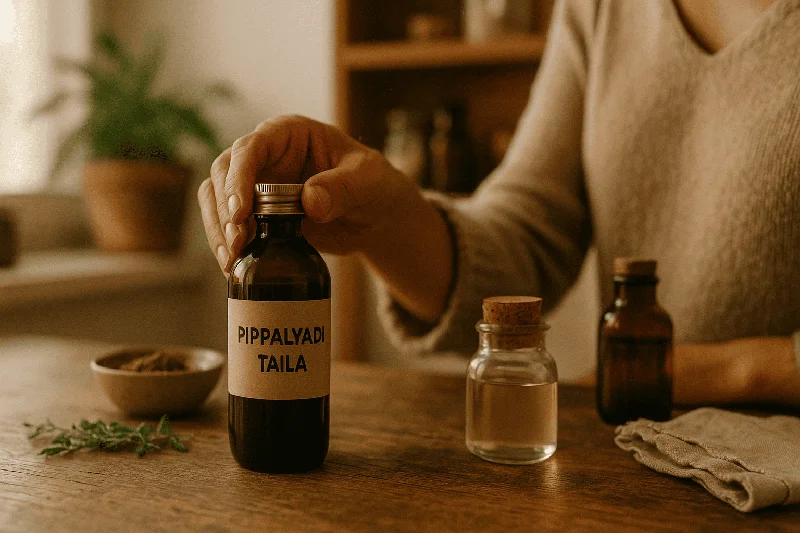
Pippalyadi Taila is a classical Ayurvedic medicated oil primarily used for Anuvasana Basti (oil enema therapy) in Panchakarma treatments. Formulated with Pippali (Long Pepper), sesame oil, cow's milk, and a synergistic blend of potent herbs, it is indicated for hemorrhoids (Arsha), lower back pain (Katishoola), constipation (Vibandha), urinary disorders (Mutrakricchra), and hernia (Antra Vriddhi). Referenced in classical texts like Ashtanga Hridaya and Sahasrayogam, this oil works by pacifying aggravated Vata dosha, strengthening Agni (digestive fire), and nourishing deep tissues.
Whether you're an Ayurvedic practitioner looking for a detailed clinical breakdown or a patient trying to understand this formulation before your Panchakarma session — this guide covers everything the existing resources don't: the mechanism behind each ingredient, step-by-step Basti procedure, dietary guidelines during treatment, and how it compares to other Basti oils.
What Is Pippalyadi Taila?
Pippalyadi Taila (also written as Pippalyadi Thailam) is a polyherbal medicated oil preparation where "Pippalyadi" indicates that Pippali (Piper longum) is the chief ingredient, and "Taila" denotes it is an oil-based formulation. The base is Tila Taila (sesame oil), which is processed with Go-Dugdha (cow's milk) and a group of herbs following the classical Taila Paka Vidhi (oil cooking method).
Meaning and Etymology
The name breaks down simply:
- Pippaly — derived from "Pippali," the Sanskrit name for Long Pepper
- Adi — meaning "and others" or "beginning with," indicating Pippali leads the herb group
- Taila — meaning oil (specifically sesame oil in Ayurvedic pharmacology)
So, Pippalyadi Taila literally means "the oil formulation beginning with Pippali."
Classical References (Ashtanga Hridaya, Sahasrayogam)
This formulation is documented in multiple classical Ayurvedic treatises:
- Ashtanga Hridaya — Chikitsa Sthana, Chapter 7 (Arsha Chikitsa / Treatment of Hemorrhoids). This is widely considered the primary reference. The specific verse describes it as an Anuvasana Basti oil for Arsha management.
- Sahasrayogam — Taila Prakarana (Oil Section), where it is listed among therapeutic oils for Vata-predominant conditions.
- Charaka Samhita — References to similar Pippali-based formulations appear in Siddhi Sthana, in the context of Basti therapy protocols.
The original Sanskrit shloka from Ashtanga Hridaya describes the oil's composition and indicates its use specifically as an Anuvasana Basti dravya (substance for oil enema).
Pippalyadi Taila vs Pippalyadi Anuvasana Thailam — Are They the Same?
This is a question that confuses many people, and honestly, no competitor has clarified it properly.
Here's the deal:
Pippalyadi Taila and Pippalyadi Anuvasana Thailam refer to the same formulation. The term "Anuvasana" is added by some manufacturers (like Sitaram Ayurveda and Kairali) to specify the intended mode of administration — Anuvasana Basti. It doesn't indicate a different recipe or composition. Think of it as a labeling convention rather than a pharmacological distinction.
However, the oil can occasionally be used for purposes beyond Anuvasana Basti (like external application), which is why some texts and manufacturers use the shorter name "Pippalyadi Taila" without restricting it to Basti usage.
Ingredients and Composition of Pippalyadi Taila
The formulation contains a carefully selected group of herbs processed in sesame oil with cow's milk. Each ingredient serves a specific therapeutic role.
Complete Ingredient List with Botanical Names
| Sanskrit Name | Botanical / English Name | Part Used | Proportion |
|---|---|---|---|
| Pippali | Piper longum (Long Pepper) | Fruit | 1 part |
| Pippali Moola | Piper longum (Long Pepper Root) | Root | 1 part |
| Chitraka | Plumbago zeylanica (Leadwort) | Root | 1 part |
| Shunti (Nagara) | Zingiber officinale (Ginger) | Rhizome | 1 part |
| Yashtimadhu (Madhuka) | Glycyrrhiza glabra (Licorice) | Root | 1 part |
| Saindhava Lavana | Rock Salt | — | 1 part |
| Guda (Jaggery) | Sugarcane jaggery | — | 1 part |
| Tila Taila | Sesamum indicum (Sesame Oil) | Seed oil | 4 parts (base) |
| Go-Dugdha (Goksheeram) | Cow's Milk | — | 4 parts (liquid media) |
Note: Proportions may vary slightly between Ashtanga Hridaya and Sahasrayogam versions, but the core herb group remains consistent.
Why Each Ingredient Matters — Mechanism of Action
This is something no other resource explains properly. Let's break down the pharmacological rationale for each component:
- Pippali (Long Pepper) — The star ingredient. Acts as a powerful Yogavahi (bioenhancer) that increases the bioavailability of other herbs. It is Deepana (appetizer) and Pachana (digestant), directly stimulating Agni.
- Pippali also has Vatanulomana action — it directs Vata downward, which is critical for Basti therapy.
Pippali Moola (Long Pepper Root) — Stronger Vata-pacifying action than the fruit. Specifically indicated for Shoola (colic pain), Gulma (abdominal mass), and Anaha (bloating). Its inclusion addresses the root-level Vata obstruction in conditions like hemorrhoids and hernia. Chitraka (Leadwort) — One of the most potent Agni Deepana (digestive fire stimulant) herbs in Ayurveda. In this formulation, it combats the sluggish metabolism (Mandagni) that is considered the root cause of Arsha (hemorrhoids) according to Ayurvedic pathology. Shunti (Dry Ginger) — Called "Vishwabheshaja" (universal medicine) in Ayurveda. It is anti-inflammatory (Shothahara), analgesic, and improves circulation. Its Ushna Virya (hot potency) helps counter the cold quality of aggravated Vata. Yashtimadhu (Licorice) — This is the balancing agent. While other herbs are heating, Yashtimadhu is Sheeta Virya (cooling potency), preventing the formulation from becoming excessively hot. It is also Mutra Virechaniya (mild diuretic) and has significant anti-inflammatory and wound-healing properties — crucial for fissures and inflamed hemorrhoidal tissue. Saindhava Lavana (Rock Salt) — Acts as a Sukshma Marganusari, meaning it penetrates fine channels (Srotas). It enhances absorption of the oil during Basti and has mild laxative properties. Also reduces Vata and Kapha without aggravating Pitta. Guda (Jaggery) — Provides Brimhana (nourishing) quality. Counterbalances the Lekhana (scraping) nature of other hot herbs. Also acts as Anulomana (mild laxative), supporting smooth elimination. Tila Taila (Sesame Oil) — The ideal base for any Vata-pacifying formulation. Sesame oil is considered "best among oils" in Ayurveda (Charaka Samhita, Sutra Sthana 13). It is Ushna, Guru, penetrating, and has inherent Vata-shamaka properties. Go-Dugdha (Cow's Milk) — Used as the liquid medium during processing. Milk extracts water-soluble active compounds from herbs and adds Madhura (sweet) and Sheeta (cooling) qualities, balancing the formulation's overall thermal nature.
Pharmacological Properties (Rasa-Guna-Virya-Vipaka-Dosha)
| Property | Pippalyadi Taila |
|---|---|
| Rasa (Taste) | Predominantly Katu (pungent), Madhura (sweet), Lavana (salty) |
| Guna (Quality) | Snigdha (unctuous), Ushna (warm), Teekshna (penetrating) |
| Virya (Potency) | Ushna (hot) — moderated by Yashtimadhu and milk |
| Vipaka (Post-digestive effect) | Madhura (sweet) |
| Dosha Action | Primarily Vata Shamaka; balances Kapha in moderate doses; may mildly increase Pitta in excess |
Key Benefits of Pippalyadi Taila
How Does It Help in Hemorrhoids (Arsha)?
Hemorrhoids is the primary classical indication.
The oil works through multiple mechanisms:
- 1.Corrects Mandagni — Pippali, Chitraka, and Shunti collectively restore digestive fire, addressing the root cause of hemorrhoid formation according to Ayurveda
- 2.Vatanulomana — Normalizes the downward movement of Apana Vayu, relieving constipation that aggravates piles
- 3.Shothahara (Anti-inflammatory) — Yashtimadhu and sesame oil reduce swelling of hemorrhoidal tissue
- 4.Wound healing — When administered as Basti, the oil directly contacts the rectal mucosa and promotes tissue repair
A comparative clinical study published on ResearchGate evaluated Matra Basti with Pippalyadi Taila versus Ashtakatvara Taila in patients with Katishoola (lower back pain). The study demonstrated that Pippalyadi Taila group showed statistically significant improvement in both pain reduction and functional capacity, supporting its efficacy in Vata-predominant conditions.
Does It Help with Constipation (Vibandha)?
Yes. When used as Anuvasana Basti, the oil lubricates the colon, softens stool, and facilitates Vata's natural downward movement. The Saindhava Lavana and Guda components add mild laxative action. Unlike harsh purgatives, this approach works gently without depleting the body's moisture — which is why it's preferred for chronic constipation in elderly or debilitated patients.
Benefits for Lower Back Pain (Katishoola) and Musculoskeletal Conditions
Pippalyadi Taila is increasingly used in clinical practice for:
- Katishoola (Lower back pain) — through Matra Basti administration
- Lumbar spondylosis — the oil's Vata-pacifying and anti-inflammatory properties address degenerative spinal conditions
- Gridhrasi (Sciatica) — by correcting Apana Vayu dysfunction
- Gout (Vatarakta) — Yashtimadhu and the cooling elements help manage inflammatory joint conditions
Additional Therapeutic Benefits
- Mutrakricchra (Dysuria / Difficult urination) — relaxes smooth muscle in the urinary tract
- Antra Vriddhi (Hernia) — strengthens the abdominal musculature and reduces Vata obstruction
- General Vata disorders — tremors, dryness, nerve pain, muscle stiffness
- Skin conditions — when applied externally, may help with dryness and certain inflammatory skin conditions (though this is a secondary use not extensively documented in classical texts)
How to Use Pippalyadi Taila — Mode of Administration
Anuvasana Basti: Step-by-Step Procedure
This is the primary and most important method of administration. Here is what the actual procedure looks like in clinical practice — something no other online resource has detailed:
Pre-Procedure Preparation (Purva Karma)
- 1.Patient assessment — Confirm the patient is suitable for Anuvasana Basti (no contraindications like acute diarrhea or fever)
- 2.Abhyanga and Swedana — Perform oil massage on the lower abdomen and lumbar region, followed by localized fomentation (sudation) to open the Srotas
- 3.Oil preparation — Warm Pippalyadi Taila to lukewarm temperature (approximately 38-40°C / body temperature). Never use hot oil.
- 4.Patient positioning — Left lateral position (Vama Parshva Shayana) with the left leg extended and right leg flexed at the knee and hip
Main Procedure (Pradhana Karma)
- 5.Dosage — For Anuvasana Basti: typically 60–120 ml of oil.
- For Matra Basti (a smaller, milder version): 30–60 ml
- 6.Administration — Using a Basti Yantra (enema syringe/equipment), the warmed oil is gently introduced through the rectum
- 7.Post-insertion — The patient is asked to take deep breaths and remain in the left lateral position for 5–10 minutes, then turn supine
- 8.Retention time — Ideally the oil should be retained for 3–6 hours or until the natural urge for defecation arises. In Anuvasana Basti, longer retention is considered beneficial
Post-Procedure Care (Paschat Karma)
- 9.Rest — The patient should rest and avoid heavy physical activity for the remainder of the day
- 10.Diet — Light, warm, freshly cooked food.
- Specifically recommended: rice gruel (Peya), mung dal soup, warm water
- 11.Observation — Monitor for proper evacuation of oil and any adverse reactions
Matra Basti — The Gentler Alternative
Matra Basti uses a smaller dose (30–60 ml) and can be administered daily without the strict preparatory procedures required for full Anuvasana Basti.
It's more practical for outpatient settings and suitable for:
- Elderly patients
- Patients with mild to moderate symptoms
- Long-term maintenance therapy
- Those who cannot tolerate full Basti protocols
External Application (Abhyanga)
While the classical indication is predominantly Basti, Pippalyadi Taila can be used for external massage in certain situations:
- Lower back massage for Katishoola
- Abdominal massage for bloating and constipation
- Application on feet (Pada Abhyanga) — mentioned in some traditional practices for improving sleep and calming Vata
Warm the oil slightly, apply to the affected area, and massage in circular motions for 15-20 minutes. Follow with Swedana (warm fomentation) for enhanced absorption.
Duration of Treatment Course
| Condition | Basti Type | Recommended Duration |
|---|---|---|
| Hemorrhoids (mild-moderate) | Matra Basti | 7–14 days |
| Chronic constipation | Anuvasana Basti | 8–16 sessions (part of Yoga Basti or Karma Basti protocol) |
| Lower back pain | Matra Basti | 14–21 days |
| Spondylosis | Matra Basti | 21–30 days |
| General Vata balancing | Matra Basti | 7–14 days |
These are general guidelines. Actual duration should be determined by a qualified Ayurvedic physician based on individual assessment.
Pippalyadi Taila vs Other Basti Oils — When to Choose What
This comparison doesn't exist anywhere else online, and it's something practitioners genuinely need:
| Oil | Primary Indication | Dosha Action | Key Differentiator |
|---|---|---|---|
| Pippalyadi Taila | Hemorrhoids, constipation, lower back pain | Vata ↓, Agni ↑ | Strong digestive fire stimulation + Vata pacification |
| Dashamoola Taila | General Vata disorders, post-delivery care | Vata ↓↓ | Broad-spectrum Vata pacification, less Agni-focused |
| Sahachara Taila | Sciatica, neuromuscular conditions | Vata ↓↓ | Specific for nerve-related Vata (Sahachara is a key Vatahara herb) |
| Bala Taila | Weakness, debility, paralysis | Vata ↓, Bala ↑ | Nourishing and strengthening (Brimhana action) |
| Ksheerabala Taila | Neurological conditions, facial palsy | Vata ↓, Pitta ↓ | Cooling, nourishing — suited for Vata-Pitta conditions |
When to specifically choose Pippalyadi Taila:
- When Mandagni (weak digestive fire) is the root cause
- When hemorrhoids or constipation coexists with back pain
- When the patient has Ama (toxins) along with Vata aggravation — the Agni-stimulating herbs help clear Ama while the oil pacifies Vata
Diet and Lifestyle During Treatment (Pathya-Apathya)
No competitor covers this, yet it's absolutely essential for therapeutic success. In Ayurveda, Basti treatment without proper Pathya is like planting seeds in barren soil.
Recommended (Pathya)
- Foods: Light, warm, freshly cooked meals. Mung dal, rice, ghee, warm soups, cooked vegetables (bottle gourd, pumpkin, pointed gourd), buttermilk with roasted cumin
- Liquids: Warm water, ginger tea, cumin-coriander-fennel tea
- Lifestyle: Adequate rest, gentle walking, regular sleep schedule, warm oil self-massage (Abhyanga)
To Avoid (Apathya)
- Foods: Cold, dry, raw foods. Excessive spicy or fried foods. Heavy meats, fermented foods, stale/leftover food, cold beverages, ice cream
- Substances: Alcohol, tobacco, excessive caffeine
- Activities: Vigorous exercise, heavy lifting, long-distance travel, suppression of natural urges (especially the urge for defecation, urination, and passing gas), staying up late, excessive sexual activity during the treatment period
- Psychological: High stress, anger, anxiety — these aggravate Vata and undermine treatment
Don't wait or self medicate. Start chat with Doctor NOW
How to Prepare Pippalyadi Taila at Home (Taila Paka Vidhi)
For practitioners or advanced students who want to understand the preparation process:
Classical Method
- 1.Prepare Kalka (herb paste): Grind equal parts of Pippali, Pippali Moola, Chitraka, Shunti, Yashtimadhu, Saindhava Lavana, and Guda into a fine paste using small quantity of water. Total Kalka = 1 part.
- 2.Combine liquids: Mix 4 parts Tila Taila (sesame oil) with 4 parts Go-Dugdha (cow's milk).
- 3.Cook together: Add the Kalka to the oil-milk mixture in a wide, heavy-bottomed vessel. Heat on mild flame.
- 4.Monitor Paka stages:
- Mridu Paka (soft stage) — Kalka is soft when rolled between fingers. Oil is still mixed with moisture. Suitable for Basti and internal use.
- Madhyama Paka (medium stage) — Kalka forms a wick-like consistency when rolled. Moisture is mostly evaporated. Ideal for both Basti and external application.
- Khara Paka (hard stage) — Kalka is hard and brittle. Used only for external application.
For Anuvasana Basti, Mridu Paka is preferred.
- 5.Tests for readiness: Drop water into the oil — if it crackles without sputtering, the water phase (milk) has evaporated. The oil should have a pleasant aroma and the characteristic color of the herbs.
- 6.Filter: Strain through clean muslin cloth while still warm. Store in glass or food-grade containers.
Self-preparation requires proper training. Incorrect processing can alter the oil's properties or create harmful compounds. Always train under an experienced Vaidya before attempting DIY preparation.
Side Effects, Contraindications & Drug Interactions
Side Effects
When used under proper medical supervision and in recommended doses, Pippalyadi Taila is generally well-tolerated.
However, possible side effects include:
- Mild burning sensation in the anal canal during Basti (due to Ushna Virya herbs)
- Loose stools or increased bowel frequency initially
- Mild abdominal cramping in sensitive individuals
- Allergic reactions (rare) — particularly in patients with sesame allergy
Specific Contraindications
This is another area where competitors are vague.
Here are the concrete contraindications:
- Acute diarrhea (Atisara) — Basti is contraindicated during active diarrhea
- Acute fever (Jwara) — Any Sneha (oleation) therapy is avoided during fever
- Acute inflammatory conditions of the GI tract — Active colitis, Crohn's flare, acute gastroenteritis
- Rectal bleeding (active) — Unless specifically directed by a physician
- Diabetes mellitus (uncontrolled) — Guda (jaggery) component may be problematic
- Children under 7 years — Basti is generally not administered; if needed, Matra Basti with very small doses under strict supervision
- Intestinal obstruction or perforation — Absolute contraindication
- Immediately after meals — Anuvasana Basti should be given after light food, not heavy meals
Pregnancy and Lactation
- Pregnancy: Basti procedures are generally avoided during the first trimester. During the second and third trimesters, mild Matra Basti may be administered by an experienced physician for specific conditions, but this requires careful assessment.
- Lactation: Can be used with medical supervision. No known adverse effects on breast milk, but consult your Ayurvedic doctor.
Interaction with Other Medicines
- Ayurvedic medicines: Generally compatible with other Vata-pacifying formulations. Avoid concurrent use with strong Virechana (purgative) drugs as it can cause excessive downward movement.
- Allopathic medicines: If taking blood thinners (anticoagulants), consult both your allopathic and Ayurvedic doctor — Pippali has mild blood-thinning properties. Diabetic patients on hypoglycemic drugs should monitor blood sugar due to jaggery content.
- Time gap: Maintain at least 30 minutes gap between Pippalyadi Taila administration and any oral allopathic medication.
Where to Buy and How to Identify Authentic Product
Reputable Manufacturers
Look for GMP-certified Ayurvedic manufacturers.
Some well-known producers of Pippalyadi Taila include:
- Kairali Ayurvedic Products
- Sitaram Ayurveda
- AVN Ayurveda Formulations
- Kottakkal Arya Vaidya Sala
- Nagarjuna Ayurveda
Quality Checks
- Label should mention: Complete ingredient list, batch number, manufacturing date, expiry date, GMP certification
- Shelf life: Typically 3 years from manufacturing when sealed; 1 year after opening
- Appearance: Clear, dark golden-brown oil with a characteristic pungent-aromatic smell
- Storage: Cool, dry place away from direct sunlight. Keep the lid tightly closed.
- Red flags: Rancid smell, cloudy appearance, sediment at the bottom (some fine sediment is normal, but excessive amounts indicate poor filtration)
Frequently Asked Questions (FAQ)
What is Pippalyadi Anuvasana Thailam?
It is the same formulation as Pippalyadi Taila. The word "Anuvasana" is added to specify that the oil is primarily intended for Anuvasana Basti (oil enema) therapy, which is a part of Panchakarma treatment. The composition and preparation method remain identical.
What is Pippalyasavam used for, and is it the same as Pippalyadi Taila?
No, these are completely different formulations. Pippalyasavam (also known as Pippalyasava) is a fermented liquid preparation (Asava) used internally for digestive disorders, cough, and respiratory conditions. Pippalyadi Taila is a medicated oil used primarily for Basti. They share Pippali as a common ingredient but differ in form, preparation, and indication.
Is Pippali good for lungs?
Yes, Pippali (Long Pepper) is one of Ayurveda's most valued herbs for respiratory health. It is Kaphahara (reduces Kapha), a bronchodilator, and enhances lung capacity. However, in Pippalyadi Taila, the respiratory benefits of Pippali are secondary — the formulation is designed for rectal and lower abdominal conditions through Basti therapy.
How to remove piles by Ayurvedic methods?
Ayurveda approaches hemorrhoids (Arsha) through multiple strategies: Basti therapy (including Pippalyadi Taila), oral medicines (like Arshkuthar Ras, Abhayarishta), dietary modification (high-fiber, warm foods), Kshara Karma (alkaline cauterization for advanced stages), and lifestyle changes. Pippalyadi Taila Anuvasana Basti is specifically recommended for Grade 1-2 hemorrhoids with predominant Vata involvement.
What is Pippalyadi Churna and how is it related?
Pippalyadi Churna is the powdered form of the same herb group used in Pippalyadi Taila (minus the oil and milk). It can be used orally for digestive issues. In fact, the Kalka (paste) used during Pippalyadi Taila preparation is essentially the churna mixed with water. The Churna addresses similar conditions from an internal medicine perspective, while the Taila is designed for Basti and external use.
Can I use Pippalyadi Taila without a doctor's supervision?
- For external application (massage on lower back, joints, or feet), you can use it with general precautions. However, for Anuvasana Basti or Matra Basti, always consult a qualified Ayurvedic physician.
- Basti is a specialized procedure — incorrect administration can lead to complications including rectal injury, electrolyte imbalance, or worsening of symptoms.
How long does it take to show results?
For Basti therapy, most patients report noticeable improvement within 5–7 sessions for hemorrhoids and constipation. Lower back pain may require 10–14 sessions. Chronic conditions like spondylosis may need 21–30 sessions combined with other Panchakarma procedures. Individual results vary based on disease severity, patient constitution, and adherence to Pathya (dietary regimen).
Conclusion
Pippalyadi Taila is not just another Ayurvedic oil — it's a precisely designed therapeutic formulation that addresses the root cause of Vata-predominant diseases through its unique combination of Agni-stimulating and Vata-pacifying herbs. Its primary strength lies in Anuvasana Basti therapy, where it directly delivers medicinal compounds to the colon — the seat of Vata dosha.
The key to getting real results from this oil lies in three things: proper diagnosis by a qualified Ayurvedic doctor, correct administration technique, and strict adherence to Pathya-Apathya guidelines during the treatment course.
If you're considering Pippalyadi Taila for hemorrhoids, chronic constipation, lower back pain, or any other Vata condition, consult a certified Ayurvedic practitioner who can assess your Prakriti (constitution), Vikriti (current imbalance), and design a personalized Basti protocol. Self-treatment with Basti procedures is not recommended.
Disclaimer: This article is for educational purposes only and should not replace professional medical advice. Always consult a qualified Ayurvedic physician before starting any treatment. The information provided here is based on classical Ayurvedic texts and available clinical literature.
Scientific Sources
- An Insight of Clinical Evidence of Ayurveda Interventions in the Management of COVID-19 Patients — Maideen NMP et al., 2022, Infectious disorders drug targets
- Chinese herbal medicine-derived extracellular vesicles as novel biotherapeutic tools: present and future — Zhang J et al., 2024, Journal of translational medicine
- Efficacy of herbal medicine (cinnamon/fennel/ginger) for primary dysmenorrhea: a systematic review and meta-analysis of randomized controlled trials — Xu Y et al., 2020, The Journal of international medical research
- A critical review of Ginger's (Zingiber officinale) antioxidant, anti-inflammatory, and immunomodulatory activities — Ayustaningwarno F et al., 2024, Frontiers in nutrition
- Ayurvedic Herbal Medicines: A Literature Review of Their Applications in Female Reproductive Health — Patibandla S et al., 2024, Cureus
- Zingiber officinale var. rubrum: Red Ginger's Medicinal Uses — Zhang S et al., 2022, Molecules (Basel, Switzerland)
- Piperine: A review of its biological effects — Haq IU et al., 2021, Phytotherapy research : PTR
- Health Benefits of Culinary Herbs and Spices — Jiang TA, 2019, Journal of AOAC International
- [Liver Injury Associated with Turmeric-A Growing Problem: Ten Cases from the Drug-Induced Liver Injury Network [DILIN]](https://pubmed.ncbi.nlm.nih.gov/36252717/) — Halegoua-DeMarzio D et al., 2023, The American journal of medicine
- Herbal formulation "turmeric extract, black pepper, and ginger" versus Naproxen for chronic knee osteoarthritis: A randomized, double-blind, controlled clinical trial — Heidari-Beni M et al., 2020, Phytotherapy research : PTR
- Aromatherapy and Essential Oils: Holistic Strategies in Complementary and Alternative Medicine for Integral Wellbeing — Caballero-Gallardo K et al., 2025, Plants (Basel, Switzerland)
- Properties of macerated herbal oil — Kantawong F et al., 2017, BioImpacts : BI
- Kampo herbal ointments for skin wound healing — Paul-Traversaz M et al., 2023, Frontiers in pharmacology
- Daily intranasal sesame oil instillation to improve nasal barrier function and mucosal immunity for respiratory health: A pilot randomized trial in healthy adults — Chaturvedi S et al., 2025, Complementary therapies in medicine
- Role of natural products in alleviation of rheumatoid arthritis-A review — Sharma D et al., 2021, Journal of food biochemistry
- Oil pulling for maintaining oral hygiene - A review — Shanbhag VK, 2017, Journal of traditional and complementary medicine
- Natural Oils for Skin-Barrier Repair: Ancient Compounds Now Backed by Modern Science — Vaughn AR et al., 2018, American journal of clinical dermatology
- Herbal Remedies for Hair Loss: A Review of Efficacy and Safety — Ahmed A et al., 2025, Skin appendage disorders
- The effect of oil pulling with coconut oil to improve dental hygiene and oral health: A systematic review — Woolley J et al., 2020, Heliyon
- African oils in dermatology — Ayanlowo O et al., 2022, Dermatologic therapy
- Coconut Oil and Immunity: What do we really know about it so far? — Joshi S et al., 2020, The Journal of the Association of Physicians of India
Questions from users
What other conditions can Pippalyadi Taila help beyond hemorrhoids?
Caroline
6 days ago
Pippalyadi Taila can also help manage lower back pain, constipation, urinary disorders, and hernia. This herbal oil, made with ingredients like long pepper and sesame oil, is used in traditional therapies beyond hemorrhoids due to its potential benefits for these conditions. For issues like lower back pain or constipation, it may be applied topically or used in specific Ayurvedic procedures like Anuvasana Basti, a type of enema. However, symptom relief varies and effectiveness can be subjective. It's important to consult with a healthcare provider to determine its suitability for your condition and avoid self-prescribing, especially if symptoms persist or worsen.
Can I use Pippalyadi Taila for external application on sore muscles?
Theodore
15 days ago
Absolutely, you can use Pippalyadi Taila for sore muscles. It's not just for Basti, it's fine for external application too. The warming nature of the herbs might help relax those tense muscles. Just make sure to do a patch test first to check for any skin sensitivities. If your muscles are sore due to Vata imbalance, using this oil externally can help pacify that!
What is the shelf life of Pippalyadi Taila and how can I tell if it's gone bad?
Shayla
25 days ago
The shelf life of Pippalyadi Taila is usually around 1-2 years if stored properly. Keep it in a cool, dry place away from direct sunlight. You'll know it's gone bad if it has a rancid smell, becomes cloudy, or there's excessive sediment in it. A bit of sediment is normal, but if it's lots, the quality might be off.
What is the best way to store Pippalyadi Taila to preserve its effectiveness?
Summer
38 days ago
To store Pippalyadi Taila properly, keep it in a cool, dark place away from direct sunlight and heat. Use a glass bottle with a tight lid to keep it safe from moisture and air exposure. If you're in a humid climate, a fridge can do the trick, but make sure it stays at room temperature before using!
Can I combine Pippalyadi Taila with other oils for better therapeutic effects?
Landon
48 days ago
Yes, you can combine Pippalyadi Taila with other oils, like sesame or coconut, to balance its warming nature or enhance specific therapeutic effects. Just keep in mind your dosha type and any particular imbalance. Always great to chat with an Ayurvedic practitioner first to make sure it's the right mix for you. 😊
What is the traditional role of oils like Pippalyadi Taila in Ayurveda for overall health?
Samuel
58 days ago
Pippalyadi Taila, traditionally, is used for balancing doshas, especially Vata and Kapha. It penetrates deeply into the tissues, which can improve circulation, relieve pain, and calm the mind. It’s also known to help with digestion and inflammation—making it a versatile remedy in Ayurveda!
Can I use Pippalyadi Taila for enhancing skin health during massage therapy?
Addison
67 days ago
Absolutely, you can! Pippalyadi Taila isn't just for aches and pains—it can indeed enhance skin health. Its active compounds help improve circulation and nourishment at a deep level, which can leave your skin feeling rejuvenated and nourished. Just be sure to patch test first, as everyone's skin is unique.
What is the best way to perform Abhyanga using Pippalyadi Taila for digestive issues?
Zuri
77 days ago
To do Abhyanga with Pippalyadi Taila for digestion, warm a little oil and gently massage your abdomen in circular motions, clockwise. Focus around your navel area to stimulate agni (digestive fire). Do this in the morning ideally, on an empty stomach! Just be gentle, like you're giving your belly a nice hug 😊. If issues persist, it might be helpful to consult an Ayurvedic practitioner.
Can I use Pippalyadi Taila for reducing anxiety and stress during massage?
Asher
86 days ago
Yeah, you can definitely use Pippalyadi Taila for reducing anxiety and stress during massage. Its calming effects on the nervous system can help. Just make sure to check with a qualified practitioner for personalized advice 'cause every body is different - you never know, right?
Is Pippalyadi Taila safe to use during pregnancy or breastfeeding?
Lucas
96 days ago
It's best to be cautious with Pippalyadi Taila during pregnancy or breastfeeding. While it's usually safe for many, these are sensitive times, and individual responses can vary. I'd recomend consulting an Ayurvedic practitioner to get personalized guidance for your specific situation. They can help make sure everything is safe for you and baby!
Related articles

Orthopedic Disorders
Katigraha in Ayurveda – Natural Relief for Lower Back Pain
Discover Ayurvedic insights and natural remedies for Katigraha. Learn how traditional treatments, herbal therapies, and lifestyle adjustments can ease lower back pain and improve mobility.
3,054

Orthopedic Disorders
An Ayurvedic Guide to Managing Joint and Muscle Pain
Joint and muscle pain is a common problem that affects people of all ages.
3,349

Orthopedic Disorders
Torchnil Capsule
Exploration of Torchnil Capsule
2,566

Orthopedic Disorders
Maharasnadi Kashayam – Benefits, Dose, Side Effects, Ingredients, Reference
Exploration of Maharasnadi Kashayam – Benefits, Dose, Side Effects, Ingredients, Reference
3,643

Orthopedic Disorders
Rumalaya Forte Tablet
Exploration of Rumalaya Forte Tablet
4,292
Orthopedic Disorders
Rasnadi Kwath Uses – Ayurvedic Herbal Decoction for Pain Relief
Explore the uses of Rasnadi Kwath in Ayurveda for managing pain and inflammation. Learn how this traditional herbal decoction supports joint health, alleviates discomfort, and promotes overall wellness.
2,548

Orthopedic Disorders
Ayurvedic Treatment for Muscle Stiffness: Real Help or Just Hype?
So, muscle stiffness. That annoying, sometimes borderline-debilitating feeling of being locked up from the inside out. We've all felt it — maybe after a hard workout, during flu season, or just from sitting like a shrimp for eight hours at the desk. But f
2,656
Orthopedic Disorders
Marmani Vati: Ayurvedic Remedy for Calm and Clarity
Discover Marmani Vati, an Ayurvedic herbal formulation. Learn about its traditional uses, benefits, dosage, and how it supports holistic well-being.
2,906

Orthopedic Disorders
How Can Ayurveda Help You in Healing Fractures Faster?
Fractures can be a painful and often slow-healing issue, requiring both time and care to mend effectively.
3,969

Orthopedic Disorders
Lakshadi Oil Benefits, How To Use, Ingredients, Side Effects
Exploration of Lakshadi Oil Benefits, How To Use, Ingredients, Side Effects
2,199
Related consultations on the topic
Legal
Additional Documents
© 2024 Ask Ayurveda. All rights reserved.