FREE! Ask Ayurvedic Doctors 24/7

 Fast responses
 1000+ verified doctors
Ayurvedic Medicine for Tooth Pain – Natural Remedies for Dental Health

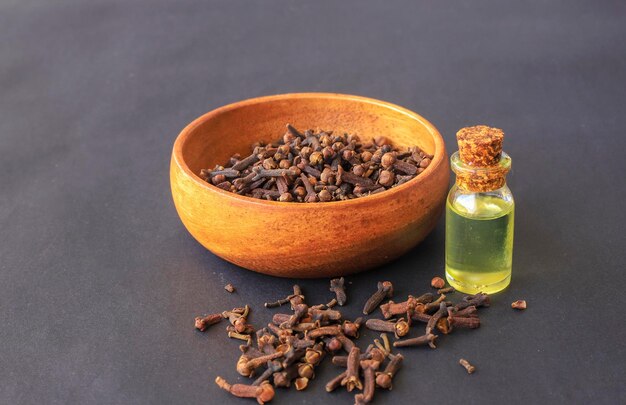
Clove oil (Lavanga Taila) is the single most effective ayurvedic medicine for tooth pain — its active compound eugenol is a clinically proven analgesic and antiseptic that numbs nerve endings within minutes. But clove oil is just the beginning. Ayurveda offers a complete system of herbal remedies, oil-based therapies, dietary adjustments, and preventive rituals that address not just the symptom of pain, but the root imbalance causing it. In this guide, we'll walk through every proven ayurvedic remedy for dental pain, explain when each one works best, provide exact dosages, and — just as importantly — tell you when to stop self-treating and see a dentist.
Ayurvedic Understanding of Tooth Pain (Dant Shool)
Ayurveda doesn't treat tooth pain as an isolated symptom. Classical texts like the Sushruta Samhita and Ashtanga Hridaya categorize dental diseases under Mukha Roga (diseases of the oral cavity), with specific subtypes for tooth-related conditions:
- Dant Roga — diseases of the tooth itself (decay, fracture, erosion)
- Dantamula Roga — diseases of the gum and tooth root (abscess, periodontitis)
- Dant Shool — toothache as a primary symptom
The Sushruta Samhita (Nidana Sthana, Chapter 16) describes 8 types of dental diseases linked to dosha imbalances. Understanding which dosha is involved helps you pick the right remedy.
How Each Dosha Causes Different Types of Tooth Pain
| Dosha | Type of Pain | Associated Symptoms | Common Cause |
|---|---|---|---|
| Vata | Sharp, throbbing, radiating pain that comes and goes | Sensitivity to cold air and cold water, receding gums, cracking teeth | Dry foods, irregular eating, teeth grinding (bruxism) |
| Pitta | Burning, intense, constant pain | Bleeding gums, yellowish discoloration, bad breath, fever | Spicy foods, acidic drinks, tobacco |
| Kapha | Dull, heavy, persistent ache | Swollen gums, sticky saliva, white coating on tongue, mild pain | Sweet/sticky foods, poor oral hygiene, excess dairy |
This classification isn't just theoretical. It determines which herbs, oils, and dietary changes will work best for your specific type of tooth pain.
What Causes Tooth Pain According to Ayurveda and Modern Science
From an ayurvedic perspective, dental pain arises from Asthi Dhatu Kshaya (deterioration of bone tissue) combined with dosha aggravation. The teeth are considered part of Asthi Dhatu (bone tissue), and their health depends on proper nutrition of this tissue layer.
- Modern dentistry identifies similar root causes — dental caries (cavities), periodontal disease, pulpitis, and dental abscess.
- The overlap is significant: both systems agree that inflammation, bacterial infection, and tissue deterioration drive tooth pain.
- The difference is in the approach — Ayurveda addresses the systemic imbalance alongside the local symptom.
Best Ayurvedic Medicines for Tooth Pain (With Exact Dosages)
Here are the most effective ayurvedic remedies, organized from fastest-acting to most comprehensive. Each includes the mechanism of action from both ayurvedic and pharmacological perspectives.
Clove Oil (Lavanga Taila) — The Gold Standard
Why it works (Ayurvedic view): Clove is Katu (pungent) and Tikshna (sharp) in nature, which pacifies Vata and Kapha doshas. It has Vedanasthapana (pain-relieving) and Krimighna (antimicrobial) properties. Why it works (Modern pharmacology): Clove oil contains 70–90% eugenol, which inhibits prostaglandin synthesis (similar mechanism to ibuprofen) and blocks voltage-gated sodium channels in nerve endings, producing a local anesthetic effect. A 2006 study published in the Journal of Dentistry confirmed that eugenol provides comparable pain relief to benzocaine 20% gel. How to use:
- Put 2–3 drops of pure clove oil on a clean cotton ball
- Place directly on the affected tooth and surrounding gum
- Hold for 10–15 minutes
- Repeat every 2–3 hours as needed
- Do not exceed 4–5 applications per day
Important: Always dilute clove oil with a carrier oil (sesame or coconut oil, 1:1 ratio) if you have sensitive gums. Undiluted eugenol can cause chemical burns on soft tissue.
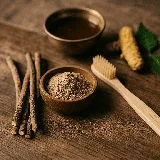
Akarkara (Anacyclus pyrethrum) — The Ayurvedic Toothache Specialist
This is one of the most powerful yet underutilized ayurvedic remedies for dental pain. Known as Akallaka in classical texts, Akarkara root has been used specifically for Dant Shool for centuries.
How it works: The root contains pellitorine and anacyclin — alkylamide compounds that produce a tingling, numbing sensation on contact with oral mucosa. In Ayurveda, it's classified as Ushna Virya (hot potency) and is considered specifically effective against Vata-type dental pain. How to use:
- Direct chewing: Chew a small piece of dried Akarkara root on the painful side for 5–10 minutes. You'll feel a characteristic tingling-numbness.
- Decoction rinse: Boil 1 teaspoon of Akarkara powder in 200 ml water, reduce to half, cool, and use as a mouth rinse 2–3 times daily.
- Powder paste: Mix Akarkara churna with a few drops of clove oil, apply to the affected area.
Triphala Kashaya — For Gum Inflammation and Infection
Triphala (the combination of Amalaki, Bibhitaki, and Haritaki) is arguably the most well-researched ayurvedic formulation for oral health. A 2016 randomized controlled trial published in AYU journal found that Triphala mouthwash was as effective as chlorhexidine (the clinical gold standard) in reducing dental plaque and gingival inflammation — without the side effect of tooth staining.
How to prepare:
- Boil 1 tablespoon of Triphala churna in 500 ml water
- Reduce to 200 ml on low heat
- Strain and cool to lukewarm temperature
- Use as a gargle/mouth rinse for 2–3 minutes
- Spit out — do not swallow
- Use twice daily, morning and evening after brushing
Triphala works best for Pitta-type tooth pain with bleeding gums, inflammation, and mild infection.
Katphal (Myrica nagi) — The Anti-Inflammatory Bark
Katphal is another lesser-known remedy that deserves more attention. The bark is Kashaya (astringent) and Tikta (bitter) in taste, making it excellent for Pitta and Kapha types of dental pain. It has strong anti-inflammatory and astringent properties that reduce gum swelling.
How to use: Rub fine Katphal bark powder directly on the painful gum area, or mix with warm water to create a thick paste and apply. Leave for 15 minutes, then rinse.
Neem (Nimba) — For Tooth Infection and Decay
- Neem is the most potent Krimighna (antimicrobial) herb in Ayurveda.
- Its compounds — nimbidin, nimbin, and azadirachtin — have demonstrated broad-spectrum antibacterial activity against oral pathogens including Streptococcus mutans (the primary bacterium responsible for dental caries).
How to use:
- Neem twig (Datun): Chew the end of a fresh neem twig until it becomes brush-like, then use to clean teeth. Best for Pitta and Kapha constitutions.
- Neem oil application: Mix 2–3 drops of neem oil with sesame oil, apply to infected gum with a cotton swab.
- Neem leaf decoction: Boil 10–12 fresh neem leaves in 300 ml water, reduce to half, use as a warm mouth rinse.
Camphor and Menthol Blend
- A 2023 randomized double-blind clinical study involving 45 subjects found that an ayurvedic dental gel containing clove oil, camphor, and menthol provided statistically significant pain reduction (p < 0.05) as measured by the Visual Analog Scale (VAS), comparable to conventional dental analgesic gels.
- The combination works synergistically — camphor provides cooling and anti-inflammatory action, menthol activates TRPM8 receptors producing a numbing sensation, and eugenol handles the core analgesic effect.
Oil Pulling (Kavala Graha and Gandusha): Step-by-Step Protocol
Oil pulling is one of the most misunderstood ayurvedic practices. Let's get the technique right, because doing it incorrectly makes it useless.
Kavala Graha vs Gandusha — They're Different
The Charaka Samhita (Sutrasthana, Chapter 5) describes two distinct practices:
- Kavala Graha — Taking a comfortable amount of oil and swishing it vigorously through the teeth. This is what most people call "oil pulling."
- Gandusha — Filling the mouth completely with oil and holding it still (no swishing) until the eyes water or the nose runs, then spitting it out.
For tooth pain, Gandusha with medicated sesame oil is traditionally recommended because the sustained contact allows deeper penetration of herbal compounds.
Correct Oil Pulling Protocol for Tooth Pain
- Perform on an empty stomach, first thing in the morning
- Use 1 tablespoon of organic sesame oil (Tila Taila) — the classically recommended oil, not coconut oil
- For enhanced effect, warm the oil slightly and infuse with 1 drop of clove oil
- Swish gently through the teeth for 15–20 minutes (start with 5 minutes and build up)
- Do NOT swallow the oil — it accumulates bacteria and toxins
- Spit into a trash can (not the sink — it can clog pipes)
- Rinse mouth with warm salt water
- Brush teeth normally afterward
Why sesame oil specifically? Ayurveda classifies sesame oil as Vata-pacifying. Modern research shows it contains sesamol and sesamin, which have anti-inflammatory and antibacterial properties. A 2017 study in the Journal of Traditional and Complementary Medicine confirmed that sesame oil pulling reduced S. mutans count by 20% after just 2 weeks of daily practice.
Who Should Avoid Oil Pulling
- Children under 5 years (choking risk)
- People with active mouth sores or severe oral infections
- Anyone who feels nauseous with oil in the mouth — don't force it
Dosha-Specific Chewing Sticks (Datun) for Prevention
Before toothbrushes existed, Ayurveda had a sophisticated system of medicated chewing sticks. The Charaka Samhita recommends specific plants based on your constitution:
| Dosha | Recommended Datun | Rasa (Taste) | Properties |
|---|---|---|---|
| Vata | Licorice (Yashtimadhu) | Madhura (Sweet) | Moistening, soothing, reduces sensitivity |
| Pitta | Neem (Nimba) or Arjuna | Tikta/Kashaya (Bitter/Astringent) | Cooling, anti-inflammatory, stops bleeding |
| Kapha | Karanja (Pongamia) or Arka (Calotropis) | Katu (Pungent) | Drying, antimicrobial, reduces swelling |
- Use a fresh, finger-thick twig. Chew one end until it becomes fibrous, then gently brush all tooth surfaces including the gumline.
- This practice — called Dantadhavana — is recommended every morning before breakfast.
Ayurvedic Forms of Dental Medicine: Churna, Kashayam, and Tailam
When you're browsing ayurvedic products for tooth pain, you'll encounter several traditional preparation forms.
Here's what each one is and when to use it:
Churna (Herbal Powder)
- Fine powder of dried herbs, used as tooth powder or mixed into paste.
- Common examples: Dashana Samskara Churna, Triphala Churna. Best for daily prevention and mild pain.
Kashayam (Decoction)
- Concentrated herbal liquid prepared by boiling herbs and reducing the volume.
- Used as a mouth rinse.
- Common examples: Triphala Kashayam, Patoladi Kashayam. Best for acute gum inflammation and infection.
Tailam (Medicated Oil)
- Herbs cooked in a base oil (usually sesame).
- Used for topical application or oil pulling.
- Common example: Arimedadi Tailam — a classical formulation containing clove, camphor, pepper, and other herbs in a sesame oil base. Best for recurrent pain, sensitivity, and preventive care.
Which Form Should You Choose?
| Condition | Best Form | Example Product | How to Use |
|---|---|---|---|
| Acute sharp pain | Tailam (oil) | Arimedadi Tailam, Clove oil | Apply directly to tooth |
| Bleeding, swollen gums | Kashayam (decoction) | Triphala Kashayam | Gargle 2x daily |
| Daily prevention | Churna (powder) | Dashana Samskara Churna | Use as tooth powder |
| Tooth sensitivity | Tailam (oil) | Sesame oil + herbs | Oil pulling daily |
| Mild cavity pain | Churna + Tailam combo | Triphala churna rinse + clove oil | Rinse, then apply oil |
Ayurvedic Diet for Stronger Teeth (Asthi Dhatu Poshana)
Since teeth are part of Asthi Dhatu (bone tissue), strengthening this tissue layer through diet is fundamental to treating — and preventing — dental pain. This is something most articles on the topic completely overlook.
Foods That Strengthen Teeth
- Sesame seeds (Til): Rich in calcium and naturally Vata-pacifying. Chew 1 tablespoon of white sesame seeds slowly every morning.
- Amla (Indian Gooseberry): Highest natural source of Vitamin C, strengthens gum collagen. Eat 1–2 fresh amla daily or take Amla churna.
- Milk boiled with Ashwagandha: Classical Asthi Dhatu rasayana. Add ½ teaspoon Ashwagandha powder to warm milk at bedtime.
- Moringa leaves (Sahjan): Contain 4x more calcium than milk by weight. Add to soups, dal, or eat steamed.
- Ghee: Proper Snehana (oleation) nourishes all dhatus, especially bones and teeth. Cook with ghee daily.
Foods to Avoid During Active Tooth Pain
- Ice-cold foods and beverages (aggravate Vata, increase sensitivity)
- Excessively sweet or sticky foods (feed oral bacteria, aggravate Kapha)
- Very hot, spicy, or sour foods (aggravate Pitta, irritate inflamed gums)
- Hard, crunchy snacks (physical trauma to weakened teeth)
- Carbonated drinks (acidic pH erodes enamel)
Safety, Contraindications, and Side Effects
This section is critical — and almost no other resource covers it. Ayurvedic remedies are natural, but that doesn't automatically mean they're safe for everyone.
General Safety Precautions
- Clove oil: Do not use undiluted on gums for more than 3–4 days continuously. Prolonged direct contact with eugenol can cause gum tissue damage, contact dermatitis, and in rare cases, pulp necrosis. Keep away from eyes.
- Akarkara: Not recommended during pregnancy (it has Ushna Virya — hot potency — and may stimulate uterine contractions). Avoid in Pitta-dominant conditions with burning sensations.
- Neem: Internal consumption of neem oil is toxic. Only use externally for dental applications. Neem should not be used by those trying to conceive (it has anti-fertility properties).
- Oil pulling: Can cause lipoid pneumonia if accidentally aspirated. Never let young children attempt oil pulling unsupervised.
Ayurvedic Remedies for Tooth Pain in Children
Children under 12 need modified approaches:
For Ages 5–12
- Mild clove oil application: Dilute 1 drop clove oil in 1 teaspoon coconut oil. Apply with a cotton swab to the painful area. Do not use more than twice a day.
- Triphala rinse: Half the adult concentration (½ teaspoon in 500 ml water).
- Ensure the child can spit reliably — no swallowing.
- Warm salt water gargle: The safest option. ¼ teaspoon salt in 1 cup warm water. Supervise the child.
For Ages 2–5
- Avoid clove oil entirely — the concentration of eugenol is too strong for delicate tissues.
- Gently rub a small amount of organic honey mixed with a pinch of turmeric on the painful gum (turmeric is anti-inflammatory, honey is antimicrobial).
- See a pediatric dentist promptly — toddler tooth pain usually indicates a condition that needs professional care.
Ayurvedic Remedies vs OTC Pain Medicines: When to Use What
This is the comparison nobody else is making, but every person with a toothache needs.
| Factor | Ayurvedic Remedies | OTC Medicines (Ibuprofen, Paracetamol) |
|---|---|---|
| Speed of relief | 5–20 minutes (clove oil); slower for herbal rinses | 20–45 minutes |
| Duration of relief | 1–3 hours per application | 4–8 hours per dose |
| Anti-inflammatory effect | Moderate (eugenol, triphala) | Strong (ibuprofen) |
| Side effects | Minimal with correct use; tissue irritation if overused | Gastric irritation, liver stress with prolonged use |
| Root cause treatment | Yes — addresses dosha imbalance, tissue health | No — symptom relief only |
| Safe during pregnancy | Some remedies are contraindicated (see above) | Paracetamol generally safe; ibuprofen avoided in 3rd trimester |
| Availability | Kitchen ingredients or ayurvedic pharmacy | Any medical store |
| Cost | ₹20–₹150 for most remedies | ₹10–₹50 per strip |
Practical recommendation: For acute, severe pain, you can safely combine ayurvedic topical remedies (clove oil on the tooth) with an OTC oral analgesic (paracetamol 500 mg). This gives you fast local numbing PLUS systemic pain relief. Then transition to purely ayurvedic maintenance as the acute phase resolves.
When Ayurvedic Medicine Won't Help: Red Flags to See a Dentist Immediately
- This may be the most important section of this entire article.
- No ayurvedic remedy — no matter how potent — can replace professional dental treatment for serious conditions.
Go to a dentist immediately if you experience:
- Facial swelling, especially near the eye or jaw (possible dental abscess spreading)
- Fever above 101°F / 38.3°C along with tooth pain (systemic infection)
- Pus or foul-tasting discharge from the gum (active abscess)
- Pain that persists beyond 48 hours despite home remedies
- Difficulty opening your mouth or swallowing (potential Ludwig's angina — a life-threatening emergency)
- Tooth pain after trauma (fall, hit, accident) — possible root fracture
- Numbness in lip, chin, or tongue along with dental pain (nerve involvement)
- Tooth pain with chest pain or left arm pain (rare but possible: cardiac referred pain)
Ayurvedic remedies are best used for: mild to moderate tooth pain, sensitivity, early gum disease, post-dental-procedure care, and long-term prevention. They are NOT a substitute for root canal treatment, abscess drainage, extraction, or antibiotics when genuinely needed.
Frequently Asked Questions
What is the fastest way to stop tooth pain at home?
Apply 2–3 drops of clove oil on a cotton ball and hold it against the painful tooth for 10–15 minutes. The eugenol in clove oil numbs the nerve ending within 2–5 minutes. For enhanced effect, combine with a warm salt water rinse (½ teaspoon salt in 1 cup warm water) before applying the clove oil. If pain is severe, you can take paracetamol 500 mg orally alongside the topical clove oil application.
What is the 3-3-3 rule for tooth pain?
The 3-3-3 rule is a simple pain management guideline: if your tooth pain lasts more than 3 days, occurs more than 3 times, or keeps you awake for 3 nights, you need to see a dentist — it's beyond home remedy territory. This rule helps you distinguish between temporary sensitivity (which ayurvedic remedies handle well) and a deeper structural problem requiring professional treatment.
Is there an Ayurvedic treatment for tooth decay and cavities?
- Ayurveda can help prevent cavities and manage early-stage decay through antimicrobial herbs (neem, triphala), oil pulling, and Asthi Dhatu-strengthening diet. However, once a cavity has formed a physical hole in the tooth, no herbal medicine can regenerate lost enamel or dentin. You'll need a dental filling or restoration.
- Ayurvedic remedies are excellent as complementary therapy — using Arimedadi Tailam or Triphala rinse after dental treatment speeds healing and prevents new cavities.
What kills a tooth infection naturally?
- No natural remedy can reliably "kill" a deep tooth infection (dental abscess). However, neem, turmeric, and Triphala have documented antibacterial activity that can reduce bacterial load and slow infection spread while you arrange professional care. Warm salt water rinses help drain superficial infections.
- But please understand: a true dental abscess requires professional drainage and often antibiotics. Delaying treatment can lead to sepsis, which is life-threatening.
Can toothpaste help with toothache or cavity pain?
Regular toothpaste cannot treat a toothache. However, ayurvedic tooth powders (like Dashana Samskara Churna) and toothpastes containing clove, neem, and camphor can provide mild analgesic effects during routine brushing and help prevent the conditions that cause tooth pain. For active pain relief, direct application of clove oil is far more effective than any toothpaste.
How can I prevent tooth and gum pain naturally?
- Follow the ayurvedic daily oral care routine: oil pulling with sesame oil every morning (15–20 minutes), use a dosha-appropriate chewing stick or ayurvedic tooth powder, rinse with Triphala decoction after meals, eat an Asthi Dhatu-nourishing diet rich in sesame, amla, and calcium-rich foods, and avoid ice-cold and excessively sweet foods.
- This comprehensive approach — called Dinacharya in Ayurveda — prevents most common dental problems when followed consistently.
Can a toothache be treated without going to the dentist?
Mild toothaches from temporary sensitivity, minor gum inflammation, or food impaction can often be managed at home with ayurvedic remedies like clove oil, Triphala rinse, and dietary adjustments. But if pain is severe, persistent (over 48 hours), accompanied by swelling or fever, or involves a visible cavity — you need a dentist. Think of ayurvedic remedies as your first line of defense, not your only line.
Conclusion: A Complete Approach to Dental Pain
- Ayurvedic medicine for tooth pain isn't about choosing one single magic herb.
- It's a layered system — clove oil for immediate relief, Triphala or neem for infection control, oil pulling for long-term oral health, dosha-specific dietary changes for root-cause correction, and the wisdom to know when professional help is needed.
Start with what's most accessible: clove oil is probably already in your kitchen. Add Triphala rinses and morning oil pulling over the next week. Adjust your diet to support Asthi Dhatu. And remember the red flags that mean it's time to visit a dentist.
Your teeth are the only set you get. Treat them with both the ancient wisdom of Ayurveda and the practical sense of modern care.
Scientific Sources
- Health Benefits of Culinary Herbs and Spices — Jiang TA, 2019, Journal of AOAC International
- Areca Nut — 2012
- Antimicrobial activity of eugenol and essential oils containing eugenol: A mechanistic viewpoint — Marchese A et al., 2017, Critical reviews in microbiology
- Syzygium aromaticum L. (Myrtaceae): Traditional Uses, Bioactive Chemical Constituents, Pharmacological and Toxicological Activities — Batiha GE et al., 2020, Biomolecules
- Eugenol (Clove Oil) — 2012
- Rosemary and neem: an insight into their combined anti-dandruff and anti-hair loss efficacy — Hashem MM et al., 2024, Scientific reports
- Bangladeshi medicinal plant dataset — Borkatulla B et al., 2023, Data in brief
- Phytotherapy in periodontics as an effective and sustainable supplemental treatment: a narrative review — Gawish AS et al., 2024, Journal of periodontal & implant science
- Formulation and Evaluation of Turmeric- and Neem-Based Topical Nanoemulgel against Microbial Infection — Giri S et al., 2024, Gels (Basel, Switzerland)
- Traditional Oral Hygiene Practices and Their Effectiveness: A Systematic Review of the Evidence — Shahzad M et al., 2026, Oral health & preventive dentistry
Ask Ayurvedic doctor a question and get a consultation online on the problem of your concern in a free or paid mode.
More than 2,000 experienced doctors work and wait for your questions on our site and help users to solve their health problems every day.
Related articles