Ask Ayurvedic doctor a question and get a consultation online on the problem of your concern in a free or paid mode. More than 2,000 experienced doctors work and wait for your questions on our site and help users to solve their health problems every day.
FREE! Ask Ayurvedic Doctors 24/7

 Fast responses
 1000+ verified doctors
Body DetoxEar, Nose, and Throat DisordersGeriatrics & RejuvenationImmunodeficiencyInfertility TreatmentNutritionOrthopedic DisordersPediatricsRespiratory DisordersSexually Transmitted Diseases (STDs)Surgery RecoveryUrological DisordersVascular DisordersDental DisordersEndocrinological DisordersGastrointestinal DisordersYoga TherapyGeneral MedicineAllergic DisordersCardio DisordersGynecology and ObstetricsCosmetologySkin and Hair DisordersEye DisordersInfectious DiseasesMental DisordersNeurological DisordersOncologyPanchakarmaSexual Health & DisordersSports Medicine
Published on 01/29/25
(Updated on 06/19/26)
star_border 5
3,272
Poornachandrodaya Ras – Powerful Ayurvedic Remedy for Holistic Health
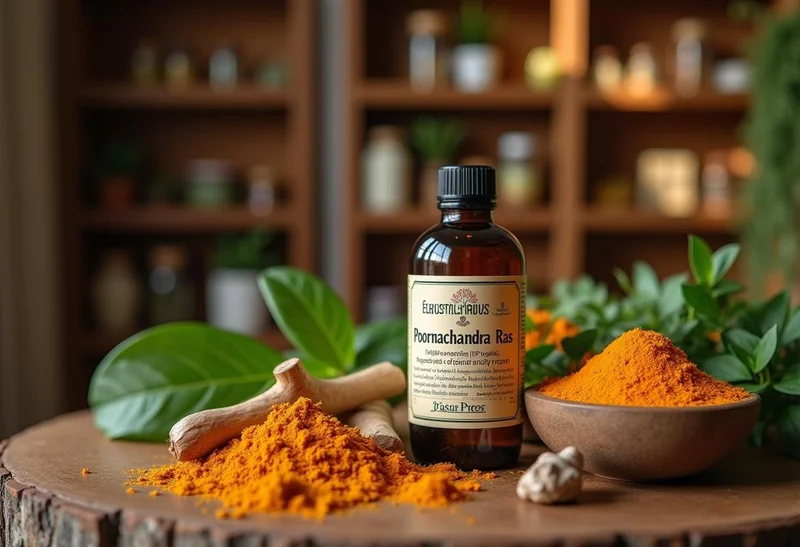
Poornachandrodaya Ras is a classical Ayurvedic Kupipakva Rasayana — a mercury-gold-silver formulation prepared through a sophisticated sublimation process — used primarily for chronic cardiac conditions, neurological weakness, respiratory disorders, and deep-tissue rejuvenation. Referenced in authoritative texts like Rasa Tantra Saar, Bhaishajya Ratnavali, and Rasendra Chintamani, this formulation has been a cornerstone of Rasa Shastra (Ayurvedic mineral therapeutics) for centuries. If you're looking for a comprehensive, evidence-informed guide that covers everything from ingredients and doshic action to safety concerns, drug interactions, and how to verify product authenticity — you're in the right place.
What Is Poornachandrodaya Ras and Why Is It Important?
Poornachandrodaya Ras (also spelled Poorna Chandrodaya Ras or Purna Chandrodaya Ras) literally translates to "the essence of the full moon." The name is symbolic — just as the full moon represents completeness and nourishment, this formulation is designed to provide holistic restoration to depleted tissues (Dhatus) and weakened organ systems.
Historical Origins and Classical References
The formulation traces its roots to the medieval period of Indian medicine, roughly between the 12th and 16th centuries, when Rasa Shastra — the science of mercurial and metallic preparations — reached its zenith. Some historians associate its codification with scholars in Bengal and parts of Central India, where monastic traditions of alchemy and medicine overlapped significantly.
The primary classical references include:
- Rasa Tantra Saar wa Siddha Prayoga Sangraha — detailed manufacturing instructions and indications
- Bhaishajya Ratnavali (Govinda Das, 18th century) — cardiac and neurological applications
- Rasendra Chintamani — broader Rasayana context and preparation variants
Unlike simple herbal formulations, Poornachandrodaya Ras belongs to the Kupipakva Rasayana category — medicines prepared inside a glass bottle (Kupi) using the Valuka Yantra (sand-bath apparatus). This manufacturing method involves gradual heating over 48–72 hours, ultimately causing sublimation of mercurial compounds into a purified, therapeutically active form.
How Does It Work? The Doshic and Pharmacodynamic Profile
Understanding the Ayurvedic pharmacology of Poornachandrodaya Ras is essential for appreciating its broad therapeutic range.
| Parameter | Detail |
|---|---|
| Rasa (Taste) | Tikta (Bitter), Kashaya (Astringent), Madhura (Sweet) |
| Guna (Quality) | Laghu (Light), Snigdha (Unctuous) |
| Veerya (Potency) | Ushna (Hot) |
| Vipaka (Post-digestive effect) | Madhura (Sweet) |
| Prabhava (Special action) | Hridya (Cardiotonic), Rasayana (Rejuvenative) |
| Dosha Karma | Primarily Vata-Kapha Shamaka; balances Tridosha when used with appropriate Anupana |
The Ushna Veerya makes it particularly effective against Vata and Kapha aggravations, while its Madhura Vipaka prevents it from excessively aggravating Pitta — provided it's taken with the right carrier substance (Anupana). This is an important nuance that most online resources completely miss.
From a modern pharmacological perspective, some researchers have proposed that the purified mercuric sulfide (HgS) combined with gold nanoparticles (from Swarna Bhasma) creates a synergistic matrix that may enhance cellular bioavailability and exert immunomodulatory effects. A 2017 pharmaceutics review published on ResearchGate explored this chemical basis, though large-scale clinical trials remain limited.
Poorna Chandrodaya Ras Ingredients: Complete Composition
The formulation is a carefully calibrated blend of purified metals, minerals, and herbal Bhavana Dravyas (trituration media). Each ingredient undergoes extensive Shodhana (purification) before inclusion — in some traditions, Parada (mercury) alone undergoes up to 18 sequential purification steps.
Core Mineral Ingredients
| Ingredient | Sanskrit Name | Role in Formulation |
|---|---|---|
| Purified Mercury | Shuddha Parada | Base catalyst; Yogavahi (enhances bioavailability of other ingredients) |
| Purified Sulphur | Shuddha Gandhaka | Binds with Parada to form Kajjali (black sulfide); detoxifies mercury |
| Gold Bhasma | Swarna Bhasma | Cardiotonic, Medhya (nootropic), Rasayana |
| Silver Bhasma | Rajat Bhasma | Nervine tonic, cooling agent, Vata-pacifying |
| Mica Bhasma | Abhraka Bhasma | Deep-tissue nourisher, Ojas-enhancer |
| Iron Bhasma | Loha Bhasma (in some variants) | Rakta Dhatu (blood tissue) nourisher |
Bhavana Dravyas (Trituration Media)
The mineral core is triturated with specific herbal juices or decoctions to potentiate the formula.
Common Bhavana Dravyas include:
- Kumari Swarasa (Aloe vera juice) — for Pitta balancing
- Tulsi Swarasa (Holy basil juice) — for Kapha and respiratory support
- Bhringaraja Swarasa — for liver support and Pitta regulation
- Chitrak Kwatha (Plumbago decoction) — for Agni (digestive fire) enhancement
The exact Bhavana Dravyas vary between classical texts and manufacturers, which is one reason why products from different companies can produce slightly different clinical effects.
The Kupipakva Manufacturing Process
This is worth understanding because it directly impacts quality and safety.
The process involves:
- 1.Kajjali preparation — Mercury and Sulphur are ground together in a mortar until a fine, lusterless black powder forms (typically 24–48 hours of manual grinding)
- 2.Addition of Bhasmas — Swarna, Rajat, and Abhraka Bhasmas are incorporated sequentially
- 3.Bhavana — The mixture is triturated with herbal juices (multiple rounds)
- 4.Kupi filling — The processed material is placed inside a glass bottle (Kupi)
- 5.Valuka Yantra heating — The bottle is buried in sand and heated gradually through Mridu (mild), Madhyama (moderate), and Tikshna (intense) Agni phases over 48–72 hours
- 6.Sublimation and collection — The final product deposits at the neck or bottom of the bottle as a solidified mass
This 56-step process (in some traditions) ensures that mercury is converted to a therapeutically active yet toxicologically safer form. The key indicator of proper preparation is the formation of a specific color and texture — and this is excatly why sourcing from a reputable manufacturer matters so much.
What Is the Use of Poornachandrodaya Ras? Clinical Indications
Poornachandrodaya Ras has an unusually broad therapeutic scope, which makes sense given its Tridosha-balancing action and deep-tissue penetrating ability. Here's a systematic breakdown.
Cardiac and Cardiovascular Conditions
This is perhaps the most well-documented traditional use.
The formulation is indicated for:
- Hridroga (heart disease) — particularly chronic angina, palpitations, and post-infarction weakness
- Cardiac arrhythmia — Vata-driven irregular heart rhythms
- Congestive conditions — where Kapha accumulation impairs cardiac output
The Swarna Bhasma component is primarily responsible for the cardiotonic action. Classical texts describe it as Hridya (heart-friendly) and modern in-vitro studies have shown gold nanoparticles possess anti-inflammatory properties relevant to cardiovascular protection.
Real-world example: A 52-year-old woman (referred to as Mrs. Rao in one clinical documentation) presented with chronic angina and fatigue unresponsive to conventional management. After a structured 90-day course of Poornachandrodaya Ras with Arjuna Ksheera Paka as Anupana, she reported significant improvment in exercise tolerance and reduction in anginal episodes. While this is anecdotal, it reflects the kind of clinical outcomes Rasa Shastra practitioners have documented for decades.
Neurological and Cognitive Disorders
The combination of Swarna Bhasma (Medhya action) and Rajat Bhasma (nervine tonic) makes this formulation valuable for:
- Vata-dominant neurological conditions — tremors, numbness, neuralgia
- Cognitive decline — age-related memory issues, poor concentration
- Chronic fatigue syndrome — particularly when associated with neurological exhaustion
- Multiple sclerosis (MS) — some Ayurvedic practitioners have explored this formulation as adjuvant therapy for MS, though evidence remains preliminary
Respiratory Disorders
- Chronic bronchitis (Kasa)
- Bronchial asthma (Shwasa) — especially Kapha-dominant variants
- Recurrent respiratory infections with underlying immunodeficiency
- Post-tuberculosis debility
Autoimmune and Immunodeficiency Conditions
The Rasayana properties of the formulation — particularly its capacity to enhance Ojas (the subtle essence of immunity in Ayurveda) — make it relevant for:
- Autoimmune conditions where immune modulation (not suppression) is desired
- Chronic immunodeficiency with recurrent infections
- Post-illness recovery and convalescence
Reproductive and Sexual Health
Though less commonly highlighted, Poornachandrodaya Ras also finds use in:
- Male sexual debility (Klaibya)
- Oligospermia and low vitality
- General Shukra Dhatu (reproductive tissue) depletion
Dosage, Anupana, and Complete Administration Protocol
This is where most online resources fall short — they give you a dosage number but no context around it. In Rasa Shastra, the protocol around a potent formulation like this is just as important as the medicine itself.
Standard Dosage
| Form | Dosage | Frequency |
|---|---|---|
| Tablet | 1 tablet (125 mg) | Once or twice daily |
| Powder (Churna) | 125–250 mg | Once or twice daily |
Always under the supervision of a qualified Ayurvedic physician. This is not a self-medication remedy.
Choosing the Right Anupana (Carrier Substance)
The Anupana dramatically influences how Poornachandrodaya Ras works in the body. This is a critical concept most guides overlook entirely.
| Condition | Recommended Anupana | Rationale |
|---|---|---|
| Cardiac disorders | Arjuna Ksheera Paka (Arjuna boiled in milk) | Synergistic cardioprotection |
| Neurological weakness | Brahmi Ghrita or plain cow's ghee | Ghee crosses the blood-brain barrier per Ayurvedic theory |
| Respiratory conditions | Honey + Sitopaladi Churna | Kapha-liquefying action |
| General Rasayana | Warm milk with honey | Nourishing, Ojas-building |
| Summer/Pitta season | Coconut water or Gulkand | Cooling counterbalance to Ushna Veerya |
| Winter/Kapha season | Honey + Trikatu | Enhances bioavailability and counters Kapha |
Step-by-Step Protocol: Preparation → Course → Recovery
No competitor covers this, but in authentic Rasayana practice, the protocol matters enormously.
Phase 1: Pre-treatment Preparation (1–2 weeks)
- Mild Panchakarma or at minimum Deepana-Pachana (digestive optimization) with Trikatu or Chitrakadi Vati
- Virechana (therapeutic purgation) if Pitta-Kapha toxins are present
- Dietary simplification — light, warm, freshly cooked meals
Phase 2: Active Course (30–90 days typically)
- Prescribed dosage with appropriate Anupana
- Strict adherence to Pathya (favorable diet/lifestyle)
- Monthly follow-up with physician for assessment
Phase 3: Post-course Transition (2–4 weeks)
- Gradual tapering if on longer courses
- Continued Rasayana diet
- Mild herbal support (Chyawanprash, Ashwagandha) to sustain benefits
Pathya-Apathya: Diet and Lifestyle During Treatment
This section is entirely absent from every competitor's content, yet it is arguably the most practical information a patient needs. In Rasayana therapy, violating Pathya can nullify the medicine's effects entirely.
Pathya (Favorable)
- Foods: Old rice (Purana Shali), moong dal, cow's ghee, warm milk, pomegranate, seasonal vegetables, dates
- Lifestyle: Early sleep (before 10 PM), gentle yoga or Pranayama, oil massage (Abhyanga) with sesame oil, adequate rest
- Mental hygiene: Meditation, avoidance of excessive stimulation, Sattvic environment
Apathya (Unfavorable)
- Foods to avoid: Fermented foods, excessive sour/salty tastes, curd at night, cold beverages, processed/packaged food, excessive non-vegetarian food
- Lifestyle to avoid: Late nights, excessive sexual activity (depletes Shukra and Ojas), strenuous exercise beyond capacity, smoking and alcohol (absolute contraindication)
- Emotional stressors: Anger, anxiety, and grief directly impair Rasayana efficacy per classical texts
Don't wait or self medicate. Start chat with Doctor NOW
Side Effects, Safety, and Contraindications
Let's address the elephant in the room. Poornachandrodaya Ras contains mercury and heavy metals. This raises legitimate safety questions that deserve honest answers.
Known Side Effects
When properly prepared (Samyak Siddha) and taken under medical supervision in recommended doses:
- Side effects are generally rare
- Mild gastric discomfort may occur initially
- Metallic taste in some patients
When improperly prepared or taken in excess:
- Heavy metal toxicity is a real risk — symptoms include nausea, abdominal pain, neurological symptoms
- Hepatotoxicity and nephrotoxicity in extreme cases
Contraindications
- Pregnancy and lactation — absolutely contraindicated
- Children under 12 — generally not recommended; pediatric alternatives exist
- Kapha Prakriti individuals — require dose adjustment and careful monitoring (some texts advise caution)
- Severe hepatic or renal impairment — contraindicated
- Known hypersensitivity to any ingredient
Drug Interactions with Modern Medicines
This is a critical gap that no other guide addresses. If you're taking allopathic medications alongside Poornachandrodaya Ras, be aware of potential interactions:
| Medication Class | Potential Interaction | Risk Level |
|---|---|---|
| Anticoagulants (Warfarin, Heparin) | May alter coagulation parameters | Moderate–High |
| Antihypertensives | Additive hypotensive effect possible | Moderate |
| Immunosuppressants | Conflicting mechanism (immunomodulation vs. suppression) | High — avoid combination |
| Cardiac glycosides (Digoxin) | Potential for additive cardiac effects | Moderate |
| Hepatotoxic drugs | Increased liver burden | Moderate |
| Chelation therapy drugs | May interfere with mineral components | High — avoid |
Bottom line: Always inform your allopathic physician if you are taking any Rasa Shastra preparation. And always inform your Ayurvedic physician about your allopathic medications. This two-way transparency is non-negotiable.
How to Verify Authenticity and Choose a Quality Product
With mercury-based formulations, quality assurance isn't optional — it's a matter of safety. Here's a practical guide for consumers that no other resource provides.
What to Check on the Label
- 1.GMP certification — Look for the GMP (Good Manufacturing Practices) logo mandated by the Ministry of AYUSH, Government of India
- 2.License number — Every Ayurvedic manufacturer must have a valid drug manufacturing license
- 3.Batch number and expiry date — Kupipakva Rasayanas typically have a long shelf life (5–10 years) but should always be dated
- 4.Heavy metal testing declaration — Reputable manufacturers test for mercury, arsenic, lead, and cadmium levels and maintain them within pharmacopoeial limits
- 5.Reference text mentioned — Good products cite the classical reference (e.g., "As per Rasa Tantra Saar")
Major Manufacturers Compared
| Manufacturer | Form Available | Approx. Price (INR) | Notable Features |
|---|---|---|---|
| Baidyanath | Tablet | ₹150–250 (10 tabs) | Widely available, established brand |
| Dhootapapeshwar | Tablet/Powder | ₹300–500 | Known for strict quality control, premium segment |
| Unjha Pharmacy | Tablet | ₹120–200 | Gujarat-based, traditional manufacturing |
| SDM Ayurveda | Powder | ₹200–350 | South Indian formulation tradition |
| Dabur | Tablet | ₹180–280 | Mass market availability |
Prices are approximate and may vary by region and retailer.
Red Flags to Watch For
- No manufacturer address or license number
- Unusually low price (proper Swarna Bhasma alone is expensive — a suspiciously cheap product likely cuts corners)
- No expiry date or batch number
- Sold loose without proper packaging
- Claims of "zero side effects" or "100% safe" — any honest manufacturer acknowledges that medical supervision is required
Poornachandrodaya Ras vs Similar Formulations: A Comparative Guide
This comparison helps practitioners and patients understand when Poornachandrodaya Ras is the right choice versus its alternatives.
| Parameter | Poornachandrodaya Ras | Siddha Makaradhwaja | Vasant Kusumakar Ras | Chandra Prabha Vati |
|---|---|---|---|---|
| Category | Kupipakva Rasayana | Kupipakva Rasayana | Kharaliya Rasayana | Vati (Tablet) |
| Contains Gold | Yes | Yes | Yes | No |
| Contains Mercury | Yes | Yes | Yes (processed) | No |
| Primary Action | Cardiotonic + Nervine + Rasayana | Powerful Rasayana + Vajikarana | Prameha (diabetes), Rasayana | Urinary, mild Rasayana |
| Potency | Very High | Very High | High | Moderate |
| Safety Profile | Requires strict supervision | Requires strict supervision | Requires supervision | Relatively safer |
| Best For | Cardiac + neuro + respiratory complex cases | Severe debility, sexual health | Diabetes, debility, Pitta conditions | Urinary disorders, general wellness |
| Cost | High (contains Swarna Bhasma) | Very High | High | Low–Moderate |
The key differentiator for Poornachandrodaya Ras is its broad-spectrum activity across cardiac, neurological, and respiratory systems simultaneously — making it the formulation of choice for multi-system debility in Vata-Kapha dominant patients.
Legal Status: Can You Buy It Everywhere?
This is increasingly relevant for the global Ayurveda community. Mercury-containing formulations face regulatory scrutiny in several countries.
- India: Legal and regulated under the Drugs and Cosmetics Act. Must be manufactured by licensed pharmacies under AYUSH guidelines
- United States: Not FDA-approved. Import for personal use exists in a grey area. Several FDA warnings have been issued about mercury content in Ayurvedic products
- European Union: Generally restricted. Mercury-containing medicinal products face strict regulations under REACH
- Canada: Requires NPN (Natural Product Number) which is difficult to obtain for mercurial preparations
- Australia: TGA (Therapeutic Goods Administration) does not approve mercury-based formulations
If you're outside India, consult a qualified Ayurvedic practitioner in your country about legal alternatives or proper import procedures. Self-importing without understanding the regulatory landscape is risky.
Frequently Asked Questions
What is the best Ayurvedic medicine for diabetes — is Poornachandrodaya Ras effective?
Poornachandrodaya Ras is not primarily a diabetes medicine. For Prameha (diabetes), Vasant Kusumakar Ras is the more targeted Rasayana, often combined with Chandraprabha Vati and Shilajit. Poornachandrodaya Ras may play a supportive role in diabetic patients who also have cardiac complications, but it shouldn't be your first-line choice for blood sugar management alone.
What is Chandraprabha used for, and how is it different?
Chandraprabha Vati is a much milder, herbo-mineral formulation primarily used for urinary tract disorders, mild diabetes support, and general debility. It does not contain mercury or gold, making it significantly safer for long-term and self-directed use. Poornachandrodaya Ras, in contrast, is a potent Kupipakva preparation for serious chronic conditions. They are in completely different therapeutic categories despite the similar name.
Is Poornachandrodaya Ras available in powder form?
Yes. It is available as both tablets and powder (Churna). The powder form allows more precise dosing and can be mixed directly with specific Anupanas. Some practitioners prefer the powder for better absorption, though tablets offer convienience and standardized dosing.
How long does it take to see results?
- Most practitioners report initial improvements within 2–4 weeks for symptoms like fatigue and breathlessness. For chronic cardiac or neurological conditions, a full 60–90 day course is typically needed. Some conditions may require repeated courses with gaps.
- Patience is essential — this is not a quick-fix medicine.
Can I take Poornachandrodaya Ras without a doctor's prescription?
Strongly discouraged. This is a potent mercurial preparation that requires proper assessment of your Prakriti (constitution), Vikriti (current imbalance), Agni status (digestive capacity), and compatibility with any existing medications. Self-medication with Rasa Shastra products carries genuine risk.
What is the price of Poornachandrodaya Ras?
- Prices typically range from ₹120 to ₹500 for a pack of 10 tablets, depending on the manufacturer and the quality of Bhasmas used. Formulations containing genuine Swarna Bhasma will naturally cost more.
- Be cautious of products priced significantly below ₹100 — the raw materials alone (particularly gold) make ultra-cheap products suspect.
Final Thoughts and Responsible Use
Poornachandrodaya Ras represents some of the most sophisticated pharmaceutical thinking in traditional medicine — a formulation where precise purification, exact proportions, and careful manufacturing transform potentially toxic raw materials into powerful therapeutics. This is the genius of Rasa Shastra, and it deserves both respect and caution.
If you're considering this formulation, here's your action plan:
- 1.Consult a qualified Ayurvedic physician — preferably one with specific Rasa Shastra training
- 2.Get a proper assessment — Prakriti, Vikriti, Agni, and existing medication review
- 3.Source from a reputable manufacturer — verify GMP certification and licensing
- 4.Follow the complete protocol — including Pathya-Apathya, appropriate Anupana, and recommended duration
- 5.Monitor regularly — periodic check-ups during the course are essential
- 6.Maintain transparency — inform all your healthcare providers about every medicine you take
This ancient formulation has helped countless patients when used wisely. The key word being wisely. Approach it with informed respect, proper guidance, and realistic expectations — and it can be a genuinely transformative part of your healing journey.
This article is for educational purposes only and does not replace professional medical advice. Always consult a qualified Ayurvedic practitioner before starting any Rasa Shastra formulation.
Scientific Sources
- Role of Vacha (Acorus calamus Linn.) in Neurological and Metabolic Disorders: Evidence from Ethnopharmacology, Phytochemistry, Pharmacology and Clinical Study — Sharma V et al., 2020, Journal of clinical medicine
- Anticonvulsant activity of raw and classically processed Vacha (Acorus calamus Linn.) rhizomes — Bhat SD et al., 2012, Ayu
- Preliminary physico-chemical profile of Brahmi Ghrita — Yadav KD et al., 2013, Ayu
- Case Study on Management of Overweight (Sthoulya) through Ayurveda — Pardhekar AD et al., 2024, Journal of pharmacy & bioallied sciences
- Phytochemical, Pharmacological, and Therapeutic Benefit of Acorus Calamus (Vacha): A Comprehensive Scientific Review — Middha SK et al., 2026, Mini reviews in medicinal chemistry
- Efficacy of Pippali in vardhamana and fixed dosage pattern in primary hypothyroidism - A randomized clinical trial — Shah SB et al., 2022, Journal of Ayurveda and integrative medicine
- Piper longum L.: A comprehensive review on traditional uses, phytochemistry, pharmacology, and health-promoting activities — Biswas P et al., 2022, Phytotherapy research : PTR
- Management of giardiasis by a herbal drug 'Pippali Rasayana': a clinical study — Agarwal AK et al., 1997, Journal of ethnopharmacology
- Ayurvedic management of systemic sclerosis - A case report — Parmar JR et al., 2024, Journal of Ayurveda and integrative medicine
- Role of Agni Karma with Pippali on Kadara- An open labeled clinical trial — Ganjoo N, 2017, Ayu
- Swarna Prashana - faith in the embrace of research — Verma S et al., 2022, Journal of complementary & integrative medicine
- Blood compatibility studies of Swarna bhasma (gold bhasma), an Ayurvedic drug — Paul W et al., 2011, International journal of Ayurveda research
- Swarna Bhasma Induces Antigen-Presenting Abilities of Macrophages and Helps Antigen Experienced CD4(+) T Cells to Acquire Th1 Phenotypes Against Leishmania donovani Antigens — Saini S et al., 2024, Biological trace element research
- Ayurvedic metal nanoparticles could be novel antiviral agents against SARS-CoV-2 — Sarkar PK et al., 2021, International nano letters
- Characterization of Swarna Bhasma and Swarnaprash and Determination of Antimicrobial Properties Against Gut-Pathobiont and Symbiont — Singh K et al., 2025, Biological trace element research
- Mercury-based traditional herbo-metallic preparations: a toxicological perspective — Kamath SU et al., 2012, Archives of toxicology
- Variations in physicochemical properties of a traditional mercury-based nanopowder formulation: need for standard manufacturing practices — Kamath SU et al., 2014, Indian journal of pharmaceutical sciences
- Pharmacological and toxicological insights into the ayurvedic formulation Rasasindura — Kamath SU et al., 2025, Scientific reports
- Explaining Ayurvedic preparation of Rasasindura, its toxicological effects on NIH3T3 cell line and zebrafish larvae — Biswas S et al., 2022, Journal of Ayurveda and integrative medicine
- Comparative neurotoxicity study of mercury-based inorganic compounds including Ayurvedic medicines Rasasindura and Kajjali in zebrafish model — Biswas S et al., 2018, Neurotoxicology and teratology
Questions from users
Is it safe to use Poornachandrodaya Ras during pregnancy?
Walker
3 days ago
No, it's generally not recommended to use Poornachandrodaya Ras during pregnancy. It's a powerful Ayurvedic formulation with mercury and heavy metals, which can pose risks. Always consult an Ayurvedic doctor or your healthcare provider before taking any such supplements while pregnant, just to be safe!
What is the best way to assess the quality of Poornachandrodaya Ras before purchasing?
Michael
16 days ago
To gauge the quality of Poornachandrodaya Ras, check for reputable brands that follow good manufacturing practices and have certifications. Look for clear labeling about ingredients and the manufacturing process. If possible, consult an Ayurvedic practitioner for guidance. Trust your senses too - a potent herbal aroma can be a good sign!
Can I use Poornachandrodaya Ras for improving mental clarity and focus?
Xander
25 days ago
Poornachandrodaya Ras might help with mental clarity and focus due to it's unique blend of ingredients, but it's essential to consult with an Ayurvedic practitioner to tailor it to your needs. They can assess your dosha balance and overall constitution to ensure it's suitable for you! Maybe also explore lifestyle and dietary changes too :)
What is the best way to store Poornachandrodaya Ras to maintain its potency?
Wade
35 days ago
Storing Poornachandrodaya Ras is kinda like keeping it safe and effective, right? Keep it in a cool, dry place, away from direct sunlight and moisture. Use an airtight container to prevent any moisture interaction. Treat it like you would any special herbal blend, and it'll stay potent longer.
What is the role of Poornachandrodaya Ras in enhancing nutrient absorption?
Tenley
45 days ago
Poornachandrodaya Ras helps enhance nutrient absorption by stimulating the digestive system, or "agni". This activation of digestive fire supports better absorption of nutrients by the body. Its blend of herbs and minerals not only boosts digestion but also cleanses the system, which in turn aids nutrient uptake. Remember, individual response can vary, so best check with an ayurveda expert for personal advice!
What are the best times of day to take Poornachandrodaya Ras for maximum effectiveness?
Mateo
54 days ago
Taking Poornachandrodaya Ras ideally in the morning on an empty stomach can be effective, as it helps boost your digestion and energy levels for the day. Some people also take it in the evening, but it really depends on your own body and routine — just listen to what feels right for you! 🕒 Remember to always check in with a doc too!
What are the key health benefits of using Poornachandrodaya Ras regularly?
Samantha
64 days ago
Using Poornachandrodaya Ras can really boost vitality and energy, improve stamina, and support a vibrant lifestyle. It's great for digestion too, enhancing nutrient absorption and detoxification. Plus, it's got benefits for skin health and balancing doshas. Just remember to consult a practitioner for personalized advice, because doshas and individual constitutions vary.
Is it safe to use Poornachandrodaya Ras for detoxifying the body?
Phillip
73 days ago
Poornachandrodaya Ras can have detoxifying benefits but it's always important to be cautious with Ayurvedic formulations, especially, rasas. They contain metals, which could potentially pose a risk if used improperly or without guidance. Best to consult an ayurvedic practitioner to see if it's right for you and your specific body constitution, dosha balance n health condition.
Can I use Poornachandrodaya Ras to boost my energy levels?
Tiffany
83 days ago
Yes, you can use Poornachandrodaya Ras to boost energy levels! It's a powerful Ayurvedic rasayana, known for enhancing vitality and balancing doshas. But, always consider your personal prakriti and any imbalances you might have. It's good to consult an Ayurvedic doctor before starting it!
What should I expect during the first few weeks of taking Poornachandrodaya Ras?
Connor
180 days ago
In the first few weeks of taking Poornachandrodaya Ras, you might notice some changes like improved digestion and maybe a boost in overall vitality and skin health. It helps with immunity too. But it's important to be patient as consistent and long-term use is usually needed to really see the best benefits. Always keep an eye on on how you feel!
Related articles
Sexual Health & Disorders
Understanding Hydrocele in Ayurveda
Hydrocele is characterized by fluid accumulation around the testicles, leading to swelling and discomfort, which can be addressed through Ayurvedic methods.
3,780

Sexual Health & Disorders
Ekangveer Ras Benefits, Dosage, Ingredients, Side Effects
Exploration of Ekangveer Ras Benefits, Dosage, Ingredients, Side Effects
3,002
Sexual Health & Disorders
Lingavardhana Thailam – Ayurvedic Rejuvenator for Male Vitality & Sexual Health
Discover Lingavardhana Thailam, a potent Ayurvedic formulation designed to enhance male vitality, improve sexual performance, and support overall reproductive health through natural, traditional herbal ingredients.
4,377

Sexual Health & Disorders
Himalaya Confido vs Viagra: Benefits, Results, and Side Effects
Compare Himalaya Confido vs Viagra for men’s health. Learn about benefits, results, size impact, and side effects of both natural and pharmaceutical options
23,901

Sexual Health & Disorders
Tentex Royal Capsule
Exploration of Tentex Royal Capsule
2,901
Sexual Health & Disorders
Vrishya Vati: Focuses on reproductive vitality.
Explore the proven benefits, proper dosage, side effects, and scientific research behind Vrishya Vati, the powerful Ayurvedic formulation for reproductive health.
4,596

Sexual Health & Disorders
Side Effects of Masturabation in Male Daily in Ayurveda
Explore the side effects of masturabation in male daily in Ayurveda. Learn scientific insights, Ayurvedic perspectives, and expert tips for holistic wellbeing.
6,538

Sexual Health & Disorders
Which Ayurvedic Medicine Increase Sex Power Naturally?
Find out which Ayurvedic medicine can increase sex power. Learn about the best remedies for men and women, natural tablets, and time-tested herbal solutions
7,065

Sexual Health & Disorders
Vigomax Forte Tablet
Exploration of Vigomax Forte Tablet
2,814
Related questions on the topic
Legal
Additional Documents
© 2024 Ask Ayurveda. All rights reserved.